
Thousands Of Sandhill Cranes Fill This Arizona Sky At Dusk And Change How You Hear The Desert
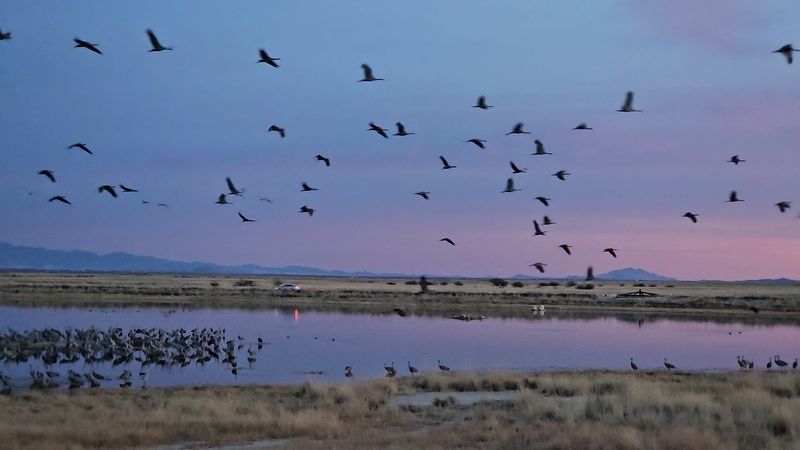
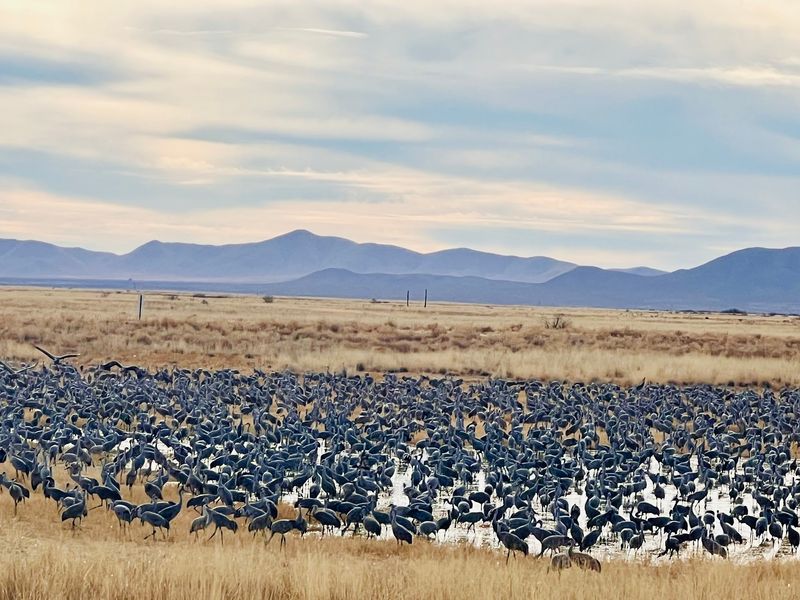
Picture recycled city water pooling into shallow lakes on the edge of a small farm town, then filling with the wildest sound you will ever hear at sunset. Southeastern Arizona keeps this trick tucked into an open valley, where thousands of Sandhill Cranes drop from the sky each winter evening.
The birds bugle, wheel, and settle onto the water while the desert light turns gold and pink. Best part?
It costs nothing to watch, and the drive rewards you with something you will talk about for years.
A Quiet Refuge On The Edge Of Willcox
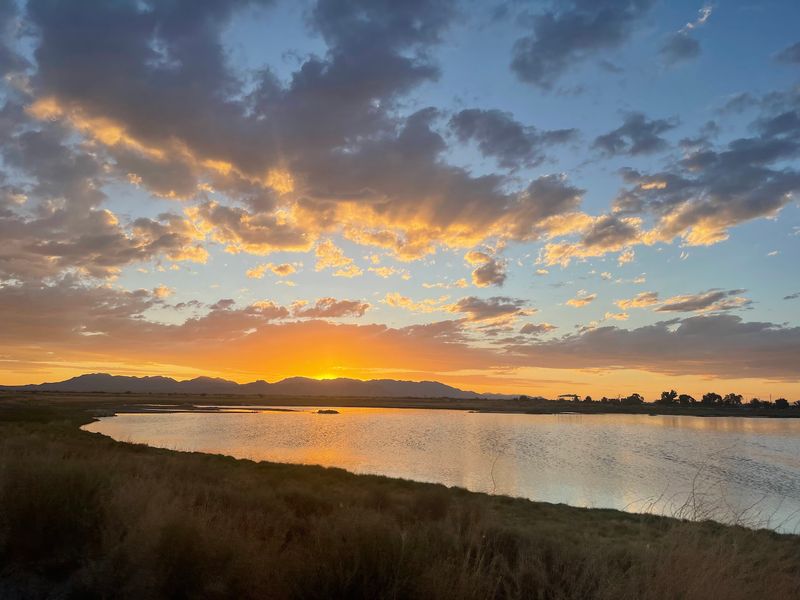
Sitting just south of Willcox off Rex Allen Jr Drive, this wildlife viewing area feels less like a formal park and more like a friendly open secret. Small lakes stretch across the flat valley floor, and there is no ticket booth or admission gate to slow you down.
The land here doubles as a wildlife refuge, quietly managed to keep the water and habitat healthy for the birds passing through. Visitors describe it as simple, peaceful, and beautifully uncomplicated, exactly the sort of place you stumble onto and never forget.
What makes it special is how easy it is to reach. You can pull right up along the road, roll down your window, and start watching without hiking a single mile.
Regulars mention how well managed the spot has become, with the town adding educational signage, bat houses, and shaded platforms decorated with attractive steel touches. It has grown into a place that welcomes birders, photographers, and curious travelers alike, all sharing the same wide horizon and the same hush before the evening rush of wings begins.
Water Born From A Clever Recycling Idea
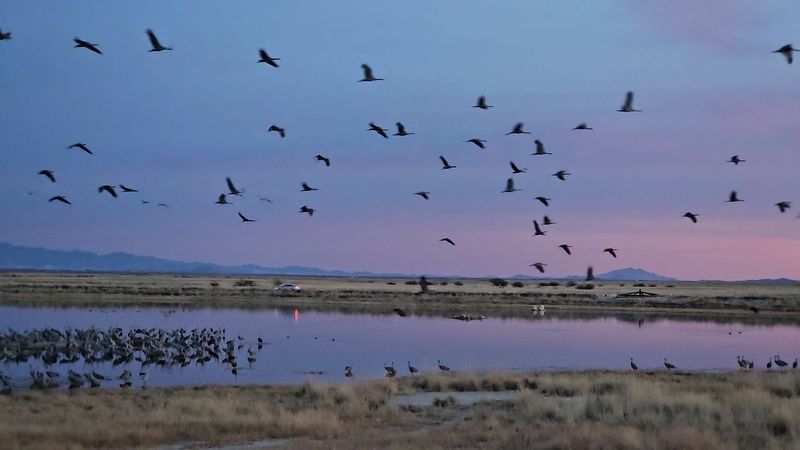
Here is a delightful twist most first-timers never expect: the shimmering lakes that draw all these birds are fed by recycled water. What could have been simple wastewater instead becomes a lifeline for thousands of feathered travelers each season.
Visitors have praised the good use of recycled water, and it is easy to see why the idea works so well. In a dry corner of the desert, this steady supply keeps the shallow lakes filled during the crucial winter months when the cranes and ducks arrive.
The water level does shift with the seasons and the rain. Some travelers show up in summer to find much less water and mostly a birding-in-winter kind of place, while others arrive after a good rain and marvel at how pretty and full the lakes look.
That changing character is part of the charm. When conditions line up, folks who pass through on their way west call it a must-visit, returning year after year to check whether the water is high and the birds have settled in for another remarkable stay.
The Sulphur Springs Valley Migration Story
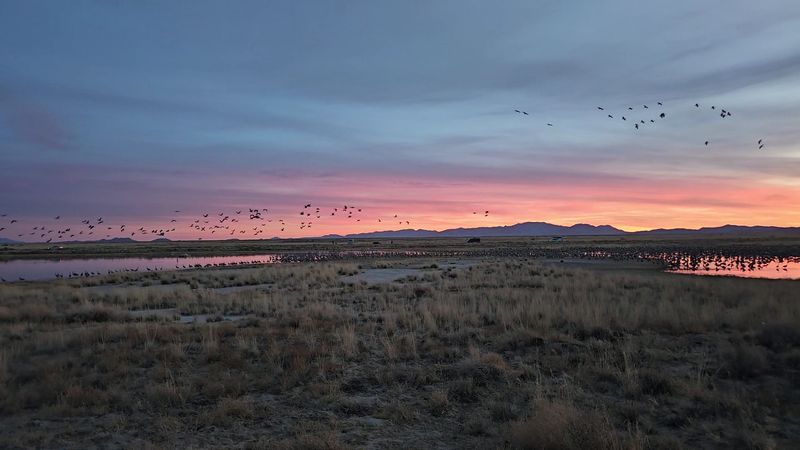
Long before anyone built lakes here, this valley was already a highway in the sky. Every autumn, Sandhill Cranes travel enormous distances, some journeying from as far north as Siberia, to spend the cold months in southeastern Arizona.
The wider Sulphur Springs Valley acts as their winter home from late September until mid-March. Farmlands scattered across the region provide the food that keeps tens of thousands of birds fed and thriving through their stay.
Cochise Lake fits neatly into that big picture. The birds spend daytime hours feeding out in the surrounding fields, then return to open water where they feel safe from disturbances during the night.
One traveler who camped nearby in March counted thousands of Sandhill Cranes flying in each day around late morning and lifting off again in the early evening. That daily rhythm has repeated for generations, tying this small Willcox spot to an ancient pattern that stretches across continents.
Standing here, you become a small witness to one of nature’s oldest commutes, played out against a backdrop of desert grass and distant mountains.
The Bugling Chorus That Rewrites Desert Silence
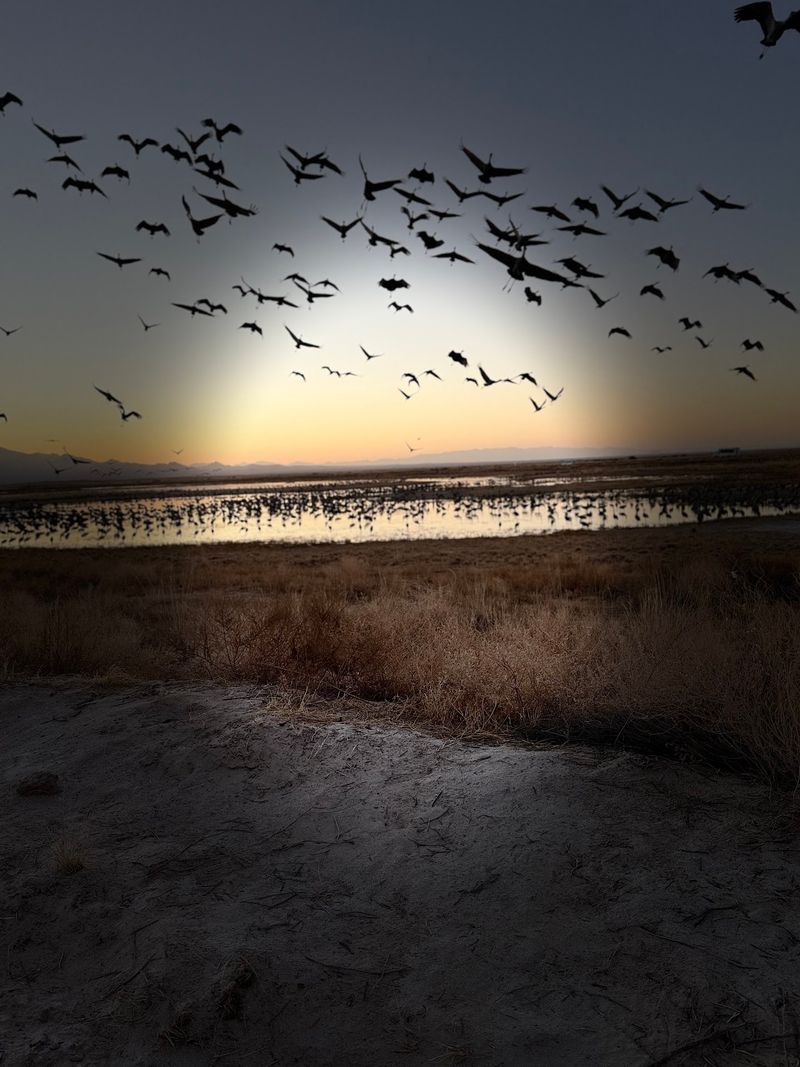
Close your eyes near sunset and the desert quiet suddenly cracks open. A rolling, resonant bugle rises from the horizon, growing louder as ribbons of gray birds sweep toward the water.
The Sandhill Crane’s call is unlike anything else out here. It is not the chirp of a cricket or the yip of a coyote, but an ancient, trumpeting sound that can carry for miles across the open valley.
As wave after wave of cranes arrives, the air fills with an overwhelming rush of overlapping voices. Each bird adds to the tapestry, calling to reinforce bonds and announce its place within the enormous flock.
That is the moment the whole experience earns its reputation. Travelers who visit specifically for the cranes describe how thrilling it feels to hear that chorus swell as the light fades.
The sound genuinely changes how you perceive the desert at dusk. A time you might expect to be still and hushed becomes an auditory marvel instead, one that stays with you long after you have driven back home and the memory of that bugling still rings in your ears.
The Twilight Fly-In Spectacle
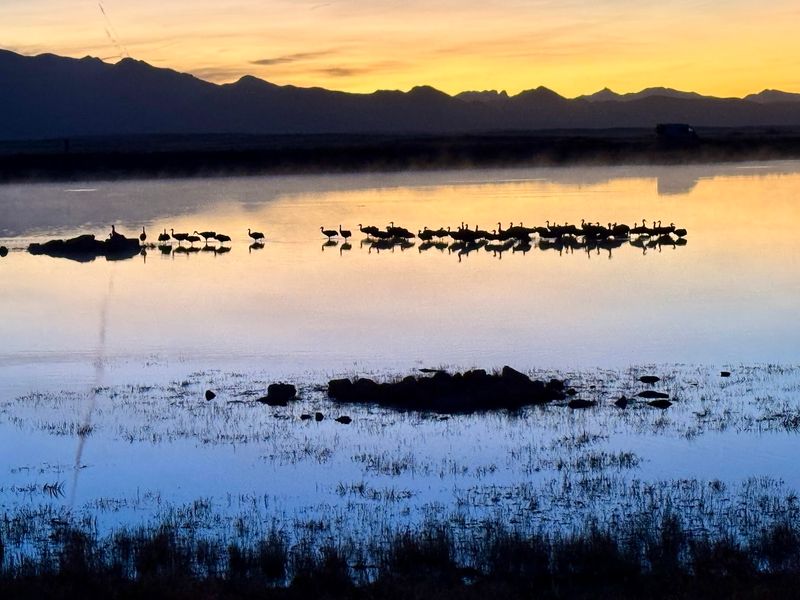
Timing is everything for the main event, and the sweet spot runs from near sunset until full darkness. That short window is when the cranes stream back to the water to roost for the night.
First you spot tiny specks on the horizon. Within moments they multiply into ribbons against the twilight, their five to six-foot wingspans carrying them in with surprising grace.
Watching them settle has been compared to planes landing at a busy airport, except every arrival is wild, organic, and utterly unscripted. Group after group circles, lowers, and touches down onto the shallow lakes.
Campers who have stayed nearby describe the return as a spectacular show, matched only by the equally stunning liftoff at daybreak. Many cranes also come back around midday, giving patient watchers more than one chance to catch the action.
The final rays of sun often paint the clouds in fiery colors just as the biggest waves arrive. That combination of blazing sky and descending flock turns an ordinary evening into something you will find yourself describing to friends for weeks afterward.
Wigeons, Shovelers, And A Cast Of Waterfowl
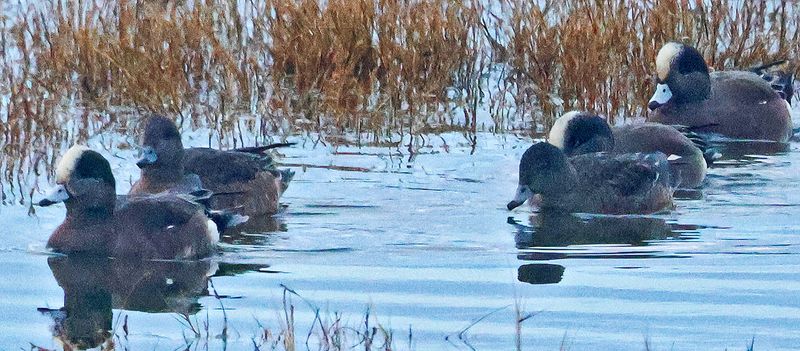
Cranes may headline the show, but they are far from the only performers on this stage. One visitor arrived expecting Sandhills and instead found the lake ruled by American wigeons, scads of them, drifting in the last forty minutes before sunset.
The way that crowd moved stuck with them. The wigeons streamed steadily off the water and onto land for the evening, marching along as if following some unseen conductor.
Mixed into the scene were shovelers paddling about, plus other small critters going about their evening business. A harrier even cruised overhead, adding a bit of drama to the calm surface below.
Across the seasons, the lakes host geese, ducks, and shorebirds alongside the famous cranes. Birders love that variety, and the site earns steady praise as a genuine birding destination well beyond the crane spectacle.
That mix means even a quiet visit rarely feels empty. Show up with binoculars and a little patience, and the water almost always offers a supporting cast worth watching, whether or not the Sandhills happen to be in town that day.
The Playful Dance Of The Cranes
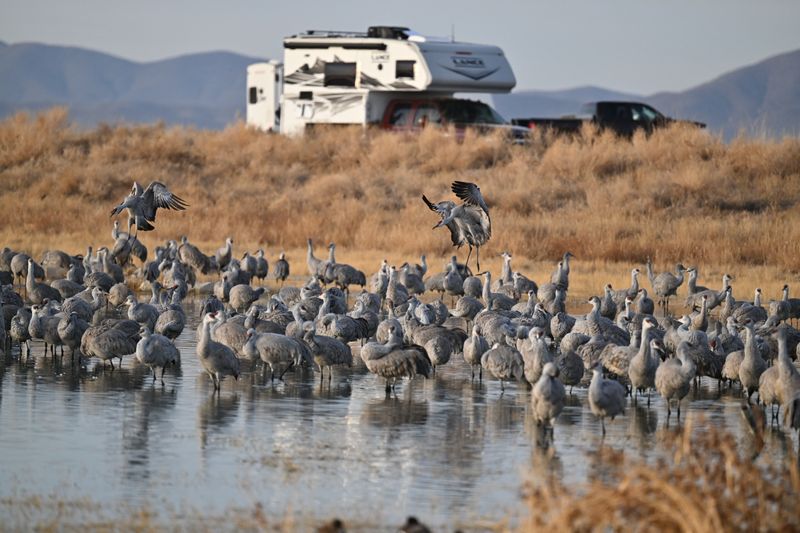
For a bird this dignified, the Sandhill Crane hides a surprisingly goofy side. Watch long enough and you might catch a spontaneous burst of what can only be called dancing.
The routine is a joy to see. Cranes stretch their wings wide, bow their heads, leap straight up into the air, and sometimes fling bits of vegetation around just for the fun of it.
People often link this behavior to courtship, and it certainly plays a role there. Yet the dancing can ripple through the flock at any time, spreading from one bird to the next like a contagious mood.
Up close you can also spot the details that make these gray-feathered marvels so striking. A brilliant red patch caps each forehead, adding a splash of color to their elegant frames.
Photographers treasure moments like these, and many call the area a true paradise for capturing wildlife. Catching a leaping, wing-flapping crane mid-dance is the kind of shot that rewards anyone willing to stand quietly and wait for the flock to break into its unpredictable, exuberant celebration.
A Photographer’s Wide-Open Paradise
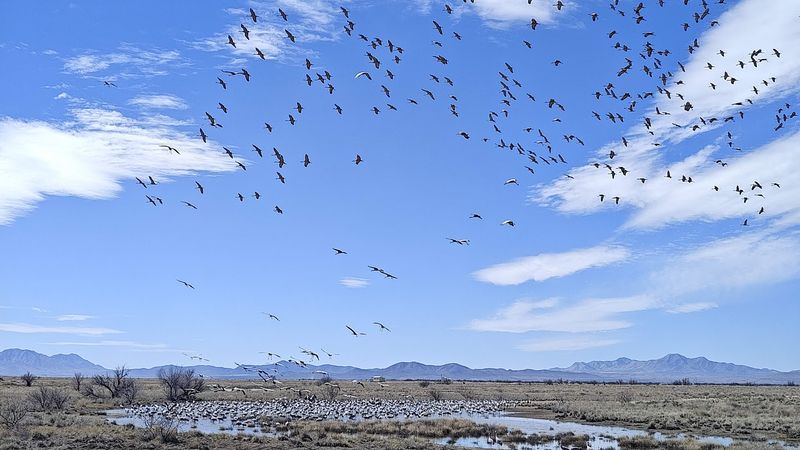
Grab your camera, because this simple stretch of water has quietly become a favorite among people who chase light and wings. Visitors flat-out call it a photographer’s paradise, and the reasons stack up fast.
Wide-open skies mean nothing blocks your view of the horizon. When the sun sinks low, the whole scene glows, and birds crossing that colored sky practically frame their own portraits.
The lack of crowds and fences helps too. You can set up along the road, work at your own pace, and let the evening unfold without jostling for a spot.
Even on gentler days, the reflections make the effort worthwhile. One traveler who caught the lakes right after a rain described how pretty the water looked, calling it a fine place to stop and take a picture before moving on.
Between the cranes, the waterfowl, and that soft desert light, the compositions almost make themselves. Serious shooters and casual phone photographers alike walk away with images that capture both the vastness of the valley and the delicate motion of thousands of birds in flight.
Birding Made Easy, Even From Your Car
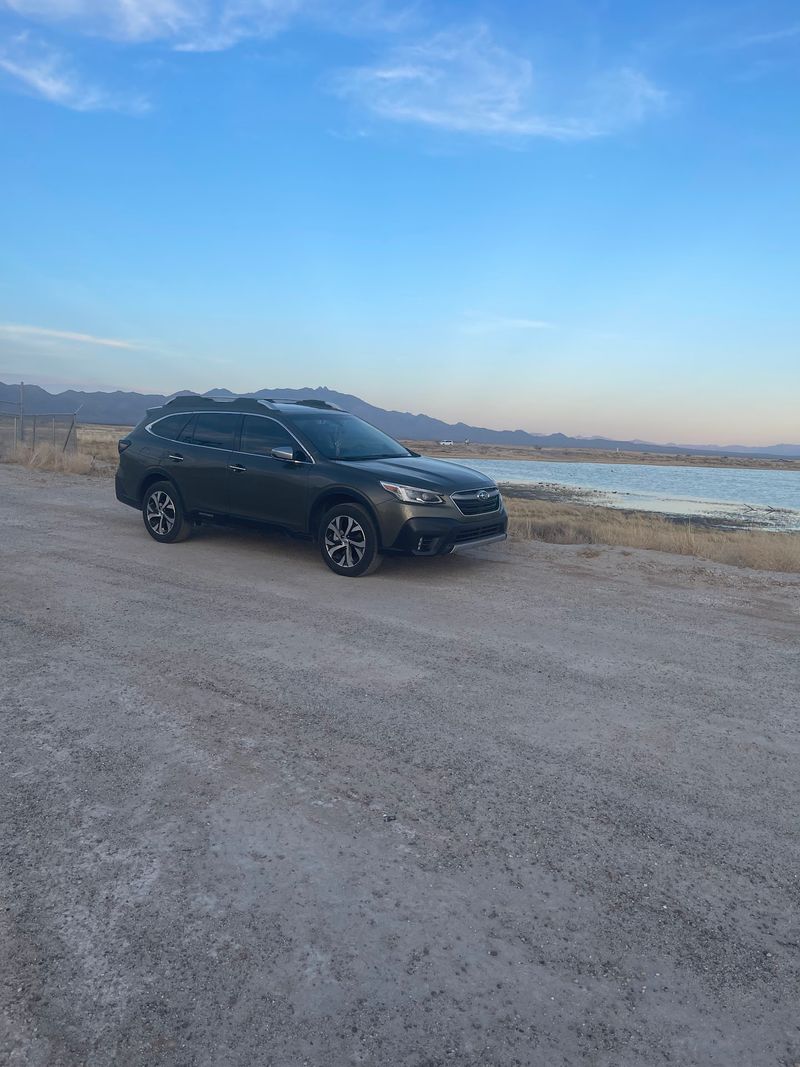
Not everyone wants to lace up boots for a long trek, and this spot happily accommodates. One of its best-loved features is how you can bird right from the car.
Roll along the road bordering the lakes and the shorebirds, ducks, and cranes appear at close range. Visitors repeatedly note the easy access, calling it welcoming for anyone regardless of mobility or experience.
That convenience makes it a favorite quick stop for travelers passing through. Some folks pull over simply to eat lunch by the water, then find themselves lingering far longer than planned once the birds start moving.
The comfort of car-based viewing also suits the cranes’ cautious nature. They prefer open expanses where they can spot disturbances, so staying near your vehicle keeps you from spooking the flock while still enjoying a front-row seat.
Whether you are a lifelong birder chasing a new sighting or a curious newcomer who has never held binoculars, the low barrier here is a gift. Show up, park, and watch.
Few nature experiences this rewarding ask so little effort in return for so much wonder.
Boondocking Under Wide Desert Skies
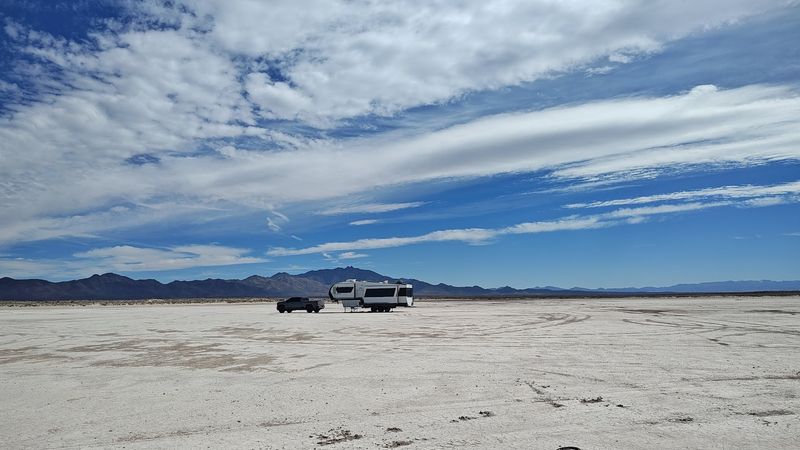
Travelers hauling an RV have their own reason to love this place. The dry lakebed on the south side offers roomy, easygoing boondocking that even big rigs can handle without a fuss.
Space is the headline draw. Campers describe parking along the road anywhere near the lake, settling in for a night or several, and enjoying wide-open room that never feels cramped.
The reward for staying overnight is unbeatable. Waking to the daybreak liftoff of thousands of cranes, then catching their return and the sunset show, means you never miss a moment of the daily rhythm.
Dispersed camping is available, and some mention a 14-day limit for setting up. Just remember there are no facilities here, so arrive prepared and self-contained.
The setting stays refreshingly quiet, which suits both the wildlife and the folks who come to appreciate it. One camper called it a peaceful night parked just feet from hundreds of majestic birds.
For anyone chasing a low-cost, high-wonder overnight, few desert pull-offs deliver a wake-up call quite this magical.
Seasons That Change Everything
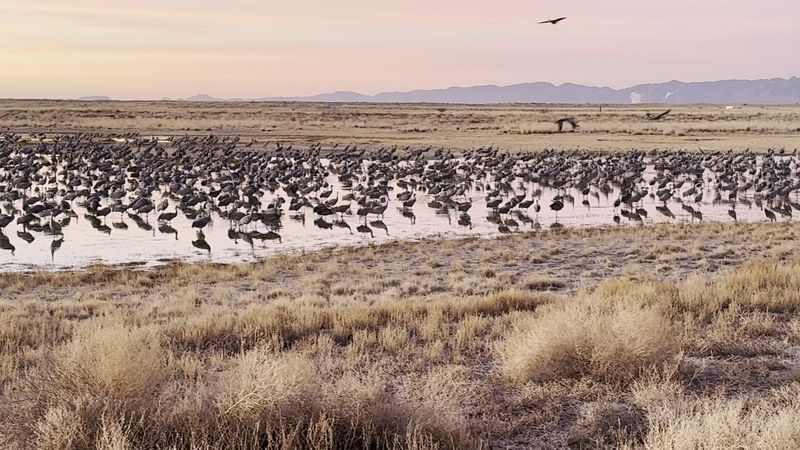
Choosing when to visit matters more here than at almost any spot in the region. The lakes and their crowds transform dramatically across the calendar.
Winter is the golden ticket. From late September through mid-March, the Sandhill Cranes fill the valley, the recycled water keeps the lakes healthy, and birders arrive to enjoy the cool desert air and steady action.
Summer tells a different tale. Travelers who show up in the hot months often find much less water and call it more of a winter birding place, since the star birds have long since headed north.
Rain can flip the script too. One visitor was pleasantly surprised to see the lakes full and pretty after a storm, while returning fans have raved about years when the water ran high and the whole area looked its best.
For Arizona locals, the mild winter desert makes this an easy cool-season day trip when the high country is too cold. Plan around the cranes, aim for those chilly months, and you set yourself up for the fullest, most rewarding version of the whole experience.
Getting There And What To Expect
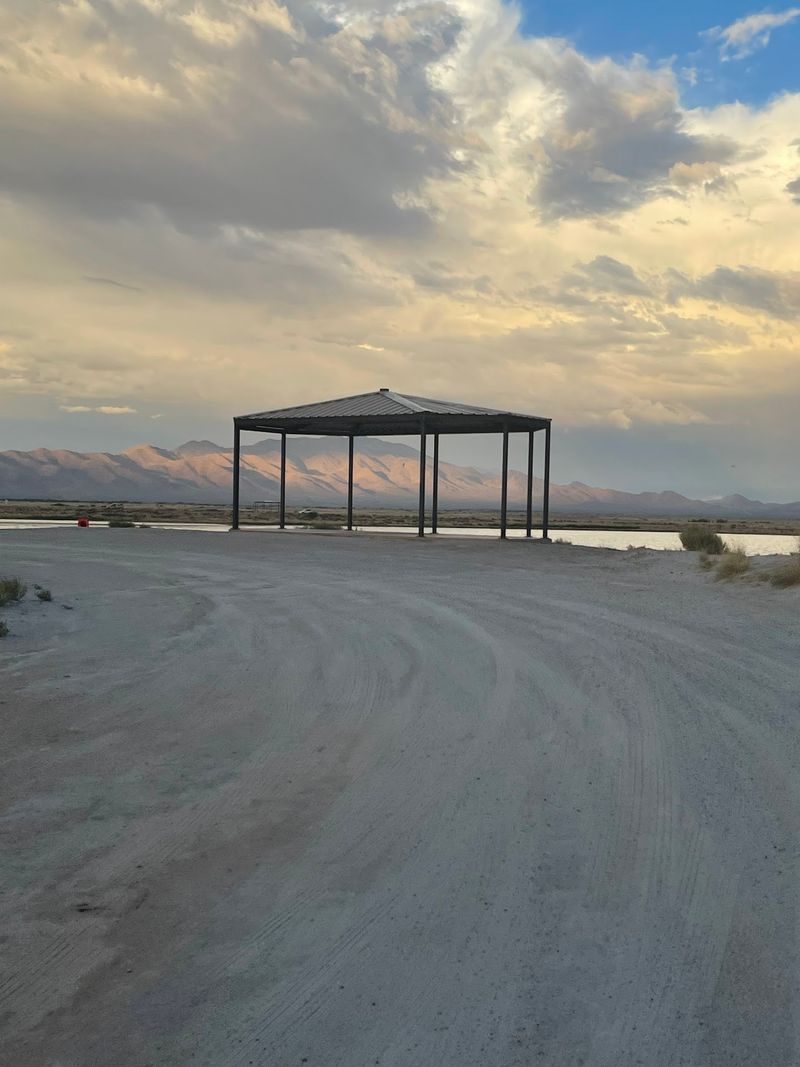
Finding the place is refreshingly simple. It sits at 1296 S Rex Allen Jr Dr in Willcox, an easy detour for anyone traveling through southeastern Arizona along the interstate corridor.
Access earns constant praise. Travelers describe pulling right up along the road, noting it works for any rig and requires no rough driving or long walks to reach the best viewing.
Come prepared, because this is a bare-bones nature spot. There are no facilities on site, so bring water, snacks, and anything else you need for a comfortable visit.
Timing your arrival pays off. Aim to be in place from near sunset until dark for the roosting fly-in, or catch the daybreak liftoff and the midday return if you are staying nearby.
The location also makes a handy base for exploring further. One camper noted it sits about 45 minutes from Chiricahua National Monument, making it a natural pairing for a bigger adventure.
Pack binoculars, a camera, and a little patience. With admission free and the setup this straightforward, the only real planning is choosing the right winter evening to go.
Why This Simple Spot Stays With You
Strip away the crowds, the entrance fees, and the polished tourist trappings, and you are left with something rarer: a genuine encounter with the wild. That honesty is exactly what makes this place worth the drive.
Visitors keep circling back to the same feelings. They call it simple but beautiful, peaceful, and a must-visit stop they return to every time they head west through the valley.
The magic lands hardest when the cranes are present. As one traveler happily put it, if the Sandhills are there, it is simply so cool, and that spark of wonder is easy to catch.
Even on quieter days, the wide skies, the reflective lakes, and the ever-changing cast of waterfowl reward anyone who lingers. There is comfort in a spot that asks so little yet gives so generously.
For Arizona residents dreaming of low-cost adventures with big payoffs, few finds fit better. A tank of gas, a free evening, and a willingness to stand quietly in the dusk buy you a memory of thousands of wings and voices reshaping the desert night.