
10 Timeless Towns In Arizona Where The Wild West Still Lives In 2026
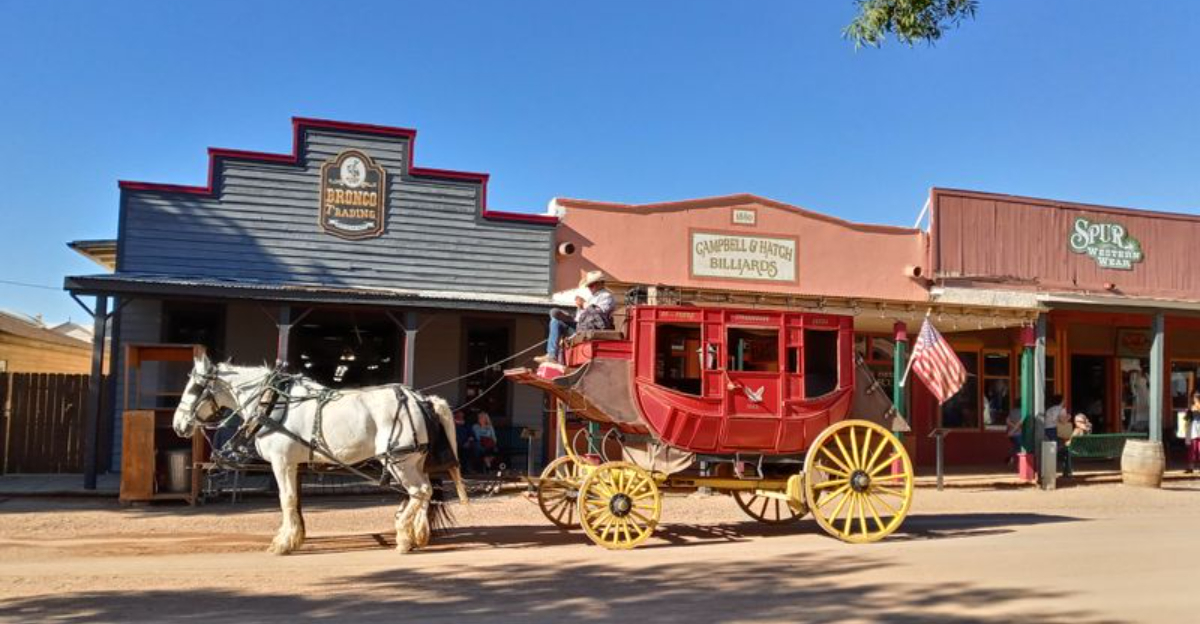
Arizona keeps more of its Old West soul alive than most states, and I’m not talking about theme parks or Hollywood sets.
Real towns across the state still wear their frontier history in plain sight, with streets that remember the sound of horse hooves, buildings that survived boom-and-bust mining cycles, and locals who wouldn’t dream of trading cowboy boots for sneakers.
Walking through these places feels less like a history lesson and more like stepping into a time warp where saloon doors still swing, Route 66 neon still glows, and the desert air carries stories older than your grandparents.
I’ve spent years chasing down the best-preserved Wild West spots in Arizona, and these ten towns deliver that authentic frontier atmosphere without trying too hard or polishing away the rough edges that make them special.
1. Tombstone, Arizona
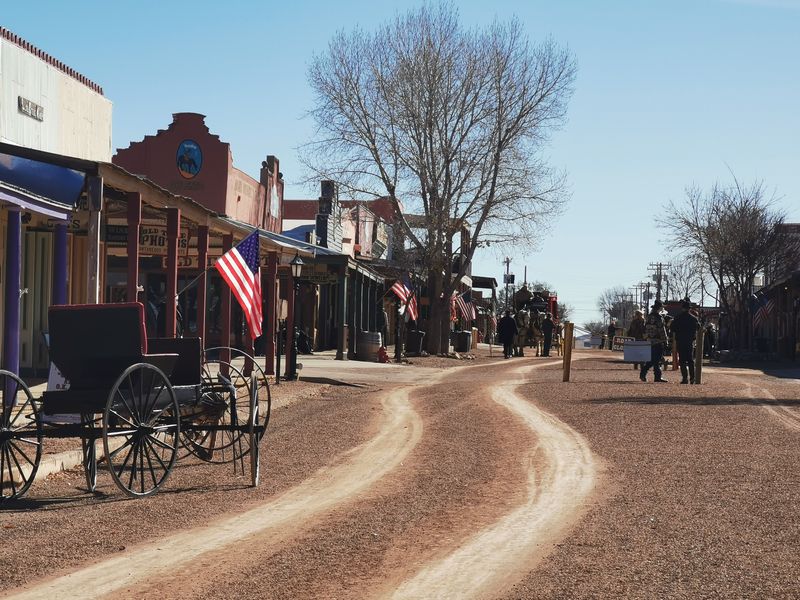
Stepping onto Allen Street in Tombstone feels like walking straight into an 1880s photograph, except the dust on your boots is real and the afternoon sun is hotter than any movie set could fake.
Tombstone sits in Cochise County, about 70 miles southeast of Tucson, and this town has never let go of its gunfight-and-silver-rush roots.
The O.K. Corral still stands where Wyatt Earp and Doc Holliday made frontier history, and daily reenactments keep that October 26, 1881 showdown fresh in everyone’s mind.
Walking the wooden boardwalks, I pass buildings that actually housed miners, gamblers, and lawmen back when Tombstone was too tough to die.
The Bird Cage Theatre, with its original velvet curtains and bullet holes, tells stories that guidebooks barely scratch the surface of.
Shops sell everything from vintage cowboy gear to handmade leather goods, and the whole town commits to the Old West vibe without feeling like a cartoon version of history.
Every corner whispers tales of silver strikes, shootouts, and the kind of rough-and-tumble life that built the American West one dusty street at a time.
2. Bisbee, Arizona
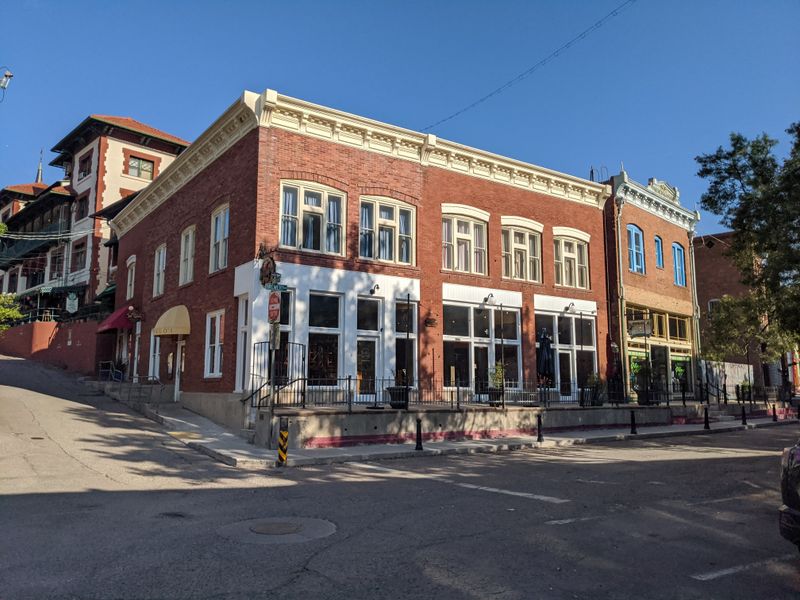
Bisbee clings to the Mule Mountains like it grew straight out of the copper-rich rock, and every steep street tells you this town earned its place through sweat, dynamite, and sheer stubbornness.
Located in southeastern Arizona near the Mexican border, Bisbee was once the richest mining camp in the world, pulling billions of dollars worth of copper, gold, and silver from the earth.
The town’s brick storefronts, narrow staircases, and tilted streets create a maze that feels more European mining village than typical Arizona desert town.
I’ve climbed those staircases dozens of times, always finding new murals, quirky galleries, or century-old buildings that somehow survived boom, bust, and everything between.
The Copper Queen Hotel still operates in its original 1902 building, and the whole downtown district maintains that lived-in mining-town character that newer developments can never replicate.
Artists and history buffs have claimed Bisbee as their own, but the old-timers and mining heritage remain the town’s backbone.
Every visit reminds me that Bisbee refuses to be anything other than authentically itself, rough edges and all.
3. Jerome, Arizona
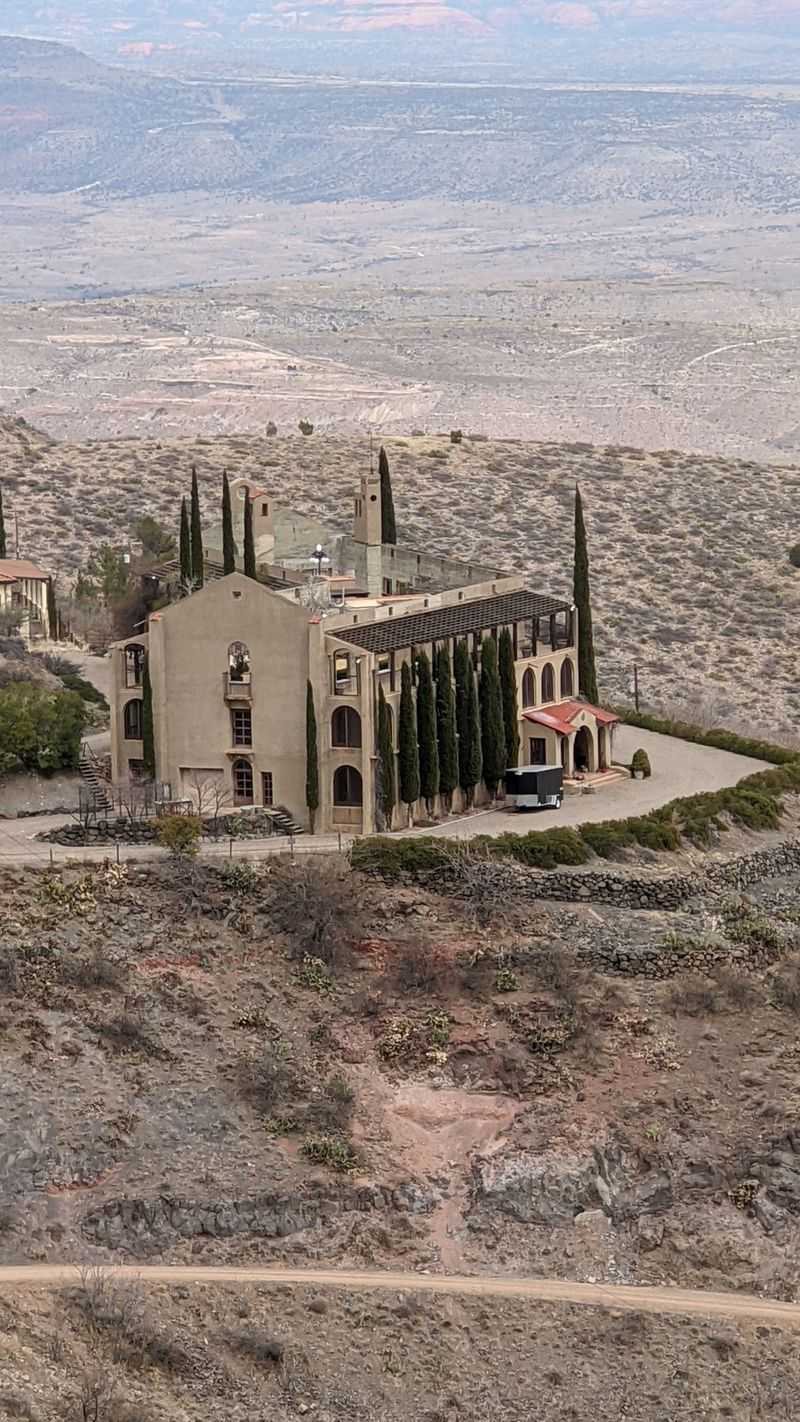
Perched impossibly on Cleopatra Hill at 5,000 feet elevation, Jerome looks like gravity forgot to claim it during the town’s copper mining heyday.
This former ghost town, about 100 miles north of Phoenix in the Verde Valley, once housed 15,000 miners and earned the nickname “Wickedest Town in the West” for reasons your history teacher probably skipped.
The drive up Highway 89A is half the experience, with switchbacks that make your stomach flip and views that stretch across the entire valley.
Buildings lean at odd angles because the mountain itself shifted from decades of underground blasting, giving Jerome a slightly tipsy appearance that adds to its character.
I’ve wandered through art galleries housed in former brothels, shops occupying old miner supply stores, and restaurants where the foundation is literally carved into the mountainside.
The Jerome State Historic Park preserves the Douglas Mansion and mining equipment that explain how this town pulled millions of tons of copper from beneath its streets.
Every sunset paints the valley below in colors that make the steep climb worthwhile, and the town’s refusal to smooth out its rough mining past keeps Jerome feeling genuinely wild.
4. Prescott, Arizona
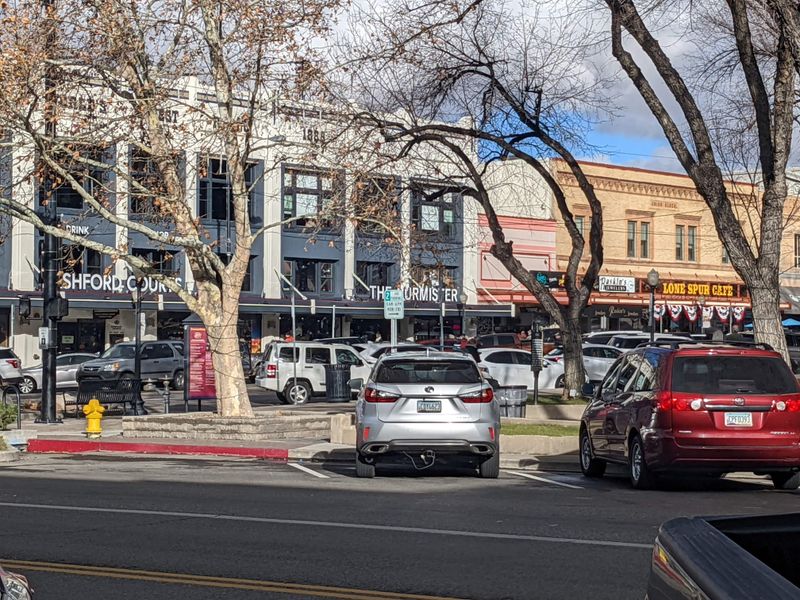
Prescott’s courthouse square anchors a downtown that never forgot its cowboy roots, even as the town grew into a proper city of 45,000 residents.
Sitting in the ponderosa pine country of central Arizona at 5,400 feet, Prescott served as Arizona’s first territorial capital and still carries that frontier-government dignity.
Whiskey Row once lined the square with dozens of saloons, and while most burned in 1900, the rebuilt versions maintain that Old West saloon atmosphere without the sawdust floors.
I’ve spent countless afternoons walking the square’s tree-shaded paths, watching locals in working cowboy gear mix with tourists trying on hat after hat in the Western outfitters.
The annual Prescott Frontier Days rodeo, running since 1888, claims the title of world’s oldest rodeo and brings authentic ranch culture straight into town every summer.
Historic buildings house modern businesses, but the architecture keeps Prescott looking like a place where Wyatt Earp actually tended bar, because he did.
The combination of real ranching culture, preserved Western architecture, and mountain-town atmosphere makes Prescott feel less like a tourist destination and more like a working piece of Old West history that simply kept going.
5. Wickenburg, Arizona
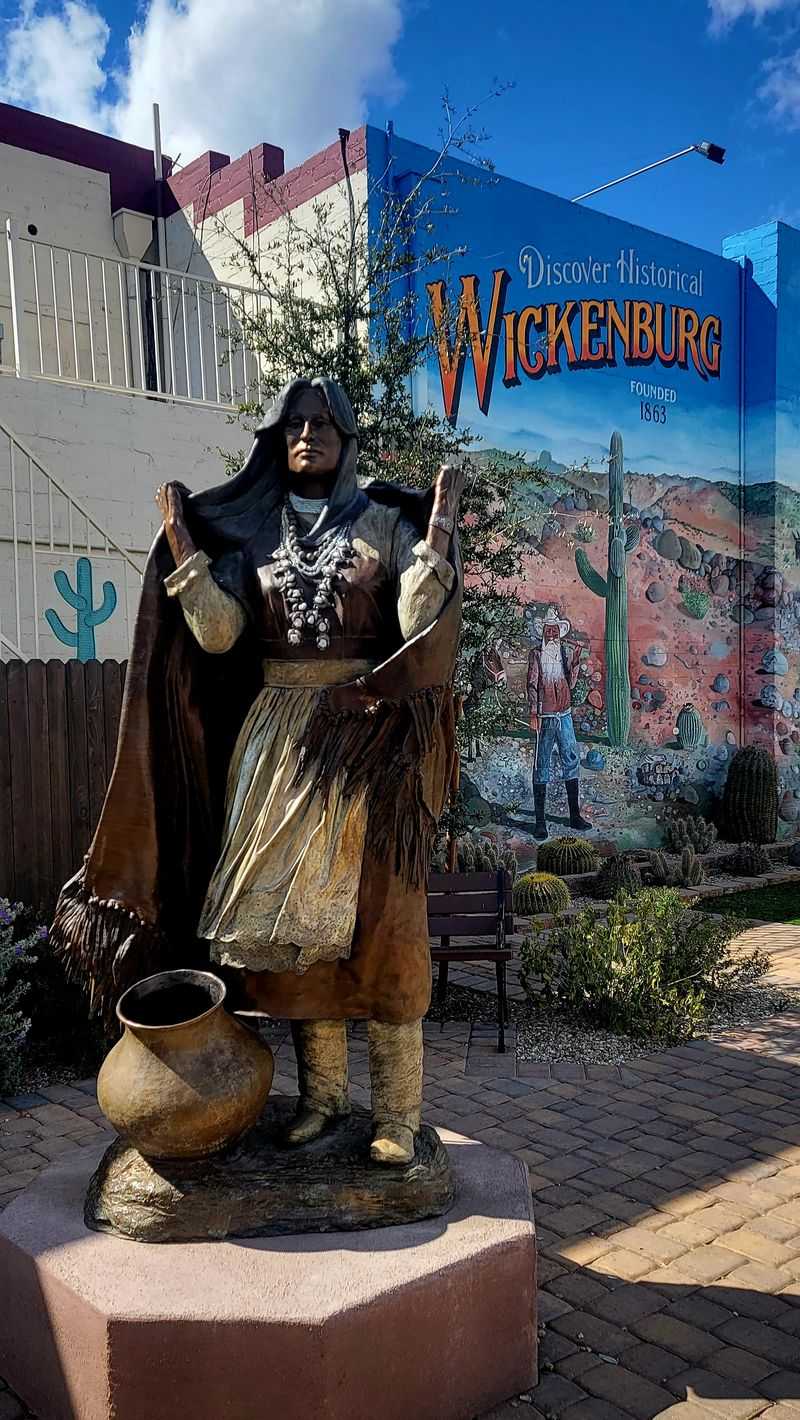
Ranch country spreads in every direction around Wickenburg, and this town about 50 miles northwest of Phoenix never pretends to be anything other than cowboy central.
Founded in 1863 when Henry Wickenburg discovered gold in the nearby Vulture Mountains, the town quickly became a supply center for miners and ranchers working the harsh Sonoran Desert.
Frontier Street still features hitching posts, Western wear shops that cater to working cowboys rather than costume seekers, and enough genuine ranch culture to fill a dozen country songs.
I’ve watched real ranchers in dusty trucks pull up to the feed store, their boots showing miles of hard work that no movie prop could fake.
The Desert Caballeros Western Museum houses one of the finest collections of Western art and frontier artifacts in Arizona, telling stories of the region’s mining, ranching, and Native American heritage.
Guest ranches surround Wickenburg, offering visitors a taste of authentic cowboy life that’s been refined over generations rather than invented for tourists.
Every February, Gold Rush Days brings the whole town together for rodeos, shootout reenactments, and celebrations that feel like Wickenburg showing off what it does best, being unapologetically Western.
6. Oatman, Arizona
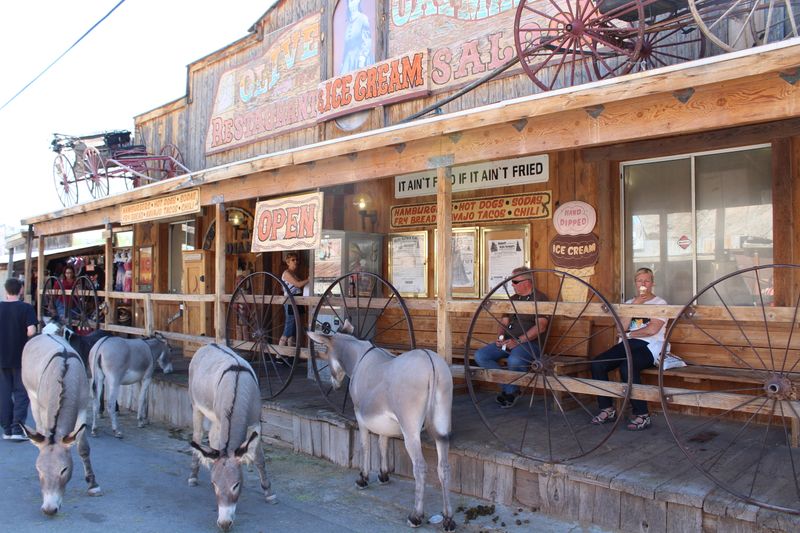
Wild burros wander Oatman’s main street like they own the place, because in a way, they do, and this former gold mining camp embraces its deliberately untamed atmosphere.
Tucked in the Black Mountains along old Route 66 between Kingman and the California border, Oatman nearly became a ghost town after the mines closed and the new highway bypassed it in 1952.
Instead of fading away, Oatman leaned hard into its Wild West character, with staged gunfights, saloon-style storefronts, and those famous burros descended from miners’ pack animals.
I’ve fed carrots to burros right in the middle of the street, dodged fake shootouts between “outlaws” and “lawmen,” and explored shops selling everything from turquoise jewelry to vintage mining equipment.
The Oatman Hotel, where Clark Gable and Carole Lombard honeymooned in 1939, still operates with its original creaky floors and dollar bills papering every inch of the walls and ceiling.
The drive into Oatman via Route 66 twists through mountain switchbacks that make modern GPS systems nervous but reward you with views worth every white-knuckle turn.
Oatman knows exactly what it is, a slightly dusty, thoroughly entertaining time capsule that chose character over comfort and never looked back.
7. Williams, Arizona
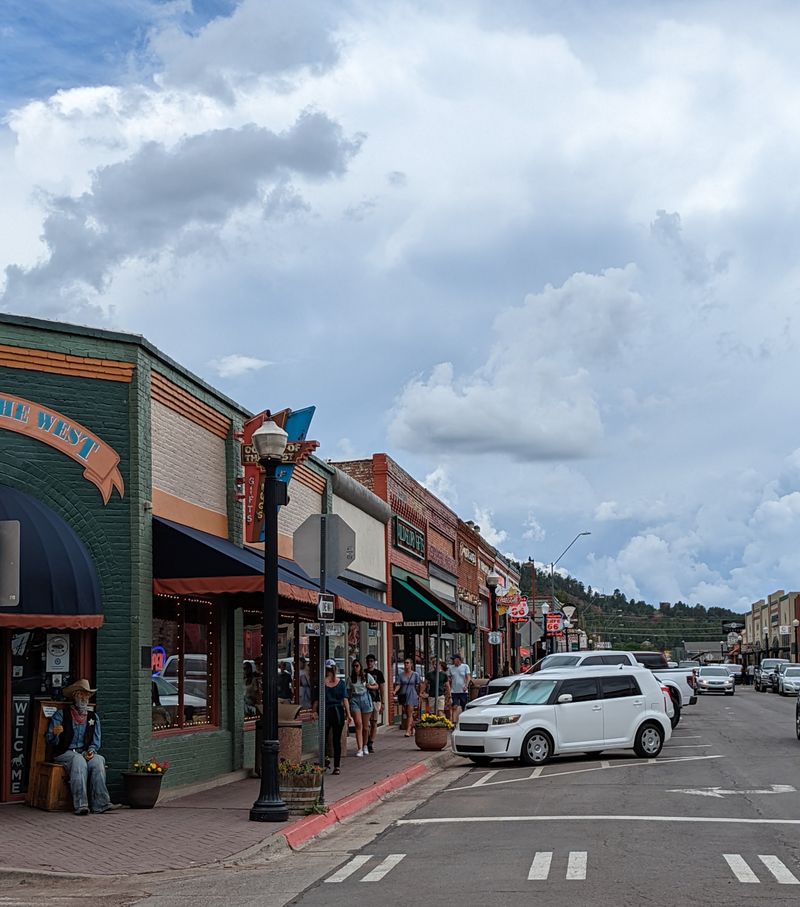
Williams wears its Route 66 heritage and frontier past with equal pride, creating a main street that feels like equal parts Old West town and classic American road trip stop.
Located in northern Arizona at 6,770 feet elevation, about 60 miles south of the Grand Canyon, Williams served as a key railroad and highway town connecting travelers to one of the world’s natural wonders.
The historic downtown along Route 66 mixes Western storefronts with mid-century neon signs, creating a timeline you can walk in about fifteen minutes but could explore for hours.
I’ve ridden the Grand Canyon Railway from Williams to the canyon’s South Rim, experiencing the same journey tourists took in 1901 when the railroad first opened that route.
The train depot, vintage locomotives, and period-dressed staff keep that early 1900s atmosphere alive without feeling forced or fake.
Main Street shops sell Western gear alongside Route 66 memorabilia, and the whole town understands it sits at the intersection of two major chapters in American history.
Pine forests surround Williams, giving it a mountain-town feel that sets it apart from Arizona’s desert communities and makes summer visits particularly pleasant when lower elevations bake under triple-digit heat.
8. Winslow, Arizona
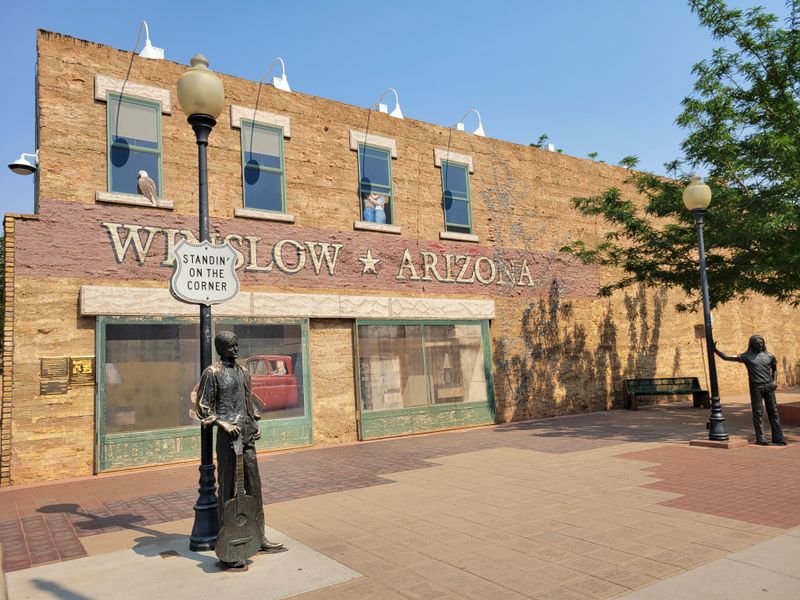
Standing on a corner in Winslow, Arizona, is more than just an Eagles lyric, it’s a genuine slice of Route 66 and railroad history that this northern Arizona town has preserved beautifully.
Winslow sits along Interstate 40 about 60 miles east of Flagstaff, where the Santa Fe Railway and Route 66 once made it a crucial stop for travelers crossing the Southwest.
The restored La Posada Hotel, designed by Mary Colter and originally built in 1930, stands as one of the last great railroad hotels in America, with Spanish Colonial Revival architecture that takes your breath away.
I’ve explored Winslow’s historic district, finding murals celebrating its railroad past, vintage storefronts that remember when this was a booming railway town, and that famous corner with the flatbed Ford statue.
The Old Trails Museum tells stories of Route 66 travelers, railroad workers, and the Native American heritage that predates both by centuries.
Unlike flashier tourist towns, Winslow maintains a lived-in, working-town atmosphere where history is part of daily life rather than a costume the town puts on for visitors.
Every building along Second Street seems to hold memories of travelers, railroad crews, and the golden age of American road travel that Winslow witnessed firsthand.
9. Kingman, Arizona
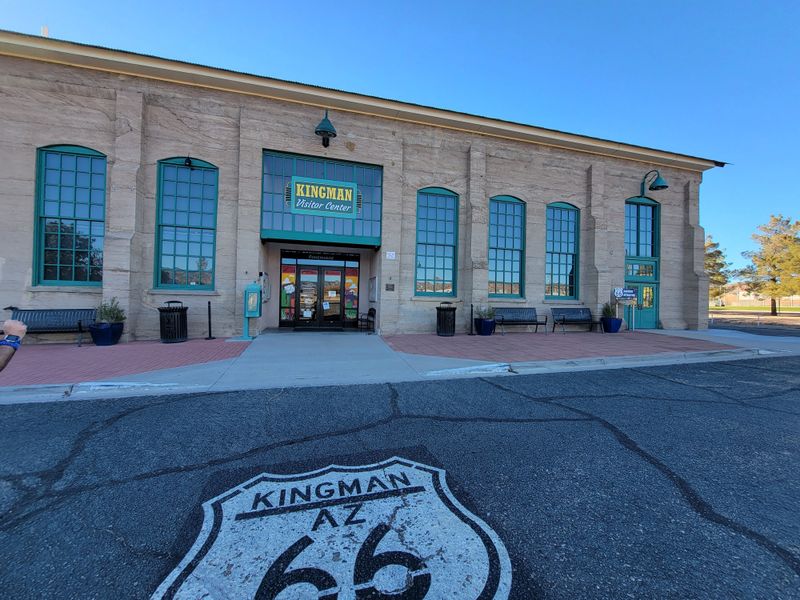
Kingman guards a crucial stretch of Route 66 through northwestern Arizona, and this desert town of 30,000 never lost its connection to the old road that made it famous.
Sitting at 3,300 feet elevation where the Mojave Desert meets the Hualapai Mountains, Kingman served miners, ranchers, and later, cross-country travelers seeking the California dream.
The historic downtown along Beale Street and Andy Devine Avenue preserves that mid-century Route 66 character, with vintage motels, classic diners, and neon signs that still light up the desert night.
I’ve spent hours in the Route 66 Museum, housed in the old powerhouse building, learning how this highway transformed American travel and how Kingman became one of its most important stops.
The Mohave Museum of History and Arts adds depth to Kingman’s story, covering everything from Native American artifacts to mining equipment to portraits of local celebrities like actor Andy Devine.
Surrounding mountains hold ghost towns and abandoned mines that remind you Kingman’s roots go deeper than Route 66, back to the gold and silver rushes that first put this area on the map.
Modern Kingman balances its historic preservation with practical desert living, creating a town that honors its past while serving as a real community rather than just a tourist stop.
10. Globe, Arizona
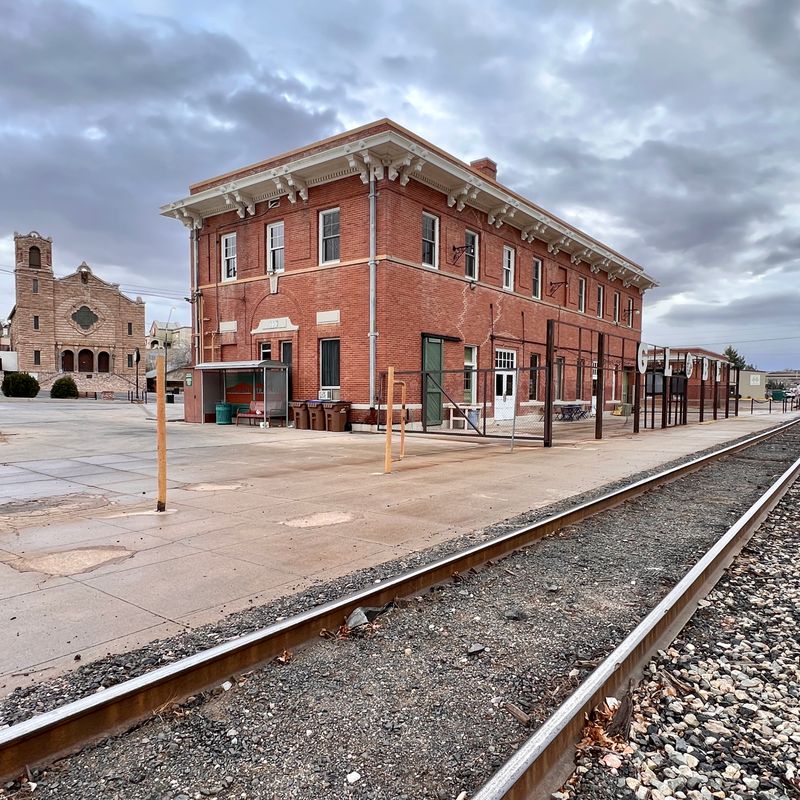
Copper built Globe, and this eastern Arizona mining town never bothered to hide the rough edges that come with pulling millions of tons of ore from the earth.
Located about 90 miles east of Phoenix in the Pinal Mountains, Globe boomed in the 1870s when prospectors discovered some of the richest copper deposits in the Southwest.
Broad Street runs through downtown past brick buildings that housed miners, merchants, and the businesses that kept a frontier mining camp running through boom times and busts.
I’ve walked Globe’s historic district, finding architecture that ranges from simple frontier commercial buildings to more elaborate Victorian structures that show how mining wealth transformed the town.
The Gila County Historical Museum preserves mining equipment, period rooms, and artifacts that tell Globe’s story without sugarcoating the hard reality of mining life.
Unlike tourist-focused mining towns that polished up their past, Globe maintains a working-town atmosphere where history is simply part of the landscape rather than the main attraction.
The surrounding Tonto National Forest and nearby Salt River Canyon offer spectacular scenery, but Globe itself remains the draw for anyone wanting to experience an authentic Arizona mining town that never stopped being itself.