
Towing The Line Through Michigan’s 45th Parallel North
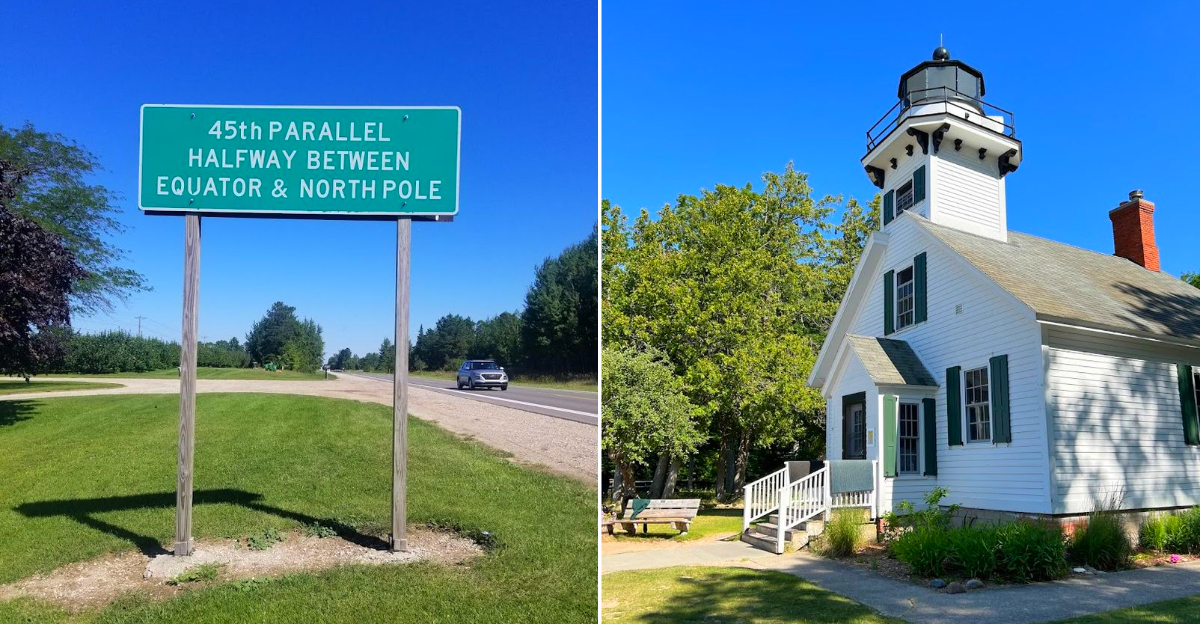
I’ve always loved the idea that Michigan’s “middle” isn’t just a feeling, but a literal, invisible thread stitched right through the mitten.
Following the 45th Parallel North feels like chasing a cartographer’s whisper. It’s a constant reminder that you are standing exactly halfway between the humid Equator and the frozen North Pole.
When you track this line, the landscape shifts in the most poetic ways, you’ll find yourself crossing rolling vineyards one minute and blinking at the silver, metallic light of the “big water” the next.
Michigan’s 45th Parallel road trip offers a unique geographical adventure through Traverse City fields, scenic lighthouses, and iconic Northern Michigan landmarks.
Pack your favorite layers and a healthy dose of patience for those inevitable backroad detours. Stick with me, and I’ll show you exactly where to pull over to stand on the edge of the world’s most interesting “middle ground.”
1. Mission Point Lighthouse, Traverse City
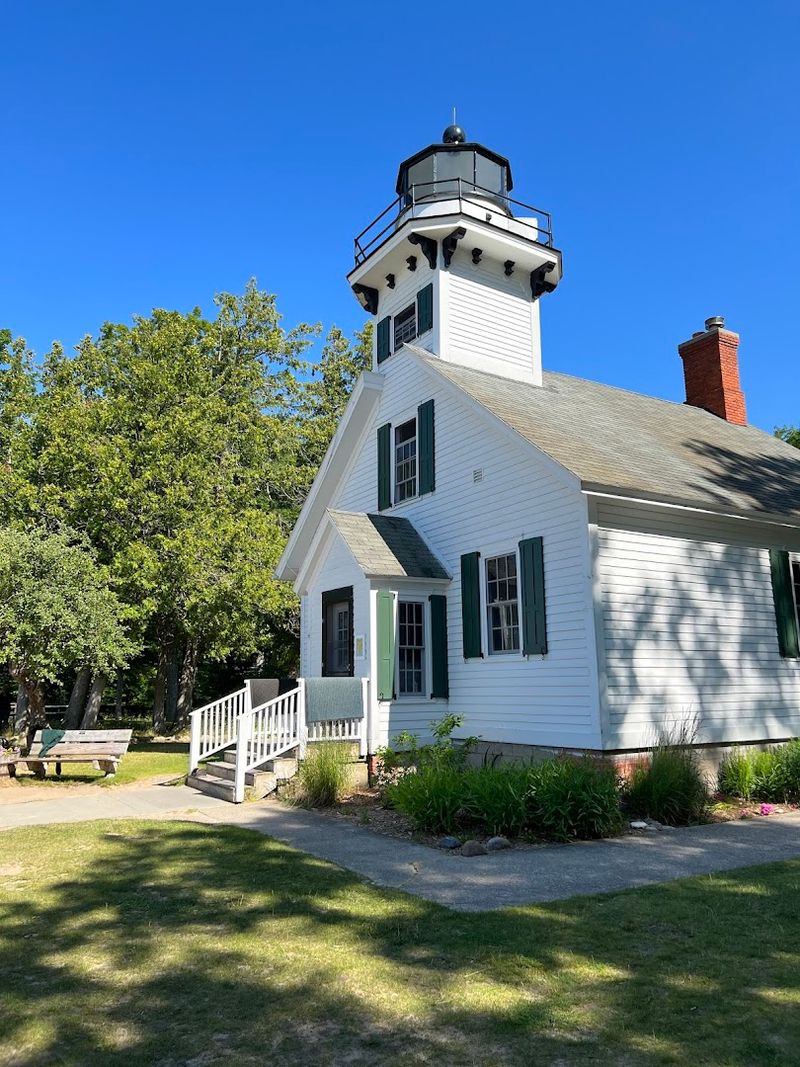
Salt-less wind licks the pines while Old Mission’s white lighthouse pins the horizon to Grand Traverse Bay.
Built in 1870 and decommissioned in 1933, the tower still hosts a tidy museum that feels like a time capsule. If you have the lungs for it, the wooden staircase to the lantern room rewards you with a view that makes the bay look like an endless sheet of blue glass.
Just outside the structure, a humble brown sign marks the 45th Parallel. It serves as a small, silent certificate for making it halfway between the extremes of our planet.
As you walk the grounds, the rhythmic clicking of beach stones underfoot becomes the soundtrack to your visit. If you’re lucky, you might encounter volunteers in period dress who are more than happy to share Keeper Lore and advice on navigating the nearby dunes without disturbing the delicate ecosystem.
Mornings here are particularly unhurried. You’ll see gulls patrolling the shallows with bureaucratic intensity while kayaks slide past like quiet commas on the water.
2. Old Mission Peninsula, Traverse City
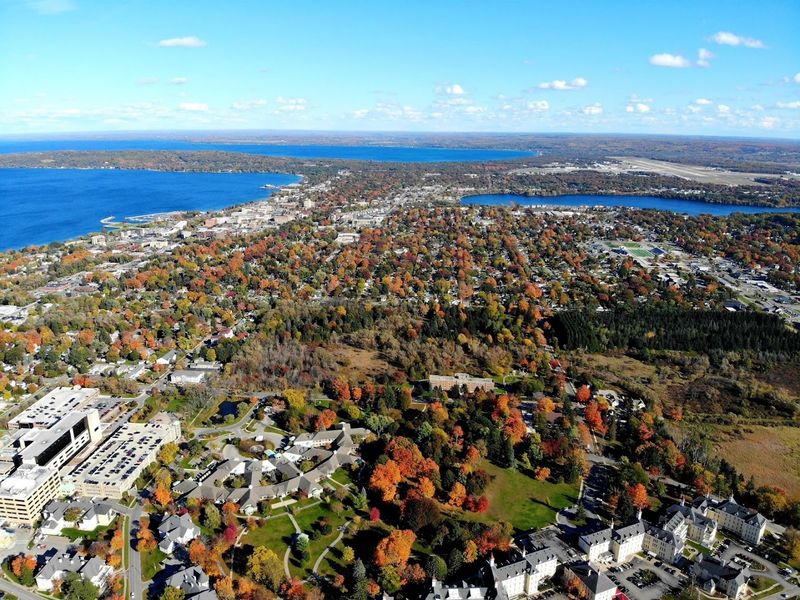
The peninsula unspools like a lush green ribbon between East and West Bay, stitched together with world-class vineyards, cherry orchards, and winding gravel drives. This isn’t a place you drive through so much as experience.
Glacial hills tilt perfectly manicured rows of vines toward the sun, and the tasting rooms of Mari Vineyards or Chateau Chantal lean into lake-effect breezes that soften the brutal heat of July and stretch the golden days of autumn into November.
One of my favorite things about this stretch of road is the prevalence of roadside farm stands. Many still operate on honor boxes, a quiet, beautiful trust that perfectly suits the northern scenery.
I highly recommend timing your drive for the golden hour. This is when the historic barns glow with a soft, cinematic warmth and the water of the bays looks like it was newly minted just for your arrival.
If you visit in June, the air is thick with the scent of cherry blooms, which dust the orchards like a light snow.
By October, the harvest weekends bring a lively energy, filled with the sound of cork pops and the constant clicking of camera shutters capturing the fall foliage.
3. 45th Parallel Marker On M-22, Leelanau Peninsula
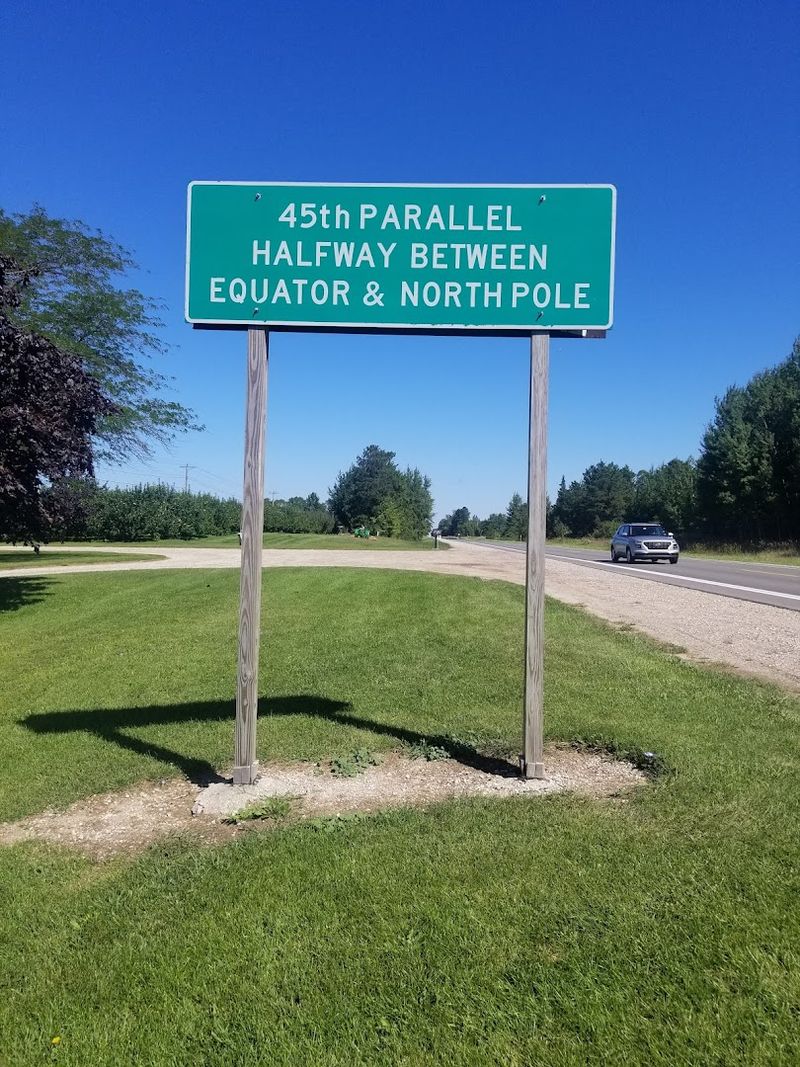
Just north of the charming village of Suttons Bay, the shoulders of the legendary M-22 carry you to a modest green-and-white sign. It’s easy to miss if you aren’t looking for it, but it quietly announces your arrival at the 45th Parallel.
It’s a popular spot for travelers to pull their cars onto the sandy edge of the road to capture a quick photo. Across the asphalt, the waves of West Grand Traverse Bay mumble against the shore, providing a constant maritime hum.
It’s a moment of cosmic perspective delivered via a simple highway marker. Photographers often line up for snapshots here, but the flow of traffic usually resumes its coastal rhythm fairly quickly.
When you pull over, make sure your vehicle is completely off the pavement. The wind on the peninsula can be surprisingly fierce, so watch your car doors when you step out.
Morning light is generally the best for a crisp, clear photo of the sign, while the late afternoon throws long, dramatic shadows across the nearby vineyard fences.
4. Hugh J. Gray Cairn, Elk Rapids
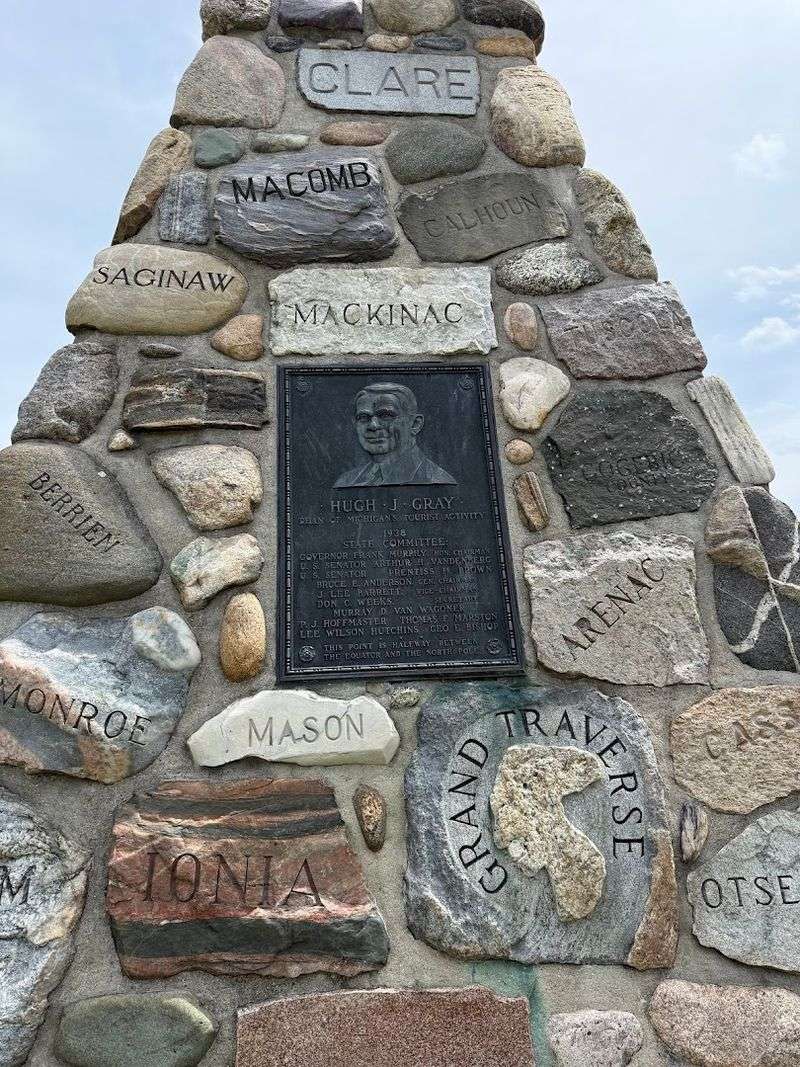
If you head north of Kewadin on the appropriately named Cairn Highway, you’ll encounter an angular stone tower that rises beside the old US-31 like a massive roadside puzzle.
This is the Hugh J. Gray Cairn, and it is one of the more unique monuments in the state.
Built in 1938, the structure is composed of 83 individual rocks, each one representing a different Michigan county. It was erected to honor Hugh J. Gray, a man often called the Dean of Michigan Tourism, and to permanently pin the 45th Parallel in both memory and mortar.
The texture of the cairn is fascinating when viewed up close. Decades of lake light and northern weather have encouraged lichens to freckle the granite and limestone surfaces.
There are plaques on-site that tell the story of the monument’s construction in succinct, old-fashioned prose. Parking is essentially a small pull-off, so you’ll want to be patient and keep a close eye on any children or pets as traffic can slide by in short, fast bursts.
After you’ve read the inscriptions and marveled at the masonry, continue your trek north to find another official 45th Parallel sign along the modern US-31.
5. Traverse City
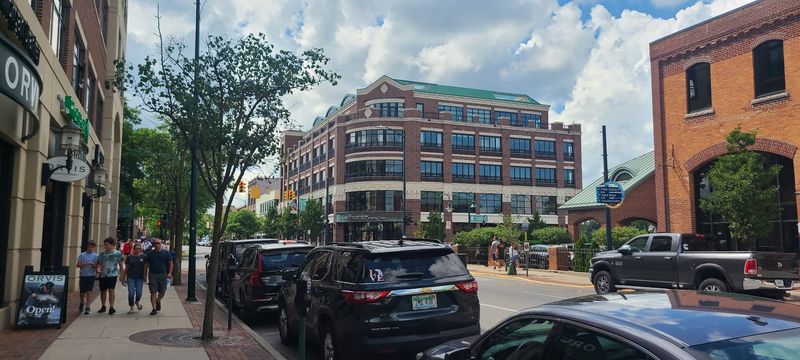
Lake breezes funnel along Front Street, where the glow of Cherry Neon signs and the tall masts in the marina sketch a bright, busy ledger across the bay.
While Traverse City’s actual location near the parallel is sometimes whispered rather than shouted from the rooftops, the line acts as a guiding thread that leads you to the region’s best peninsulas and sandy margins.
The town has a pulse that is both sophisticated and ruggedly outdoorsy.
The local coffee shops start humming early in the morning as cyclists hop onto the TART Trail for their morning commute or a scenic loop around the water.
History is baked into the very bricks here, seen in the old warehouses that have been converted into trendy eateries like The Little Fleet or 7 Monks Taproom.
One of the most striking examples of preservation is the Village at Grand Traverse Commons, a sprawling former asylum campus turned into a vibrant community of shops and apartments.
If you are visiting during the major summer festival weeks, be prepared for significant crowds. It’s wise to book your rooms months in advance and seek out the quieter morning hours for a swim at Bryant Park or Clinch Park.
6. Suttons Bay
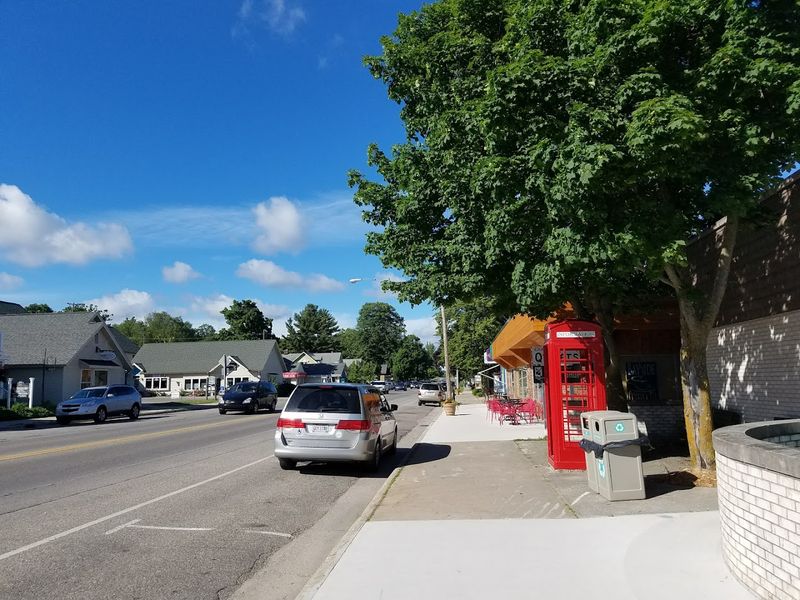
Morning fog sometimes hangs like heavy gauze above the marina here, and as the sun rises, the storefronts along M-22 begin to throw soft light onto the pavement.
Suttons Bay feels delightfully pocket-sized yet surprisingly cosmopolitan.
It is a village framed by vineyards that seem to climb the hills in every direction, and a public beach that acts as a communal living room for the residents.
Since the 45th Parallel markers are just two miles north, it’s the perfect base for a day of exploring.
The local flavor here is varied and authentic. You can find everything from expertly Smoked Fish at local markets to artisan gelato that tastes like a summer afternoon.
The galleries in town are worth an unhurried browse, often featuring artists who capture the unique up north light. Keep an eye out for the Inland Seas Education Association’s schooner, seeing it sail from the harbor is a beautiful nod to the long history of Great Lakes seamanship.
The best way to see the village is to park your car once and walk the entire grid. Don’t be afraid to duck into the alleys to find hidden murals or quiet coffee nooks.
7. Charlevoix
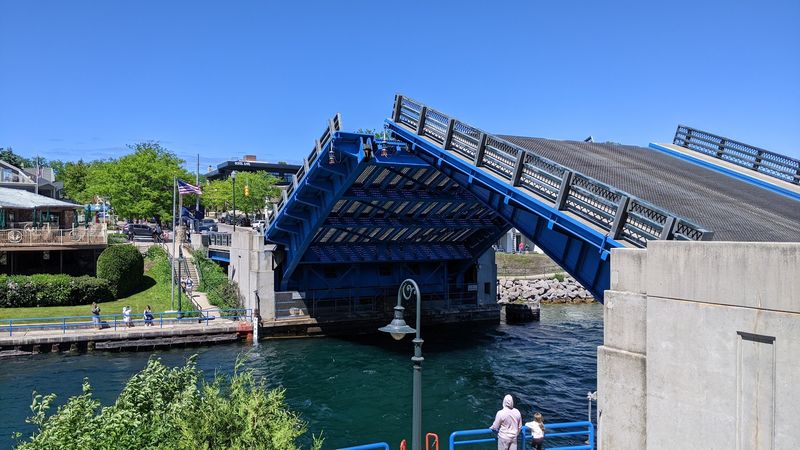
Stone waves seem to curl directly into the houses here, a legacy of the visionary architect Earl Young. His famous Mushroom Houses are scattered throughout the town like storybook cairns made of boulders and cedar shakes.
As you walk through the residential streets, Lake Michigan presses against the narrow channel where the South Pier Light stands as a bright red punctuation mark against the blue.
The town’s rhythm is dictated by the drawbridge, which rises on a strict schedule to allow majestic sailboats and sleek yachts to pass between Round Lake and Lake Michigan.
The 45th Parallel brushes right against this region’s latitude, creating a mental line that threads through the local beaches and pine-shaded parks.
Preservation efforts have been incredibly successful here, keeping Young’s unique boulder-craft intact for new generations to marvel at.
When you visit, expect a fair amount of foot traffic near Bridge Street, especially during the peak of summer.
If you find the downtown area a bit too busy, head west to Fisherman’s Island State Park, which offers a rugged, natural refuge from the crowds.
8. Petoskey
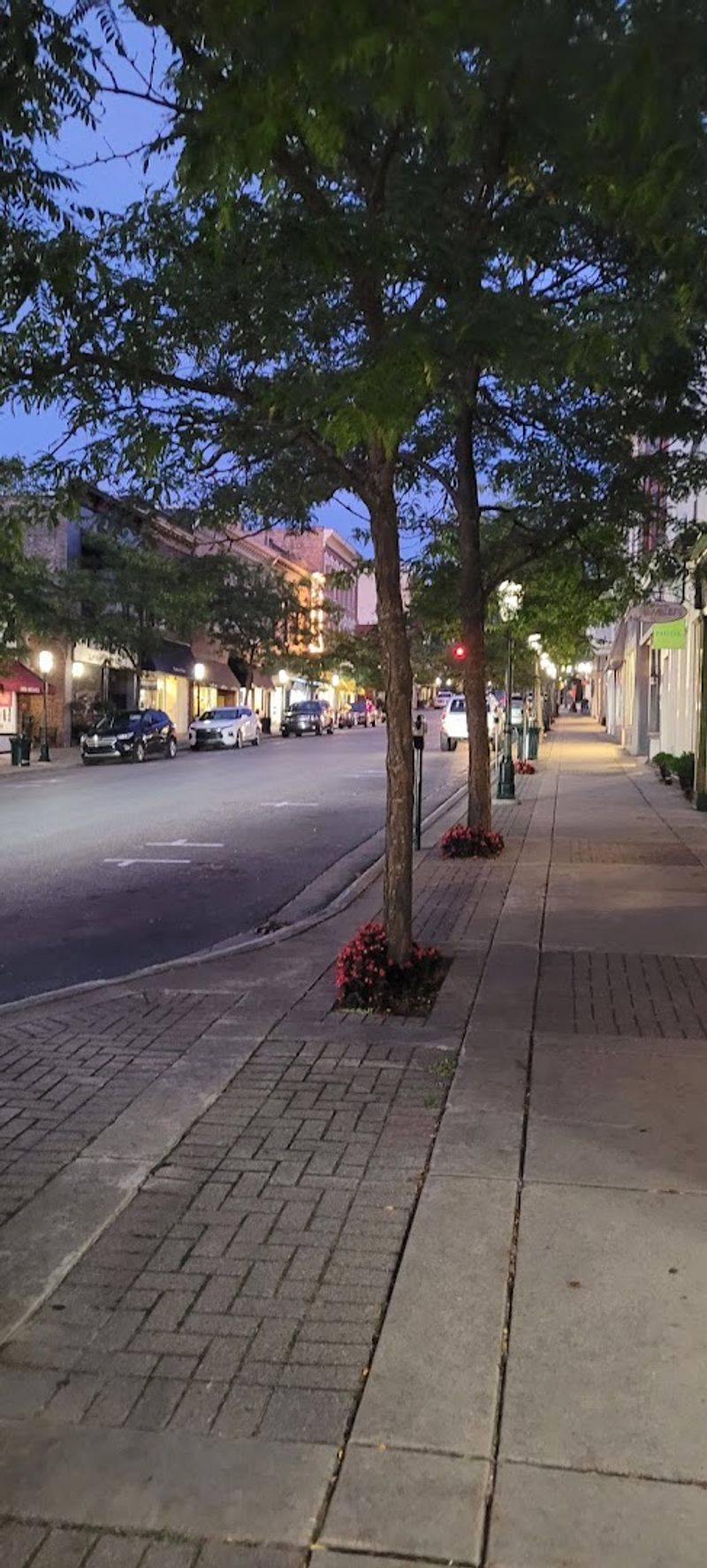
The sidewalks of the Gaslight District glow with a warm, inviting light at dusk, and the namesake Petoskey Stones wink from the beach racks of local shops like a secret code. There is a literary weight to the air here, too.
Ernest Hemingway’s early summers spent in the nearby woods and waters lace the town’s mythos.
However, the modern daily rhythm is more about retail chatter, the sparkle of Little Traverse Bay, and the long trains of strollers headed toward the nearest ice cream shop.
I always recommend bringing a small spray bottle of water when you go stoning. Wetting the dry rocks on the shore is the only way to reveal the intricate hexagonal patterns of the fossils.
You can hunt for your own treasures at Magnus Park or the more expansive Petoskey State Park. The town’s history is preserved in the tidy storefronts and the excellent museum housed in the old railroad depot.
If you have the time, the legendary Tunnel of Trees on M-119 beckons from just north of town. It is one of the most scenic drives in the country, but it requires your full attention.
9. Boyne City
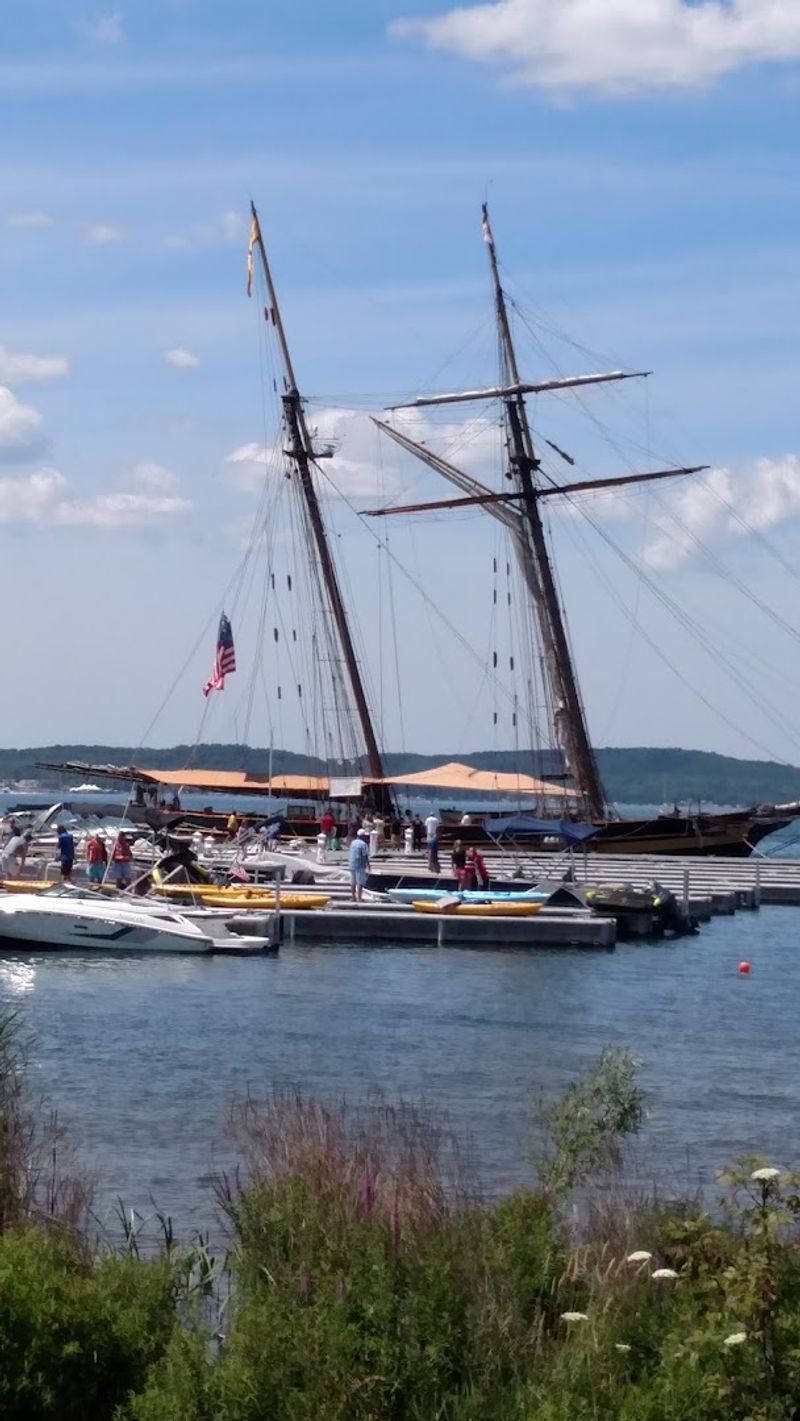
Evenings on Lake Charlevoix are a masterclass in tranquility, painting the passing boats into sharp silhouettes against a flaming sunset.
Boyne City has a posture that is both practical and friendly, serving as a year-round base camp for those who split their time between the ski hills and the shoreline.
The downtown blocks are perfect for slow laps, particularly during the summer Stroll the Streets events when musicians and performers pop up on every corner of Water and Lake Streets. I love looking at the historic photographs displayed in many shop windows.
They trace the town’s origins back to the lumber days and the railroad spurs that once dominated the waterfront.
Whether you are spending your day at Boyne Mountain, hiking the trails at Young State Park, or enjoying a hearty breakfast at a local diner, the town feels lived-in and authentic. You can usually find free parking along the side streets, but be sure to check for event-related closures on Friday evenings.
In the spring, the local smelt runs bring out the storytellers, while the autumn farmers markets are a bounty of local apples and cider.
10. East Jordan
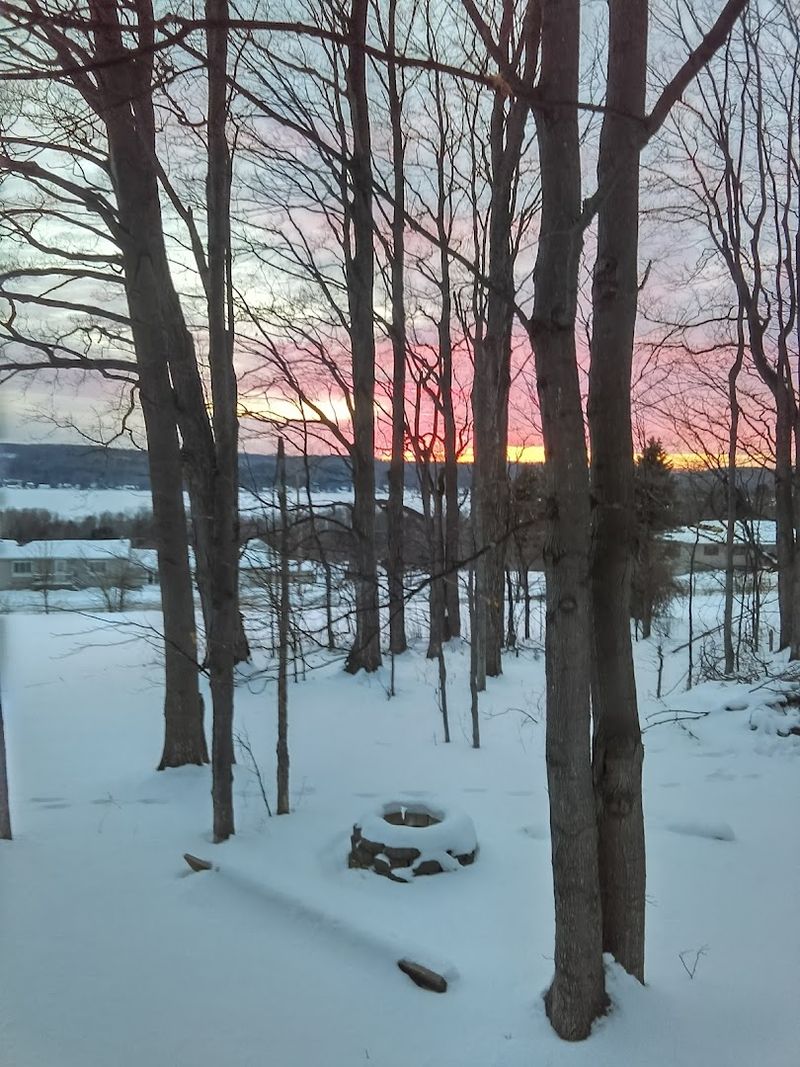
Evenings on Lake Charlevoix are a masterclass in tranquility, painting the passing boats into sharp silhouettes against a flaming sunset.
Boyne City has a posture that is both practical and friendly, serving as a year-round base camp for those who split their time between the ski hills and the shoreline.
The 45th Parallel sits nearby, cutting across the rolling farm country that surrounds the town.
The downtown blocks are perfect for slow laps, particularly during the summer Stroll the Streets events when musicians and performers pop up on every corner of Water and Lake Streets. I love looking at the historic photographs displayed in many shop windows.
They trace the town’s origins back to the lumber days and the railroad spurs that once dominated the waterfront.
Whether you are spending your day at Boyne Mountain, hiking the trails at Young State Park, or enjoying a hearty breakfast at a local diner, the town feels lived-in and authentic.
You can usually find free parking along the side streets, but be sure to check for event-related closures on Friday evenings.