
14 Traditional Desserts People Don’t Make These Days
Traditional desserts have a way of sneaking into family stories and fading from modern menus.
Once beloved treats filled with nostalgia now feel like forgotten treasures, hiding behind trendy sweets and Instagram-worthy creations.
These classic recipes carry rich history and flavors that remind us of simpler times.
Rediscovering these desserts is like unlocking a delicious time capsule where every bite tells a story worth remembering and savoring all over again.
1. Syllabub
Whipped cream with a boozy kick! This frothy 16th-century English treat combined cream, sugar, and wine or sherry into a cloud-like consistency that would make modern mousse jealous.
Traditionally served in special glasses, syllabub was both a drink and a dessert.
The alcohol caused the cream to curdle slightly, creating distinct layers that were considered quite elegant at fancy gatherings.
2. Tipsy Cake
Booze-soaked sponge cake that would make your grandma blush! Before trifle became mainstream, Tipsy Cake reigned supreme at Victorian dinner parties.
Stale cake cubes were revived with sherry, brandy or rum, then layered with custard and jam. The alcohol preserved the dessert for days, though it rarely lasted that long once guests caught wind of this spirited creation.
3. Charlotte Russe
Fancy finger food before cupcakes stole the spotlight! Created by French chef Marie-Antoine Carême for Czar Alexander I, this elegant dessert featured delicate ladyfingers forming a crown around Bavarian cream.
Once a staple at high-society gatherings, Charlotte Russe required steady hands and patience.
The dessert was typically served in special molds or paper cups that were peeled away to reveal the beautiful pattern of cookies surrounding the creamy center.
4. Blancmange
Before Jell-O packets took over, this milky white pudding was the go-to molded dessert! Almond-flavored and set with gelatin, blancmange wobbled its way across medieval European tables for centuries.
Often shaped like castles or animals using elaborate copper molds, this sweet was both entertainment and dessert.
Its subtle flavor and smooth texture made it particularly popular for invalids and children, though modern palates might find it surprisingly delicate.
5. Queen of Puddings
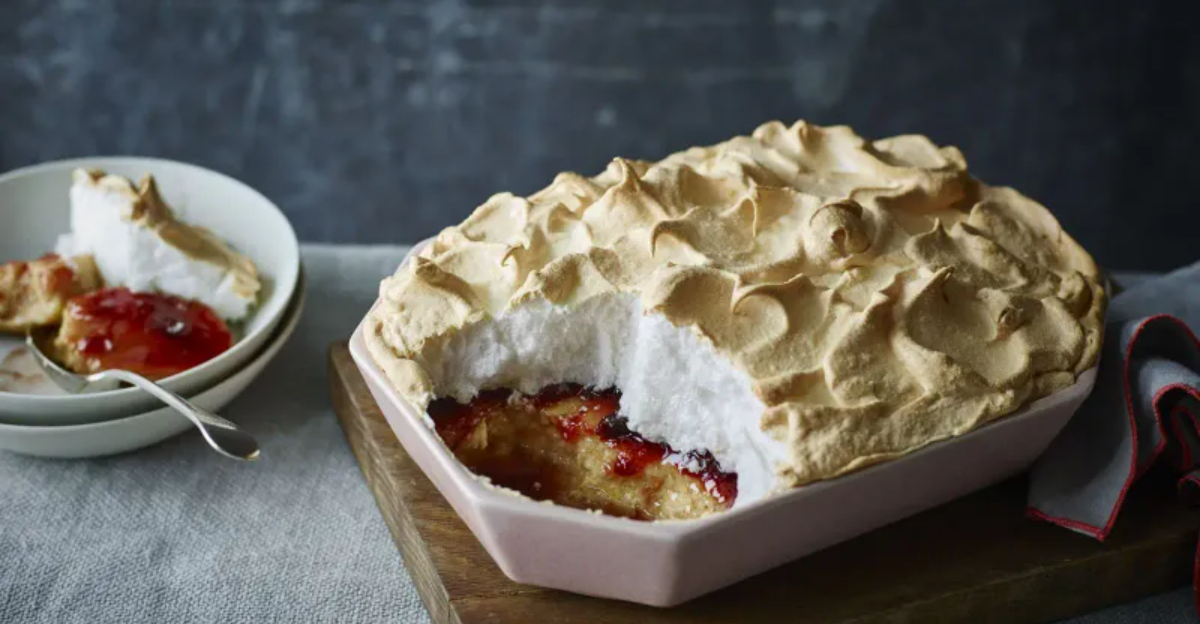
Royal by name and nature! This British classic layers custardy breadcrumbs, tart jam, and a crown of fluffy meringue that would make any monarch swoon.
Dating back to 17th-century England, this dessert transformed humble ingredients into something spectacular.
The contrast between the creamy base, sweet-tart jam middle, and crisp meringue top created a textural wonderland that’s sadly missing from most modern dessert menus.
6. Figgy Pudding
“Now bring us some figgy pudding!” wasn’t just a random Christmas carol lyric. This dense, boozy fruit bomb was the highlight of Victorian holiday feasts, often dramatically set aflame before serving.
Despite its name, traditional recipes rarely contained actual figs. Instead, this pudding featured raisins, currants, and other dried fruits, bound together with suet and breadcrumbs.
Aging the pudding for weeks or even months allowed the flavors to develop into something truly spectacular.
7. Bird’s Nest Pudding
Whole apples nestled in a custardy cradle, this American colonial dessert was both rustic and clever.
Imagine coring apples, filling the centers with butter and sugar, then baking them in a sweet batter until golden.
Farm families loved this dessert because it stretched precious sugar and butter while showcasing fall apples.
The name comes from the appearance – the baked apples peeking out from the puffy batter resembled eggs in a nest.
8. Junket
Milk magic that would baffle modern kids! This simple dessert used rennet (the same enzyme used in cheese-making) to transform sweetened milk into a delicate, trembling custard.
Popular in nurseries and sickrooms, junket was considered gentle on digestion and nourishing for invalids.
The dessert set at room temperature into something between yogurt and panna cotta, often topped with freshly grated nutmeg and served with cream.
9. Shrewsbury Cake
Long before sugar cookies conquered America, these buttery British biscuits reigned supreme! Dating back to Tudor times, these crisp, lightly spiced cookies were the perfect companion to afternoon tea.
Named after the town of Shrewsbury, these treats featured distinctive patterns pricked into the dough with forks before baking.
The original recipes called for rosewater or caraway seeds – flavors that have fallen out of fashion but once defined sophisticated taste.
10. Semolina Pudding
Comfort in a bowl before ice cream took center stage! This warm, creamy pudding made from coarse wheat grains was a staple in British and European households for generations.
Cooked slowly with milk until thick and velvety, then sweetened with sugar and vanilla or cinnamon.
Children of yesteryear would eagerly await the skin that formed on top – some considered it the best part, while others carefully pushed it aside to reach the silky pudding beneath.
11. Arctic Roll
The 1950s frozen dessert that had dinner party guests gasping with delight! This British invention wrapped vanilla ice cream in a spiral of light sponge cake, creating a mesmerizing swirl when sliced.
Created by Dr. Ernest Velden in 1958, Arctic Roll became so popular that by the 1980s, over 40 miles of the dessert were produced each month.
The perfect balance of cold ice cream and soft cake made it an instant classic, though preparing it at home required serious patience and a steady hand.
12. Floating Island
Fluffy meringue islands floating on a sea of custard – dessert doesn’t get more whimsical than this! Also known as Île Flottante in France, this ethereal creation was once the highlight of fancy dinner parties.
Making these delicate poached meringues required a gentle touch and perfect timing.
The contrast between the cloud-like meringue and silky custard created a textural wonderland, often finished with a drizzle of caramel that crackled delightfully when your spoon broke through.
13. Kogel Mogel
Raw egg concoction that would make modern food safety experts faint! This Eastern European treat whipped egg yolks with sugar until thick and creamy – no cooking required.
Often flavored with honey, cocoa, or even vodka for adults, Kogel Mogel was considered both a dessert and a home remedy.
Grandmothers across Poland, Russia, and Jewish communities swore it cured everything from sore throats to broken hearts, serving it warm in special cups.
14. Nesselrode Pudding
Named after a 19th-century Russian diplomat, this luxurious chestnut-based ice cream was the height of Victoriana sophistication!
Count Nesselrode’s chef created this decadent frozen dessert featuring pureed chestnuts, candied fruits, and enough liqueur to raise eyebrows.
Often molded into elaborate shapes and decorated with crystallized violets or gold leaf, this dessert announced that the host spared no expense.
The complex preparation required multiple steps over several days – a far cry from today’s quick desserts.