
Turn A Walk Into A Mini Adventure On 12 Michigan Trails With Wildlife
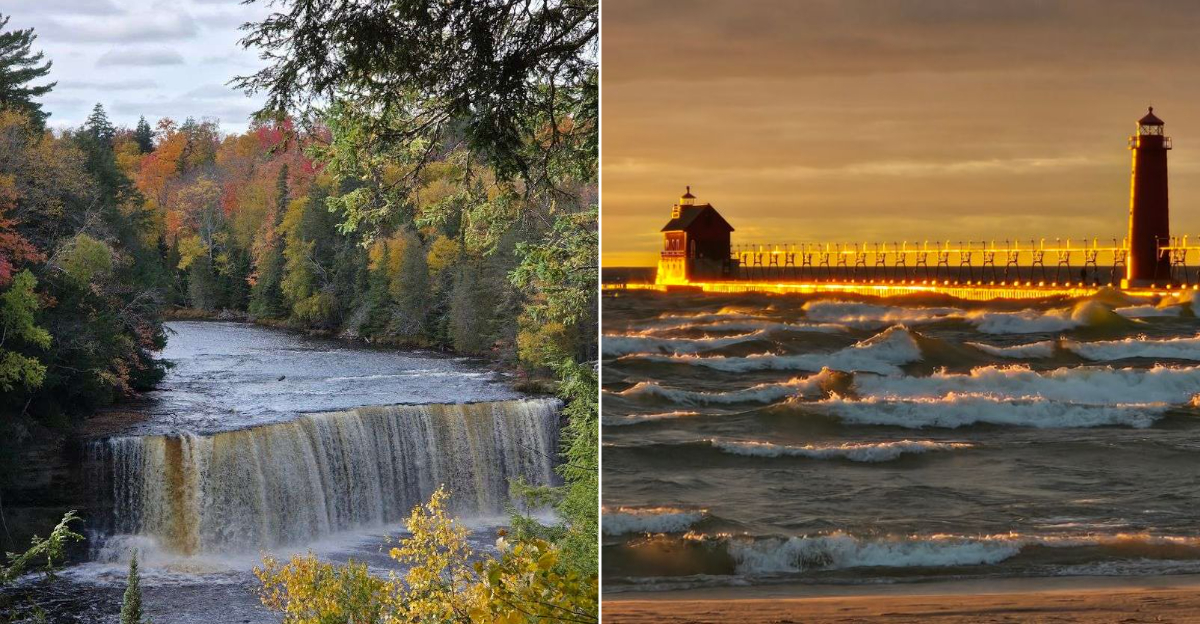
Some walks are just walks. These ones are sneaky little thrill rides disguised as nature strolls.
Mist curls over the Upper Peninsula like it’s in on a secret, Lake Michigan’s sandy edges look like they’ve been photoshopped by Mother Nature herself, and forests that seem to whisper, “Go on…get lost a little.”
Michigan basically took a map, saw endless water and woods, and said, “Challenge accepted.” But it’s not just scenery that steals the show.
It’s the wildlife cameo reel. Picture great blue herons striking zen poses, beavers moonlighting as architects, sandhill cranes sashaying like runway models, and bald eagles judging your sneakers from above.
Each trail is a tiny stage for the weird, wonderful, and wildly unpredictable. So lace up, grab some water, and prepare to trade a casual walk for an epic story you’ll actually want to brag about.
Curiosity required. Fear of getting a little muddy optional.
1. Arcadia Marsh Nature Preserve Boardwalk
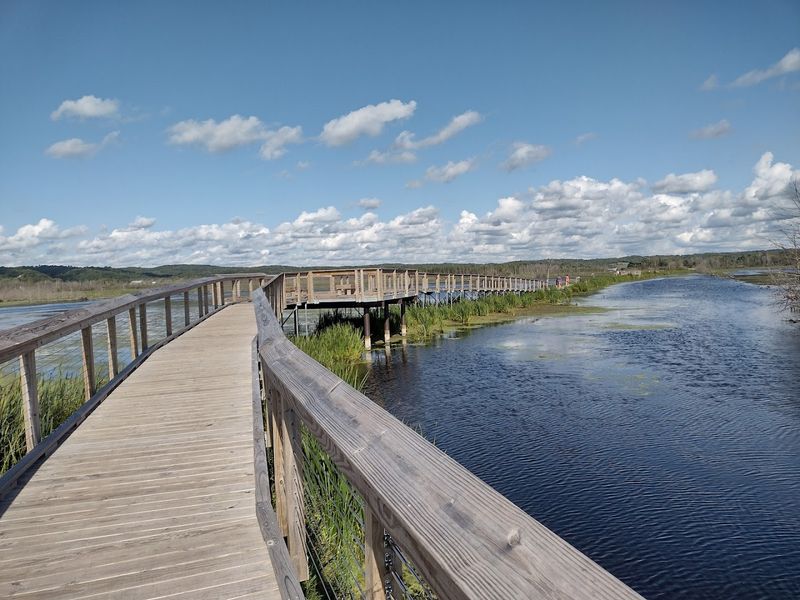
Some places make you feel like you accidentally walked into a nature documentary, and Arcadia Marsh Nature Preserve Boardwalk is absolutely one of them. Located at 16791 Northwood Hwy, Arcadia, MI 49613, this elevated wooden boardwalk floats over one of the most productive wetland habitats on Lake Michigan’s eastern shoreline.
The marsh sits right where freshwater meets the big lake energy of Lake Michigan, creating a wildlife corridor that is genuinely buzzing with life.
Great blue herons patrol the shallows with the slow confidence of someone who has never once been in a hurry. Muskrats cut through the water leaving tiny V-shaped wakes, and red-winged blackbirds sing from every cattail cluster like they are auditioning for something.
The boardwalk keeps your feet dry while giving you front-row access to all of it without disturbing a single reed.
The trail is short enough for a casual visit but rich enough that you could easily spend an hour just watching the marsh do its thing. Bring binoculars if you have them, because the bird variety here is exceptional, especially during spring and fall migration.
Arcadia Marsh is the kind of quiet, tucked-away gem that makes you feel genuinely lucky to have found it.
2. Grass River Natural Area Sedge Meadow Trail
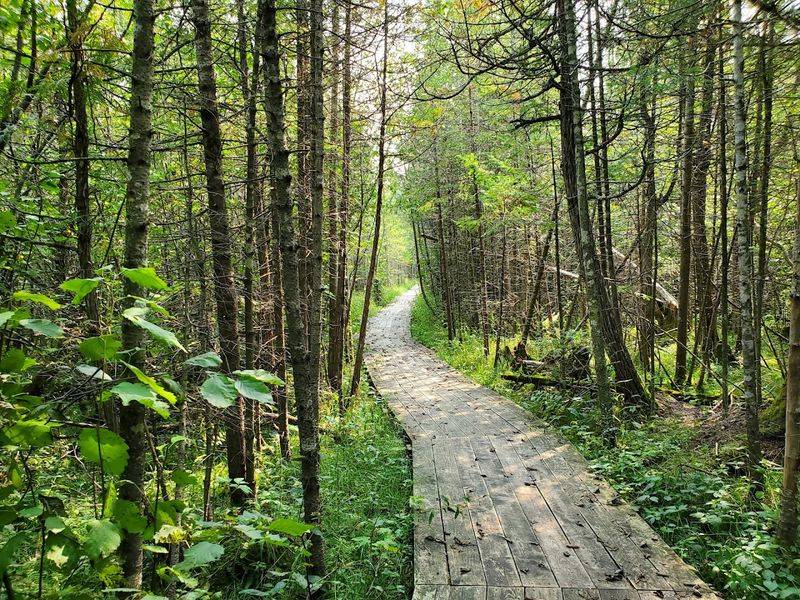
Walking the Sedge Meadow Trail at Grass River Natural Area feels like stepping into a scene from a Terrence Malick film, all soft light, grasses, and that particular kind of quiet that makes your shoulders drop.
Situated at 6500 Alden Hwy, Bellaire, MI 49615, this trail system winds through one of Michigan’s most pristine river corridor ecosystems.
Sandhill cranes are basically the celebrities of this trail, tall, dramatic, and completely unbothered by your presence. River otters make surprise cameos in the waterways, and if you are patient and quiet near the river’s edge, you might catch a beaver inspecting its dam like a very focused project manager.
The sedge meadows themselves are alive with insects, songbirds, and the occasional white-tailed deer stepping delicately through the grass.
The trail network covers several miles, but even a short loop rewards you with remarkable scenery and wildlife encounters. The boardwalk sections keep the experience accessible while protecting the sensitive wetland habitat underneath.
Spring is peak season here, but honestly, every season has its own personality at Grass River. Autumn turns the meadows into a warm amber canvas that no filter can improve.
3. Mud Lake Bog Nature Preserve
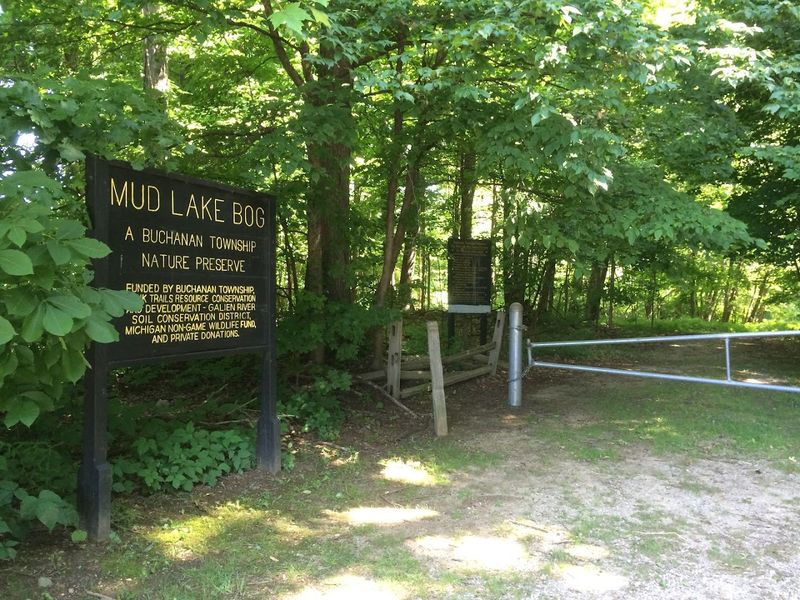
Not every trail is trying to be Instagram-friendly, and Mud Lake Bog Nature Preserve is perfectly fine with that. Located at 905 E Elm Valley Rd, Buchanan, MI 49107 in southwestern Michigan, this preserve protects a rare sphagnum bog ecosystem that feels genuinely ancient.
The kind of place where time moves differently and the plants have personality quirks that would shock you.
Pitcher plants grow right out of the sphagnum moss, quietly trapping insects with the calm efficiency of a seasoned professional. Sundews sparkle with sticky droplets that glitter in the light and serve a very carnivorous purpose.
The bog is home to a fascinating cast of wildlife adapted to the acidic, nutrient-poor environment, including rare dragonfly species, bog copper butterflies, and the occasional great blue heron hunting along the bog’s edges.
The trail here is more of an exploration than a structured hike, which makes it feel like a genuine discovery every time. Tamarack trees, Michigan’s only deciduous conifer, frame the open bog mat and turn brilliant gold in autumn.
The whole ecosystem is delicate, so staying on the path is essential, but the reward for your care is access to something most people have never seen.
Mud Lake Bog is weird, wonderful, and absolutely unforgettable.
4. Bishop’s Bog Preserve
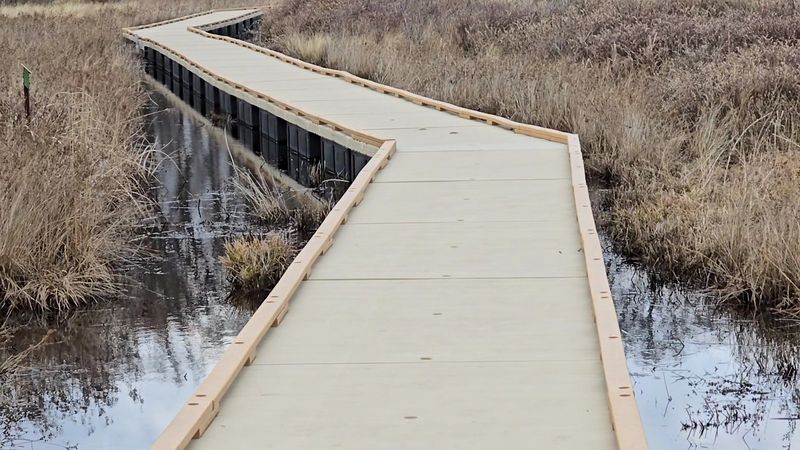
Urban nature preserves tend to surprise people, and Bishop’s Bog Preserve in Portage is one of the most surprising of all. Tucked right into the city at 7900 South Westnedge Avenue, Portage, MI 49002, this 76-acre bog sits in the middle of suburban southwestern Michigan like a wild secret hiding in plain sight.
The fact that you can pull off a busy road and walk into a functioning bog ecosystem within minutes is genuinely remarkable.
The preserve protects one of the most intact bogs in the region, complete with sphagnum moss mats, carnivorous plants, and a diversity of rare bog specialists that would make any naturalist’s heart race.
Bog copper butterflies flutter through during summer, and the plant life alone tells a story of ecological resilience that is hard not to respect.
Painted turtles sun themselves near the water’s edge, and the birding is surprisingly excellent for a spot surrounded by neighborhoods.
A raised boardwalk makes the bog accessible without causing damage to the fragile moss and plant communities beneath your feet. Interpretive signs help you understand exactly what you are looking at, which transforms a short walk into something educational and genuinely eye-opening.
Bishop’s Bog proves that wild Michigan is not always far away. Sometimes it is just around the corner, waiting quietly for someone to notice it.
5. Proud Lake Recreation Area Marsh Trail

Proud Lake Recreation Area has one of those names that sounds like it was chosen by a lake that definitely knows it looks good.
The Marsh Trail at 3500 N Wixom Road, Commerce Twp, MI 48382 gives you close access to the wetland edges of Proud Lake and the Huron River corridor, putting you right in the middle of one of southeastern Michigan’s most active wildlife zones.
The marsh habitat here supports an impressive roster of wildlife, including wood ducks, which are possibly the most stylish birds in Michigan, great egrets, muskrats, and painted turtles stacked on logs like they are waiting for a bus.
During spring, the chorus of frogs is so loud it feels like the marsh is throwing a party and you have been invited.
Osprey occasionally cruise overhead, scanning the water with that intense focus that makes you feel slightly judged.
The trail winds through a mix of wetland, upland forest, and meadow, offering a variety of habitats in a relatively compact area. That diversity means wildlife encounters shift as you move through different zones, keeping the walk fresh from start to finish.
For anyone in the southeast part of the state looking for a genuine nature fix without a long road trip, Proud Lake delivers in a big, loud, frog-filled way.
6. Shiawassee National Wildlife Refuge Ferguson Bayou Trail
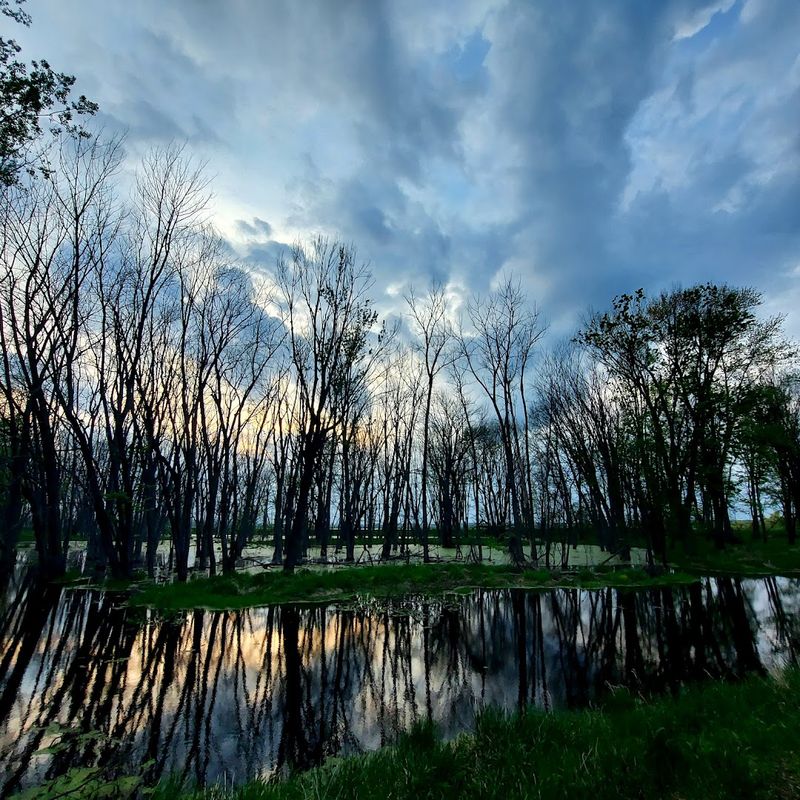
Walking the Ferguson Bayou Trail at Shiawassee National Wildlife Refuge feels like the wildlife came to you, not the other way around.
Located at 6000 Bishop Road, Saginaw, MI 48601, it sits at the confluence of four rivers in the Saginaw Valley, creating one of the most productive migratory bird stopover habitats in the entire Great Lakes region. During peak migration, the numbers here are staggering in the best possible way.
Sandhill cranes gather in the thousands during fall, filling the air with their rattling calls and creating a spectacle that feels almost prehistoric.
Canada geese, tundra swans, and dozens of duck species use the refuge’s floodplain marshes and restored wetlands as a critical rest stop on their long journeys. Bald eagles hunt over the open water with a confidence that borders on theatrical.
The Ferguson Bayou Trail follows the bayou through a mix of floodplain forest and open wetland, giving you elevated viewing platforms and open sight lines that make wildlife watching genuinely easy.
Even outside peak migration, the refuge buzzes with activity, from nesting great blue herons to white-tailed deer moving through the tree lines at dusk.
This is one of those places that reframes what a walk can actually be. Bring your binoculars and clear your afternoon schedule.
7. Seney National Wildlife Refuge
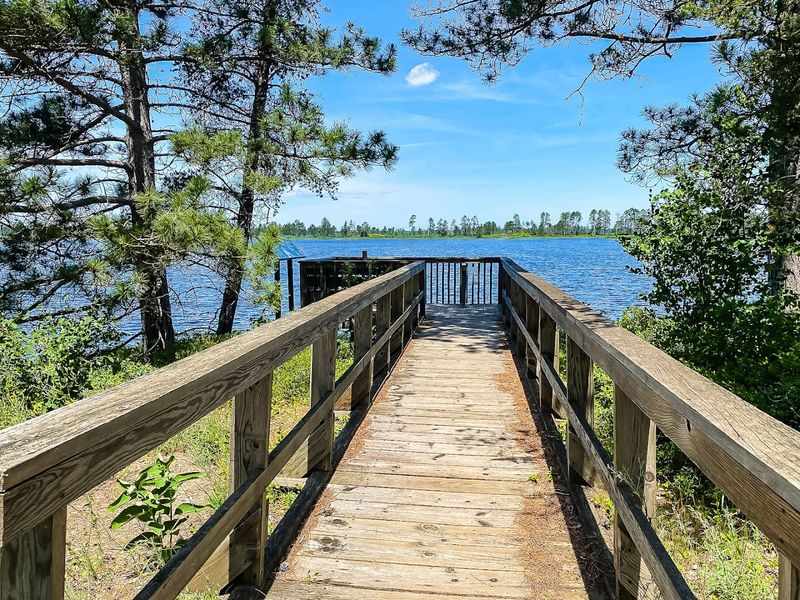
Seney National Wildlife Refuge is the Upper Peninsula’s quiet masterpiece, a vast, open wilderness that feels like the edge of the world in the most calming way imaginable.
Located at 1986 River Road, Germfask, MI 49836, this 95,000-acre refuge is one of the largest in the eastern US, and it is home to wildlife that simply does not exist at this scale anywhere else in Michigan. Common loons call across the pools with that haunting wail that gets under your skin in the best way.
Trumpeter swans nest here, which is remarkable given that this species was nearly extinct in the lower 48 states not long ago.
Their return to Seney is a genuine conservation success story you can witness firsthand. Sandhill cranes, bald eagles, osprey, and northern harriers are regular sightings, and the refuge’s shallow pools attract an extraordinary variety of waterfowl throughout the seasons.
The Marshland Wildlife Drive offers a 7-mile auto tour route with walking opportunities along the way, making it accessible for a range of fitness levels. The Pine Ridge Nature Trail provides a more immersive forest and wetland experience.
Seney rewards patience above all else. Slow down, stay quiet, and the refuge will put on a show that no theme park could replicate.
This is the Upper Peninsula at its most gloriously wild.
8. Tahquamenon Falls State Park Upper Falls Area
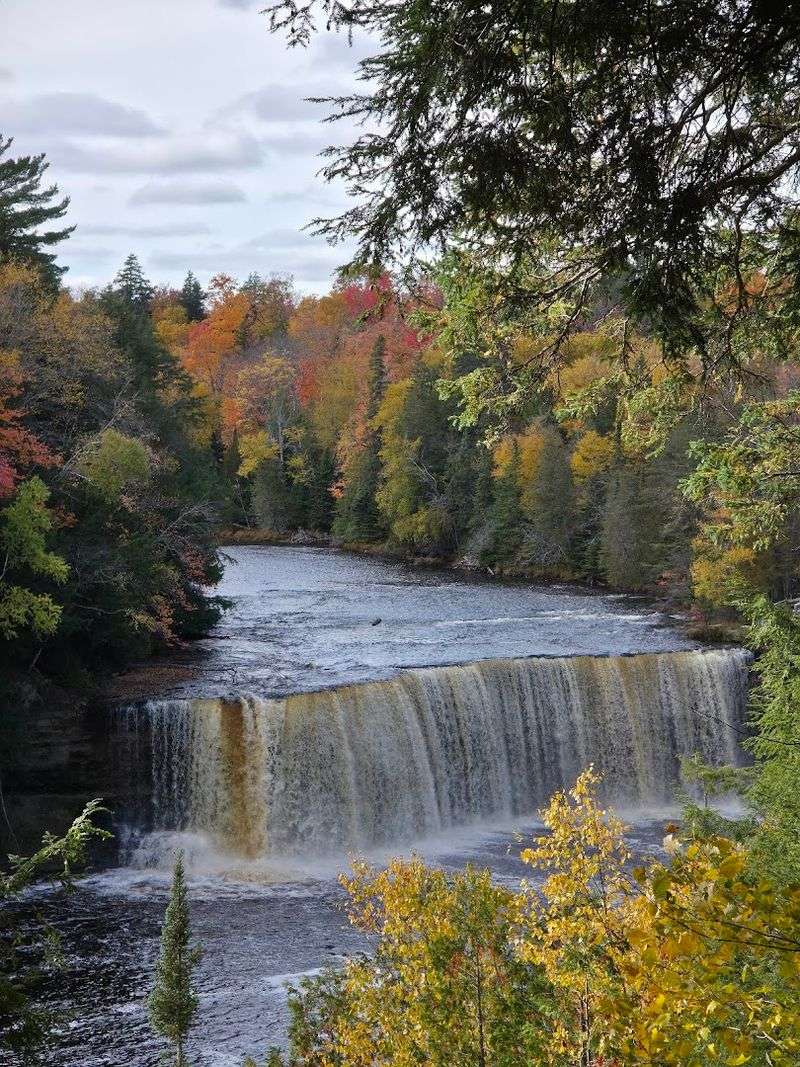
Tahquamenon Falls earns its reputation every single time. The Upper Falls at 41382 W M-123, Paradise, MI 49768 in Michigan’s Upper Peninsula is one of the largest waterfalls east of the Mississippi, and the trails surrounding it deliver wildlife encounters that match the dramatic scenery.
The Tahquamenon River runs the color of dark tea, stained naturally by tannins from the cedar swamps it drains, giving the whole landscape an almost mythological quality.
Black bears are year-round residents of the surrounding forest, and sightings along the trail are not uncommon, particularly in berry season when the forest edges are full of activity. Bald eagles nest near the river, and river otters have been spotted playing in the calmer sections below the falls.
White-tailed deer move through the old-growth forest with a grace that feels choreographed against the ancient hemlocks and maples.
The trail network around the Upper Falls ranges from short and paved to longer wilderness routes that push deeper into the boreal forest. The sound of the falls carries through the trees before you see them, building anticipation with every step.
Standing at the overlook when the river is running full is a full sensory experience that genuinely humbles you.
Tahquamenon is not just a waterfall, it is an argument for why the Upper Peninsula deserves its legendary status.
9. Black Lake Boardwalk
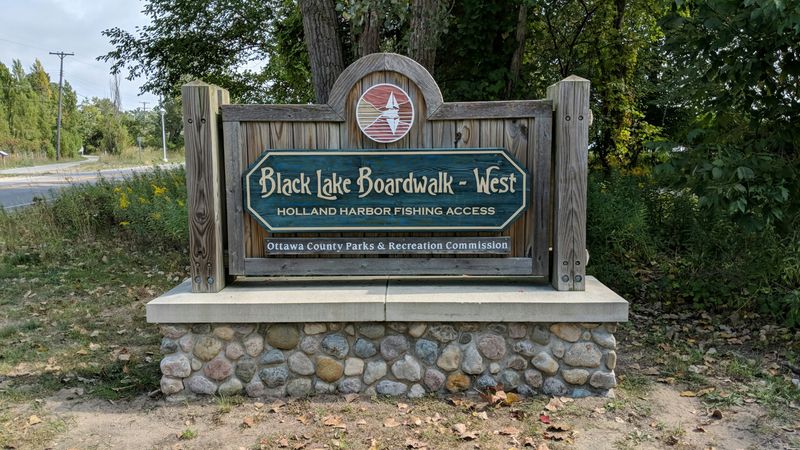
The Black Lake Boardwalk near Holland has the kind of low-key charm that sneaks up on you. Located at 2358 Ottawa Beach Road, Holland, MI 49424, this boardwalk cuts through a coastal wetland system where Black Lake connects to Lake Macatawa and the broader Lake Michigan shoreline ecosystem.
The location puts you at the intersection of freshwater marsh and open lake habitat, which means the wildlife variety is genuinely impressive for such a short walk.
Great blue herons are practically permanent fixtures here, standing motionless in the shallows with the patience of someone who has truly figured out life.
Mute swans glide through the channels in pairs, looking impossibly elegant against the dark water. Painted turtles emerge on sunny days to bask on any available log, and the marsh grasses are alive with red-winged blackbirds and marsh wrens calling back and forth constantly.
The boardwalk itself is a comfortable, flat walk that takes maybe 20 minutes at a leisurely pace, but the scenery and wildlife make it easy to stretch that into much longer.
Sunset here is something special, with the light hitting the water and cattails in a way that makes even a casual visitor stop and take a breath. Black Lake Boardwalk is proof that extraordinary wildlife encounters do not always require an extraordinary effort to reach them.
10. Grand Haven State Park Boardwalk
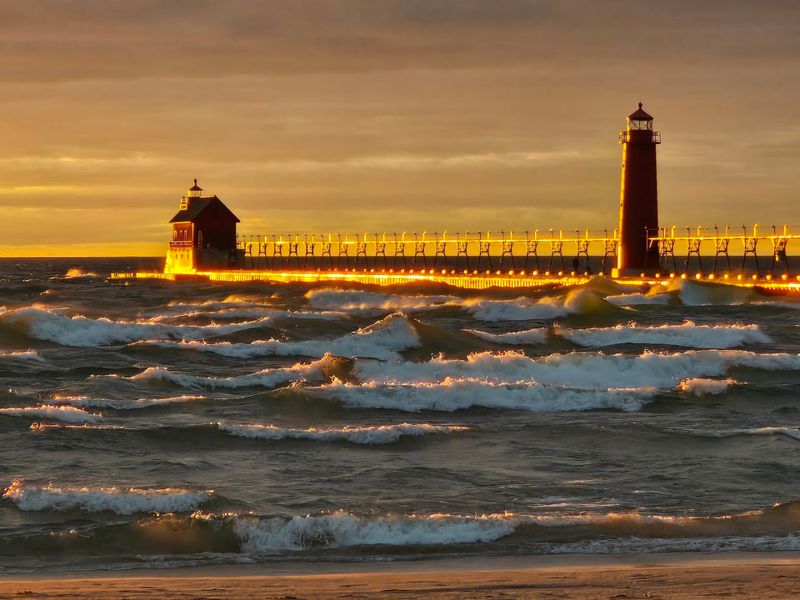
Grand Haven State Park is the kind of place where the lake is so enormous it starts to feel like the ocean, and your brain just accepts it.
The boardwalk at 1001 S Harbor Dr, Grand Haven, MI 49417 runs along the Lake Michigan shoreline and the Grand River channel, positioning you perfectly between two massive bodies of water where wildlife traffic is constant.
The combination of beach, dune, river, and open lake creates a habitat mosaic that wildlife absolutely love.
Ring-billed gulls and herring gulls work the shoreline year-round, but the real excitement comes during migration when uncommon shorebirds show up on the beach, stopping to refuel on their long journeys.
Piping plovers, a federally threatened species, have been spotted in the area, making every beach walk feel like a potential conservation moment.
Cormorants fish the river channel with relentless efficiency, and merganser ducks ride the current with casual expertise.
The boardwalk and pier extend out toward the famous red lighthouse, giving you sweeping views of the lake and the river simultaneously. During fall hawk migration, the skies above Grand Haven become a highway for broad-winged hawks, sharp-shinned hawks, and peregrine falcons riding the lake winds south.
Grand Haven boardwalk is one of those places where you came for the scenery and left having witnessed something genuinely wild.
11. Ludington State Park Skyline Trail
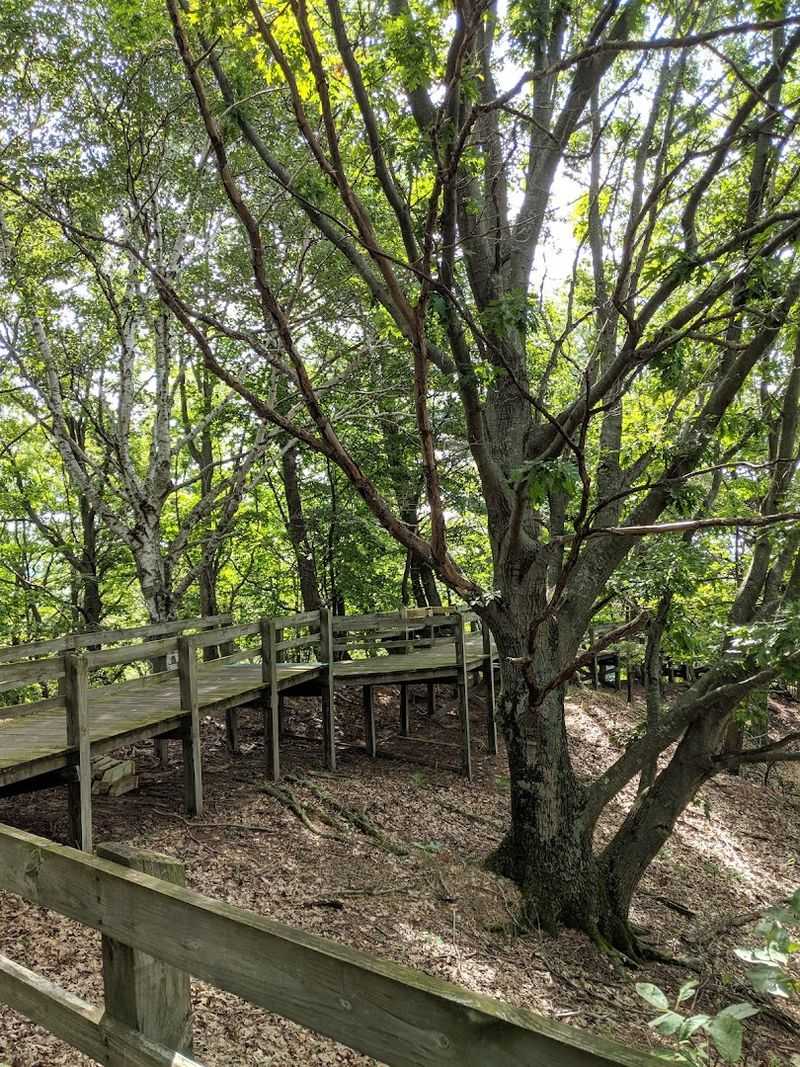
Ludington State Park is the kind of place that makes you feel genuinely wealthy in the most non-monetary sense of the word. The Skyline Trail at 8800 W M-116, Ludington, MI 49431 climbs through forested dunes above Lake Michigan, offering elevated views that shift between dense forest and sweeping lake panoramas as you move along the ridge.
The dune ecosystem here supports wildlife that you simply cannot find in lower, flatter terrain.
Wild turkeys strut through the forest with a confidence that is frankly impressive for a bird that gets so much cultural grief in November.
White-tailed deer browse the dune meadows, and coyotes move through the forest edges at dawn and dusk, usually just out of full view but close enough to make you aware of them.
The forest canopy fills with migrating warblers in May, turning the Skyline Trail into a world-class birding experience that draws enthusiasts from across the Midwest.
The trail runs approximately 3.5 miles and connects to Ludington’s broader network of trails, allowing you to extend your adventure toward the beach or the Big Sable River.
The elevation changes give your legs something to think about while your eyes stay busy tracking everything moving through the trees. Ludington State Park is consistently ranked among Michigan’s best, and the Skyline Trail is the main reason serious hikers keep coming back.
12. Pictured Rocks National Lakeshore Sand Point Trail Area
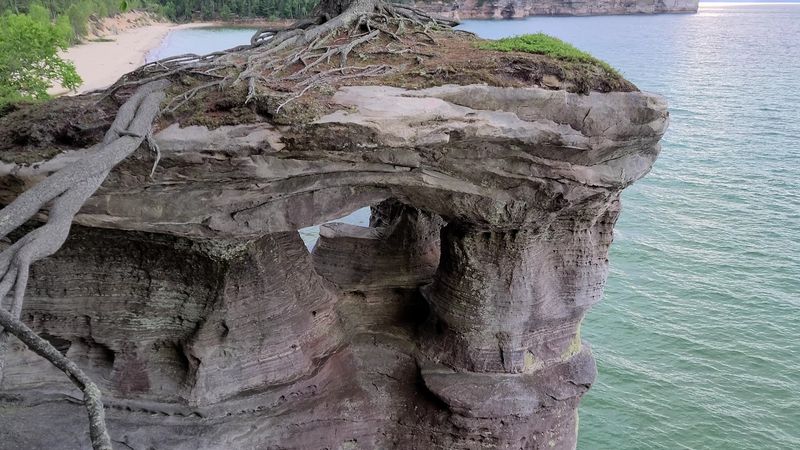
Pictured Rocks is Michigan’s crown jewel, and the Sand Point Trail area lets you experience it at ground level, which is somehow even better than the aerial view. Located at 1505 Sand Point Road, Munising, MI 49862, this trail area sits along the Lake Superior shoreline near the Munising Bay, where the scale of the landscape is genuinely humbling.
The colored sandstone cliffs rise out of the lake in shades of orange, red, and white, creating a backdrop that looks digitally enhanced but is completely, gloriously real.
Bald eagles are a near-constant presence overhead, riding the thermals above the cliffs with the kind of effortless grace that makes watching them feel like a privilege.
Common loons float on the cold, clear Lake Superior water, and mergansers fish the rocky shoreline with practiced precision. Black bears roam the surrounding boreal forest, and beaver activity is visible along the inland ponds and streams that feed into the lakeshore.
The Sand Point area is also an excellent spot for viewing the northern lights on clear autumn nights, adding a completely different kind of wildlife to the experience, the atmospheric kind.
The trail itself is relatively flat and accessible, making it a strong entry point for Pictured Rocks exploration before venturing into the more rugged backcountry.
So, are you ready to let Michigan’s wildest shoreline completely rearrange your idea of what a walk can be?