
13 Under-The-Radar Things To Do In Arizona That Even Many Locals Don’t Know About
If my bank account had a voice, it would probably beg me to stop wandering into remote desert canyons, but my sense of adventure is a stubborn thing. I’ve spent years exploring this state, and I’m convinced that the best experiences don’t come with a crowded parking lot or a gift shop at the exit.
I’m talking about those blink-and-you’ll-miss-them treasures tucked away in the creases of the landscape.
Arizona rewards curious travelers with places that never make the usual postcards or crowded itineraries.
These under-the-radar spots are the true heartbeat of the high desert. Let’s go find them.
1. Explore Lava River Cave Near Flagstaff, Arizona
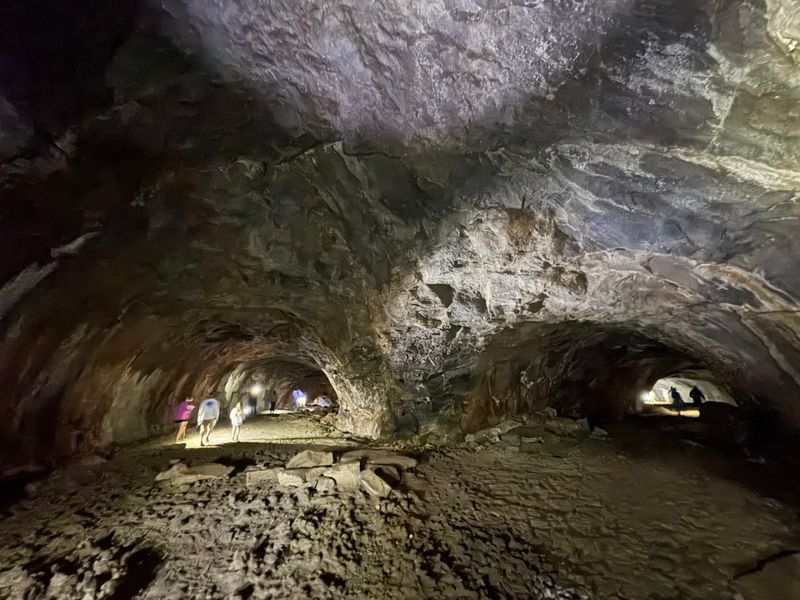
About nine miles north of Flagstaff, buried beneath a blanket of Ponderosa pines, a volcanic lava tube waits in near-total darkness. Lava River Cave formed roughly 700,000 years ago when molten rock drained away and left a hollow tunnel stretching close to three-quarters of a mile underground.
Temperatures inside hover between 35 and 45 degrees Fahrenheit all year, which makes it one of the most refreshingly bizarre places to visit during an Arizona summer.
The cave floor is uneven, scattered with loose boulders, and demands real scrambling in spots. Sturdy boots, warm layers, and at least two reliable light sources per person are non-negotiable.
Forest roads to the entrance typically close in winter, turning the trip into a snowshoe or ski approach of about four miles round trip.
Few experiences in the state match the eerie quiet of standing inside a 700,000-year-old volcanic passage with nothing but your headlamp between you and absolute darkness.
2. Enter Coronado Cave Near Hereford, Arizona
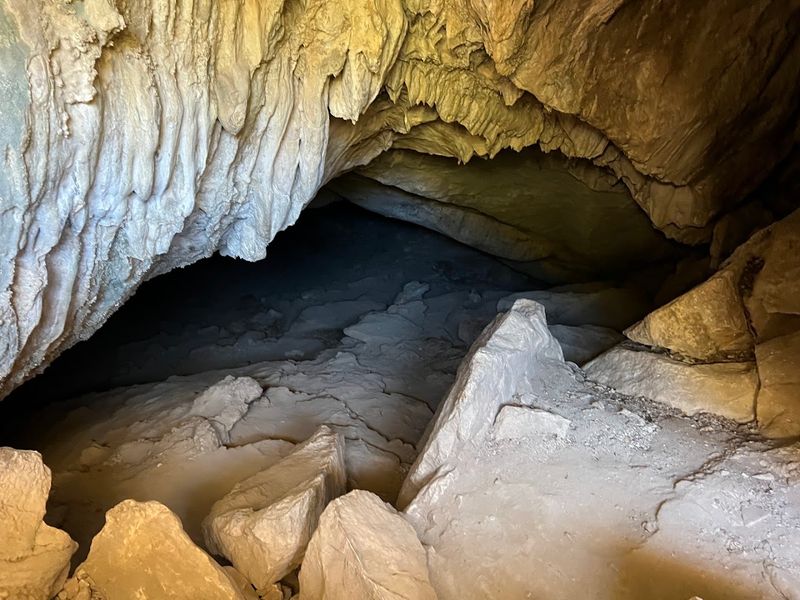
Not every cave comes with a paved walkway and a gift shop, and Coronado Cave near Hereford, Arizona, is proudly neither of those things.
Tucked within the Coronado National Memorial in the Huachuca Mountains, this undeveloped cavern stretches about 600 feet in length and opens up to 70 feet wide in certain chambers.
Getting there requires a moderately steep half-mile trail with loose rock and switchbacks, followed by a scramble down a rocky 25-foot drop into the entrance.
Once inside, there are no guides, no lighting, and no marked paths. That raw, unscripted quality is exactly the draw. Legends suggest Apache groups used this cave for shelter, and the sense of stepping into that layered history is palpable.
Plan for roughly two hours round trip, carry at least two flashlights per person, and stop at the Coronado National Memorial Visitor Center first to pick up the free permit required before entering.
3. Tour Casa Malpaís Archaeological Park In Springerville, Arizona
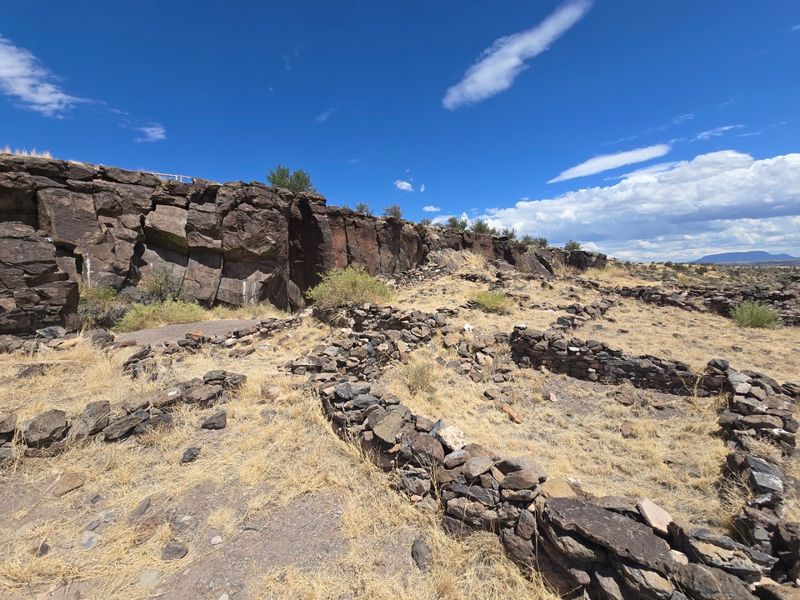
Perched dramatically on terraces of volcanic basalt in the White Mountains, Casa Malpaís is a Mogollon cultural site that dates back to around 1260 CE and somehow manages to stay off most Arizona travel itineraries.
The name translates roughly to “house of the badlands,” which gives you a pretty honest preview of the rugged terrain surrounding these ancient stone structures.
Guided tours depart from the Springerville Heritage Center and are the only way to access the grounds.
Those tours lead visitors through a great kiva built from volcanic rock, remnants of ancient stairways, and a rectangular kiva featuring astronomical alignments that allow summer solstice light to illuminate pictoglyphs carved into the stone walls.
Both the Hopi and Zuni tribes consider this site sacred.
Wear sturdy hiking shoes and carry water because the trails run steep and rocky. The reward is a genuinely rare look at ancestral Pueblo life that feels nothing like a typical museum visit.
4. Browse The Coit Museum Of Pharmacy In Tucson, Arizona

Somewhere on the University of Arizona campus in Tucson sits one of the most wonderfully peculiar museums in the entire state.
The Coit Museum of Pharmacy and Health Sciences houses thousands of medical artifacts, antique pharmaceutical equipment, and vintage drugstore fixtures that trace the strange evolution of health care through the centuries.
Renamed in 2022, the collection ranks among the premier pharmacy history museums in the world.
Highlights include a full-scale replica of an old-time drugstore, a collection of artifacts from the Upjohn Pharmacy at Disneyland, and a jar reportedly containing gangster John Dillinger’s chewed gum. That last item alone is worth the trip.
Admission is free, though scheduling an advance visit is recommended to get the most out of the exhibits.
The museum generally welcomes visitors on Mondays, Wednesdays, and Fridays from 9 a.m. to 3 p.m., so check their website before heading over to confirm current hours.
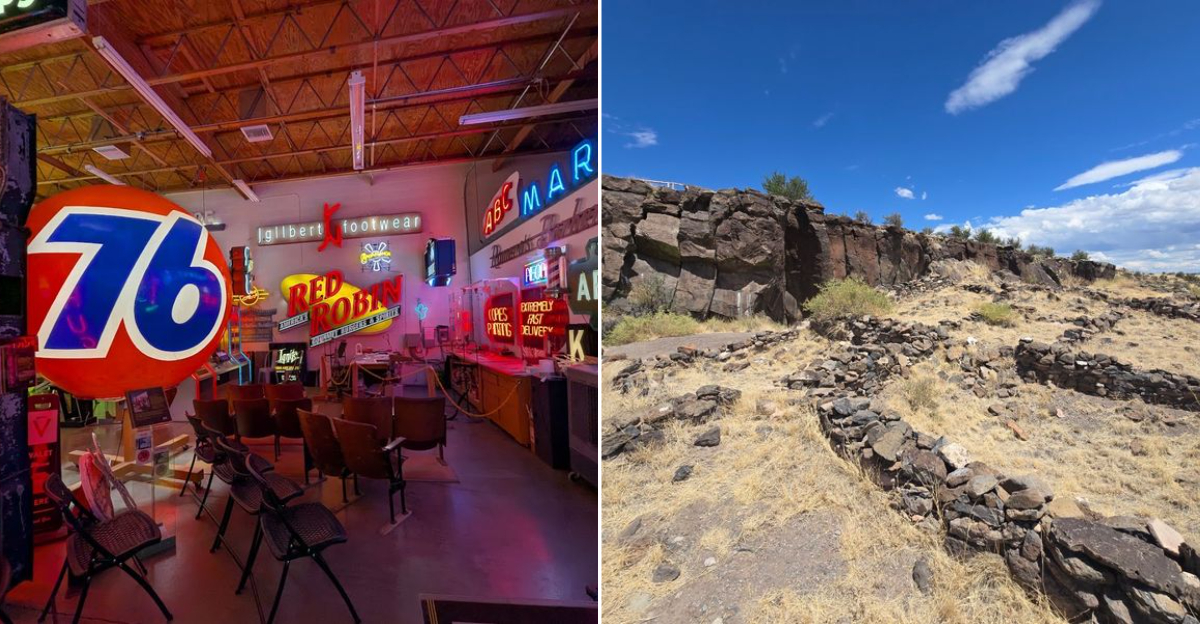
5. Walk Beneath The Neon At Ignite Sign Art Museum, Tucson, Arizona

Tucson has a soft spot for saving things that the rest of the world would rather throw away, and the Ignite Sign Art Museum is proof of that instinct at its most colorful.
This one-of-a-kind institution collects vintage advertising signs, neon artwork, and classic roadside relics that would otherwise have quietly disappeared into storage or landfills. Walking through the collection feels like flipping through a glowing visual history of American commercial culture.
The main museum building is currently undergoing restoration following a fire, but the spirit of the place remains very much alive. The gift shop frequently stays open, and free visits on Fridays and Saturdays give curious visitors a genuine peek into the collection while restoration continues.
Calling ahead before your visit is the smartest move to confirm current access. The museum also welcomes pets and offers interactive activities for visitors of all ages, making it one of Tucson’s most unexpectedly charming afternoons out.
6. Hear Cowboy Music At The Arizona Folklore Preserve, Hereford, Arizona
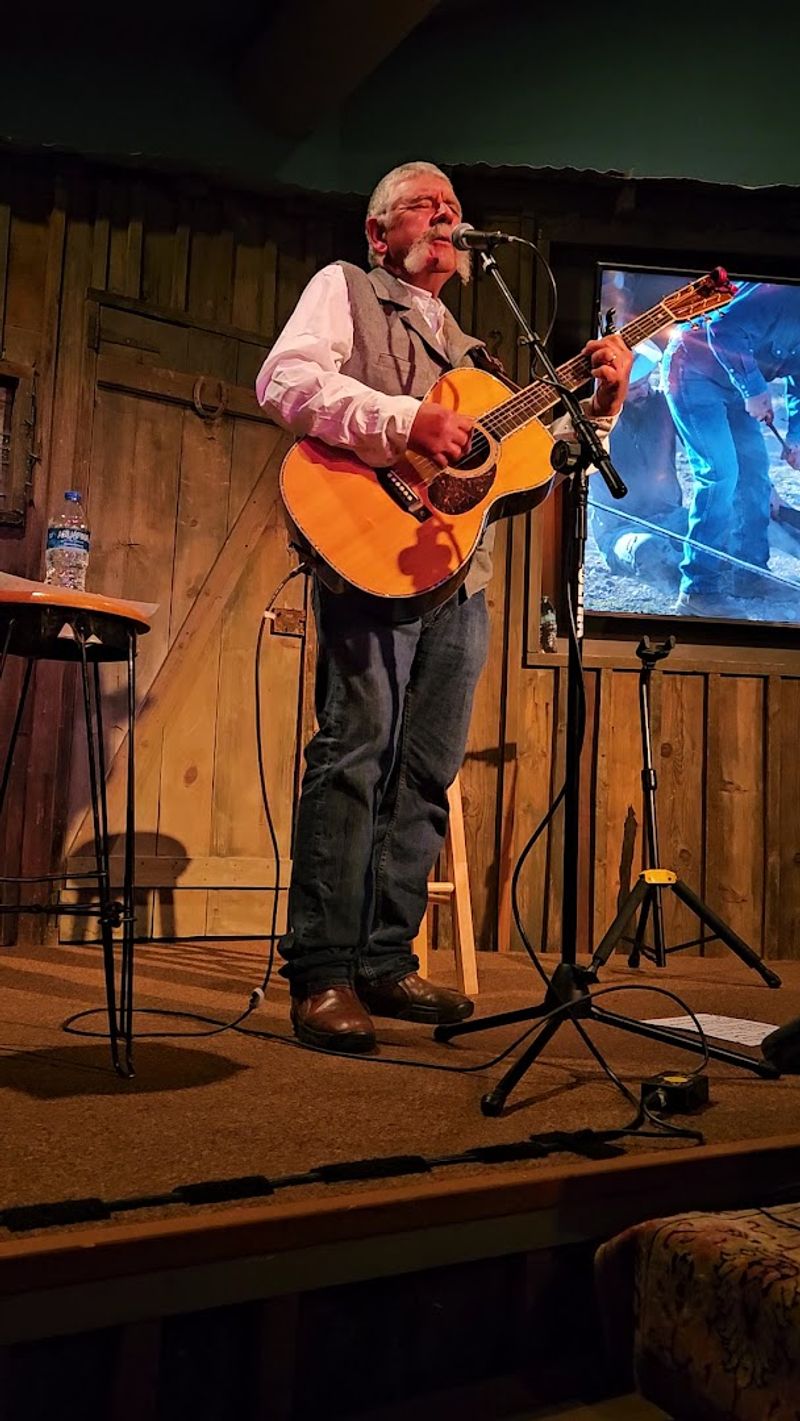
Near Ramsey Canyon in the Huachuca Mountains outside Hereford, Arizona, a small venue keeps the soul of the Old West alive one Saturday and Sunday at a time.
The Arizona Folklore Preserve was founded by Dolan Ellis, Arizona’s Official State Balladeer, and it has been hosting matinee performances dedicated to Western songs, poetry, legends, and storytelling ever since. Shows typically begin at 2:00 p.m. on weekends.
The 2026 event calendar remains active, with performances scheduled throughout the year including a Patriotic Weekend in early July featuring award-winning Western artists.
The setting is intimate, the talent is genuine, and the stories told from that stage carry real historical weight. This is not a theme park version of the West; it is the actual tradition, passed down and performed with care.
Reservations are strongly recommended since these shows fill up. Secure your spot early and settle in for an afternoon that connects you to something genuinely rooted in Arizona’s cultural soil.
7. Leave A Wish At El Tiradito In Tucson, Arizona
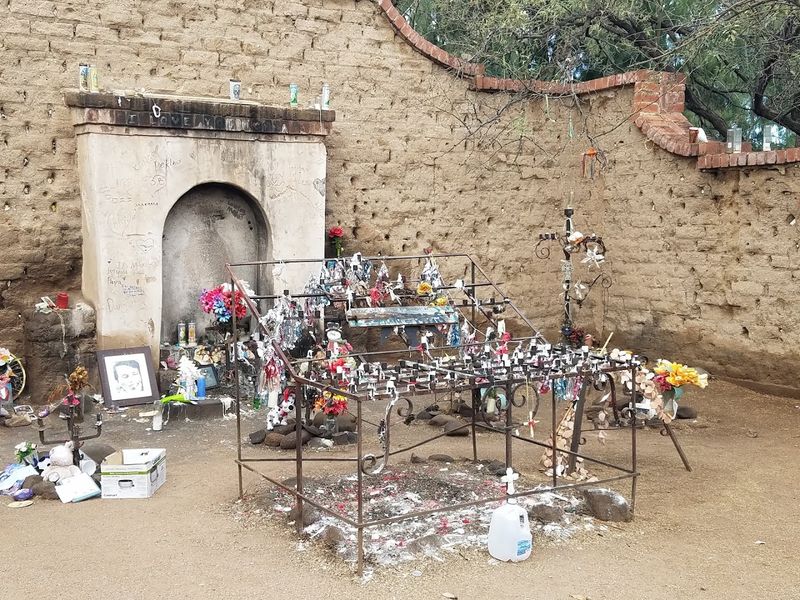
At 420 South Main Avenue in Tucson’s historic Barrio Viejo neighborhood, a small crumbling adobe shrine carries one of the most quietly powerful stories in all of Arizona.
El Tiradito, meaning “The Little Castaway,” is believed to be the only Catholic shrine in the United States dedicated to a sinner rather than a saint. The legend traces back to the 1870s and a ranch hand named Juan Oliveras, whose forbidden affair ended in his being buried on unconsecrated ground where he fell.
Visitors today leave candles, handwritten notes, and personal wishes pressed into the worn brick walls, trusting that a candle burning through the night means the wish will be granted. The ritual costs nothing and requires no tour guide.
The shrine was added to the National Register of Historic Places in 1971.
Its quiet, unassuming presence in the middle of a Tucson neighborhood makes El Tiradito feel like a living piece of the city’s memory rather than a preserved historical exhibit.
8. Walk The Labyrinth At Sanctuary Cove Near Marana, Arizona
Just outside Marana on the edge of the Tucson Mountains, an 80-acre desert sanctuary offers something that is surprisingly hard to find in Arizona: genuine stillness.
Sanctuary Cove, managed by the nonprofit All Creeds Brotherhood, opens its grounds to the public year-round from sunrise to sunset. Walking paths, an interfaith chapel, an amphitheater, and a labyrinth built entirely from desert rocks are scattered across the property.
The labyrinth is the quiet centerpiece of the experience. Walking its winding paths is a form of moving meditation, and the expansive views of Safford Peak and the surrounding Tucson Mountains give the practice a setting that feels almost ceremonial.
The preserve shares a boundary with Saguaro National Park, so the scenery is appropriately dramatic.
There is no admission fee and no formal schedule to follow. You simply arrive, walk at your own pace, and leave feeling noticeably lighter than when you pulled into the parking area.
9. Drive Out To Swansea Historic Ghost Town, Arizona
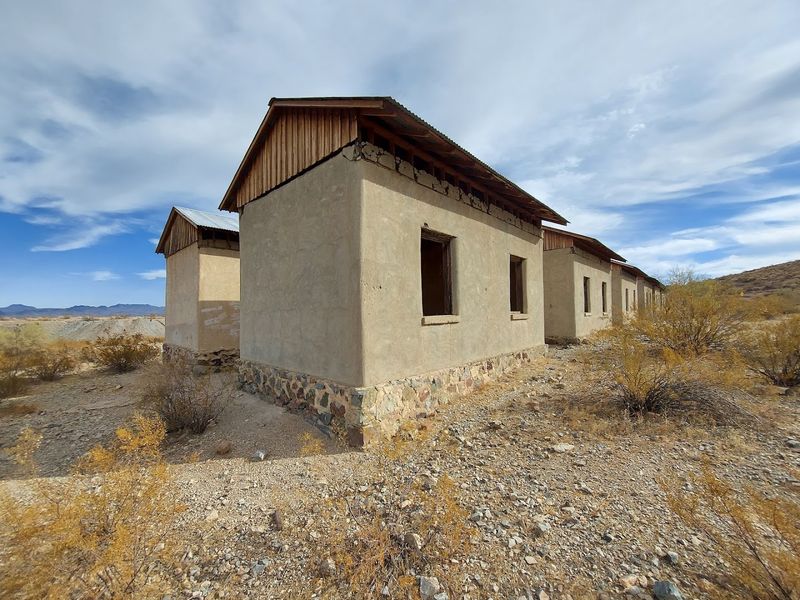
Out in the remote stretch of La Paz County near Parker, the ruins of Swansea sit quietly in the desert, waiting for the kind of traveler who does not mind a rough gravel road.
This former copper mining boomtown was established around 1908 and at its peak supported a population of 500 people, complete with an electric light company, multiple businesses, and a railroad connecting it to Bouse.
A 22-mile aqueduct once carried water across the parched landscape to keep the operation running.
Financial troubles in 1911 and the Great Depression finished what the desert started, and Swansea was largely abandoned by the mid-1930s.
The Bureau of Land Management now oversees the site, and visitors can walk among preserved adobe and brick ruins, old foundations, and scattered mining equipment.
The final miles of the approach require a high-clearance vehicle, and that challenge is part of the charm. Arriving at Swansea feels earned in a way that a roadside attraction never quite does.
10. Find Native Palms Inside Kofa National Wildlife Refuge, Arizona
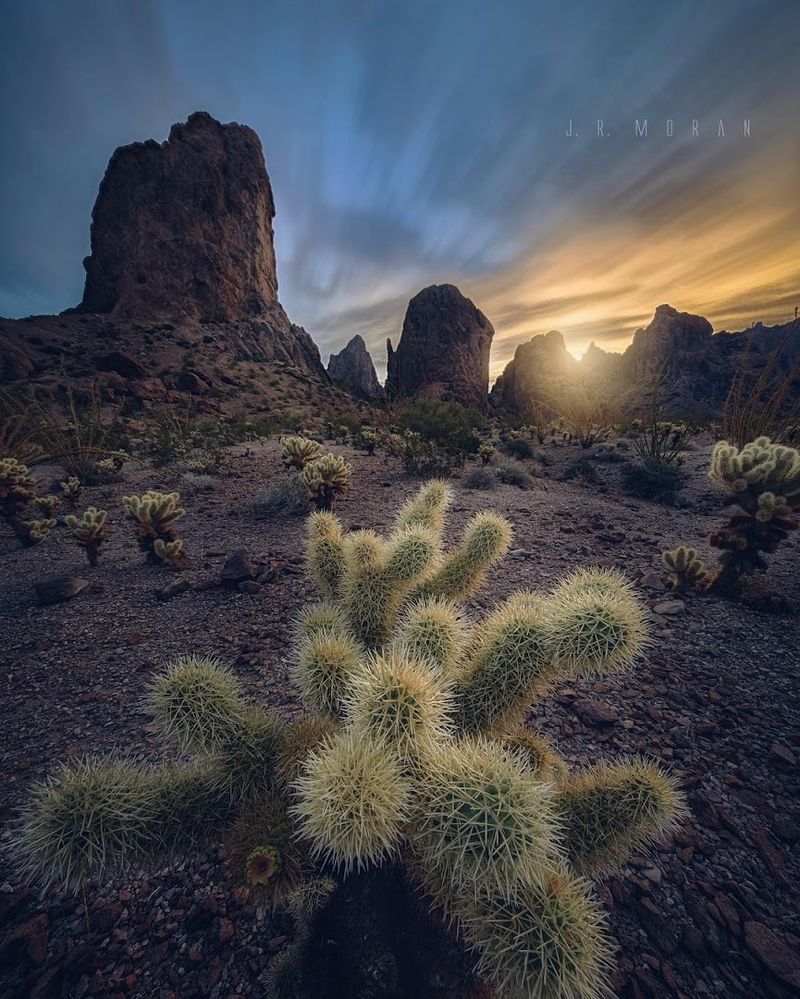
Most people driving Highway 95 between Yuma and Quartzsite have no idea that a canyon tucked about 18 miles to the east holds the only native palm trees in all of Arizona.
Palm Canyon, located within the Kofa National Wildlife Refuge, protects a rare stand of Washingtonia filifera, California fan palms that grow naturally from cracks high up on the canyon’s volcanic rhyolite walls.
Reaching the palms requires a seven-mile dirt road from the highway, followed by a half-mile trail that gets steep and rocky near the viewpoint. The payoff is an almost surreal scene: desert canyon walls suddenly studded with palms that have been growing there long before any map was drawn.
The refuge’s roads and trails stay open year-round, though summer midday heat demands serious water preparation.
Visiting in the cooler morning hours of late fall or winter turns Palm Canyon into one of the most quietly spectacular short hikes in the entire state.
11. Kayak At Dankworth Pond Near Safford, Arizona
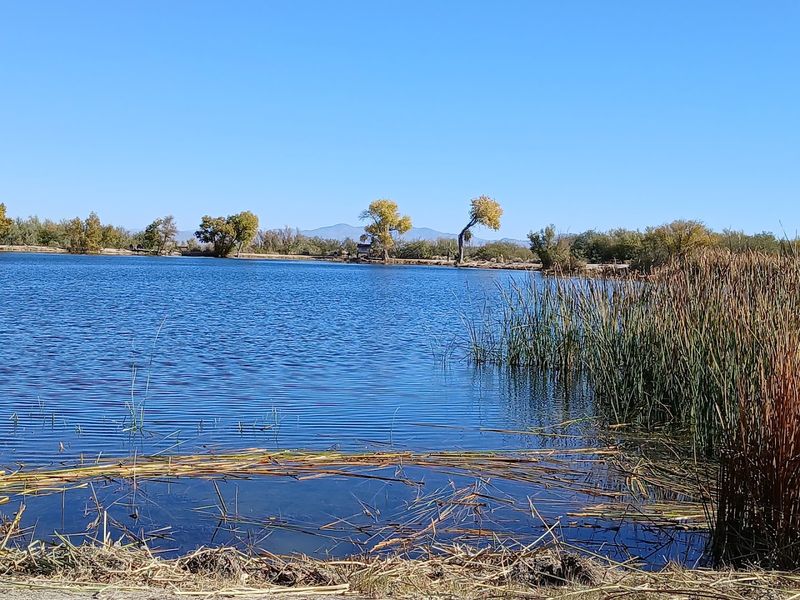
A few miles south of Safford, an artesian spring quietly feeds a 15-acre pond that most visitors to the area never bother to find. Dankworth Pond State Park sits near the more well-known Roper Lake but draws a fraction of the foot traffic, which makes it ideal for anyone who prefers their kayaking without a crowd.
The water is warm, clear, and genuinely inviting.
Anglers will find the pond stocked with rainbow trout, catfish, largemouth bass, bluegill, and green sunfish. Birdwatchers tend to linger here too, since the water draws a surprisingly diverse range of species to this corner of the Sonoran Desert.
The Dos Arroyos Trail, a short interpretive loop, winds through the property and passes a replica Indian village that offers a brief but interesting look at ancient lifeways.
The park stays open year-round with varying day-use hours by season. Pack a picnic, bring a fishing rod, and plan to stay longer than you originally intended.
12. Visit Montezuma Well Near Rimrock, Arizona
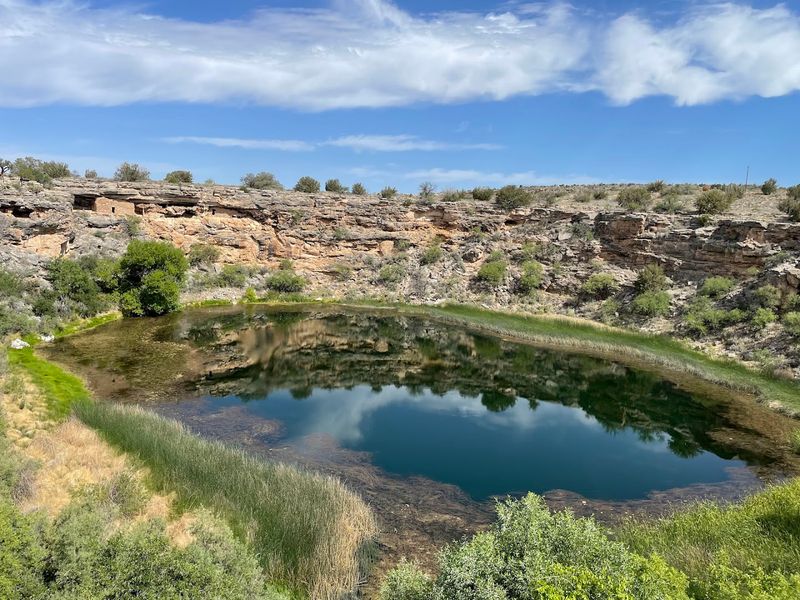
Eleven miles from Montezuma Castle, most day-trippers miss a separate and arguably more fascinating site entirely. Montezuma Well, near Rimrock, Arizona, is a collapsed limestone cavern that has transformed into a natural sinkhole measuring 386 feet across and 55 feet deep.
Natural springs push 1.5 million gallons of warm water through it every single day. The water chemistry here is so unusual, high in carbon dioxide and arsenic, that fish cannot survive in it.
What thrives instead is a collection of at least five endemic species found nowhere else on the planet, including a springsnail, a water scorpion, an amphipod, and a leech.
Ancient Sinagua cliff dwellings ring the sinkhole walls, and portions of their irrigation ditches, built around 700 CE, remain visible and functional today.
The site is open year-round from roughly 8 a.m. to 5 p.m. with no entrance fee, which makes it one of the most accessible and genuinely astonishing natural wonders in all of Arizona.
13. Explore The Ancestral Villages At Homolovi State Park, Winslow, Arizona
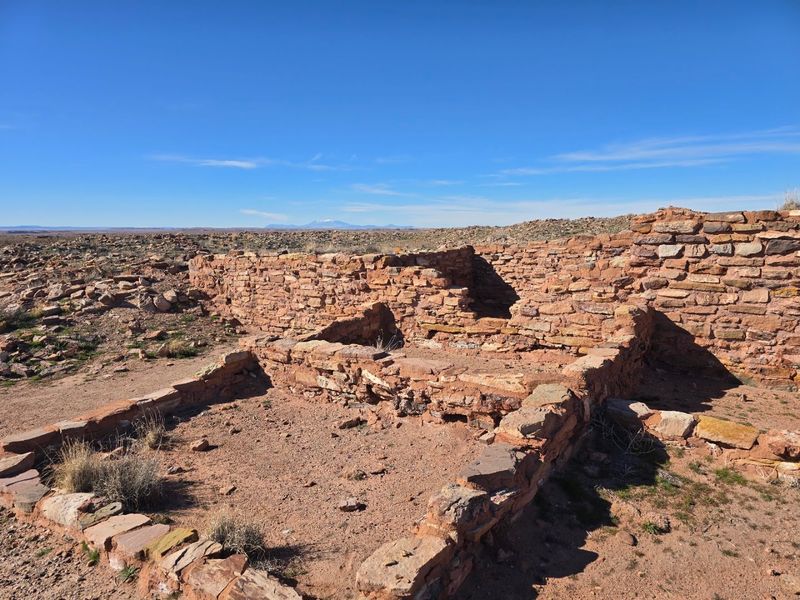
Just over a mile north of Winslow, Homolovi State Park protects more than 300 Ancestral Puebloan archaeological sites spread across the Little Colorado River floodplain.
The name Homolovi means “place of the little hills” in Hopi, and the park holds deep spiritual significance for the Hopi tribe, who consider these ancestral communities to be very much alive in a cultural sense.
Communities here flourished between 620 AD and 1400 AD. Trails lead visitors past the remains of four major pueblos, including Homolovi I and Homolovi II, which once housed thousands of people.
The Visitor Center displays Hopi pottery, carvings, and artifacts that give meaningful context to what you see on the trails. Research into the late Hopi migration period is ongoing at the site.
Campground improvement work is scheduled through late July 2026, but the park itself remains open year-round. Northern Arizona rarely offers a more direct and respectful connection to this region’s layered human history.