
13 Unique Trivia Facts About Arizona Even Locals Might Not Know
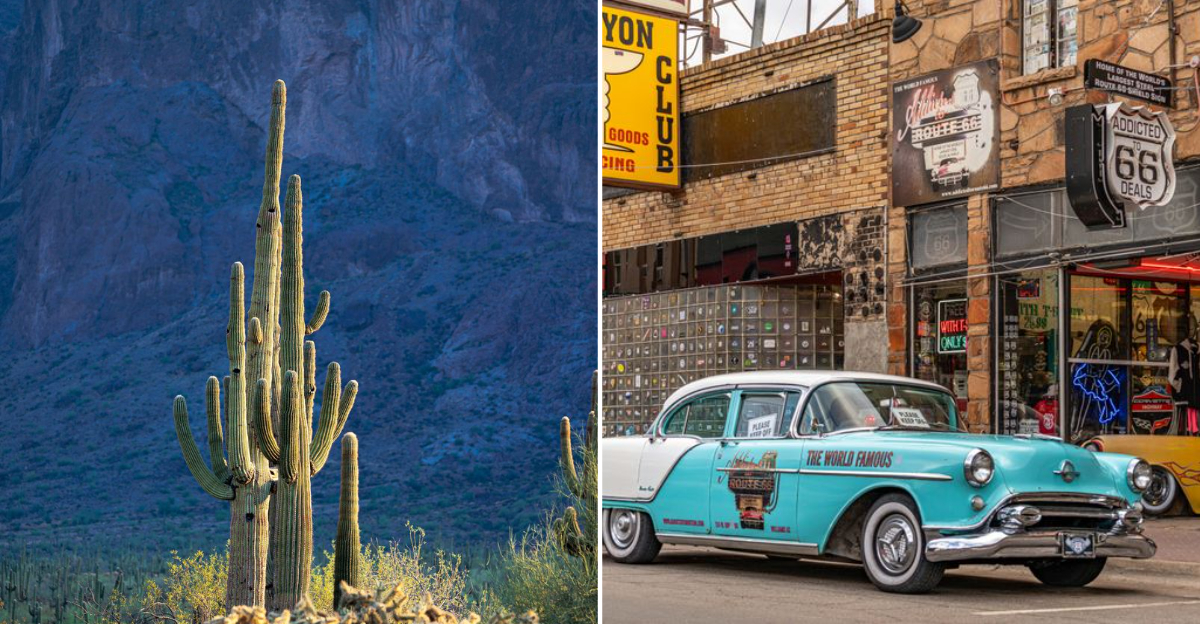
Arizona is much stranger than the postcards let on.
Beyond the saguaros, red rocks, and famous desert highways, the state is packed with odd history, unusual landmarks, scientific discoveries, and little details that can surprise even people who have lived here for years.
Some facts are hiding in plain sight. Others involve ancient landscapes, unexpected state symbols, unusual timekeeping rules, and places that played a bigger role in history than most travelers realize.
That is what makes Arizona trivia so much fun. Just when you think you have the state figured out, another strange detail pops up and changes the story.
A few of these facts may sound made up at first. They are not.
Here are some unique Arizona trivia facts that might make even longtime locals stop and say, “Wait, really?”
1. Pluto’s Flagstaff Beginnings
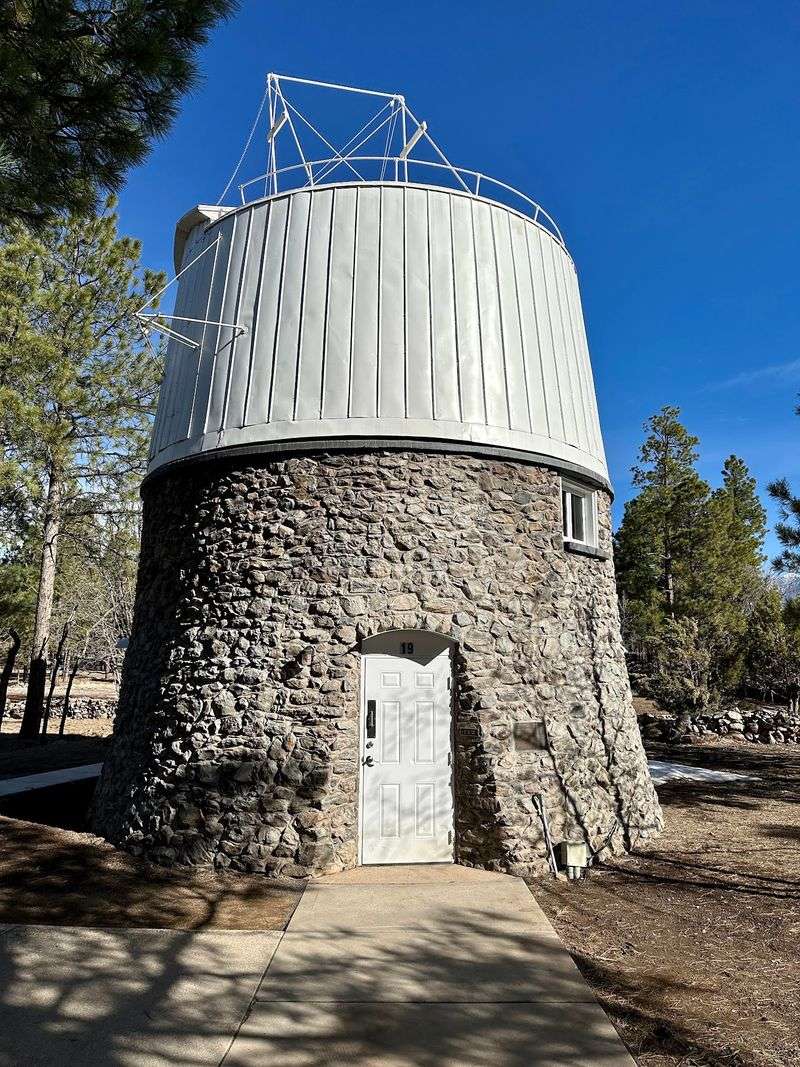
Picture a young observatory assistant scanning the night sky and suddenly spotting a brand new world. That is exactly what happened when 24-year-old Clyde Tombaugh discovered Pluto at Lowell Observatory on February 18, 1930.
The observatory, established in 1894, carries deep astronomical history and holds the title of a National Historic Landmark. The hunt for a mysterious “Planet X” was started years earlier by Percival Lowell, who believed something unseen was tugging on other planets.
Tombaugh carefully compared photographic plates using a device called a blink comparator until the icy dwarf planet finally appeared. The official announcement came on March 13, 1930, which also happened to fall on Percival Lowell’s 75th birthday, linking past and present in one tidy cosmic moment.
Today you can visit Lowell Observatory and stand where history was made. Walking those grounds feels like stepping into a real discovery story, a truly stellar stop on any Arizona journey worth planning.
2. A State That Keeps Its Own Time, Across Arizona
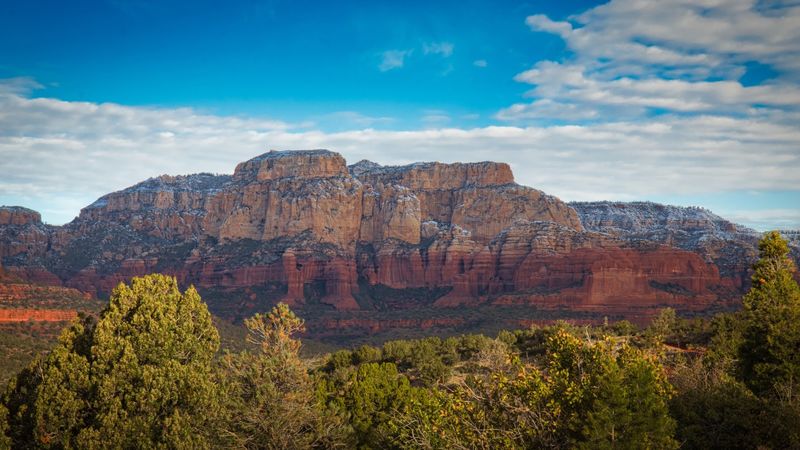
Keep an eye on your watch while traveling Arizona, because time here works a little differently. Most of the state proudly skips Daylight Saving Time and stays on Mountain Standard Time all year long.
For much of the year, that means Arizona clocks match California, even though the state sits farther east. It saves everyone from the twice-yearly clock scramble that the rest of the country deals with.
There is one fascinating exception. The vast Navajo Nation, which spreads across parts of Arizona, Utah, and New Mexico, does observe Daylight Saving Time to keep its lands on a single schedule.
Things get even more interesting around the Hopi Reservation, which sits completely surrounded by Navajo Nation land yet follows the rest of Arizona by ignoring the time change.
So as you drive across these regions, you could shift clocks without ever leaving the state, making for a quirky little journey through time itself.
3. The Bridge That Crossed An Ocean, Lake Havasu City
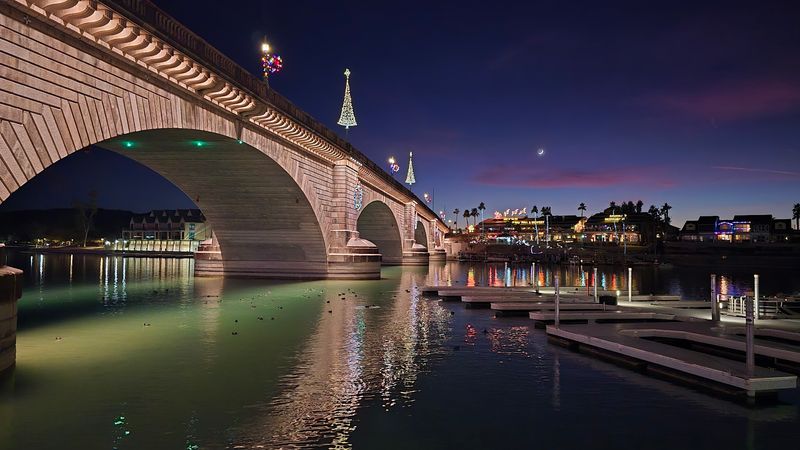
Get ready for a double-take when you learn that a piece of old London sits in the Arizona desert. The original London Bridge, built in 1831 by engineer John Rennie, was purchased by American businessman Robert P. McCulloch in 1968 for about 2.46 million dollars.
Yes, the very bridge that crossed the River Thames for over a century was carefully taken apart, with each stone numbered, and shipped across the Atlantic Ocean.
Its new home became Lake Havasu City, Arizona, where crews rebuilt it stone by stone and dedicated it on October 10, 1971. What makes it even wilder is that there was no river waiting for it.
Engineers dug a canal beneath the finished bridge, turning a peninsula into an island so the structure had water to span. This bold plan brought a touch of British history to the Southwest and turned Lake Havasu City into one of Arizona’s most unexpected stops.
4. Secrets Of The Underground, Kartchner Caverns State Park
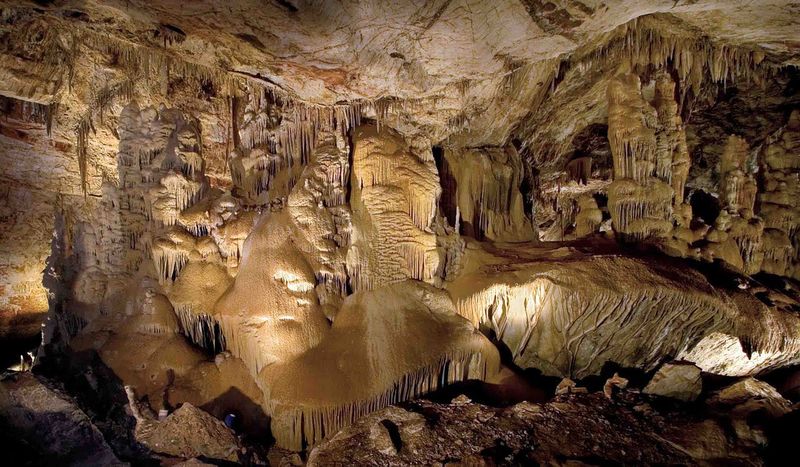
Tucked inside the Whetstone Mountains of southeastern Arizona lies a hidden world that stayed a secret for years. In November 1974, two curious cavers named Gary Tenen and Randy Tufts found what would become Kartchner Caverns.
Realizing how fragile and beautiful their discovery was, they made a remarkable choice to keep the cave quiet. For more than three years they explored and mapped it privately, telling only the landowners, James and Lois Kartchner, in February 1978.
Their devotion to protection came first, since they knew that public attention could cause lasting harm to the delicate formations. It was not until 1988 that the cave became widely known, when its purchase as an Arizona State Park was finally approved.
Today Kartchner Caverns remains a living cave, carefully guarded so visitors can admire formations that are still slowly growing. It stands as proof that patience and quiet care can preserve something truly extraordinary for everyone.
5. Saguaro’s Slow Start To Arm Waving, Sonoran Desert
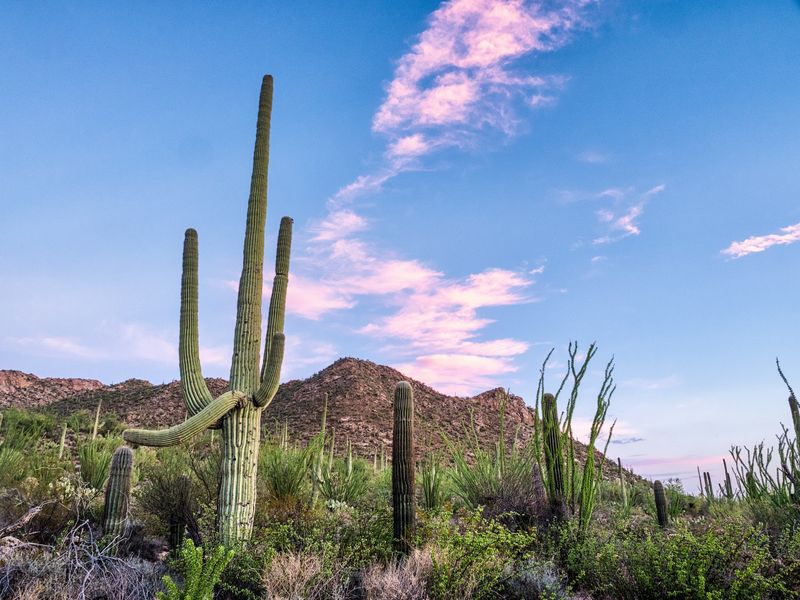
Those famous arm-waving saguaro cacti take a surprisingly long time before they ever raise a single limb. A saguaro usually needs to reach an age between 50 and 75 years, sometimes even close to 100, before growing its very first arm.
Here is another twist worth remembering. Some saguaros never grow arms at all, especially in harsh, dry spots where they pour every bit of energy into simply staying alive.
Growing arms is actually a clever survival strategy. More arms give the plant extra surface for its lovely white flowers and bright red fruit, both essential to the desert’s web of life.
Those flowers and fruit feed birds, bats, and other creatures that keep the ecosystem humming along. So the next time you spot a towering saguaro stretching out its limbs, remember the patient decades it spent reaching that welcoming pose across the sun-soaked Sonoran landscape.
6. The Saguaro’s Exclusive Address, Sonoran Desert
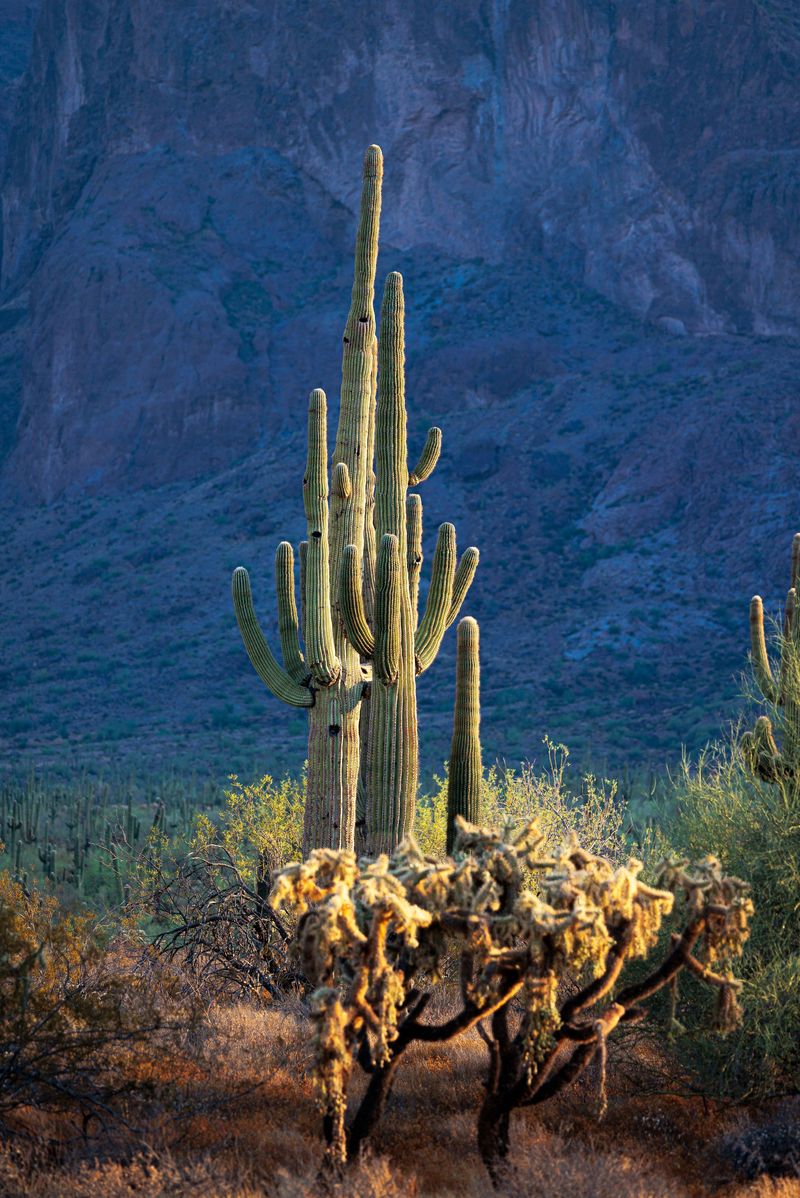
Although the saguaro has become a symbol of the entire American West, its natural home is surprisingly small. These giant cacti grow almost only within the boundaries of the Sonoran Desert.
That special ecosystem covers parts of Arizona, stretches into the Mexican state of Sonora, and barely brushes a tiny sliver of California. Beyond that, you simply will not find them growing wild.
What keeps these giants so picky about location? They need just the right balance of heat and rainfall and are especially sensitive to long stretches of freezing temperatures.
Their dislike of cold, along with a preference for elevations from sea level up to around 4,500 feet, keeps their range tightly limited. So when you finally see a saguaro up close, you are looking at more than a cactus. You are witnessing a living icon perfectly tuned to its very specific and cherished desert address.
7. Organ Pipes OfThe Desert
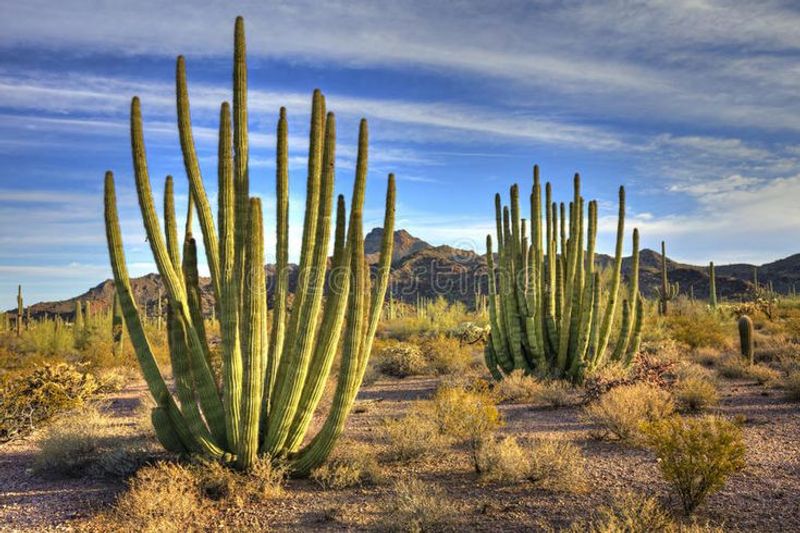
For a truly one-of-a-kind desert experience, point your travels toward Organ Pipe Cactus National Monument in Arizona. This protected area holds the honor of being the only place in the entire United States with large, natural stands of the rare organ pipe cactus.
Unlike its more famous saguaro cousin, the organ pipe cactus sends up many slender stems clustered together, rising straight from the ground like the pipes of a great church organ.
Located near the Mexican border, the monument offers exactly the warm conditions these multi-stemmed wonders need to thrive. Wandering through feels like strolling a wild botanical garden shaped entirely by nature.
Each cactus stands as a natural sculpture reaching toward the sky, punctuating the quiet desert with dramatic vertical shapes. Visiting this remote corner reminds you just how much unusual life flourishes within Arizona’s arid beauty, and why some places truly deserve their protected status.
8. Earth’s Ancient Scar
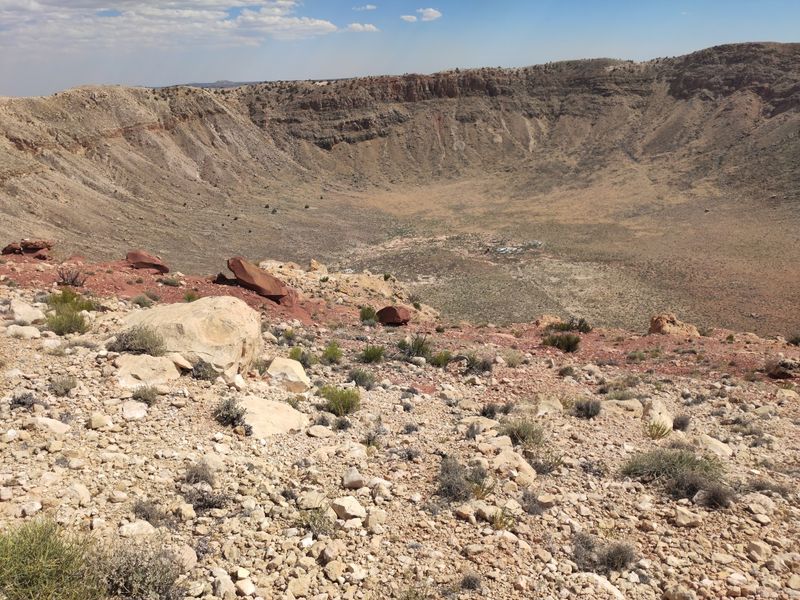
Prepare to feel wonderfully small standing at the edge of Meteor Crater in Arizona, one of the best-preserved impact craters on the entire planet. This enormous bowl formed roughly 50,000 years ago when a space rock about 150 feet across slammed into the ground.
The collision carved out a scar around six-tenths of a mile wide and nearly 550 feet deep. That is a serious dent left behind by a single cosmic visitor.
Many impact sites around the world have worn away over time, but Meteor Crater kept its dramatic shape and sharp rim remarkably well.
Standing along that rim, you can almost imagine the powerful moment when the sky itself reshaped this stretch of desert. It is a humbling and thrilling stop that quietly connects you to the vastness of space and the surprising forces that helped shape our world.
9. The Grand Canyon’s Timeline Twist
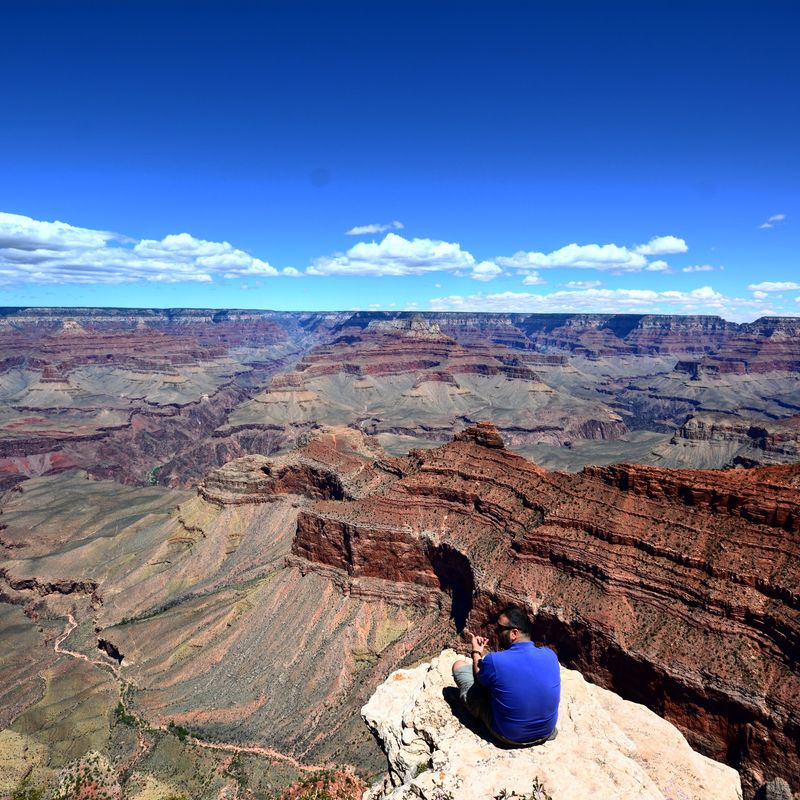
While the Grand Canyon dazzles millions with its size and sweeping views, a fascinating time puzzle hides inside its colossal walls. The canyon itself is actually quite young in geologic terms, carved mostly within the last five or six million years by the steady Colorado River.
Yet the rocks forming those glowing, layered walls are astonishingly ancient. Some of the oldest formations near the bottom reach close to two billion years old, between 1.7 and 1.84 billion years by most estimates.
That huge gap means erosion did not slowly build these layers. Instead, the river peeled them back, revealing chapters of Earth’s history that had been waiting quietly for eons.
Every colorful band tells a different part of that long story. Standing at the rim, you are gazing at a landscape that seems timeless yet was shaped by a surprisingly recent and endlessly dramatic tale.
10. A Petrified Past, Petrified Forest National Park
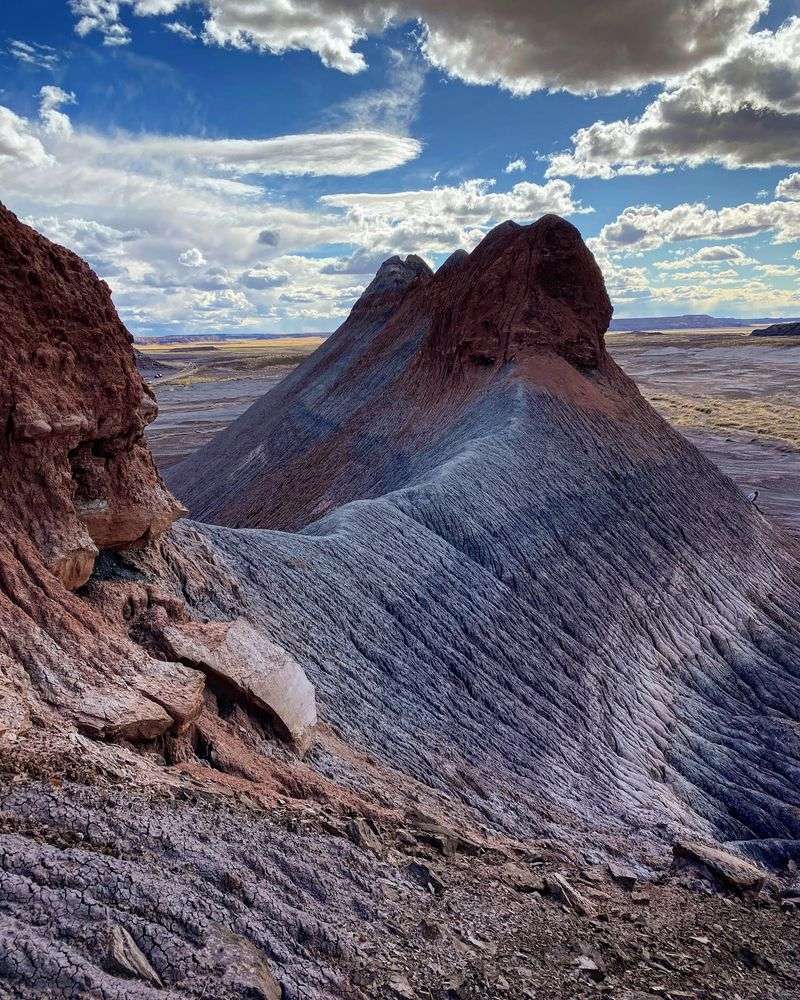
Step into a landscape where ancient forests turned to solid stone and you will find Arizona’s official state fossil, petrified wood. State law specifically honors Araucarioxylon arizonicum, an extinct conifer that once ruled the region.
Massive trunks of these prehistoric trees, some once growing up to 200 feet tall, now weather out of the colorful badlands within Petrified Forest National Park in northern Arizona.
What makes this fossil wood so spectacular is its dazzling range of colors, earning it the nickname rainbow wood. The reds, yellows, and purples are not paint at all.
They come from iron oxides and other minerals that slowly replaced the original wood over hundreds of millions of years. Wandering among these glittering logs feels like walking through an artist’s palette scattered across the desert floor, a colorful and quiet trip straight back to the Triassic period.
11. Arizona’s Official Neckwear
Fashion is taken seriously in Arizona, so seriously that the state gave itself an official piece of neckwear. On April 22, 1971, the state legislature named the bola tie, also spelled bolo tie, as Arizona’s official neckwear.
This distinctive accessory features a cord or braided leather strand with decorative tips, held together by an ornamental slide or clasp. It carries deep roots in Southwestern style and craftsmanship.
Bola ties, often shining with silver and turquoise, have been part of Hopi, Navajo, and Zuni silversmithing traditions since the mid-20th century. Each one can be a small work of wearable art.
While some folks treat it as casual, in Arizona you will spot bola ties at everyday errands and formal gatherings alike. Wearing one is a genuine sign of regional pride and a charming nod to frontier heritage that never really went out of style.
12. Cruising The Mother Road
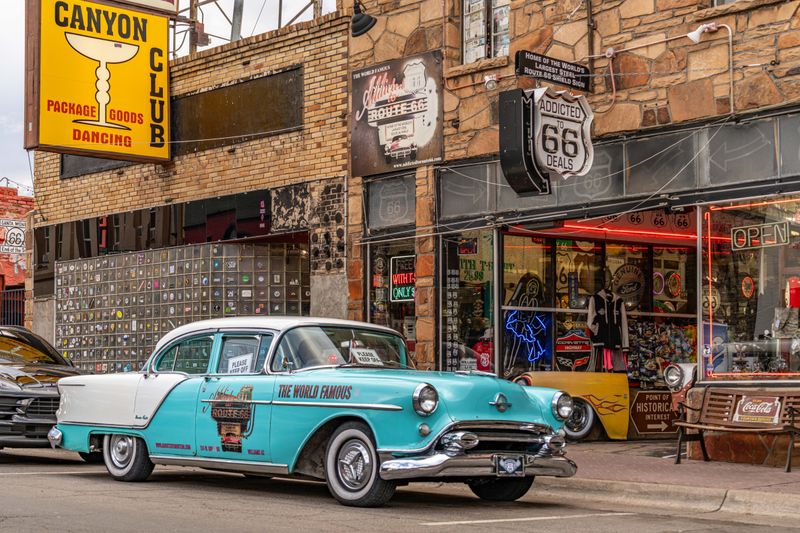
Road trip lovers and history fans have a real treat waiting along Arizona’s stretch of legendary Route 66. The state boasts America’s longest preserved section of this famous highway, warmly known as the Mother Road.
According to the Arizona Office of Tourism, roughly 385 miles of historic Route 66 wind across the state, giving travelers an unmatched chance to soak up this classic American byway.
Cruising it is not just about driving. It is about slipping into another era, rolling past charming small towns, vintage diners, and retro motels that recall the golden age of highway travel.
From the colorful murals in Seligman to the beloved Hackberry General Store, Arizona’s Route 66 unspools like a long ribbon of nostalgia and adventure. Roll down your windows, let the desert air rush in, and feel the enduring spirit of the open road guiding you along.
13. The Center Of It All
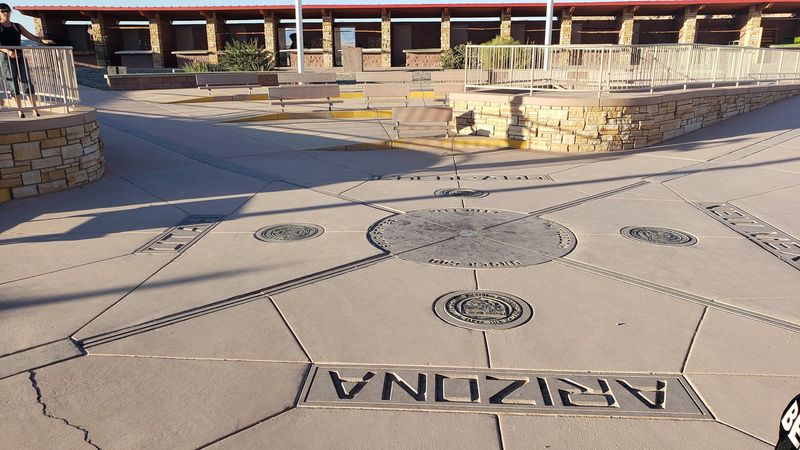
Get ready for a geographical bragging right unlike any other at the Four Corners Monument. This spot is the only place in the entire United States where four state borders meet at a single point: Arizona, Utah, Colorado, and New Mexico.
Imagine stretching out your arms and legs and standing in four states at once. It is the ultimate photo opportunity and a genuine bucket-list stop for many travelers.
The monument features a bronze disc set into a raised plaza, surrounded by the seals of each state so you can see exactly where one meets the next.
Managed by the Navajo Nation, the site is more than a map marker. Local Native American artisans often sell traditional crafts here, adding warmth and culture to the visit. It is a place where landscapes and communities come together, offering a memorable glimpse of the diverse American Southwest.