
10 Utah Ghost Towns Where The Desert Still Whispers
In the wide hush of Utah’s desert, ruins breathe and sand slides into empty windows. I follow the wind’s echo, collecting towns where life once clamored and then evaporated.
Tracks, chimneys, foundations, and rooms without roofs still murmur of ambition, ruin, and hope undone. What remains is fragmentary, haunted by desert dust, rusting metal, and the ghost of conversation.
Silence moves like water across streets that no longer hold names. Join me on this tumble-through time: ten ghost towns where you can almost taste salt on your tongue and hear a solitary footstep in a noonless afternoon.
1. Grafton
Shadows lengthen over orchards where fences lean like tired dancers, and the Virgin River still whispers nearby.
The abandoned homes sit quietly against the red cliffs, their porches brittle yet inviting, as if someone left only yesterday. You’ll notice swings that creak with the weight of memory, not children.
Grafton feels heartbreakingly intact, a place where silence rings louder than words. Walking its paths, I kept thinking how stubbornly beauty lingers. It’s haunting but strangely tender, the kind of ghost town that feels alive.
2. Frisco
A shriek of wind across slag heaps, a clang of rusted kilns, memory dragging itself across your thoughts.
At its peak in the 1880s, Frisco boasted perhaps 6,000 souls, 23 saloons and a violent reputation. Its mines yielded silver, zinc, lead and copper, fortunes that collapsed when the Horn Silver Mine caved in.
You might stumble among charcoal kilns, collapsed walls, and a lonely cemetery. Best visited in spring or fall to avoid unbearable heat or deep cold.
3. Thistle
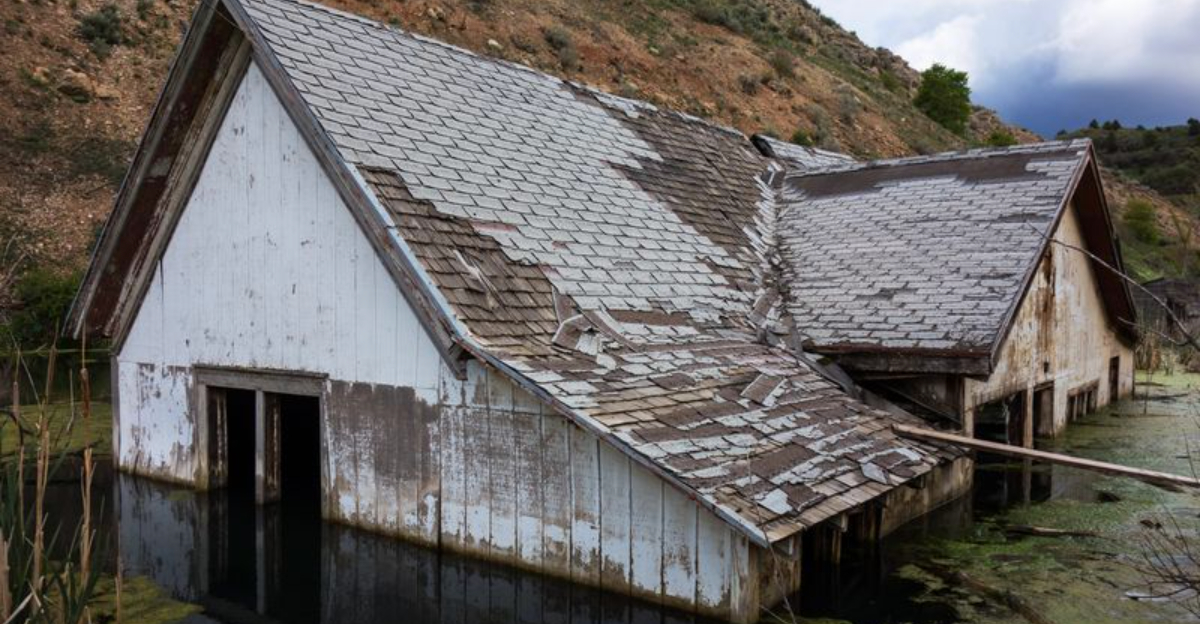
Look upstream: the river once surged until a catastrophic landslide drowned the town in 1983.
Thistle was a railroad service town. The massive earthflow dammed the Spanish Fork River, flooding much of the settlement and submerging buildings.
Now only fragments of structure and tilted walls poke up from debris. The flooded ruins demand respect: cross quietly lest you disturb submerged ghost-shapes.
4. Cisco
A rusted gas pump leans at an odd angle, like it gave up mid-breath. The desert wind rattles sheet metal, and colorless boards clap together as if applauding nothing at all. Cisco is scattered more than built, an accidental collection of remnants.
Once a pit stop for railroads and travelers, it withered when highways passed it by. What remains are shells of shacks, graffiti-scribbled walls, and skeletal vehicles slowly sinking into sand.
It feels chaotic yet oddly poetic, a junkyard turned desert poem where silence rules.
5. Silver Reef
This place wasn’t supposed to exist, who finds silver in sandstone? Prospectors did in the 1870s, and for a moment, Silver Reef glittered with fortune. Storefronts and hotels sprang up, saloons kept candles burning, and the town pulsed with noise.
Now the museum and ruins stand quiet under endless sky. Stones of old buildings lie scattered, still glowing warm at sunset.
If you visit, time your arrival near evening—the red cliffs light up and every broken wall casts long, dramatic shadows across the desert floor.
6. Iosepa
White stone markers dot the ground with Hawaiian names etched deep, startling against Utah’s emptiness. They’re what remains of Iosepa, a settlement built by Polynesian Mormon converts in the late 1800s.
The isolation here is fierce; the desert feels like it swallows everything except those graves. Walking among them is humbling, quiet, almost like trespassing on a fragile memory. The town itself is gone, absorbed back into earth.
Honestly, Iosepa left me reflective, it feels less like a ghost town, more like a whispered prayer.
7. Sego
Graffiti flickers bright on cracked concrete, an odd contrast to the desert’s muted tones. The first thing you notice is how quiet the canyon feels, its cliffs looming over skeletal remains of a coal camp.
Sego began with promise in the early 1900s, miners chasing veins of coal that rarely delivered enough. The railroad came and went, leaving only half-built dreams.
Today it’s scattered foundations and tunnels, slowly devoured by weeds. It feels raw, untamed, like the desert never cared to keep secrets.
8. Silver City
Silver City thrived briefly on mining, its population booming as prospectors rushed to claim ground. For a short while, its saloons roared, stagecoaches rolled in, and lives flared fast. Then the ore thinned, and people drifted away, leaving behind only shells.
What you find now are faint outlines of buildings, forgotten timbers, and rumors of a few stubborn spirits. The hush feels heavy.
Tip: stop in nearby Eureka first, where history museums give context, otherwise Silver City’s emptiness might feel like a puzzle missing half the pieces.
9. Spring Canyon
Snow still lingers in shaded creases, even when the valley below turns warm. That quirk of altitude makes Spring Canyon’s ruins look strangely bright, roofs collapsed under a shifting blanket of white.
Coal once fueled this place, and whole communities lived high in the Wasatch. The 1940s marked its decline, mines closing, families leaving houses to weather away.
The contrast of crisp mountain air and decaying homes unsettled me. It’s haunting but also beautiful, nature reclaims here with a patience that feels almost tender.
10. Kelton
Railroad spikes still poke through the dirt, small iron reminders of why Kelton mattered. This was once a bustling hub on the Transcontinental Railroad, with trains, hotels, and lives crisscrossing through the desert.
When tracks were rerouted, Kelton’s lifeline vanished, and wind became its only resident. Today there’s little left but foundations, glass shards, and weather-beaten wood.
I loved Kelton for its starkness. Standing there, I felt the weight of how quickly progress forgets. It’s empty, yes, but strangely freeing in its silence.