
10 Vermont Mountain Towns Where Maple Syrup Is Still Made The Old-Fashioned Way
Vermont’s mountain towns hold onto maple syrup traditions that span generations. Wood-fired evaporators still bubble and steam in these communities, where families tap trees by hand and boil sap over crackling fires.
Many producers use metal buckets instead of modern tubing systems, creating syrup the same way their great-grandparents did decades ago. Let’s see which towns in Vermont still follow tradition.
1. Underhill – Maple Crest at Robinson Hill Farm
Robinson Hill Farm houses one seriously impressive wood-fired evaporator that commands respect from maple syrup enthusiasts. This substantial piece of equipment produces exceptional syrup using time-honored techniques passed down through farming families.
Located on Mt. Mansfield’s western slope, the farm benefits from prime sugarbush conditions that create ideal sap flow. The elevation and forest composition provide perfect growing conditions for sugar maples.
Their farmstand and sugarhouse retail operation welcomes visitors, though checking current hours before visiting ensures the best experience possible.
2. Stowe – Nebraska Knoll Sugar Farm & Trapp Sugarhouse
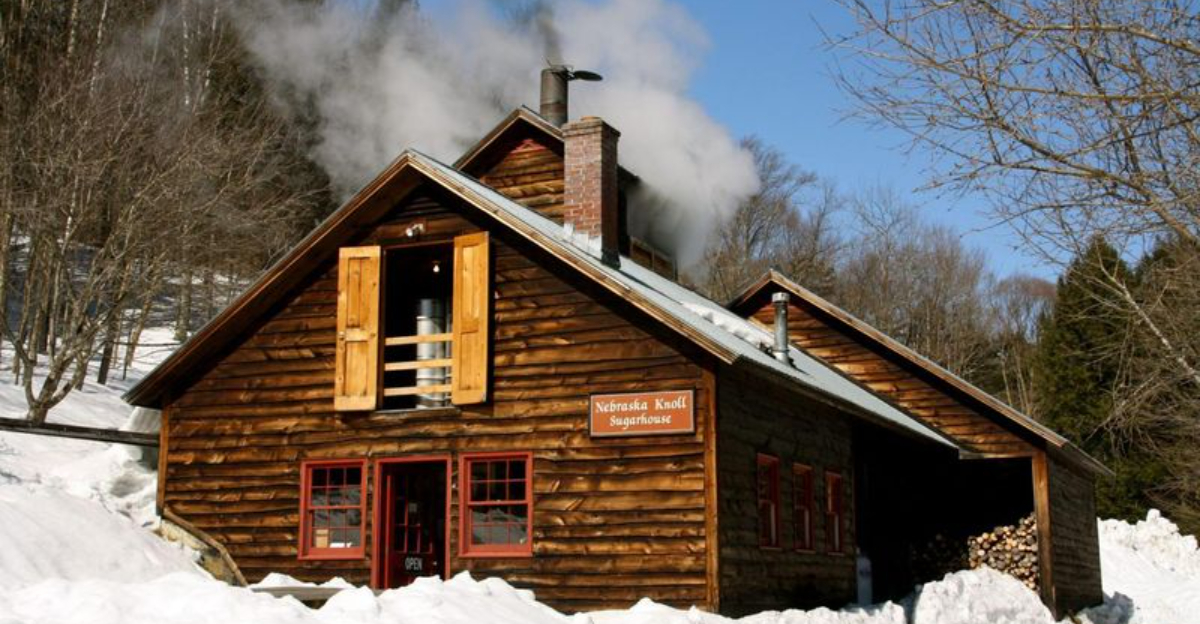
Nebraska Knoll operates their wood-fired evaporator with impressive dedication to traditional methods. Visitors can witness the authentic boiling process during spring weekends when steam rises from their classic sugarhouse.
Meanwhile, Trapp Family Lodge offers guided maple tours that showcase bucket collection and wood-fired boiling techniques. Both operations sit beautifully on Mt. Mansfield’s shoulders, providing picture-perfect sugaring scenery that makes every visit memorable.
Nebraska Knoll welcomes guests during boiling season and by appointment, while Trapp runs seasonal tours for maple enthusiasts.
3. Huntington – Couching Lion Maple Sugar Farm
Small-batch production defines Couching Lion’s approach to maple syrup making. Their wood-fired operation emphasizes quality over quantity, creating distinctive syrup that reflects the unique terroir of Camel’s Hump’s foothills.
Bird-friendly forest management practices make this farm environmentally conscious while maintaining traditional production methods. A convenient self-serve kiosk operates year-round on the farm road for easy purchases.
Tucked below Camel’s Hump in the Green Mountains, the location provides stunning backdrop for maple production. Tours and tastings are available during sugaring season with advance notice.
4. Warren – West Hill Sugar Orchard
Bucket collection remains the preferred method at West Hill Sugar Orchard, where tradition trumps modern convenience. Workers still trudge through snow-covered forests, gathering sap from individual trees using metal buckets that clang musically in the crisp air.
Wood fire provides the only heat source for their evaporator, creating syrup with distinctive flavor profiles that reflect patient, careful boiling. The Mad River Valley location offers classic Vermont mountain scenery.
March and early April provide the best visiting opportunities when the sugarhouse operates at full capacity during prime sugaring season.
5. Lincoln – Twin Maple Sugarworks
Wood firing remains the heart of Twin Maple’s operation, where owners proudly maintain their arch with traditional fuel sources. Open almost daily during the season, they welcome visitors to witness authentic maple syrup production methods.
Located in Lincoln in the western Green Mountains, this family sugarworks benefits from elevation and forest conditions that create exceptional sap flow. The mountain location offers breathtaking views alongside educational experiences.
Shop visits and tastings run from 9 to 6, with tours available by request for those wanting deeper insight into traditional maple syrup production techniques.
6. Shrewsbury – Krueger-Norton Sugarhouse
Off-grid operation defines Krueger-Norton’s impressive commitment to sustainable maple syrup production. Solar panels, wind turbines, and hydroelectric systems power this remote sugarhouse while wood fires handle the essential boiling process.
Steep, forested hills south of Killington Peak provide ideal sugarbush conditions for this back-to-the-woods operation. The challenging terrain requires extra effort but rewards producers with exceptional sap quality.
This small family operation on Button Hill Road requires advance calls for visits, ensuring personalized attention for guests interested in off-grid maple syrup production methods.
7. South Woodstock – Sugarbush Farm
Educational demonstrations showcase traditional maple syrup-making techniques at Sugarbush Farm, where wood fires provide authentic boiling experiences. Bucket versus tubing displays help visitors understand different collection methods and their historical significance.
Quiet hills above Woodstock village create perfect sugarbush conditions while maintaining a peaceful rural atmosphere. The location offers easy access to traditional maple production without sacrificing scenic beauty.
Year-round displays welcome visitors regardless of season, though March through April provides the most exciting time when active boiling fills the sugarhouse with sweet-smelling steam and bustling activity.
8. Cambridge/Jeffersonville – Wyckoff Family Maple
Wood-fired cooking remains central to Wyckoff Family Maple’s production philosophy, where flames dance beneath evaporator pans filled with bubbling sap. Steam rising from their sugarhouse signals active maple runs to passing visitors.
Smugglers’ Notch location lies on the western side of the Green Mountains, with abundant sugarbush resources. Dense maple forests and favorable elevation create ideal conditions for consistent sap production throughout the sugaring season.
Family shop operations at the sugarhouse offer direct sales and personal interaction with producers who share generations of maple syrup knowledge and local mountain wisdom.
9. Middletown Springs – Mahar Maple Farm
Public open houses feature Mahar Maple Farm’s wood-fired evaporator in full action, creating memorable experiences for maple enthusiasts. Steam fills the air while families demonstrate traditional boiling techniques passed down through generations.
Tiny mountain town location at the Taconic Range’s edge provides an intimate community atmosphere rarely found elsewhere. The remote setting preserves authentic rural character while maintaining traditional maple production methods.
Appointment visits and Maple Open House Weekend provide the best opportunities to experience this small-scale operation where personal attention and traditional techniques create exceptional Vermont maple syrup.
10. Weston – Bobo’s Mountain Sugar
Boutique maple syrup production characterizes Bobo’s Mountain Sugar, where wood-fired Vermont maple syrup emerges from south-facing hills above this postcard-perfect village. Small-batch attention ensures exceptional quality in every bottle produced.
Classic New England village atmosphere surrounded by ski mountains creates prime sugaring country with ideal elevation and exposure. The scenic location attracts visitors year-round, though maple season provides the most authentic experience.
Social media and website updates provide seasonal availability information for this small producer, where limited quantities make advance planning essential for maple syrup purchases.