
9 Vintage Louisiana Snacks Locals Still Remember
Growing up in Louisiana meant having access to some of the most unique snacks you couldn’t find anywhere else.
These treats weren’t just food, they were part of our cultural identity.
I still remember racing to the corner store with my cousins after school, pocket change jingling, eager to grab our favorite local goodies.
Let me take you on a nostalgic journey through nine vintage Louisiana snacks that still make locals’ mouths water at the mere mention.
1. Hubig’s Pies: The Pocket-Sized Taste Of New Orleans
Biting into a Hubig’s Pie was like unwrapping a little piece of New Orleans history. The flaky crust would crumble slightly in your hands, releasing that sweet aroma of fruit filling that could stop you in your tracks. My grandpa used to bring them home every Friday – apple for him, lemon for me.
These hand-sized treats weren’t fancy or pretentious. They were simple, honest pastries wrapped in wax paper with that iconic mascot, Savory Simon, winking at you from the package. The factory on Dauphine Street pumped out thousands daily until that heartbreaking fire in 2012 put production on hold.
What made Hubig’s special wasn’t just the taste – though that sweet, jammy filling was certainly memorable. It was how these pies connected generations. I watched businessmen in suits grab them alongside construction workers and schoolkids. Nobody was too good for a Hubig’s.
The flavors rotated with the seasons – apple, lemon, peach, pineapple, chocolate, coconut – each with their devoted followers. Arguments over the best flavor could split families (peach was clearly superior, no matter what my brother says).
2. Southern Maid Donuts: The Late-Night Louisiana Legend
My first Southern Maid donut experience happened at midnight during a road trip with my dad. We pulled into this unassuming shop where the HOT NOW sign glowed like a beacon. The aroma hit me before we even opened the door – that magical combination of fresh dough, hot oil, and sweet glaze that seems to bypass your nose and go straight to your soul.
Southern Maid wasn’t just another donut chain. These pillowy circles of perfection earned such fame that Elvis Presley himself recorded their radio jingle – the only commercial endorsement The King ever made. The donuts came out piping hot, with that perfect balance of crispy exterior and cloud-soft interior that modern chains just can’t replicate.
Watching them being made was half the experience. The donut-making process was visible through a window where you could see them floating in oil, getting flipped, and then traveling down a river of glaze. Pure kitchen choreography!
What made Southern Maid special was their simplicity. No fancy flavors or wild toppings – just perfectly executed classics. The glazed was their masterpiece, but the chocolate-covered and jelly-filled had their devoted followers too.
3. Elmer’s CheeWees: The Original Cheese Curl With Louisiana Attitude
Before Cheetos conquered the world, Louisiana kids were already orange-fingered thanks to Elmer’s CheeWees. I discovered these crunchy treasures at my aunt’s corner store in Metairie, where she’d slip me a bag whenever mom wasn’t looking. The bright yellow packaging with that cartoon face practically winked at you from the snack aisle.
Created in New Orleans back in 1936, Elmer’s CheeWees claim to be the original cheese curl – beating that famous Chester Cheetah to the punch by decades. The difference? CheeWees were crunchier, cheesier, and came in unique shapes that somehow made them taste even better. That distinct crackly texture gave your jaws a proper workout compared to their softer national competitors.
Hurricane Katrina nearly washed away this Louisiana tradition when it devastated the factory in 2005. But in true New Orleans fashion, Elmer’s bounced back stronger than ever. The factory reopened, and locals celebrated like a family member had returned home.
What makes CheeWees special is their intensity – these aren’t shy snacks. The cheese flavor hits hard, with that perfect balance of salt that keeps you reaching back into the bag. They come in multiple varieties now, but the original cheese remains the champion.
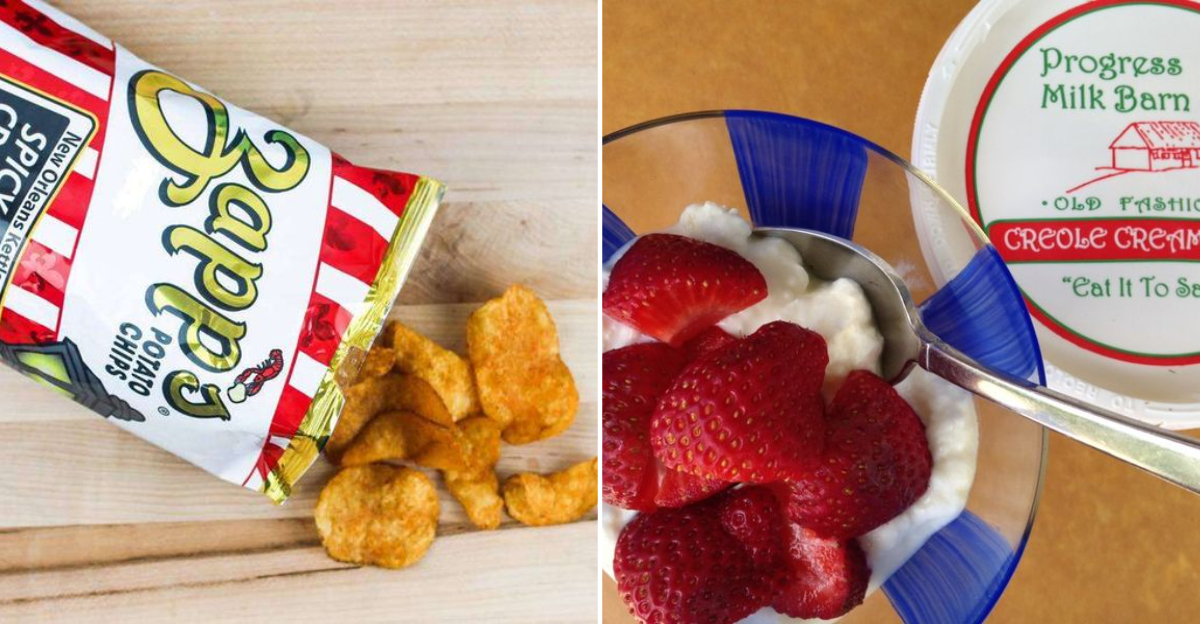
4. Zapp’s Kettle Chips: The Potato Chip With Cajun Soul
My first encounter with Zapp’s was at a crawfish boil when my uncle handed me a bag of their Cajun Crawtators. “Try these instead of those boring national brands,” he said with a wink. One crunch and I was converted – these weren’t just potato chips; they were a flavor explosion wrapped in a distinctively loud foil bag.
Ron Zappe started making these kettle-cooked treasures in 1985 after moving to Louisiana and finding the local chips lacking. He set up shop in Gramercy, creating chips with an audacious crunch and flavors that captured Louisiana’s bold culinary spirit. Each batch was kettle-cooked in peanut oil, giving them that perfect thick-cut texture that could stand up to the heartiest dips without breaking.
The flavors are what made Zapp’s legendary. Spicy Cajun Crawtators tasted like they’d been seasoned at a crawfish boil. Voodoo chips combined salt, vinegar, and smoky BBQ in a mysterious blend that became their signature. Even their regular flavors seemed to have extra attitude.
Opening a bag of Zapp’s was a multisensory experience – that distinctive pop of the foil bag, the intense aroma that escaped, and the substantial weight of each chip. They weren’t those flimsy, air-filled imposters; these were serious potato chips for serious snackers.
5. Creole Cream Cheese: The Breakfast Delicacy Time Almost Forgot
Grandma’s Sunday morning ritual always included a bowl of Creole cream cheese sprinkled with sugar and topped with fresh fruit. As a kid, I thought everyone ate this tangy, smooth delicacy for breakfast. It wasn’t until college that I realized this wasn’t a universal experience but a distinctly Louisiana tradition that had nearly vanished.
Creole cream cheese isn’t like the Philadelphia brick in your fridge. It’s closer to a farmer’s cheese – slightly tart, with a texture somewhere between yogurt and ricotta. Made from skim milk curdled with rennet and left to drain, it was originally a practical way for Creole families to preserve milk before refrigeration became common.
By the 1980s, this once-staple of Louisiana breakfasts had nearly disappeared. Commercial dairies stopped production, and the knowledge of how to make it at home began fading with each passing generation. Thankfully, a few passionate food preservationists and local dairies like Mauthe’s stepped in to revive this cultural treasure.
The beauty of Creole cream cheese lies in its versatility. Traditionalists eat it for breakfast with sugar and fruit. Others use it in king cakes, cheesecakes, or savory dishes. My grandmother would sometimes mix in honey and vanilla, creating a dessert that made fancy ice cream seem pointless.
6. Natchitoches Meat Pies: The Original Louisiana Hot Pocket
My first Natchitoches meat pie happened at the Christmas Festival when I was eight. Standing in the chilly December air, I bit through that crispy golden crust into a steaming pocket of spiced meat that nearly burned my tongue – but I couldn’t stop eating it. That perfect hand-held pie became my gold standard for what street food should be.
These half-moon pastries originated with the French colonists who settled Natchitoches (pronounced “NACK-a-tish”), Louisiana’s oldest town. Over generations, they evolved to incorporate Spanish and Southern influences, resulting in a unique culinary treasure. The filling is a savory mixture of ground beef and pork seasoned with the holy trinity of Cajun cooking – bell peppers, onions, and celery – plus garlic and spices that vary slightly from maker to maker.
What makes these pies special is their perfect portability. Unlike their messier cousin, the empanada, Natchitoches meat pies have a sturdy crust that holds up to their juicy filling. They’re designed to be eaten while walking through a festival or watching a football game – no plate required.
The meat pie is so beloved that it was named the official state food of Louisiana in 2003. Locals debate whose recipe reigns supreme, with some families guarding their techniques like state secrets. The proper way to eat one? Hold it with a napkin wrapped around the bottom half to catch any escaping juices.
7. Louisiana Boiled Peanuts: The Roadside Delicacy That Divides Opinions
The smell hit me first – that unmistakable aroma of peanuts slow-boiled in salty brine with spices that seemed to perfume every rural gas station between Shreveport and New Orleans. My grandfather would always pull over when we spotted a hand-painted “BOILED P-NUTS” sign, buying a soggy paper bag full of these soft, salty treasures that bewildered my northern cousins.
Boiled peanuts are the ultimate Louisiana road trip snack – though our neighbors in Mississippi and Alabama might fight me on that claim. Unlike their roasted counterparts, these peanuts are harvested young and green, then boiled for hours in heavily salted water, often with cajun seasoning, garlic, or even crab boil thrown in for extra kick.
The resulting texture creates an immediate love-it-or-hate-it reaction. First-timers expect the crunch of a roasted peanut but instead get something closer to a bean – soft, yielding, and intensely flavored. Watching someone try their first boiled peanut is a favorite Louisiana pastime; their expression tells you immediately which camp they’ll fall into.
Opening each shell releases a small pool of the spiced brine – a mess that’s part of the experience. Experts develop a technique for extracting the nuts while minimizing the drip factor. Newspaper or paper towels are essential companions for this snack.
While you can find them in some grocery stores now, true boiled peanut enthusiasts seek out roadside stands where they’re made fresh daily in massive pots.
8. Hush Puppies: The Crispy Sidekick To Louisiana Seafood
My earliest fishing memories always end the same way – sitting at a weathered picnic table as my grandfather transformed our catch into a feast, complete with golden-brown hush puppies that would steam when you broke them open. These crispy cornmeal fritters weren’t just a side dish; they were little orbs of pure joy that made even a modest catch feel like a celebration.
Louisiana hush puppies have a distinctive personality compared to their cousins across the South. Ours tend to be more heavily seasoned with the holy trinity (bell peppers, onions, and celery), often with a kick of cayenne or hot sauce mixed right into the batter. Some families add corn kernels, others swear by minced jalapeños, but all agree they should be crispy outside, tender inside, and never, ever greasy.
The origin stories are as varied as the recipes. Some say they date back to Civil War soldiers who would toss fried cornbread to barking dogs, telling them to “hush, puppy.” Others trace them to Cajun fishermen who needed a quick way to use leftover cornmeal batter. Whatever their history, they became the perfect accompaniment to fried seafood.
The proper hush puppy technique is hotly debated at family gatherings. My aunt insisted on using two spoons to form perfect ovals, while my grandfather preferred dropping irregular dollops straight from his fingers into the hot oil. Each method produces slightly different results, and each cook will defend theirs passionately.
9. Roman Candy: The Rolling Sweet Treat Of New Orleans
My first encounter with the Roman Candy wagon happened during a sweltering July afternoon in the Garden District. The mule-drawn cart appeared like a mirage – a white and red Victorian-style wagon that seemed teleported from another century. The elderly gentleman inside handed me a long stick of taffy wrapped in wax paper, twisted at both ends like a colorful Christmas cracker.
Roman Candy isn’t just a sweet treat; it’s a living piece of New Orleans history that’s been rolling through the city’s streets since 1915. Sam Cortese started selling his grandmother’s Italian taffy recipe from a wagon he built himself. More than a century later, his descendants still operate the same wagon, pulled by the same breed of mule, selling the same hand-pulled candy for a price that feels stuck in time.
The taffy itself is unlike modern commercial versions – firmer, less sticky, and with flavors that taste authentically of chocolate, vanilla, or strawberry rather than artificial approximations. Each stick is hand-pulled and wrapped in wax paper with a twist at each end, a technique unchanged for generations.
What makes Roman Candy special isn’t just its recipe but its ephemeral nature. Finding the wagon requires luck or local knowledge, as it follows no fixed schedule. Spotting it on a New Orleans street corner creates an instant sense of urgency – you must get your candy now because tomorrow the wagon might be across town.