
10 Virginia Dishes That Only Make Sense If You Grew Up Here
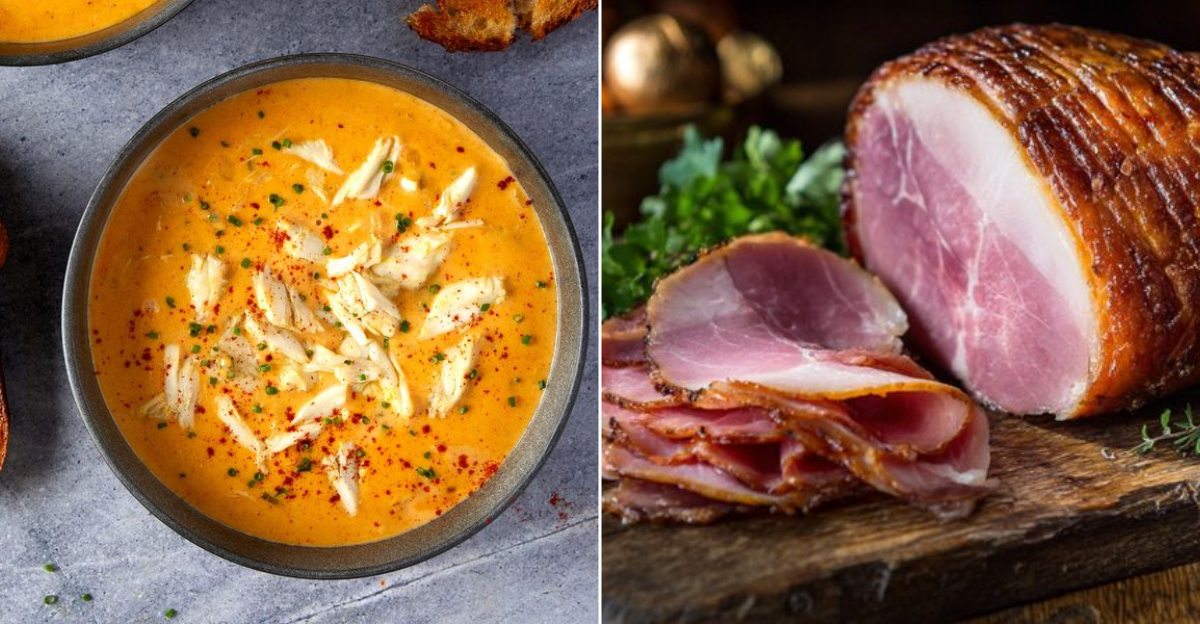
Growing up in Virginia shaped my taste buds in ways I didn’t fully appreciate until I left home. The state’s culinary heritage is a remarkable blend of coastal treasures and hearty mountain traditions, offering a flavor profile that feels entirely its own.
Fresh oysters and crab pulled from the Chesapeake Bay sit side by side with country ham, spoonbread, and peanut pies from inland kitchens.
To outsiders, some of these iconic dishes may seem unusual or even puzzling, but for Virginians, they are inseparable from childhood memories, family gatherings, and a sense of place that only the Old Dominion can provide.
1. Virginia Ham Biscuits
Nothing beats the salty-sweet harmony of paper-thin Virginia ham tucked inside a warm, buttery biscuit. My grandma would rise before dawn on Sunday mornings to cure her ham, a process she learned from her mother who swore the secret was in the brown sugar rub.
These aren’t your average breakfast sandwiches. The ham must be Virginia-cured – smoky, salty, and sliced so thin you can almost see through it. The biscuits should crumble slightly when you bite in, releasing steam that carries the aroma of fresh butter.
Country folks serve them room temperature at picnics, while city dwellers warm them for fancy brunches. Either way, they’re pure Virginia comfort.
2. Brunswick Stew
Family feuds have started over who makes the best Brunswick stew! My uncle Mike’s version simmers for eight hours until you can stand a wooden spoon straight up in the pot – the true test of proper thickness according to Virginia stew masters.
Originally made with squirrel meat (yes, really), today’s versions typically blend chicken, pork, lima beans, corn, tomatoes, and potatoes into a hearty, stick-to-your-ribs concoction. The consistency should be somewhere between soup and concrete.
Every fire department and church in Virginia hosts Brunswick stew fundraisers come fall, selling it by the quart to locals who know real stew doesn’t come from a can.
3. Peanut Soup
First-timers always raise eyebrows when I mention peanut soup. “Like Thai peanut sauce?” they ask. Not even close! This colonial-era delicacy showcases Virginia’s peanut-growing prowess with a velvety, savory broth that warms you from the inside out.
The soup’s silky texture comes from peanut butter melted into chicken stock, enhanced with onions, celery, and just a hint of cream. Traditionally served with crispy breadsticks for dipping, it’s an unexpected flavor combination that somehow works perfectly.
I remember visiting historic Williamsburg as a child and feeling so sophisticated sipping my peanut soup at King’s Arms Tavern, pretending to be Thomas Jefferson enjoying his favorite dish.
4. Smithfield Ham
Smithfield ham isn’t just ham – it’s an institution protected by actual Virginia law! Only hams cured in Smithfield, Virginia can legally bear the name, making them the champagne of pork products.
The secret lies in the salt-curing and long aging process, sometimes up to two years. The result? An intensely flavored, ruby-red meat with a saltiness that’ll make your lips pucker. My father would thinly slice it for special occasions, treating it with the reverence usually reserved for fine wine.
Out-of-staters often find it overwhelmingly salty, but Virginians know to pair small portions with something sweet like honey biscuits or fig preserves to balance the flavor explosion.
5. Chesapeake Bay Blue Crab Cakes
Blue crab cakes are serious business here – we don’t mess around with fillers! My summer memories revolve around newspaper-covered picnic tables piled high with steamed crabs, everyone picking meat for tomorrow’s crab cakes.
A proper Virginia crab cake should be mostly jumbo lump crabmeat held together by little more than wishful thinking and maybe a touch of mayonnaise. Pan-fried until golden brown, they need nothing more than a squeeze of lemon. Those breadcrumb-heavy hockey pucks served elsewhere? We call those “crab-flavored breading cakes.”
The sweet, delicate flavor of Chesapeake Bay blue crab simply can’t be replicated. Trust me, I’ve tried crab cakes in Maryland (don’t tell my neighbors I said this), but Virginia’s are superior.
6. Spoon Bread
Southerners argue fiercely about spoon bread’s texture, but Virginia’s version falls gloriously between cornbread and soufflé. So moist you need a spoon to eat it (hence the name), this buttery creation melts in your mouth like corn-flavored clouds.
My aunt Mabel’s recipe calls for stone-ground cornmeal, never the packaged stuff. She’d serve it piping hot from the oven, watching with satisfaction as we’d dig in while it was still puffed and proud before inevitably collapsing into custardy goodness.
Yankees might mistake it for undercooked cornbread, but Virginians know better. It’s particularly divine alongside country ham or alongside Brunswick stew, soaking up all those savory juices.
7. Fried Oysters
Virginia’s oyster bounty transforms into crispy perfection when dredged in cornmeal and briefly kissed by hot oil. The coastal tradition dates back centuries, but my first fried oyster experience came during a Tidewater autumn festival when I was ten.
The perfect fried oyster should have a crunchy exterior that gives way to the briny, tender treasure inside. We don’t over-batter them like some states do – that would mask the delicate flavor of our prized Chesapeake bivalves.
Locals debate the best accompaniment: cocktail sauce, remoulade, or simply a squeeze of lemon. My grandmother insisted on only eating fried oysters in months containing the letter ‘R’ – an old rule ensuring they’re harvested during the cooler, safer seasons.
8. Country Ham & Red-Eye Gravy
Red-eye gravy mystifies outsiders with its coffee-infused simplicity. After frying thick slices of salty country ham, you deglaze the pan with strong black coffee, creating a thin, savory sauce with a caffeine kick that’ll wake you right up!
My grandfather would save his morning coffee dregs specifically for this purpose. The name comes from the reddish circle of fat that forms on the surface, resembling a bloodshot eye. Pour it over grits or biscuits alongside your ham for an authentic Virginia breakfast experience.
City folks might turn up their noses at this humble concoction, but rural Virginians know the magic that happens when ham drippings meet coffee. It’s not pretty, but it transforms plain ham into something transcendent.
9. She-Crab Soup
Female blue crabs hide a culinary treasure – their bright orange roe adds rich flavor and color to our velvety she-crab soup. My coastal grandmother would chase us kids away while preparing it, claiming the secret ingredient was “just a splash” of sherry, though her heavy pour suggested otherwise!
The soup’s silky texture comes from cream, butter, and crab roe whisked together with delicate crabmeat. Modern versions often skip the roe due to conservation efforts, but traditionalists insist it’s not authentic without it.
Virginians serve this luxurious soup as a first course at special occasions, topped with additional sherry tableside. The flavor is delicately sweet yet complex – like the Chesapeake itself distilled into a bowl.
10. Soft-Shell Crabs
Biting into an entire crab – shell and all – seems bizarre until you’ve experienced the seasonal magic of soft-shells. These blue crabs caught just after molting their hard shells become completely edible, offering a sweet-briny crunch that’s uniquely Virginian.
My family celebrated the first soft-shells of spring like a holiday. Simply dusted with flour, pan-fried until crisp, and served on white bread with mayo and lettuce – no fancy preparations needed. The legs should shatter like delicate potato chips when you bite them.
The season is fleeting, typically May through July, which makes them even more special. Out-of-staters often can’t get past the idea of eating the whole crab, but Virginians know it’s worth embracing the weird to taste these seasonal treasures.