
16 Virginia Small Towns That Wear Their Brightest Winter Wonderland Lights For Christmas
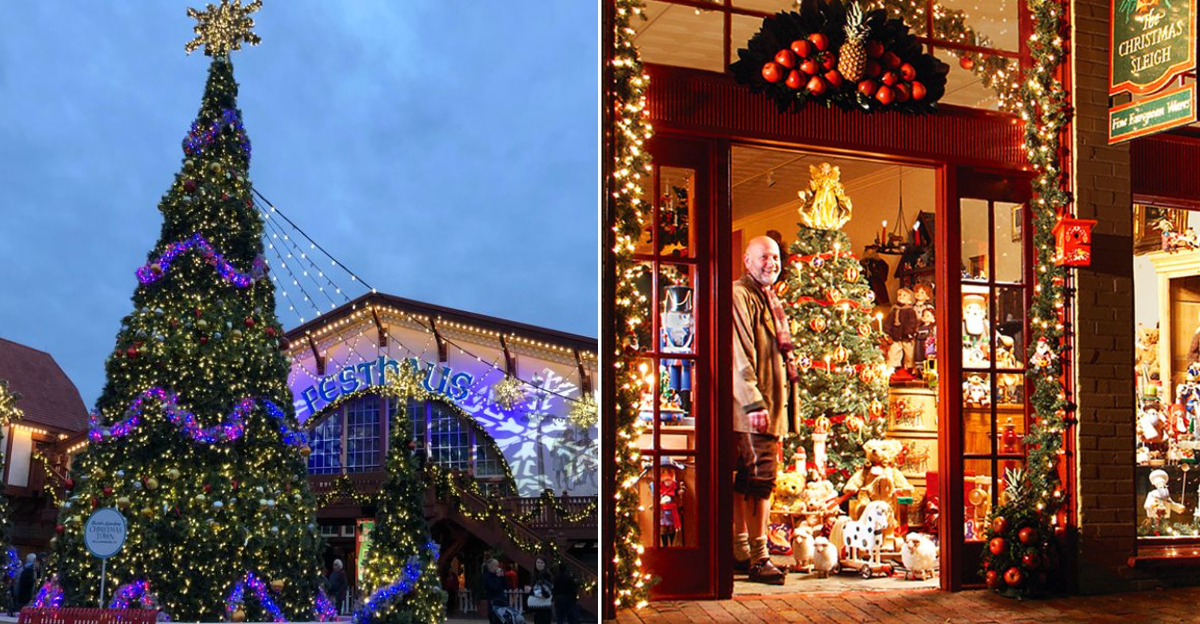
Winter light has a way of changing how a place breathes, and I’ve noticed that Virginia’s smaller towns seem especially aware of this, as if they understand that when the days shorten and the air sharpens, illumination becomes less about brightness and more about reassurance.
I tend to arrive just before dusk, when storefronts are closing up and the streets feel briefly undecided, and then the lights begin to come on one by one, tracing outlines you might have walked past all summer without really seeing.
What strikes me is how human the scale feels, never overwhelming, never designed to impress from a distance, but tuned instead to the pace of someone walking slowly, hands in pockets, willing to take the long way around.
In places where cobblestones still hold the memory of older footsteps or ferry docks stretch quietly into dark water, the glow settles gently, wrapping historic districts in color that respects the age of the bricks and the honesty of a cold night.
I’ve found that these displays aren’t trying to reinvent anything, and that restraint is exactly what gives them weight, because they feel like a continuation of something rather than an interruption.
Each town seems to make a series of small, thoughtful decisions, where to hang a strand, which building to outline, how much is enough before it becomes noise.
Spending time with these lights becomes a kind of ritual in itself, one that invites lingering and conversation, reminding you that winter doesn’t have to be endured so much as entered.
Think of this as an invitation to wander through places where the bulbs feel most alive, and to notice how each town quietly puts its own handprint on a tradition that only works when it’s handled with care.
1. Staunton
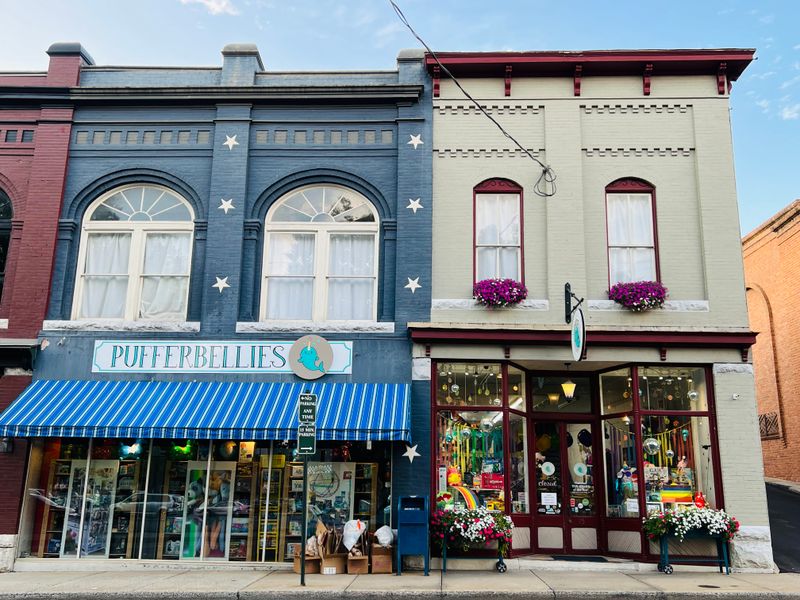
Cold air slides downhill along Beverley Street while storefront lights blink in steady rhythm, reflecting off slate sidewalks and brick façades in a way that makes the entire downtown feel composed rather than busy.
Queen Anne and Victorian buildings catch the glow like polished metal, their details outlined just enough to be legible without turning the street into a stage set.
Musicians sometimes tuck themselves beneath marquees, their notes cutting cleanly through the chill and giving the lights a soundtrack that feels unplanned but fitting.
Staunton’s late nineteenth century architecture has been carefully preserved, and the holiday lighting follows that same philosophy of emphasis rather than excess.
Instead of flooding façades, bulbs trace cornices, windows, and signs, allowing the buildings to remain the main characters.
Coffee shops become natural pauses along the route, warm pockets where you can watch headlights braid briefly with garlands outside.
A slow loop through downtown ends feeling complete rather than rushed, as if the town itself set the pace.
2. Middleburg
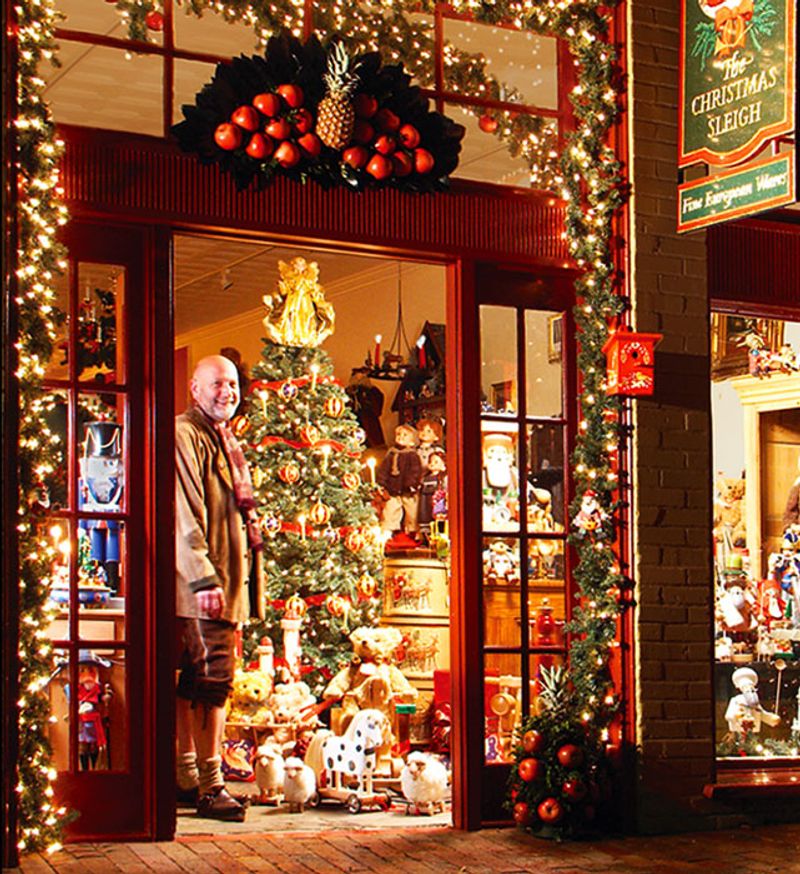
The first sound you notice here is often the soft jingle of horse tack rather than music, echoing beneath white lights that stretch politely across Washington Street.
Middleburg’s decorations lean restrained and traditional, favoring evergreen swags, foxhunting reds, and window displays that glow like small hearths rather than spotlights.
Sidewalks feel calm and orderly, encouraging strolling rather than clustering, with light bouncing gently off stone walls and carriage entrances.
The town’s equestrian heritage shapes both its events and its visual language, grounding the holiday atmosphere in long standing local ritual.
Eighteenth and nineteenth century storefronts keep the scale intimate, preventing the lights from ever feeling oversized or theatrical.
On busier evenings, quieter side streets offer softer views where decorations feel almost private.
The effect is festive without noise, as if the town prefers a well tailored coat to a sequined one.
3. Alexandria
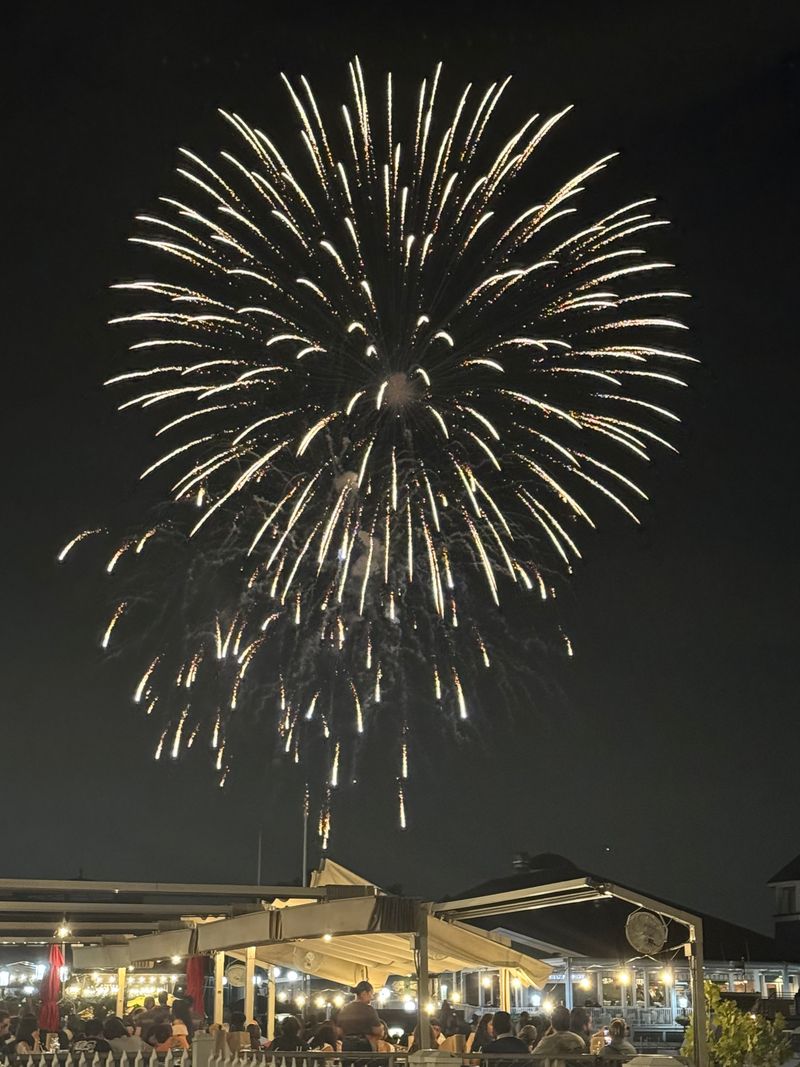
On King Street, strings of lights trail downhill toward the river like deliberate breadcrumbs, pulling walkers forward while brick sidewalks glow in warm amber tones.
Tall townhouses carry wreaths in symmetrical patterns that calm the street’s energy, turning repetition into a kind of visual rest.
At the waterfront, reflections double every bulb, making the light feel deeper and more expansive without adding anything new.
Founded in the mid eighteenth century, Old Town’s preserved grid shapes how decorations are placed and how they are read.
Seasonal traditions like the Scottish Christmas Walk thread heritage into the display without turning it into reenactment.
Tavern windows leak fireplace light onto the street, softening the cold and drawing people briefly indoors before sending them back out.
The entire evening feels like a long, luminous corridor between buildings and water, steady and quietly absorbing.
4. Williamsburg
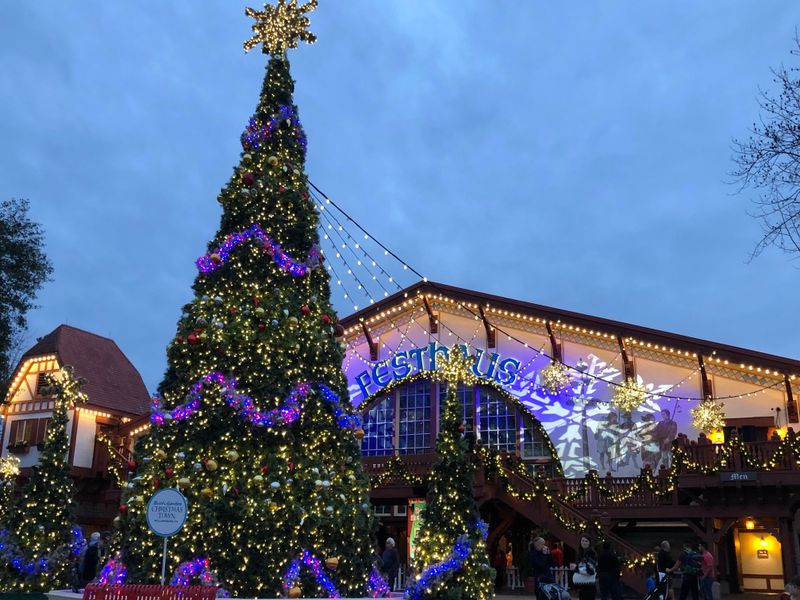
Pine boughs, candlelit windows, and natural garlands carry most of the visual weight here, creating a glow that feels intentional and historically grounded rather than decorative for decoration’s sake.
Colonial Williamsburg’s streets settle into a hush at night, where crushed oyster shell paths soften footsteps and the light seems to hover rather than glare.
Instead of blinking displays, lantern style illumination and restrained strings outline doorways and rooflines with a patience that invites lingering.
The town’s eighteenth century planning shapes how the lights behave, keeping sightlines open and facades readable even during the busiest holiday evenings.
Seasonal traditions like the Grand Illumination reinterpret early American celebrations without forcing them into spectacle.
Music drifts intermittently, fife and drum rhythms folding into the glow and disappearing again around corners.
Walking here feels less like attending an event and more like stepping briefly into another cadence of time.
5. Fredericksburg
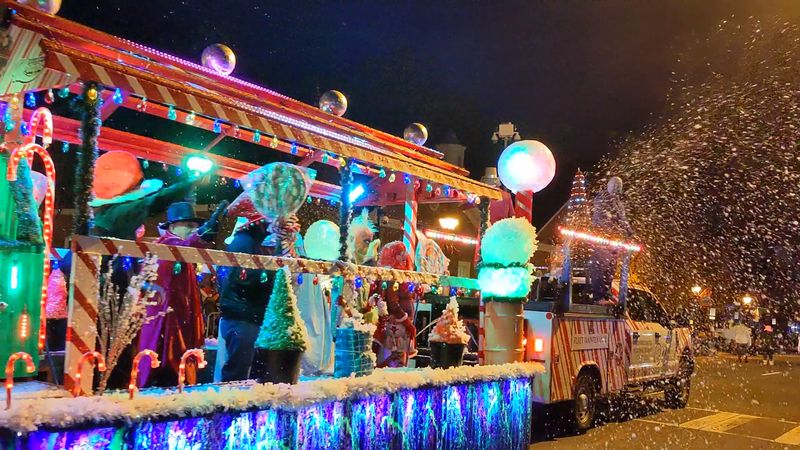
Across Caroline Street, strings of lights stretch overhead while brick storefronts absorb color quietly, allowing the illumination to feel embedded rather than applied.
The Rappahannock reflects faint echoes of carols and passing headlights, adding movement without distraction.
Painted façades stay subdued, letting garlands and bulbs provide the contrast instead of competing for attention.
Fredericksburg’s layered history, from colonial roots to Victorian expansion, shows through even under holiday décor.
Hurkamp Park’s tree anchors gatherings without dominating the surrounding streets, acting as a reference point rather than a focal command.
Rail lines and station lights pull the glow outward, linking downtown to the river’s edge.
The town feels walkable in a way that rewards slow observation, where the lights feel woven into daily life.
6. Ashland
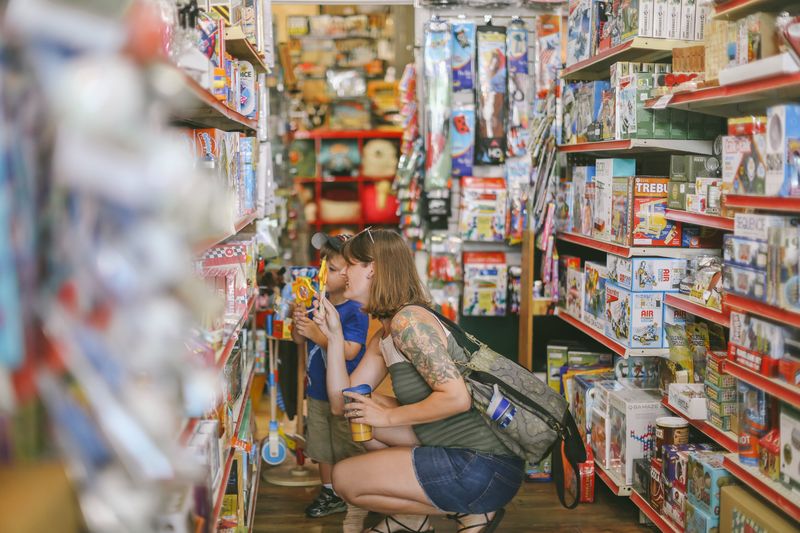
Here the rhythm comes from passing trains, their low thunder rolling alongside Center Street while storefronts and porches glow steadily in response.
Ashland’s lights spill naturally from commercial blocks into residential streets, blurring the boundary between town center and neighborhood.
Wraparound porches carry wreaths and warm bulbs that feel domestic rather than performative.
Founded around the railroad, the town’s linear shape makes the lighting feel continuous, like a ribbon rather than a cluster.
Community buildings host modest displays that emphasize gathering over display.
The whistle of a passing locomotive becomes part of the holiday soundtrack, punctuating moments of stillness.
Standing at a crossing while lights shimmer and engines idle briefly creates a sense of shared pause that feels distinctly local.
7. Kilmarnock
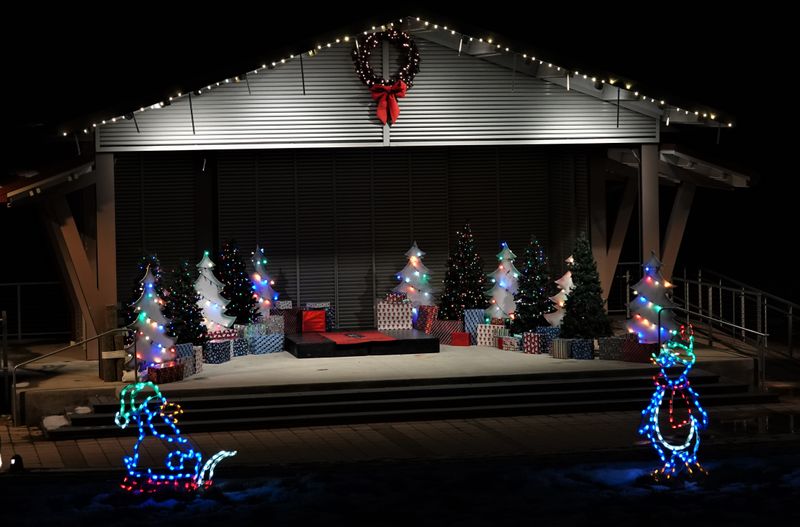
Along the Northern Neck, the air carries a faint brine as Main Street settles into a clean, confident glow that feels sharpened by proximity to the water.
The crab pot tree rises not as novelty but as a local shorthand, stacking work and celebration into a single, readable silhouette.
Lights arrive early here because darkness falls quickly near the bay, and the illumination responds by staying focused and purposeful rather than sprawling.
Kilmarnock’s role as a fishing and retail hub shapes the mood, where practicality never quite leaves even during the holidays.
Decorations nod to watermen culture without tipping into theme, using rope, evergreen, and modest bulbs to keep things honest.
The compact street grid makes the experience feel complete within a few blocks, encouraging loops instead of long treks.
At dusk, the river toned sky deepens the contrast, and every light seems etched rather than glowing.
8. Cape Charles
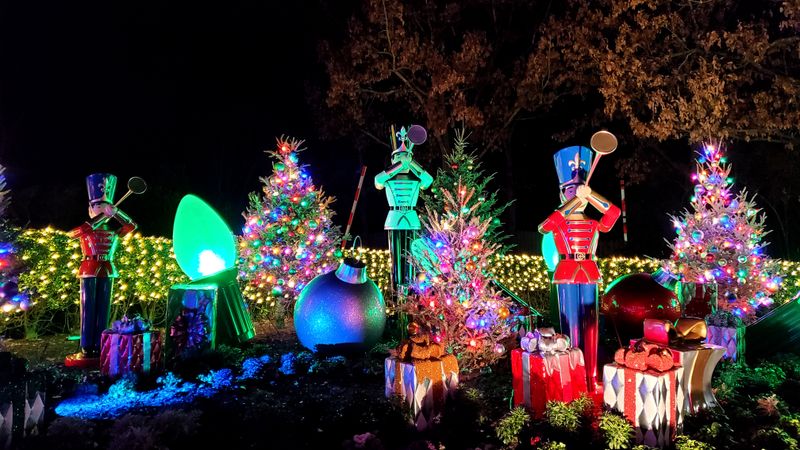
In Cape Charles, the harbor sets the tempo, with mast lines ticking gently while Mason Avenue wears its lights with beach town restraint and quiet confidence.
Sand still gathers along curbs, reminding you that this is a working shoreline town first and a holiday postcard second.
The color temperature stays warm and buttery, avoiding icy blues in favor of tones that echo porch lamps and dock lights.
Reflections ripple across shop windows like small waves, doubling the effect without adding intensity.
Restoration of the late nineteenth century core gives the lighting clean architectural lines to follow, keeping everything legible even after dark.
Nautical touches appear sparingly, more suggestion than statement, allowing the town’s proportions to lead.
A slow walk from the pier inward lets the bay breeze set your pace, making the lights feel earned rather than staged.
9. Narrows

Where the New and Wolf Rivers meet, sound becomes the guide, with water and wind setting a steady background for a modest string of lights across the bridge.
The mountains press in tightly, shrinking the scale so the glow feels pocket sized, almost protected by the surrounding ridges.
Main Street storefronts hold their brightness like lanterns, contained and deliberate rather than expansive.
Rail and river trade shaped the town’s straightforward layout, which the holiday lights follow without deviation or flourish.
Wet pavement after a flurry turns reflections into secondary decorations, doubling the effect without additional effort.
Nothing here competes for attention, which makes the quiet feel intentional rather than empty.
Crossing the bridge and turning back toward town offers the clearest view of how little light can still feel complete.
10. Leesburg
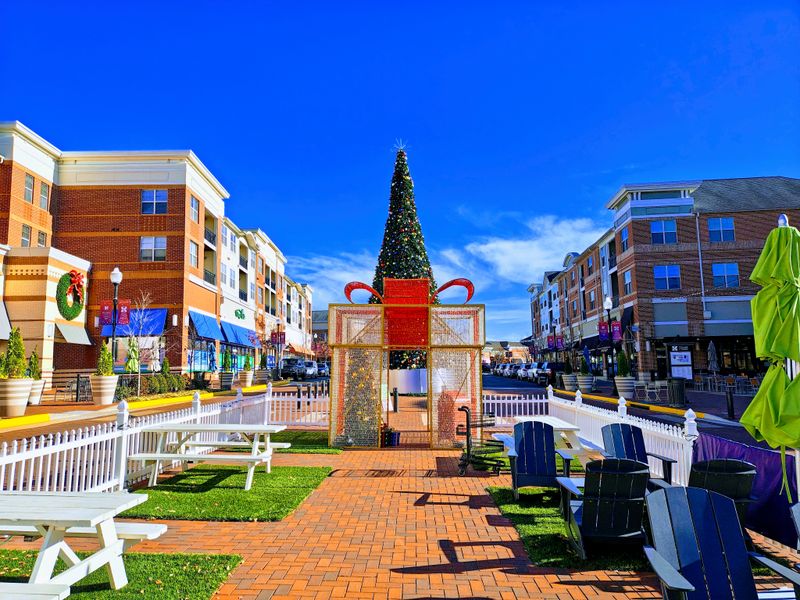
Garlands climb the courthouse steps with a Federal steadiness, while King Street threads white lights carefully between brick and stone façades.
The market square tree gathers families naturally, acting as a point of return rather than a spectacle to orbit.
Shop windows glow with wool, glassware, and wine bottles, keeping the holiday mood grounded in daily commerce.
Leesburg’s eighteenth century core remains readable because preservation rules keep lighting proportional to architecture.
Seasonal events fold into the town’s rhythm instead of interrupting it, reinforcing continuity rather than novelty.
Cornices and archways catch light first, giving buildings a sense of structure even at night.
When fog settles, the courthouse dome softens into a quiet beacon that reorients the entire walk.
11. Culpeper

Davis Street hums gently as precise lines of bulbs trace parapets and storefront edges with almost architectural restraint.
Restored brick and tile surfaces catch light unevenly, creating texture instead of glare.
The town’s investment in careful revitalization shows most clearly at night, when decorations highlight what was saved rather than masking it.
Painted signage remains readable under the lights, keeping history visible rather than buried.
The slope toward the depot creates natural vantage points where the glow compresses into a single view.
Freight trains pass intermittently, their vibration briefly unsettling reflections before everything settles again.
Timing photographs between those moments of movement reveals how calm the lighting scheme actually is.
12. Christiansburg
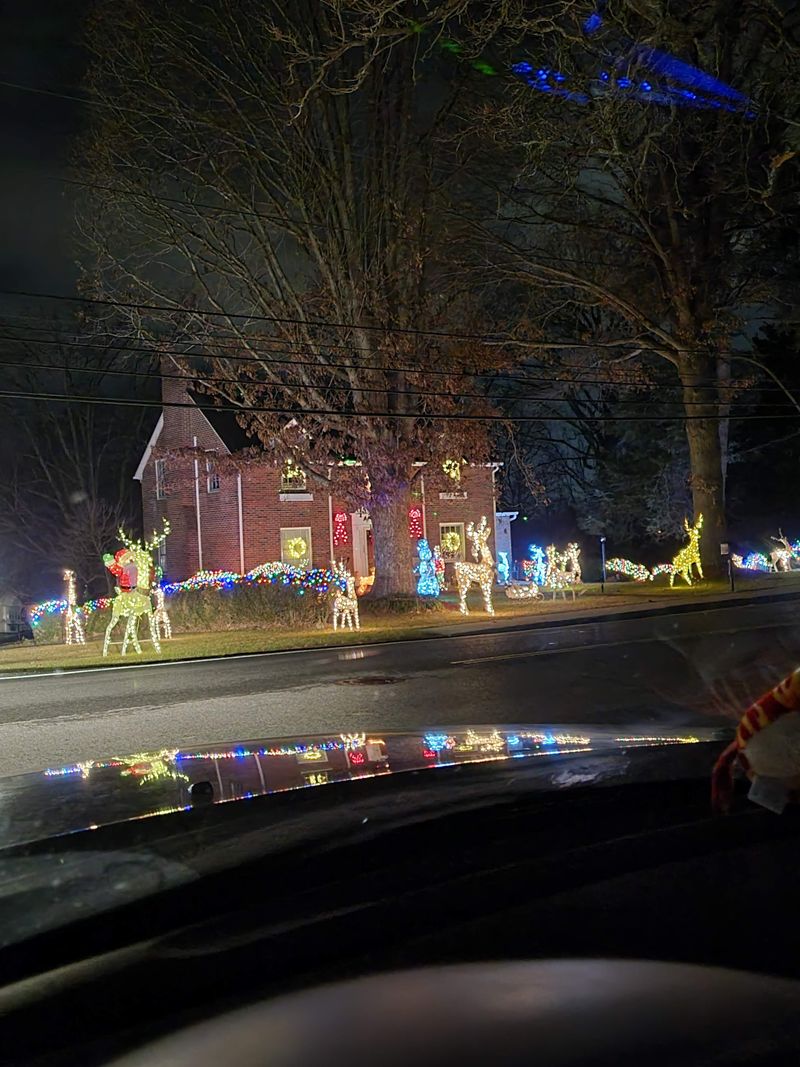
Wind curls insistently around the courthouse hill while Main Street stretches its lights in a disciplined line that feels more civic than sentimental, creating a winter corridor that guides the eye without demanding attention.
Streetlamp wreaths repeat at measured intervals, producing a visual cadence that mirrors the town’s steady pace and its preference for order over flourish.
The nearby college presence from Blacksburg hums faintly in the background, adding energy without tipping the balance toward spectacle.
As an eighteenth-century crossroads shaped by rail lines and later highways, Christiansburg favors clarity, which shows in how the lighting stays aligned with streets rather than spilling into the sky.
Holiday decorations remain municipal in tone, consistent from block to block, allowing older storefronts to speak in their own voices instead of being drowned out.
The courthouse lawn anchors the scene, acting as a visual pause where lights gather, then disperse again down side streets.
Walking a block off the main stretch reveals quieter angles where the glow feels almost private, framed by wind and shadow rather than crowds.
13. Smithfield

Pine and cured ham drift faintly through the cold air as Church Street lights up in a line that feels ceremonial without ever becoming formal or stiff.
The Pagan River holds reflections with unusual steadiness, stretching each bulb downward and making the town appear taller and calmer after dark.
Lanterns sway gently on historic porches, adding movement that softens the otherwise composed scene.
Smithfield’s colonial and Victorian preservation efforts give the holiday décor a dignified framework, ensuring nothing feels temporary or disposable.
Seasonal gatherings emphasize neighbors and conversation rather than volume, reinforcing the sense that the lights exist for locals first.
Wreaths and candle-style bulbs flatter clapboard and brick, highlighting texture rather than masking it.
When fog lifts off the river at just the right moment, every light briefly halos, turning restraint into something quietly luminous.
14. Dayton

Conversation replaces traffic as the dominant sound in Dayton’s compact core, where the holiday glow settles gently rather than announcing itself.
Mennonite heritage shows through in the practical, orderly placement of decorations that waste neither space nor energy.
Rooflines and porches are outlined just enough to register against the surrounding farmland, which stays deliberately dark.
Founded near Silver Lake, the town maintains a modest grid that keeps the illuminated area coherent and easy to read.
Holiday lighting avoids peaks and crescendos, letting the darkness beyond town limits frame the center like a stage backdrop.
Shops close early, reinforcing the idea that the lights are meant to be lived with, not consumed.
After a sleet squall, the street surface turns mirror-bright, briefly transforming simplicity into something striking.
15. Abingdon
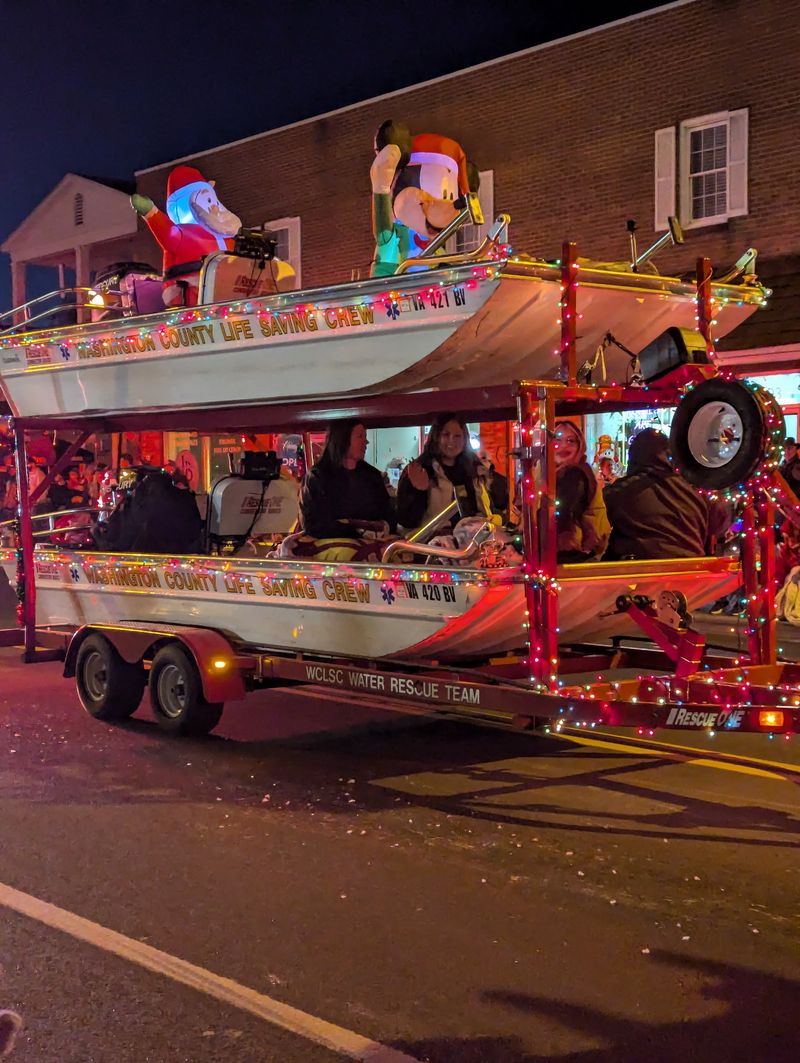
Brick sidewalks along Main Street hold the cold firmly, making the Barter Theatre marquee glow with cinematic clarity against the Appalachian night.
Wreaths punctuate doorways with careful spacing, giving the street a readable rhythm rather than a decorative blur.
Abingdon’s long relationship with the arts shapes its holiday atmosphere, favoring mood and pacing over sheer brightness.
Preservation guidelines keep lighting respectful of gas lamps, brickwork, and porch rails, ensuring harmony instead of competition.
The Martha Washington Inn dresses its porches with restraint, creating pockets of warmth that invite lingering loops.
Mountain air sharpens every color, giving reds and greens a crisp edge that feels earned.
A post-performance walk recalibrates the scene, as if the town pauses between acts under its lights.
16. Lexington
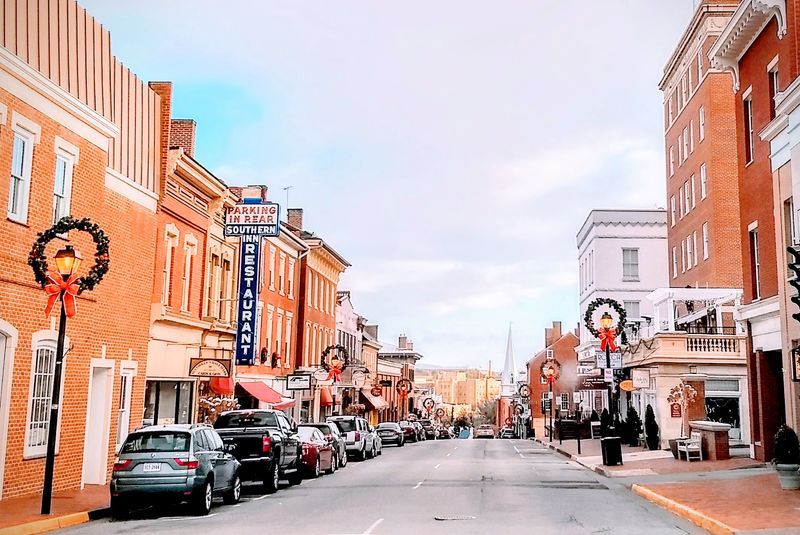
Stone walls absorb the cold visually, causing lamplight along Washington Street to appear warmer and deeper than expected.
Academic schedules from Washington and Lee and VMI lend the town a disciplined cadence that the holiday décor mirrors almost unconsciously.
Wreaths and window candles repeat with near military precision, reinforcing symmetry and calm.
Preservation ordinances keep signage and lighting restrained, ensuring buildings remain the dominant visual language.
Parades and gatherings slip through narrow streets that photograph cleanly after a light snow.
Alleys offer quieter routes where the glow feels more intimate and less ceremonial.
Stepping one block off campus restores balance when sidewalks fill, allowing the lights to settle back into quiet order.