Volunteers Still Roll Lefse By Hand Inside This 1848 Norwegian Church Museum In Illinois
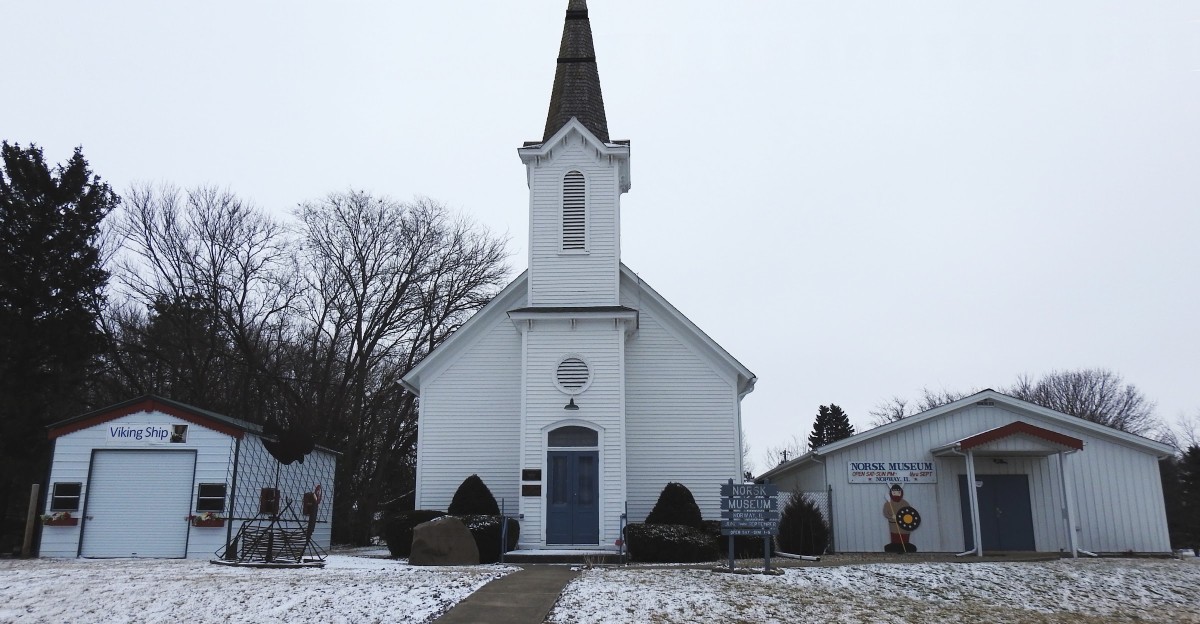
A church built in 1848 by Norwegian settlers still stands in Illinois, and its attic beams carry symbols stamped by the craftsmen who shaped them. Those beams were joined with wooden pegs, not nails.
That alone made me want a closer look.
Today the old church holds a museum run entirely by volunteers. On special days, they roll out lefse and shape crispy krumkake by hand.
The recipes come from a homeland across the ocean.
I like how this place treats food as part of the history lesson. A thin round of potato flatbread can say a lot about where a family came from.
So can a delicate cone of sweet batter.
Admission is free, and donations keep the doors open. That makes it an easy weekend outing for families.
So who were the people who started it all?
A Tiny Village With A Giant Claim To Fame
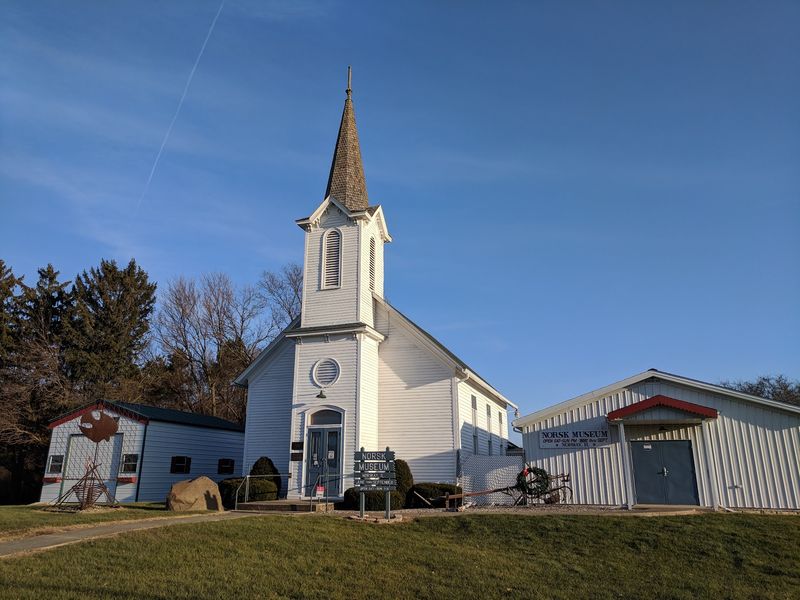
Out in the farm country of LaSalle County, a small village carries a big title. Norway, Illinois, is known as the first permanent Norwegian settlement in North America.
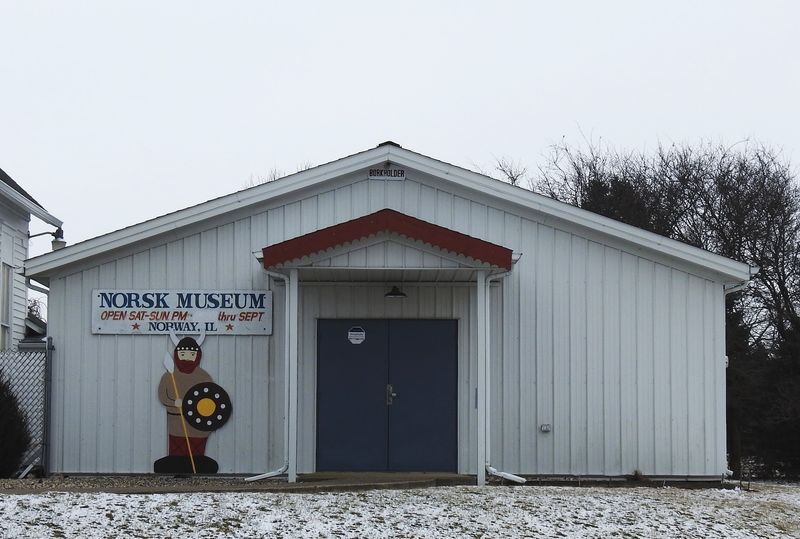
Right in the middle of it sits the Norsk Museum, a heritage museum run by volunteers. It keeps the story of those early settlers alive with artifacts, displays, and plenty of friendly conversation.
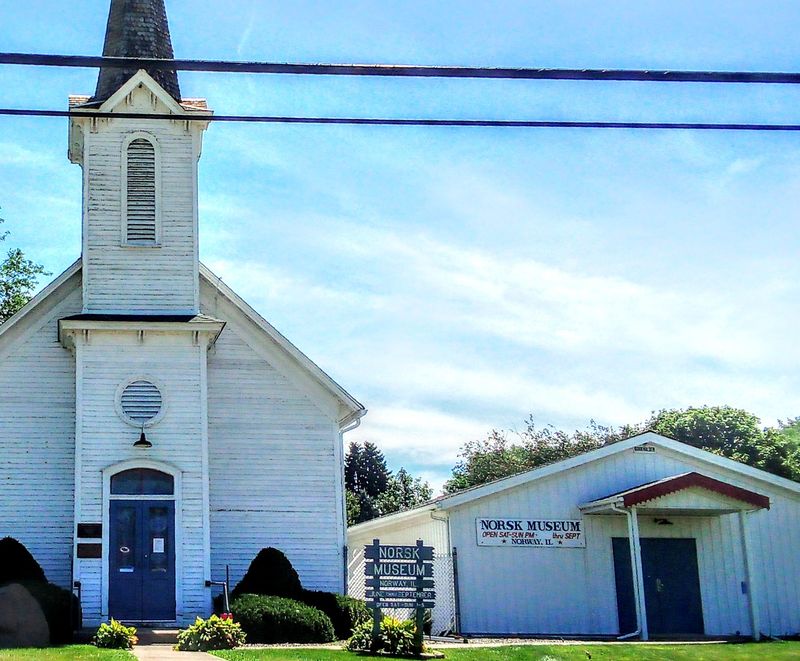
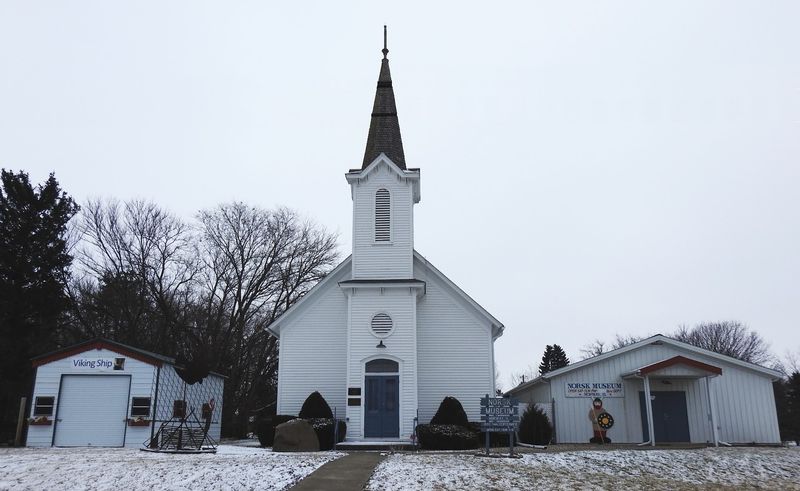
The setup is charmingly modest. A small historic church and its neighboring structures sit behind a community store, and a newer adjacent building holds even more of the collection.
Don’t let the humble size steer you wrong. The museum traces the Norwegian immigrant experience through LaSalle County and onward to Wisconsin, Iowa, Minnesota, and beyond.
Food is a big part of the charm here. During special events and demonstrations, volunteers hand-roll lefse and shape krumkake the old way.
That mix of history and baking makes the place feel lived in. It’s less like a quiet archive and more like a family reunion with very good snacks.
For Illinois families hunting a low-cost outing with real roots, this little museum checks a lot of boxes. And the best stories are only getting started.
Fifty-Two Brave Sloopers Who Started Everything
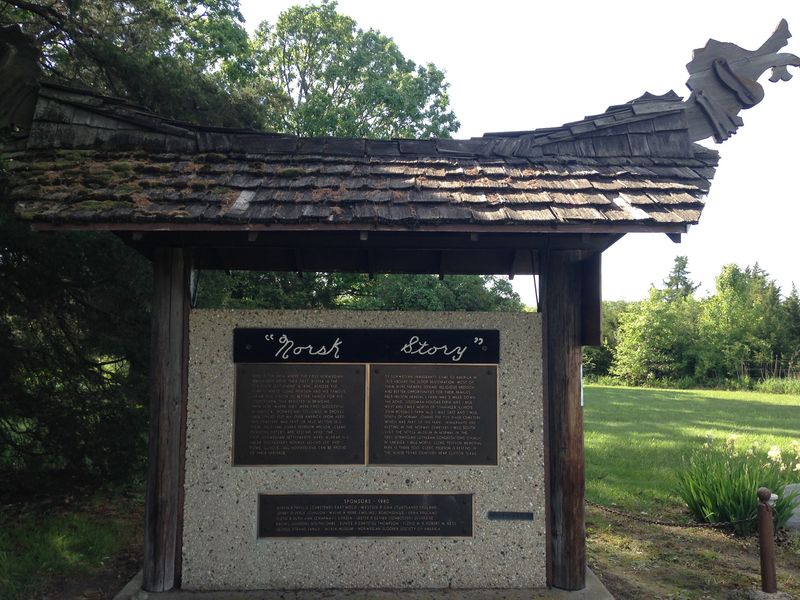
In 1825, a group of 52 people boarded a small sloop and sailed from Norway toward America. They became known as the Sloopers, the first organized group of Norwegian immigrants to the United States.
Religious freedom drove their journey. The group was a mix of Quakers and Hauge Lutherans, and they wanted room to worship their own way.
Their path eventually led to the rich farmland of LaSalle County. In 1835, they founded the community of Norway, Illinois.
That’s a long road for a family farm. I can’t imagine packing a whole life into a trunk and trusting a tiny boat with it.
The museum honors these forebears and their leader, Cleng Peerson. It also tells the story of the thousands of Norwegians who followed them west.
Many artifacts here came from those first immigrants. Many Slooper descendants still live in the area today, which makes the history feel close to home.
Some visitors even come to trace their own family lines. You never know, you might discover a Slooper branch on your family tree.
Wooden Pegs, Pine Beams, And An 1848 Church
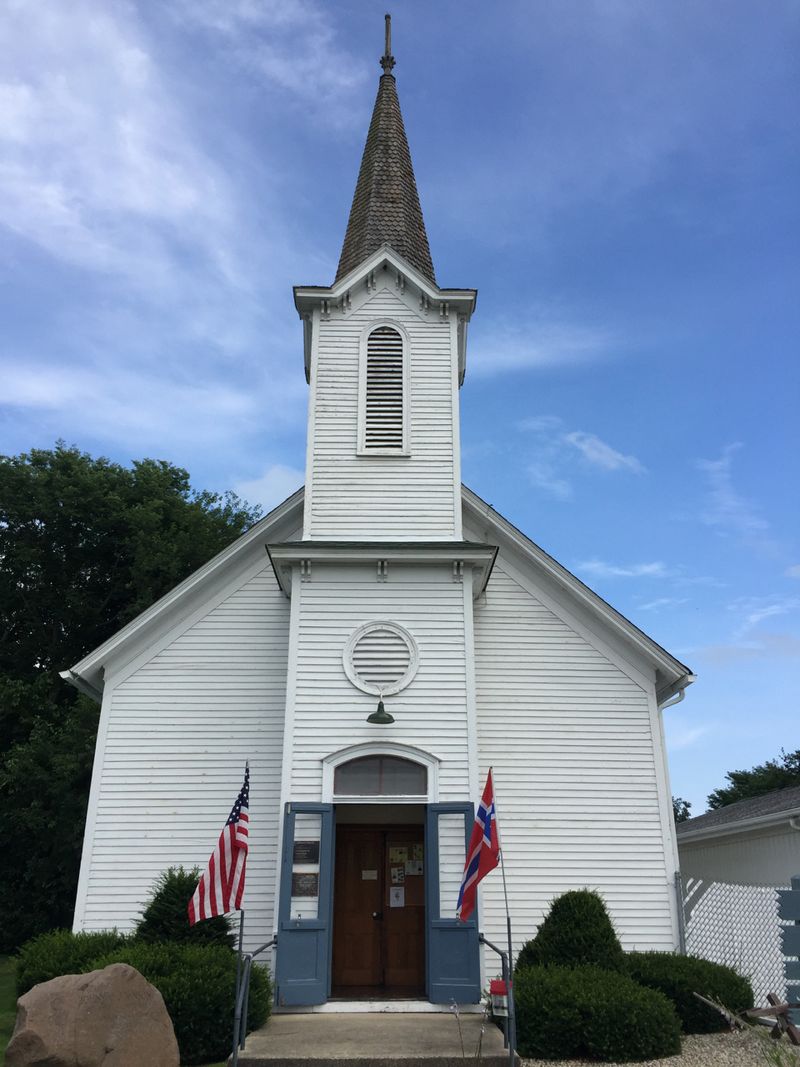
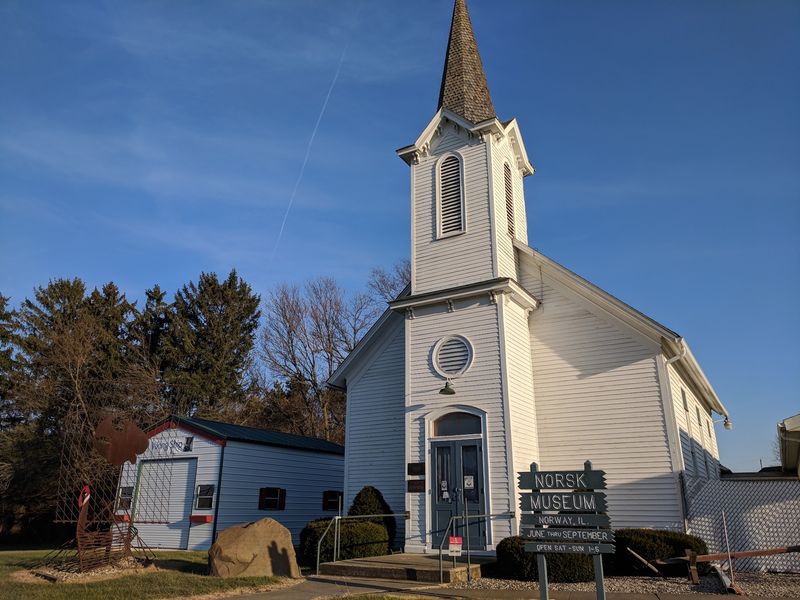
Nails were optional for the builders of this church. Its hand-hewn beams of soft pine were joined with sturdy wooden pegs instead.
The building is known as the oldest Norwegian Lutheran church in America. It was dedicated in 1848 and replaced an earlier log cabin church built in 1838.
Here’s my favorite detail. Some attic beams still bear individual symbols stamped by the craftsmen who shaped them.
That feels like a signature left for us. Every mark points back to a real person swinging a tool on the Illinois prairie.
The church is listed on the National Register of Historic Places. It now serves as the main home of the Norsk Museum.
Inside, the space still feels like a relic of another century. The quaint setting gives every display a little extra weight.
A newer building sits right beside it with more artifacts. Both buildings are air-conditioned, which is a welcome perk on a hot summer weekend.
So you get two buildings to explore and one remarkable church at the center. Not bad for a stop that costs nothing to enter.
Flour-Dusted Hands And The Art Of Lefse
Lefse looks simple until you try to roll it. This soft Norwegian flatbread needs a very thin, even round of dough.
At the Norsk Museum, volunteers keep that skill alive by hand. During special events and demonstrations, the rolling becomes a little show of its own.
Watching the dough stretch thinner and thinner is oddly satisfying. It’s the kind of thing kids remember long after the car ride home.
Krumkake gets the same loving treatment. These delicate pastries are shaped into crispy cones, a treat tied closely to Norwegian celebrations.
The museum’s krumkake demonstrations can fill the room with a warm, sweet aroma. Good luck ignoring that.
Both treats follow methods passed down through generations. Hand preparation is the whole point, because it keeps the old techniques from fading away.
I believe food is one of the easiest ways to understand a culture. A recipe carries memories that no display case can fully hold.
So when you see a volunteer roll out lefse, you’re watching history move. And it happens to smell wonderful too.
A Norwegian Breakfast Worth Setting An Alarm For
Fried kumla, ham, and chive-scrambled eggs make a strong case for an early morning. That lineup has appeared at the museum’s Taste of Norway Breakfast.
Kumla is a hearty Norwegian potato dumpling. Frying it gives breakfast a savory twist you won’t find at the usual pancake house.
Fresh lefse and krumkake join the spread too. Fruit cups and coffee round things out for a full, comforting meal.
Events like this bring the museum’s food traditions out of the demonstration and onto your plate. It’s history you can actually taste.
Cultural celebrations sometimes feature even more Norwegian pastries. Local lodges such as Polar Star and Cleng Peerson have contributed to the sweet side of the table.
Event menus can change from year to year. It’s smart to check the museum’s schedule before planning a trip around a specific meal.
The breakfast also supports the museum itself. Event proceeds help keep this volunteer-run landmark going.
So your second helping of kumla counts as a good deed. That’s my kind of logic.
Trolls, Trunks, And A Viking Ship Under One Roof
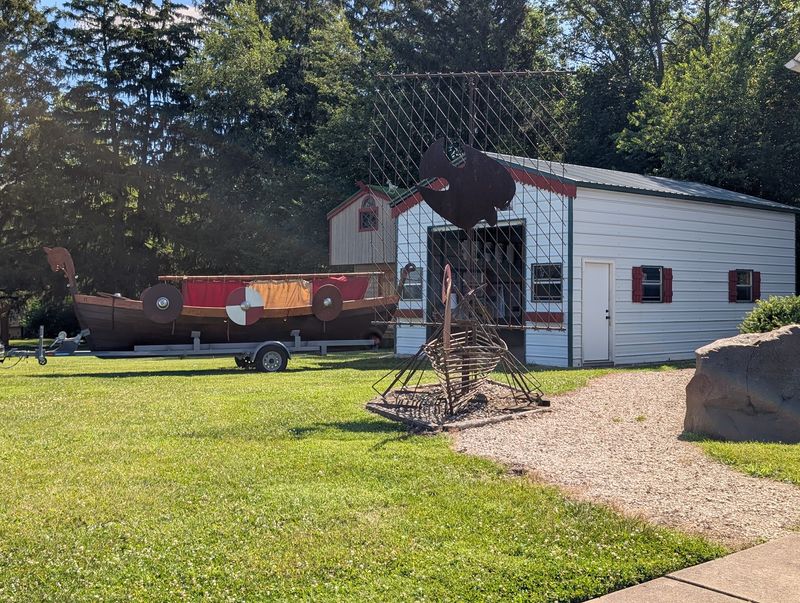
A Viking ship inside a little Illinois church museum? Yes, and it’s called the Skagerrak.
The Skagerrak Viking Ship is one of the most eye-catching displays here. It captures the seafaring spirit of Norwegian history in a fun, kid-friendly way.
The rest of the collection covers a lot of ground. You’ll find immigrant trunks, early farm tools, spinning wheels, and everyday household items.
Traditional bunads, the Norwegian folk costumes, show off careful needlework. Colorful rosemaling, a decorative folk painting style, brightens furniture and objects throughout the rooms.
There’s also furniture, art, clothing, and yes, trolls. Every family trip needs a troll sighting.
Some exhibits focus on the local area too. Displays include famous personalities with Norwegian roots, which adds some surprise to the tour.
The space is cozy, so aisles can feel snug. Take your time and look closely, because small objects tell big stories here.
The collection keeps evolving and improving. If you visited a few years back, there’s a good reason to come again.
Kubb Games And Viking Crafts For Little Explorers
Kids get to toss wooden batons at events here, and it counts as education. The traditional Viking lawn game Kubb has been part of the museum’s festivities.
Younger visitors have also tried How to Be a Viking crafts. That’s a pretty great title for an afternoon project.
Grown-ups get their own hands-on treats. Rosemaling demonstrations show how the swirling folk paintings come to life brushstroke by brushstroke.
Hardanger embroidery demonstrations highlight another classic Norwegian craft. The cutwork patterns are precise enough to make anyone squint in admiration.
Then there’s the krumkake again, being made fresh by volunteers. It turns the whole place into a sensory experience.
The volunteers deserve their own mention. They’re friendly, knowledgeable, and happy to chat at length about local history.
That personal touch makes the visit feel warm rather than stiff. Kids can ask questions without feeling shushed.
For grandparents sharing family heritage, this is a gift. It’s a place where Norwegian roots get passed along through games, paint, thread, and pastry.
Free Admission, Summer Weekends, And A Store Across The Lot
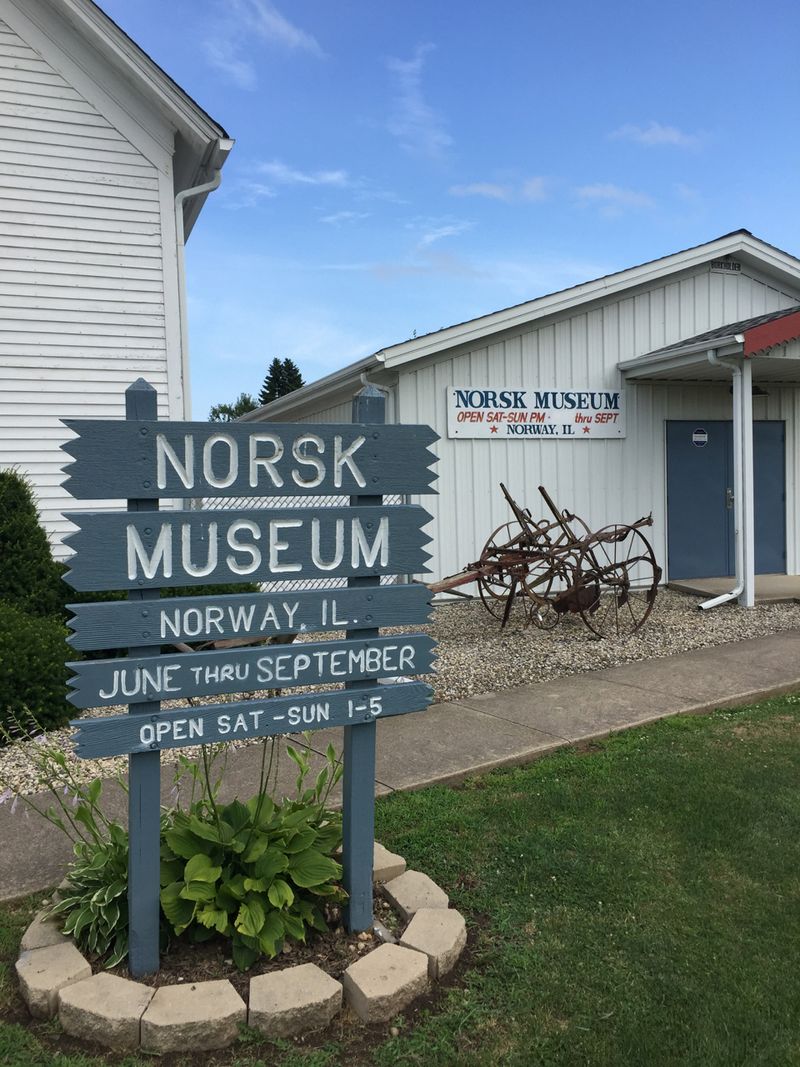
Here’s the budget news Illinois families love. Admission to the Norsk Museum is free, with donations gladly accepted.
The museum is a volunteer-operated 501(c)(3) nonprofit. It receives no tax funding, so donations and event support keep it running.
You’ll find it at 3656 E 2631st Rd, Sheridan, IL 60551. The village of Norway sits in LaSalle County, an easy drive for many northern Illinois families.
Regular hours are Saturday and Sunday from 1 to 5 p.m. The season typically runs June through October.
Groups and school field trips can arrange special openings by appointment. That’s handy for scout troops or a big family reunion.
Plan for an hour or two to see everything. Parking is limited, so a little patience helps on busy event days.
Hungry after your tour? The Norway Store sits right across the parking lot with a cafe and Scandinavian grocery items.
The store also offers a Sunday breakfast buffet. You can bring home Norwegian treats too, which might be the most delicious souvenir in Illinois.
Why This Little Church Deserves A Spot On Your Weekend List
Two hundred years of Norwegian-American history recently got a big birthday spotlight. The year 2025 marked the 250th celebration connected to that first settlement story, according to local excitement around the museum.
Whether you catch a celebration or a quiet Sunday, the appeal holds. The Norsk Museum is small, sincere, and packed with stories.
I like that it doesn’t try to be flashy. The church, the pegged beams, and the hand-rolled lefse do all the talking.
It’s a strong pick for families with Scandinavian roots. It’s just as fun for curious kids who think Vikings are cool.
History fans will enjoy the Slooper story most. It’s a piece of the past that often gets overlooked in school lessons.
Free admission makes it easy on the wallet. Toss a donation in the box, and you help keep the doors open for the next generation.
Pair it with a meal at the Norway Store, and you’ve got a full afternoon. It’s a sweet little Illinois road trip, krumkake included.