
Walk Through Centuries-Old Pueblo Rooms Stacked Four Stories High At This Arizona Ruin
A crack in the ground near an ancient ball court breathes cool air at you, and nobody plugged it in. That natural blowhole sits a short walk from red stone rooms built roughly 900 years ago in northern Arizona.
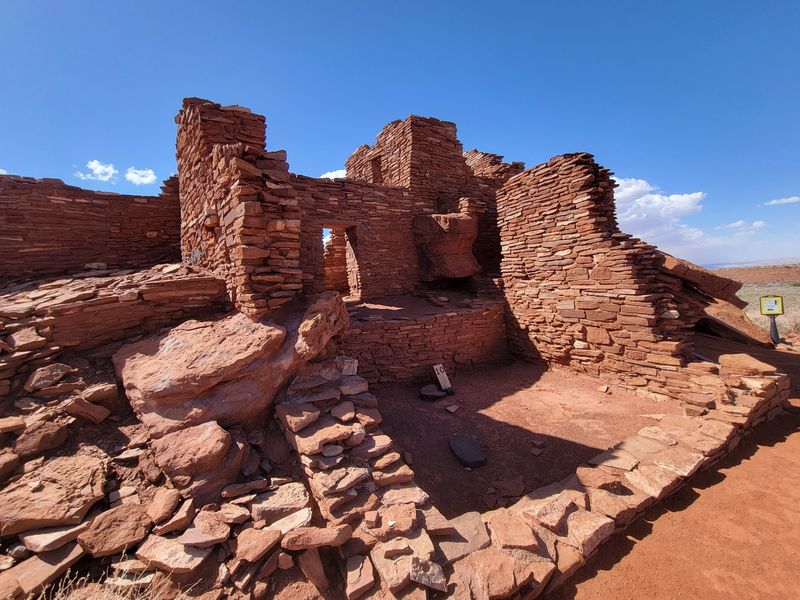
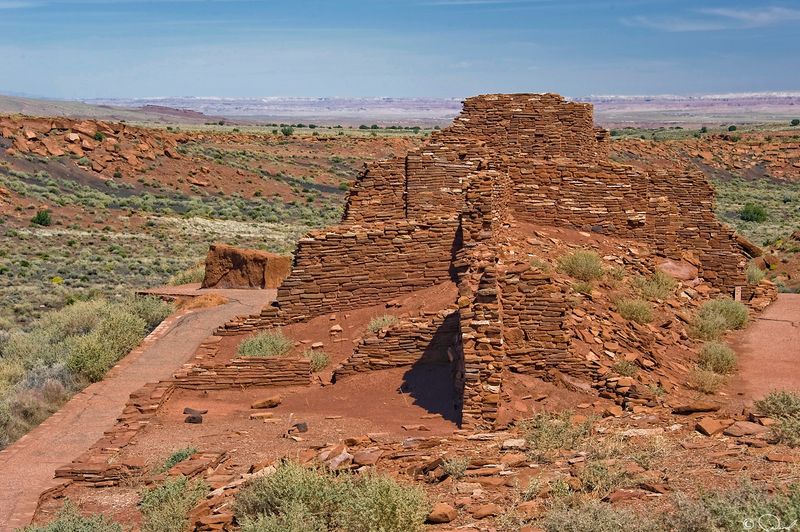
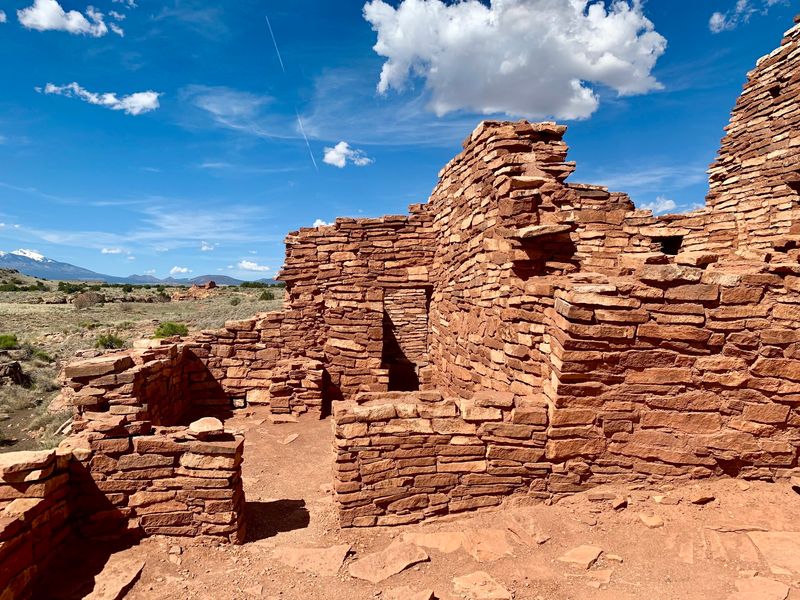
The main pueblo once held about 100 rooms. Its walls rise straight out of sandstone, as if the rock simply decided to become a building one day.
Doorways still frame views of open desert and distant peaks.
I love that you can stroll right up to these walls on easy paved paths. There’s no rope line keeping you a football field away.
You read the signs, peek through the windows, and the past suddenly feels close.
I can’t imagine raising a family on that windy plateau. So how did whole communities thrive there for generations?
An Ancient Apartment Block Rising From Red Rock North Of Flagstaff
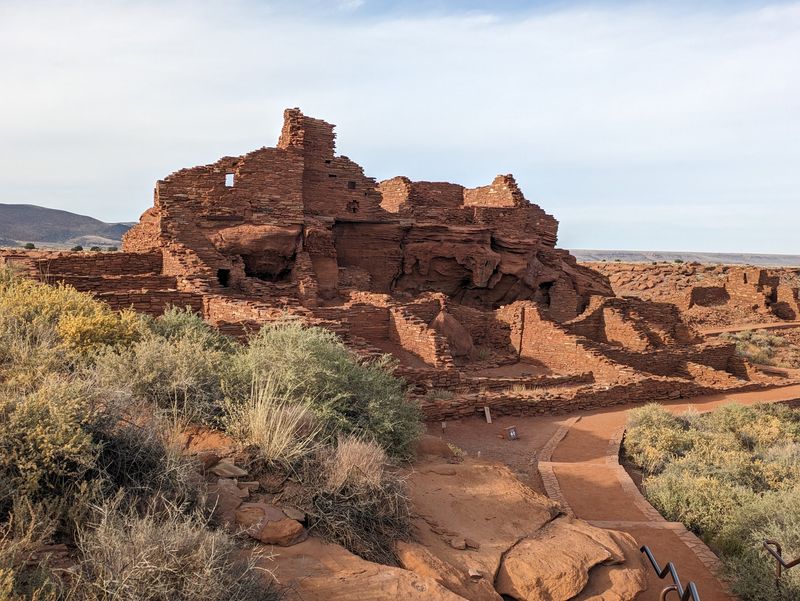
Wupatki National Monument protects a scatter of ancient pueblos on a high desert plateau north of Flagstaff, Arizona. The star of the show is Wupatki Pueblo, a red sandstone complex sitting just behind the visitor center.
The name comes from a Hopi word often translated as tall house. One look at those stacked walls and you’ll agree the label fits nicely.
Wupatki Pueblo held around 100 rooms at its peak. That makes it one of the largest pueblos in the region, built without cranes, steel, or even a single power tool.
Builders shaped local sandstone and fitted it onto natural rock outcrops. Some walls look like they grew right out of the boulders beneath them.
The monument covers far more than one ruin, though. Several other pueblos dot the landscape along the park road, each with its own setting and personality.
So you’re not visiting a single stop. You’re touring a whole neighborhood that people called home centuries ago.
Easy trails and clear signs make it friendly for first-timers. Better still, the walls stand close enough to study the stonework with your own eyes.
For a history lesson you can actually walk through, it’s tough to beat.
Volcanic Ash, Farming Know-How, And A Booming Plateau
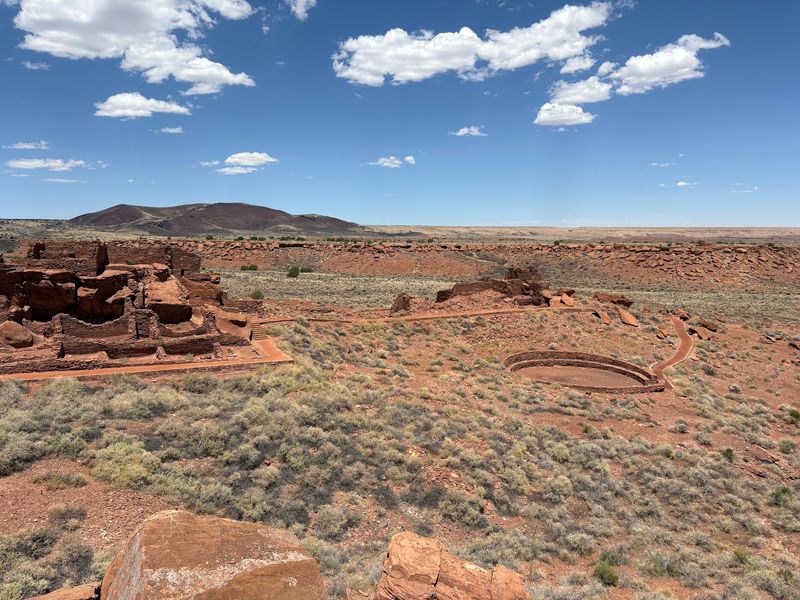
Around the year 1085, a volcano erupted just south of here. That eruption formed Sunset Crater and blanketed the area in black cinders.
Here’s the twist. Instead of driving everyone away, the ash layer helped hold moisture in the soil for crops.
Within a few generations, the Wupatki area grew busy with families. Archaeologists connect these communities to Ancestral Puebloan, Sinagua, and Cohonina groups who traded and lived side by side.
Picture a crossroads more than a quiet outpost. Goods, ideas, and people moved through this plateau during the 1100s.
Farmers grew corn and other crops with very little rain. Park staff have even planted corn and cotton near the visitor center to show traditional methods.
Hopi people today consider these places ancestral homes rather than abandoned buildings. That perspective adds weight to every doorway you pass.
The monument itself was established in 1924 to protect the pueblos. Rangers and exhibits now share the long story of the land and its people.
Exhibits also explain the striking red rock layers. Those stones formed long ago in rivers and tidal flats, which feels wild in such a dry place.
The Ball Court And Gathering Circle Out Back
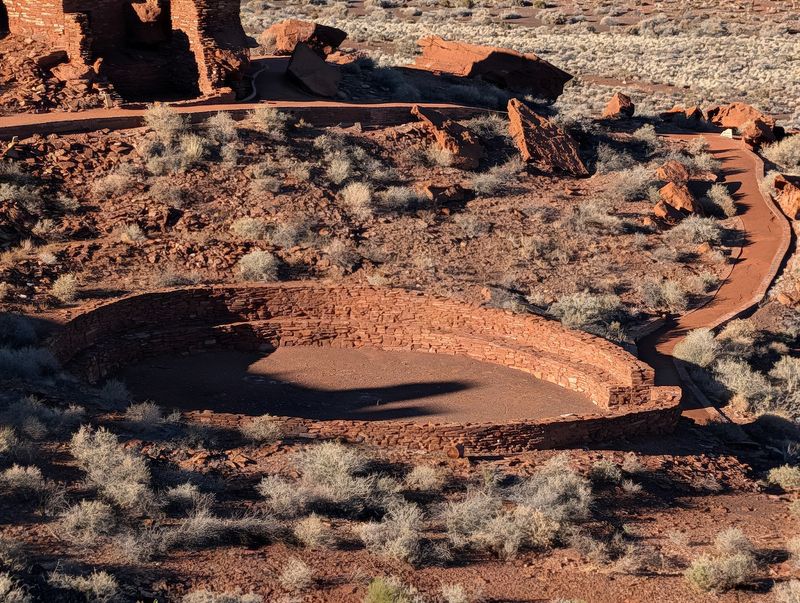
Sports fans, this one’s for you. Below Wupatki Pueblo sits an oval masonry ball court, a rare find this far north.
Ball courts like this are more common in southern Arizona. Seeing one here hints at strong ties between distant communities.
Nobody knows the exact rules of the game played on it. Still, standing beside those curved stone walls sparks plenty of guesses.
Nearby is a large round structure often called the community room or amphitheater. Its circular shape suggests gatherings, ceremonies, or group meetings.
Together, these spaces show that life here wasn’t only about survival. People also gathered, celebrated, and shared time together.
The paved trail loops past both features on its way around the pueblo. Interpretive signs explain what researchers believe each space was used for.
The visitor center sells a small trail guide that matches numbered posts along the path. It’s an inexpensive way to get far more out of each stop.
Take your time on this stretch. The open setting and wide views make it easy to linger and soak in the scale of the place.
A Blowhole That Breathes Like The Earth Is Sighing
Hold your hand over a small opening in the rock and you may feel a rush of air. On other days, it pulls air inward instead.
That’s the Wupatki blowhole, and it’s easily one of the quirkiest features in Arizona. It connects to underground cracks in the earth’s crust.
The air movement depends on the difference between surface pressure and pressure underground. When outside pressure drops, air streams out of the hole.
On a hot summer afternoon, that breeze can feel surprisingly cool. It’s basically nature’s air conditioner, no thermostat required.
The blowhole sits near the ball court along the main pueblo trail. A sign nearby explains the science in plain language.
Kids tend to get a kick out of it, and honestly, grown-ups do too. It’s a fun break between all that ancient stonework.
Researchers believe the people of Wupatki likely noticed the blowhole too. It’s hard to imagine anyone ignoring a talking hole in the ground.
Give it a moment if you don’t feel anything right away. The flow changes, so a little patience may pay off.
Four More Pueblos Worth Pulling Over For
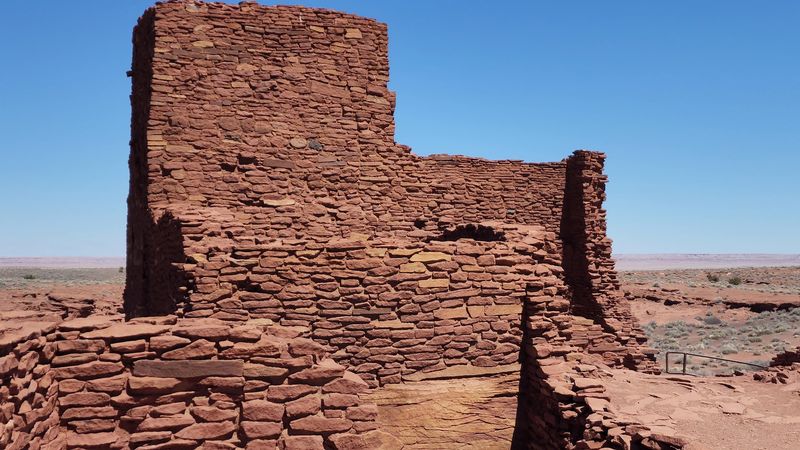
Once you’ve seen the main pueblo, keep driving. The park road leads to several more ruins, and each one feels different.
Wukoki Pueblo is a short drive and short walk from the visitor center. Built on a sandstone outcrop, its walls look almost like a small castle tower.
Lomaki Pueblo sits along the edge of a small canyon. A short trail nearby also passes the smaller Box Canyon dwellings.
Then there’s the Citadel, perched on top of a small hill. The climb is brief, and the 360-degree views are a real treat.
Nalakihu sits right at the base of the Citadel. It’s easy to visit both in one stop.
Every site has parking, and trails are short and well marked. You can see a lot without wearing yourself out.
Views stretch toward the Painted Desert and the San Francisco Peaks from many spots. The colors shift with the light, especially late in the day.
Plan for some time here. Rushing through would be like reading only the first chapter of a great book.
Who Will Love This Quiet High Desert Loop
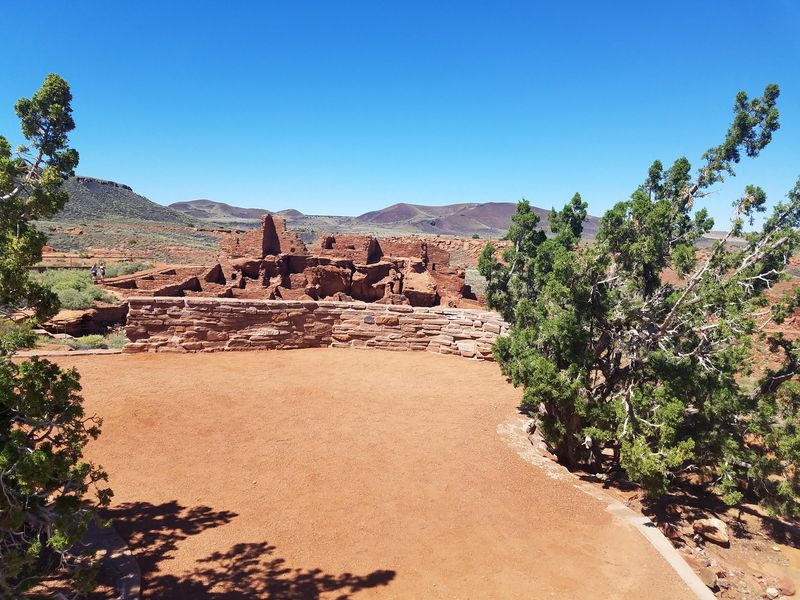
History buffs are an obvious match. Yet Wupatki National Monument works for a surprisingly wide range of travelers.
Families with kids can manage the short, easy trails. Grandparents can enjoy the same walks without tackling steep climbs.
Photographers get red walls, big skies, and distant mountains in one frame. Golden hour makes those sandstone walls glow.
The setting feels calm and open, with wide desert views in every direction. It’s a nice change from crowded tourist stops.
Shade is limited, so it’s smart to plan around the sun. Bring a hat and plenty of water, especially in warmer months.
The visitor center offers clean restrooms, a small gift shop, and exhibits on the area’s Indigenous history. Water is often sold there as well.
Picnic tables near the parking area make a good lunch stop. Pack a cooler and you’ve got a budget-friendly day out.
Rangers and volunteers often share stories and answer questions. Their knowledge can turn a quick look into a real conversation about the past.
Please stay on marked trails, too. These are protected archaeological sites, and signs also warn about snakes.
Getting There Without Losing Your Signal Or Your Way
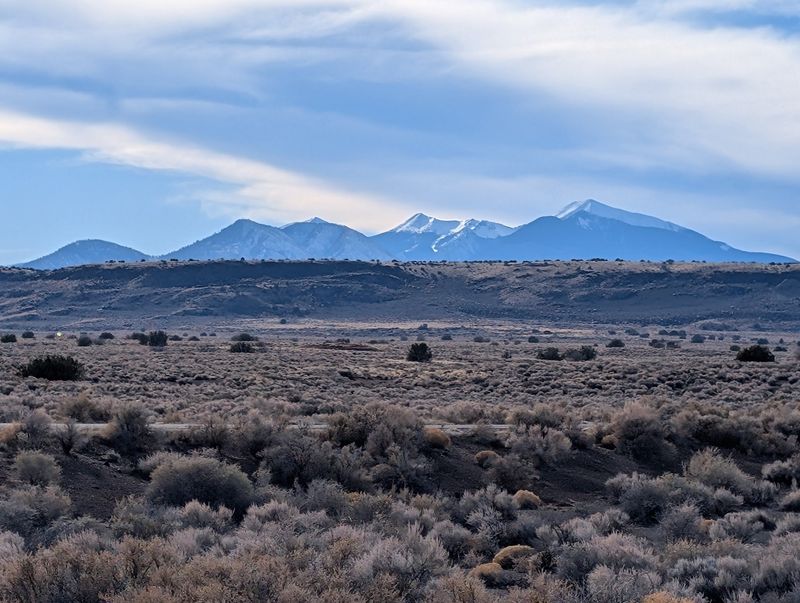
A 34-mile scenic loop road connects Wupatki with Sunset Crater Volcano National Monument. Both ends of the loop meet U.S.
Highway 89 north of Flagstaff, Arizona.
The monument’s address is simply listed as Arizona, which tells you how remote it is. The visitor center sits deep along the loop, a good half hour from the highway.
One easy plan is visiting both monuments in the same trip. Drive through cinder fields first, then reach the red rock pueblos.
The road is paved and well maintained. You’ll pass lava flows, grasslands, and wide valley views along the way.
Cell service can be spotty out here. Downloading offline maps in the free NPS App before you go is a smart move.
An America the Beautiful pass covers entry. Fees can change, so check the park’s current rates and hours before heading out.
Stop inside the visitor center to show your pass or pay. It keeps things smooth before you head down the trail.
Services are few once you leave Flagstaff. Fill your tank and grab snacks before starting the loop.
A Short Detour That Sticks With You Long After
Plenty of travelers zip past on their way to the Grand Canyon. That’s a shame, because Wupatki National Monument rewards anyone who turns off the highway.
It’s affordable, easy to explore, and packed with stories. Few places in Arizona let you stand this close to such old walls.
Where else can you see an ancient ball court and a breathing rock in one walk? Add volcanic scenery and you’ve got a full day of wonder.
Timing helps. Cooler months make daytime exploring more comfortable, while summer visits work best early in the day.
Sunset light on the pueblo walls is especially pretty. Just remember the road gets dark quickly, and services are limited after hours.
The pace here is slow and thoughtful. You read a sign, look up, and suddenly picture families cooking and talking in those rooms.
Pair it with Sunset Crater, and the drive becomes a story of fire and resilience. It’s a trip you’ll likely want to repeat.
Tag the friend who always wants a road trip. This one deserves a spot on your northern Arizona list.