
Washington Has A Covered Bridge So Old It Feels Like Driving Into A Storybook
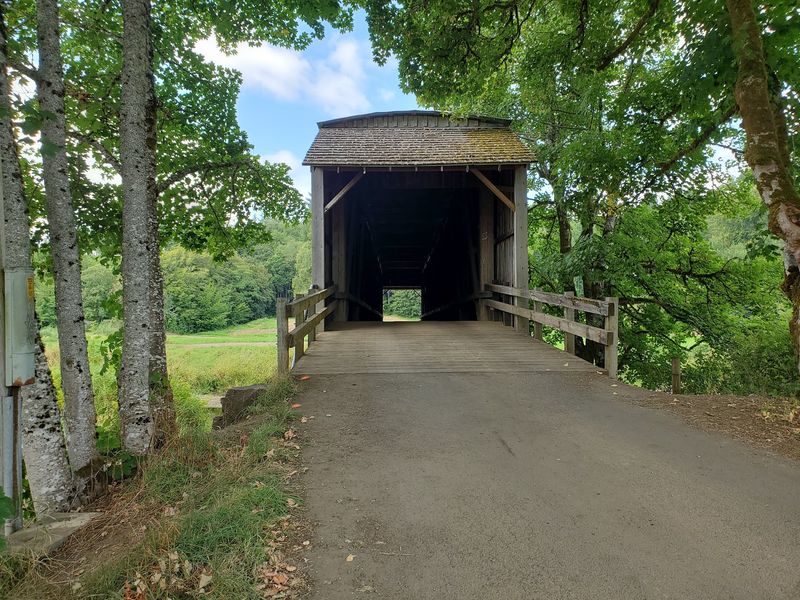
Wooden planks, a metal roof, and a quiet river below can make a simple drive feel like a page from an old picture book. In southwest Washington, one small country road leads to the last covered bridge of its kind still carrying cars in the state.
It costs nothing to see, it sits beside a shady little park, and it might be the most charming detour you take all year. Here is everything worth knowing before you go.
A Landmark on a Quiet Country Road
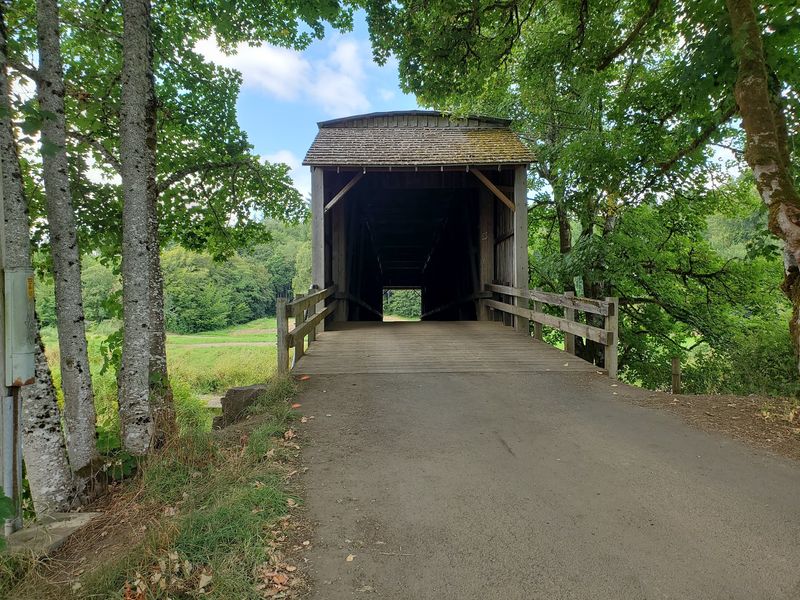
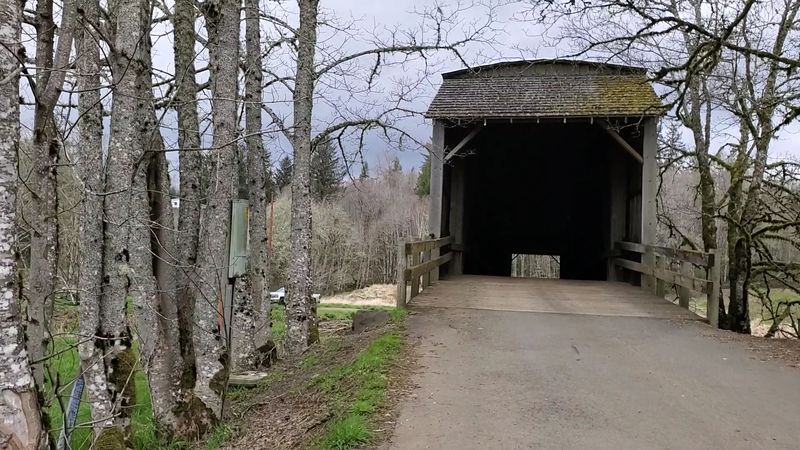
Roughly two miles off the main highway, in the small community of Grays River, a long wooden structure stretches over the water like something borrowed from another century. The Historic Grays River Covered Bridge is a historical landmark, and many travelers describe it as the last covered bridge still in use in Washington.
Finding it is part of the fun. Plenty of people stumble onto it after spotting a roadside sign on the way back from the beach, while others plan a whole road trip around it.
Either way, the reaction tends to be the same: surprise that Washington even has a covered bridge at all.
The setting is rural and green, with farm fields, big trees, and the river doing most of the talking. You will not find crowds, gift shops, or ticket booths here.
What you will find is a sturdy old crossing that you can drive through, walk through, and admire from the riverbank below.
For anyone exploring the lower Columbia River region, it makes an easy and memorable stop. Think of it as a short pause that feels much bigger than the time it takes.
Over a Century of Timber History
Back around 1905, workers built a bridge across Grays River, and by 1908 it had gained its famous cover. That roof was not just for looks.
Covered bridges were designed to protect wooden beams from rotting in wet climates, and few places are wetter than this corner of the Pacific Northwest.
Fast forward to 1988, when the bridge received extensive restorations. Local history credits Finnish farming and logging families in the area for helping fund that work, which says a lot about how much the community cared about keeping it standing.
Small informative signs are placed around the site, so you can learn the backstory while you stroll. They are short, easy to read, and great for curious kids who want to know why anyone would put a roof on a bridge.
Covered bridges in America were mostly built between the 1850s and the 1920s, and new ones simply are not made the way they used to be. Standing here, you get a real taste of that era.
It is engineering history you can touch, hear, and even drive across.
Driving Through a Wooden Tunnel
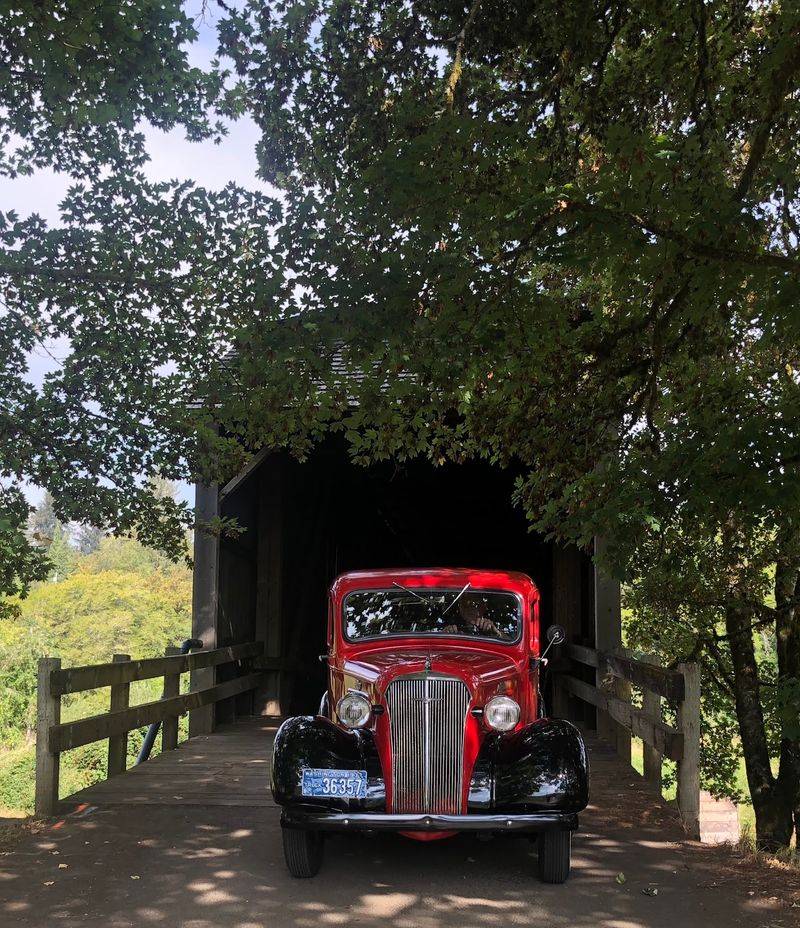
Rolling tires across old planks makes a sound you might remember from childhood road trips with a parent at the wheel. That low, steady rumble is half the reason people come here.
Yes, you really can drive through it. The bridge is only wide enough for one vehicle at a time, so pause at the entrance and make sure the way is clear before heading in.
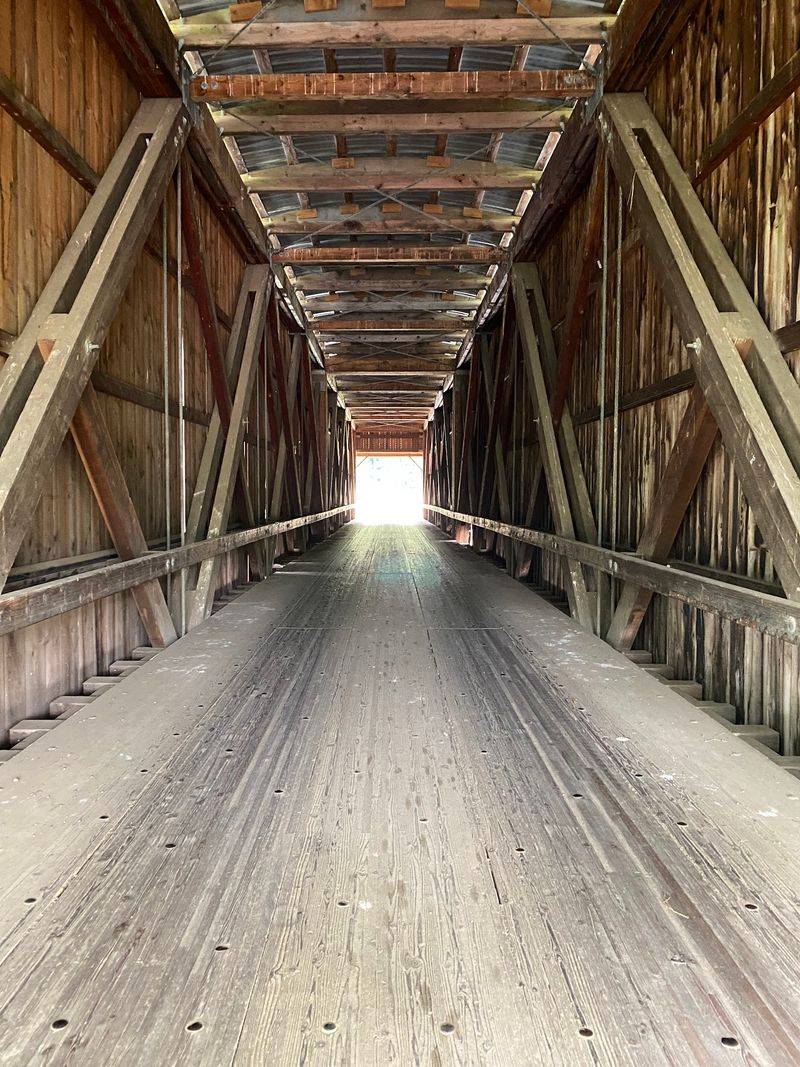
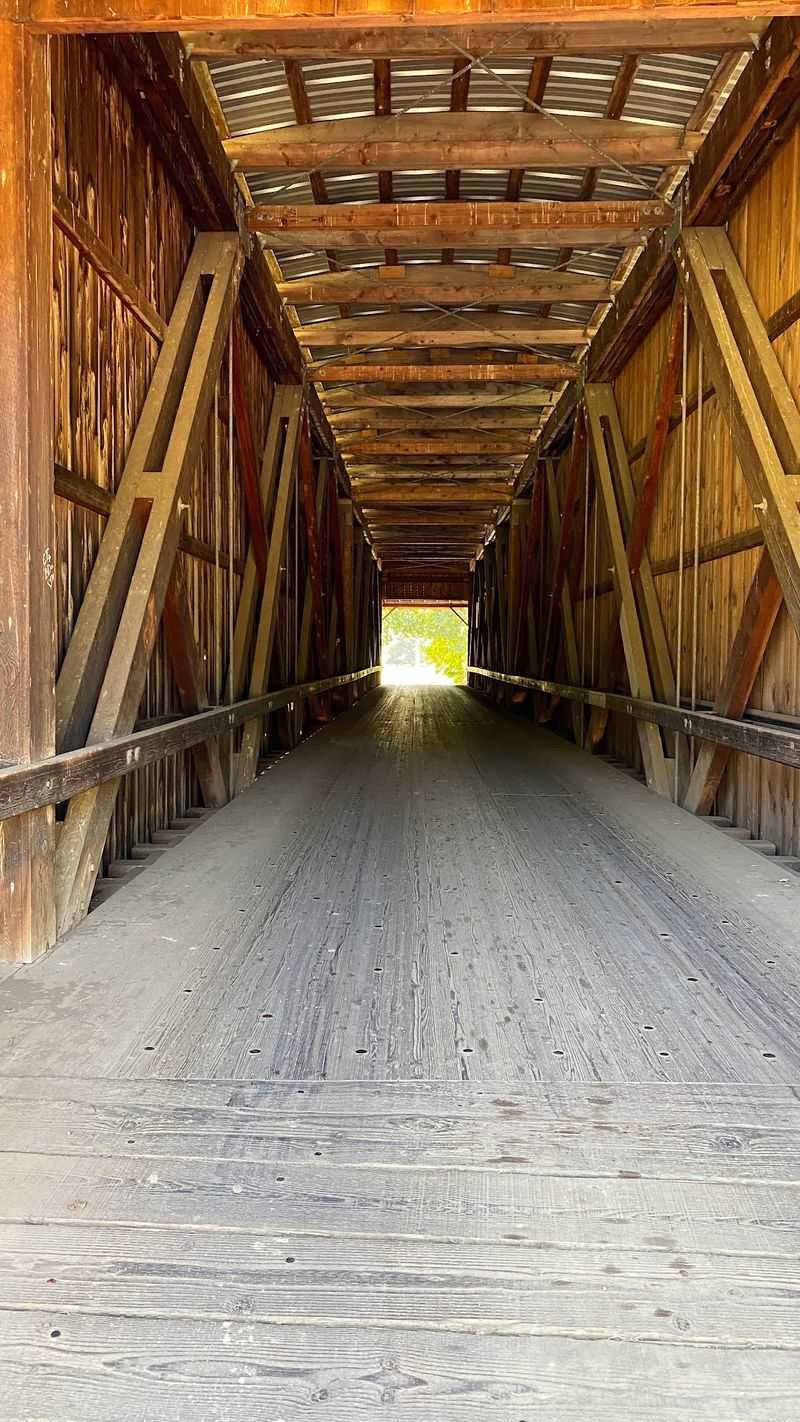
Once inside, the light dims, the walls close in, and the bright opening at the far end looks like the doorway to another chapter.
Visitors are often surprised by how long it feels. A few even joke that it should be called an enclosed bridge, since it feels more like a wooden tunnel than an open crossing.
Travelers from overseas, including folks from the UK, often call the drive one of the more unusual things they have done in Washington. Locals who grew up with covered bridges in old movies feel a different kind of thrill: the joy of finally seeing one in person.
Roll your window down for the full effect, and take it slow.
Sturdy Beams and a Metal Roof
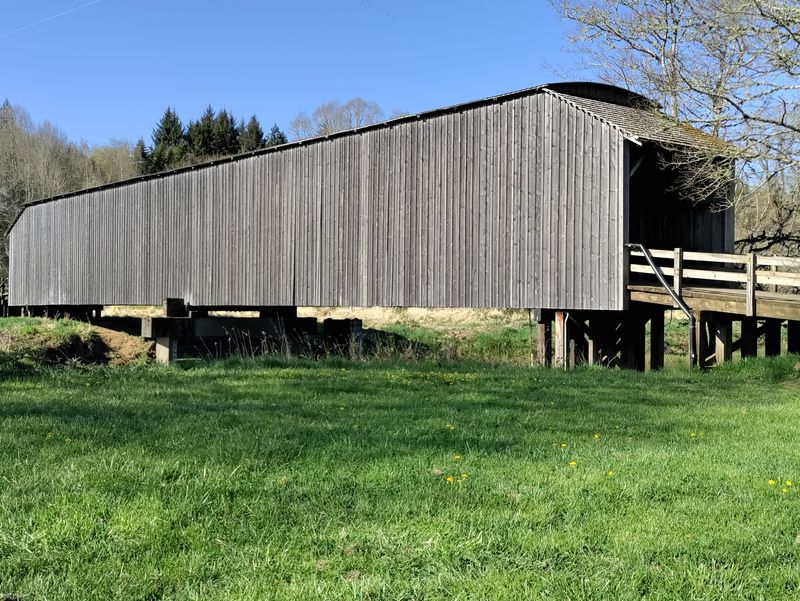
Expect something rickety? Many first-timers do, and they leave impressed.
The bridge rests on a sturdy base, and its frame feels solid underfoot and under wheels.
Most of the structure is wood, topped with a metal roof that helps shed the region’s frequent rain. Look up while walking through, and you can study the beams and trusses that hold everything together.
It is a neat lesson in how builders solved problems long before modern steel bridges took over.
Some people note that the bridge looks younger than its age, and that makes sense given its restoration work. The upkeep shows.
It is in very good shape, with clean lines and a well-preserved look that photographs beautifully from almost any angle.
Another pleasant detail is the lack of graffiti. That alone sets it apart from many roadside landmarks.
Inside, there is a charming woodsy smell, the kind that drifts out of an old barn or a cedar chest.
Bring a camera and take your time with the details. The craftsmanship is what turns a quick crossing into a real piece of Washington history.
The River Running Below
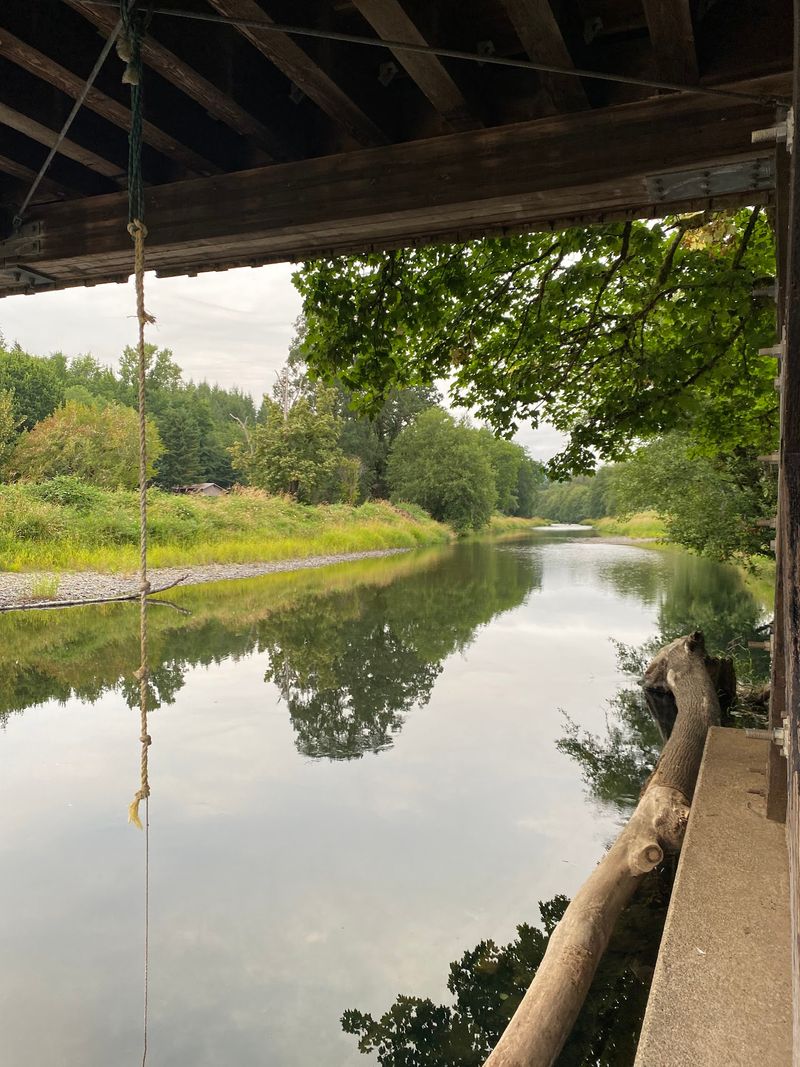
Clear water slides beneath the bridge, and on lucky days you might spot salmon circling near a fallen tree in the stream. Moments like that are why so many people head down to the riverbank instead of just driving away.
Access to the water is easy from the parking areas, and families often spend time near the edge watching the current. The river is a big part of the scene, framing the bridge from below and giving photographers a classic view that looks almost painted.
Rockhounding is another small pleasure here. Some visitors enjoy searching the stones along the shore for interesting shapes and colors.
It is a calm, simple activity that kids and grandparents can share.
In warm weather, the area has a swimming hole feel. Kids have been seen swinging from a rope beneath the bridge and splashing into the river.
If you choose to wade or swim, use good judgment, keep an eye on younger ones, and respect the current.
Even if you stay dry, the sound of moving water adds a lot to the peaceful mood of the place.
Ahlberg Park Next Door
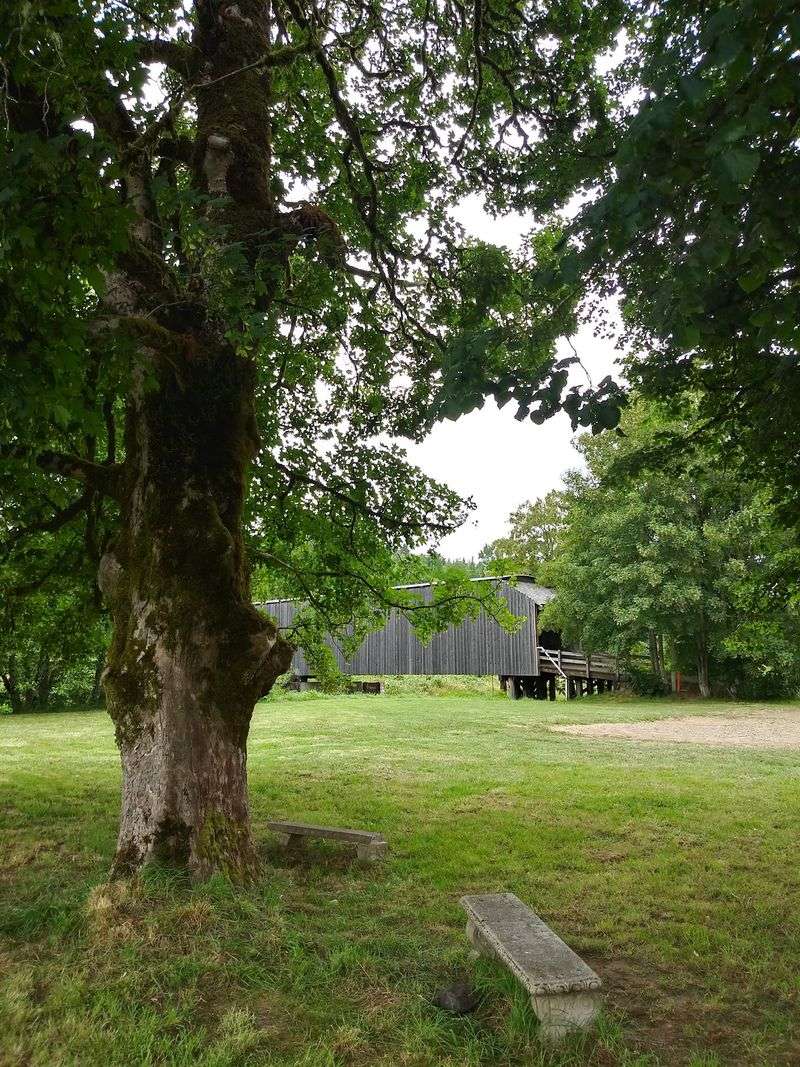
Right beside the bridge sits Ahlberg Park, a small green space that makes the stop feel complete. After driving through, you can pull in, stretch your legs, and enjoy the view from a shady spot.
Two massive maple trees offer generous shade, and benches tucked beneath them invite you to sit for a while. Some people describe concert-style bench seating in the field, which adds to the relaxed, village-green feel.
Visitors often credit the Wahkiakum Community Foundation with maintaining the park for everyone to use. The grounds are known for being clean and well kept, and a portable toilet is available on site.
That simple convenience matters a lot when you have driven a long way.
Pack a picnic lunch, and you have yourself an easy, budget-friendly afternoon. One couple drove more than three hours just to eat beneath those trees and see the bridge, and they felt the trip was well worth it.
Dog owners appreciate the open space for a quick walk, too. It is the kind of park that rewards slowing down.
Birdsong, Frogs, and Old-World Calm
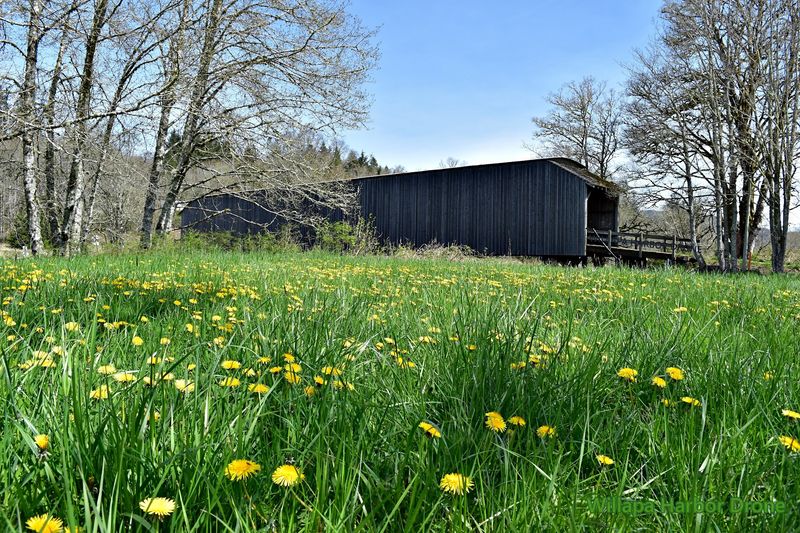
Listen closely and the soundtrack becomes clear: birds singing in the trees, frogs calling from the damp edges, and the river whispering below. Peaceful is the word people use most when they talk about this spot.
The surroundings stay green much of the year, thanks to the region’s generous rain. Fields, tall trees, and mossy banks give the area an old-world feel, as if time slowed down a few decades ago and never quite caught up.
Serene and tranquil are not just nice words here. With no busy attractions nearby competing for attention, the bridge and its park feel unhurried.
You can sit on a bench, watch the light change on the wooden siding, and simply breathe.
Retirees looking for a calm outing will feel right at home. So will anyone who needs a break from city noise around Seattle, Tacoma, or Portland.
For the full storybook effect, arrive early in the day when the air is cool and the birds are busiest. You may find yourself staying longer than planned.
Who Will Love This Stop
Road-trippers who love two-lane highways are the obvious fans. Driving back roads is a wonderful way to see American heritage, and this bridge fits that spirit perfectly.
Families with kids get plenty out of it, too. Little ones can walk through the bridge, read the history signs, peek at the river, and run around the park.
On warm days, the water adds even more fun.
History buffs and engineering lovers will enjoy studying how the structure was built and preserved. Photographers find endless angles, from the hilltop glimpse on the approach to the reflection in the water below.
Budget-minded travelers have reason to smile, because there is no admission fee mentioned anywhere for visiting the bridge or the park. Bring your own snacks, and the whole outing can cost little more than gas.
Nostalgic travelers may be the happiest of all. For anyone who remembers the sound of wooden planks under a family car, crossing here can bring back a flood of memories.
It is a small place with a surprising emotional pull, and that is what makes it special.
Getting There Along the Columbia
Heading along the Columbia River toward the Pacific coast? You are already close.
The bridge sits a short drive off the main road, roughly two miles from the highway, in the Grays River area.
The final stretch is a winding country route. Roads can be curvy, wildlife may cross, and children could be playing nearby, so drive with care and keep your speed relaxed.
Watch for a lovely bonus as you approach. From the top of the hill, you can catch a glimpse of the bridge before you reach it, which makes a great moment to point it out to passengers.
Many travelers combine this stop with a beach trip or a day exploring the lower Columbia region. It fits neatly into a longer itinerary without taking much time.
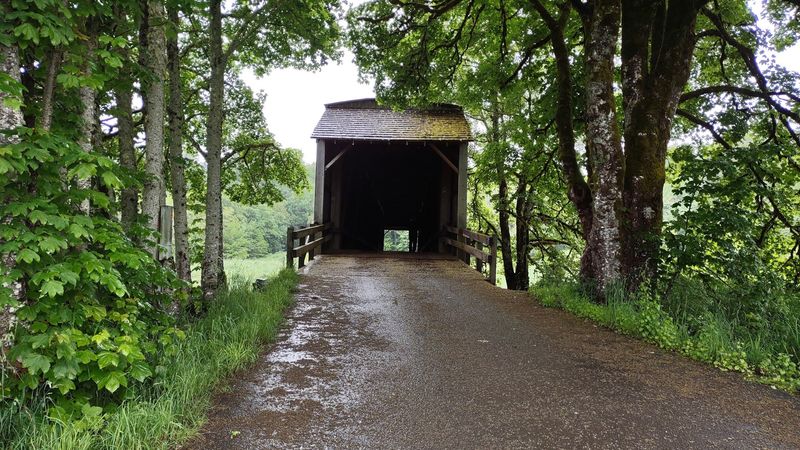
Visiting during stormy weather is still possible. Some people stay in their vehicle and simply drive through, enjoying the experience without stepping into the rain.
On a clear day, though, plan to park and linger. The scenery deserves more than a quick pass.
Parking Tips and Practical Notes
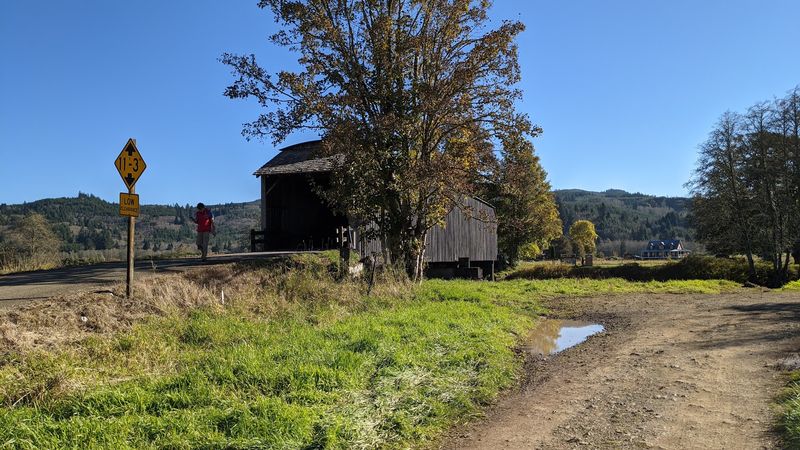
Gravel and ruts are the main things to plan for. Parking is available on both sides of the bridge, but neither lot is fancy, and there are no marked spaces.
The first lot you reach comes with a bumpy road, and many visitors suggest driving through the bridge to the park on the other side, where parking tends to be better. The south side is often described as the stronger choice.
Low-slung cars need extra caution. The rocky ground can make it tricky to find a safe spot, especially if a few pickup trucks have already claimed the best areas.
Take it slow and choose your path carefully.
Facilities are simple but helpful. A portable toilet is on site, and visitors often describe it as clean.
Benches sit under the big shade trees, so you have a place to rest.
Hours and fees are not posted in the information available, so it is smart to treat this as a daytime outing and check local details before you go. Bring water, snacks, and a light jacket, since weather here can shift quickly.
A Detour Worth Every Mile
Few roadside stops manage to feel both simple and magical, but this one pulls it off. A short drive, a wooden tunnel, a river below, and a shady park make for an outing that sticks in your memory.
Visitors consistently call it a treasure and a true piece of Pacific Northwest history. It is off the beaten path, which only adds to its charm.
You have to want to find it, and that effort makes the arrival feel earned.
The experience is easygoing and affordable. No long hikes, no big crowds, and no pricey tickets stand between you and a memorable afternoon.
Pack a lunch, bring the grandkids or a good friend, and let the day unfold slowly.
Seasons can change the mood, from summer swims to rainy-day drive-throughs and green spring mornings filled with birdsong. Whenever you go, the bridge offers something a little different.
For anyone who has ever wished they could step into an old storybook, this corner of Washington comes remarkably close. Go see it while the road calls you this weekend.