
13 Ways Different States Put Their Own Spin On Pizza
Pizza may have originated in Italy, but in the United States it has taken on a life all its own. From bustling city streets to small-town pizzerias, every region has shaped this classic dish to reflect local flavors, traditions, and creativity.
Over the years, I’ve traveled coast to coast tasting slices, and I can promise you—the differences run far deeper than just a few toppings.
Some styles are thick and hearty, others thin and crispy, but all tell a story about the communities that created them. These regional specialties highlight the incredible diversity of American cuisine through our most beloved comfort food.
1. New York’s Iconic Foldable Slice
Nothing beats the ritual of folding a massive New York slice in half lengthwise. I’ll never forget my first authentic experience – standing on a crowded Manhattan sidewalk, grease dripping down my wrist as I navigated that perfect balance of crispy bottom and chewy interior.
The magic lies in the water, many say – something about the city’s tap water creates that distinctive chewy-yet-crisp crust. Topped with a thin layer of tangy tomato sauce and bubbling mozzarella, these slices demand to be eaten on the go.
Local pizzerias often become neighborhood institutions, with heated debates about which spot serves the best slice becoming a true New York pastime.
2. Trenton Tomato Pie Flips the Script
The first time I ordered a Tomato Pie in Trenton, New Jersey, I thought they’d made a mistake. “Where’s the cheese?” I wondered, until I realized it was hiding underneath the vibrant red sauce that crowned the pie.
Unlike traditional pizza, Trenton’s signature creation reverses the usual order – cheese goes directly on the crust, with a generous ladle of chunky, slightly sweet tomato sauce on top. The sauce becomes the star here, often made from locally-grown New Jersey tomatoes.
Dating back to the early 1900s, these pies developed their own identity separate from nearby New York, proving that sometimes flipping the script creates something magical.
3. Chicago Deep Dish: More Casserole Than Pizza
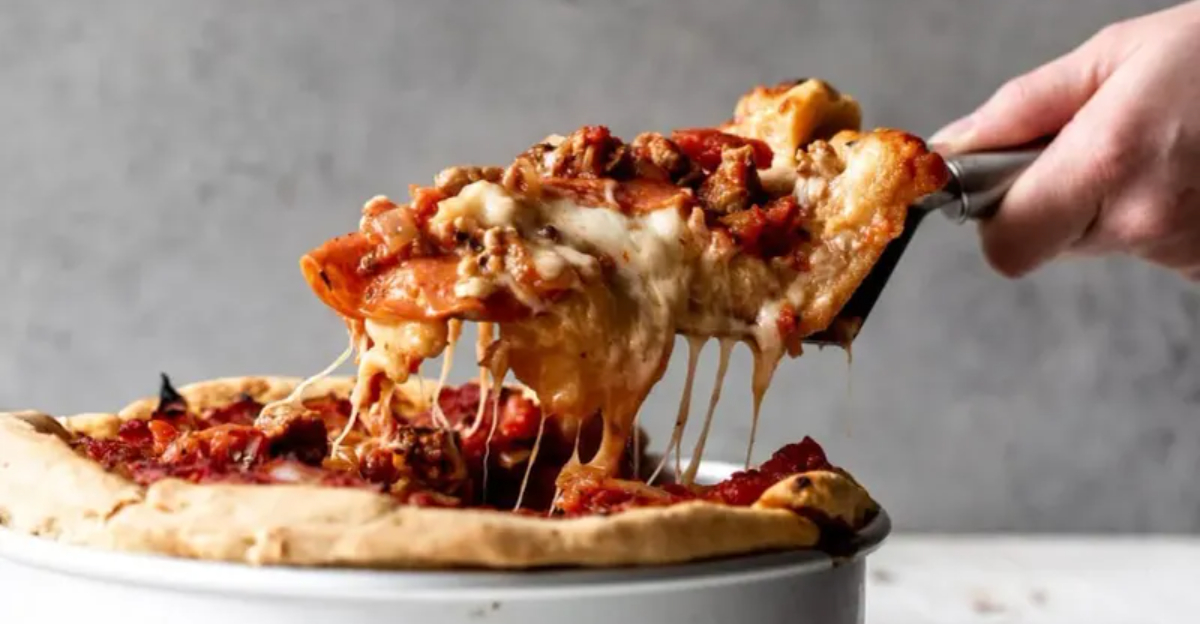
My first Chicago deep dish experience felt like a pizza revelation! This hearty creation requires a fork and knife – there’s no folding these slices. The buttery, cornmeal-enriched crust rises up the sides of a deep pan like a protective fortress.
Inside this crust castle lies a magnificent construction: a thick layer of mozzarella on the bottom, hearty toppings in the middle, and a crowning glory of chunky tomato sauce on top. The whole thing bakes for nearly 45 minutes, creating something closer to a savory pie than traditional pizza.
Locals fiercely defend their favorite deep dish establishments, with places like Lou Malnati’s and Giordano’s inspiring almost religious devotion.
4. Tavern-Style: Chicago’s Other Pizza Treasure
“This is what Chicagoans actually eat!” my friend insisted as she introduced me to tavern-style pizza. While tourists line up for deep dish, locals often prefer this thin, crispy-crusted pie cut into squares (or “party cut”) instead of triangles.
Born in the neighborhood bars of the Windy City, these pizzas feature a cracker-thin crust that shatters with each bite. The square cuts create coveted corner pieces with extra crispy edges that everyone fights over.
Toppings extend all the way to the edge, and the thin profile allows you to stack several slices on your plate without filling up too fast – perfect for social gatherings at your favorite tavern.
5. Detroit-Style: All About Those Caramelized Edges
My pizza world expanded dramatically the first time I tried Detroit-style pizza with its glorious, caramelized cheese edges. These rectangular pies are baked in heavy steel pans – originally automotive drip pans from the Motor City’s manufacturing heyday.
The genius is in the assembly: cheese (often Wisconsin brick cheese) is spread all the way to the edges of the pan, where it melts down and creates a spectacular crispy, caramelized crust. The dough underneath stays airy and light with a focaccia-like texture.
Sauce is typically ladled on top in racing stripes, and the pies are cut into squares that showcase those prized edges that Detroit pizza enthusiasts dream about.
6. St. Louis’ Cracker-Thin Provel Perfection
“What IS this cheese?” I asked during my first bite of St. Louis pizza. The answer: Provel, a processed cheese blend of cheddar, Swiss, and provolone that’s virtually unknown outside Missouri but beloved within city limits.
This distinctive cheese tops an impossibly thin, yeast-free crust that snaps like a cracker when you bite it. Cut into small squares instead of triangles (locals call this the “party cut”), St. Louis pizza is designed for sharing and socializing.
Imo’s Pizza, the city’s famous chain, has popularized this style since 1964. While visitors sometimes need time to appreciate Provel’s unique gooey-yet-non-stringy texture, St. Louis natives defend their hometown creation with fierce loyalty.
7. Ohio Valley’s Hot-Then-Cold Pizza Innovation
I thought they’d forgotten to finish making my pizza when I first ordered in Steubenville, Ohio. The crust and sauce came out piping hot, but the cheese and toppings were just… cold!
This isn’t a mistake – it’s the signature style of Ohio Valley pizza. The square or rectangular crust bakes with just sauce, then after it comes out of the oven, cold cheese and toppings are added. The residual heat slightly warms the toppings without melting the cheese completely.
Born in the steel mill towns along the Ohio River, this unique approach creates an interesting temperature contrast. DiCarlo’s Original Pizza has been serving this style since 1945, creating generations of devoted fans.
8. Rhode Island’s Saucey Pizza Strips
The first time someone offered me a “pizza strip” at a Rhode Island party, I was confused by what looked like a slice of thick focaccia with just tomato sauce on top. No cheese. No toppings. Just bread and sauce – served at room temperature!
These rectangular strips (sometimes called “bakery pizza”) are a staple at Rhode Island gatherings, from graduation parties to funeral receptions. The thick, chewy dough supports a layer of slightly sweet tomato sauce, often spiced with oregano and garlic.
Found in local bakeries rather than pizzerias, these portable slices don’t need reheating and have fueled generations of Ocean State celebrations. Their simplicity is precisely what makes them special.
9. New Haven’s Coal-Fired Apizza Tradition
“It’s not pizza, it’s apizza,” my Connecticut friend corrected me, pronouncing it “ah-BEETZ.” New Haven’s signature style transformed my understanding of what pizza could be with its irregular shape and charred, blistered crust.
Cooked in blazing-hot coal-fired ovens that reach over 650 degrees, these thin-crusted pies emerge with a distinctive char that adds smoky complexity. The most famous version might be the white clam pie – topped with fresh littleneck clams, garlic, olive oil, and pecorino (but no tomato sauce or mozzarella).
Frank Pepe Pizzeria Napoletana has been crafting these masterpieces since 1925, creating a pizza pilgrimage destination that still draws lines around the block.
10. California’s Fresh Farm-to-Table Pizza Revolution
My pizza worldview expanded dramatically when I first encountered California-style pizza topped with ingredients I never imagined belonging on a pie. Chef Ed LaDou and restaurants like Chez Panisse and California Pizza Kitchen pioneered this revolutionary approach in the 1980s.
These personal-sized pizzas feature thin, artisanal crusts topped with fresh, seasonal ingredients that reflect California’s agricultural abundance. Think arugula, goat cheese, fig jam, barbecued chicken, Thai-inspired flavors, or fresh avocado – combinations that were unthinkable in traditional pizzerias.
The emphasis on fresh, local ingredients and creative combinations perfectly captures California’s innovative culinary spirit. These pizzas aren’t bound by tradition but instead celebrate creative freedom and seasonal bounty.
11. Colorado’s Mountain Pies: Honey-Sweetened Crusts
Hiking in the Rockies works up a serious appetite, which might explain why Colorado’s signature “Mountain Pies” feature massive, hand-rolled edges that could feed a hungry climber. My first encounter with these hearty creations left me wondering about the slightly sweet flavor in the crust.
The secret? Honey! Many Colorado pizzerias brush their thick, braided crusts with honey before or after baking, creating a sweet-savory contrast that’s become the state’s pizza signature. These substantial pies stand up to the hearty toppings favored at high altitudes.
Beau Jo’s, the famous Idaho Springs pizzeria, even provides bottles of honey on tables for dipping those enormous crusts – turning the part most people discard into a beloved dessert.
12. Florida’s Cuban-Inspired Pizza Fusion
Miami introduced me to a pizza style I never expected – one that brilliantly fuses Italian traditions with Cuban flavors. The soft, chewy crust provides the perfect foundation for toppings that reflect South Florida’s vibrant Cuban community.
These distinctive pies might feature picadillo (spiced ground beef), plantains, chorizo, or mojo-marinated pork. The cheese tends to be abundant, creating a gooey, indulgent experience that pairs perfectly with the tropical climate.
Some pizzerias even incorporate elements of a Cuban sandwich, with mustard, pickles, ham, and roasted pork on a pizza base. This cultural fusion represents Florida’s unique position as a meeting point between Caribbean, Latin American, and North American culinary traditions.
13. Minnesota’s Hotdish Pizza: Casserole Meets Pie
“You’ve gotta try tater tot hotdish pizza,” my Minneapolis friend insisted, introducing me to Minnesota’s ultimate comfort food fusion. This Midwestern creation brilliantly combines two beloved regional staples – pizza and hotdish (what Minnesotans call casseroles).
These hearty pies feature toppings inspired by classic hotdish recipes: tater tots, cream of mushroom sauce, green beans, ground beef, and of course, plenty of cheese. Some versions even incorporate wild rice, celebrating Minnesota’s state grain.
Perfect for surviving those brutal northern winters, these substantial creations emerged from neighborhood bars and family-owned pizzerias that understand their customers’ desire for familiar, comforting flavors in pizza form. It’s Minnesota nice in each warming, nostalgic bite.