
These Are 12 Weekend Getaways In California That Feel A World Away
California stretches over 800 miles from north to south, packing in deserts, mountains, forests, and coastlines that could each belong to different countries.
You can leave the traffic behind and land in places so remote and strange they reset your sense of what the Golden State actually contains.
These dozen escapes will pull you out of the everyday grind and drop you somewhere that feels like another planet. Let’s dive in!
1. Mendocino (North Coast)
Perched on weathered bluffs where the Pacific crashes below, this Victorian village looks like it wandered off the coast of Maine and settled 3,000 miles west.
Mendocino Headlands State Park wraps around the entire town, offering easy trails that wind past sea arches, hidden coves, and seasonal whale-watching spots.
The fog rolls in thick most mornings, adding a moody charm to the wooden water towers and old storefronts. You can walk the headland loop in under an hour, pausing at benches that face the endless blue.
Between February and May, gray whales cruise past on their northern migration, often close enough to see their spouts from shore.
2. Big Sur (Central Coast)
Redwood groves tower over fern-filled canyons while the Pacific smashes into cliffs so sheer they make your stomach flip.
Big Sur runs for about 90 miles along Highway 1, but Pfeiffer Big Sur State Park anchors the heart of it with trails like Buzzard’s Roost and Pfeiffer Falls.
Buzzard’s Roost climbs steeply through oak and redwood, rewarding you with views that stretch from ridgeline to ocean. Pfeiffer Falls is a gentler walk, ending at a 60-foot cascade tucked into a mossy grotto.
Cell service vanishes here, which is exactly the point. Pack layers because coastal fog can roll in fast, even on sunny days.
3. Santa Catalina Island (Avalon/Two Harbors)
Private cars are heavily restricted on this island (permits and long waitlists in Avalon), so most visitors get around by golf cart, shuttle, bike, or on foot.
Golf carts putter through Avalon’s compact downtown, where pastel buildings climb the hillsides above a crescent bay filled with bobbing sailboats.
Snorkeling at Lover’s Cove reveals bright orange garibaldi fish darting through kelp forests, and glass-bottom boat tours let you peek underwater without getting wet.
The zip-line course soars above canyons with views that swing between island interior and open ocean.
Two Harbors, on the quieter west end, offers camping and kayaking in near-total solitude.
4. Channel Islands National Park (Santa Cruz Island)
Scientists call this chain the Galapagos of California because isolation has bred species found nowhere else on Earth.
Santa Cruz Island, the largest, is reached by boat from Ventura Harbor, and Scorpion Anchorage serves as the main landing zone for day-trippers and campers.
Sea-cave kayaking here ranks among the best in the state, especially around Scorpion Anchorage’s smaller caves; the famed Painted Cave is typically viewed by boat on special excursions rather than by kayak.
Island foxes, no bigger than house cats, trot fearlessly around campsites looking for dropped crumbs.
Spring wildflowers explode across the hillsides in yellows and purples, and the night sky goes pitch-black, perfect for stargazing.
5. Point Reyes (Marin)
Fog clings to these headlands like a second atmosphere, softening the edges of windswept cliffs and dairy farms that date back a century.
Point Reyes National Seashore juts into the Pacific on its own tectonic plate, making it geologically distinct from the rest of California.
Tule elk roam the Tomales Point trail, their bugling calls echoing across coastal scrub during fall rut season. The lighthouse requires descending 300 steps, but the view from the bottom spans miles of churning ocean and migrating whales.
Stop at one of the oyster shacks along Tomales Bay for the freshest bivalves you will taste, shucked right at picnic tables beside the water.
6. Lassen Volcanic National Park (Shasta-Cascade)
Sulfur stench hits your nose before you even see the bubbling mud pots and hissing fumaroles that make this park feel like another planet.
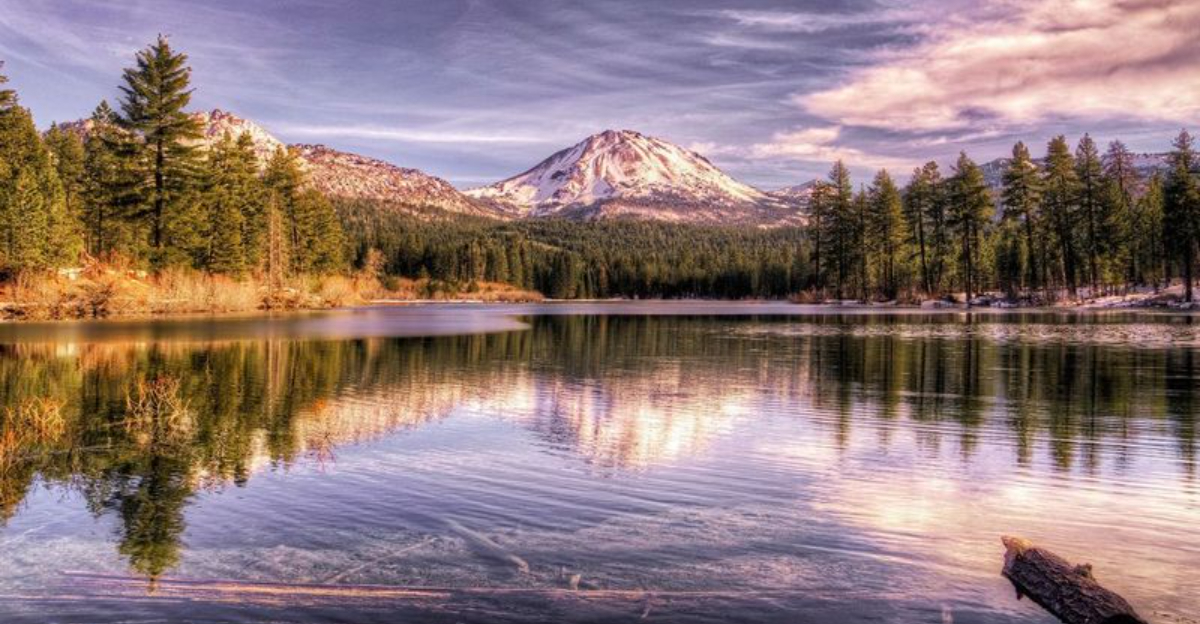
Lassen Peak, a plug-dome volcano, last erupted in 1915, and the landscape still simmers with geothermal energy beneath trails that wind through pine forests and alpine meadows.
Bumpass Hell, the largest hydrothermal area, requires a moderate hike but rewards you with boardwalks over boiling springs painted in rust and turquoise. Manzanita Lake offers easy paddling with volcano reflections on calm mornings.
Crowds stay thin here compared to Yosemite or Tahoe, giving you trails and campsites mostly to yourself, even in summer.
7. Sequoia & Kings Canyon National Parks (Sierra)
Standing beneath a giant sequoia makes you feel like an ant at the base of a skyscraper, except this tower has been growing for thousands of years.
The Giant Forest holds five of the ten largest trees on Earth by volume, including General Sherman, which weighs an estimated 2.7 million pounds.
Congress Trail loops through groves where sunlight filters down in golden shafts, and the air smells like vanilla from the bark. Kings Canyon drops over 8,000 feet from rim to river, creating one of the deepest canyons in North America.
Scenic drives along Generals Highway twist through sequoia groves and granite domes, with pullouts that beg for long stares.
8. Joshua Tree & Pioneertown (High Desert)
Boulders pile into impossible sculptures while Joshua trees raise their spiky arms toward skies so clear the Milky Way looks painted on.
This high desert sits where the Mojave and Colorado deserts collide, creating a landscape that photographers and rock climbers worship equally.
Pioneertown, just outside the park, was built as a 1940s movie set and still looks like the Wild West, complete with wooden storefronts and dusty streets. On weekends, you might catch a mock gunfight in the town square.
Use alternate park entrances if the west gate backs up on busy weekends. Sunrise and sunset turn the rocks into glowing embers worth setting an alarm for.
9. Anza-Borrego Desert State Park (Borrego Springs)
Badlands ripple like frozen waves across a landscape so vast and empty it swallows sound itself. Anza-Borrego is California’s largest state park, covering over 600,000 acres of slot canyons, palm oases, and sculptured mud hills that glow pink at sunset.
Spring wildflower blooms here are legendary, turning the desert floor into a carpet of yellow, purple, and orange when winter rains cooperate. The underground visitor center stays naturally cool year-round and offers exhibits on desert survival and geology.
The park is an International Dark Sky Park (and Borrego Springs is an International Dark Sky Community), so light pollution is minimal and the stars can look three-dimensional. Summer heat tops 110 degrees, so visit between October and April.
10. Idyllwild (San Jacinto Mountains)
Pine scent hangs thick in the air of this artist town perched at 5,400 feet, where cabins nestle among boulders and deer wander through backyards like locals.
Idyllwild has no chain stores, just galleries, coffee roasters, and mom-and-pop diners that close whenever they feel like it.
Hiking trails spiderweb out in every direction, from easy nature walks to the grueling climb up San Jacinto Peak via the Devil’s Slide Trail.
Rock climbers flock to Tahquitz and Suicide Rocks, both legendary granite faces with routes for every skill level.
Winter brings snow that dusts the pines; mountain roads can require chains during storms, but between storms, it’s a cozy cold-weather escape without the ski-resort crowds.
11. North Lake Tahoe (Tahoe City & West Shore)
Water so blue and clear you can see 70 feet down makes this alpine lake look Photoshopped, but it is all real and absurdly beautiful.
North Lake Tahoe stays quieter than the South Shore casinos, with Tahoe City and the West Shore offering beaches, hiking, and skiing without the neon chaos.
The Tahoe Rim Trail wraps 165 miles around the entire lake, but shorter sections like the hike to Rubicon Point offer big rewards without the commitment. In winter, local resorts like Homewood and Alpine Meadows deliver deep snow and shorter lift lines.
Summer beach days at Sand Harbor or D.L. Bliss State Park feel like the Mediterranean dropped into the Sierra Nevada.
12. Solvang (Santa Ynez Valley)
Windmills spin above half-timbered buildings where bakeries sell aebleskiver and storefront signs are written in Danish, all in the middle of California ranch country.
Solvang was founded in 1911 by Danish immigrants who wanted to recreate their homeland, and the theme stuck so thoroughly it now feels like Disneyland without the rides.
You can walk the entire downtown in an hour, ducking into shops that sell European chocolates, wooden clogs, and imported cheeses. The surrounding Santa Ynez Valley produces masterpieces, with tasting rooms scattered along quiet back roads.
Hans Christian Andersen Museum celebrates the fairy-tale author with first editions and memorabilia that fans will appreciate.