
6 West Virginia Ghost Towns With Stories More Fascinating Than Their Ruins
Back in 1910, one tiny railroad town tucked inside a West Virginia river gorge earned more freight revenue for its railroad than Cincinnati and Richmond combined. Let that sink in for a moment.
A place with just a few hundred residents was outperforming two major cities. Not bad for a town most people today have never heard of.
West Virginia is full of stories like this, where small communities once played surprisingly big roles in America’s industrial boom. Some rose on coal, others on oil wells, river mills, or enormous logging trains that hauled fortunes through the mountains.
But when the money moved on, many of these towns had little left to keep them alive. Floods swept through, fires tore buildings apart, and mines shut down.
Prosperity gave way to silence, leaving behind abandoned foundations, forgotten streets, and mysteries that still spark curiosity.
Yet these places haven’t disappeared entirely. Their streets, trails, and ruins remain open to exploration, while a few still have museums, visitor centers, and steam whistles that echo through the hills like distant reminders of another era.
So where should the adventure begin, with a town consumed by fire, an island swallowed by floodwaters, or a coal mine reached by hundreds of steps? In West Virginia, even the smallest dot on an old railroad map can hide a story bigger than a city.
1. Thurmond Historic Town, Thurmond, WV
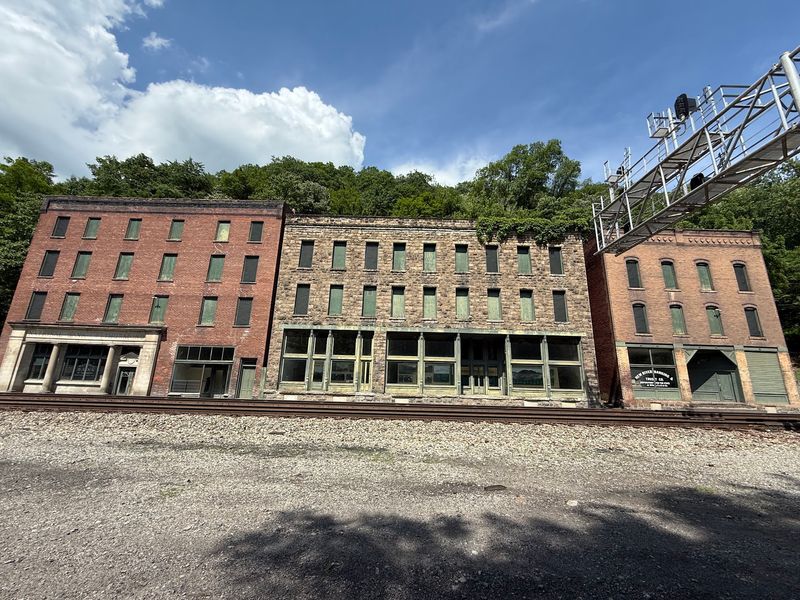
Only a handful of people live here now, yet this little town once moved money like a big city. In 1910, it brought the C&O Railway more freight revenue than Cincinnati and Richmond combined.
Coal was the reason. Trains rumbled through the New River Gorge day and night, and Thurmond sat right in the middle of the action.
Today the town is mostly quiet, with just a few buildings still standing. The National Park Service looks after them, which keeps the old main street looking a lot like it did in its prime.
Your best first stop is the restored depot. It works as a seasonal visitor center, and the railroad still runs right past it.
Walk along the side of the tracks and you can spot the old coal chute. It towers over the scene and helps you picture how busy this narrow strip of land once was.
Here’s a story you’ll want to share. Across the river, a hotel called the Dun Glen was famous for a card game said to have lasted fourteen years.
The roads came, fires hit, and diesel trains changed the railroad business. Bit by bit, Thurmond emptied out.
The town joined the National Register of Historic Places in 1984. It’s open around the clock, and the drive in, with river and mountain views, is half the fun.
2. Nuttallburg Coal Tipple, Fayetteville, WV
Henry Ford once owned a piece of this lonely gorge. In the 1920s, the car maker took over the Nuttallburg mines to feed coal to his own operations.
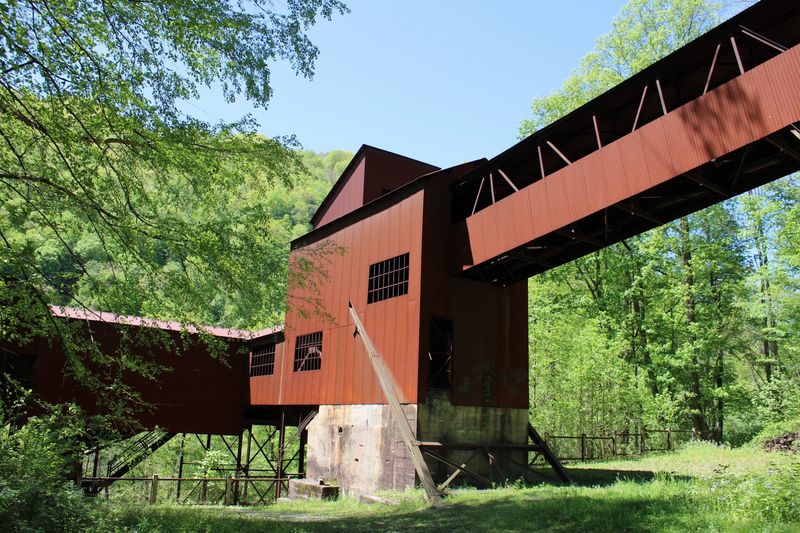
He didn’t stop at paperwork. Ford upgraded the site, including a long conveyor that carried coal down the mountainside to the tipple by the tracks.
The story starts earlier, though. An Englishman named John Nuttall opened mines here in the 1870s, right as the C&O Railway pushed through the gorge.
A full town grew around the mines. Families lived, worked, and went to school in a spot that now feels completely tucked away from the world.
Getting here takes some patience. The road in is narrow, bumpy, and unpaved, so slow and steady is the rule.
Your reward is a towering tipple that still stands over the trees. Nearby, you’ll find old coke ovens and stone foundations scattered across the hillside.
Signs along the trails explain what each structure did. Still, plenty is left to your imagination, which honestly makes it more fun.
Wander freely and let the strange shapes tell their own tale. The site is open daily from 7 a.m. to 7 p.m., so plan your trip before dusk.
Bring good shoes and a little curiosity. Few places show off West Virginia coal history this clearly.
3. Virginius Island, West Virginia
Rivers can build a town, and rivers can wash one away. Virginius Island learned both lessons the hard way.
Sitting on the Shenandoah River at Harpers Ferry, this island was once a busy little factory town. Water power turned the wheels of mills and shops through much of the 1800s.
Workers and their families lived right among the machines. Picture streets, homes, and the steady hum of production on a strip of land surrounded by water.
That same river kept rising, though. Big floods slammed the island again and again, and the town never bounced back.
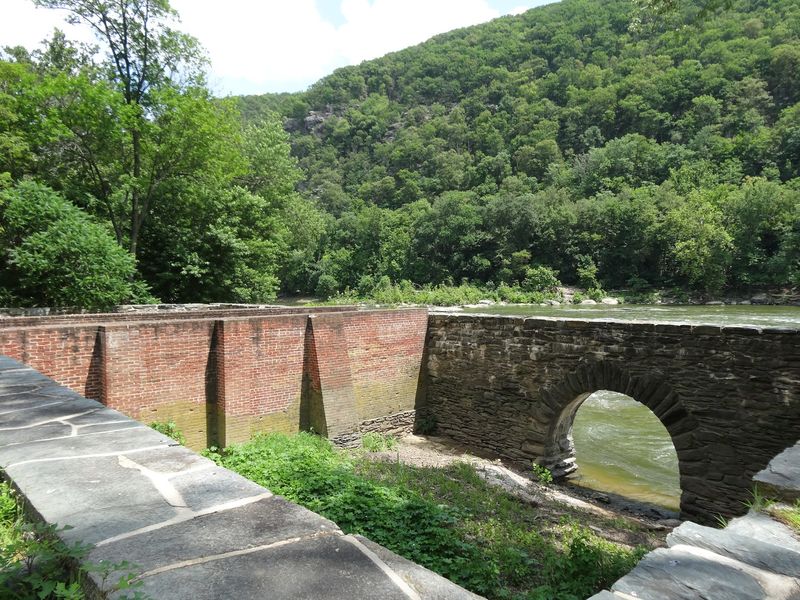
Today the island belongs to Harpers Ferry National Historical Park. Walking paths lead you past stone foundations and the remains of 19th-century mills and factories.
Getting there is simple. The easiest route crosses the short Virginius Bridge from the main road.
Once you’re on the island, slow down and look closely. Old walls and channels poke out of the woods, hinting at how water was steered to power the factories.
Harpers Ferry gets plenty of attention for its famous history. Plenty of visitors breeze right past this quieter corner without knowing what happened here.
Don’t be one of them. Pair the island with a stroll through town, and you’ll see a whole other side of this famous West Virginia spot.
4. Kaymoor Miners Trail
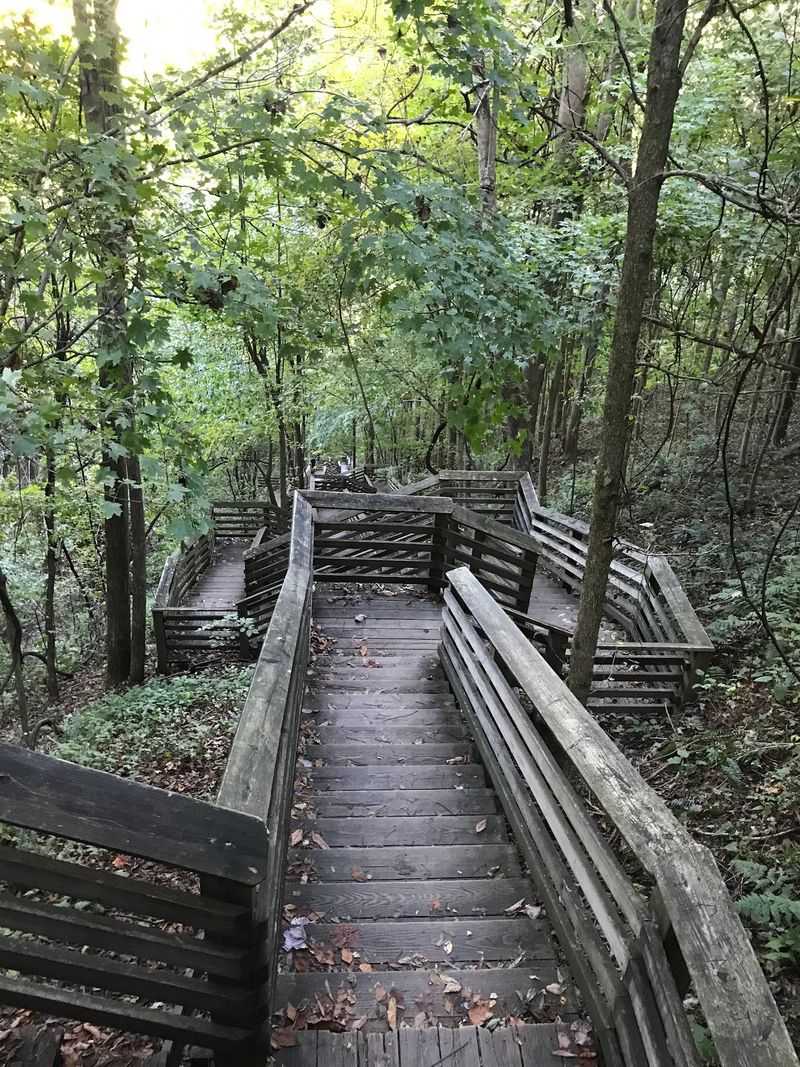
Leg day, meet history class. This trail drops you straight down the side of the New River Gorge to an abandoned coal mine.
The Low Moor Iron Company opened Kaymoor in 1899. The mine kept going for decades until it finally closed in 1962.
The town was split into two parts. Kaymoor Top sat near the rim, while Kaymoor Bottom stretched along the river far below.
A steep haulage system linked the two levels. Coal and people moved up and down a slope that would make most of us dizzy.
Start from Kaymoor Top and you’ll face a steep, mostly natural descent. It’s a real workout before you even reach the steps.
Those steps lead down to the mine site, where old structures still cling to the hillside. The mine openings are sealed, so you’ll admire from the outside.
Feeling bold? Another 821 steps continue down toward the river and the bottom town site.
Plenty of hikers stop at the mine and call it a win. No shame there, since you’ll have to climb back up whatever you go down.
Pack water and wear sturdy shoes. Then take your time and picture miners making this trip as part of a normal day at work.
5. Mountwood Park, Walker, WV
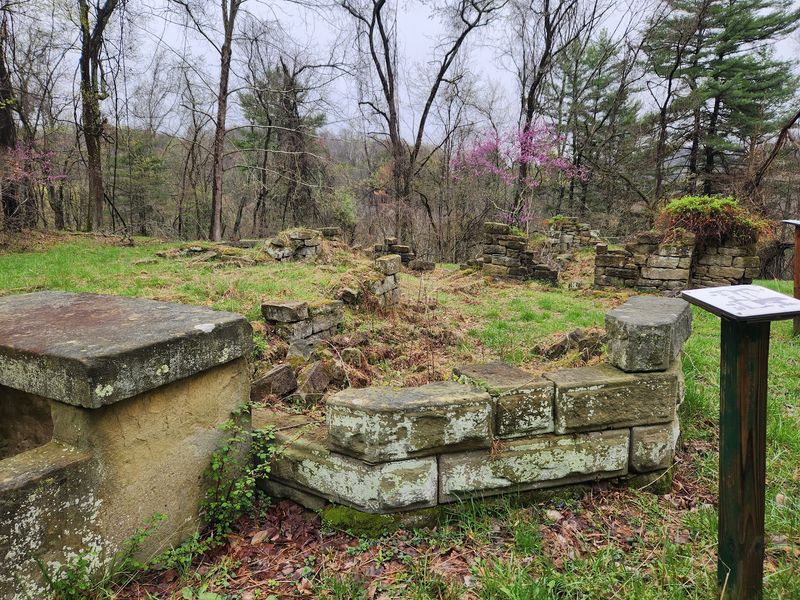
A town called Volcano sounds made up, but it really existed. Even wilder, it burned to the ground in 1879.
Volcano was an oil boom town in the hills of Wood County. Oil drew people in during the 1870s, and the town grew quickly around the wells.
Then fire swept through, and Volcano never recovered. Today its story lives on inside Mountwood Park.
The park keeps a museum dedicated to the old town. You can also explore archeology and geology features tied to the area’s oil past.
Here’s the fun twist. Most ghost towns ask you to bring your own snacks and silence, but this one comes with a full playground.
Mountwood has plenty of hiking and mountain biking trails. A lake lets you fish, canoe, or kayak, and a creek runs through the grounds.
Families will find pavilions with grills, picnic tables, and play areas. There’s disc golf, an archery range, horse trails, and even a dog park.
Want to stay longer? The park offers cabins and a few rooms for rent.
It’s open daily from 7 a.m. to 10 p.m. That gives you time to learn about Volcano in the morning and paddle the lake by afternoon.
6. Cass Scenic Railroad State Park, Cass, WV
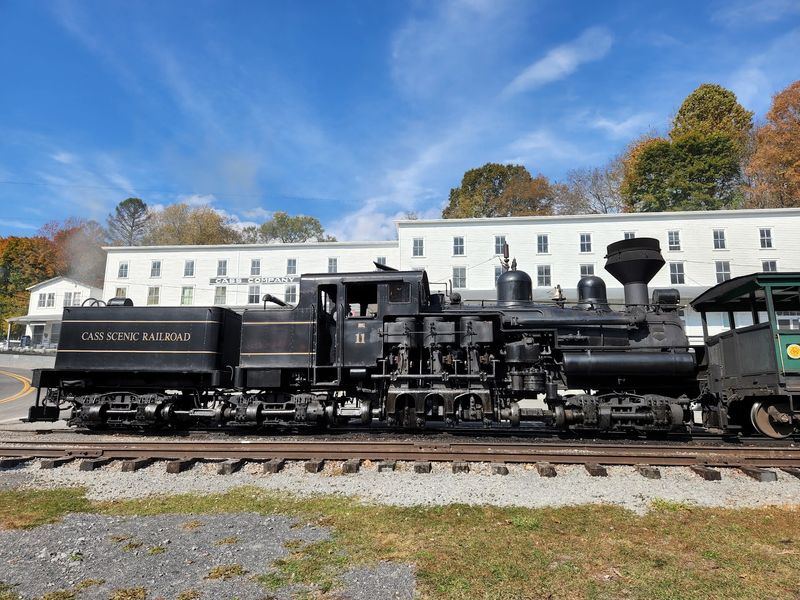
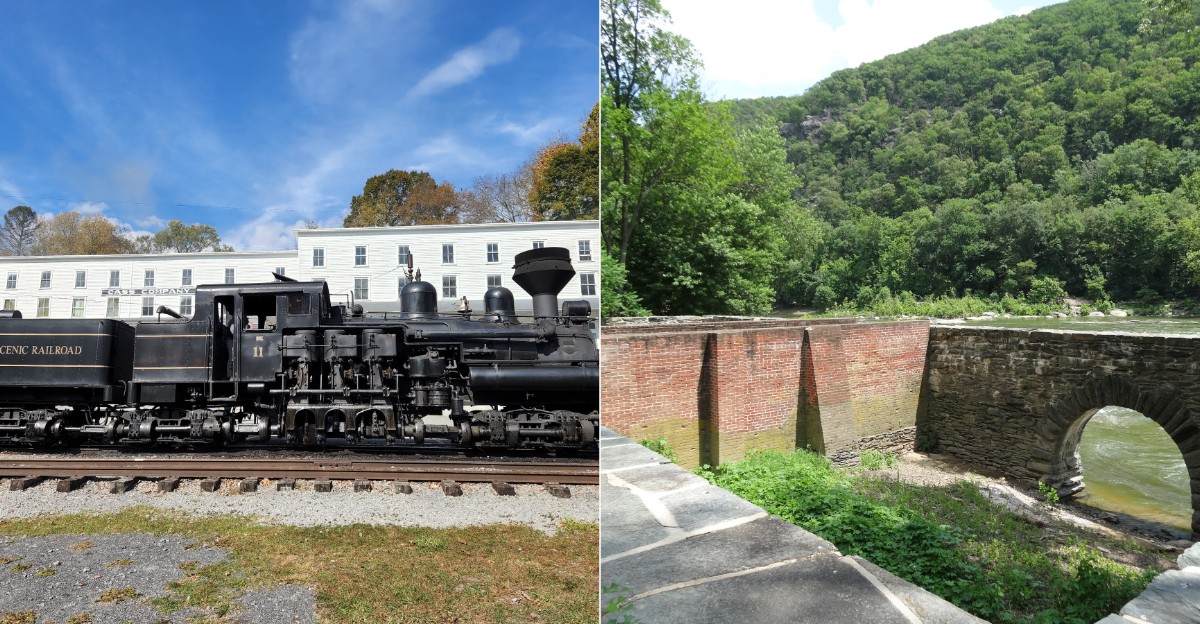
Steam whistles still echo through this old logging town. Some ghost towns go silent, but Cass decided to keep the trains running.
Cass grew in the early 1900s as a company town for loggers and mill workers. Rows of company houses still line the streets today.
Timber was the town’s whole reason for being. Locomotives hauled logs out of the mountains, and the mill turned them into lumber.
When logging ended, the town could have faded away. Instead, the state turned it into a park, and the steam engines got a second career.
Now you can ride behind those locomotives on a scenic trip into the mountains. The views alone make the ticket worth it.
Before or after your ride, check out the museum and short film. The general store, gift shop, and gallery are fun for browsing too.
Don’t skip the free walking tour of town. Tours leave the visitor center Thursday through Tuesday at 10:15 a.m. and 2:15 p.m.
Guides share stories about the town doctor, and how the railroad and park came to be. It turns old buildings into real lives.
Picnic tables, grills, and a playground round things out. Cass proves a West Virginia ghost town can still be full of life.