
Where Curious Travelers Go When They Want A Different Side Of Oregon
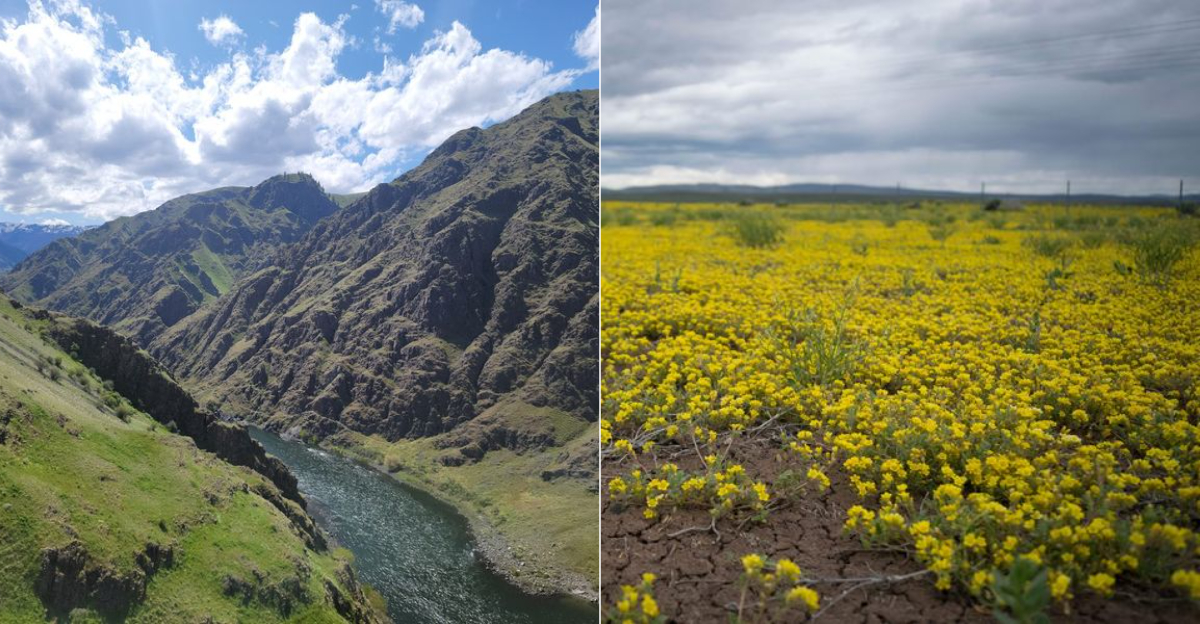
Most people think of Oregon and picture Portland’s coffee, Crater Lake’s mirror-blue waters, or Haystack Rock at Cannon Beach. And yes, those spots are incredible.
But Oregon has a quieter, wilder side, the kind that makes you lean in and say, “Wait, really? Tell me more.” Like finding a hidden track at the end of your favorite album, these places often end up being the best part.
High-desert skies sparkle like black velvet dusted with glitter. River gorges plunge deeper than you imagined, and mountain lakes lie so still they seem unreal. This is for travelers who crave the road less polished, the trail less predictable.
Rugged coastlines, canyon walls, stars untouched by city lights, Oregon has a version of itself most visitors never see. Pack your sense of adventure.
It’s breathtaking.
1. Samuel H. Boardman Scenic Corridor
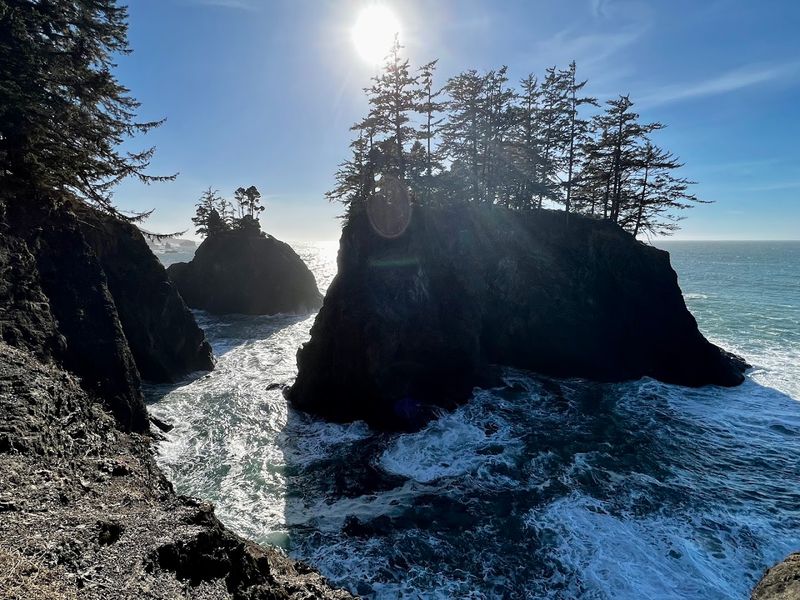
Forget what you thought you knew about the Oregon coast, because Samuel H. Boardman Scenic Corridor on U.S. 101 near Brookings, OR 97415 feels like a world of its own.
This 12-mile stretch is one of the most stunning parts of the Pacific Coast, yet it still slips past a surprising number of travelers.
Natural rock arches, hidden coves, sea stacks rising out of the ocean like ancient monuments, and trails that weave through old-growth Sitka spruce forests make this place feel almost fictional.
The Arch Rock Viewpoint and Natural Bridges Cove are among the corridor’s most photographed spots, but the real magic lies along the connector trails linking the overlooks. There, the scenery shifts from dramatic cliff edges to soft, mossy forest floors in a way that feels truly cinematic.
The tidepools here are another reason to slow down. At low tide, the rocky shoreline reveals a whole miniature world of sea anemones, starfish, and hermit crabs going about their business.
Unlike the busier beaches further north, this corridor rewards patience and a willingness to explore on foot.
The farther you walk from the parking pullouts, the more the landscape opens up into something that feels entirely yours.
Samuel H. Boardman is the kind of place where you take one photo and then realize no photo will ever fully capture it, so you just put the phone down and breathe it all in.
2. Wallowa Lake And Joseph
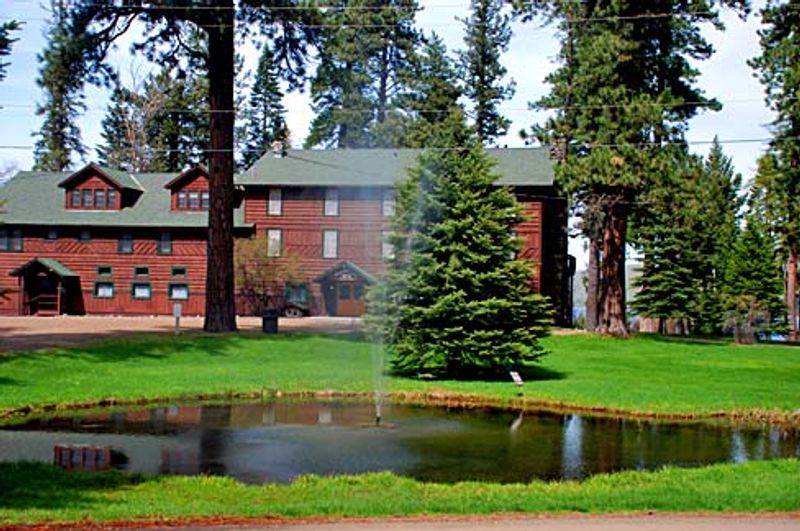
People call it Oregon’s Switzerland, and honestly, that comparison does not feel like an exaggeration once you actually arrive. Wallowa Lake sits in the far northeastern corner of Oregon near the town of Joseph, and the drive alone through the Wallowa Valley is enough to make you pull over three times just to stare at the mountains framing the horizon.
The lake itself is a glacially carved masterpiece, stretching about four miles long with water so clear it turns shades of green and blue depending on the light.
Eagle Cap Wilderness rises dramatically behind it, offering some of the most rewarding hiking terrain in the entire Pacific Northwest. The Wallowa Lake Tramway carries visitors up to an elevation of about 8,150 feet, where the views stretch across multiple mountain ranges in a way that makes your brain temporarily short-circuit from sheer beauty.
The town of Joseph nearby adds a surprisingly rich cultural layer to the visit.
It has become known as a hub for bronze casting and public art, with foundries and galleries that feel genuinely world-class for a town of its size. The main street is lined with bronze sculptures that tell the story of the Nez Perce people who called this valley home long before anyone else arrived.
Wallowa Lake State Park offers waterfront camping where mornings feel almost sacred. With mountain drama, an artistic community, and glassy lake reflections, it’s one of those rare places that exceeds even high expectations.
3. Cove Palisades State Park
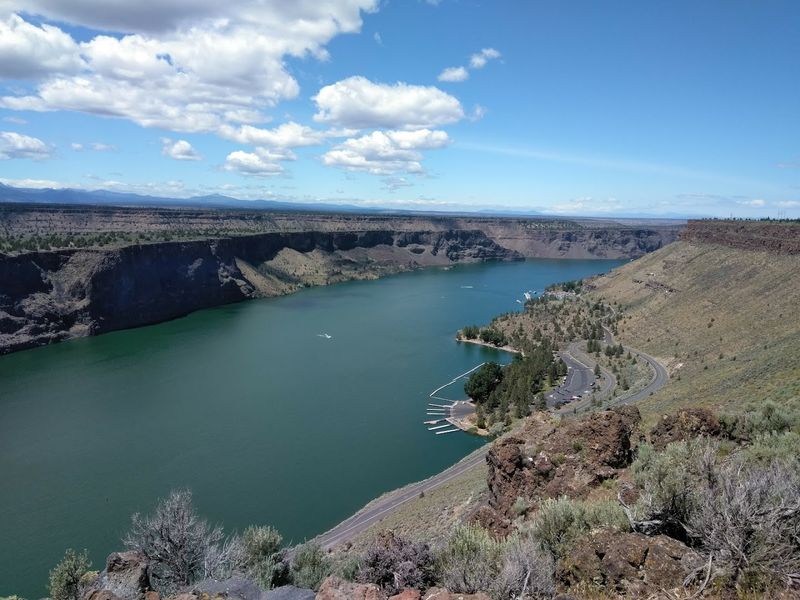
Central Oregon has a secret the forest-and-coast crowd often misses, and it looks nothing like the rest of the state. The Cove Palisades State Park, 7300 SW Jordan Rd, Culver, OR 97734, trades Oregon’s usual look for golden cliffs, blue water, and a landscape that feels closer to the Southwest.
The park sits at the convergence of three rivers, the Deschutes, the Crooked, and the Metolius, which all feed into Lake Billy Chinook, a reservoir carved into the canyon floor.
From above, the contrast between the warm-toned basalt cliffs and the almost electric blue water creates a scene that photographers absolutely love. The Tam-a-lau Trail is the best way to experience the full scale of the canyon, winding along the rim with views that drop several hundred feet straight down to the water below.
What makes Cove Palisades feel genuinely different from other Oregon parks is the high-desert atmosphere.
There are no dense evergreen forests here, no coastal fog rolling in, no rain-soaked trails. Instead, you get wide open skies, juniper trees, sagebrush, and a kind of dry, sun-baked silence that feels meditative.
Boating, kayaking, and paddleboarding on the lake are popular in warmer months, and the campground fills up fast for a reason.
It’s one of those places that surprises people who assumed all of Oregon looked the same, because this corner of the state has its own bold personality, and it is absolutely not shy about showing it off.
4. Indian Beach In Ecola State Park
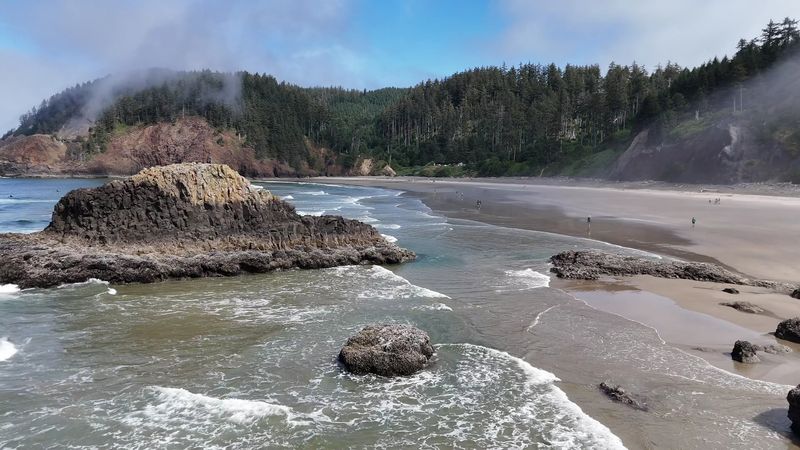
There is a beach in Oregon that feels like it belongs in a movie about a place no one else has found yet, and it is tucked inside Ecola State Park near Cannon Beach. Indian Beach sits about two miles north of the park’s main overlook, and reaching it requires a short but scenic drive through old-growth forest that sets the mood perfectly before you even see the water.
The beach itself is wide and unhurried, flanked by forested headlands and decorated with sea stacks that rise from the surf like sentinels.
At low tide, the rocks along the edges reveal some of the most accessible and vibrant tidepools on the entire Oregon coast. Purple sea urchins, ochre sea stars, turban snails, and green anemones cluster together in shallow pools that feel like nature’s own aquarium.
The light here in the early morning has a softness to it that makes everything look slightly dreamlike.
Surfers have known about Indian Beach for decades, drawn by consistent waves and the dramatic backdrop that makes even a mediocre session feel epic.
But you do not need a surfboard to appreciate what this place offers. Simply walking the shoreline when the tide is low and the mist is still hanging over the headlands delivers a kind of quiet wonder that is hard to find at more crowded Oregon beach access points.
The trail connecting the main Ecola overlook to Indian Beach also passes through forest thick with ferns and Sitka spruce, making the journey to the water feel like an event in itself, not just a means to an end.
5. Hat Rock State Park
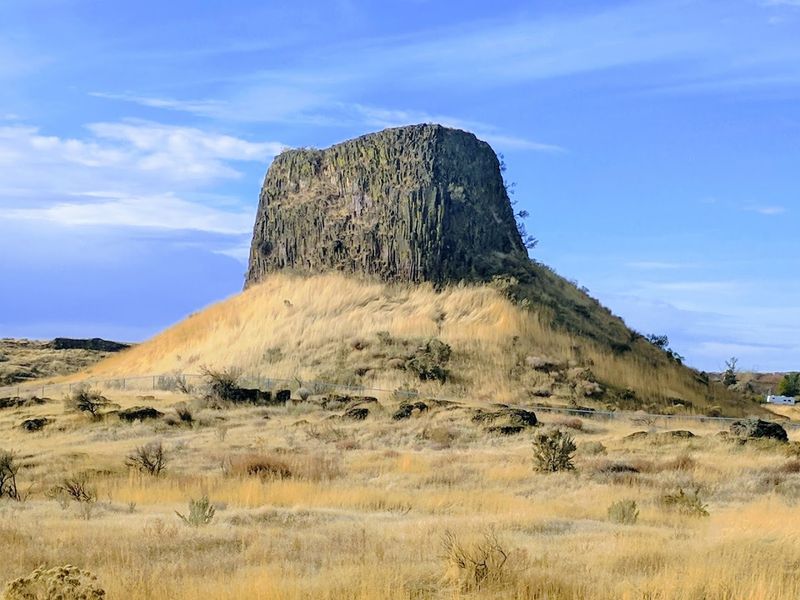
Named by Lewis and Clark in 1805, Hat Rock has been catching first-time visitors off guard ever since. Hat Rock State Park sits off U.S.
Highway 730, about nine miles east of Umatilla, OR, and the massive basalt formation rises abruptly from the flat plateau like it does not belong there.
The comparison to Monument Valley is not a stretch. There is something about the wide, open horizon, the warm-toned rock face, and the dramatic verticality of the formation against a big blue sky that gives this corner of Oregon a distinctly desert-Southwest energy.
The Columbia River runs nearby, and the contrast between the rugged volcanic rock and the wide, calm water creates a visual combination that photographers find endlessly interesting.
A small pond at the base of the rock reflects the formation on still days, creating mirror images that feel almost too good to be real.
The park offers hiking trails that wind around the base of the rock and along the riverbank, and the terrain is accessible enough for a wide range of fitness levels. Birdwatching is surprisingly rewarding here too, with raptors often circling the top of the formation and waterfowl gathering near the pond and river edge.
What makes Hat Rock worth the detour is the way it reframes your understanding of Oregon’s geography. Most visitors never make it this far east, which means the park stays genuinely peaceful even on weekends, giving the whole experience an unhurried, exploratory quality that is increasingly rare to find.
6. Hells Canyon
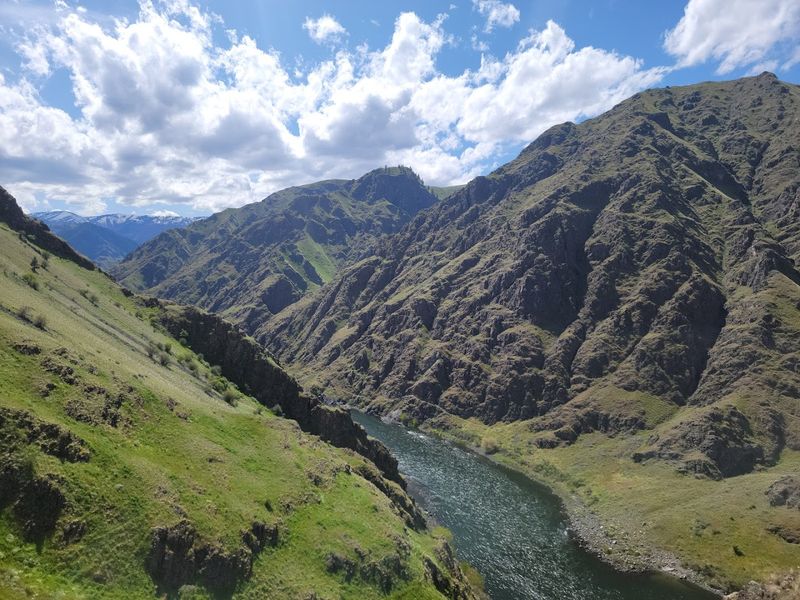
Deeper than the Grand Canyon. That is not a rumor or a regional boast, it is a geological fact.
Hells Canyon, carved by the Snake River along the Oregon-Idaho border near the town of Oxbow, plunges to a maximum depth of about 7,993 feet, making it the deepest river gorge in North America.
And yet, compared to the Grand Canyon, it draws a fraction of the visitors, which makes the whole experience feel almost like a discovery.
The canyon’s scale is genuinely difficult to process from any single viewpoint. Hat Point Lookout, accessible via a long but rewarding forest road, sits at an elevation of around 6,982 feet and offers a perspective that makes the Snake River below look like a thin silver thread.
The layered canyon walls display millions of years of geological history in bands of basalt, granite, and ancient marine sediment that tell a story far older than anything humans have built. Bighorn sheep, black bears, and golden eagles all call this wilderness home.
Whitewater rafting through the canyon is one of the most exhilarating experiences available in the Pacific Northwest, with multi-day trips that pass through sections of river that are completely inaccessible by road.
Jet boat tours out of Hells Canyon Dam offer a more accessible way to experience the lower canyon walls up close.
The sheer remoteness of Hells Canyon is actually a big part of its appeal.
There are no souvenir shops at the rim, no shuttle buses, and no crowds jostling for the same photo angle. Just raw, ancient, unfiltered wilderness at a scale that puts your everyday concerns into a very different perspective.
7. Oregon Outback Dark Sky Region
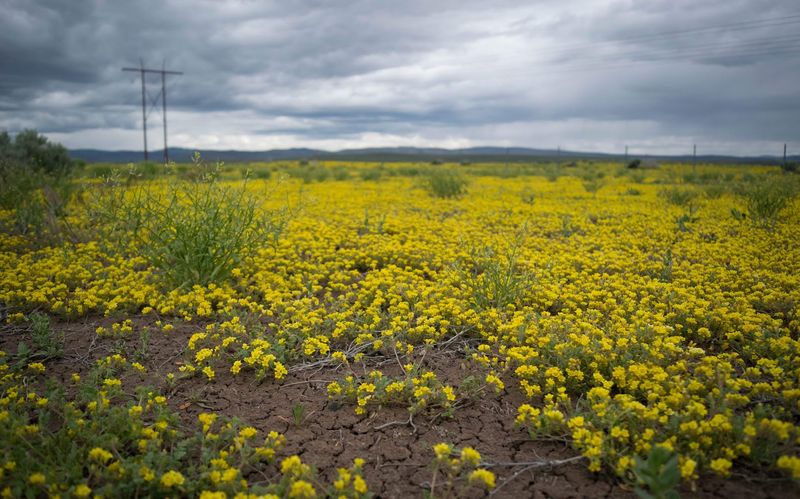
Imagine the Milky Way so bright and dense it casts a faint shadow on the ground. This isn’t a photo trick, just a truly dark sky, and southeastern Oregon’s Outback near Lakeview is one of the best spots on the continent to see it.
The Oregon Outback covers a vast stretch of high desert that sees some of the lowest light pollution readings in the entire United States.
The landscape itself is striking even in daylight. Wide playa lake beds, rimrock formations, sagebrush flats, and the occasional juniper-dotted ridge define a terrain that feels ancient and untouched.
Summer Lake Hot Springs sits within this region, offering a genuinely surreal experience of soaking in geothermal water while watching stars wheel overhead in a sky that looks almost three-dimensional.
The Warner Wetlands nearby attract massive flocks of migratory birds in spring, adding a layer of natural spectacle that has nothing to do with the night sky.
Reaching the Oregon Outback requires commitment, which is honestly part of the appeal. The nearest major city is hours away, cell service is minimal, and the silence at night is so complete it almost has a texture.
Travelers who make the effort tend to describe the experience in terms that border on the spiritual. There are few places left in the modern world where you can stand outside at midnight, look up, and feel genuinely small in the best possible way.
If unplugging is something you have been meaning to try, the Oregon Outback will make sure you actually mean it this time.