
Where To Find The Most Beautiful Waterfall In North Carolina
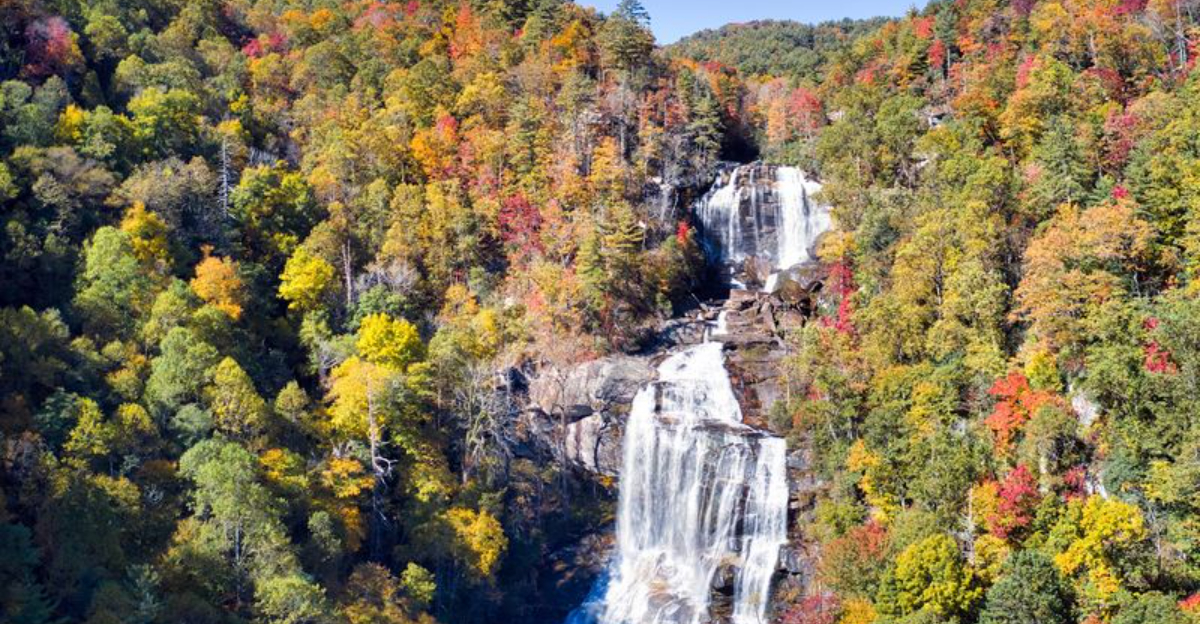
North Carolina has a little secret it doesn’t exactly advertise. Ask most people about the state’s scenery, and they’ll probably mention mountains, forests, and maybe a few scenic drives. A waterfall dropping hundreds of feet down a rocky mountainside?
That might not be the first thing that comes to mind. And that’s exactly what makes this place so surprising.
Hidden in the western corner of the state is a waterfall that looks like it belongs somewhere much farther away. Somewhere with a plane ticket, a passport, and a much bigger travel budget. No tropical island required.
No international adventure needed. Just a road into the mountains and a view that makes you wonder why more people aren’t talking about it.
Because sometimes the most unforgettable sights aren’t the ones everyone is chasing. They’re the ones you almost didn’t know were there.
An Overlook That Steals Your Breath
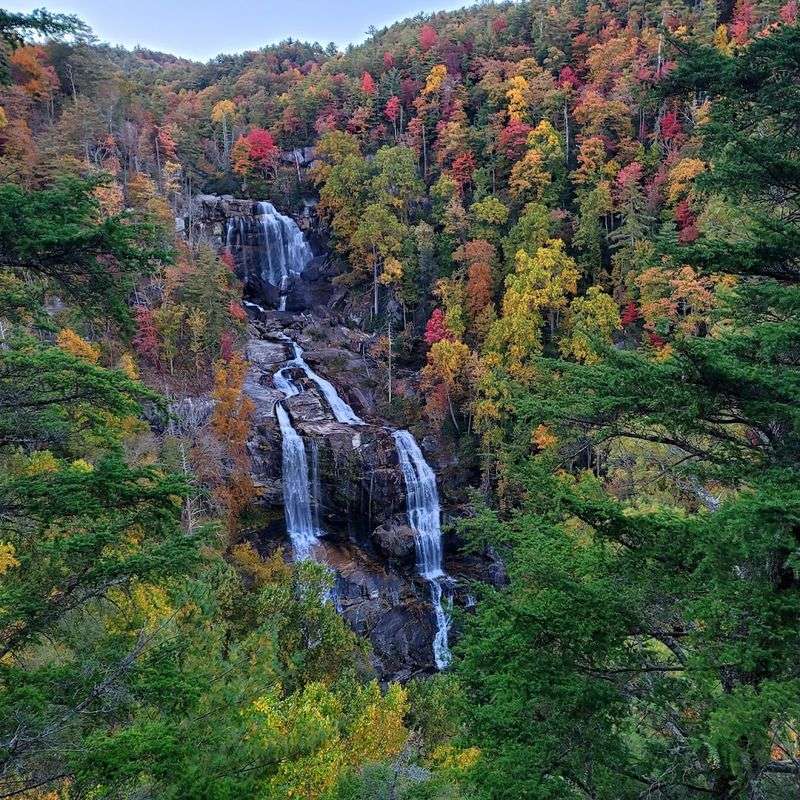
Nothing quite prepares you for that first glimpse of Upper Whitewater Falls from the main overlook. The moment the trees part and the full cascade reveals itself, your jaw simply drops.
It is one of those rare natural moments that no photograph can fully capture.
The overlook sits just a quarter-mile walk from the parking area along a paved, well-maintained path. This short stroll is accessible for most visitors, making the reward incredibly easy to reach.
You round a bend, and suddenly, 411 feet of pure roaring water fills your entire field of vision.
The scale is genuinely hard to process at first. The falls tumble dramatically through the ancient Blue Ridge landscape, framed by dense forest canopy and jagged rock faces.
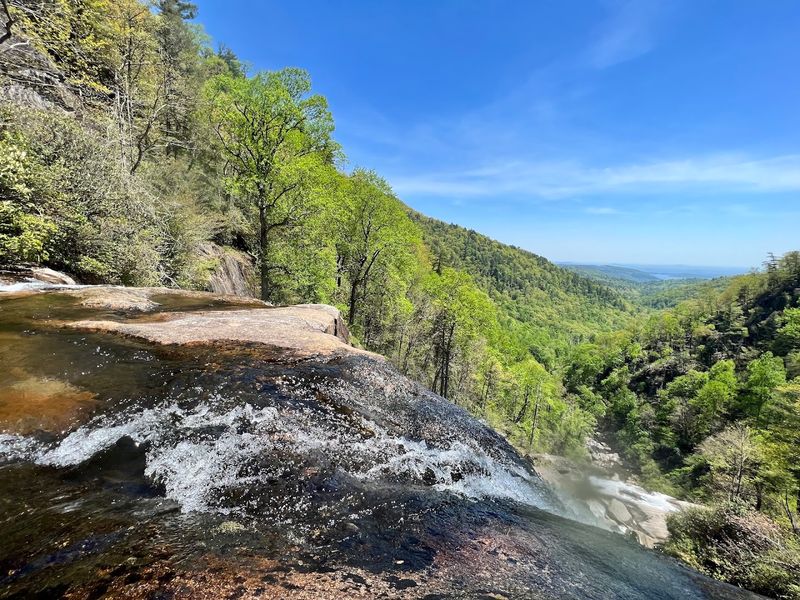
On clear days, you can even spot the shimmering surface of Lake Jocassee far below in the distance.
Rainbows frequently appear in the mist during sunny afternoons, adding a surreal, almost dreamlike quality to the scene.
The sound alone is enough to make you pause and simply breathe it all in. This overlook is not just a viewpoint, it is a full sensory awakening that sets the tone for everything that follows.
The Address Worth Driving To
Some destinations sound magical on paper, but the journey there tells you everything. The drive to 101 Whitewater Falls Lane in Cashiers, North Carolina, winds through mountain roads lined with towering hardwoods and rolling ridgelines.
Every mile feels like the scenery is building toward something spectacular.
Cashiers itself is a charming mountain community sitting at about 3,500 feet elevation in the Southern Appalachians.
The town has a quiet, unhurried energy that immediately signals you have arrived somewhere worth slowing down for. From there, the road to the falls passes through Nantahala National Forest, adding layers of wild beauty to the approach.
The parking area at the trailhead is spacious and well-organized, with picnic tables and restroom facilities available for visitors.
A modest fee of three dollars per vehicle helps fund the maintenance of this remarkable site managed by the U.S. Forest Service.
That is genuinely one of the best deals in outdoor recreation anywhere in the Southeast.
Arriving early on weekday mornings rewards you with a peaceful, almost private experience. The crisp mountain air, the sound of birds, and the distant thunder of the falls create an atmosphere that feels completely removed from everyday life.
This address belongs on every North Carolina bucket list without question.
411 Feet Of Pure Natural Power
Let us talk numbers for a second, because the stats behind Upper Whitewater Falls are genuinely staggering.
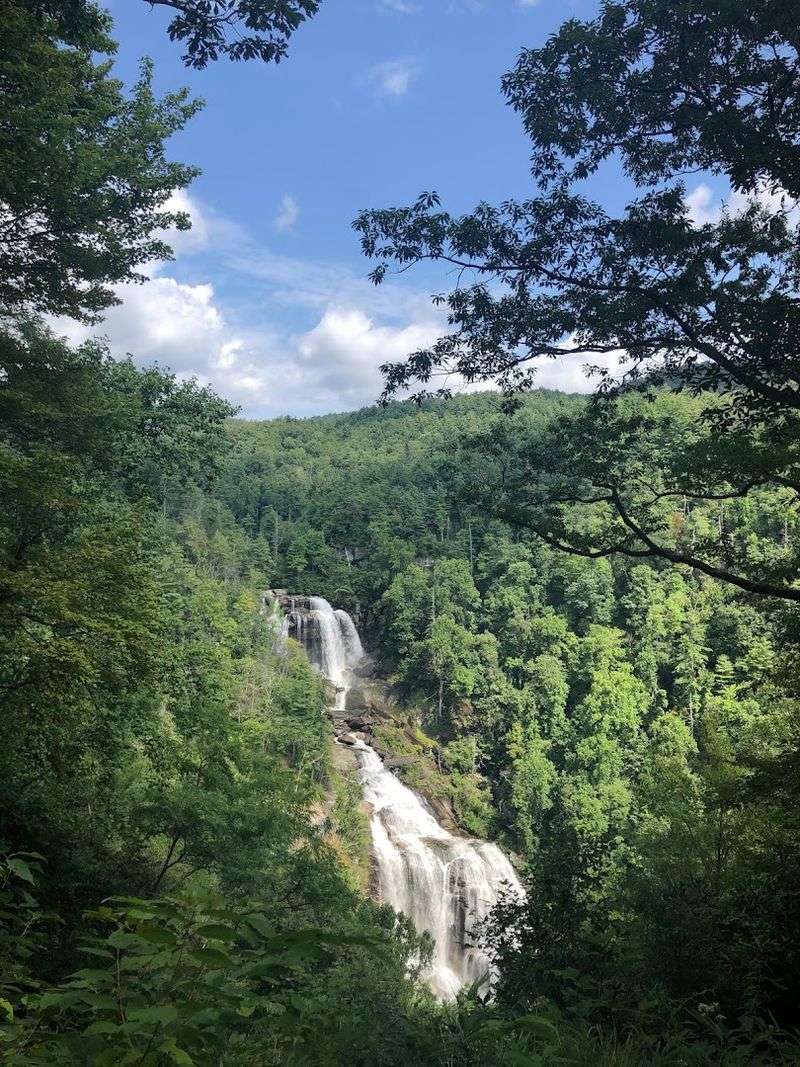
At 411 feet tall, this cascade claims the title of the highest waterfall east of the Rocky Mountains. That is not a regional bragging right, that is a continental-level achievement.
The Whitewater River is the engine behind this spectacle. It gathers momentum as it flows across the Blue Ridge Escarpment, then launches itself over the granite edge in a series of powerful, dramatic drops.
The result is a multi-tiered cascade that builds in intensity with every section.
The sheer volume of water moving through the falls varies with the seasons, but it never truly disappoints. After heavy rainfall, the torrent becomes absolutely ferocious, sending mist billowing hundreds of feet into the surrounding air.
Even during drier stretches, the falls maintain an impressive, commanding presence.
Geologists point to the Blue Ridge Escarpment as one of the most dramatic geological features in the eastern United States.
The sharp elevation change that creates this escarpment is directly responsible for giving Upper Whitewater Falls its extraordinary height. Standing before it, you are essentially witnessing millions of years of geological storytelling in one magnificent, thundering display.
154 Steps Closer To Greatness
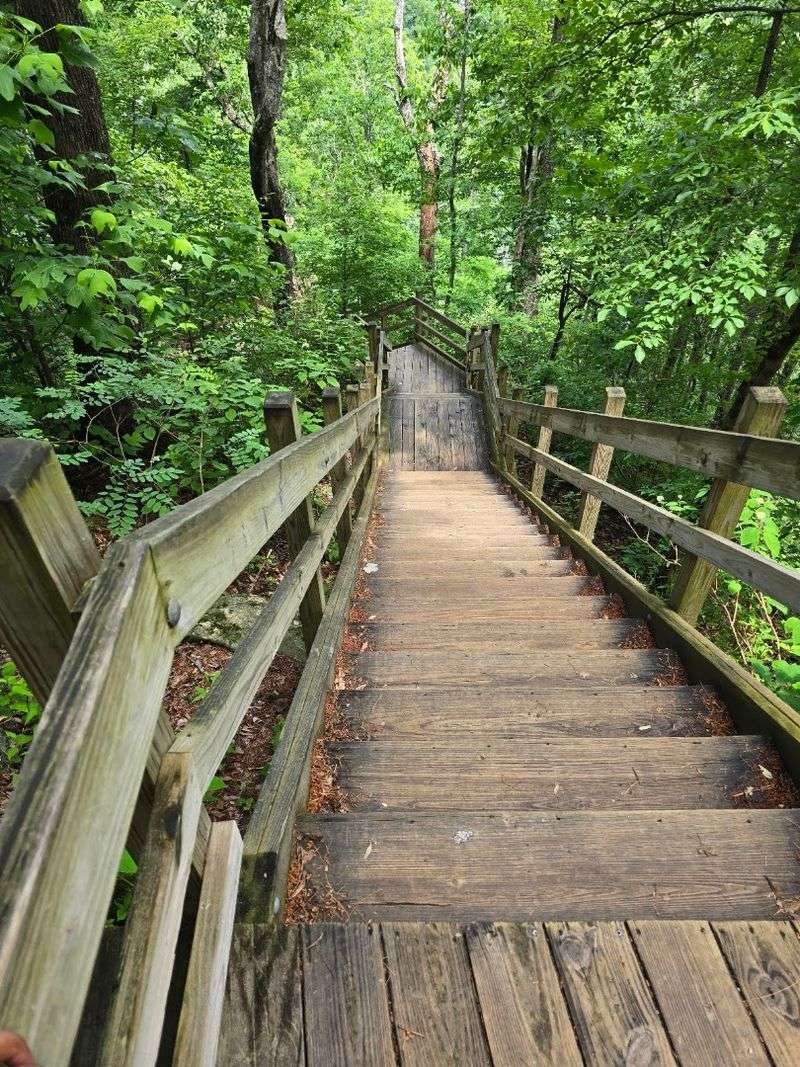
Here is where things get really exciting. Beyond the main overlook, a set of 154 wooden steps descends into the gorge, leading to a lower viewing platform that changes everything about how you experience this waterfall.
Think of it as unlocking the director’s cut version of an already incredible film.
The staircase winds through dense vegetation, with ferns brushing your arms and the roar of the falls growing louder with every step.
The air becomes noticeably cooler and moister as you descend. By the time you reach the bottom platform, the mist is kissing your face and the sound is absolutely all-consuming.
From this lower vantage point, the full 411-foot drop unfolds directly in front of you in breathtaking detail. You can see individual sections of the cascade, each one a dramatic performance in its own right.
The perspective from here is completely different from the upper overlook, almost like seeing a familiar painting from a whole new angle.
The steps require a moderate level of fitness, and the climb back up provides a satisfying workout. Most visitors agree that the effort is absolutely worth every single step.
Reaching that lower platform and witnessing the falls at close range is one of those moments that genuinely stays with you long after you have returned home.
The Rainbow Magic
Forget chasing rainbows at the end of storms. At Upper Whitewater Falls, rainbows come to you on bright sunny afternoons, and they are absolutely spectacular.
The constant mist generated by the falling water acts like a natural prism, splitting sunlight into vivid arches of color that hang in the air above the gorge.
This phenomenon happens most reliably during late morning and early afternoon when the sun is at the right angle to illuminate the spray.
Visiting around midday on a clear day dramatically increases your chances of witnessing this magical display. It feels genuinely otherworldly, like nature decided to add a finishing touch to an already extraordinary scene.
Photographers absolutely love this spot for exactly this reason. The combination of rushing white water, dark granite rock, lush green forest, and a shimmering rainbow in the foreground creates a composition that looks almost too beautiful to be real.
Your camera roll will thank you for making the trip.
Even without the rainbow, the way light interacts with the mist and the water creates constantly shifting visual patterns throughout the day.
Every hour offers a slightly different version of the falls. This ever-changing quality means that no two visits are ever quite identical, which is a compelling reason to return again and again.
A Sanctuary Frozen In Time
Upper Whitewater Falls does not exist in isolation. It sits within the extraordinary Jocassee Gorge, one of the most biologically rich and scenically dramatic wilderness areas in the entire eastern United States.
This gorge has remained largely undeveloped, and that preservation is a massive part of what makes the whole experience feel so raw and special.
The rugged terrain of the gorge has historically made large-scale development difficult, which turned out to be an incredible gift for nature lovers. The result is a landscape that feels genuinely wild, ancient, and untouched by the modern world.
Walking through it, you get the strong sense that this place operates on its own terms entirely.
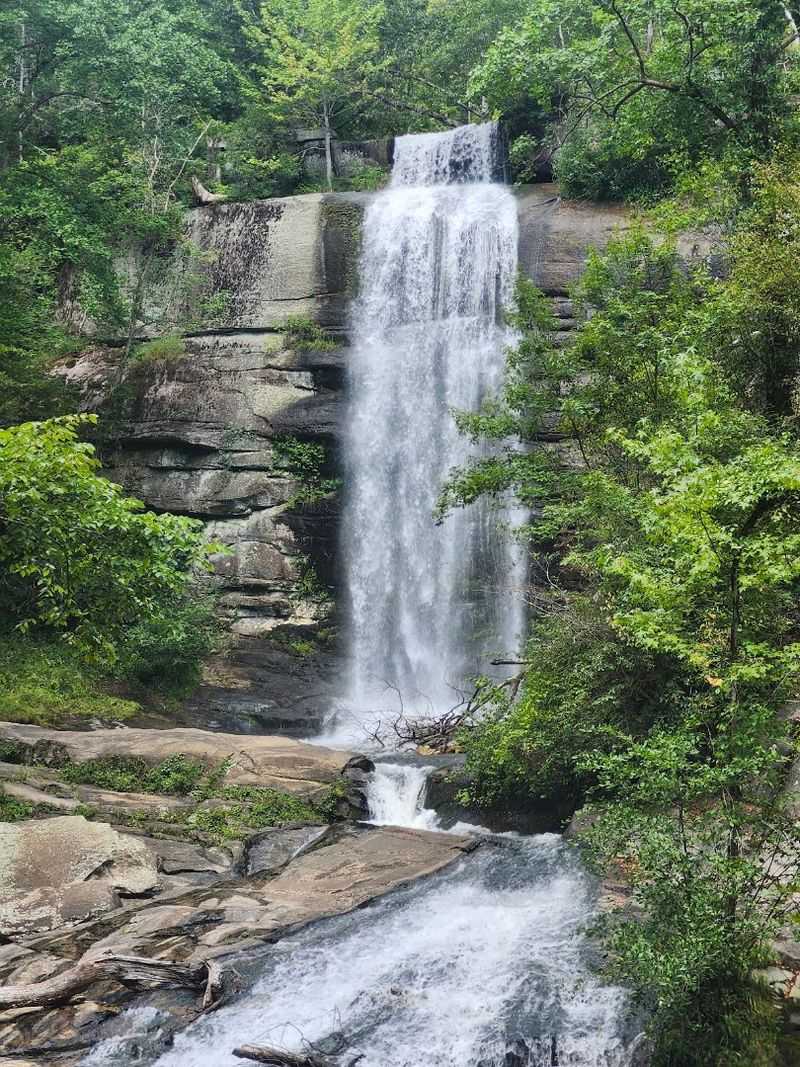
The Whitewater River carves through the gorge below the falls, creating a series of pools, rapids, and quieter stretches that support an astonishing variety of wildlife.
Rare plant species, unique amphibians, and diverse bird populations thrive throughout the area. Botanists and naturalists consider Jocassee Gorge to be one of the most significant biodiversity hotspots in the Southern Appalachians.
The sheer scale of the gorge also provides incredible context for the waterfall itself. When you understand the vast wilderness surrounding it, the falls feel even more monumental.
This is not just a waterfall in a park, it is the centerpiece of a living, breathing wild ecosystem that deserves every ounce of admiration it receives.
A Living Botanical Wonderland
Over 100 inches of rainfall per year. That is the staggering amount of precipitation that the Jocassee Gorge area receives annually, and it creates an environment so lush and verdant that it almost defies belief.
The constant moisture around Upper Whitewater Falls nurtures an extraordinary botanical community that surprises even experienced naturalists.
Rare plants that you might expect to find in tropical rainforests actually grow here. Unique fern species, mosses, and wildflowers carpet the forest floor in dense, vibrant layers.
The cool, humid shade beneath the canopy creates perfect conditions for species that simply cannot survive in drier or warmer environments found elsewhere in the region.
Wildlife is equally impressive throughout this area. Salamanders thrive in the moist leaf litter, and the gorge is considered one of the most important salamander habitats in North America.
Various bird species fill the canopy with song, and keen observers might spot diverse woodland creatures going about their daily routines in the undergrowth.
Visiting in spring brings an explosion of wildflower blooms that adds brilliant color to the already stunning landscape.
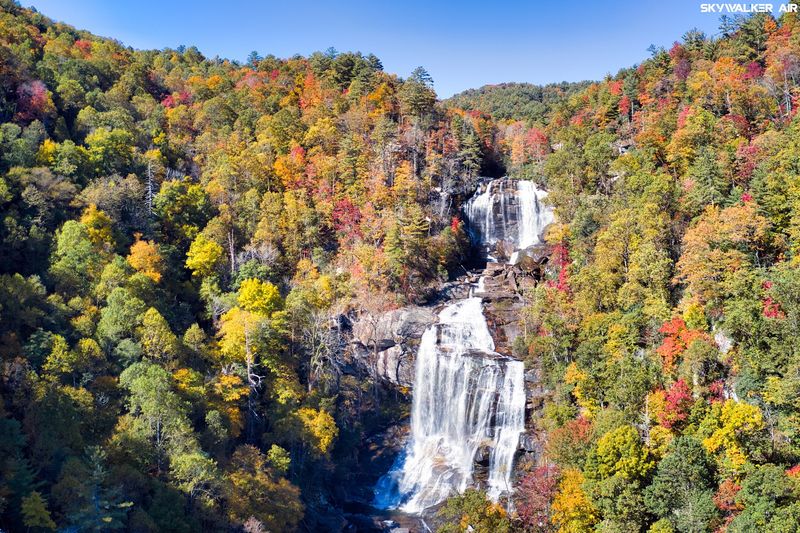
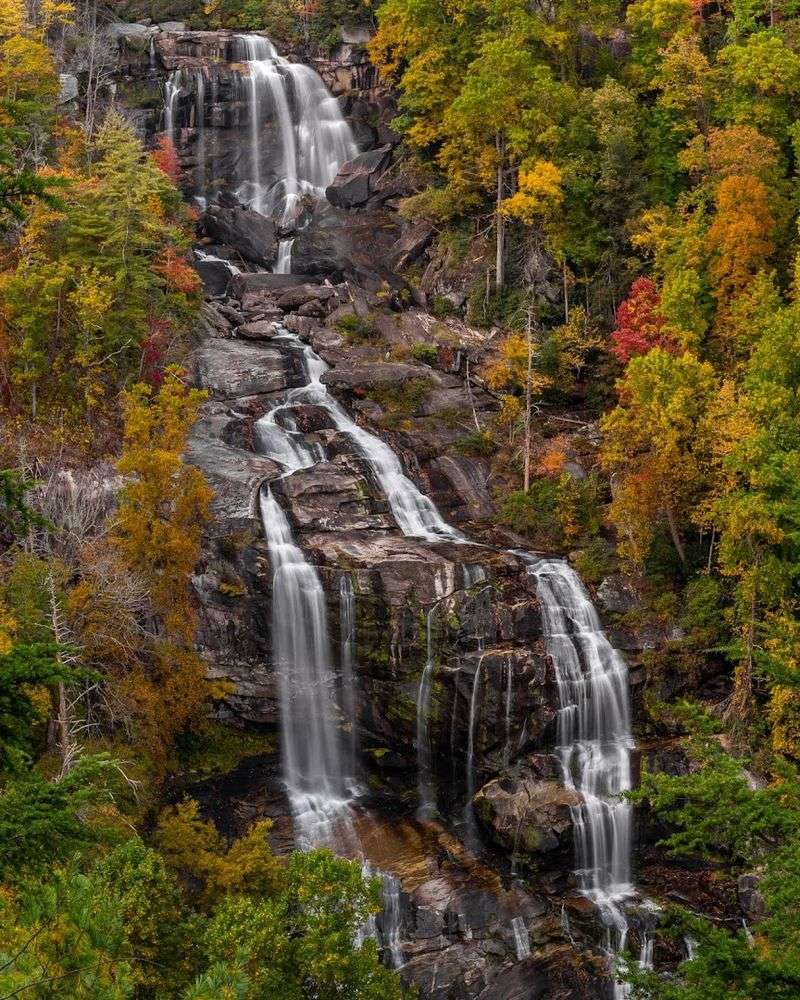
Autumn transforms the surrounding forest into a breathtaking tapestry of reds, oranges, and golds that frames the white cascade in spectacular fashion. Every season offers its own unique botanical performance worth witnessing firsthand.
Where The Adventure Goes Deeper
For those whose appetite for adventure runs particularly deep, the experience at Upper Whitewater Falls extends well beyond the overlooks.
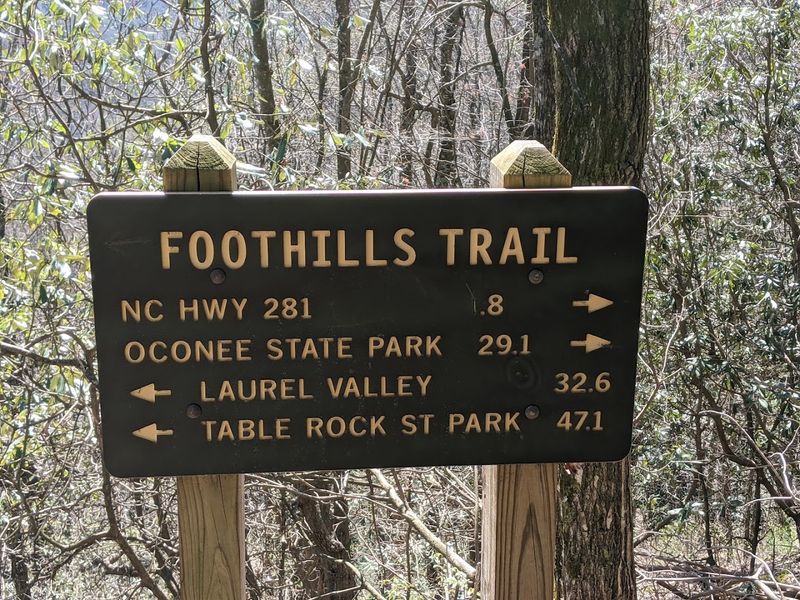
A half-mile spur trail descends from the main area into the gorge, dropping approximately 600 feet in elevation to reach the banks of the Whitewater River. This is where the truly adventurous spirits find their reward.
This spur connects to the renowned Foothills Trail, a 77-mile long-distance route that stretches through some of the most spectacular wilderness in the Carolinas.
Serious hikers use Upper Whitewater Falls as both a destination and a gateway to longer expeditions through the surrounding mountains. The trail network here is genuinely world-class in terms of scenic quality.
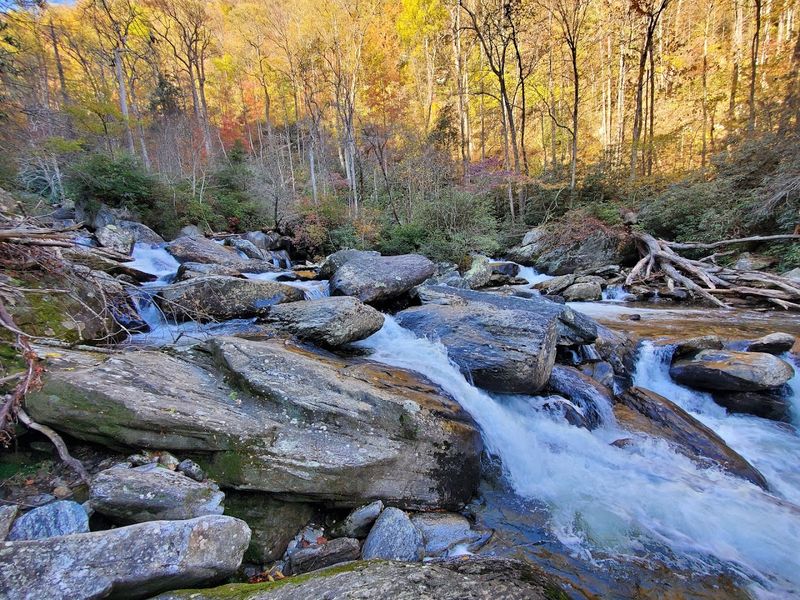
Along the river at the bottom of the gorge, large boulders create natural resting spots with stunning views back up toward the falls.
The sound of the river rushing over rocks provides a completely different acoustic experience from the thundering roar of the main cascade above. It feels like discovering a hidden chapter within an already remarkable story.
The descent requires solid footing and reasonable fitness, but the trail is well-marked and manageable for most active visitors.
Always stay on designated paths and respect the boundaries of this protected wilderness area. The gorge rewards careful, attentive exploration with experiences that feel genuinely rare and precious in today’s busy world.
Timing Your Perfect Waterfall Moment
Timing a visit to Upper Whitewater Falls thoughtfully can genuinely transform an already wonderful experience into something truly extraordinary.
The falls are open to visitors year-round from dawn to dusk, which means every season brings its own distinct version of this natural masterpiece. Choosing when to go is almost as exciting as the destination itself.
Spring delivers powerful, high-volume flows fed by snowmelt and seasonal rainfall. The surrounding forest bursts with fresh green growth and wildflower blooms during this period.
Summer brings steady crowds but also the best conditions for rainbow spotting in the afternoon mist, making it a perennially popular season for good reason.
Autumn is arguably the most visually spectacular time to visit. The hardwood forest surrounding the gorge transforms into a breathtaking display of warm colors that frames the white cascade in a way that feels almost impossibly beautiful.
Cooler temperatures also make the hike more comfortable and the air noticeably crisper and more invigorating.
Winter visits offer a completely different kind of magic. Reduced crowds mean near-solitude at the overlooks, and freezing spray sometimes creates dramatic ice formations on the surrounding rocks.
Morning visits on any given day consistently offer the quietest and most peaceful experience overall.
So when is your perfect moment to finally stand before North Carolina’s most magnificent waterfall?