
Whoever Built Arizona’s Castle Inside A Cliff Left Five Stories Of Rooms Still Standing
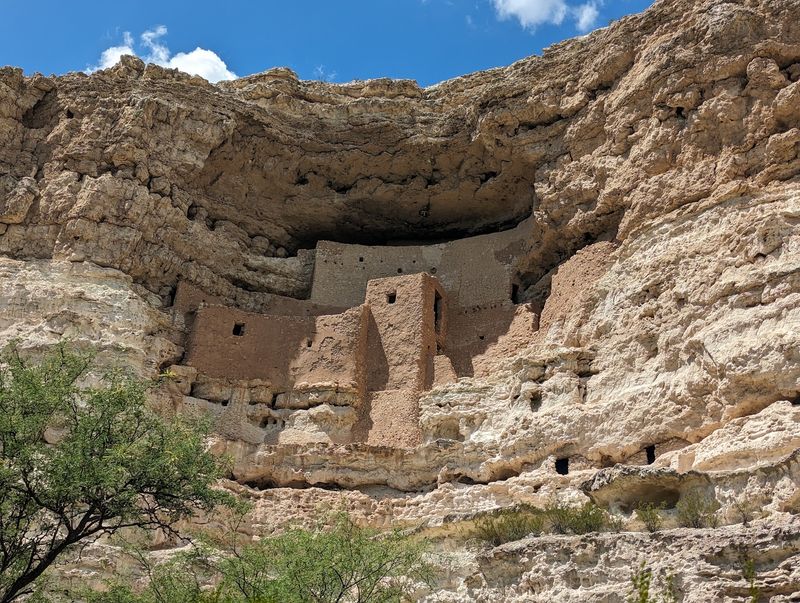
Twenty rooms, five stories, and roughly 90 feet of sheer limestone below the front door. Nobody used a crane, a power drill, or even a metal tool to build it.
The builders hauled stone, mud, and sycamore beams up a cliff face in Arizona. They did it nearly a thousand years ago.
The walls are still standing today, wedged into a natural alcove like a stone apartment tower.
I can’t imagine carrying a single beam up that wall, let alone enough for a whole building. I like how the place still makes grown adults stop, tilt their heads back, and stare.
A creek runs below it, shaded by giant sycamores.
And the best part? You don’t need a long hike to see it.
So who built this cliffside high-rise, and why does it carry the name of a ruler who never saw it?
A High-Rise Home Built Into A Limestone Wall
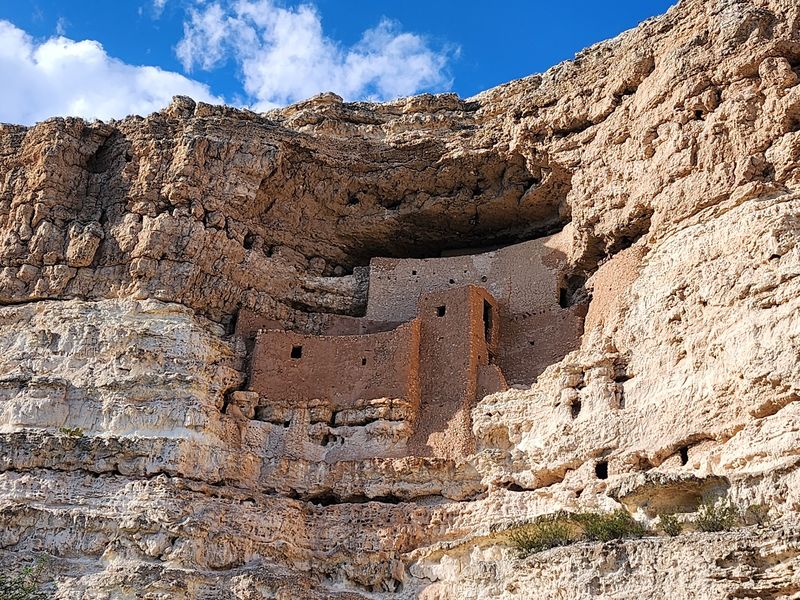
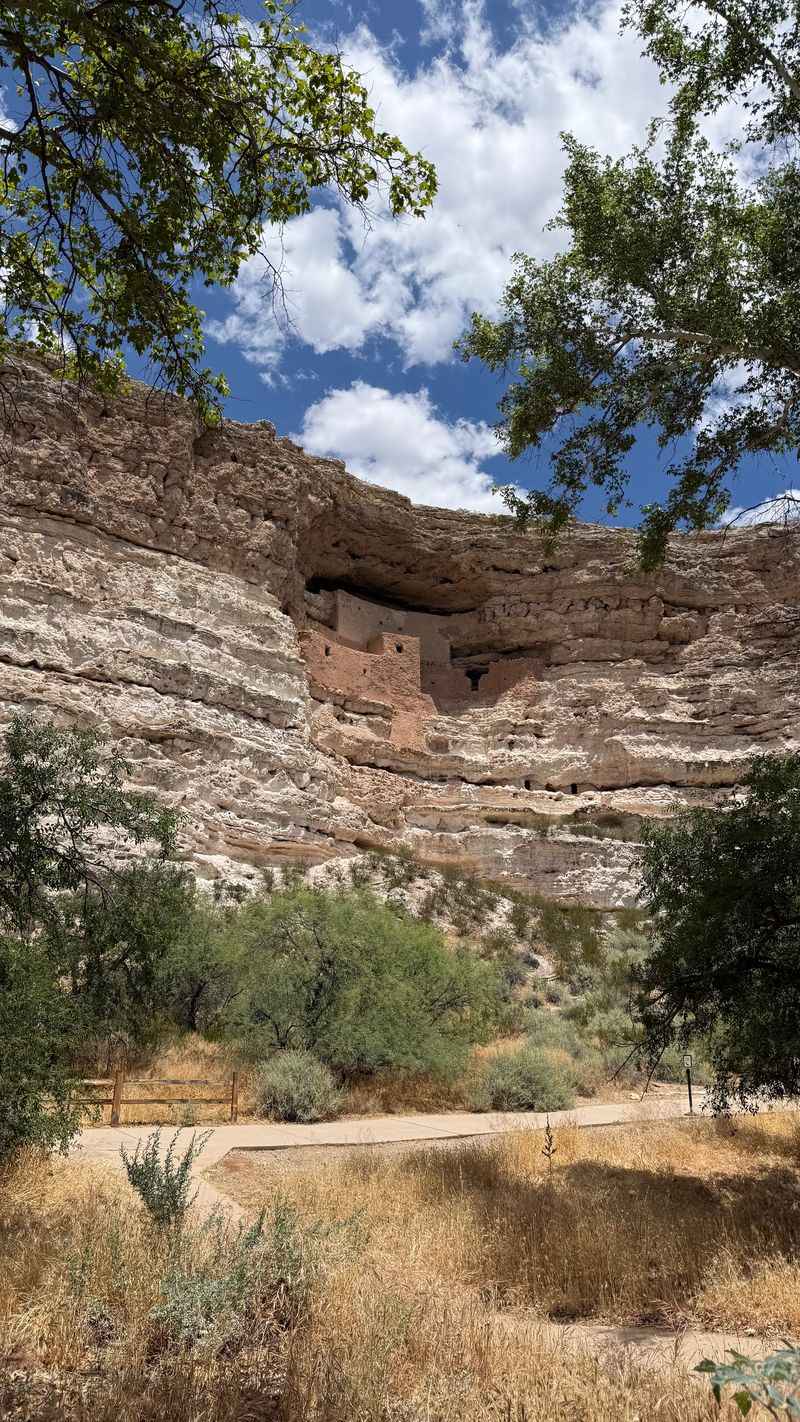
Montezuma Castle National Monument sits in Camp Verde, in the heart of central Arizona’s Verde Valley. Its star attraction is a five-story cliff dwelling with about twenty rooms.
The whole thing rests inside a natural alcove in a towering limestone cliff. It perches roughly 90 to 100 feet above the valley floor.
That’s taller than a lot of small-town water towers.
Calling it a castle is a little generous. It was never a royal palace or a fortress with a king inside.
It was a home, a stacked community built right into the rock.
The dwelling dates back to around the 12th century. It’s considered one of the best-preserved cliff dwellings in North America.
That’s a big title for a building made from stone, mud, and wood.
The site overlooks Beaver Creek, which flows year-round below the cliff. That water matters a lot to the story, and we’ll get there.
For now, just know this. You can stand at the base of the cliff and look straight up at walls that have held together for centuries.
Good luck not wondering how anyone got groceries up there.
The Sinagua Builders Who Knew Their Stuff
Credit for this cliffside masterpiece goes to the Sinagua people. They lived across this part of Arizona from roughly 1100 to 1425 AD.
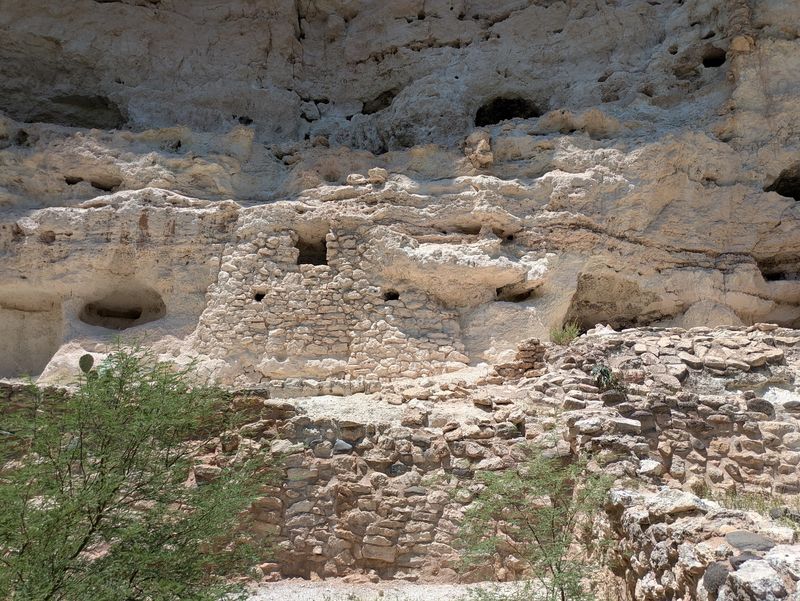
Their building kit was simple. They used local limestone, mud, and timbers from sycamore trees.
No metal tools, no machines, and no shortcuts.
Still, the results speak for themselves. The walls have outlasted centuries of weather, sun, and seasons.
From the trail below, you can still spot original wooden ceiling beams and mud plaster work.
Bring binoculars or a camera with a good zoom if you have one. The details are easier to appreciate up close, even from the ground.
The Sinagua were also skilled farmers. The valley below the cliff supported crops like corn, beans, squash, and cotton.
Beaver Creek kept those fields alive in a dry landscape.
Choosing an alcove in a cliff was smart in several ways. The overhang offered protection from the elements.
The height gave sweeping views of the valley and creek.
Nearly a thousand years later, people still stand below it and marvel. That’s a pretty solid engineering review, if you ask me.
Blame The Mix-Up On Some Confused Explorers
Here’s a fun twist for your next trivia night. Montezuma never lived here, never visited, and never even heard of it.
Explorers in the 1800s saw the impressive dwelling and made a guess. They assumed the Aztec emperor Montezuma had something to do with it.
The guess was wrong, but the name stuck anyway.
The timing makes the mistake even funnier. The Sinagua had already left this home nearly a century before Montezuma was born.
So the name honors someone who arrived late to the party by a long shot.
And the castle part? Also not quite right.
No royalty ever held court in these rooms.
I believe the name actually helps the place in a quirky way. It’s catchy, it sparks questions, and it gives rangers a great story to tell.
Most people walk away remembering the truth better because of the error.
Today, the visitor center sets the record straight. Exhibits, artifacts, and a diorama explain who really lived here and how they lived.
You get the real Sinagua story instead of the 1800s rumor.
Honestly, it’s a nice reminder that a wrong guess can last for generations.
A Shady Little Loop Along Beaver Creek
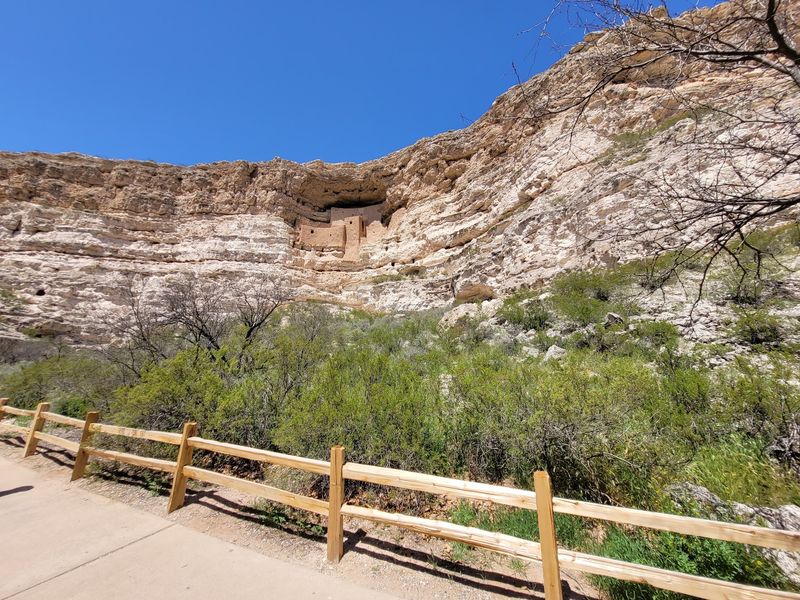
Good news for anyone who dreads steep trails. The path to the castle is a paved loop about a third of a mile long.
It starts at the visitor center and runs between Beaver Creek and the cliff. Giant Arizona sycamores shade much of the route.
On a warm day, that shade feels like a gift.
The trail is flat for the most part, with no stairs. Strollers and wheelchairs can handle it, and benches line the way.
Kids can manage it easily too.
Interpretive signs pop up along the loop. They cover the history, architecture, plants, and daily life of the Sinagua.
None of it feels like homework, which is a nice trick.
The views of the dwelling come from several angles as you walk. You’ll find plenty of spots to pause for photos.
The creek and the trees add a calm, green backdrop to all that stone.
If you walk straight through, the loop takes only minutes. Most folks spend closer to 45 minutes to an hour and a half.
Reading signs and staring upward eats up time fast.
That’s a lot of payoff for a very gentle stroll.
Why Nobody Gets To Climb Inside Anymore
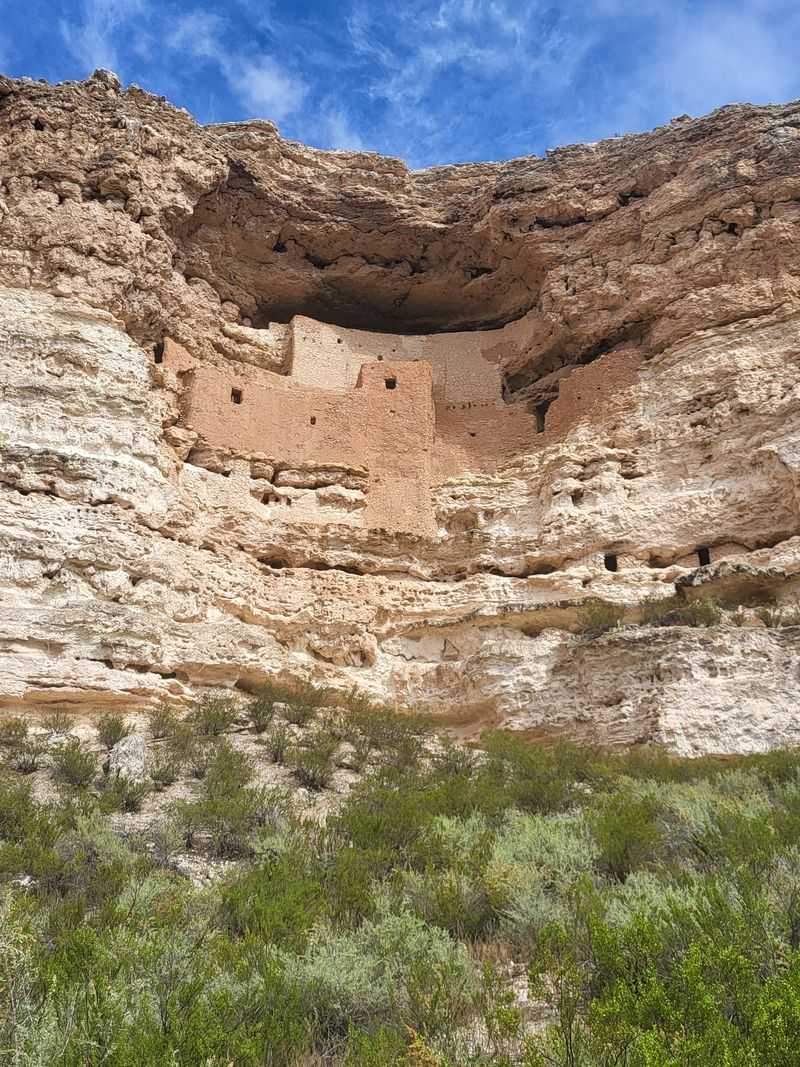
Once upon a time, visitors could actually climb into the dwelling. Ladders gave people access to the ancient rooms.
That ended in 1951. Years of foot traffic had caused serious damage to the fragile structure.
Closing the interior was the only way to protect it.
I’m glad they did. A building this old deserves a little peace and quiet.
Looking but not touching keeps it standing for future visitors.
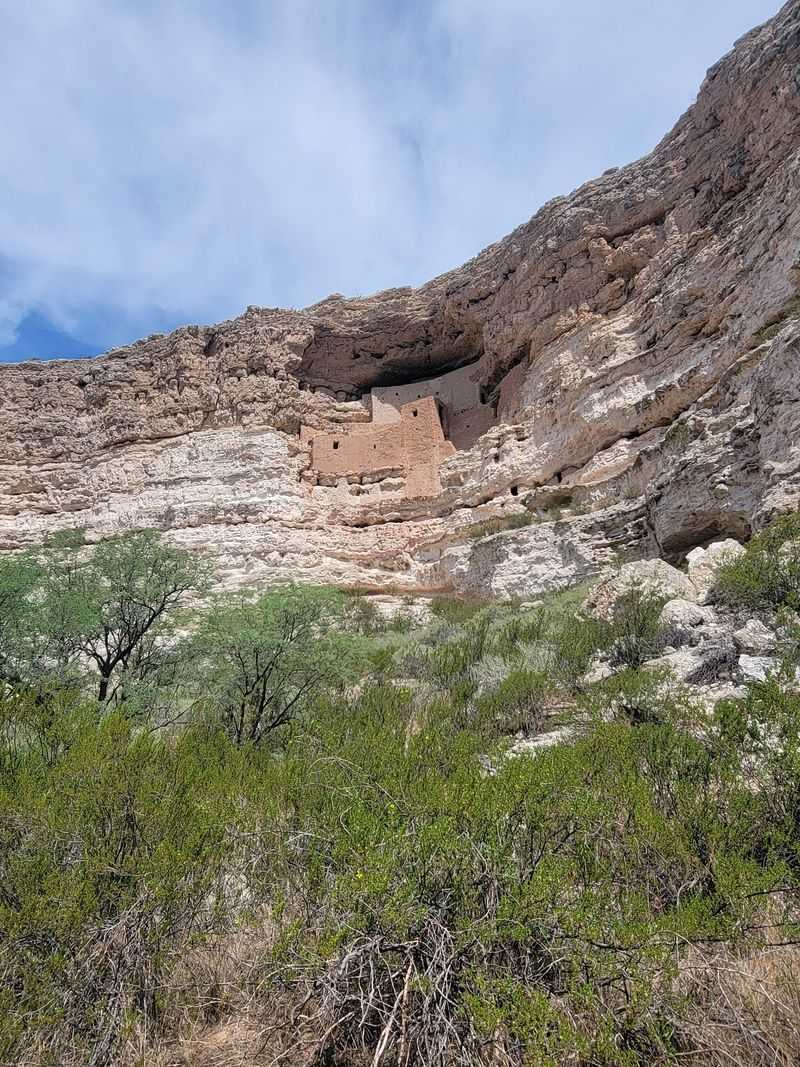
The view from below is still excellent. The trail offers clear sight lines straight up to the multistory walls.
You can study the doorways, beams, and plaster without a ladder.
The visitor center fills in what you can’t see. It includes exhibits, artifacts, and a diorama showing daily life during that time.
It’s small, but it packs in plenty.
Rangers are a big part of the experience here too. They’re known for answering questions, and planned ranger talks happen at the site.
Ask as many questions as you like.
Kids can join the Junior Ranger program as well. They finish an activity booklet and earn a badge.
That might be the most motivated reading your kids do all summer.
Two Bonus Stops That Stretch Your Visit
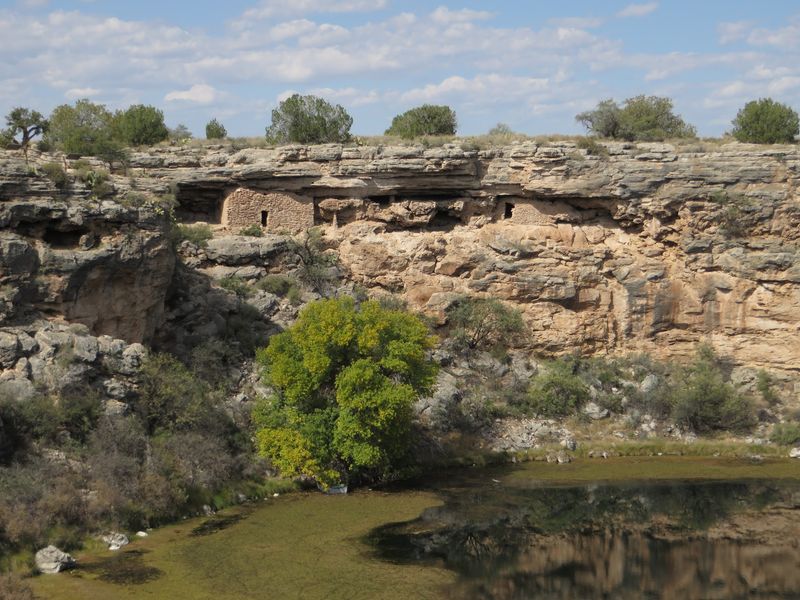
Montezuma Castle National Monument has a second unit, and it’s worth the short drive. Montezuma Well sits about eleven miles north.
The Well is a natural limestone sinkhole with its own ancient story. You’ll find cliff dwellings, pueblo remains, and an ancient irrigation canal.
It’s a completely different look at how people used water here.
Best of all, there’s no extra fee for the Well. The drive takes roughly 15 to 20 minutes.
It’s often less crowded than the main site, too.
Then there’s Tuzigoot National Monument. This hilltop pueblo is also tied to the Sinagua people.
Your Montezuma Castle entrance fee also covers admission there.
Put those three together and you’ve got a full Verde Valley history day. That’s a lot of exploring without paying separately at every stop.
Budget-minded Arizona road-trippers, take note.
The Well and Tuzigoot also show different sides of Sinagua life. One centers on water, the other on a hilltop village.
Seeing both adds real depth to the castle.
It makes the castle feel like part of a bigger community. Which, of course, it was.
Hours, Fees, And The Easy Exit Off I-17
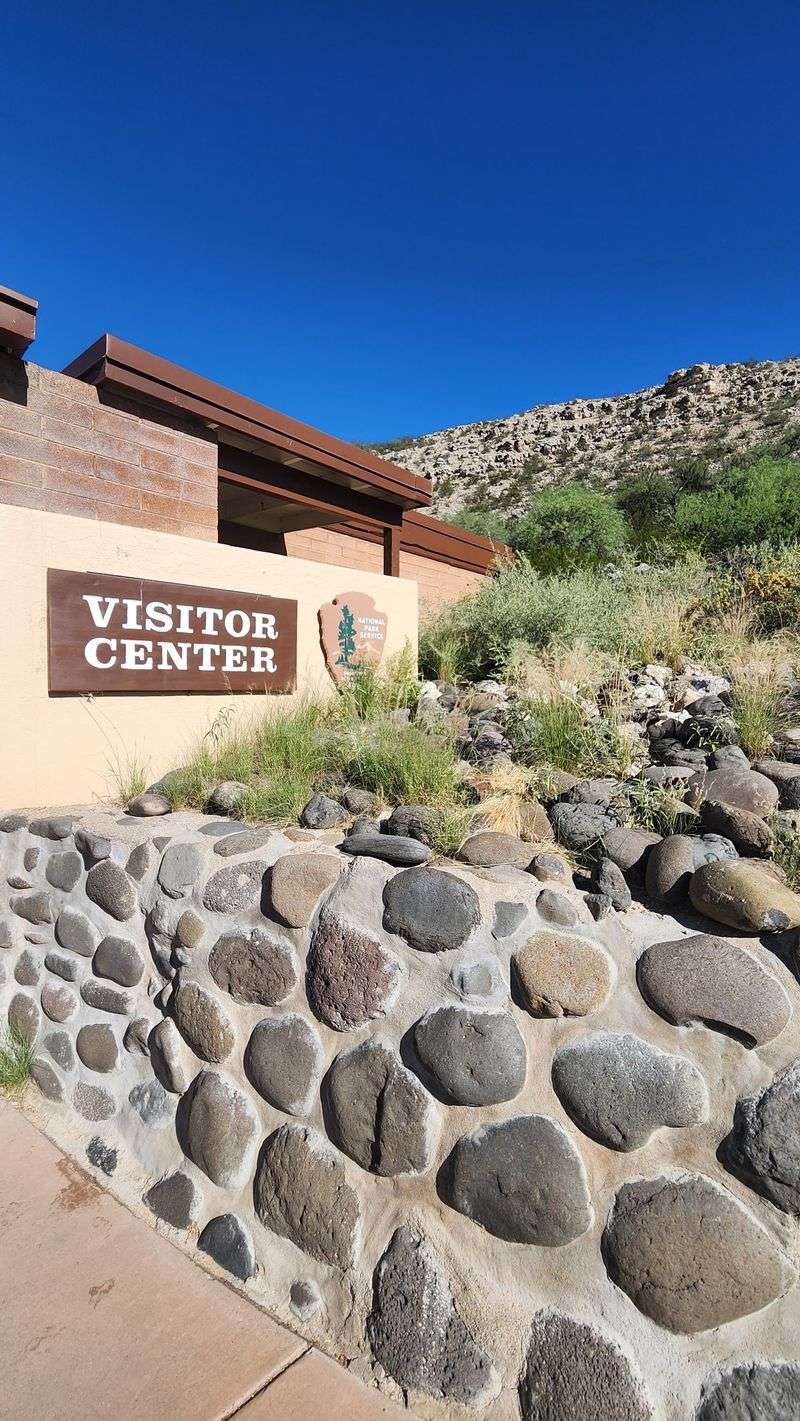
Getting here couldn’t be much simpler. Take Interstate 17 to Exit 289 and follow the access road.
The address is 2800 Montezuma Castle Rd, Camp Verde, AZ 86322. The visitor center has plenty of parking.
Sedona and Flagstaff travelers can work it in without much fuss.
The monument opens daily from 9 a.m. to 4:45 p.m. The park gate closes at 4:45 p.m., so don’t cut it close.
It closes on New Year’s Day, Thanksgiving, and Christmas.
There is a small per-person entrance fee. National park passes are accepted, including senior lifetime passes.
Active-duty military members can get a free America the Beautiful military pass.
The visitor center has clean restrooms and a gift shop. The shop carries regional books and Native American crafts.
You’ll also find a drinking fountain with a bottle refill station.
Summer in Arizona means heat, even under the sycamores. Arriving early in the morning helps you beat it.
Fall and winter visits tend to feel more comfortable.
Pack a hat and sunscreen in warmer months. A pair of binoculars is a smart addition any time of year.
Short Detour, Big Wow, Zero Regrets
Some stops eat your whole day. Montezuma Castle National Monument takes about an hour and leaves you thinking for weeks.
It suits nearly everyone. Families with little ones, history fans, and anyone who prefers paved paths will feel right at home.
Road-trippers heading north in Arizona can tack it on with ease.
The mood here is calm and quietly impressive. Shade from the sycamores and the sound of Beaver Creek set a peaceful tone.
Then you look up, and the cliff takes over.
I like that it rewards both quick visitors and slow ones. You can stroll the loop in minutes.
Or you can read every sign and pepper the rangers with questions.
Add Montezuma Well and Tuzigoot, and the value grows. One modest fee opens a lot of Sinagua history.
That’s a pretty good deal in my book.
Mostly, though, it’s the building itself. Five stories of stone, mud, and sycamore still hug that limestone wall.
They’ve done it for nearly a thousand years.
Somebody built that by hand. Standing below it is the best way to appreciate just how remarkable that is.