
Why This Pennsylvania Park Is Famous For Its 200 Foot Cliffs, Gorge Views, And Jaw Dropping Overlook
Some parks make you work for the wow moment. This Pennsylvania park gets right to the point with cliffs, gorge views, and an overlook that makes the ground feel suddenly more dramatic than expected.
It is the kind of place that can turn a quick outdoor stop into a full-on “look at this” moment, especially for anyone who likes scenery with a little edge.
The appeal is not complicated. Big rocks, big views, and enough height to make the whole landscape feel alive.
A spot like this proves that a state park does not need to be huge to feel unforgettable.
I am always drawn to overlooks that make me pause before taking a photo, because when the view is strong enough to make me forget my phone for a second, I know the trip was worth it.
The Cliff Heights That Made High Rocks Vista Famous
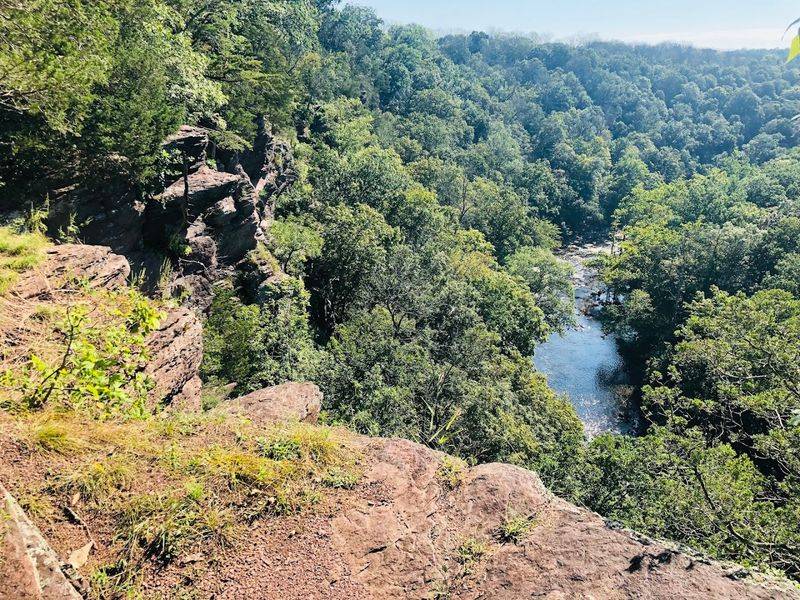
Standing at the top of High Rocks Vista and looking straight down is not for the faint of heart.
Official park pages describe a 150-foot sheer rock face, while hiking materials also refer to 200-foot cliffs overlooking Tohickon Creek far below.
That kind of vertical drop puts this spot in a completely different category from your average state park viewpoint.
The exposed red Brunswick shale face stretches along the ridge for about three-quarters of a mile, giving visitors multiple vantage points to take in the dramatic scene.
A safety rail runs along the most exposed sections of the overlook, which is a smart touch given how close the path gets to the edge.
Even with the rail in place, the view down into the gorge is enough to make your stomach do a little flip, in the best possible way every time.
Tohickon Creek And The Gorge Views Below
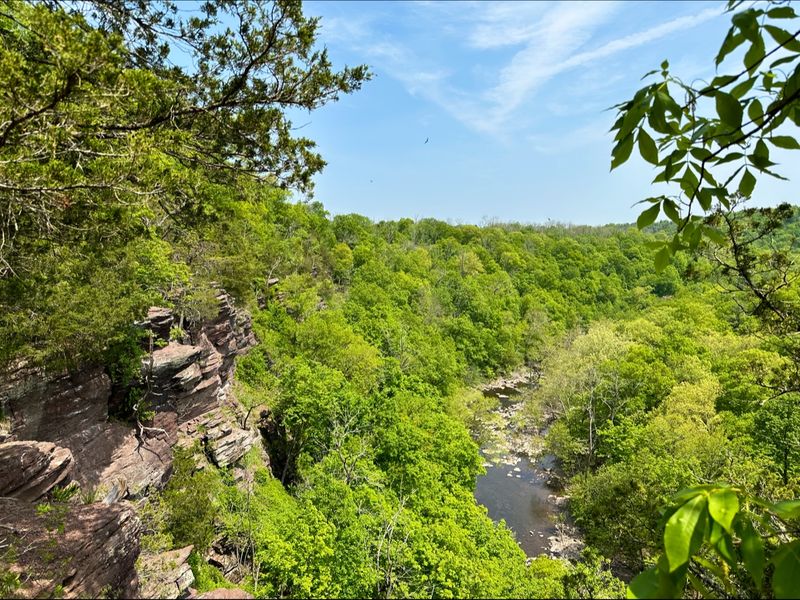
Few things in Pennsylvania match the sight of Tohickon Creek curving through its rocky gorge far below the High Rocks ridge.
From the overlook, the creek looks almost like a ribbon of silver threading through a blanket of green, especially in late spring and summer when the forest canopy is full.
The gorge itself is what gives this park its dramatic character.
The creek carved through the landscape over thousands of years, leaving behind steep walls and exposed rock that now define the park’s most iconic views.
Visitors who make the trek down from the ridge to the creek level get a completely different perspective.
Down at water level, the cliffs tower overhead and the sound of the water moving over rocks fills the air. It is one of those rare spots where both the top-down and bottom-up views are equally rewarding.
Rock Climbing At The High Rocks Wall
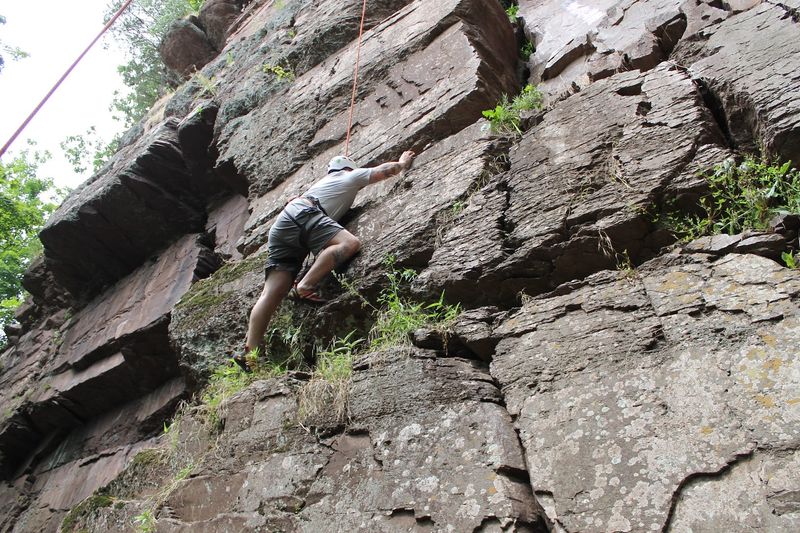
The High Rocks wall has become one of the premier climbing destinations in eastern Pennsylvania, drawing everyone from newer climbers learning to top-rope to more experienced climbers working through trickier routes.
The rock face offers close to 100 routes, which means it never feels like a place reserved only for experts.
Access to the climbing area is straightforward from the Tory Road parking lot, but this is still technical climbing.
DCNR says safety equipment is required, and the park does not maintain fixed anchors, hardware, cliff faces, or routes for climber safety.
One important detail worth knowing is that placing additional fixed hardware or anchors is prohibited unless approved by park management. That rule matters for both safety and preservation.
Moving along the wall reveals a mix of top-rope, traditional climbing, and bouldering possibilities, which keeps the experience interesting no matter how many times you visit here and return again.
The Twice-Yearly Whitewater Dam Release
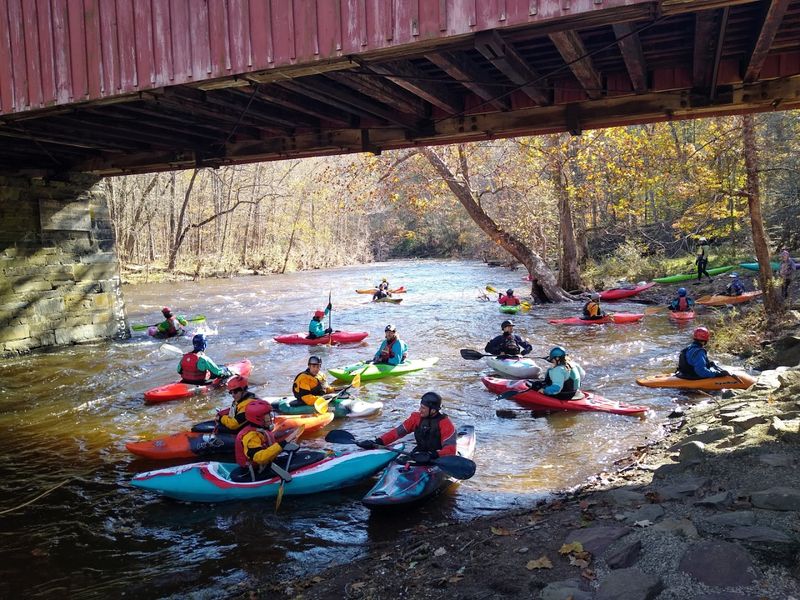
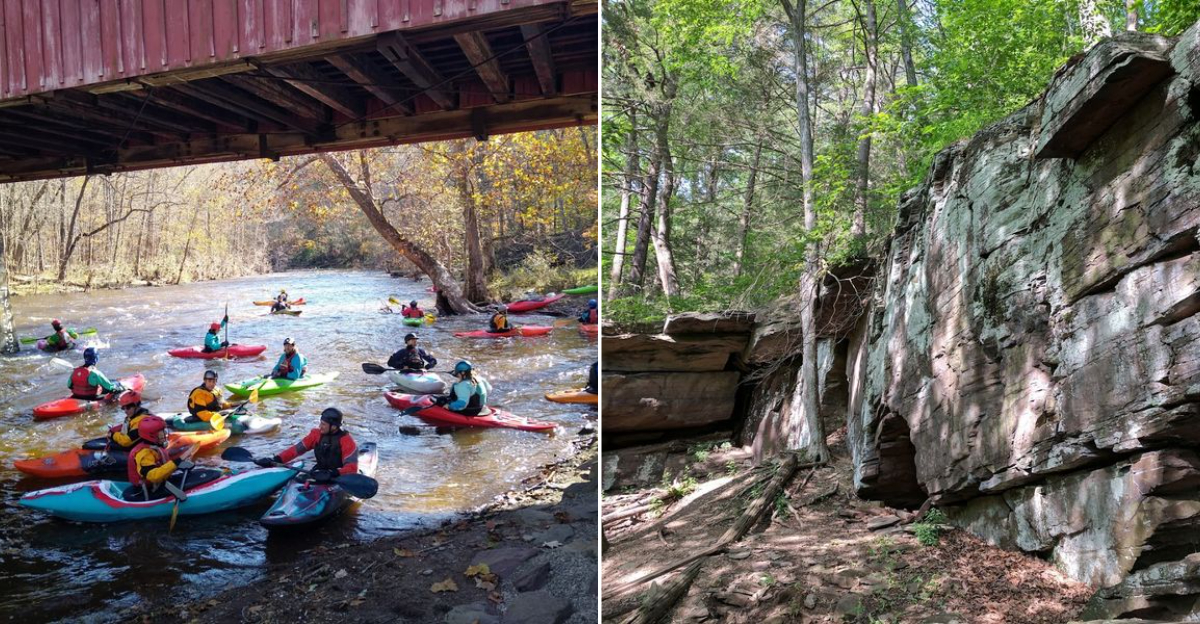
Twice a year, Tohickon Creek transforms into a technical Class 3 and 4 whitewater run, and the park becomes a gathering point for paddlers from across the region.
The dam release events draw serious kayakers and canoeists who come specifically for the challenge of the fast-moving water.
On a normal day, the creek can look deceptively manageable from the bank.
But during a release, that same stretch becomes something entirely different, a fast and technical run that demands real paddling skill and experience.
The release events are scheduled in advance and announced publicly, so planning ahead is essential if catching the whitewater action is the goal.
Spectators also gather at approved viewing spots to watch paddlers work through the rapids.
It is one of those events that adds a completely unexpected layer of excitement to what is otherwise a quiet, scenic Pennsylvania park for visitors watching safely from shore nearby.
The Historic Howe Pony Truss Bridge
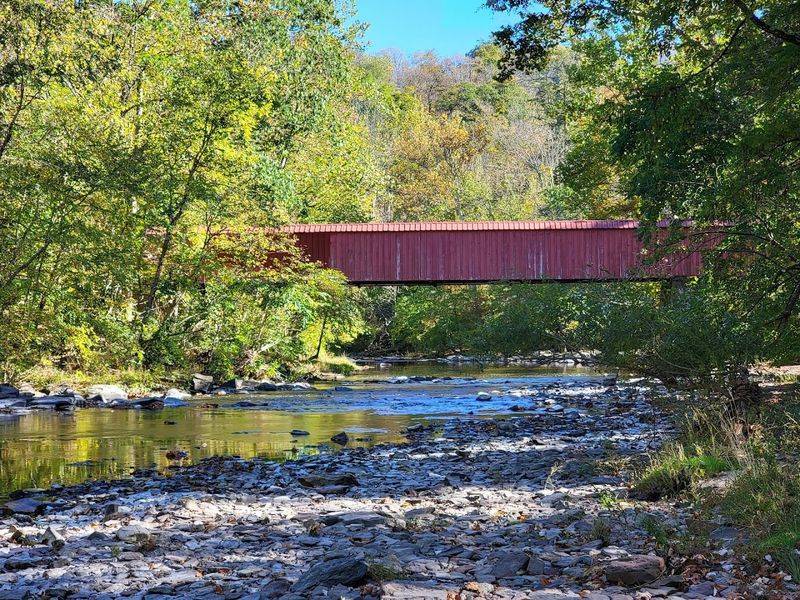
One of the more surprising historical details about this Pennsylvania park is the bridge.
The day-use area contains what is reportedly the longest boxed Howe pony truss bridge in North America, a genuinely rare piece of engineering history sitting quietly in the middle of a state park.
The Howe truss design was popular in the 19th century, using a combination of wooden diagonal members and iron vertical rods to create a strong, efficient span.
Finding one in this condition and of this length is unusual enough to make it worth a close look, even for visitors who do not normally get excited about historic infrastructure.
Beyond its structural significance, the bridge is also just a lovely spot to pause and take in the surroundings.
The creek below is clear and peaceful at this section of the park, and the old stonework nearby adds to the sense that this place carries a long and layered history.
WPA Stonework And The Park’s Depression-Era History
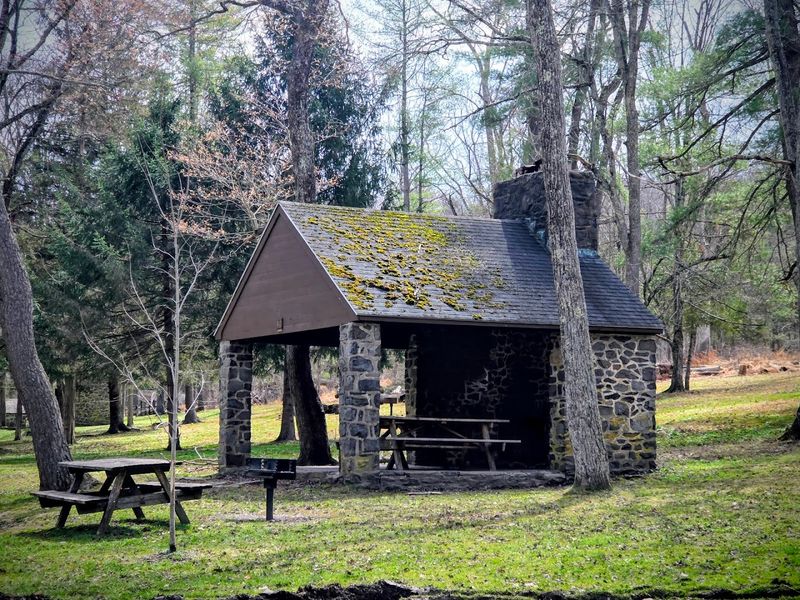
Scattered throughout the park are stone structures built by the Works Progress Administration during the 1930s, a reminder of the New Deal era when the federal government put thousands of unemployed workers to work building public infrastructure across the country.
The craftsmanship is still visible and holds up remarkably well decades later.
These stone walls, steps, and foundations blend into the landscape in a way that feels almost natural now, as if the forest has gradually accepted them as part of its own history.
Spotting them along the trails adds a quiet historical dimension to an otherwise purely outdoor experience. The park also contains the remains of the Stover grist mill at the northern end of the property.
The mill once played an active role in the local economy of Bucks County, and its stone remnants are a tangible connection to a time when this creek was more than just a scenic backdrop.
Pennsylvania has no shortage of history, and this park holds more than its share.
Wildlife And Natural Diversity In The Park
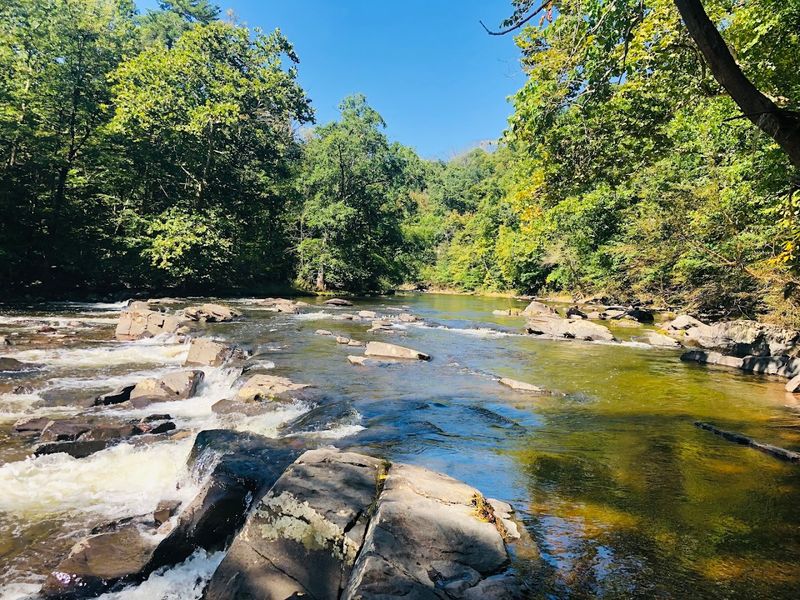
The 45 acres of woodland at Ralph Stover State Park support a surprisingly rich variety of wildlife.
Visitors have reported spotting snake skins, tiny frogs and toads along the creek paths, aquatic insects in the water, and a wide range of bird species moving through the deciduous forest canopy overhead.
For anyone who enjoys identifying plants and fungi, the forest floor offers plenty to study.
The mix of moisture from the creek and the shade from the tall trees creates exactly the kind of habitat where interesting species tend to cluster.
Fishing is also a draw along the Tohickon Creek banks, where the water provides habitat for a range of freshwater species.
The combination of geological drama above and biological richness below makes this Pennsylvania park genuinely rewarding to explore slowly.
Rushing through it means missing the small details that make the place feel alive in a way that a quick overlook photo simply cannot capture.
The Trail System And What To Expect On Each Route
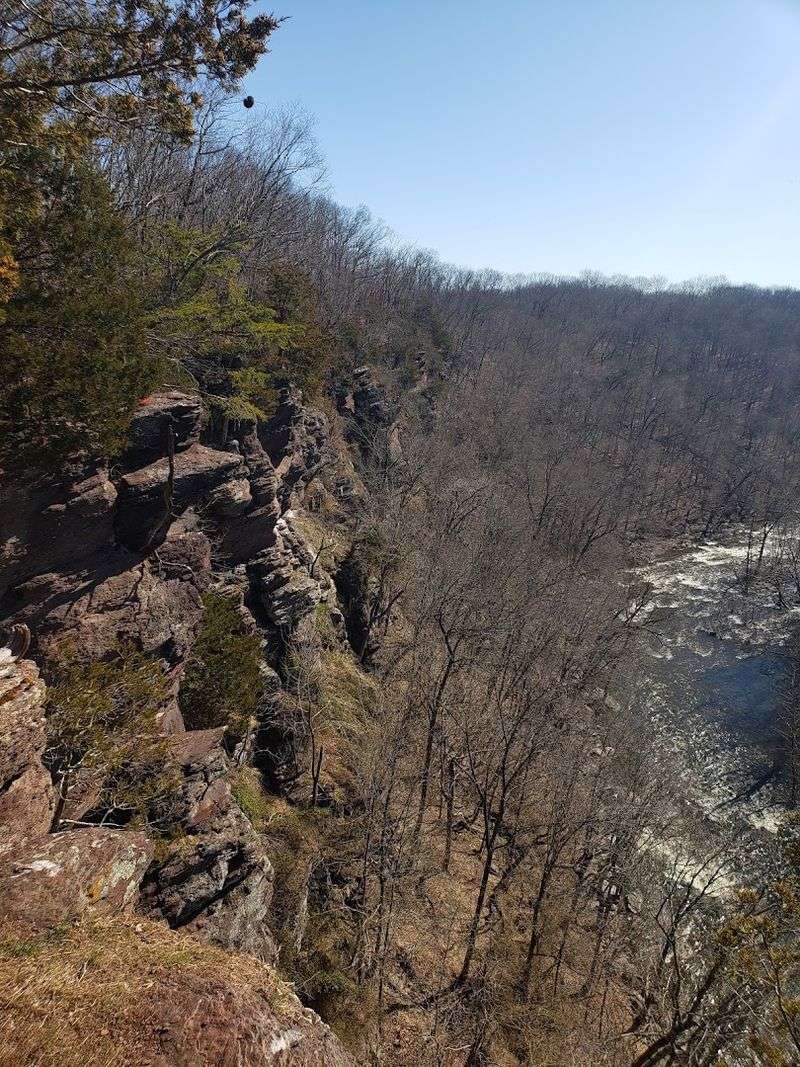
The trail system at Ralph Stover State Park offers more variety than it might first appear.
At the High Rocks section, official maps describe blue and yellow trail sections near the vista, with additional connected routes continuing through neighboring Tohickon Valley Park.
The blue route offers an easier walk with a stop at the cliff overlook, while the yellow route is more challenging and runs closer to the creek.
It also connects with the orange trail in Tohickon Valley Park, where rock climbing and gorge views continue.
Cell reception is unreliable throughout the park, so downloading a trail map before arriving is a genuinely useful step rather than an optional one.
Some routes can be steep, rocky, and uneven in places, so solid shoes help on the trail too.
The park rewards those who come prepared and take their time, especially on the narrower paths that run close to the cliff edges and gorge terrain overall safely.
Revolutionary War History Hidden In The Caves
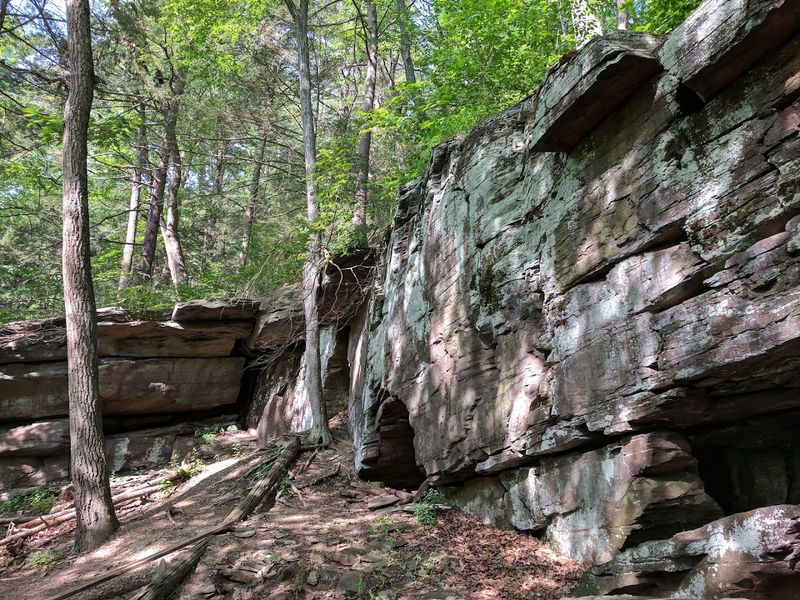
The caves and rock shelters around Bucks County carry stories that stretch back to the Revolutionary War era.
Local history links the Doan family, a gang known for their loyalty to the British Crown, with caves in the broader region.
The Doans were notorious in Bucks County during the late 18th century, operating as outlaws who raided the colonial cause while using the rugged terrain of the region to stay one step ahead of authorities.
Doan’s Cave is located in Ralph Stover State Park, though the gang’s actual use of these caves remains unproven.
This layer of history adds a different kind of depth to a visit, one that goes beyond the geology and the scenery.
Pennsylvania has a remarkable amount of Revolutionary War history embedded in its landscape, and finding it in a place as visually dramatic as this park is a genuinely unexpected bonus for anyone with an interest in early American stories nearby today.
Practical Tips For Visiting Ralph Stover State Park
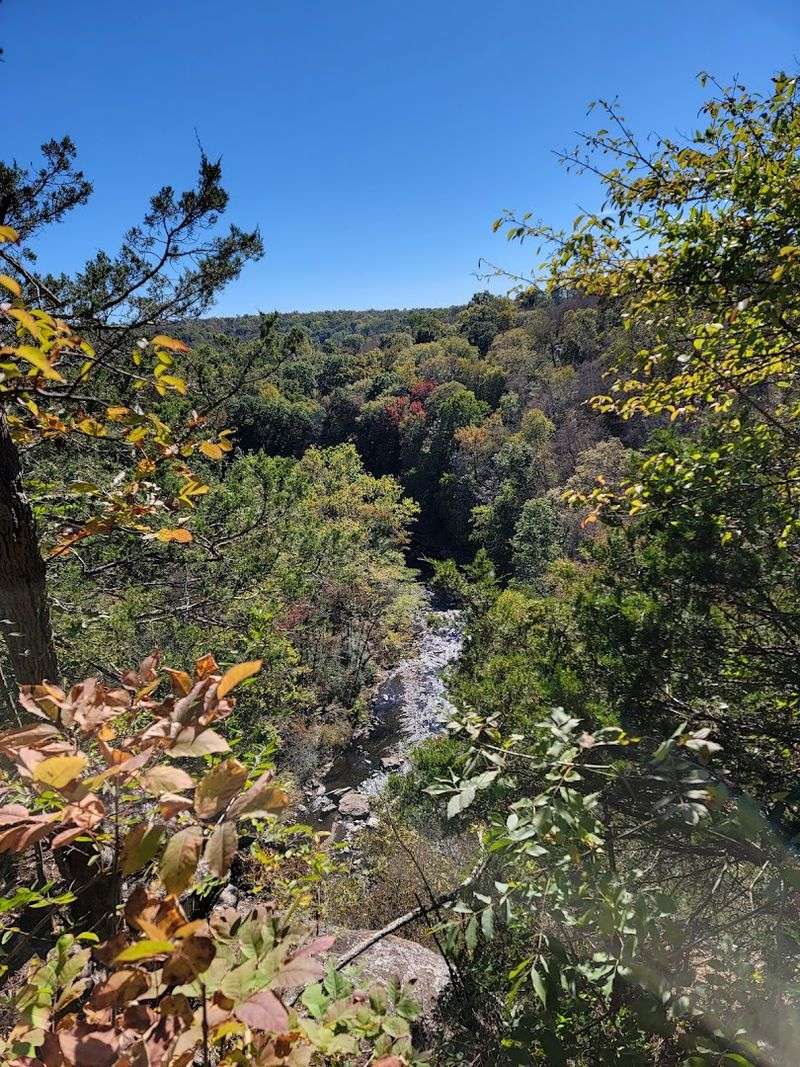
Ralph Stover State Park at 6011 State Park Road, Pipersville, Pennsylvania 18947 is open every day of the year from sunrise to sunset, with day-use areas closing at dusk.
There are two especially useful access points: the day-use area at 6011 State Park Road and the High Rocks parking lot at 150 Tory Road.
Choosing the right lot based on the planned activity saves a lot of unnecessary backtracking, especially since the cliff overlooks and climbing areas are not right beside the main picnic area for most visitors arriving first.
Bringing good hiking shoes, extra water, and a downloaded trail map covers the basics for a comfortable visit.
Parking along Tory Road outside the High Rocks lot is prohibited, and cell service is unreliable, so a little planning really helps before you start walking there at High Rocks today.