
18 Wisconsin Dinner Table Rules From The 1960s That Would Confuse Kids Today
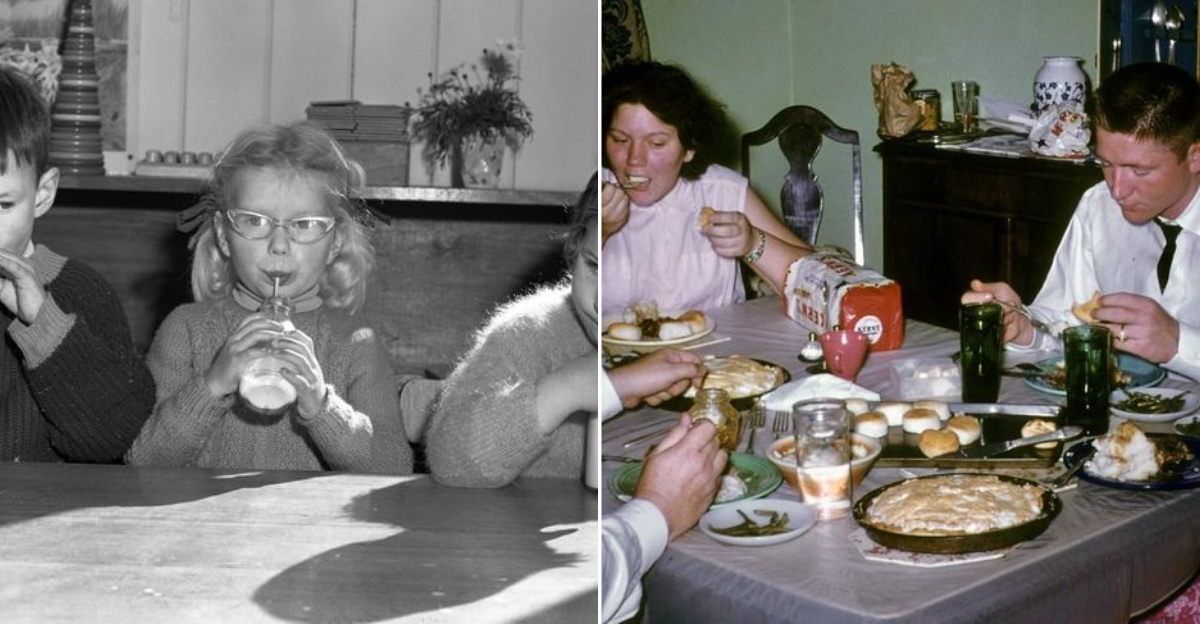
Growing up, my grandma would swat my hand if I even thought about grabbing the mashed potatoes before grace was said.
Wisconsin families in the 1960s took dinner time seriously, with rules stricter than a librarian on a Monday morning.
These traditions kept everyone polite, patient, and respectful around the table. Modern kids would find these old-school manners downright baffling.
1. Say Grace Before Anyone Lifts a Fork
Back in the 1960s, no Wisconsin kid dared touch their fork before someone said grace. Prayers before meals were as automatic as breathing, whether you had company or just the usual crew.
Families believed thanking God for their food taught gratitude and humility. Kids today might fidget through a blessing, checking imaginary phones in their pockets.
But back then, interrupting grace could earn you a stern look that froze you solid.
2. Wait Until Everyone Is Seated to Start
Patience wasn’t just a virtue in the 1960s; it was the law at suppertime. Nobody touched their food until every family member was parked in their chair, napkin ready.
This rule taught kids to respect everyone’s time and presence at the table. Modern children, used to grabbing snacks on the go, would probably wonder why they couldn’t just dig in.
Wisconsin families believed shared meals meant shared timing, no exceptions allowed whatsoever.
3. Dad Carves the Roast
Carving the Sunday roast was Dad’s domain, plain and simple. He’d stand at the head of the table, knife and fork in hand, slicing meat like a surgeon performing delicate work.
This ritual symbolized his role as provider and head of the household. Kids weren’t allowed to hack away at the roast themselves, no matter how hungry they felt.
Today’s families might share the task or skip roasts altogether for takeout pizza.
4. Napkin on Lap at All Times
Cloth napkins weren’t optional accessories in 1960s Wisconsin; they were mandatory equipment. The moment you sat down, that napkin landed on your lap like a parachute finding its target.
Keeping it there throughout the meal showed you had manners and weren’t raised in a barn. Kids today might wonder why they can’t just wipe their hands on their jeans.
But back then, napkin discipline separated the civilized from the savages, according to Mom anyway.
5. Elbows Off the Table
Elbows belonged on armrests, not dinner tables, according to every Wisconsin parent in the 1960s. Lean on that table and you’d get a quick tap or reminder faster than you could say “sorry.”
This rule came from old European etiquette that equated slouching with laziness.
Modern kids might argue that resting their arms is comfortable and harmless. But proper posture at the table meant you were alert, engaged, and respectful of the meal.
6. Ask to Have Dishes Passed; No Reaching
Stretching across the table like a hungry octopus was strictly forbidden in 1960s Wisconsin homes. If you wanted the butter, you asked politely for someone to pass it your way.
Reaching over other people’s plates was considered rude and potentially dangerous with hot dishes involved.
Kids learned patience and communication skills through this simple rule. Today’s children might just grab what they need without thinking twice about proper passing protocol at all.
7. Milk With Supper Is Standard
Forget soda or juice; milk ruled the Wisconsin dinner table in the 1960s. Every kid had a full glass of cold milk sitting next to their plate, no questions asked.
Parents believed milk built strong bones and healthy bodies, thanks to aggressive dairy industry campaigns. Wisconsin’s dairy pride meant milk wasn’t optional but expected at every meal.
Modern kids accustomed to variety would find this monotonous milk mandate totally bizarre and unnecessarily rigid for their tastes.
8. No Meat on Friday; Fish Fry Night
Friday nights meant one thing in Catholic Wisconsin households: fish, and lots of it. Meat was off-limits due to religious tradition, so families headed to fish fries or fried up perch at home.
This practice created a statewide Friday ritual that brought communities together at church halls and supper clubs.
Kids today might not understand skipping burgers for religious reasons. But back then, breaking the Friday fish rule felt like a serious sin worth avoiding at all costs.
9. Finish Your Plate Before Dessert
Dessert was the golden prize, but you had to earn it by cleaning your plate first. Every last pea, every bit of meatloaf, every forkful of casserole had to disappear before pie appeared.
Parents believed wasting food was sinful, especially for families who remembered Depression-era scarcity. Kids learned to eat what was served, even if it meant choking down liver and onions.
Modern children might negotiate or simply refuse, but 1960s kids knew the rules were non-negotiable and absolute.
10. Ask “May I Be Excused?” to Leave
Bolting from the table like a racehorse was unthinkable in 1960s Wisconsin homes. Kids had to ask permission with the magic phrase, “May I be excused?” before leaving their seats.
This rule taught respect for family time and acknowledged parents’ authority over the household. You couldn’t just vanish when you felt like it, even if your favorite show was starting.
Today’s kids might find this formal request silly when they’re clearly done eating and ready to go play outside.
11. No TV During Supper
Television stayed silent during supper in most 1960s Wisconsin homes. Families talked to each other instead of staring at flickering screens, sharing stories about their days and actually listening.
Parents believed mealtime was sacred family time that deserved full attention and engagement. Kids might have wanted to watch their favorite shows, but the TV remained off until dishes were cleared.
Modern families often eat with screens everywhere, making this total TV blackout seem impossibly strict and outdated by comparison.
12. Hats and Caps Off Indoors
Wearing hats indoors, especially at the dinner table, was considered disrespectful and downright rude.
Boys learned to whip off their caps the moment they crossed the threshold, no reminders needed after the first correction.
This tradition came from old military and church customs about showing proper respect. Girls with fancy hats sometimes got exceptions, but boys never did.
Today’s kids who wear baseball caps everywhere would find this rule confusing and completely unnecessary for casual family meals at home.
13. Children Speak Only When Spoken To
Kids in 1960s Wisconsin learned quickly that dinner conversations belonged to adults. Children sat quietly unless a parent directly asked them a question, then answered briefly and politely.
Interrupting grown-up talk was forbidden and could earn you a trip away from the table entirely. Parents believed children should be seen, not heard, especially during meals.
Modern kids accustomed to sharing every thought would find this silencing rule incredibly frustrating and unfair to their voices and opinions.
14. No Snacking Before Supper
Raiding the fridge before supper was absolutely forbidden in 1960s Wisconsin households. Parents guarded pre-dinner hours fiercely, ensuring kids arrived at the table with proper appetites for the meal prepared.
Snacking would ruin your dinner, mothers warned, and wasting good food was practically criminal. Kids had to endure rumbling stomachs until the dinner bell rang.
Today’s children with constant snack access would find this pre-meal fasting period unnecessarily cruel and completely unreasonable for their hunger needs.
15. Everyone Helps Set and Clear
Mealtime was a team effort in 1960s Wisconsin homes, with everyone pitching in to set and clear the table.
Kids learned their assigned tasks early, whether folding napkins, carrying plates, or scraping leftovers into containers.
This shared responsibility taught cooperation and appreciation for the work behind every meal. Nobody got to just show up, eat, and disappear without contributing something.
Modern kids might grumble about these mandatory chores when they’d rather be gaming or scrolling through their phones instead of helping out.
16. Bread and Butter Pass to the Right
Food didn’t just randomly bounce around the table in 1960s Wisconsin; it followed specific traffic patterns.
Bread and butter always traveled to the right, moving clockwise around the table like a well-choreographed dance.
This directional rule prevented collisions and confusion when multiple dishes circulated simultaneously. Kids had to remember which way to pass, or risk breaking the flow entirely.
Today’s informal family meals rarely follow such precise passing protocols, making this directional discipline seem unnecessarily complicated and fussy for simple bread.
17. Say “Please” and “Thank You”
Magic words weren’t optional in 1960s Wisconsin homes; they were absolutely mandatory at every meal.
Kids said “please” when requesting anything and “thank you” when receiving it, no exceptions or shortcuts allowed.
Parents believed politeness was the foundation of good character and civilized society. Forgetting these basic courtesies could mean losing privileges or facing lectures about proper behavior.
Modern kids might mumble these phrases automatically, but 1960s children delivered them clearly and sincerely, or faced immediate correction from watchful parents.
18. No Seconds Until Everyone’s Had Firsts
Hungry teenagers couldn’t just pile their plates high with seconds in 1960s Wisconsin homes. Everyone had to receive their first serving before anyone went back for more, ensuring fair distribution of food.
This rule taught patience, fairness, and consideration for others’ needs before your own wants. Big eaters had to wait, watching smaller siblings slowly finish while their stomachs growled.
Today’s kids with instant access to abundant food would find this enforced waiting period frustratingly slow and completely unnecessary for their immediate hunger.