
14 Wyoming Recipes Locals Swear You’ll Never Find Anywhere Else
Wyoming kitchens hold onto flavors that most of America has forgotten or never learned. Ranch culture, Indigenous traditions, and immigrant sheepherders all left recipes that stick to the ribs and tell stories no cookbook can capture.
I grew up watching my grandmother fry trout in a cast-iron skillet every summer, and those tastes anchor me to this place more than any landmark.
This list walks you through the plates, pots, and preserves that define eating in the Cowboy State – food you can only understand if you live here.
1. Rocky Mountain Oysters
Deep-fried calf or lamb fries arrive hot, crunchy on the outside, and tender inside. Ranch hands have been eating them for generations because wasting any part of the animal simply isn’t an option out here.
A squeeze of lemon cuts the richness, and most folks who try them can’t believe what they just enjoyed.
Bunkhouse Bar & Grill outside Cheyenne serves them year-round, but rodeo season is when they really shine on menus. The dish is pure cowboy pragmatism turned into a bar snack.
You either love the adventure or you stick to chicken wings, but every local knows someone who swears by them.
2. Chugwater Chili
Meaty, thick, and built on the legendary Chugwater Chili seasoning, this red pot is a staple at cook-offs and Sunday suppers.
The blend was born in tiny Chugwater and became so popular that it anchors pantries across the state. Every family tweaks the recipe, but the spice mix stays constant.
Grocers statewide stock the brand’s packets and mixes, keeping the tradition humming in home kitchens. I’ve tasted versions with elk, bison, and beef, and each one carries that signature warmth.
It’s comfort in a bowl, especially when snow piles up outside and you need something that sticks to your bones.
3. Basque Sheepherder Bread
This mammoth round loaf is slightly sweet, crusty on the outside, and pillowy soft inside.
Johnson County’s deep Basque sheepherder roots left Wyoming with a bread that fed crews in remote camps, baked over open fires in cast-iron Dutch ovens. The technique hasn’t changed much in a century.
Buffalo’s Basque celebrations still feature it, and home bakers who know the old way turn out loaves that smell like history.
My neighbor bakes one every Easter, and the whole block can smell it rising. It’s perfect for mopping up stew or slathering with butter while it’s still warm.
4. Fort Bridger Dutch-Oven Cobbler
Fruit cobbler baked over coals in a Dutch oven is centerpiece fare at mountain-man rendezvous and chuckwagon demos.
Peach fills the pot in summer, but serviceberry takes over when the shrubs hang heavy in late July. The crust bubbles up golden, and the fruit turns jammy underneath.
Fort Bridger Rendezvous is the place to taste it done right, with smoke and sweetness mingling in every spoonful. Museum chuckwagon programs across the state keep the technique alive.
I’ve burned more than one batch learning to manage the coals, but when it works, nothing beats that campfire magic on your tongue.
5. Wind River Indian Tacos on Frybread
Puffy frybread piled high with seasoned meat, beans, lettuce, and salsa is a beloved plate at Wind River Reservation powwows and cultural days.
The bread fries up light and crisp, creating the perfect base for all those toppings. It’s handheld, messy, and absolutely worth the napkin count.
Powwows and events on Wind River serve it as expected fare, and even state park cultural days list it on their menus. The combination of textures and flavors makes every bite different.
I’ve stood in line at Ethete for these tacos more times than I can count, and the wait is always justified by that first warm, savory mouthful.
6. Chokecherry Syrup and Wojapi
Syrup or the thicker berry sauce called wojapi comes from native chokecherries that grow wild across the state.
Chokecherry shrubs are everywhere here, and the fruit is both a traditional Indigenous food and a modern pantry staple. The tartness wakes up pancakes, ice cream, and even roasted meats.
Jars show up on ranch tables, at markets, and in historic sites, but you need to mind the pits when you cook with the berries.
My grandmother made wojapi every August, and the smell of simmering fruit still takes me back to her kitchen. It’s a taste that belongs to this land, sharp and unforgettable.
7. Cornmeal-Fried Cutthroat Trout
A quick pan-fry with lemon and butter lets the fish speak for itself. The cutthroat is Wyoming’s state fish, and trout dinners are a rite after a day on the water. Cornmeal gives the outside a delicate crunch while keeping the inside moist and flaky.
Campsites and kitchens from the Wind River Range to the Tetons see this dish all summer long. I’ve cooked it on a portable burner beside alpine lakes, and the simplicity is the whole point.
Fresh-caught trout needs nothing fancy, just heat, a little fat, and maybe a sprinkle of salt to bring out the sweetness of the meat.
8. Dornan’s Sourdough Pancakes
Tangy, frontier-style sourdough flapjacks have been a Jackson Hole breakfast tradition since 1948. The starter gives the cakes a slight chew and a depth you don’t get from regular batter.
They taste like a Teton morning, especially when the griddle’s going at Dornan’s Chuckwagon in Moose.
Locals line up early because these pancakes are worth the wait, and the view of the mountains doesn’t hurt either. I’ve eaten them after long hikes and before ski days, and they fuel you better than any protein bar.
The sourdough tang cuts through the syrup, keeping everything balanced and never too sweet.
9. Cowboy Cookies
Big, rugged cookies loaded with oats, chocolate, pecans, and coconut are sometimes nicknamed Wyoming Cowboy Cookies.
The treat is tied to the Cowboy State in national roundups of regional desserts. Each bite delivers multiple textures and flavors, from chewy to crunchy to sweet.
Bake sales, small-town bakeries, and any potluck that knows what’s good will have a batch on display. I’ve baked them for brandings and church suppers, and they disappear faster than anything else on the table.
They’re hearty enough to satisfy a ranch hand and sweet enough to please anyone with a sugar tooth.
10. Chili and Cinnamon Rolls
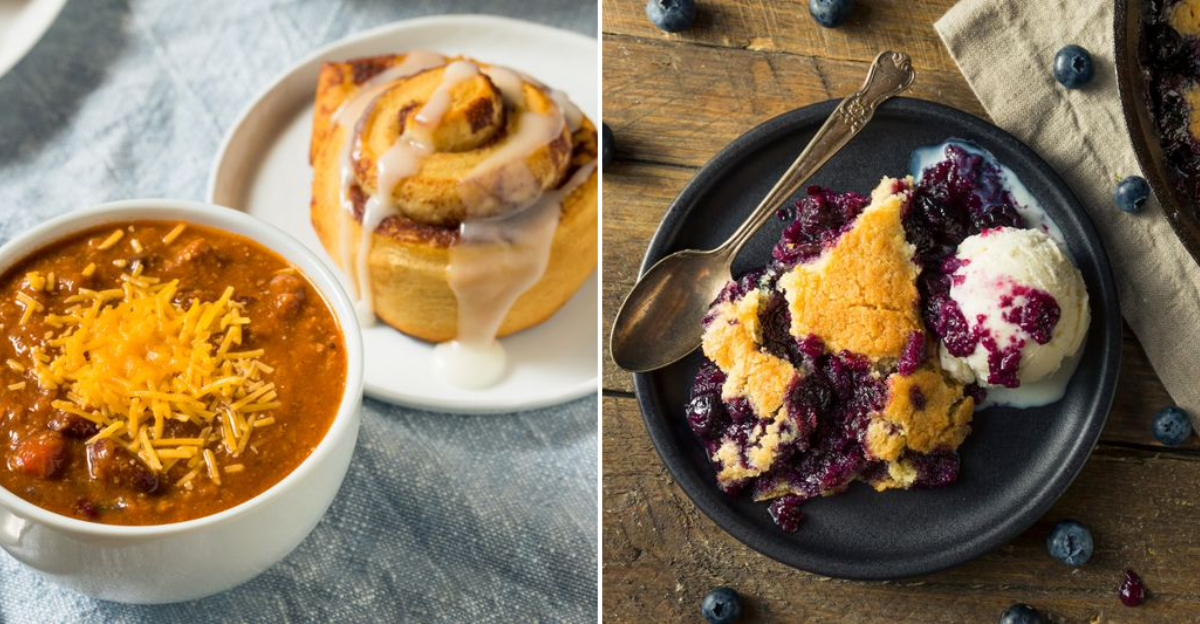
A bowl of chili with a gooey cinnamon roll on the side is a beloved Great Plains tradition, and Wyoming lays claim right alongside its neighbors.
Sweet meets heat in a way that sounds odd but works perfectly once you try it. The cinnamon roll soaks up the spicy broth, creating a bite that’s both comforting and unexpected.
Cafeterias, winter church suppers, and mom’s recipe box all feature this combo. I grew up eating it at school lunch, and it still feels like home every time I see it on a menu.
The pairing is pure prairie logic, turning two simple dishes into something greater than the sum of their parts.
11. Teton Huckleberry Pie
Jammy, deep-purple huckleberry filling under a flaky lid is summer captured in pastry. Huckleberries ripen in late summer on the west side of the state, and locals guard their patches like gold claims.
The berries are smaller and more intense than blueberries, with a tartness that balances the sugar perfectly.
Jackson Hole bakeries and home ovens turn out pies when the berries come in, and they sell out fast. I’ve hiked miles to pick enough for a single pie, and every bite reminds me why it’s worth the effort.
It’s a taste that belongs to the high country, wild and unforgettable.
12. Basque Lamb and Beans
Slow-braised lamb with peppers, onions, and beans is hearty, simple, feed-a-crew food. Sheep and wool are central to Johnson County culture, and festivals still serve celebratory lamb dinners.
The dish is pure comfort, with tender meat that falls apart and beans that soak up all the savory juices.
Buffalo’s Sheep & Wool Festival weekends and Basque club gatherings feature it as the main event. I’ve eaten it at branding days, and it’s the kind of meal that keeps you going through long hours of hard work.
The flavors are straightforward but deeply satisfying, rooted in the immigrant traditions that shaped this state.
13. Serviceberry Jam
Deep, blueberry-adjacent jam from the hardy native serviceberry is a pantry treasure. Serviceberries blanket the foothills, and birds love them as much as canners do.
The fruit is also called Juneberry or Saskatoon, and it makes a jam that’s both sweet and slightly tart.
Sparkling jars show up on pantry shelves across the state, spooned onto biscuits or stirred into yogurt. My aunt makes a batch every June, and the color alone is worth the effort.
It’s a taste of Wyoming’s wild places, preserved in glass and enjoyed all year long.
14. Rosehip Jelly
Sunset-colored jelly from wild rose hips after the first frosts is high-plains vitamin C in a jar. Wild roses thrive on the range, and old-timers swear by rosehip tea and jelly for winter health. The flavor is delicate, floral, and slightly tart, nothing like store-bought grape jelly.
Homestead-style kitchens and county fair recipe cards keep the tradition alive. I’ve picked rose hips in October, and the work is prickly but worth it.
The jelly glows like a sunset and tastes like the last warmth of autumn, perfect on toast or biscuits when the snow starts to fly.