
You Can Hunt For Nearly 50-Million-Year-Old Fossils In Washington And Keep Three
Nothing humbles a person quite like getting completely out-staged by a prehistoric leaf. During a recent trip to Washington, I spent an entire afternoon playing amateur archaeologist, swinging a tiny hammer like a caffeinated woodpecker.
My goal?
To strike gold, or, in this case, a beautifully fossilized insect or plant from 50 million years ago. Covered in dirt and utterly determined, I felt like a kid on Christmas morning every single time a rock cracked open.
The icing on the cake is that you get to keep three of your favorite finds to brag about to your friends.
If your idea of a good time involves breaking things for science and uncovering ancient secrets, you are definitely going to want to hear this story.
Here, they offer something most people never imagined they could do on a weekend trip: dig up real fossils that are nearly 50 million years old and take some home. This is not a theme park recreation or a simulated dig.
These are genuine Eocene-era impressions of ancient plants, insects, and fish pressed into shale long before humans ever walked the earth.
The Story Behind Stonerose Interpretive Center
Back in 1977, artist Wesley “Wes” Wehr and paleontologist Kirk Johnson made fossil discoveries in Republic, Washington that would eventually change how the public interacts with prehistoric science.
Their findings pointed to a site of extraordinary significance, packed with Eocene-era fossils from nearly 50 million years ago. The idea that everyday visitors could experience this firsthand took root slowly.
By the mid-1980s, Wes Wehr and Republic City council member Bert Chadick developed the concept for a public interpretive center where anyone could explore a world-class fossil site alongside real researchers.
The center officially opened in 1989 as a 501(c)(3) non-profit organization, and it has welcomed curious visitors ever since.
The name “Stonerose” was chosen as a nod to the rose family plant fossils discovered embedded in the stones at the site. Today, the center’s logo features Florissantia quilchenensis, an extinct relative of the cocoa tree found right here.
Located at 15 N Clark Ave, Republic, WA 99166, it remains one of North America’s most important Cenozoic fossil sites. Visitors can still split shale, search for fossilized leaves and insects, and take home approved finds from the public digging area.
Few museums let you leave with a discovery that has been waiting nearly 50 million years to meet you.
What You Will Find In The Fossil Layers At Boot Hill
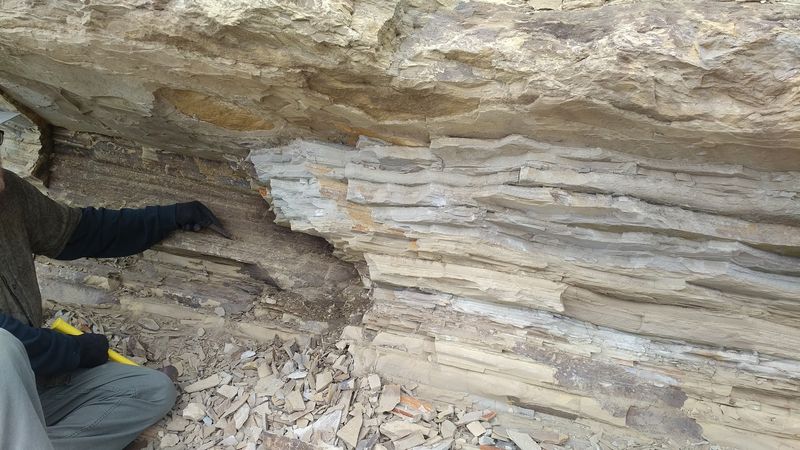
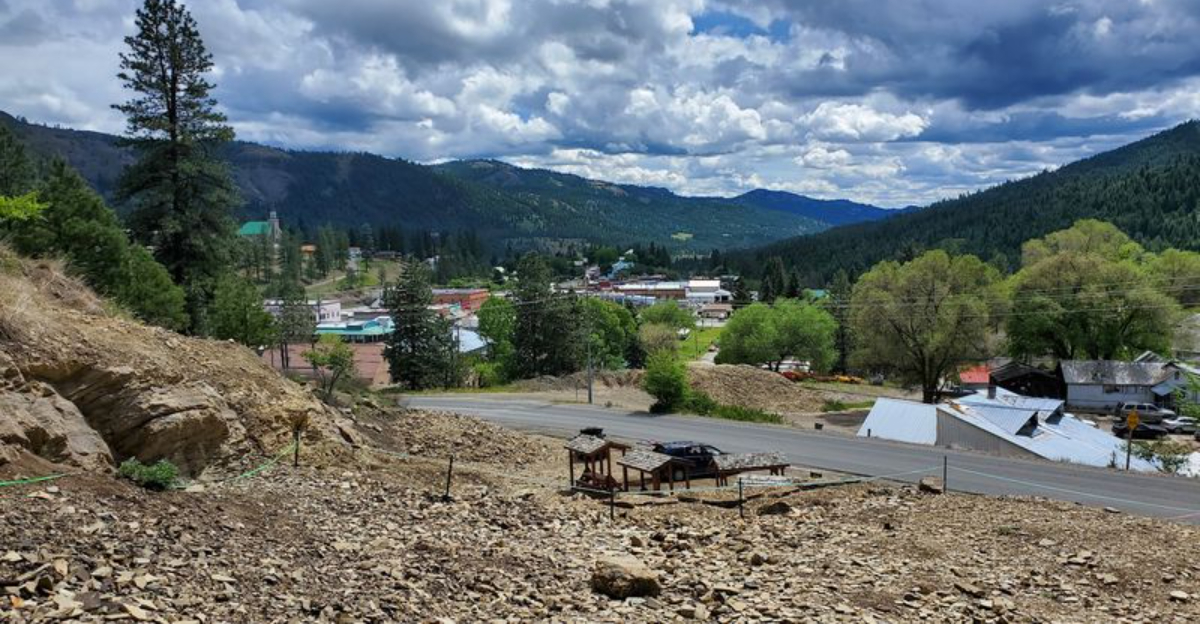
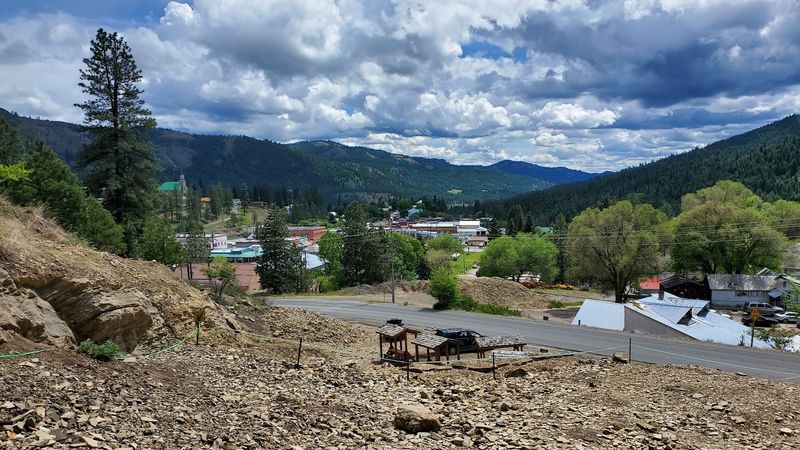
About 0.2 miles from the interpretive center sits Boot Hill, a hillside of layered shale that holds one of the most diverse collections of Eocene fossils found anywhere on the continent.
The layers crack apart with surprising ease, and inside those thin slabs are impressions of a world that existed roughly 49 to 50 million years ago.
Plant fossils dominate the site, with specimens from the rose, birch, maple, and redwood families showing up regularly. Fossil insects and ancient fish also appear, though less frequently. Each split of shale feels like opening a book that nobody has read in tens of millions of years.
One standout discovery tied to this site is Florissantia quilchenensis, an extinct relative of the cocoa tree that has become the center’s symbol.
The variety found here is genuinely remarkable, and staff members have noted that no two days of digging produce the same results. Every visitor’s experience at Boot Hill is its own small chapter in a very long story.
One slab may reveal nothing, while the next holds a leaf so crisp that its veins are still visible. That unpredictability turns every careful tap of the hammer into a tiny prehistoric cliffhanger.
How The Fossil Hunting Process Actually Works
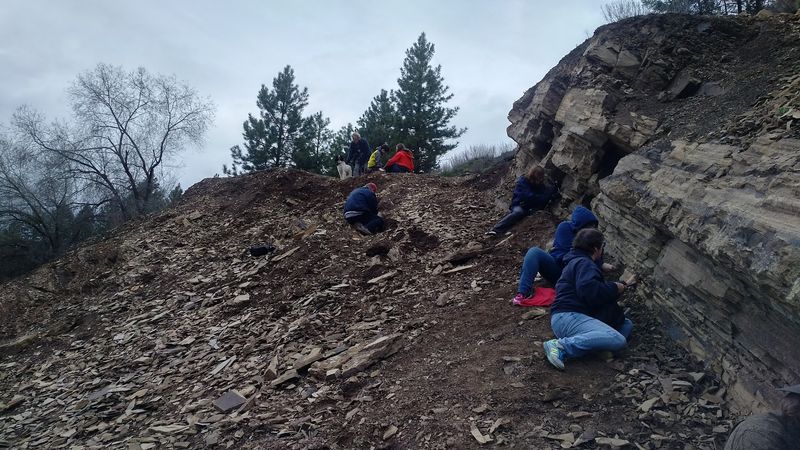
Before anyone touches a single rock at Boot Hill, the first stop is the interpretive center itself. Visitors check in, purchase a site admission sticker, and receive an orientation from a knowledgeable staff member who explains exactly where and how to dig.
Adults pay $18.00, seniors 62 and older pay $12.00, youth between 5 and 17 pay $7.00, and kids under 5 get in free. Tools matter here. Hammers and cold chisels are available to rent at the center for an additional fee, or you can bring your own small hand tools.
The technique involves carefully splitting shale layers apart, working slowly and paying close attention to what each new surface reveals. Patience is genuinely rewarded.
At the end of your dig, everything you found gets brought back to the interpretive center for identification by a staff member. You are allowed to keep three fossil pieces per person per day.
If something you found turns out to be scientifically significant, the center may retain it, but you will receive full credit and possibly even have a new species named after you.
Practical Tips For Visiting The Site Comfortably
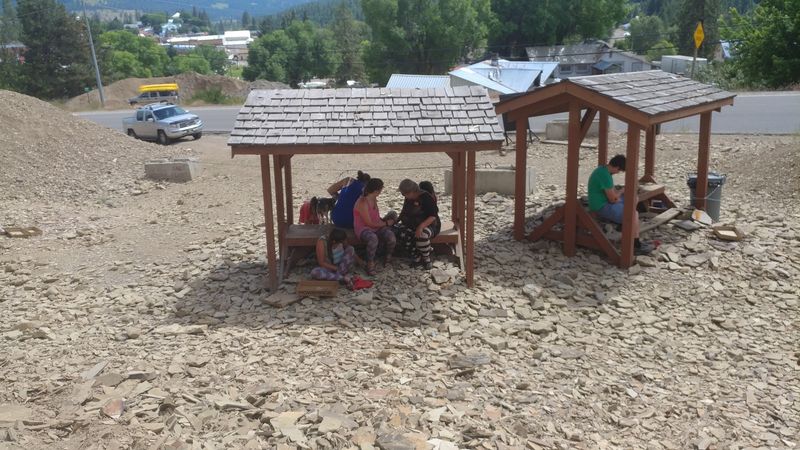
Boot Hill is a hillside of loose rock with very little shade overhead, so the sun hits hard during the warmer months. Bringing a hat, sunglasses, sunscreen, and plenty of water is not just a suggestion from the center’s staff.
After a couple of hours crouched over shale in direct sunlight, you will be very glad you listened. Closed-toe shoes are strongly recommended. The rocks are sharp, uneven, and shift underfoot in ways that sandals simply cannot handle safely.
Sturdy sneakers or hiking shoes will protect your feet and give you better stability while you work your way across the hillside.
The good news for dog owners is that well-behaved dogs on leashes are welcome at both the interpretive center and the fossil site. Handicapped parking is available at Boot Hill, and the interpretive center itself is handicapped accessible, though some areas of the site may require assistance to navigate.
Arriving early also helps, since digging must begin by 3:00 PM, and the fossil site closes at 4:00 PM during its seasonal operating hours.
Hours, Seasons, And Planning Your Trip
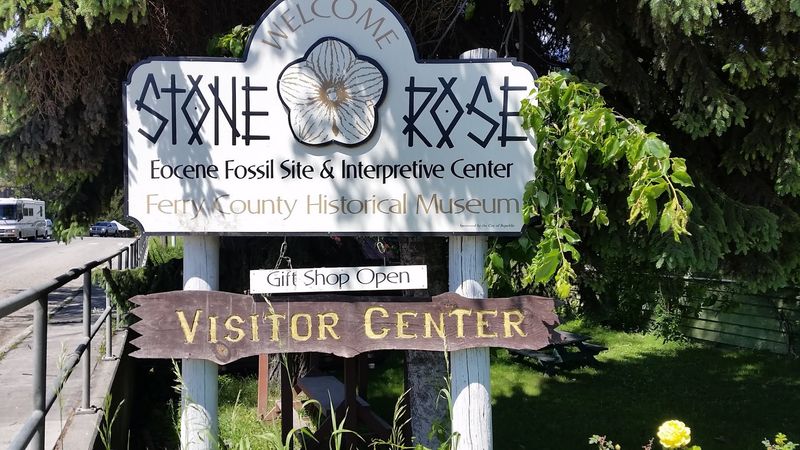
Planning ahead makes a real difference when visiting the Stonerose Interpretive Center. The center and its gift store are generally open Tuesday through Sunday from 8:00 AM to 5:00 PM, and the Boot Hill fossil site operates from 8:00 AM to 4:00 PM during its seasonal opening period.
The center is closed on Mondays, so keep that in mind when scheduling your trip.
Seasonal variations do apply, so checking the center’s current schedule before you make the drive is a smart move. Republic is a small town in northeastern Washington, and the surrounding Ferry County landscape is genuinely beautiful, making the drive itself part of the experience.
Arriving when the doors open at 8:00 AM gives you the most time to dig before the 3:00 PM cutoff for starting new excavation. Morning visits also tend to be cooler on warm days, which makes the outdoor hillside work much more comfortable.
A full visit with orientation, digging, and fossil identification can easily fill a satisfying half-day adventure.
The Science And Significance Of The Eocene Fossils Here
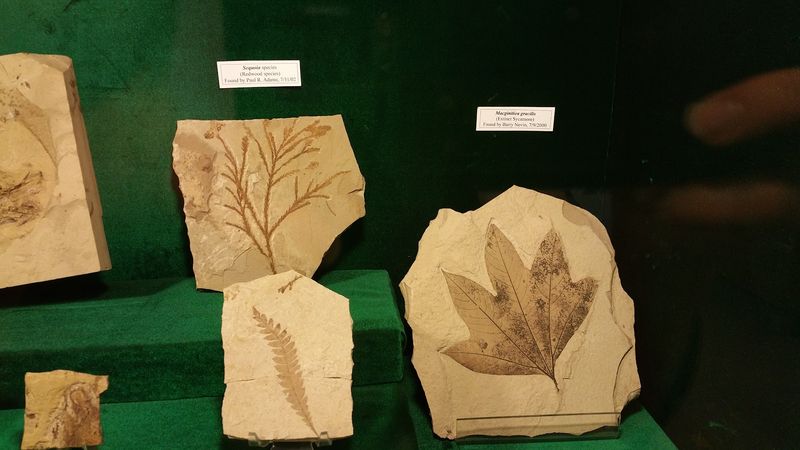
Fifty million years is a number that sounds almost too large to feel real, but holding a leaf fossil from that era makes it suddenly, surprisingly personal.
The Eocene epoch was a time of dramatic global warmth, lush forests, and ecosystems that look almost nothing like the ones we know today. The shale at Boot Hill preserved snapshots of that vanished world with extraordinary detail.
The Stonerose site is recognized as one of the most important Cenozoic fossil sites in all of North America.
Researchers have identified specimens from plant families that include roses, birches, maples, and redwoods, along with ancient insects and fish that hint at what the surrounding ecosystem once looked like.
Discoveries made by everyday visitors have contributed to genuine scientific knowledge. When a fossil of significant scientific value is found, the center retains it for study, and the person who found it receives formal credit.
In some cases, a newly identified taxon has even been named after the visitor who first spotted it, making citizen science feel wonderfully tangible here.
Why Stonerose Stands Out Among Fossil Experiences
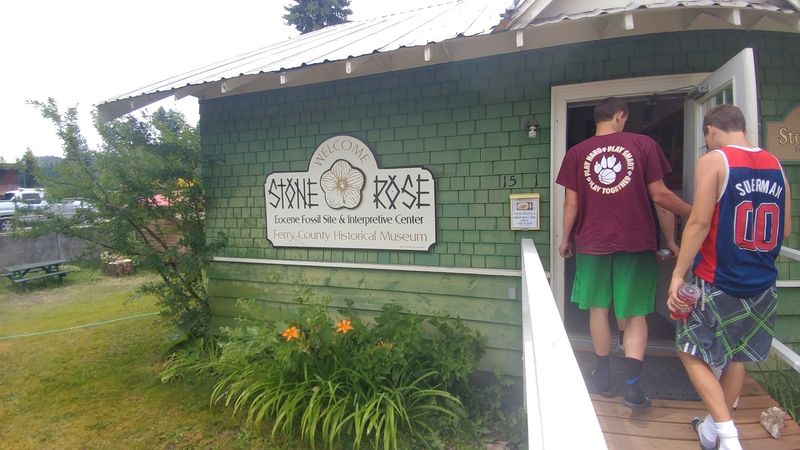
Most fossil-related attractions in the United States keep the fossils firmly behind glass. You look, you read a placard, you move on. Stonerose flips that model entirely by handing you a chisel and pointing you toward a real Eocene deposit where you get to be the one making the discovery.
The ability to keep three fossil pieces per person per day transforms the visit from passive tourism into something that feels genuinely earned.
There is a particular satisfaction in carrying home a piece of shale with a 50-million-year-old fern impression that you found and split yourself. No gift shop souvenir comes close to replicating that feeling.
What also sets this place apart is the community around it.
The staff bring real enthusiasm and knowledge to every orientation, and the center’s non-profit mission keeps the focus on education and access rather than profit.
For families, solo travelers, geology enthusiasts, or anyone who wants a story worth telling, Stonerose Interpretive Center delivers an experience that is quietly extraordinary and completely unlike anything else in the Pacific Northwest.