
You Can Paddle Beneath Centuries-Old Cypress Trees On The World’s Longest Bayou In Arkansas
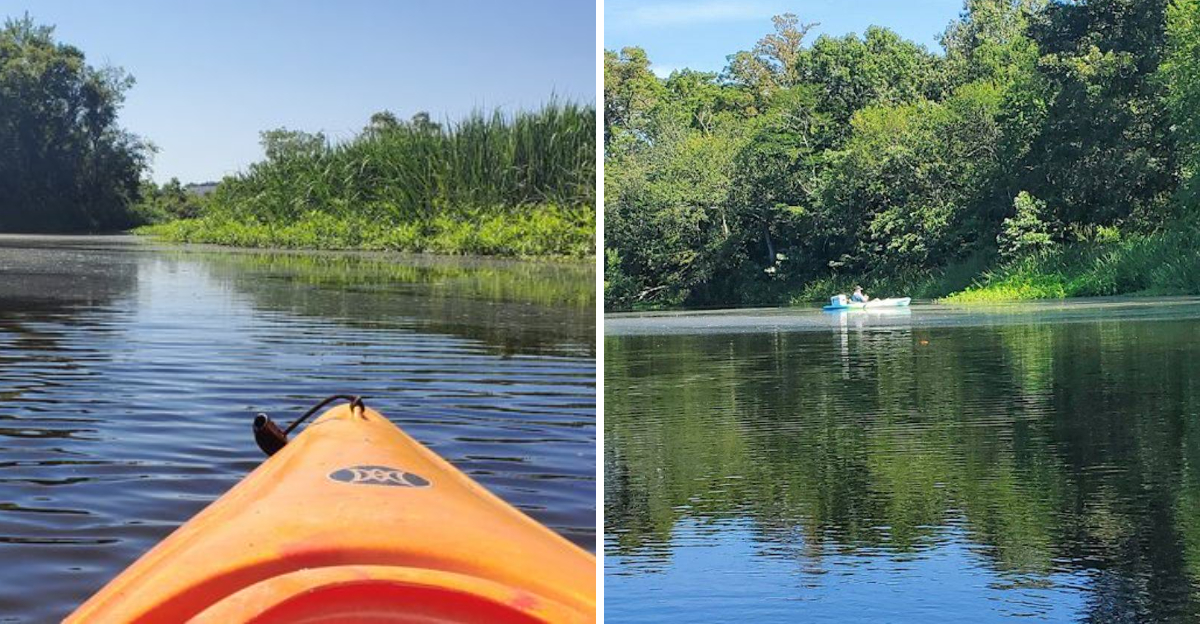
Picture yourself moving quietly across dark, glassy water as towering cypress trees rise from the bayou, their massive trunks making the whole landscape feel older than you ever imagined. It does not take long before the road behind you feels like a distant memory.
This Arkansas adventure is not about racing from one landmark to the next. It is about slowing down enough to notice reflections that look almost unreal, quiet stretches where the only sound is your paddle, and towering trees that have stood here for centuries.
The world’s longest bayou winds through a landscape that feels surprisingly untouched, even though it is easier to reach than many people realize. Every curve changes the view, and even a short paddle reveals something different from the last.
Once you see what waits around the next bend, it’s easy to understand the appeal.
Cypress Giants Tower Above The Water
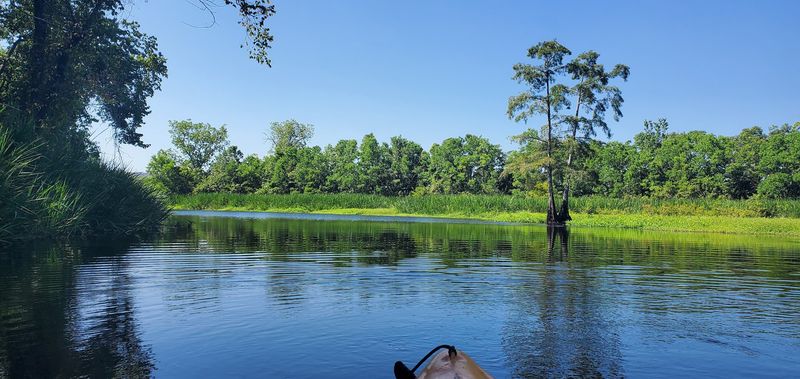
Some trees do not just grow tall. They grow into monuments, and the bald cypress trees lining this waterway are exactly that kind of tree.
These remarkable giants have been standing for centuries, their broad trunks and flared bases showing just how long they have adapted to life beside the water. Their shapes twist upward in ways that seem almost sculpted rather than grown, especially when the surface is calm enough to reflect every curve.
Some of the largest cypresses along the wider bayou system are believed to be several hundred years old, though exact ages can be difficult to confirm without scientific testing. What paddlers can see clearly is their remarkable size and the way their roots spread into the shallows.
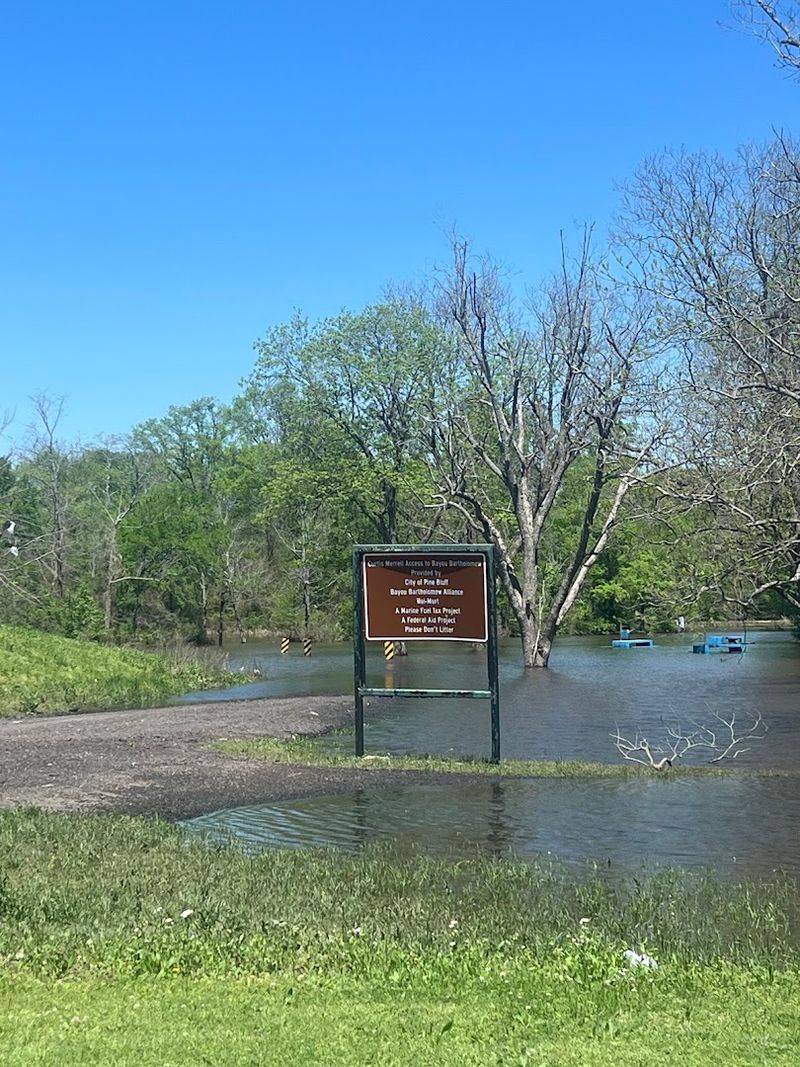
Standing water surrounds many of these trees at their base, giving visitors a close view of roots that look like they belong in a fantasy novel. You can experience this remarkable landscape at Bayou Bartholomew River Trail at 5401 S Olive St, Pine Bluff, AR 71603.
The Bayou Narrows Beneath A Leafy Canopy
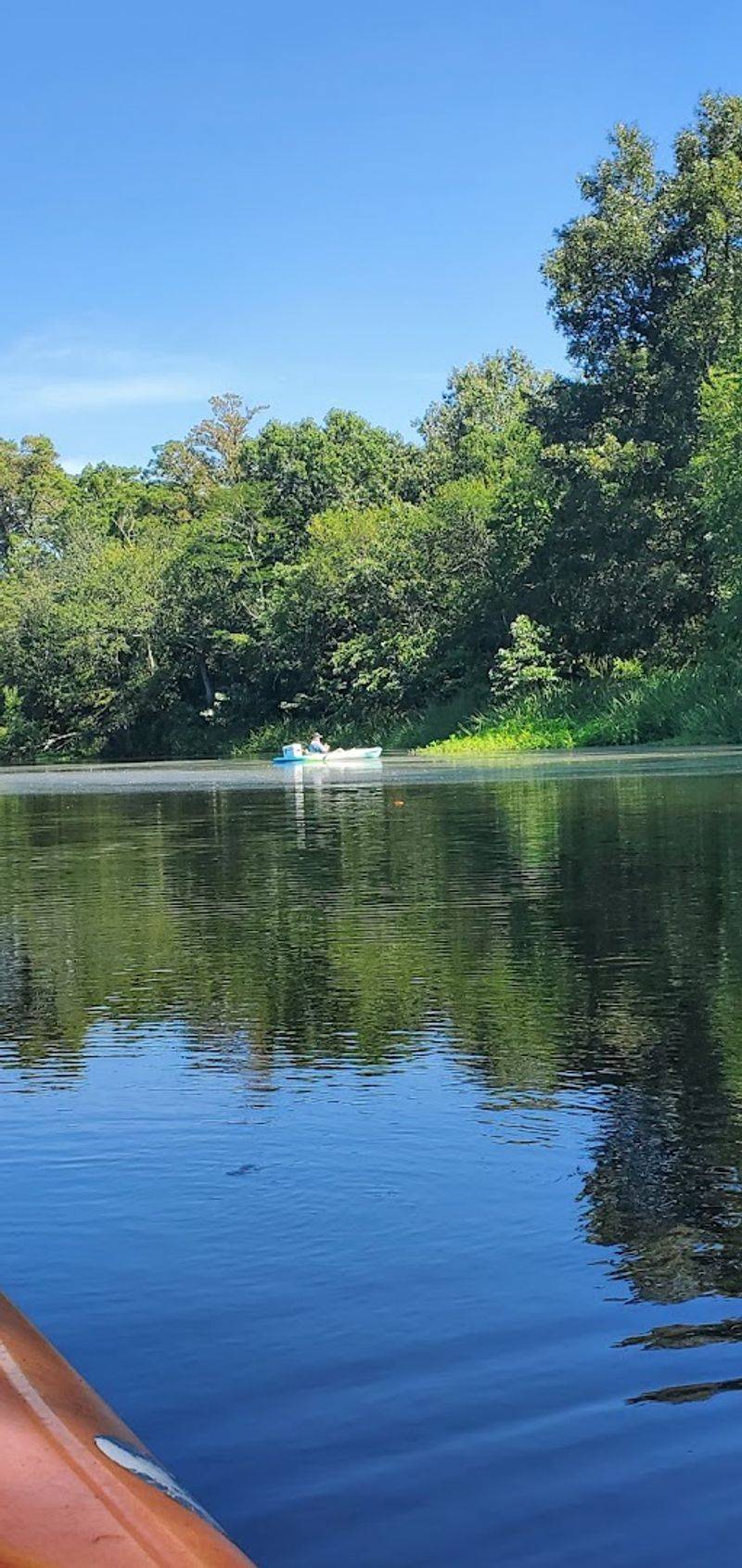
Not every stretch of this bayou feels wide open. Sections of the channel tighten into narrow corridors where branches reach across from both banks, nearly touching overhead.
Paddling through these passages feels like moving through a living tunnel, with light filtering down in shifting patterns through layers of cypress needles, privet branches, and younger trees crowding the edges. The air inside these canopied sections feels cooler and quieter, as if the outside world has agreed to wait.
Broader sections open up between these narrow passages, giving paddlers a chance to catch their breath and take in longer views across the water. That rhythm of tight and open, shadow and light, keeps the route from ever feeling monotonous.
The dense bankside vegetation also creates natural windbreaks, which can make the water calmer and easier to navigate on days when conditions elsewhere would be choppy.
Experienced paddlers and first-timers alike tend to slow down through these canopied corridors, not because the water demands it, but because the scenery absolutely does.
Mirrorlike Water Doubles Every View
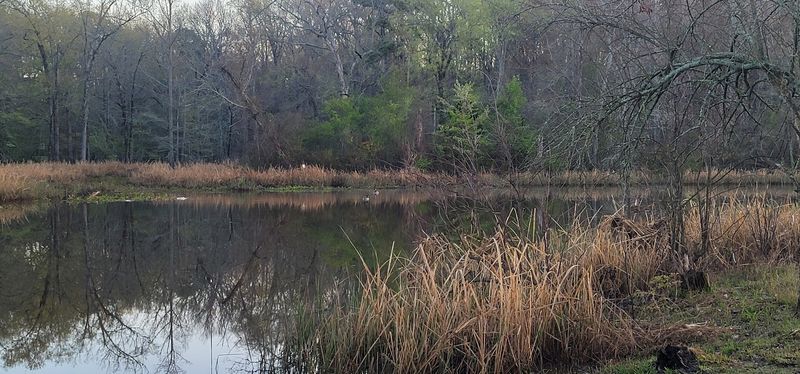
There is a particular kind of stillness that settles over a bayou on a calm morning, and Bayou Bartholomew delivers it in full measure.
The water here carries a deep, tea-colored tint from tannins released by decaying leaves and plant matter on the bayou floor. That dark surface acts like a mirror, throwing back near-perfect reflections of every overhanging branch, every leaning cypress, and every patch of sky visible between the treetops.
Photographers tend to go a little quiet when they first encounter this effect, because the reflections can make it genuinely difficult to tell where the real tree ends and its twin begins. The result is a scene that looks layered and almost dreamlike, with the real world stacked on top of its own copy.
Water levels affect how sharp these reflections appear, so early morning visits on calm days tend to offer the most striking results.
Even on days when a light breeze breaks the surface into gentle ripples, the reflections fragment into something equally beautiful, trading precision for a soft, painterly quality that feels like it belongs in a gallery.
Ancient Trees Turn The Route Into A Natural Cathedral
The mature trees overhead can make a familiar waterway feel completely different. On Bayou Bartholomew, that feeling arrives quickly and stays with you long after you leave the water.
The massive cypresses rise from the bayou in shapes that defy easy description. Some trunks spiral slightly.
Others lean at dramatic angles. A few split into multiple towers near the base, creating frames within frames as you drift through.
Together, these forms create something that feels architectural, a kind of open-air cathedral where the columns are living wood and the ceiling is woven from branches and sky. The atmosphere inside this natural structure carries a weight and a quiet that encourages slow paddling and careful observation.
These trees have witnessed generations of Arkansas history, while the bayou itself began developing in an abandoned Arkansas River channel roughly 1,800 to 2,200 years ago. Sitting in a kayak at the base of one of these giants puts human timescales into sharp perspective.
Every stroke of the paddle through that old water feels like turning a page in a very long, very patient story that continues even today.
Wild Shorelines Keep The Journey Feeling Remote
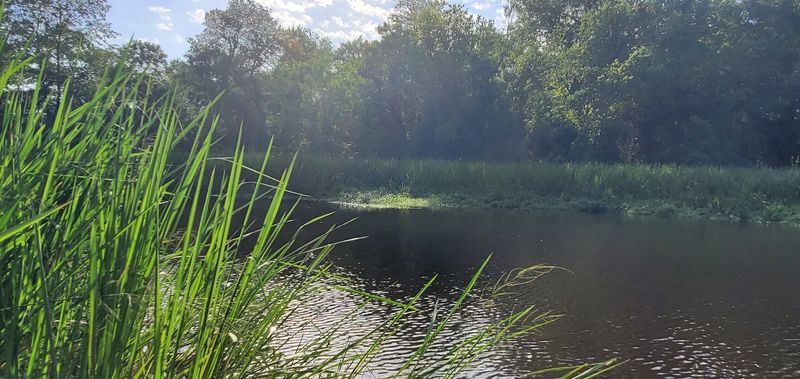
Once you push away from the launch point and round the first bend, the signs of modern life tend to disappear remarkably fast on this bayou.
The banks rise into thick bottomland hardwood forest, with vegetation growing dense enough to block any view beyond the immediate treeline. Roads rarely run close to the water along many stretches, which means the only sounds reaching you are the ones the bayou makes on its own: bird calls, water moving around roots, and the occasional splash from something deciding the bank suits it better than the surface.
That sense of remoteness is real rather than manufactured. Visitors have noted that trails are not marked along the route, which means paddlers benefit from some prior experience and a good sense of direction before venturing far from the access point.
Carrying trail-marking tape is a practical tip that experienced paddlers recommend for anyone exploring the less familiar bends. The wild shorelines reward the prepared visitor with a feeling of genuine solitude that is increasingly rare and increasingly valuable.
Few places within reach of a city can make you feel this far from everything, this quickly.
Each Bend Opens Into Another Striking Scene
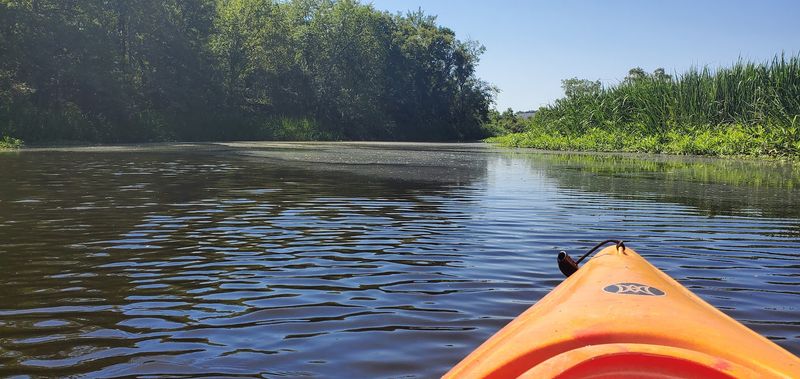
Bayou Bartholomew does not travel in a straight line. It moves in what has been described as a bewildering pathway of angular bends, and that unpredictability is one of its best features.
Every curve in the channel hides the next stretch of water until you are right on top of it, which means the route delivers a steady stream of small reveals. Around one bend you might find a cathedral-like stand of mature cypress.
Around the next, the channel might open into a broader pool fringed with bottomland hardwoods draped in vines.
This constant variation keeps paddlers alert and engaged in a way that a straight, predictable waterway simply cannot. The mix of cypress-lined passages and hardwood forest sections means the landscape changes character repeatedly over the course of a single outing.
Wildlife sightings may occur near these bends as well, since the curves create pockets along the banks where fish, turtles, and birds can gather. Snapping turtles and several snake species are among the animals associated with the bayou ecosystem.
Each new bend is essentially a small promise that something worth seeing is waiting just around the corner.
The Water Trail Feels Almost Untouched
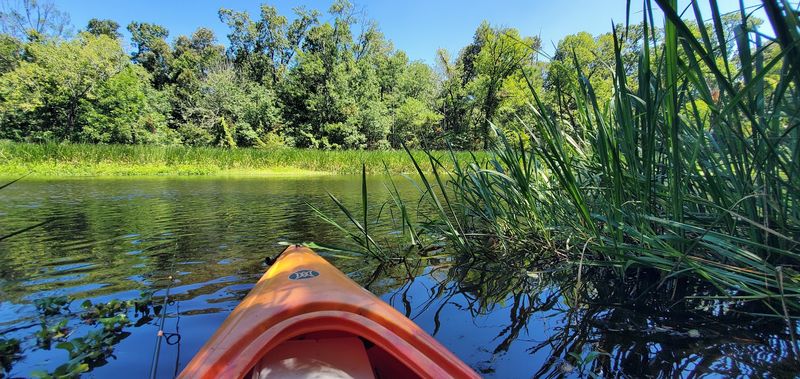
A waterway that stretches roughly 359 to 364 miles carries a certain kind of weight, and Bayou Bartholomew wears it lightly.
Recognized as the longest bayou in the world, this ancient channel was formed by the Arkansas River approximately 1,800 to 2,200 years ago. That origin story helps explain why the bayou feels so settled into its landscape, so unhurried and unrushed in the way it moves through the countryside.
The access point at Pine Bluff gives paddlers an entry into a waterway that has been shaping this region for millennia.
Despite its length and ecological importance, large stretches of the bayou retain a quality that feels genuinely undisturbed, with no development crowding the banks and no noise competing with the natural soundscape.
Water levels do fluctuate seasonally, and some visitors have noted that high water can limit what is possible on a given day. Checking conditions before heading out is always a smart move.
Still, even when the water runs high, the sheer presence of this ancient, record-holding bayou makes the drive to Bayou Bartholomew River Trail feel entirely worthwhile.
Paddling Here Feels Like Entering Another World
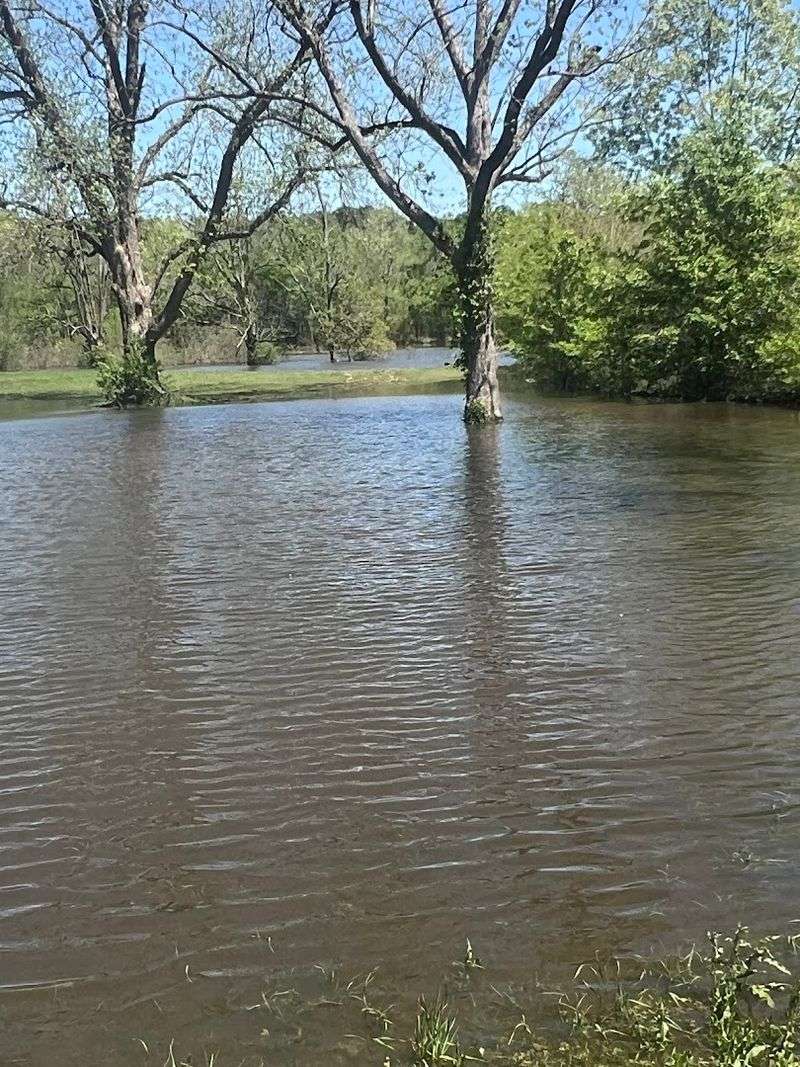
Some waterways manage to feel completely removed from everyday life, and Bayou Bartholomew can create that impression without any exaggeration needed.
The Pine Bluff access point places paddlers directly on the bayou, where dark water, mature trees, and twisting bends shape the experience. Conditions can vary by season, so the exact character of a trip depends on water levels and the section explored.
The ecological richness of this waterway adds another layer to that sense of entering a different world entirely. Bayou Bartholomew supports more than 100 aquatic species, earning recognition as the second most biologically diverse stream in North America.
That biodiversity means the water beneath your paddle is filled with life, from rare fish species to turtles navigating tangled root systems along the banks.
The combination of old trees, reflective water, biological abundance, and deep Arkansas quietude creates an experience that stays with paddlers long after their boats are back on dry land.
Even a short trip can leave the impression that the route continues far beyond the last bend you explored, with many more quiet stretches still quietly waiting farther downstream.