
You Can Ride A Self-Guided Raft Over Michigan’s Clearest Spring This July
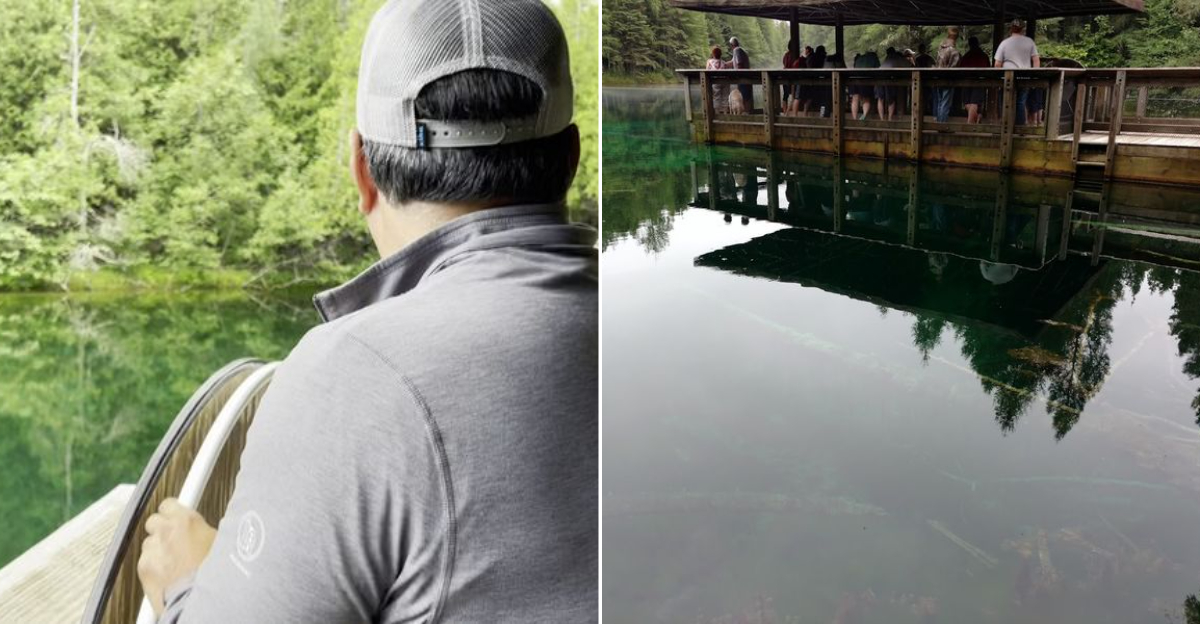
The raft sits waiting at the edge of a spring so clear the bottom, dozens of feet below, looks close enough to touch.
You pull yourself across using a hand-crank wheel, the cable overhead guiding you slowly over water so transparent that fish, fallen logs, and underwater ledges pass beneath you like scenes in a documentary.
Michigan’s largest natural freshwater spring, stretches across hundreds of feet with water that stays cold no matter what month you visit. Ancient legend says the spring earned its name from a chieftain who perished in its icy depths.
The state park surrounding it preserves the shoreline in a condition close to what early visitors would have found, with swimming and fishing prohibited to keep the water pristine.
Drifting over water so transparent the world below feels close enough to reach down and touch, a self-guided raft ride across Michigan’s clearest spring turns a casual visit into something unforgettable.
Stand By The Viewing Well First
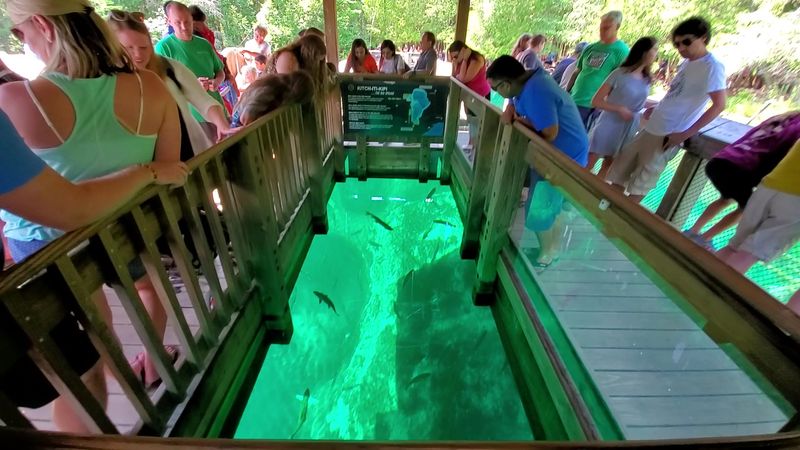
The smartest move on the raft is also the simplest: claim a spot by the central viewing well as soon as you board. That open section in the middle frames the spring’s real theater, where trout glide past lime-encrusted branches and the sandy bottom seems to breathe.
From the edges, the water is lovely. From the center, it becomes almost hypnotic.
The raft is human-powered, guided by a cable and moved by turning a large wheel. Because the crossing can take 20 to 30 minutes, your angle matters.
If you start at the viewing well, you can settle in before conversations rise, phones appear, and everyone realizes that the deepest, clearest look is directly beneath their feet.
Location
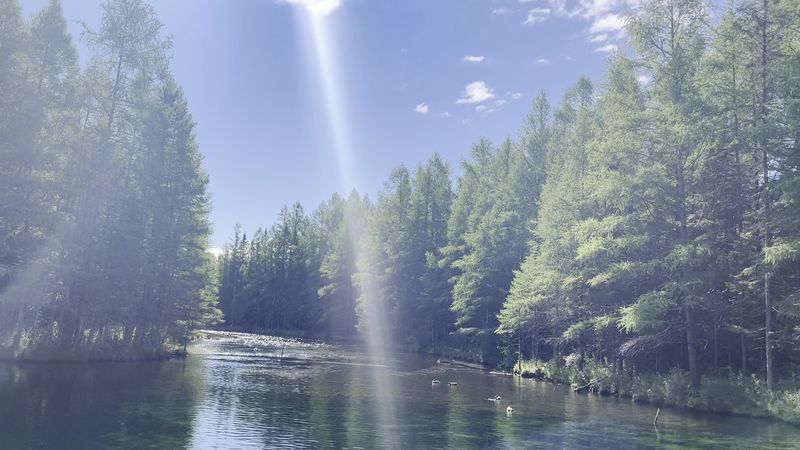
Kitch-iti-kipi is inside Palms Book State Park at 1380 Sawmill Road in Manistique, Michigan, about 12 miles west of town. From US-2, turn north onto M-149 and follow the state park signs toward the northern end of Indian Lake.
The final approach leaves the highway for a quieter run through the woods, with signs directing drivers from M-149 onto Sawmill Road. Continue until the road reaches the Palms Book State Park entrance and visitor area.
Park in the designated lot, then follow the short paved path from the parking area to the spring and observation-raft dock. A Michigan Recreation Passport is required for vehicle entry into the state park.
Let The Water Explain The Place
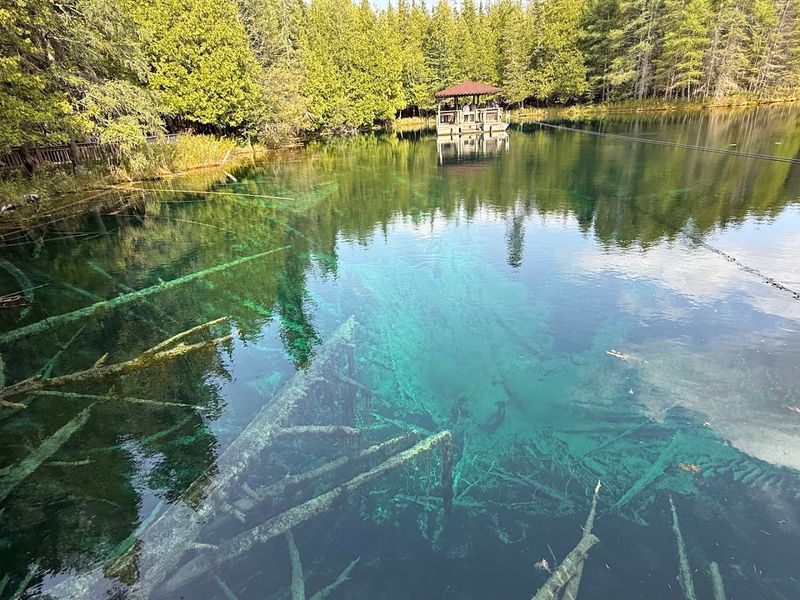
The color at Kitch-iti-kipi is not a trick of editing or a lucky patch of sun. The emerald and turquoise tones come from extraordinarily clear water, dissolved limestone, and a bright sandy bottom that reflects light upward.
Once you know that, the whole spring starts to read like geology made visible rather than scenery posing for attention.
Look down long enough and you will notice pale clouds of sand moving on the bottom. Those shifting patterns are stirred by water rising from underground fissures at a remarkable rate, more than 10,000 gallons per minute.
That constant flow is why the spring stays so clear, and why the stillness at the surface feels slightly mysterious rather than truly still.
Do Not Rush The Wheel
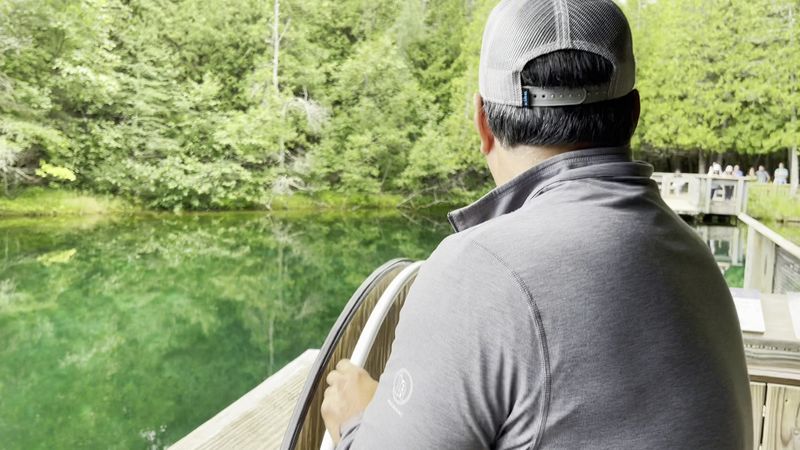
One of the most charming details here is that the raft moves only because visitors turn the wheel. The mechanism is simple, cable-guided, and pleasantly old-fashioned, which means the crossing feels cooperative rather than programmed.
There is no motor noise, no guide script, and no pressure to perform excitement on schedule. If you are eager to help, settle into a steady rhythm instead of trying to power through it. The spring rewards slowness.
A measured pace gives everyone more time at the center, where the bottom appears 40 feet below and the sand ripples upward like breath. The wheel is not the attraction, really. It is the quiet excuse that keeps the attraction wonderfully human-scaled.
Read The History Before Boarding
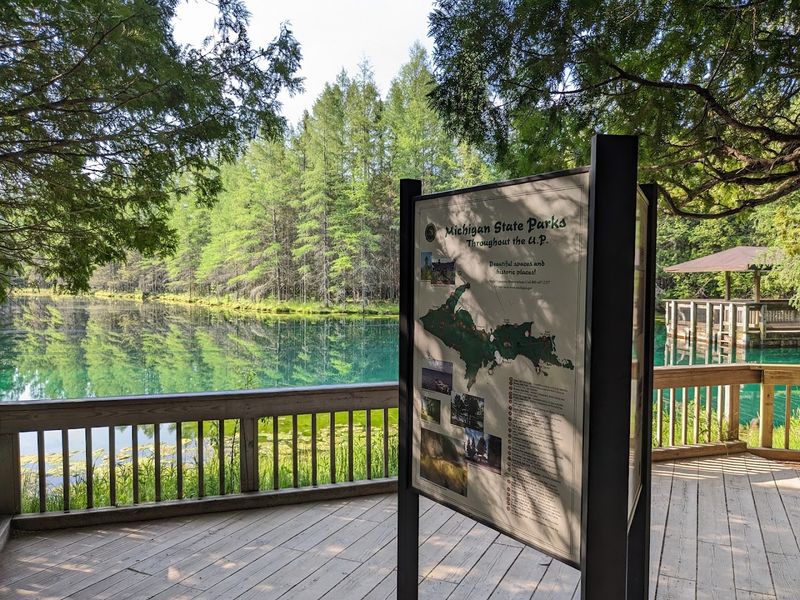
The spring is stunning on first glance, but it becomes more interesting once you understand how narrowly it became public.
In 1926, Manistique shopkeeper John Bellaire convinced the Palms and Book families to sell about 90 acres to the State of Michigan for $10, with the condition that it remain a public park. That small transaction shaped the experience you have today.
The Civilian Conservation Corps later helped develop early facilities here during the 1930s, including the visitor infrastructure around the spring. I like reading the posted information before boarding because it changes the mood of the raft ride.
You are not just looking at a natural wonder. You are also stepping into a carefully preserved public promise.
Notice How Cold Shapes Everything
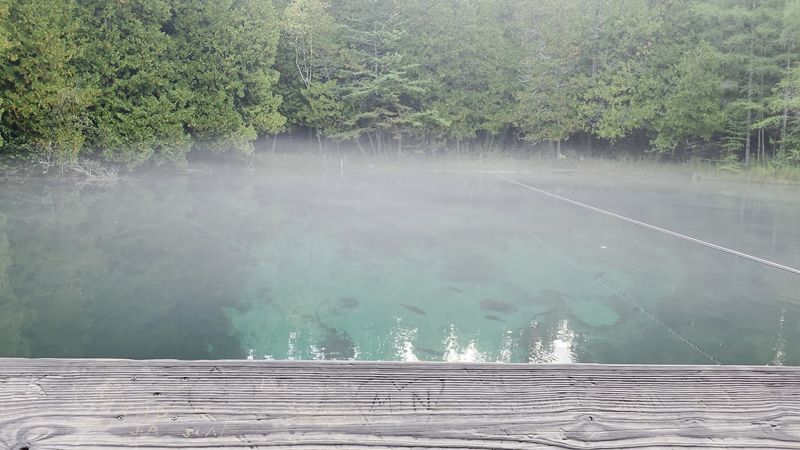
At 45 degrees year-round, the water at Kitch-iti-kipi quietly governs the entire experience. It helps preserve the spring’s clarity, keeps swimming off the table, and gives the place an oddly composed personality even in high summer.
July heat may press into the trees, but the spring itself remains physically unpersuaded, cool and exact.
That temperature contrast is part of what makes the first view feel so sharp. The surface can look gentle, yet the cold depth below seems almost untouchable.
It is worth remembering that this is not a beach stop. You come here to observe, not to enter. Once that expectation clicks into place, the spring feels less like a missed swim and more like a rare natural instrument.
Treat It Like A Protected Place
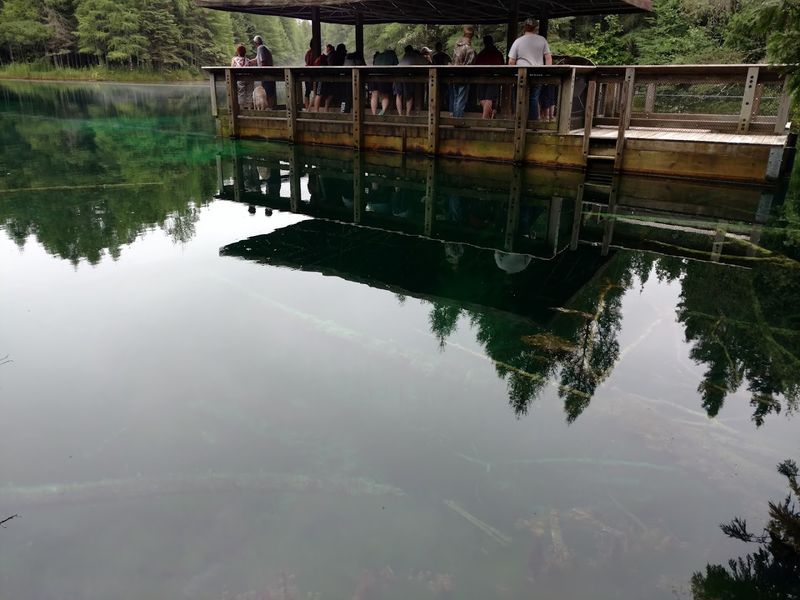
Kitch-iti-kipi stays beautiful because the rules are clear and, thankfully, quite sensible. Swimming, fishing, and placing objects in the spring are prohibited, and drones are not allowed over the water.
Those limits do not make the visit feel restrictive. They keep the experience from turning into a contest between spectacle and stewardship.
The spring has long been known to the Ojibwa as a place of wonder, often translated as Mirror of Heaven. Whatever name you prefer, it helps to approach it with that level of respect.
Keep voices low on the raft, give others room at the viewing opening, and resist the urge to manufacture the perfect moment. The place is already doing enough on its own.
Use The Path As Part Of The Visit
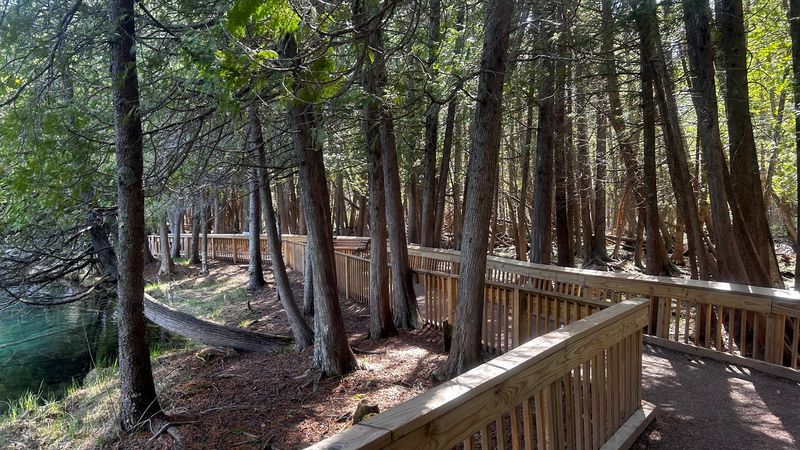
The walk to the dock is short, paved, and easy to underestimate. Because the path is ADA-accessible and stroller-friendly, the approach feels inclusive without flattening the sense of arrival.
Trees close in, the air cools slightly, and then the spring appears with almost comic suddenness, brighter than the surrounding woods seem prepared to explain.
I would not rush this part, especially if you have arrived after a long drive across the Upper Peninsula. Let the path slow your breathing before the main attraction begins.
It also makes logistics simpler for mixed groups, since the route is manageable and direct. By the time you reach the raft, the visit already feels coherent rather than hectic, which suits this place perfectly.
Plan For A Short Stop That Lingers
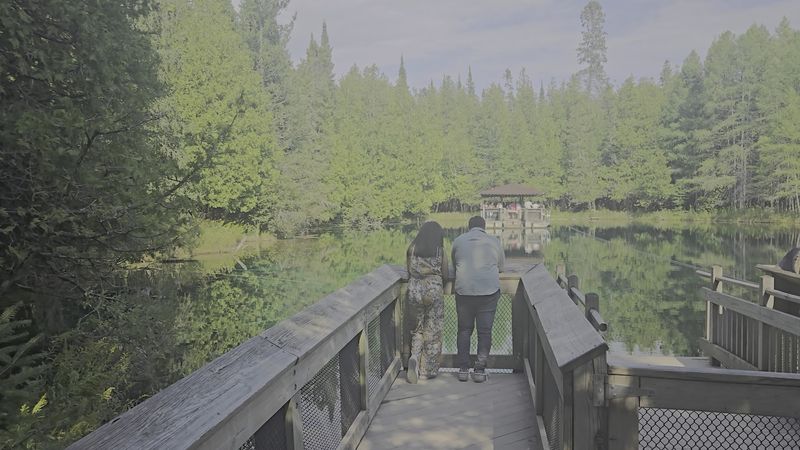
Kitch-iti-kipi is not an all-day destination, and that is part of its discipline. Most visits last around an hour, maybe a little more if you browse the seasonal store, pause at the signs, or wait for another raft crossing.
The spring asks for attention, not conquest, which makes it ideal for a July road-trip stop that does not drain your whole day.
That said, brevity should not be confused with insignificance. Some places expand in memory after you leave, and this is one of them.
Build in enough time to ride once without watching the clock. If the dock is busy, use the wait to look closely at the tree line, the water color, and the startling quiet created by a crowd focused downward.
Bring Pets And Patience
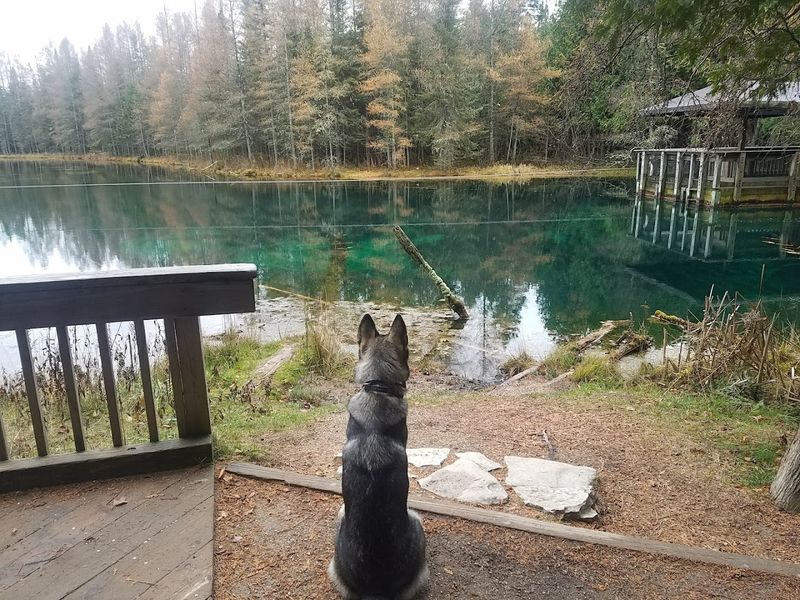
One practical detail that makes this stop easier for many travelers is that leashed pets are welcome on the path and on the raft. That policy suits the park’s relaxed character, though July crowds mean patience matters.
A dog that can handle short waits and close quarters will fit in far better than one expecting room to roam.
If you are traveling with children, older relatives, or a pet, the manageable layout is genuinely helpful. Parking, path, dock, and raft all connect without much fuss.
I appreciated how little logistical drama the place created, because it left more attention for the spring itself. At Kitch-iti-kipi, ease is not laziness. It is part of why the visit feels unusually calm and generous.
Look For What Stays Still And What Does Not
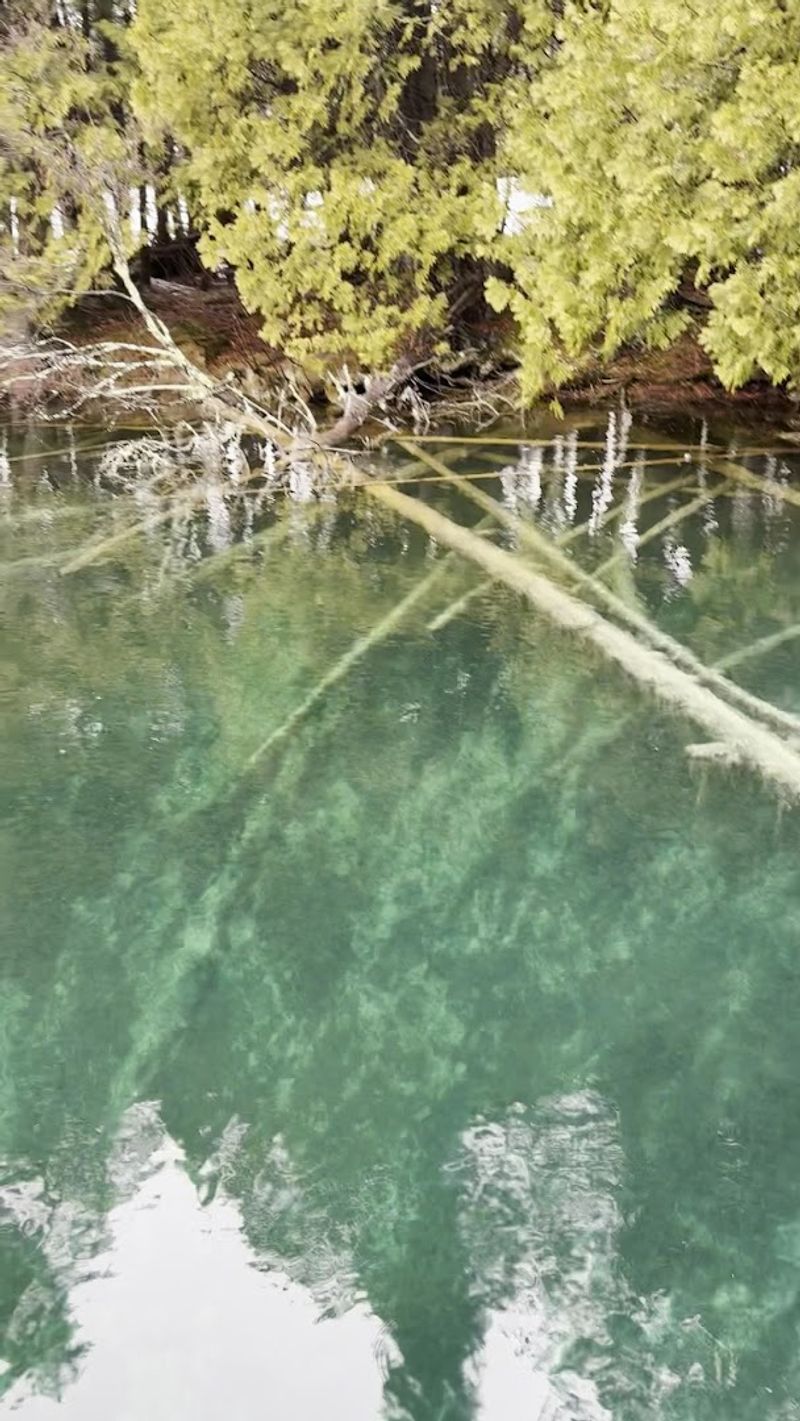
The most memorable moments here come from contrasts. Trout can seem almost motionless in the clear water while the sand below them shifts constantly, lifted by the spring’s underground force.
Old tree trunks rest where they have rested for years, yet the whole bottom appears animated by invisible pressure rising through limestone fissures.
That combination of stillness and movement is what kept me looking longer than expected. It also explains why photographs only get you partway there.
What matters is not just the color, though the color is remarkable. It is the sensation of watching a place that appears calm while actively remaking itself every second. Few stops in Michigan offer that kind of quiet drama so clearly, or so accessibly.