
You Can Walk Through A Tunnel While Sharks Swim Over Your Head
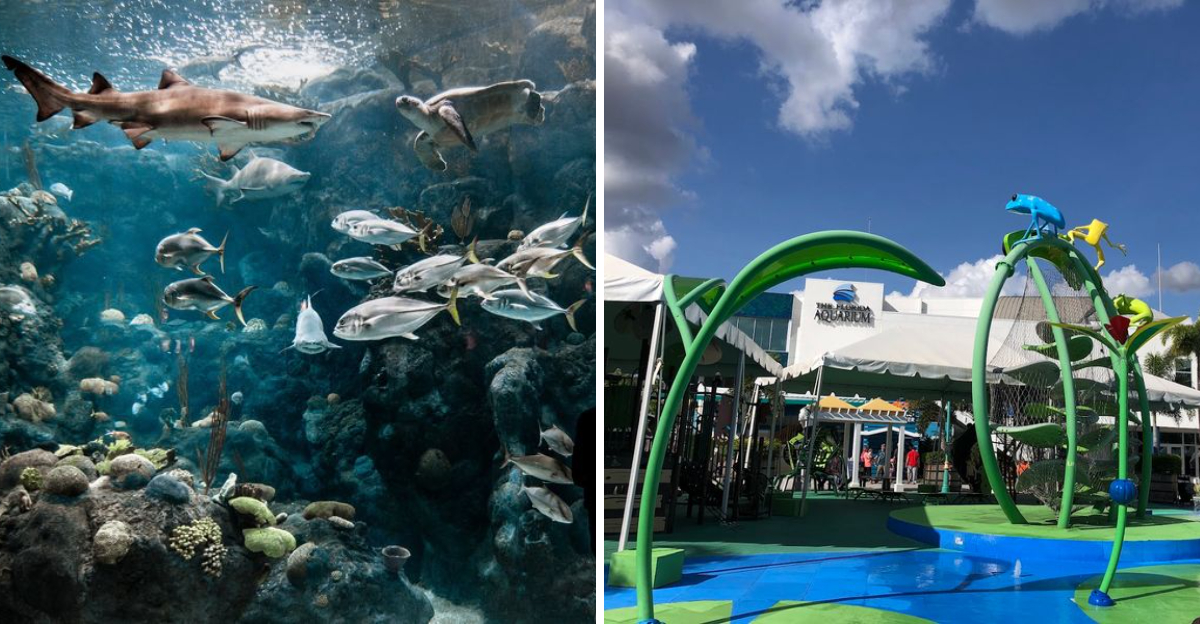
The closest most people will ever come to a shark is from behind a sheet of glass.
This Florida attraction invites you to walk beneath one instead.
That changes everything.
There is a world of difference between looking into an aquarium and feeling surrounded by the ocean itself. Above you, sharks glide effortlessly through the water.
Rays drift overhead with graceful, wing-like movements. Massive fish appear from the blue without warning, making you stop in your tracks for just a second longer.
That is the moment people remember.
Florida is home to countless family attractions, but very few make visitors feel as though they have stepped inside the underwater world instead of simply observing it. The experience is immersive, surprisingly peaceful, and exciting enough to leave both children and adults staring upward in amazement.
The contrast is unforgettable.
Outside, Tampa buzzes with traffic, skyscrapers, and city life.
Inside, time slows to the rhythm of the sea.
Some Florida attractions ask you to look at nature.
This one lets nature surround you. By the time you leave the tunnel, you are no longer thinking about sharks, rays, or colorful reef fish individually.
You are thinking about what it felt like to stand in the middle of their world, even if only for a few unforgettable minutes.
The Tunnel Puts You Inside The Ocean
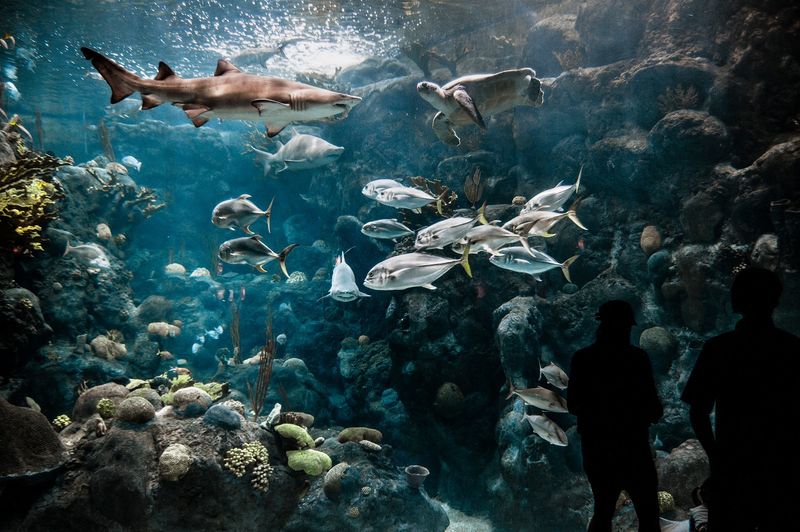
Walking through an acrylic tunnel while marine life circles overhead flips the usual aquarium script completely. Instead of pressing your nose against glass, you step into their world, surrounded on three sides by 500,000 gallons of saltwater that holds everything from sharks to schools of jacks.
The curved ceiling sits just a few feet above your head, close enough that you can count the gill slits on a passing shark or watch a cownose ray’s mouth work as it cruises past. Sunlight filters down through the water in those wavy columns you only see underwater, and the whole tunnel glows blue-green in a way that makes you forget you’re still breathing regular air.
I’ve walked through it a dozen times, and it never gets old watching a shark swim directly over me, its white belly and dark back creating that perfect predator camouflage. Kids plant themselves right in the middle and refuse to move, which I completely understand.
The tunnel runs about 43 feet, just long enough to feel like you’ve actually entered another dimension before stepping back into the regular world.
Sand Tiger Sharks Are The Main Attraction
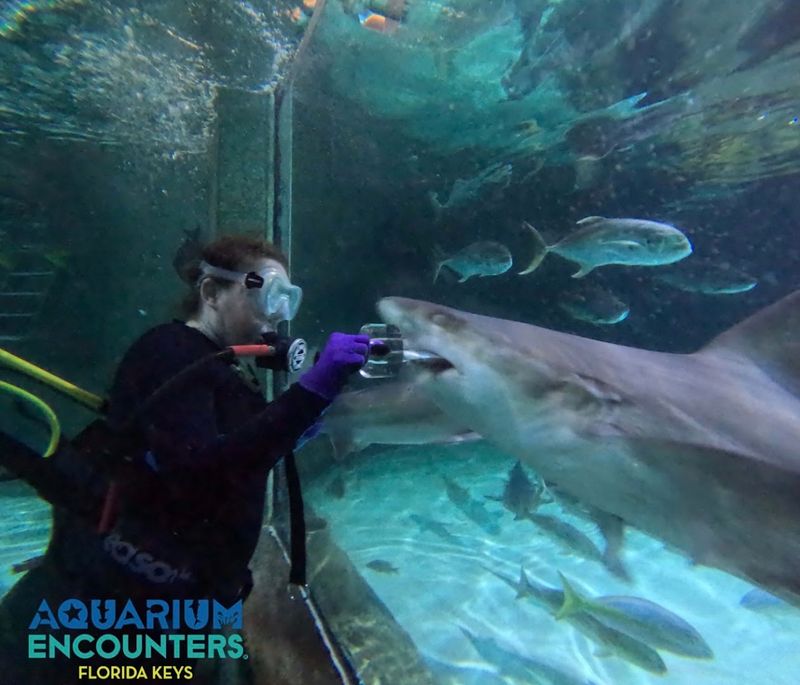
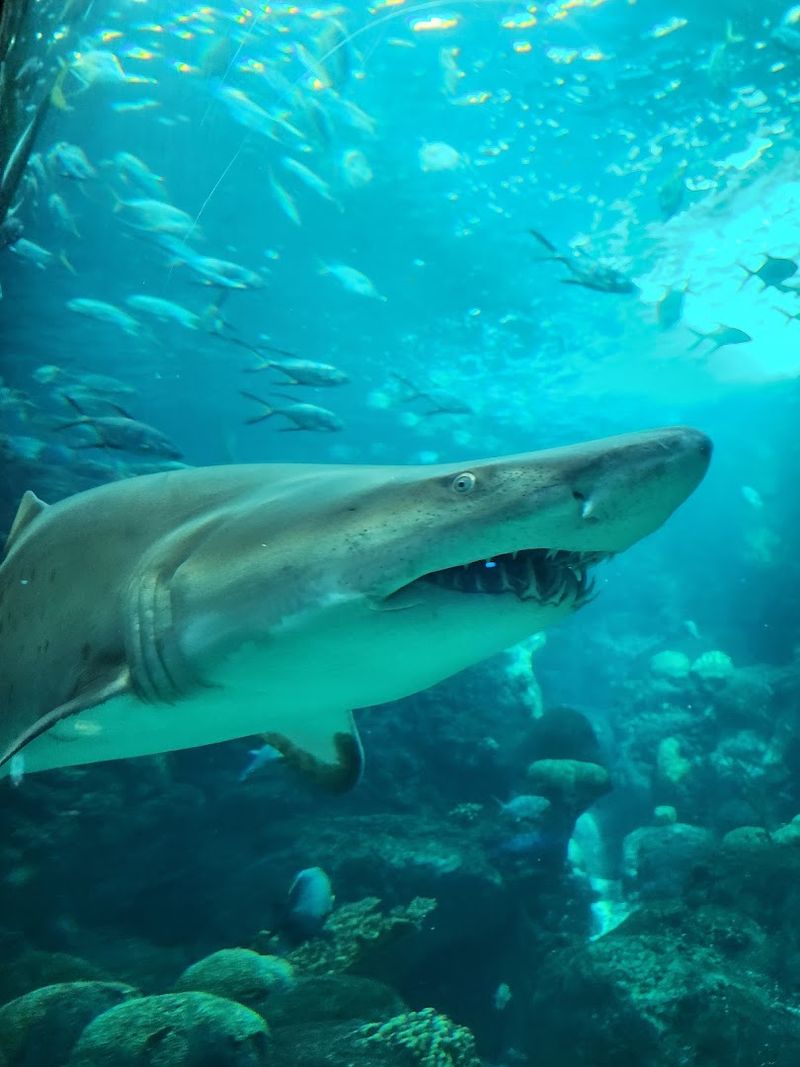
Sand tiger sharks look absolutely terrifying with their mouths full of needle-sharp teeth that stick out even when their jaws are closed, but they’re surprisingly mellow creatures. The Florida Aquarium keeps several of these beauties, and watching them patrol the big tank never stops being mesmerizing.
They cruise slowly, almost lazily, their bodies swaying in that classic shark S-curve that looks both graceful and vaguely menacing. Despite the horror-movie teeth, sand tigers are one of the calmer shark species, known for being docile around humans in aquarium settings.
What makes them extra cool is their ability to gulp air at the surface and hold it in their stomachs, which lets them hover motionless in the water without sinking. I’ve seen one float perfectly still in the tunnel area, suspended like it’s defying physics, while smaller fish dart around it without a care.
These sharks can grow up to ten feet long, and seeing one that size glide overhead really drives home how small humans are in the ocean food chain. Their prehistoric appearance makes every tunnel walk feel like time travel.
Stingrays Glide Like Underwater Birds
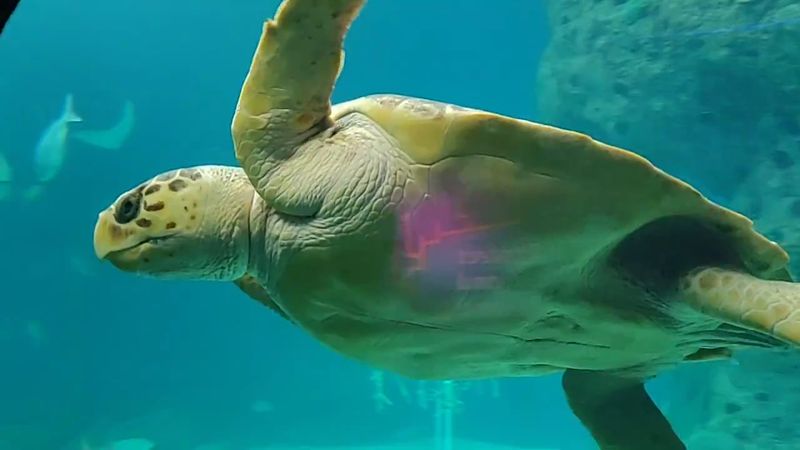
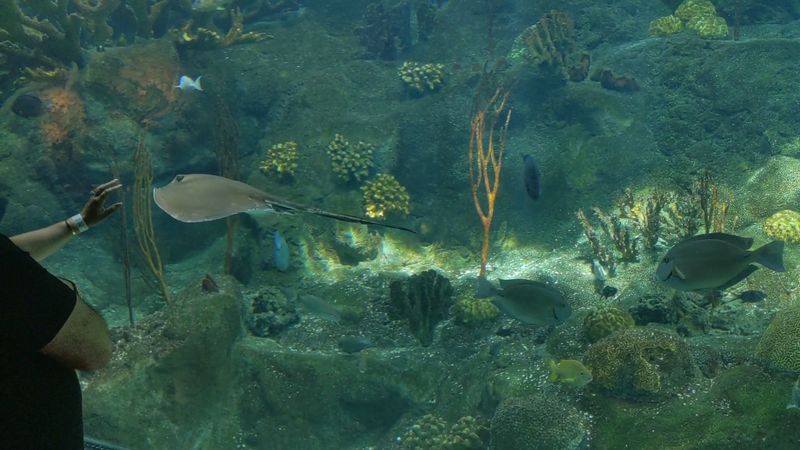
Watching stingrays move through water feels like watching birds soar through slow motion. Their wing-like pectoral fins ripple in waves, propelling them forward with this hypnotic grace that makes you want to follow them around the tank.
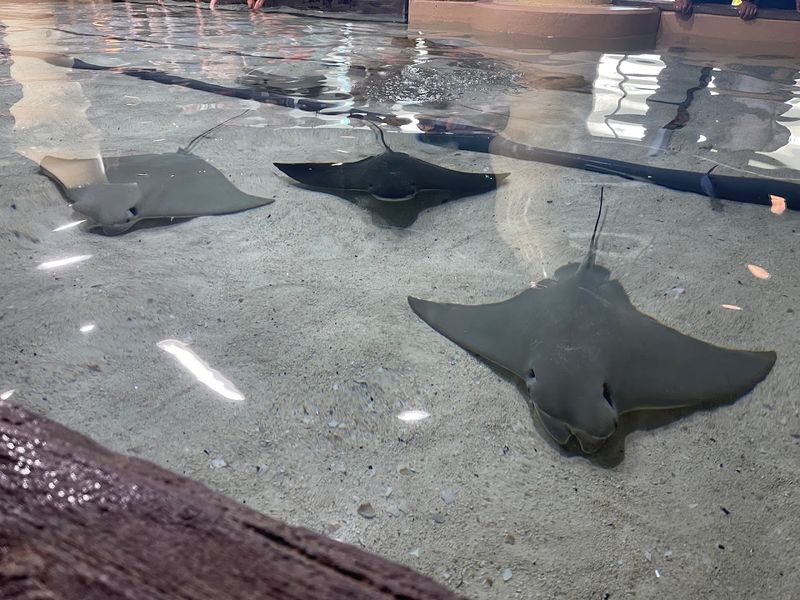
The Florida Aquarium houses several ray species, including cownose rays and southern stingrays, and they’ve got the tunnel route memorized. They’ll cruise right over your head, sometimes in small groups that look like a squadron of alien spacecraft.
From below, you can see their mouths and gill slits working, these weird little faces on the underside that always make me smile. Some rays have personalities too, one particular cownose seemed to enjoy doing loops right above the crowd, like it knew it was the star of the show.
The touch tank upstairs lets you actually feel their skin, which is smooth in one direction and rough like sandpaper in the other, but seeing them fly through the tunnel gives you the full effect of their movement. They bank and turn with barely any effort, making the whole swimming thing look easier than walking.
The Coral Reef Habitat Surrounds You
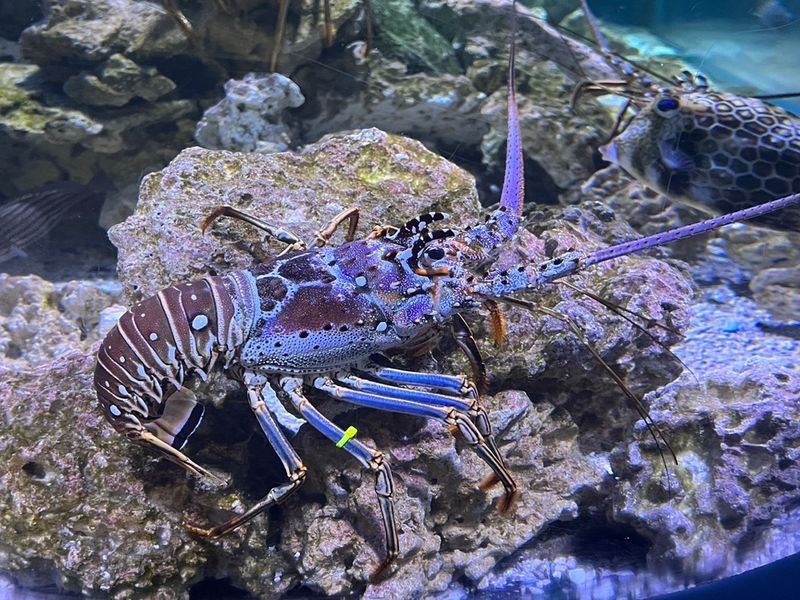
The tunnel doesn’t just showcase big predators; it drops you right into a recreated coral reef ecosystem that buzzes with color and constant motion. Hundreds of tropical fish dart between artificial coral formations that look remarkably real, creating this living kaleidoscope all around you.
Bright yellow tangs, electric blue chromis, and striped sergeant majors zip past in schools, while angelfish and butterflyfish cruise solo, showing off their painted patterns. The aquarium staff has designed the reef to mimic Florida’s natural underwater habitats, complete with sea fans and brain coral.
Standing in the tunnel, you can watch the whole ecosystem function, seeing how different species occupy different levels and zones. Parrotfish scrape algae off rocks with their beak-like mouths, wrasses pick at crevices hunting for food, and groupers lurk in shadows waiting for something interesting to swim by.
The lighting shifts throughout the day to match natural sun patterns, so the reef looks different depending on when you visit. I caught it once during feeding time, and the entire tank exploded into a feeding frenzy that looked like an underwater snowstorm of fish.
Goliath Grouper Are Living Volkswagens
Goliath grouper earn their name honestly, growing to sizes that make you question whether you’re looking at a fish or a small submarine. These absolute units can weigh over 400 pounds and measure six feet long, and seeing one drift past in the tunnel is genuinely jaw-dropping.
Their bodies are thick and powerful, covered in mottled brown and gray that helps them blend into rocky reef environments. When a goliath grouper swims overhead, it blocks out a significant chunk of light, casting this moving shadow that announces its presence before you even look up.
Despite their intimidating size, they move with surprising gentleness, their fins working in slow, deliberate strokes. I watched one hover near the tunnel ceiling once, its huge mouth opening and closing in that rhythmic breathing pattern, and it looked like it was contemplating the meaning of fish life.
These fish are actually protected in Florida waters due to overfishing in the past, making aquarium specimens some of the few chances most people get to see them up close. Their eyes are remarkably expressive, following visitors through the glass with what almost seems like curiosity.
The Acrylic Tunnel Is Engineering Magic
The tunnel itself represents some seriously impressive engineering that most visitors never think about while they’re busy watching sharks. Those curved acrylic panels are several inches thick, designed to hold back hundreds of thousands of pounds of water pressure without flexing or leaking.
Acrylic is stronger than glass and doesn’t distort the view, which is why everything looks crystal clear instead of warped or greenish. The panels connect seamlessly, creating that smooth curve that makes you feel completely immersed instead of walking through a hallway with windows.
Engineers had to calculate precise angles and thicknesses to ensure the tunnel could handle not just the water weight but also the impact of large animals swimming into it, which apparently happens more than you’d think. The whole structure sits inside the larger tank, meaning it had to be assembled underwater or the tank built around it.
Temperature control is another hidden factor, the acrylic expands and contracts with heat changes, so the entire system includes expansion joints you can’t even see. I once asked a staff member about maintenance, and apparently, divers clean the outside while the inside gets regular scrubbing to prevent algae buildup that would cloud the view.
Multiple Species Coexist Without Chaos
One of the most fascinating aspects of the tunnel experience is watching how dozens of different species share the same space without turning it into an underwater battle royale. The aquarium staff carefully selects fish that can coexist, creating a balanced community that mirrors natural reef dynamics.
Sharks and groupers that could easily eat smaller fish seem to have zero interest in hunting their tankmates, partly because they’re well-fed and partly because they’ve grown up together. The little fish don’t scatter in panic when a shark passes, they just adjust their position slightly and keep doing their thing.
This peaceful coexistence happens because the tank is large enough that fish can establish territories and escape routes, plus the regular feeding schedule means nobody’s desperately hungry. I’ve watched a shark cruise right through a school of jacks, and the jacks barely moved, just let the predator pass through like it was a bus going by.
Cleaner fish even service the bigger animals, picking parasites and skin off sharks and rays in a mutually beneficial arrangement that happens in wild reefs too. The whole system works like a tiny ocean compressed into one spectacular tank.
Lighting Creates Underwater Atmosphere
The lighting system at The Florida Aquarium does way more than just let you see the fish, it creates that authentic underwater atmosphere that makes the tunnel feel like an actual ocean dive. Blue-tinted lights mimic the way sunlight filters through seawater, giving everything that dreamy aquatic glow.
Brighter lights positioned above the tank simulate sun penetration, creating those dancing light patterns on the tunnel floor that happen when surface waves refract sunlight. The effect is so convincing that your brain starts believing you’re actually underwater, even though you’re perfectly dry.
Different zones of the aquarium use different lighting temperatures and intensities to match the natural habitats they’re representing, from bright shallow reefs to dimmer deep-water areas. The tunnel area gets medium lighting that lets you see details without washing out colors or creating harsh glare on the acrylic.
During my evening visits, the lights gradually dim to simulate sunset, and the whole tunnel takes on this moody, mysterious quality that makes the sharks look even more dramatic. Some exhibits even use special lights that make fluorescent corals glow in ways you’d only see with diving equipment in the wild.
Photography Through Acrylic Takes Skill
Trying to photograph the tunnel experience presents some interesting challenges that separate the casual phone snappers from the people who actually know what they’re doing. The curved acrylic, variable lighting, and constantly moving subjects create a perfect storm of photographic difficulty.
Reflections are the biggest enemy, your own image and the images of other visitors bounce off the acrylic unless you press your lens right against it or use a rubber hood. The blue lighting that looks magical to your eyes often tricks camera sensors into weird color shifts that require post-processing to fix.
Fast-moving fish need quick shutter speeds, but the relatively dim lighting wants you to slow down, creating this technical tug-of-war that results in a lot of blurry shots. I’ve watched photographers crouch in corners, waiting for that perfect moment when a shark passes overhead with good lighting and no other visitors in the frame.
The best shots come from patience and understanding how your camera handles underwater-blue color temperatures. Some people bring polarizing filters to cut reflections, while others just embrace the challenge and shoot hundreds of frames hoping a few turn out perfect.
The results, when you nail it, are absolutely worth the effort.
The Experience Works For All Ages
What makes the tunnel truly special is how it captivates everyone from toddlers to grandparents, creating shared wonder that crosses generational lines. Little kids press their faces to the acrylic and squeal when a ray glides over, while older visitors stand quietly, absorbing the peaceful rhythm of the underwater world.
The tunnel is wheelchair and stroller accessible, with a smooth floor and plenty of width for mobility devices, which I’ve seen make a huge difference for families with special needs. Scooters are available for visitors who have trouble walking, ensuring nobody misses out on the experience because of physical limitations.
Teenagers who act too cool for everything still stop and stare when a massive grouper drifts past, and I’ve watched elderly couples hold hands while watching the sharks, clearly enjoying a moment of simple beauty together. The tunnel doesn’t require any special knowledge or physical ability, you just walk through and let the ocean come to you.
Even people who’ve visited multiple times find something new each trip, whether it’s a fish behavior they hadn’t noticed before or just a different quality of light that makes the whole scene feel fresh. It’s one of those rare attractions that genuinely delivers for absolutely everyone.