
You Will Never Guess What These 10 Louisiana Food Phrases Mean
Ever stared at a New Orleans menu and felt like you’d accidentally enrolled in a French lesson? Welcome to Louisiana, where the food speaks its own delicious dialect.
Imagine a season of Top Chef set entirely in the bayou: every dish has a story, every phrase carries history, and every bite tastes like a love letter written in cast iron.
French, African, Spanish, and Native American influences swirl together over centuries of tradition, making both the food and the words used to describe it richly layered.
Walk into a diner, and you might hear someone order a po’ boy dressed, ask for debris on the side, or request a little lagniappe. And unless you’re local, you’ll probably smile and nod while secretly wondering what just happened.
These phrases are the keys to unlocking the full flavor of Louisiana. Prepare to let the Pelican State speak directly to your stomach.
1. Lagniappe
Some words just feel like a warm hug, and lagniappe is absolutely one of them. Pronounced “lan-yap,” this Louisiana French term means a little something extra, a small bonus given to a customer just because.
It is the baker tossing an extra cookie into your bag, the seafood shack adding one more shrimp to your order without being asked.
The word has roots in the Spanish phrase “la napa,” which was brought into Louisiana culture through trade and colonial history.
Mark Twain even wrote about lagniappe in Life on the Mississippi, describing it as a custom unique to New Orleans that charmed visitors from the moment they encountered it. That alone should tell you how deeply this tradition runs.
Today, lagniappe shows up everywhere from food festivals to neighborhood bakeries. A restaurant might offer a complimentary praline at the end of your meal, or a food truck might throw in extra hot sauce just because you were kind.
It is the spirit of generosity baked right into the culture.
Louisiana does not just feed you, it makes sure you leave with a little more than you expected. That is the magic of lagniappe, and once you know it, you will start noticing it everywhere.
2. Boudin
Walk into any gas station in Acadiana, and you will likely find something that sounds like it belongs at a fancy dinner party sitting right next to the beef jerky.
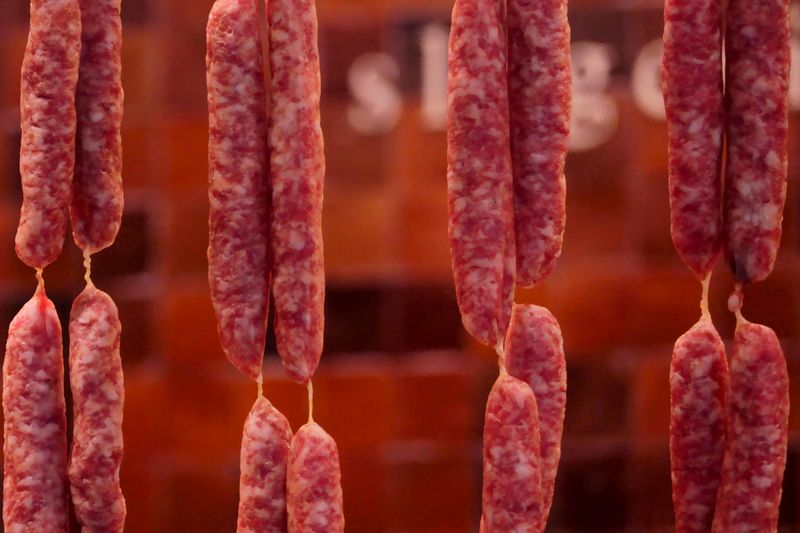
Boudin is a Louisiana sausage made with pork, rice, onions, and a blend of Cajun seasonings, all stuffed into a casing and either boiled or smoked to perfection. Yes, gas station boudin is a real thing, and yes, it is genuinely incredible.
The word boudin comes from French, and while France has its own versions of the sausage, Louisiana boudin is something entirely its own.
The rice filling sets it apart from most sausages you have ever tried. It is soft, savory, and deeply spiced in a way that makes you want to close your eyes with every bite.
Some versions are even stuffed into boudin balls, which are fried until crispy on the outside and creamy on the inside.
Boudin is so central to Louisiana identity that there are entire festivals dedicated to it.
The Boudin Festival in Scott, Louisiana draws thousands of fans who travel just to taste different versions of this beloved staple.
You eat boudin by squeezing the filling directly out of the casing into your mouth, which sounds chaotic but is completely acceptable here. Louisiana plays by its own delicious rules.
3. Andouille
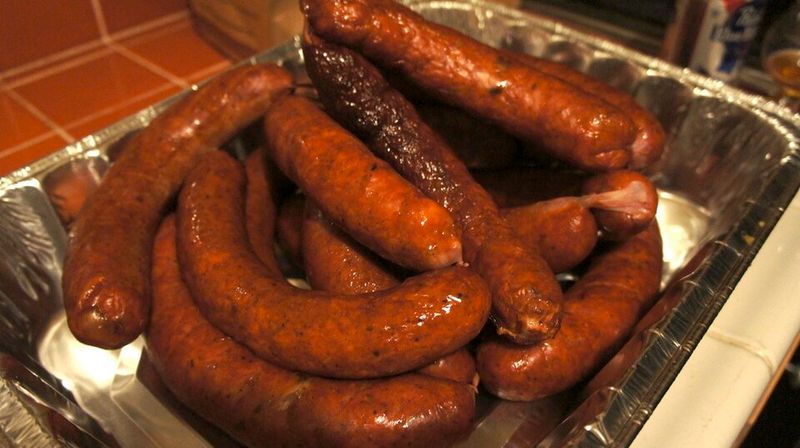
If gumbo is the soul of Louisiana cooking, then andouille is its backbone. This heavily smoked sausage is made from pork and seasoned with garlic, pepper, and Cajun spices before being smoked low and slow over pecan wood or sugarcane.
The result is a sausage so deeply flavored that even a few slices can transform an entire pot of food.
Andouille traces its roots to French and German immigrant communities that settled in Louisiana, particularly in the town of LaPlace, which proudly calls itself the Andouille Capital of the World.
The version made in Louisiana is far smokier and spicier than its French counterpart, shaped by generations of Cajun cooks who knew exactly what a dish needed to sing. It is not just a sausage.
It is a flavor bomb.
You will find andouille in gumbo, jambalaya, red beans and rice, and pasta dishes throughout the state. The smoke from the sausage infuses the entire dish with a rich, savory depth that is almost impossible to replicate with any other ingredient.
Chefs outside Louisiana have tried to substitute it with kielbasa or smoked turkey, but anyone from Louisiana will tell you that is simply not the same thing. Andouille is not just an ingredient.
It is a commitment to doing things right.
4. Etouffee
The word etouffee comes from the French verb “etouffer,” which means to smother or suffocate, and honestly, being smothered in this sauce sounds like a dream.
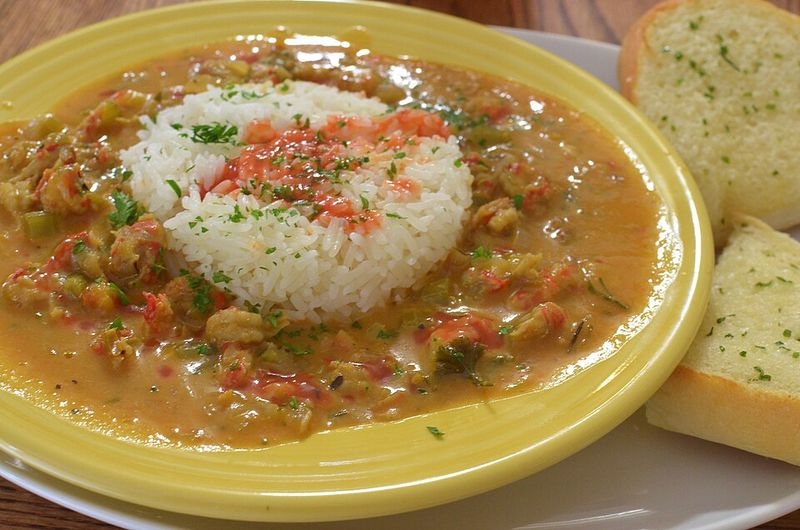
Crawfish etouffee is one of the most iconic dishes in Louisiana, built around plump crawfish tails cooked in a buttery, seasoned sauce made with the Holy Trinity of vegetables and served over a mound of fluffy white rice.
Etouffee became popular in the Breaux Bridge area of Louisiana in the early twentieth century before spreading across the state and eventually the country.
The dish is Cajun at its core, relying on simple, local ingredients elevated by technique and seasoning. The sauce is thick, glossy, and rich without being heavy, which is a skill in itself.
Getting that texture right is the mark of a confident Louisiana cook.
Shrimp etouffee is also widely beloved and follows the same basic method. The key to a great etouffee is patience, letting the vegetables soften slowly and the flavors develop before the seafood ever hits the pan.
Restaurants like Dooky Chase’s in New Orleans and Prejean’s in Lafayette have made versions of this dish that are essentially legendary.
Once you taste a properly made etouffee, you will understand why Louisiana food inspires the kind of devotion usually reserved for favorite sports teams.
5. Po’ Boy

There is a sandwich, and then there is a po’ boy. These are not the same thing, and Louisiana will be the first to tell you so.
A po’ boy is built on a specific style of French bread, light and airy on the inside with a crispy crust that shatters slightly when you bite into it.
That bread alone is the foundation of something special, and bakers in New Orleans have been perfecting it for over a century.
The origin story of the po’ boy is tied to a 1929 streetcar strike in New Orleans, when brothers Benny and Clovis Martin promised to feed striking workers for free. They reportedly said, “Here comes another poor boy,” every time a worker walked in, and the name stuck.
The sandwich was originally made with fried potatoes and gravy, though today the most popular versions are filled with fried shrimp, oysters, catfish, or roast beef.
Ordering a po’ boy “dressed” means you want it with lettuce, tomatoes, pickles, and mayonnaise. Skipping that instruction might get you a raised eyebrow from whoever is behind the counter.
Shops like Domilise’s and Parkway Bakery in New Orleans have been making these sandwiches for generations. A good po’ boy is messy, generous, and completely unforgettable, which pretty much describes Louisiana itself.
6. Muffuletta
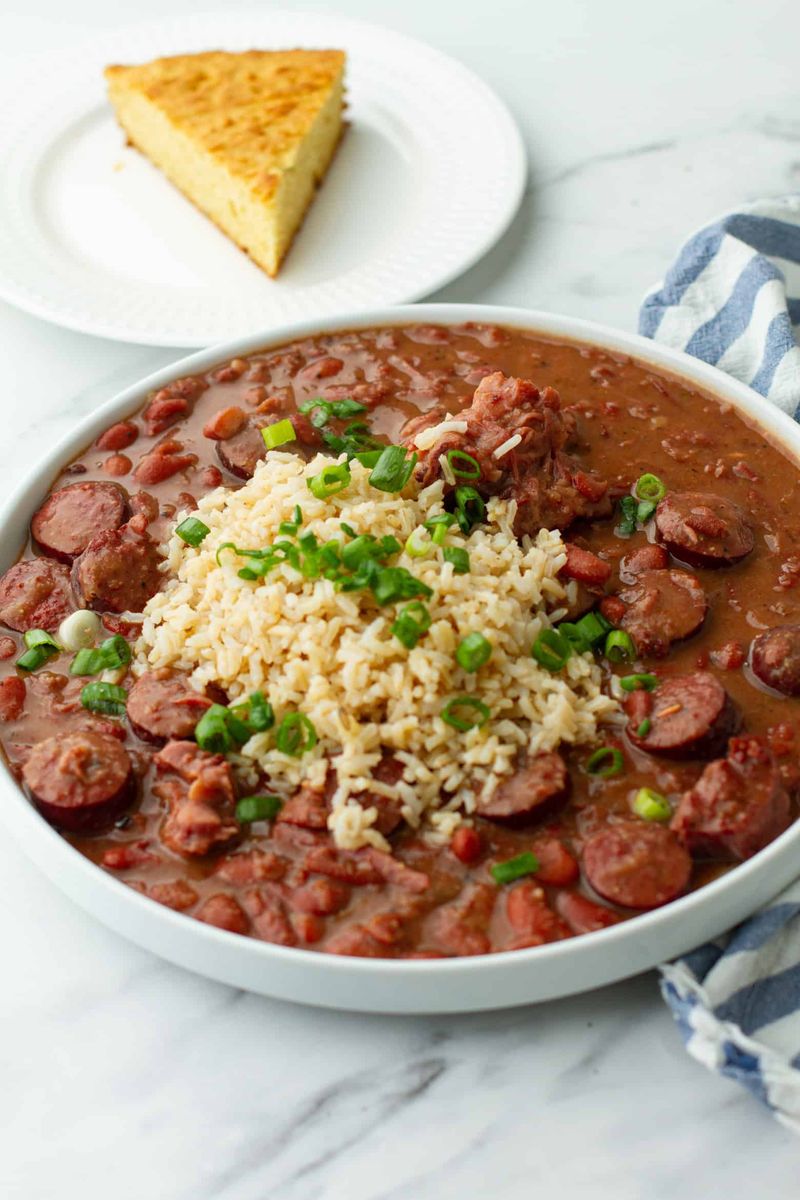
Round, towering, and stuffed with enough flavor to make your eyes widen, the muffuletta is not your average sandwich.
Born at Central Grocery on Decatur Street in New Orleans, this iconic creation is built on a large, round Sicilian sesame roll and layered with Italian cured meats, provolone cheese, and most importantly, a generous spread of marinated olive salad. That olive salad is the whole personality of this sandwich.
The muffuletta was created in 1906 by Salvatore Lupo, the Sicilian immigrant who founded Central Grocery. He noticed that workers were buying all the sandwich components separately and eating them awkwardly, so he combined everything into one magnificent round loaf.
The result became one of the most celebrated sandwiches in American food history. Central Grocery still makes them the same way today, and the line out front most mornings is proof that the recipe has not needed updating.
What makes the olive salad so essential is the brine and oil that soaks into the bread as the sandwich sits. Most people agree that a muffuletta is actually better after it has rested for a bit, giving all those flavors time to mingle and marry.
You can find variations across New Orleans at spots like Napoleon House, but the original from Central Grocery remains the gold standard. This sandwich is a full experience, not just a meal.
7. Debris
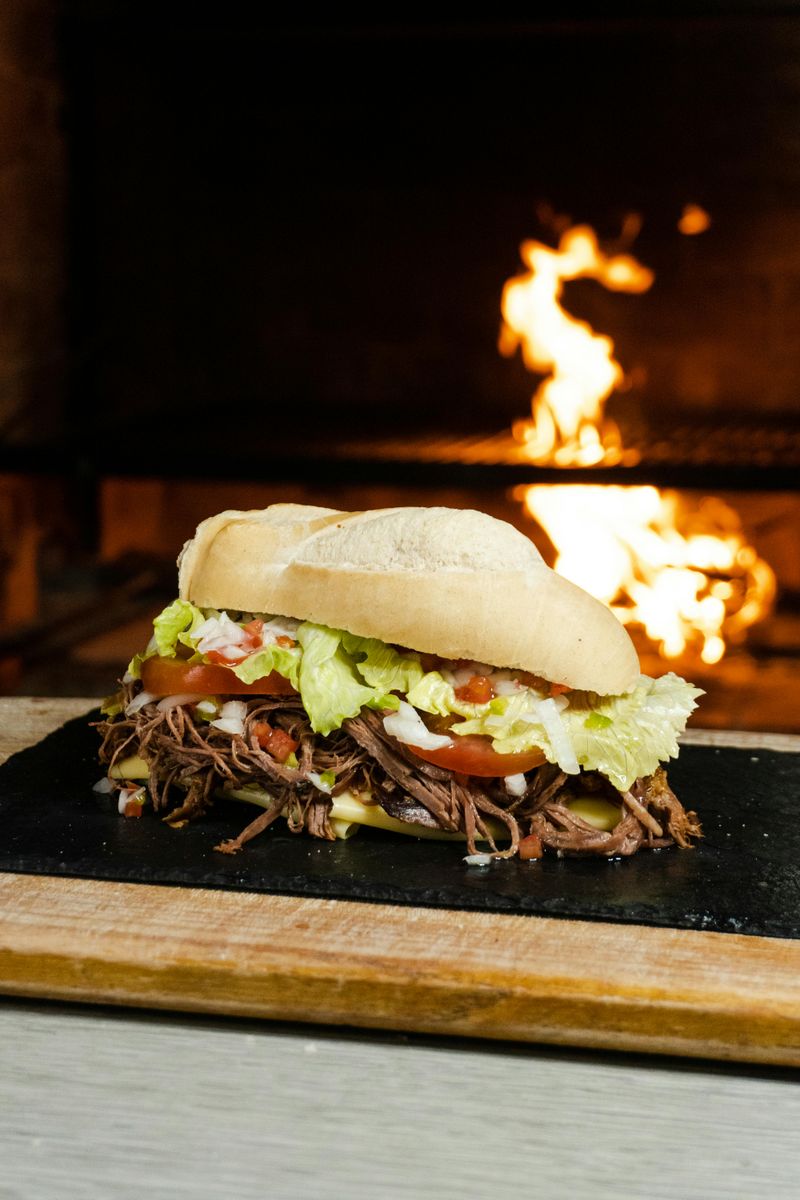
Debris sounds like something you would clean up after a storm, but in Louisiana, it is something you absolutely want on your sandwich. In the context of New Orleans cooking, debris refers to the small, tender pieces of roast beef that fall into the drippings and gravy during the slow-roasting process.
Those bits soak up all the juices and become incredibly flavorful, almost melt-in-your-mouth soft.
The roast beef po’ boy is already a legendary creation on its own, but adding debris takes the whole thing to another level.
The word itself reflects the practical, waste-nothing philosophy that has always been at the heart of Louisiana cooking. Nothing that tastes good gets thrown away, and those fallen bits of beef swimming in rich, dark gravy are proof that the most humble parts of a dish can become the most prized.
Parasol’s Bar and Restaurant in New Orleans is one of the most well-known spots for a roast beef debris po’ boy, and food writers have been raving about it for decades.
The gravy-soaked bread combined with those tender, falling-apart beef pieces is the kind of combination that makes you sit quietly for a moment after the first bite.
Debris is a reminder that in Louisiana, even the scraps are worth celebrating. That is not an accident.
That is a food culture built on joy.
8. Roux
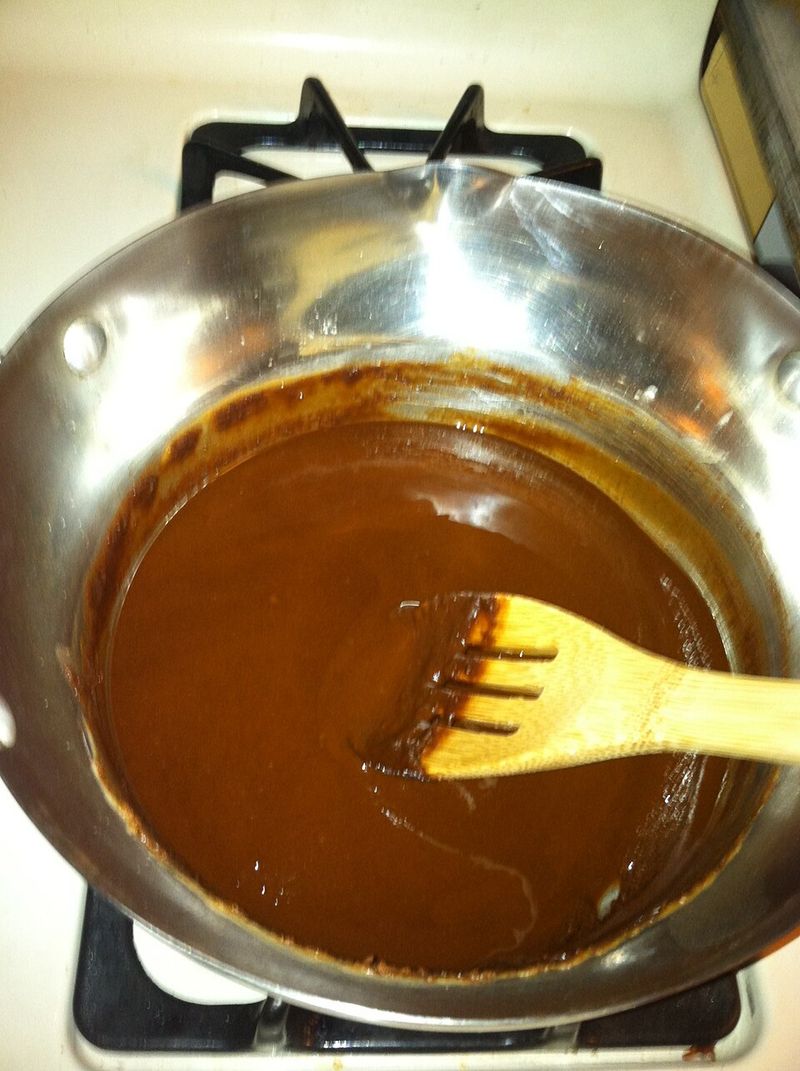
Making a roux in Louisiana is practically a meditation. It starts simply enough, equal parts fat and flour cooked together in a cast iron pot over steady heat.
But then you stir. And stir.
And keep stirring, sometimes for forty-five minutes or more, as the mixture slowly transforms from pale yellow to golden to deep chocolate brown.
The color tells you everything about how the gumbo will taste.
A dark roux is the foundation of most Cajun gumbos, and getting it right requires patience and attention. Walk away for even a moment and it burns, which means starting over completely.
Louisiana cooks treat their roux with the same level of focus and respect that a painter gives to a canvas.
The toasty, nutty flavor that develops in a properly darkened roux is irreplaceable and forms the flavor backbone of the entire dish.
Creole gumbos sometimes use a lighter roux, which produces a different flavor profile altogether. The word roux itself comes directly from French cooking, where it also serves as a thickening base, but Louisiana cooks took it somewhere entirely their own by pushing the color far darker than French tradition typically allows.
Cooking schools in New Orleans, like the New Orleans Cooking Experience, teach roux-making as one of the first and most essential skills. Master the roux and you have unlocked the gateway to Louisiana cuisine.
9. Holy Trinity

Every great cuisine has its foundation, and in Louisiana, that foundation has three legs. The Holy Trinity is the combination of onions, celery, and bell pepper that forms the aromatic base for nearly every classic Louisiana dish.
Gumbo, jambalaya, etouffee, red beans and rice, all of them start in the same place, with these three vegetables softening together in a hot pan until the kitchen smells like something wonderful is about to happen.
The name is a playful nod to the Catholic religious influence deeply woven into Louisiana culture. Just as the Holy Trinity in religion represents three elements forming one unified whole, these three vegetables work together to create a single, harmonious flavor base.
The concept is similar to the French mirepoix, which uses onions, carrots, and celery, but Louisiana swapped out carrots for bell pepper, and the result is distinctly its own.
Some Louisiana cooks add garlic to the mix and call it the Pope, which is exactly the kind of culinary humor you would expect from a state that takes food as seriously as a religion.
Getting the Holy Trinity right means cooking it low and slow, letting the natural sugars develop and the vegetables practically melt into the dish. Skip this step and rush through it, and the dish will tell on you immediately.
In Louisiana cooking, patience in the beginning pays off in every single bite.
10. Beignet

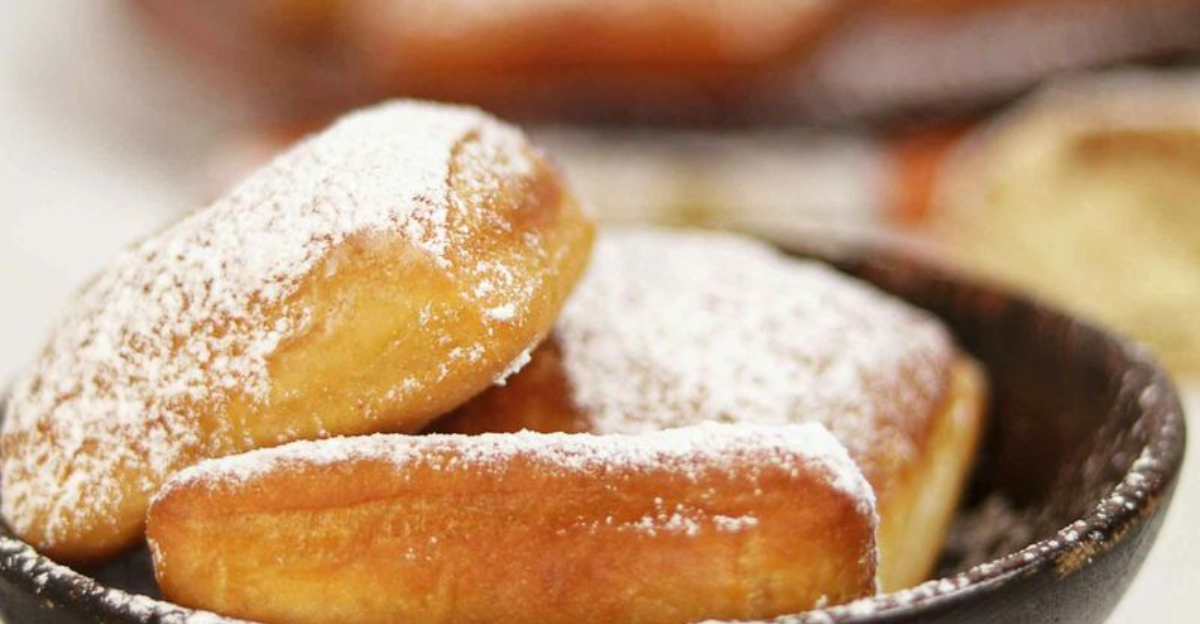
Few things in the food world are as purely joyful as a fresh beignet. These square-shaped fried dough pillows are covered in a snowstorm of powdered sugar and served piping hot, and they are completely, unapologetically messy.
You will get powdered sugar on your shirt.
You will get it on your face. You will not care even a little bit because the beignet is that good.
Beignets were brought to Louisiana by French colonists in the eighteenth century and have been a staple of New Orleans food culture ever since.
Cafe Du Monde, which opened in the French Market in 1862, is the most famous place in the world to eat them, and the cafe operates nearly around the clock to keep up with demand. The combination of crispy exterior, soft and airy interior, and that absurd amount of powdered sugar is a formula that has not needed changing in over 150 years.
The beignet was officially named the state doughnut of Louisiana in 1986, which is exactly the kind of legislative decision that makes complete sense when you have tried one.
Beignets are best eaten immediately, straight from the fryer, with something warm to drink alongside them. They represent something bigger than just a pastry.
They are a symbol of New Orleans hospitality, the idea that sweetness should always be shared freely. What Louisiana food phrase has surprised you the most?