
You’d Never Expect To Find A Place Like This In Nevada
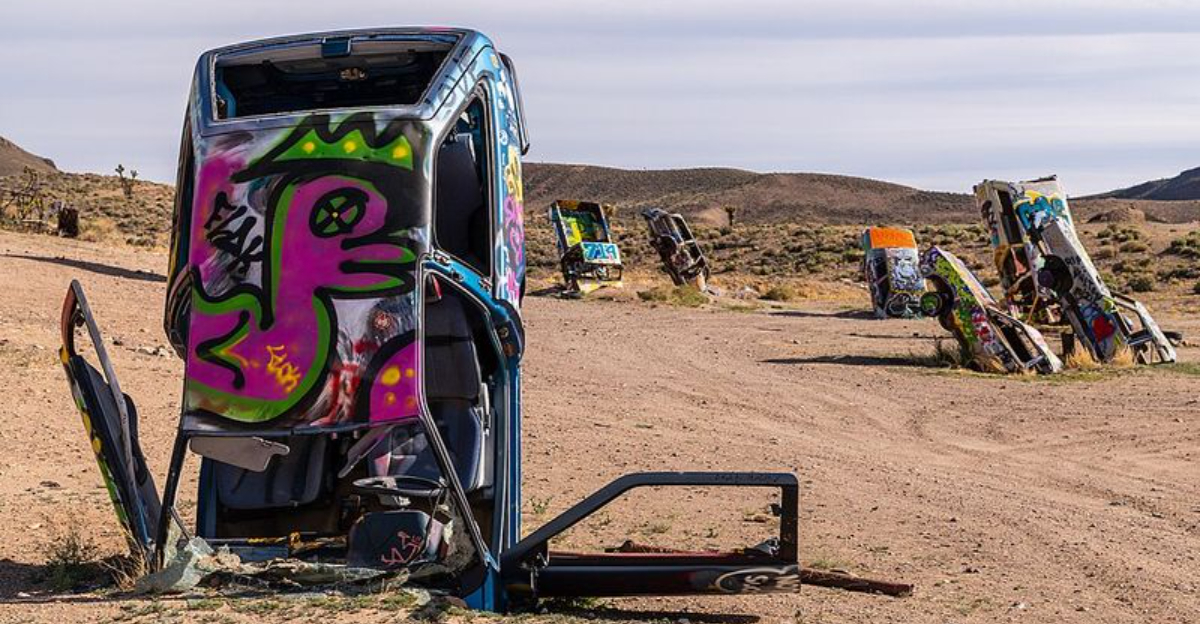
What happens when a desert gets bored of being ordinary? Out here in Nevada, you expect silence, heat, and the occasional tumbleweed rolling by like it’s late for something important.
What you don’t expect is a surreal stretch of painted cars rising from the ground, leaning at wild angles, and half-buried like they grew straight out of the sand.
It looks less like a roadside stop and more like reality briefly gave up trying to behave.
Metal “trees” tilt toward the sky, covered in color and graffiti, each one acting like it has its own chaotic personality. There’s no polished explanation for it, no neat story that wraps everything up.
Just a strange, creative burst in the middle of nowhere that makes you stop, stare, and wonder how something this unfiltered ever came to exist. And maybe that’s the point.
In a place built on emptiness, even the weirdest ideas have room to stand tall.
Cars Buried Nose-First In The Desert Ground
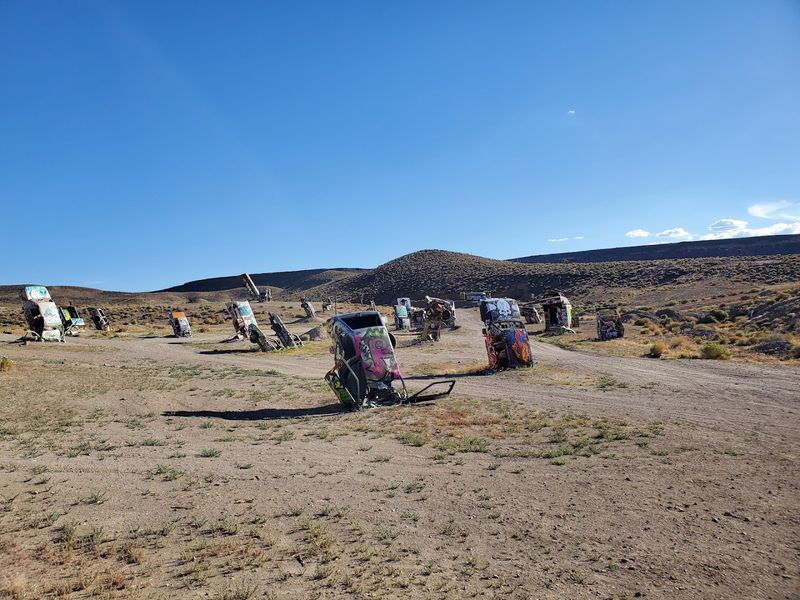
Picture pulling off a dusty dirt road and suddenly seeing a car sticking straight up out of the ground like it just crash-landed from outer space.
That is the first thing that hits you at the International Car Forest of the Last Church. It is surreal, funny, and oddly majestic all at once.
The installation features more than 40 vehicles buried vertically, noses down, tails up, reaching toward the Nevada sky like metal sunflowers.
Some are buried so deep that only the rear bumper and trunk are visible. Others stand nearly fully upright, creating dramatic silhouettes against the desert horizon.
What makes this even more fascinating is the sheer variety of vehicles on display. Sedans, pickup trucks, vans, and even full-sized school buses have been planted into the earth.
The scale of it all is something photographs struggle to fully capture.
You genuinely have to stand in the middle of it and slowly turn in a circle to take it all in. This is not just roadside curiosity, it is a full-on sensory experience that rewires your expectations of what art can look like.
The Goldfield Nevada Location And How To Get There
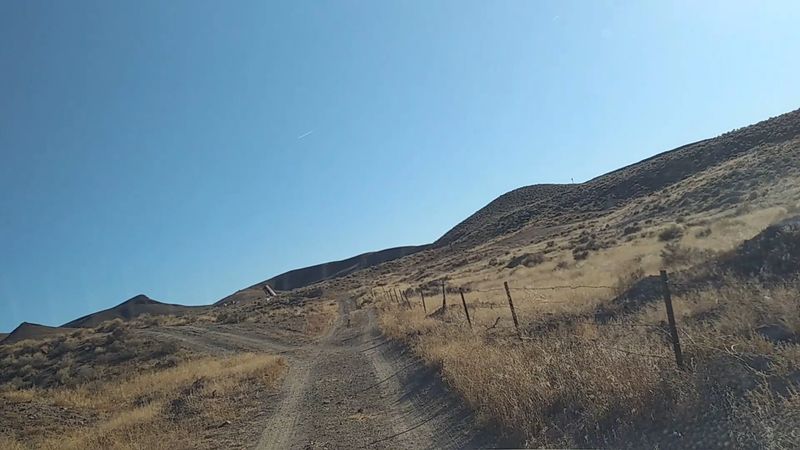
Getting there is half the adventure, and that is not a cliche when the road itself is a dirt track cutting through open desert. The International Car Forest of the Last Church sits at 1111 East Crystal Ave, Goldfield, NV 89013, just off US Highway 95, also known as the Free-Range Art Highway.
That name alone should tell you something great is nearby.
Goldfield is a small historic mining town with a big personality. Once one of the most populated cities in Nevada during the early 1900s gold rush era, it now has a quiet, almost cinematic stillness to it.
The drive into the car forest takes you past clusters of desert homes before the landscape opens up into the installation.
The dirt road is passable in most passenger vehicles, though a higher clearance vehicle makes the ride smoother.
There are no traffic lights, no parking meters, and no crowds fighting for the best angle. You navigate the site by feel, wandering between buried vehicles at your own pace.
The remoteness is part of the charm, and arriving feels like discovering something the rest of the world has not quite caught up with yet.
The Living Canvas Of Graffiti And Murals
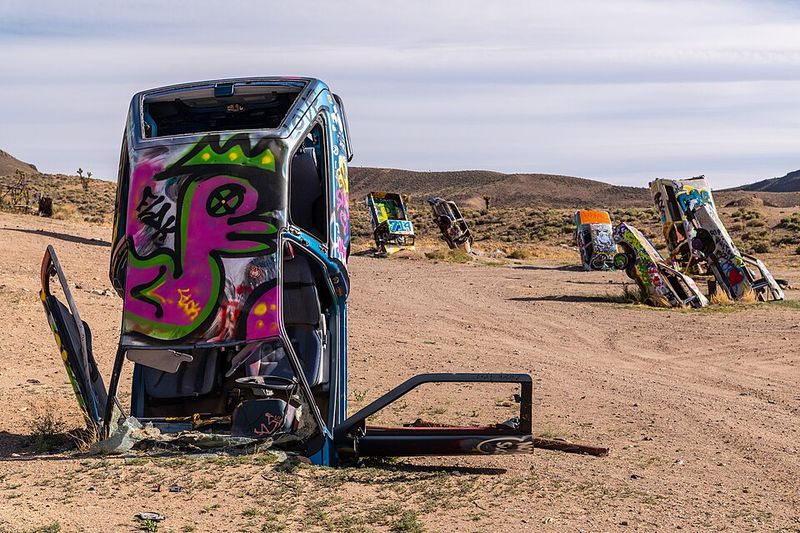
Every single vehicle at this installation is a canvas, and artists from around the world have taken that invitation seriously. Bold murals, abstract designs, intricate lettering, and expressive portraits cover nearly every inch of metal.
The artwork is layered, meaning some pieces have been painted over multiple times as new artists leave their mark.
This constantly evolving gallery is what separates the International Car Forest from other quirky roadside stops.
You are not looking at a static collection. You are witnessing an ongoing creative conversation between hundreds of artists across two decades.
Some pieces are strikingly beautiful. Others are raw and experimental.
All of them are honest.
The art ranges from hyper-detailed portraits to wild psychedelic patterns that seem to shimmer in the desert heat. Walking between the vehicles feels like flipping through an enormous sketchbook that never runs out of pages.
While current efforts lean toward encouraging photography over adding new paint, the existing artwork already tells a rich and layered story. If you appreciate street art, outsider art, or simply human creativity in unexpected places, this open-air gallery will absolutely stop you in your tracks.
The Meaning Behind The Name
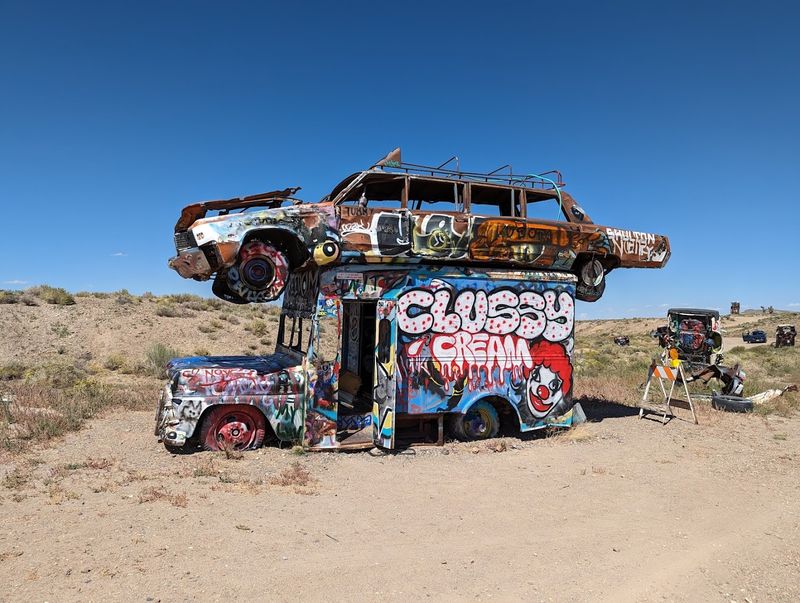
The name alone raises eyebrows, and that is exactly the point. The Last Church is not a building, a denomination, or a religious institution.
It is a philosophy baked into the DNA of this entire installation. The idea is simple and surprisingly moving: the last church is inside each of us.
This concept was introduced by the Goldfield resident who initiated the project, and it speaks to something universal. The installation encourages unconditional love, personal reflection, and compassion without walls or rules.
In a place as vast and quiet as the Nevada desert, that message lands differently than it might in a city.
Standing among these towering, painted vehicles with nothing but open sky above you, the name starts to make complete sense.
There is something almost meditative about being there. The silence is real, the scale is humbling, and the art speaks in a language that bypasses logic and goes straight to feeling.
Whether you are spiritual, philosophical, or just a curious traveler passing through, the Last Church part of this name is worth sitting with. It transforms a collection of buried cars into something that genuinely asks you to think about what you believe.
Why It Is Called An International Car Forest
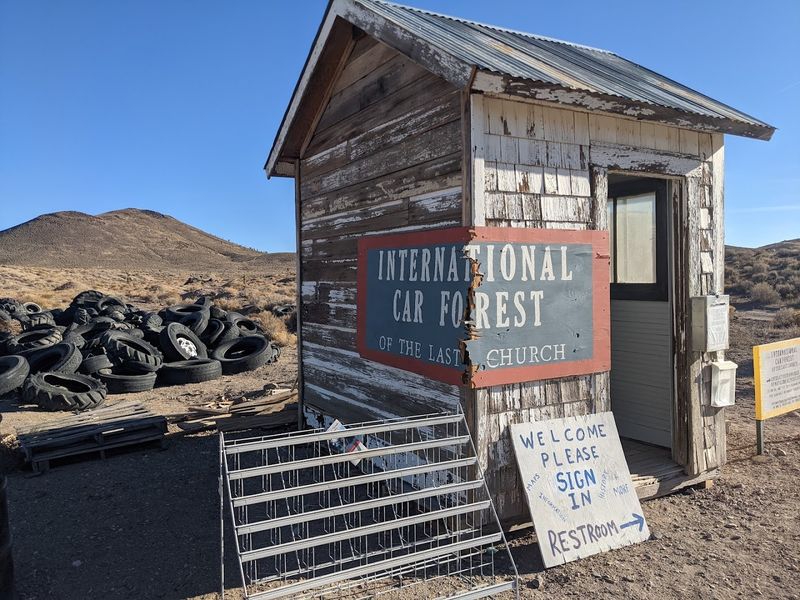
The word forest is not used loosely here. When you stand at the edge of the installation and look across the landscape, the vertical vehicles genuinely create the visual impression of a forest.
Trunks of metal rise from the ground at varying heights, and the spacing between them mimics the irregular pattern of trees in the wild.
The international part of the name came from an artist who joined the project in the early 2000s and noticed that visitors were arriving from countries all over the world.
It was a playful nod to the phrase national forest, flipped on its head to reflect the global audience this desert art project was quietly attracting.
Today, that international energy is still very much alive. People traveling between Las Vegas and Reno regularly detour to Goldfield specifically to visit.
Road trippers from Europe, Asia, and beyond make it a planned stop.
The visitor log at the entrance tells a fascinating story of how far people have traveled to stand in this strange, beautiful place. A forest made of cars in the middle of the Nevada desert somehow became a destination the whole world found on its own.
Open 24 Hours With No Admission Fee
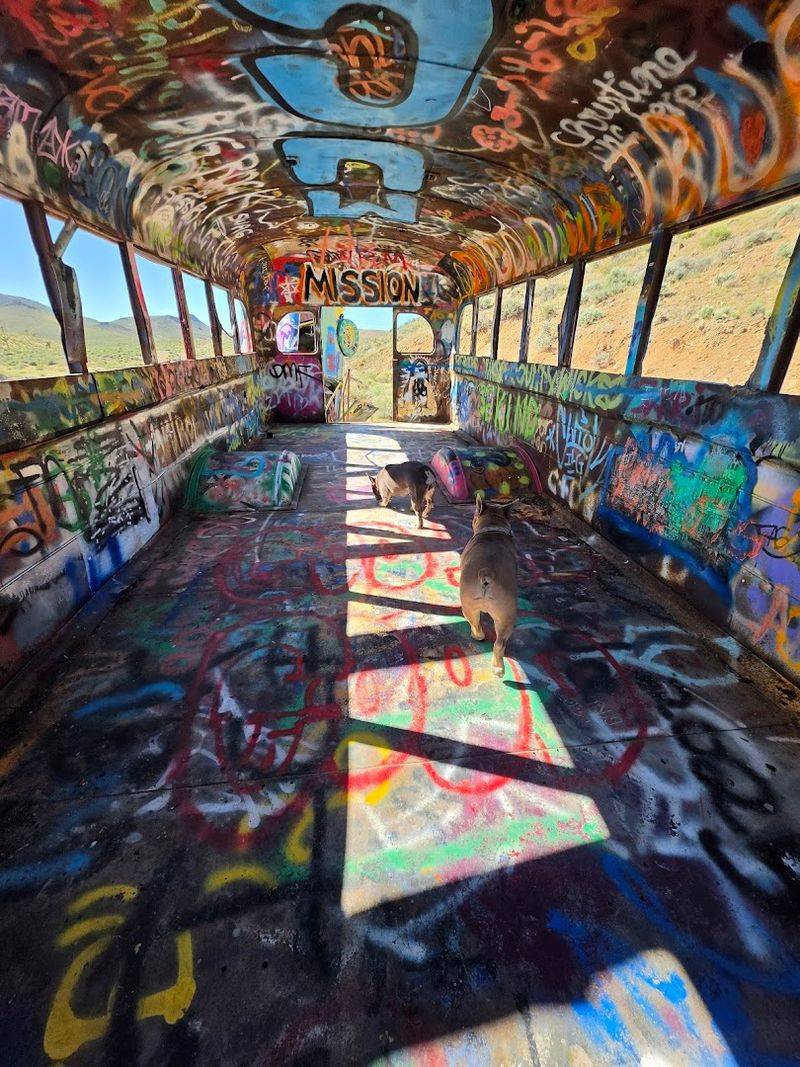
Free. Open around the clock.
No ticket booth, no wristbands, no timed entry windows. The International Car Forest of the Last Church operates on pure trust and generosity, and that accessibility is a big part of its magic.
You can show up at noon or at midnight and the place is yours to explore.
Donations are welcomed and appreciated, and there is a visitor log at the entrance where you can sign your name and note where you came from.
That log has become a small treasure of its own, filled with entries from travelers across the globe who found their way to this unlikely destination.
Visiting at different times of day offers wildly different experiences. Midday sun bleaches the colors and casts sharp shadows between the vehicles.
Golden hour wraps everything in warm amber light that makes the murals glow.
After dark, the silhouettes of buried cars against a star-filled Nevada sky create a scene that feels lifted from a science fiction film. The freedom to visit on your own terms, at your own pace, with no pressure and no price tag, is something increasingly rare.
This place trusts you to show up with curiosity and leave with gratitude.
School Buses Standing Skyward In The Desert
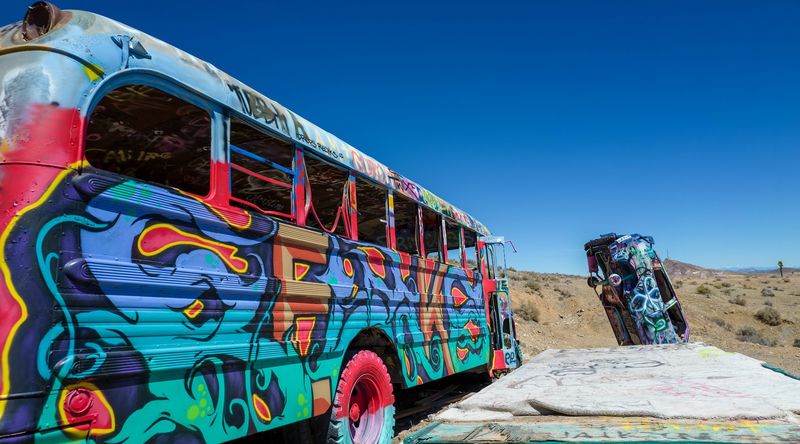
If the buried sedans do not stop you cold, the school buses absolutely will. There is something deeply unexpected about seeing a full-sized school bus standing nose-down in the earth, its rear end pointing straight at the sky like a giant exclamation point.
These are not small props, they are enormous, and they dominate the skyline of the installation.
The buses are among the most photographed elements of the entire site. Their sheer size creates a sense of scale that makes visitors feel small in the best possible way.
Covered in layers of colorful artwork, they feel simultaneously absurd and awe-inspiring, which is basically the defining mood of this entire place.
Getting the right photo angle with a bus requires some patience and walking. You might crouch low to frame the bus against the sky, or step back far enough to capture it alongside a cluster of smaller vehicles for contrast.
Either way, the images you leave with are genuinely unlike anything else in your camera roll. These buses were once built to carry people to ordinary places.
Now they carry the imagination somewhere far more interesting, straight up into the Nevada desert sky.
A Photography Paradise Hidden In Plain Sight
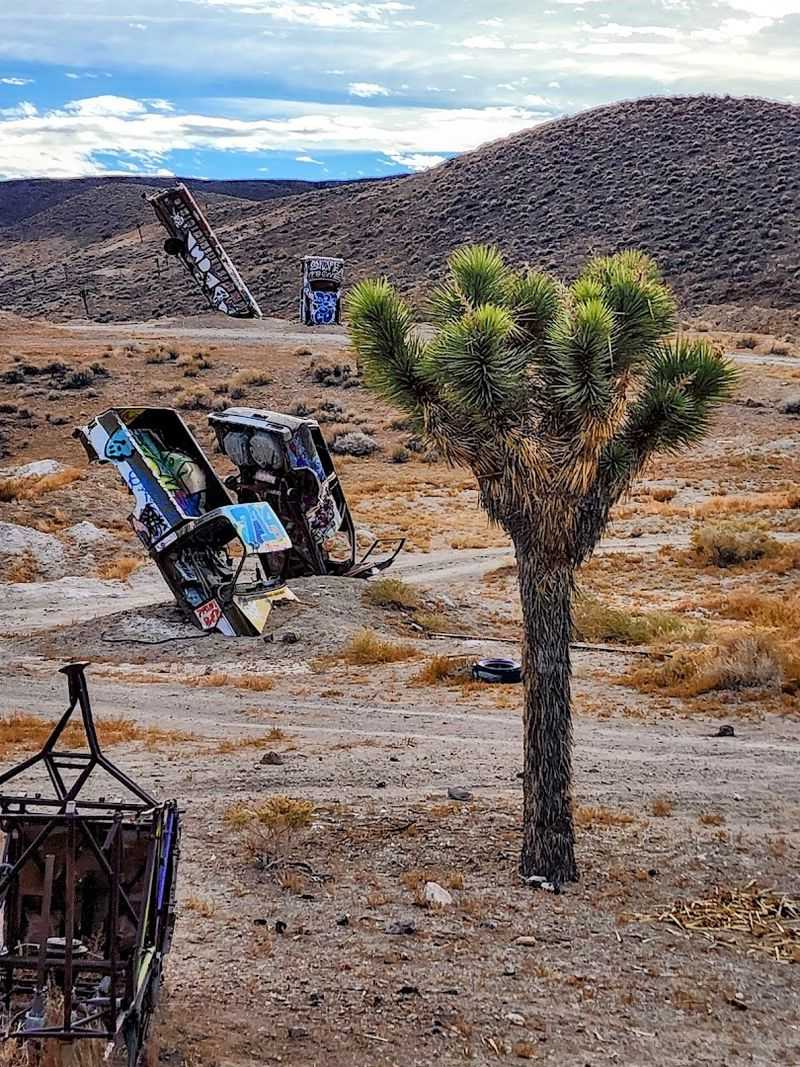
Photographers, both professional and hobbyist, have quietly turned this place into one of the most compelling shooting locations in the American Southwest. The combination of rusted metal, bold color, dramatic vertical lines, and open sky creates a composition that practically builds itself.
Every angle tells a different story.
Drone footage from above reveals the full scope of the installation in a way ground-level photos simply cannot.
The vehicles form loose clusters and rows across the desert floor, and from above, the pattern has an almost choreographed quality.
Timing your visit around sunrise or sunset adds another dimension entirely, with long shadows and warm tones transforming familiar scenes into something cinematic.
Because the site is rarely crowded, you have the freedom to take your time, experiment with angles, and wait for the light you want without anyone rushing you along.
The constantly changing artwork means repeat visits always yield something new to photograph. Even if you only have a smartphone and fifteen minutes to spare, you will leave with images worth sharing.
The International Car Forest is one of those places that photographs itself well because the raw material is so genuinely extraordinary that it barely needs any help.
What Makes This Place Unlike Anything Else In The U.S.
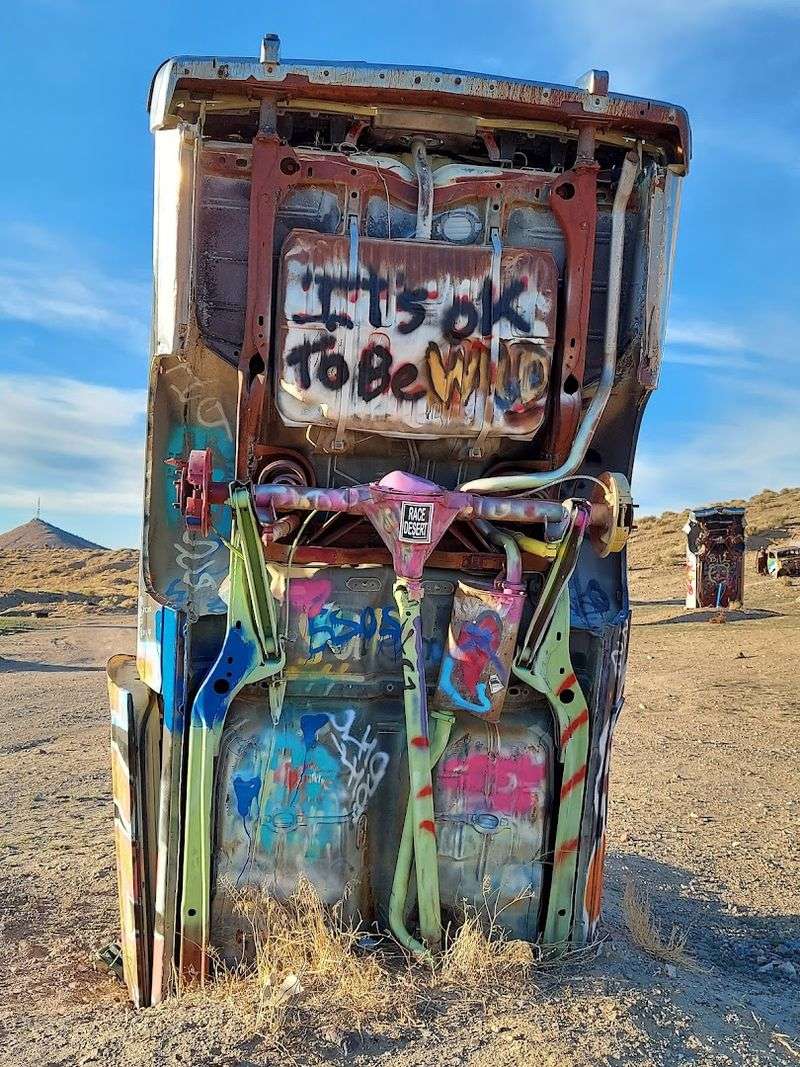
There are a handful of places in the United States where cars have been turned into art. Cadillac Ranch in Texas gets the most attention, and Carhenge in Nebraska has its devoted fans.
But the International Car Forest of the Last Church operates on a different level entirely, both in scale and in spirit.
With over 40 vehicles across 80 acres of open desert, the sheer physical size of the installation sets it apart.
Add the philosophical depth of the Last Church concept, the international artist contributions, and the completely free and open access, and you have something that genuinely has no equal. It is considered the largest car forest in the entire country.
What truly separates it from similar roadside attractions is the feeling it leaves you with. This is not a place you glance at from a car window and move on from.
You walk through it, you sit with it, and you carry something from it when you leave.
Whether that is a great photograph, a new perspective, or just the memory of standing in the Nevada desert surrounded by buried school buses, one thing is certain. You will be talking about this place long after the dust settles on your boots.