
This Abandoned Dinosaur Park Near Orlando Feels Like One Of Florida’s Strangest Attractions
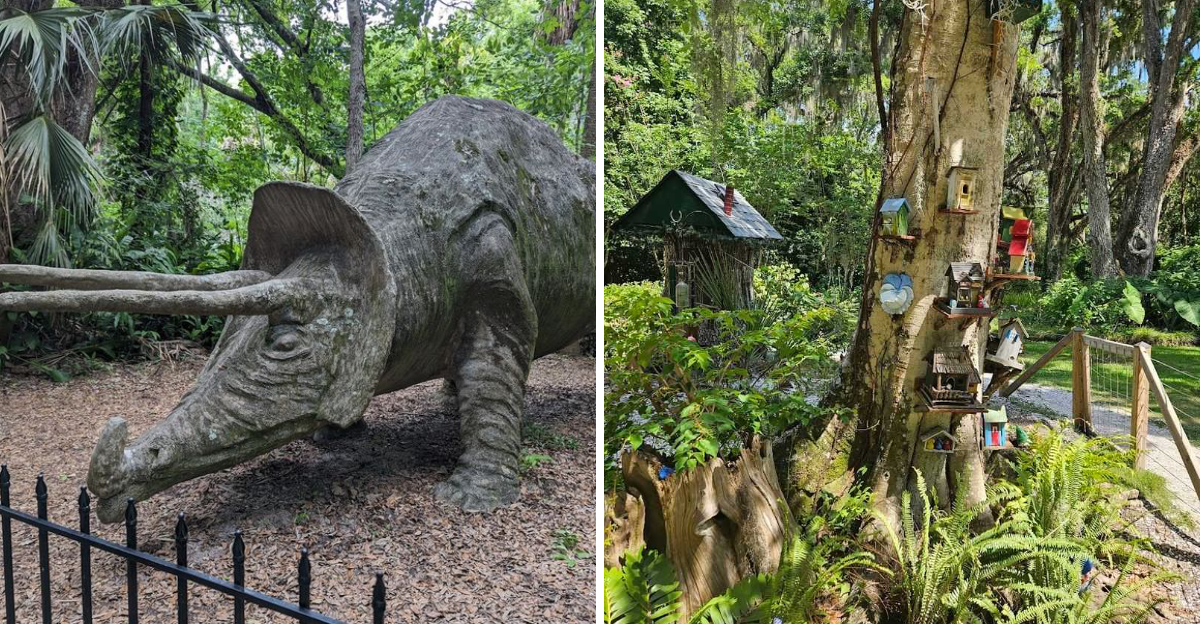
In Port Orange, Florida, there is a place where several layers of history exist side by side, creating a setting that feels both unexpected and quietly cohesive. At first, it appears to be a simple garden space, but that impression changes as you move further in.
The grounds bring together elements that would not normally share the same setting. Remnants of an older structure sit among carefully maintained greenery, while unusual details from a past era remain in place, adding a sense of curiosity to the experience.
Over time, what might have started as separate ideas has settled into something more unified. The landscape feels shaped by both intention and chance, with each part contributing to the overall atmosphere.
It is not defined by a single feature, but by how these different pieces continue to coexist.
These are some of the details that make this location stand out within Florida.
The Concrete Dinosaurs That Started It All
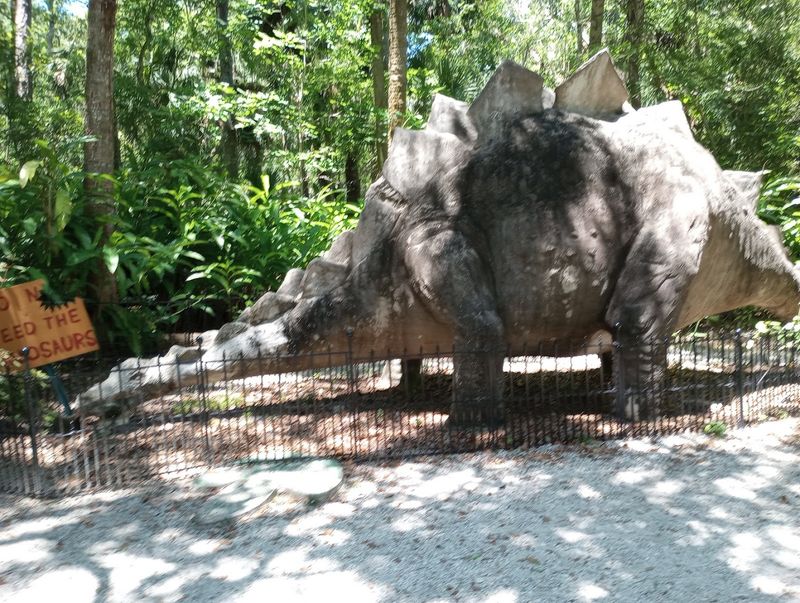
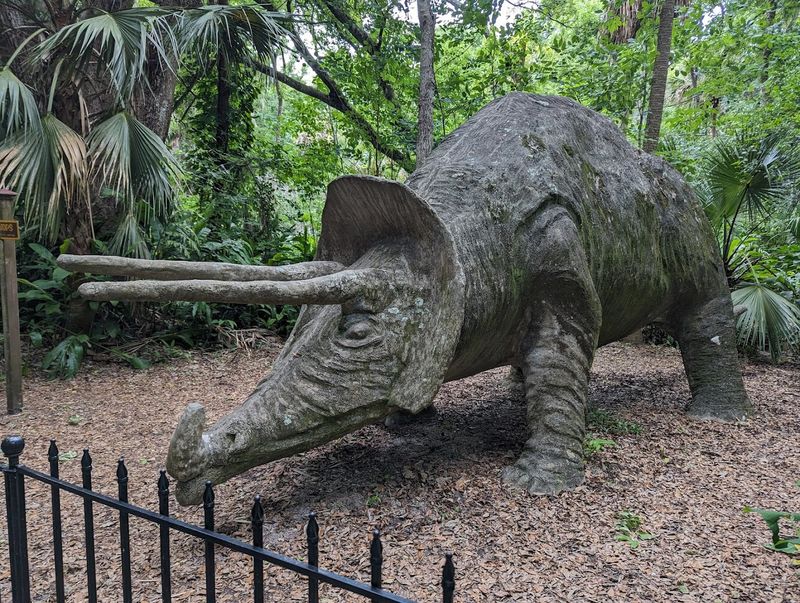
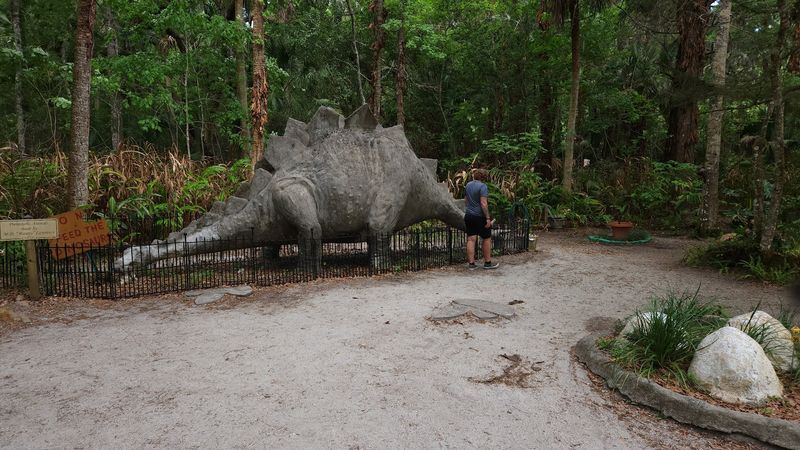
Few things in Florida stop you in your tracks quite like rounding a garden path and coming face to face with a concrete dinosaur that has been standing there since the early 1950s.
Clarence Strickland built these sculptures using a chicken-wire frame covered in cement, and the results are charmingly rough around the edges in a way that no modern theme park could ever replicate.
There are multiple dinosaur statues scattered across the 25-acre property, each one tucked between flowering plants and old trees in spots that feel genuinely surprising.
Kids absolutely love hunting for them along the trails, and adults tend to stop and stare a little longer than they expect to, trying to figure out exactly what species they are looking at.
The dinosaurs carry a nostalgic energy that reminds you of a time when roadside attractions were built by one person with a big idea and a bag of cement, and that handmade quality is exactly what makes them so memorable.
The Sugar Mill Ruins That Predate Everything
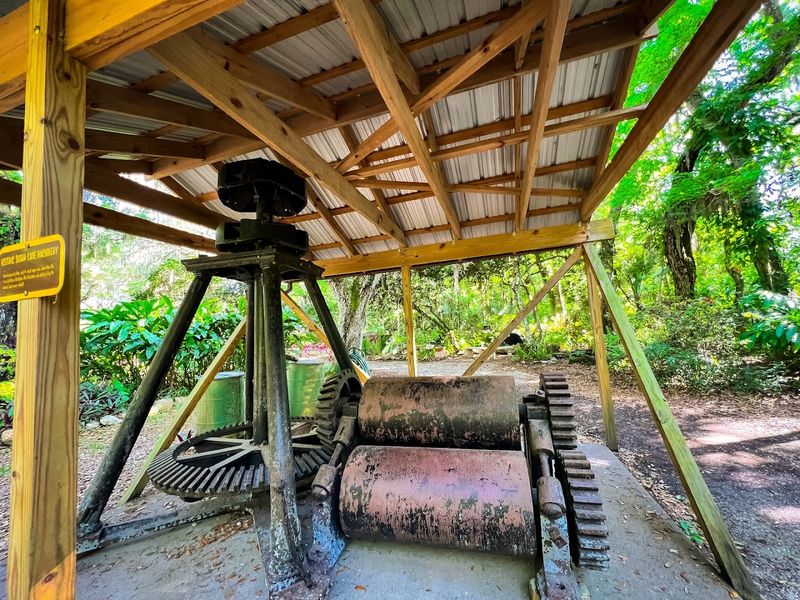
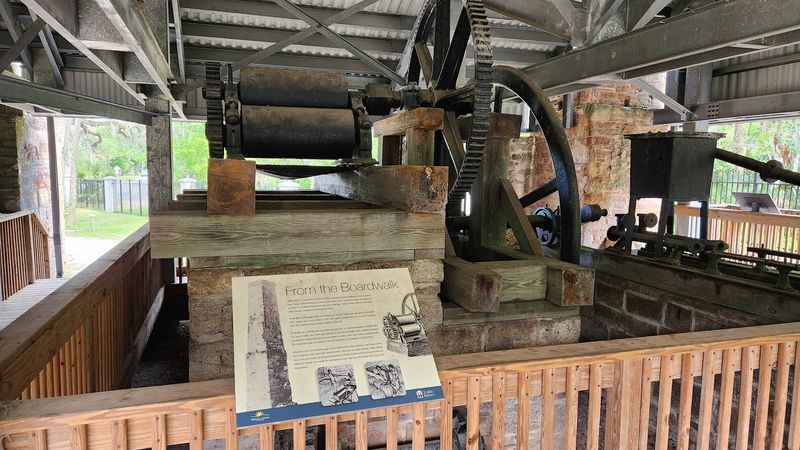
Long before the dinosaurs arrived, the land at Bongoland Ruins was home to a working sugar mill that dates back to the early 1800s, and the stone remains of that operation are still standing today.
Walking up to the ruins for the first time feels like stepping into a history book, with thick walls of coquina stone rising out of the earth, softened by decades of moss and creeping vines.
The sugar mill played a role in the broader story of Florida’s plantation era, and informational markers around the site give visitors helpful context about how the mill operated.
One reviewer noted that the history of the sugar mill was genuinely interesting, which is high praise for something you can visit for free on a Tuesday morning.
Standing inside the open walls of the old mill while birds call from the surrounding trees is one of those quietly powerful travel moments that sticks with you long after you have driven back home.
Completely Free Admission With A Donation Box
Pulling into the parking area and realizing that entry is completely free is the kind of small joy that immediately puts a smile on your face.
There are no ticket booths, no online reservations, and no upsell for a premium experience, just a red donation box just inside the gate where you can leave whatever feels right for you.
The parking is also free, though spaces are limited, so arriving earlier in the day during peak season is a smart move if you want to avoid any frustration.
Restrooms are available on the property, clean and stocked according to multiple visitors, which is genuinely appreciated when you are planning a longer walk through the trails.
The donation model keeps the atmosphere relaxed and low-pressure, which fits perfectly with the unhurried, wander-at-your-own-pace spirit of the place.
For families, couples, or solo travelers looking for a meaningful outing that does not cost a fortune, Bongoland Ruins makes a strong case for being one of the best free stops in the Port Orange area.
Shaded Trails That Make Florida Heat Bearable
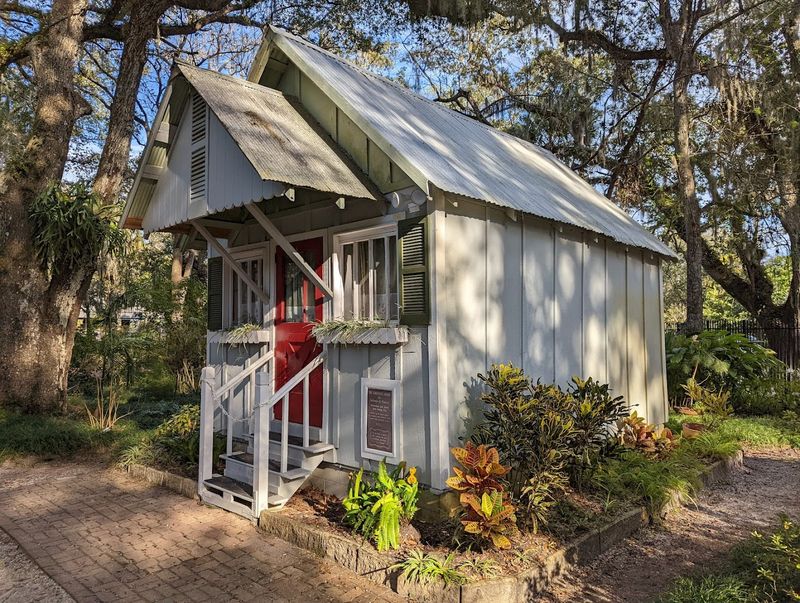
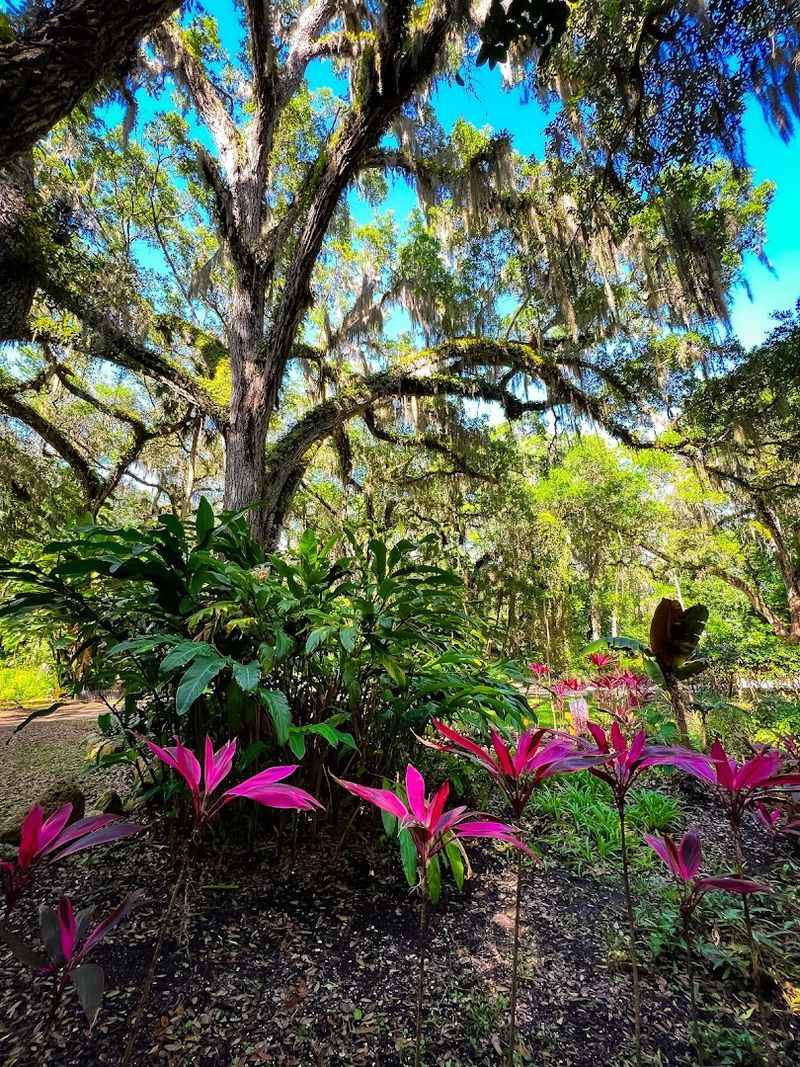
Florida in the summer is not exactly known for being kind to outdoor walkers, but the trails at Bongoland Ruins offer a surprisingly comfortable experience thanks to a thick canopy of old live oak trees.
One visitor mentioned rushing near the end of their visit because of the heat, then quickly added that most of the trails are shaded, so direct sunlight is rarely a problem for the majority of the walk.
The paths are gravel-covered and easy to navigate, making them accessible for a wide range of visitors including those who prefer a gentle stroll over a strenuous hike.
Benches are placed at various points along the trails, giving you a spot to sit quietly, listen to the birds, and take in the surrounding greenery without feeling like you need to keep moving.
The perimeter path circles the full property and connects to several shorter trails that branch off toward specific points of interest, so you can customize your route based on how much time you have.
A Botanical Garden That Sneaks Up On You
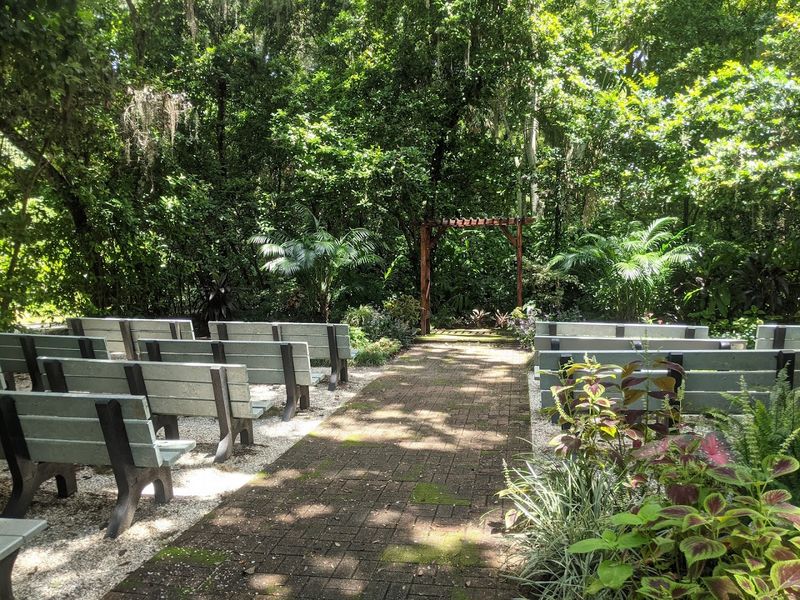
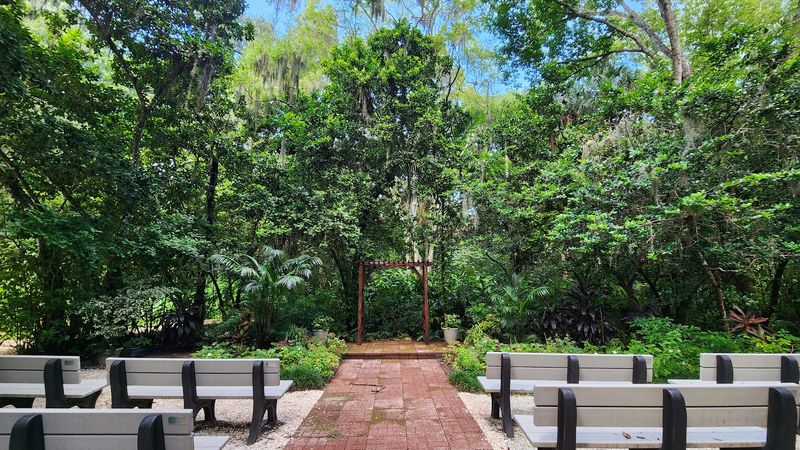
Most people arrive at Bongoland Ruins expecting ruins and dinosaurs, so the full botanical garden experience comes as a genuinely pleasant surprise.
The Volusia County Horticultural Society and the Audubon Society have both contributed to the plant collections here, filling the 25-acre property with a rich variety of native and non-native species that are labeled so visitors can actually learn what they are looking at.
Water features, including small ponds and waterfalls, are woven throughout the garden areas, adding the kind of soft background sound that makes a walk feel instantly more peaceful.
One reviewer described the combination of sounds, including birds calling and water trickling, as beautiful, and noted that being surrounded by so much green right in the middle of the city felt like a genuine escape.
Pollinators are a big part of the ecosystem here, with plants selected specifically to attract butterflies, bees, and other wildlife, which means the garden is alive with movement on most mornings.
The Tiny Gnome Village Hiding Along The Path
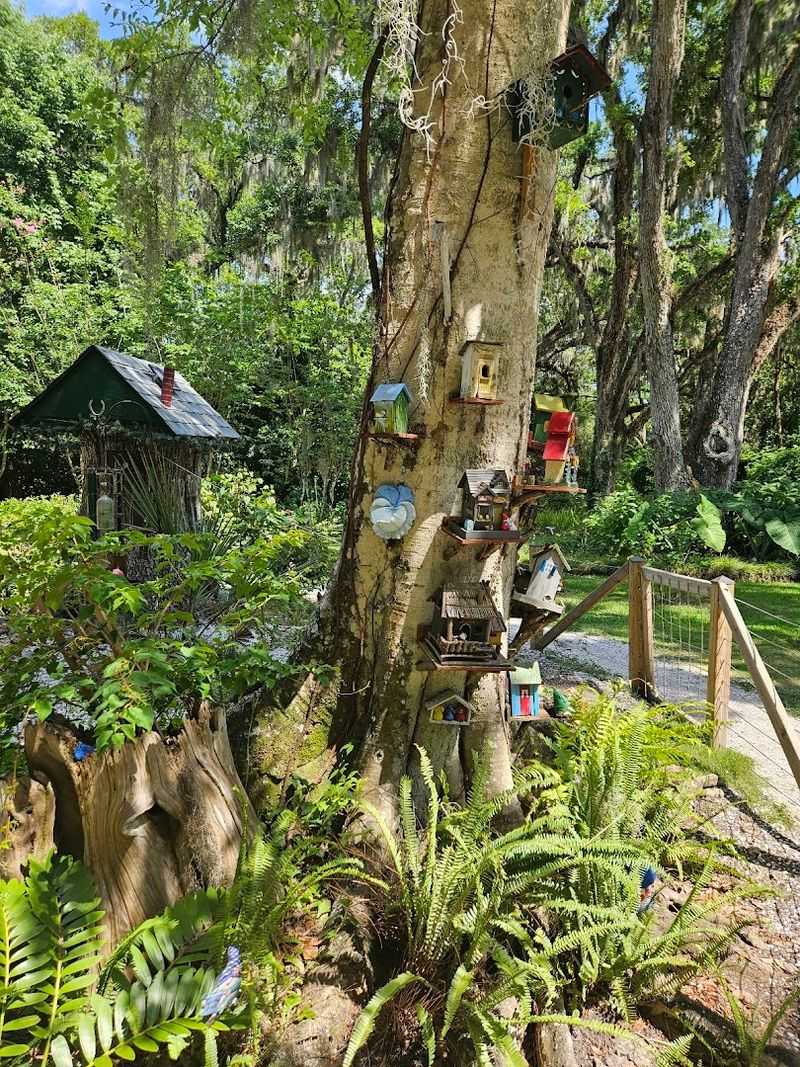
Tucked somewhere along the trails, easy to miss if you are not paying attention, is a tiny gnome village that has become one of the most talked-about surprises at Bongoland Ruins.
It is the kind of detail that delights children immediately and causes adults to crouch down for a closer look with a grin they did not plan on wearing.
Several reviewers specifically called it out as a must-see, with one simply writing “don’t miss the little gnomes” as their top piece of advice for first-time visitors.
The gnome village fits right into the overall personality of the property, which seems to genuinely enjoy rewarding curious visitors who wander off the main path and look carefully at what is tucked between the roots and flowers.
It is the kind of handcrafted, community-built touch that gives Bongoland Ruins its layered character, where every corner of the property seems to hold something small and unexpected waiting to be discovered.
Painted Rocks Hidden Across The Property
One of the most charming community traditions at Bongoland Ruins involves painted rocks that volunteers hide around the property for visitors to find and keep as souvenirs.
A reviewer mentioned spotting people actively hiding new painted rocks during their visit, which adds a layer of real-time playfulness to the experience that you simply cannot find at a polished theme park.
The rocks are usually tucked beneath plants, near tree roots, or along the edges of the paths, so finding one requires the kind of slow, attentive walking that the trails naturally encourage.
For families with younger children, the painted rock hunt gives kids a specific mission to focus on, turning a garden walk into something closer to a treasure hunt.
The tradition reflects the warm, community-driven spirit that defines the whole property, where local volunteers contribute their time and creativity to make every visit a little different from the last one.
Walking away with a hand-painted rock from Bongoland Ruins feels like carrying a small piece of the place home with you.
The Fascinating Story Of Bongoland Itself
The name Bongoland sounds like it belongs in a Saturday morning cartoon, which is part of what makes the history behind it so entertaining to learn about.
In the early 1950s, Clarence Strickland developed the property as a roadside attraction, building those now-famous dinosaur sculptures with the hope of pulling travelers off the highway for a look around.
The park never achieved the kind of popularity that would have made it a Florida institution, and it quietly faded before ever reaching its potential, leaving behind the concrete creatures as the only physical evidence of what Strickland had envisioned.
One reviewer put it well, writing that they would have loved to see what Bongoland might have become if it had caught on, calling it a cool look into the past in more ways than one.
That sense of a road not taken gives the ruins an extra layer of melancholy charm, and knowing the backstory makes every dinosaur you pass feel like a small monument to one person’s ambitious, slightly eccentric dream.
Wildlife And Natural Sounds Throughout The Property
Spending time at Bongoland Ruins is as much an audio experience as a visual one, with birdsong, water features, and the rustle of leaves creating a constant natural soundtrack along every trail.
The Audubon Society’s involvement in the garden has shaped the plant selection specifically to attract native wildlife, and the results are easy to notice even on a casual visit.
Butterflies move between flowering plants, birds call from the canopy of live oaks overhead, and the small ponds along the trails reflect the surrounding greenery in a way that makes the whole property feel larger than its 25 acres.
One long-time visitor described the combination of waterfalls and birdsong as simply beautiful, noting that the sensory experience felt like a genuine retreat from the surrounding city environment.
The absence of loud music, crowds, or commercial noise means that the natural sounds take center stage here, which is increasingly rare for any outdoor attraction close to a populated Florida city.
Practical Tips For Getting The Most Out Of Your Visit
Getting the most out of a visit to Bongoland Ruins starts with grabbing a map from the green mailbox just to the left of the main entrance sign, a detail that several visitors wish they had known before starting their walk.
The property is open every day from 8 AM to 5 PM, which gives you a solid window of time to explore without rushing, and arriving in the morning helps you enjoy the cooler part of the day before the Florida sun gets serious.
The trails are gravel-covered and generally accessible, and at least one reviewer specifically mentioned wheelchair accessibility as a positive feature of the property.
Dogs are not permitted on the grounds, so leave your four-legged companions at home for this particular outing.
Plan for about one to two and a half hours depending on how thoroughly you want to explore, and consider leaving a donation at the red box near the entrance to help keep this remarkable free space running for future visitors.