
6 Abandoned Spots In Arkansas For Your Next Road Trip
Not every great stop shows up on a map. Arkansas proves that pretty quickly.
You just have to be willing to take a chance on a road that doesn’t look like much at first. That’s how this trip took shape.
One unexpected stop turned into a full list of places I didn’t even know I was looking for. These aren’t the kind of spots you rush through.
You slow down, look around, and start noticing the details. Old buildings, quiet surroundings, and a feeling that time moved on but left something behind.
You’ll find a town resting beneath water and a castle that never quite became what it was supposed to be. It’s different, and that’s the point.
Keep your camera close and your plans loose. Here are abandoned spots that are absolutely worth the stop.
Places you won’t forget anytime soon.
1. Calico Rock Historic District, East Calico Rock
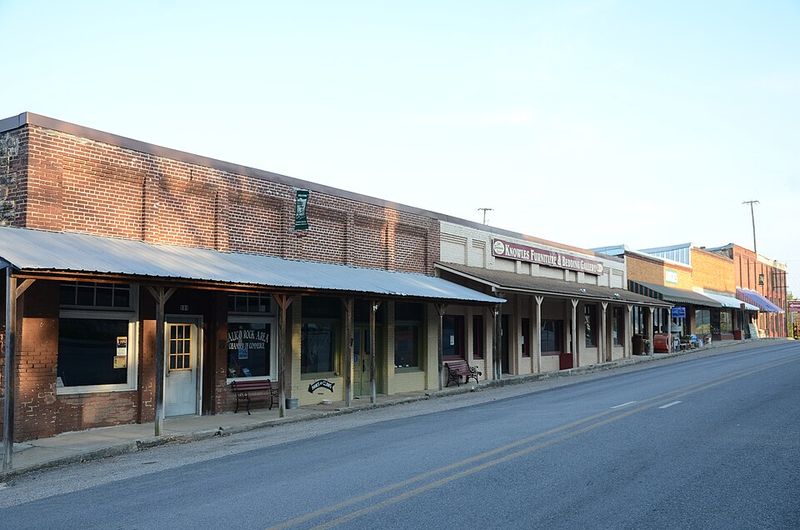
Tucked inside the living, breathing town of Calico Rock is a ghost town that most people drive right past without ever knowing it exists.
The Calico Rock Historic District in East Calico Rock, AR 72519, is one of the more unusual abandoned places I have ever walked through, because it sits within the borders of an active community, making the contrast between old and new feel almost surreal.
More than twenty historical buildings line the area, each one carrying the quiet weight of a town that once thrived before the rerouting of the Southwest Trail pulled the economic rug right out from under it.
Walking these streets, I kept thinking about all the merchants, travelers, and families who once moved through these same spaces with completely different expectations for the future.
The White River adds a beautiful backdrop to the whole scene, and on a clear morning, the light hitting the old facades creates the kind of photograph that stops people mid-scroll on social media.
Because this spot sits within an existing town, getting here is straightforward, and you can combine your visit with a stop at local shops or the river access points nearby.
The best time to visit is during spring or fall, when temperatures are comfortable and the surrounding foliage frames the historic buildings in rich, natural color.
Respectful exploration is key here, since some structures are fragile and the history of the area deserves to be treated with care rather than treated like a playground.
Local residents are generally proud of this unique corner of their town, and a quick conversation with someone at a nearby shop can unlock details about the area that no historical marker will ever fully capture.
East Calico Rock is the kind of place where history did not just happen once and get preserved in a museum, it quietly stayed behind and kept aging in the open air, waiting for curious road trippers like us to finally notice it.
2. Rush Historic District, Rush
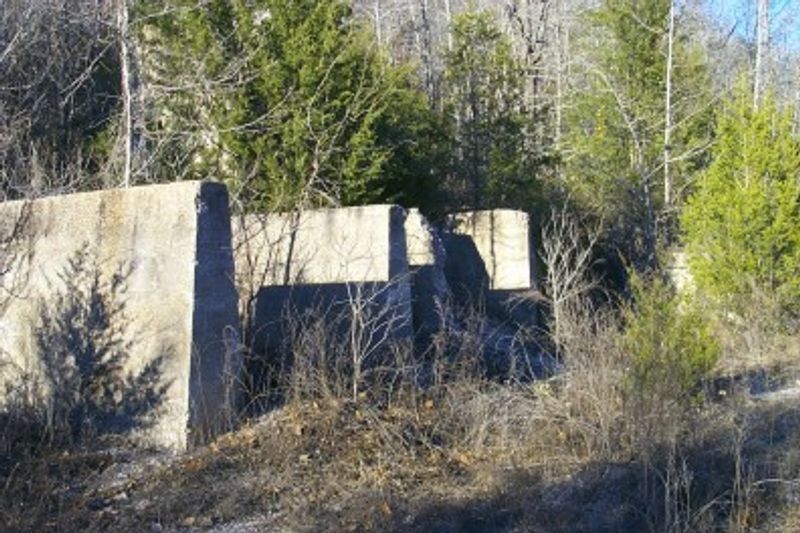
There is something about the sound of silence in a former mining town that hits differently than ordinary quiet, and Rush delivers that feeling in a way that genuinely stops you in your tracks.
Rush Historic District sits within the Buffalo National River Wilderness in Rush, AR 72601, and reaching it requires a scenic drive that winds through some of the most gorgeous Ozark landscape you will find anywhere in the state.
The town boomed hard on zinc ore extraction starting in the 1880s, drawing workers and families who built homes, businesses, and a whole community around the promise of what lay underground.
After World War II, the demand for zinc dropped, and the town slowly emptied out until the 1960s left it almost completely deserted.
What makes Rush special compared to many abandoned sites is how well-preserved the mining structures and cabins actually are, giving visitors a genuinely immersive look at what life looked like during the boom years.
The National Park Service manages the area, which means the site is accessible, maintained to a reasonable degree, and comes with interpretive signage that adds real historical context to what you are looking at.
I spent a solid two hours here just wandering between structures, reading the signs, and trying to picture the energy this hollow must have carried when it was packed with workers and activity.
The Buffalo River trail access nearby means you can pair your history exploration with a hike or even a float trip if you plan ahead.
Spring wildflowers along the trail leading into the district turn the approach into something almost painterly, and fall foliage wraps the whole hollow in shades of amber and rust that feel almost theatrical.
Rush is the rare abandoned place that rewards slowness, so resist the urge to rush through Rush, because the details hiding in every weathered board and rusted piece of equipment are absolutely worth every extra minute you give them.
3. Monte Ne, Beaver Lake
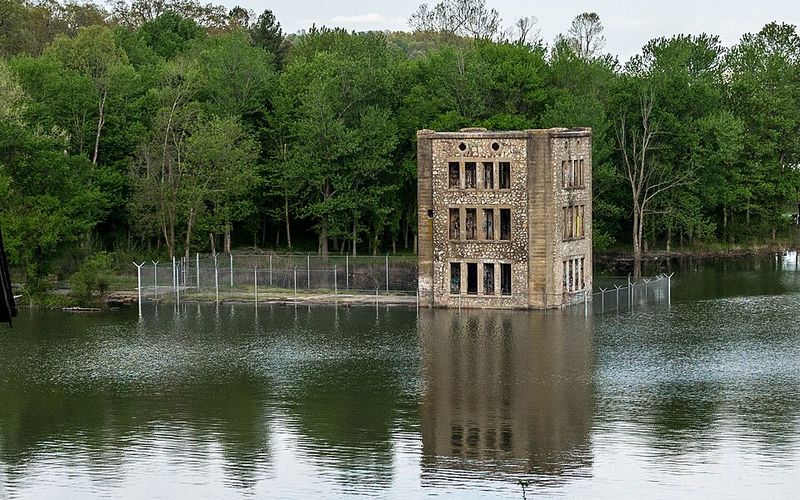
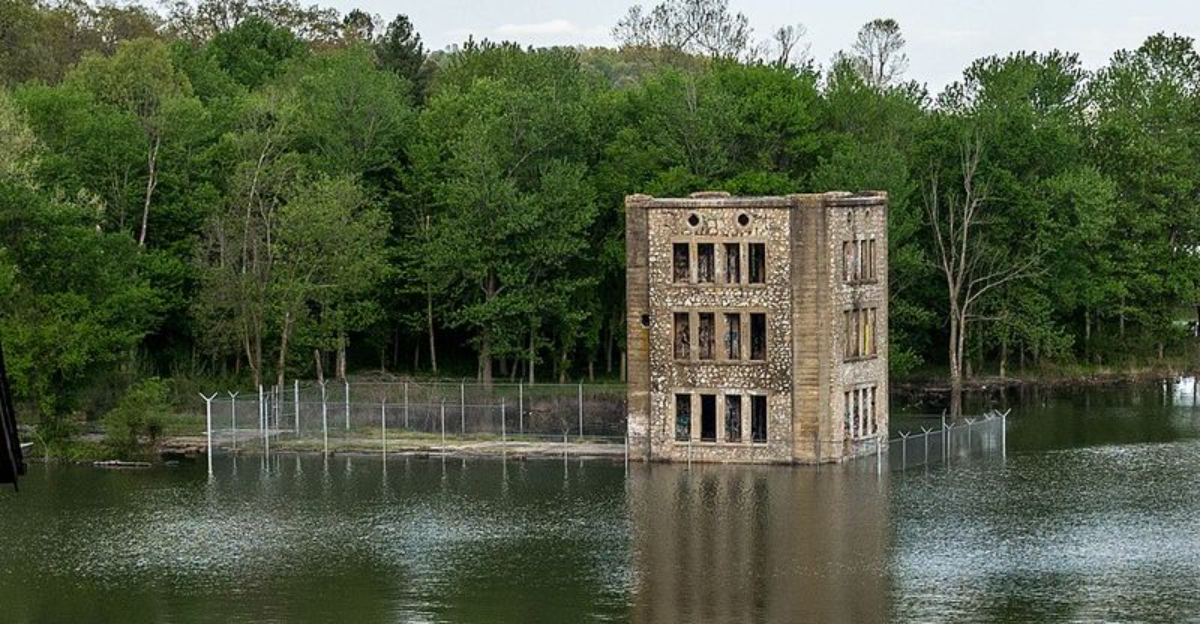
Imagine pulling up to a lake and realizing that an entire resort town is sitting quietly beneath the surface of the water, just waiting for the right season to reveal itself.
Monte Ne, located near Rogers, AR 72756, along the shores of Beaver Lake, is exactly that kind of place, and it has one of the most dramatic origin stories of any abandoned site I have ever researched.
William “Coin” Harvey, a colorful entrepreneur and economic theorist, established Monte Ne in the early 1900s with grand visions of a luxury resort destination that would draw visitors from across the country.
Harvey built impressive structures, including an amphitheater and resort buildings, and even dreamed of constructing a pyramid to preserve civilization’s knowledge for future generations, which tells you a lot about the scale of his ambitions.
When the Army Corps of Engineers created Beaver Lake in the 1960s by damming the White River, much of Monte Ne was permanently submerged, but the Oklahoma Row tower and other remnants still surface when water levels drop low enough.
Visiting during drought conditions or late summer, when the lake tends to run lower, gives you the best chance of seeing those ghostly stone walls and foundations emerging from the water like something out of a fever dream.
Boaters and kayakers sometimes paddle directly over the submerged ruins, and on calm days with good visibility, you can peer into the shallows and make out the outlines of structures below.
The surrounding area near Rogers is beautiful on its own, with Beaver Lake offering fishing, camping, and recreation that makes a full weekend trip easy to plan.
I found myself standing at the water’s edge for a long time, just watching the tower rise out of the lake and thinking about how quickly grand plans can be swallowed by both time and water.
Monte Ne is the kind of place that turns a simple lake visit into something you will be telling stories about for years.
4. Ozark Medieval Fortress, Lead Hill
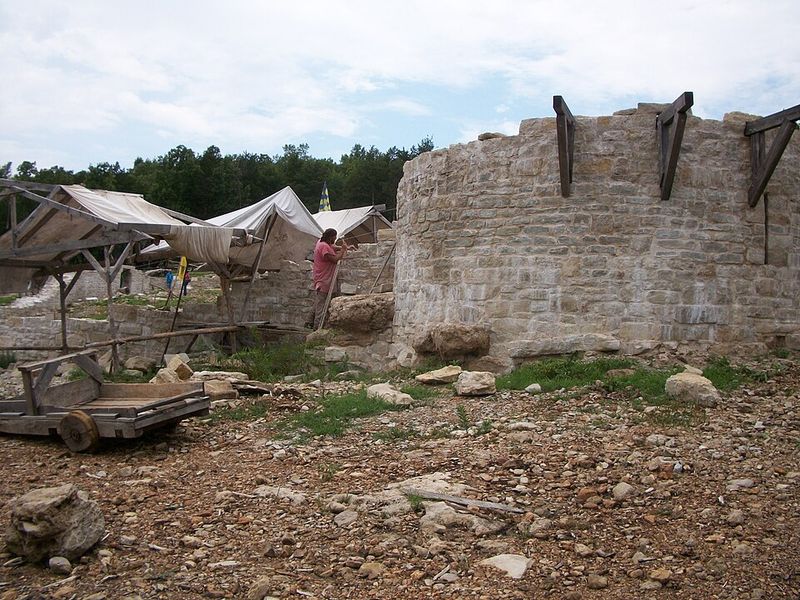
Somewhere between a bold dream and a cautionary tale stands a half-built medieval castle in the Arkansas Ozarks, and honestly, it is one of the most unexpected things I have ever stumbled across on a road trip.
The Ozark Medieval Fortress is located near Lead Hill, AR 72644, and the story behind it is almost as interesting as the structure itself.
In 2009, a group of French and American organizers launched an ambitious project to construct a fully authentic 13th-century French castle using only period-appropriate tools and techniques, with the goal of completing it over roughly two decades.
The project attracted thousands of visitors in its early years, drawing people who were fascinated by the idea of watching medieval construction unfold in real time in the middle of Arkansas.
Financial difficulties hit hard after just a few years of operation, and the project shut down, leaving behind stone walls, towers, and construction equipment frozen mid-effort in the Ozark landscape.
What you find now is a structure that is neither ruin nor completed building, a castle caught in permanent mid-sentence, which somehow makes it more interesting than a finished version might have been.
The craftsmanship visible in the completed sections is genuinely impressive, with hand-cut stone and traditional masonry techniques that remind you how much skill went into building structures like this centuries ago.
Getting to Lead Hill requires a drive through some seriously scenic Ozark countryside, and the approach to the fortress site through the hills adds a layer of atmosphere that feels completely fitting for a medieval castle.
Access to the property has varied over the years, so checking current conditions and local information before making the trip is a smart move to avoid a wasted drive.
Standing in front of those unfinished battlements, I kept thinking that the Ozark Medieval Fortress is proof that the most interesting stories are often the ones that never quite reached their ending.
5. Dogpatch USA, Marble Falls
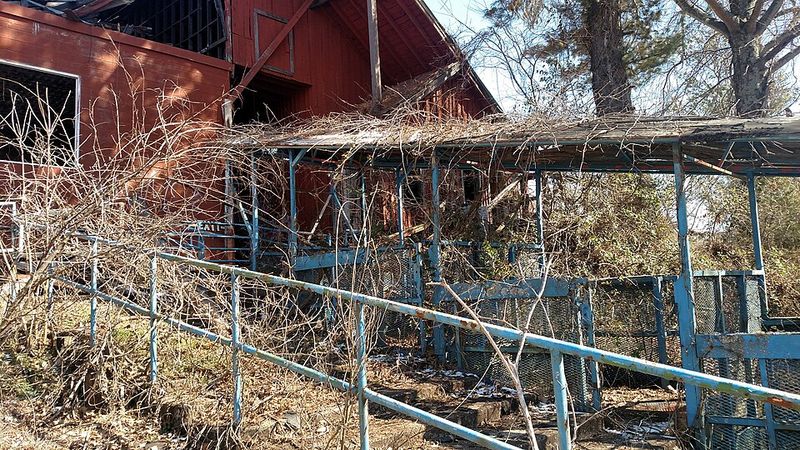
Few abandoned places carry as much nostalgic weight as a forgotten theme park, and Dogpatch USA in Marble Falls, AR 72648, is the kind of place that makes you feel the full emotional punch of that reality.
Opened in the 1960s and inspired by the beloved Li’l Abner comic strip, Dogpatch USA was once a beloved Ozark attraction that drew families from across the region with its combination of rides, live characters, and scenic mountain setting.
The park leaned hard into its hillbilly theme, featuring characters and settings pulled directly from Al Capp’s comic world, which made it a genuinely unique destination compared to the cookie-cutter amusement parks popping up elsewhere during the same era.
For decades, families made annual pilgrimages to Dogpatch, and for many Arkansans, it holds the kind of deep personal memory that is almost impossible to separate from childhood itself.
The park struggled financially through the 1980s and 1990s, cycling through various ownership attempts and rebranding efforts before finally closing its gates for good.
What remains now is a collection of overgrown structures, faded signage, and rusted ride components that nature has been slowly and steadily reclaiming for years.
The setting itself, tucked into the Ozark hills near the Kings River, is genuinely beautiful, and the contrast between the lush natural landscape and the decaying park infrastructure creates a visual tension that photographers absolutely love.
Because the property is privately owned, access is not publicly available, but the surrounding area and roadside views offer glimpses that have made Dogpatch a popular subject for urban explorers and history enthusiasts who document it from legal vantage points.
Local residents in the Marble Falls area sometimes share memories of the park that paint a vivid picture of what it felt like when the laughter and music were still very much alive here.
Dogpatch USA is a reminder that even the most joyful places eventually grow quiet, and that quiet carries its own strange, powerful kind of beauty.
6. Lost River Town Of Napoleon
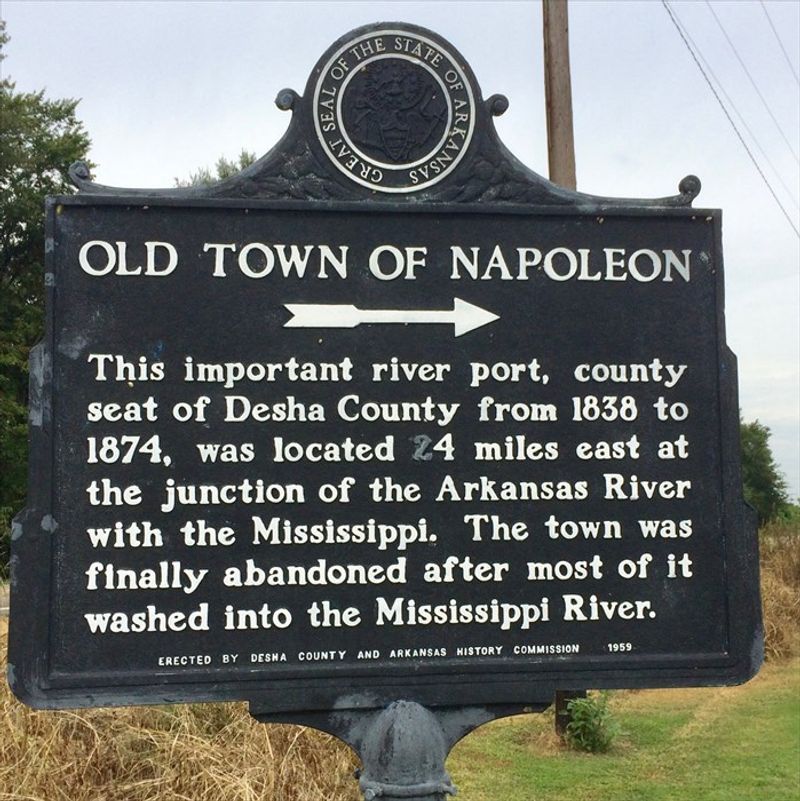
Napoleon, Arkansas, is not the kind of abandoned place where you wander through crumbling buildings or peer into empty windows. What makes it stand out is the absence.
This was once a busy river town, positioned near the confluence of the Arkansas and Mississippi Rivers, where steamboats stopped and trade moved steadily through the region. In the nineteenth century, Napoleon played an important role as a transportation and commercial hub, with warehouses, homes, and businesses lining the riverbanks.
That location, however, also sealed its fate. The shifting currents of the Mississippi River and repeated flooding gradually eroded the land the town depended on.
By the 1870s, much of Napoleon had been washed away, and what remained could not sustain a community. Over time, the town disappeared almost entirely, leaving little behind for visitors to see today.
Standing near where Napoleon once existed feels different from visiting other abandoned sites. There are no dramatic ruins or towering structures, just open land and water where a town once stood.
Old maps and engravings become the closest thing to a window into what life looked like here. Napoleon turns the idea of an abandoned place into something quieter and more reflective, a reminder that sometimes history does not leave behind walls, only stories.