
This Scenic Washington Cave Trail Leads To Ancient Petroglyphs
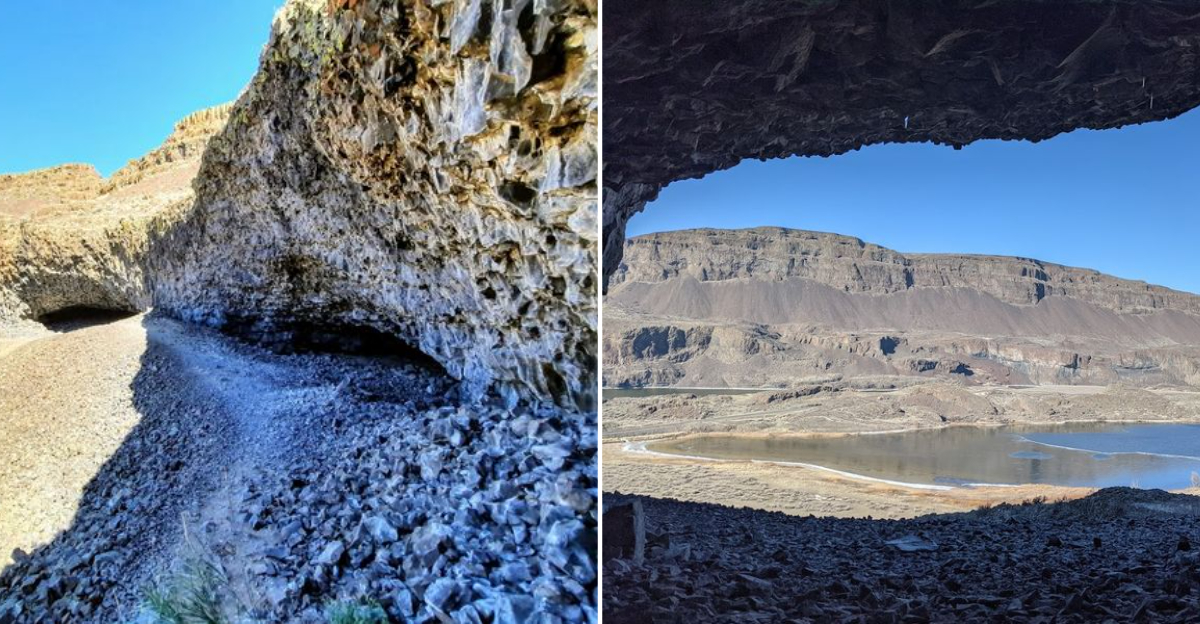
Have you ever wanted to play “archaeologist for a day”? Because that’s exactly how I felt when I first set eyes on this place. It’s not your typical damp, claustrophobic cave experience; these are wide, sun-drenched alcoves tucked into the side of a truly dramatic cliffside.
The best part of exploring this rugged corner of Washington state is the sheer sense of scale. The contrast between the brilliant blue water and the scorched-orange rock is absolutely stunning. But the real treasure is hidden in plain sight.
When I finally spotted the ancient petroglyphs etched into the stone, my jaw actually dropped. These faint carvings are a hauntingly beautiful reminder of the people who sat in these very same spots millennia ago, watching the sun set over the basin just like I was.
A Trail With A Big Opening Scene
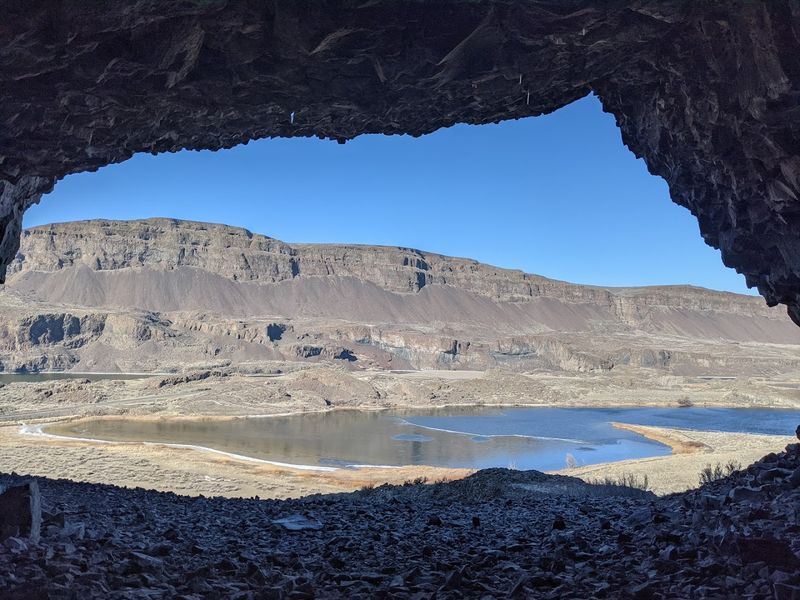
My visit began with a drive along State Route 17 in east-central Washington, where the road skirts dramatic coulee country and suddenly makes you want to pull over. A gravel road leads to the parking area for Lake Lenore Caves, and a Discover Pass is required before you head up the trail.
Right away, the setting feels bigger than the hike itself, with Lake Lenore stretching below and dark basalt walls rising ahead. The route is short, generally somewhere around 1.2 to 2.1 miles round trip depending on how much you explore, but it does not feel skimpy.
There is a staircase, some uneven rocky ground, and enough elevation change to make you pay attention without turning the outing into a boot camp performance. I liked that balance a lot, because it let me focus on the views, the shapes in the cliffs, and that nice little pulse of anticipation as the caves came into sight.
For a trail that asks so little time, it delivers a very satisfying entrance. The whole place has that quiet, ancient feeling that makes you slow down without even meaning to.
By the time you reach the cave openings, the landscape feels less like a quick roadside hike and more like a window into another side of Washington.
How Floods Shaped The Basalt
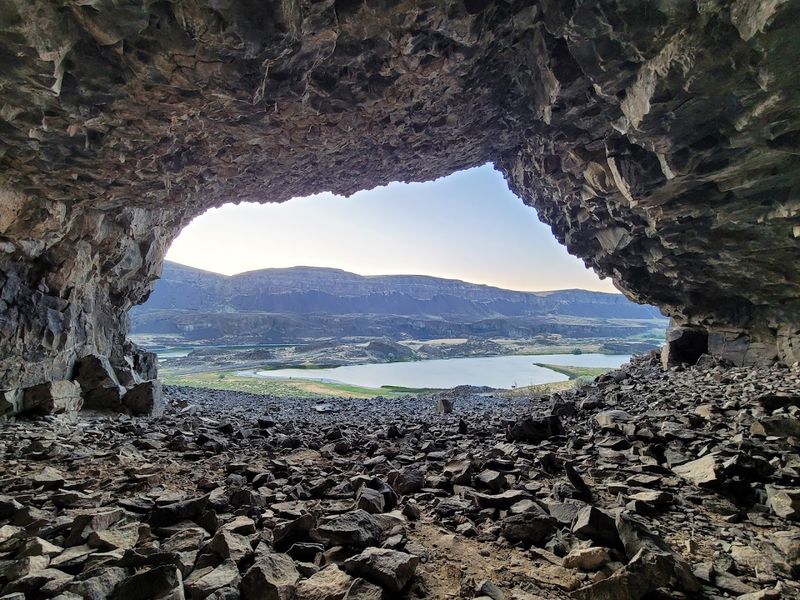
What grabbed me most was realizing these are not deep storybook caverns, but shallow rock shelters created by extraordinary force. Lake Lenore Caves sit in Lenore Canyon and are part of the Ice Age Floods National Geologic Trail, which already tells you this landscape has a wild backstory.
More than 13,000 years ago, the Missoula floods tore through this region and plucked chunks of basalt out of the canyon walls, leaving the caves and overhangs you see today.
Standing beneath them, I could feel how the geology shapes the mood of the whole place. The basalt looks stern, dark, and a little theatrical, but the forms are easy to read once you know what happened here.
Instead of wandering through underground passages, you move along an exposed cliff line where flood power is written right into the stone in a way that feels immediate and surprisingly easy to imagine. It is a geology lesson, yes, but one with a very scenic classroom and no boring seats.
Petroglyphs And Cultural Meaning
The history here reaches far beyond the trail itself, and that is something I felt strongly as soon as I stepped into the rock shelters. Indigenous people, including members of the Yakama, Moses, and Columbia tribes, used these caves as seasonal shelters and storage areas for hunting and gathering for at least 5,000 years.
That knowledge changes the experience completely, because the caves stop being just an interesting formation and become a place of continuing cultural and religious significance.
Ancient petroglyphs were once visible on the cave walls, and their presence is well documented even though vandalism has made some markings difficult to distinguish today.
I found that detail sobering in a practical, respectful way, because it reminds you to look carefully and not mistake modern graffiti for something truly old.
This is not a site to treat casually, and the best approach is simple: move gently, observe thoughtfully, and remember that people lived, worked, and returned here long before hikers arrived with phones and snack crumbs.
That awareness gives every step more weight.
The Cave That Opens Like A Whale’s Mouth
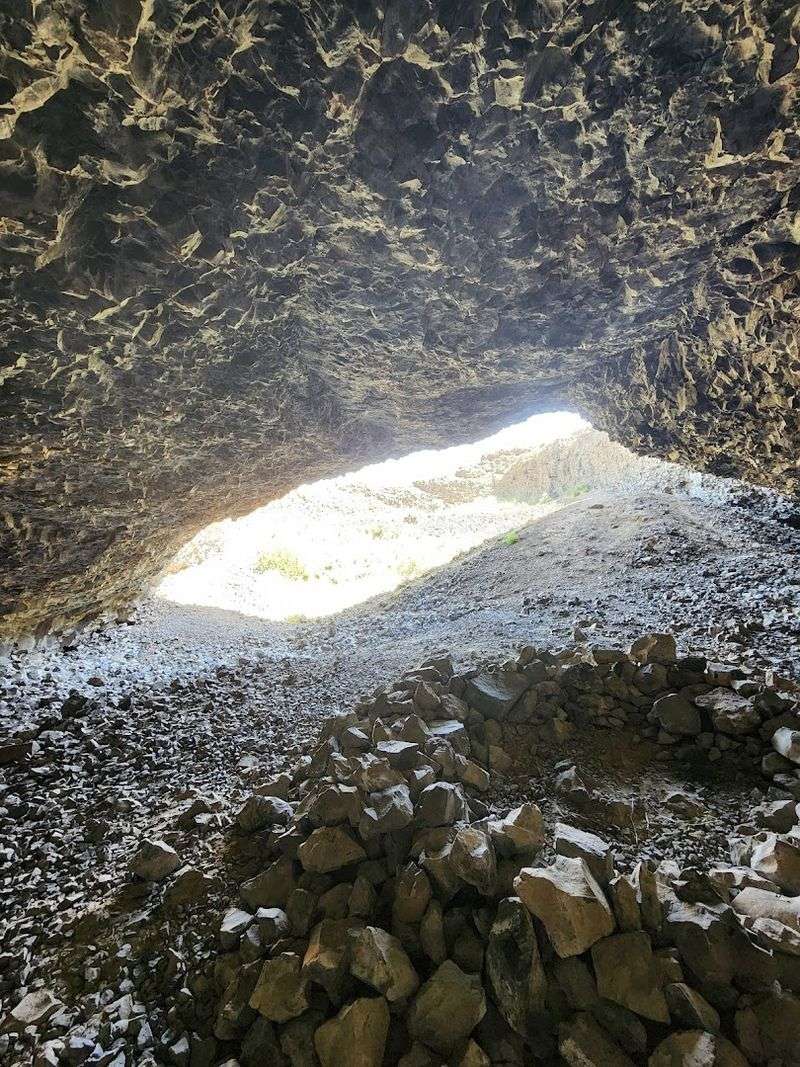
Then comes the visual payoff that people remember most: the largest cave, famous for opening like a whale’s mouth in the basalt cliff. It is a wonderfully odd description, and once I saw it, I could not argue with it.
The opening is broad, dramatic, and just theatrical enough to make you stop talking for a second and simply stare up at the stone.
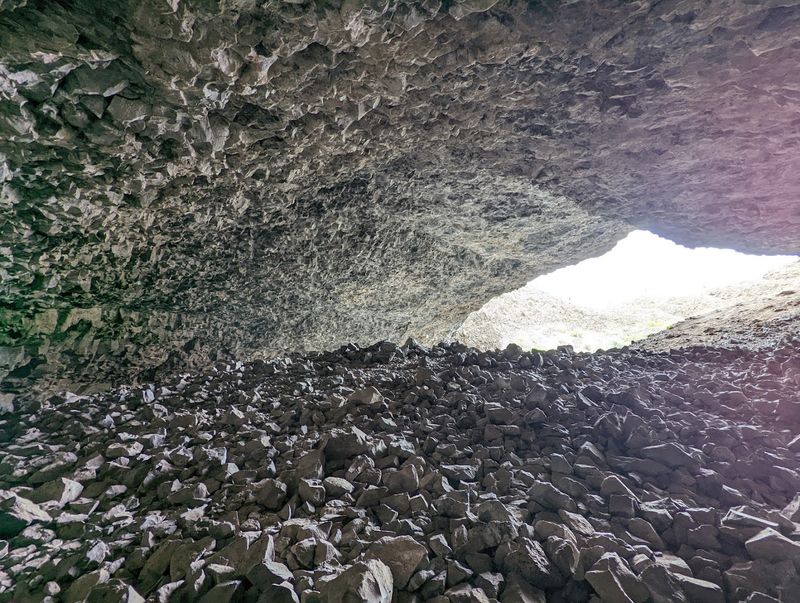
I liked how the cave feels imposing without being inaccessible. Because these are rock shelters rather than deep caverns, you still get plenty of daylight, which helps reveal the textures, shapes, and color shifts in the basalt.
Looking outward again, the view over Lake Lenore adds a softer counterpoint to all that rugged rock, and the contrast works beautifully, with water below, cliff above, and broad Washington sky tying the scene together in a way that feels very complete.
It is one of those rare trail moments that looks excellent in photos but feels even better in person, which is travel gold if you ask me.
What The Hike Actually Feels Like
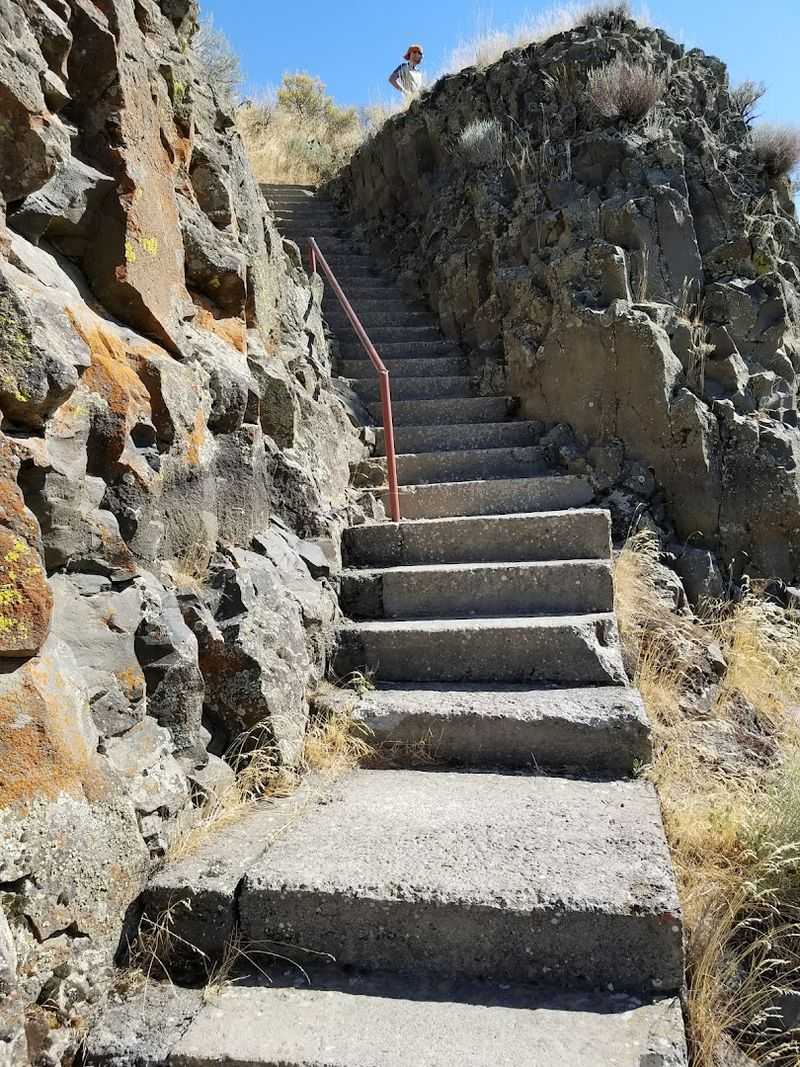
On paper, this hike sounds easy, and for many visitors it is manageable, but I would still call it a pay-attention trail. The path is short and family friendly in spirit, yet the terrain includes uneven rocks, stairs, and places where good footing matters.
I appreciated that it never felt extreme, though it definitely asked me to watch each step instead of floating along daydreaming about lunch.
Interpretive signs along the route add useful context without slowing the walk into a museum shuffle. I enjoyed pausing at them because they connected the scenery to the floods, the caves, and the long human story of the area, making the trail feel richer than a simple up-and-back.
Practical matters count here too, especially in warmer months, since rattlesnakes are known in this landscape, so sturdy shoes, alert eyes, and a calm attitude are better companions than overconfidence.
In other words, it is a short hike with just enough personality to keep everyone honest and pleasantly engaged.
Best Time To Go And How To Prepare
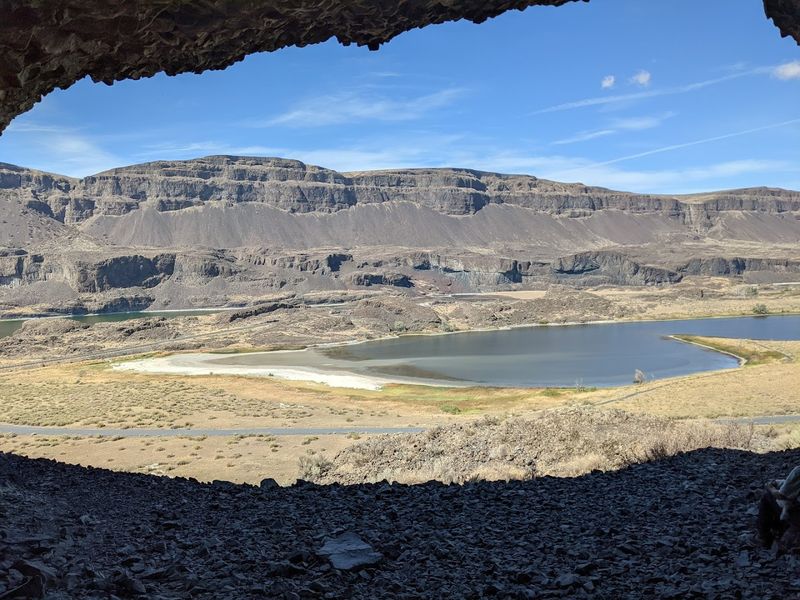
I think this place shines brightest when you approach it with simple expectations and a little preparation. Because the hike is exposed and the landscape is classic dry central Washington country, I would bring water, sun protection, and shoes with decent grip even for a quick visit.
The reward for that minimal effort is a trail that feels spacious, photogenic, and easy to fit into a day of exploring the wider coulee region.
Spring and fall would be my favorite seasons for comfort, though a clear day in any season can make the cliffs and lake look spectacular.
Morning or later afternoon light gives the basalt more texture and keeps the scene from looking flat, which matters if you enjoy photography or simply like your views with a little extra drama.
I also found it worth slowing down rather than racing to the caves, because the approach itself frames the whole experience and lets the landscape build anticipation gradually. That slow reveal is part of the charm, and the trail wears it very well.
Why This Short Stop Stays With You
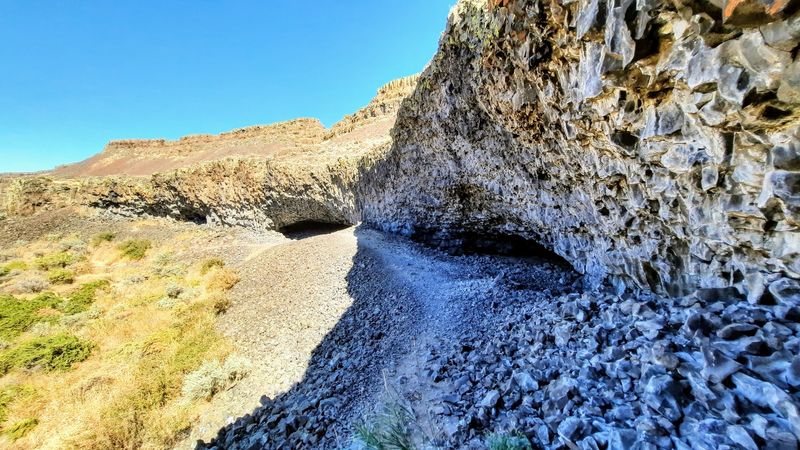
Some places impress with size, some with difficulty, and some with a long checklist of attractions, but this one wins by layering several good things into a compact visit.
Lake Lenore Caves, Washington, sits between Soap Lake and Dry Falls Junction, about 8 miles south of Sun Lakes-Dry Falls State Park, and that location makes it feel like a perfect scenic pause with substance.
I came for the trail and views, yet I left thinking just as much about geology, cultural history, and how much meaning can sit inside a relatively short walk.
There is also something refreshing about a destination that does not pretend to be more than it is. The caves are shallow, the hike is modest, and the road access is straightforward, but the place still feels memorable because every feature connects to the next so naturally.
You get sweeping scenery, Ice Age drama, Native history, and a striking cliffside setting in one neat package, which is honestly a strong bargain in travel terms. By the time I headed back to the car, the detour had fully earned top billing.