
Here’s Where You Can Find 12 Of The Most Beautiful Waterfalls In Arizona
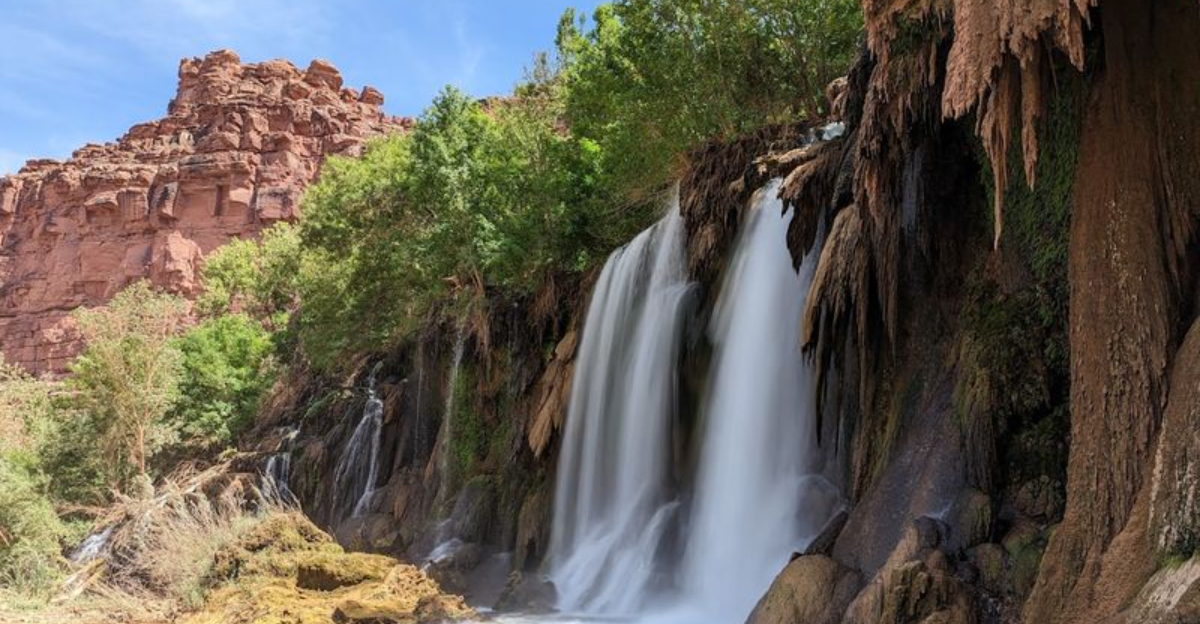
Let’s be real: when you think of the Southwest, you’re probably picturing heat, sand, and maybe a cactus or two. But I’m here to tell you that’s only half the story. I’ve been on a mission to hunt down the coolest, most photogenic, and downright majestic waterfalls across the state, and I’ve finally narrowed it down to my top twelve favorites.
Forget what you think you know about the landscape-this is about chasing rainbows through canyon mists and cooling off in crystal-clear pools. Exploring the secret canyons of Arizona has been the adventure of a lifetime, and I’m ready to share these hidden gems with you.
This guide walks you through 12 of the most beautiful waterfalls in the state, covering everything from turquoise pools to seasonal showstoppers, so you know exactly where to go and what to expect before you lace up your hiking boots.
1. Havasu Falls, Supai, Havasupai Reservation
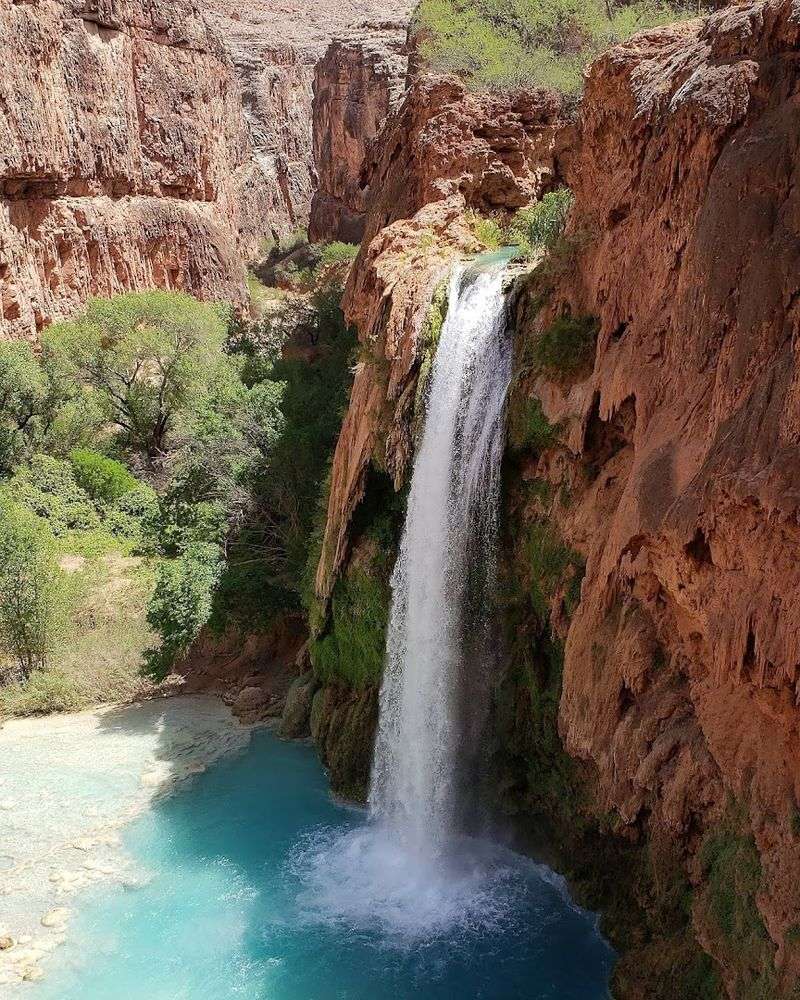
Few waterfalls on the planet stop people in their tracks the way Havasu Falls does. The water runs a striking turquoise-blue color, thanks to high mineral content, and it plunges about 100 feet into a wide, glowing pool below.
Located deep within Havasu Canyon on the Havasupai Reservation near Supai, Arizona, this is one of those places that looks almost too beautiful to be real.
Getting here is not a casual afternoon stroll. Visitors must obtain a permit through the Havasupai Tribe, and no day hiking is allowed. You will need to book an overnight stay, which typically means camping or staying at the lodge, and reservations fill up extremely fast, often within minutes of opening.
Planning well in advance is absolutely essential. The roughly 10-mile hike into the canyon is manageable for most fit hikers, and every step of the journey rewards you with canyon scenery that builds beautifully toward that first view of the falls.
2. Mooney Falls, Supai, Havasupai Reservation
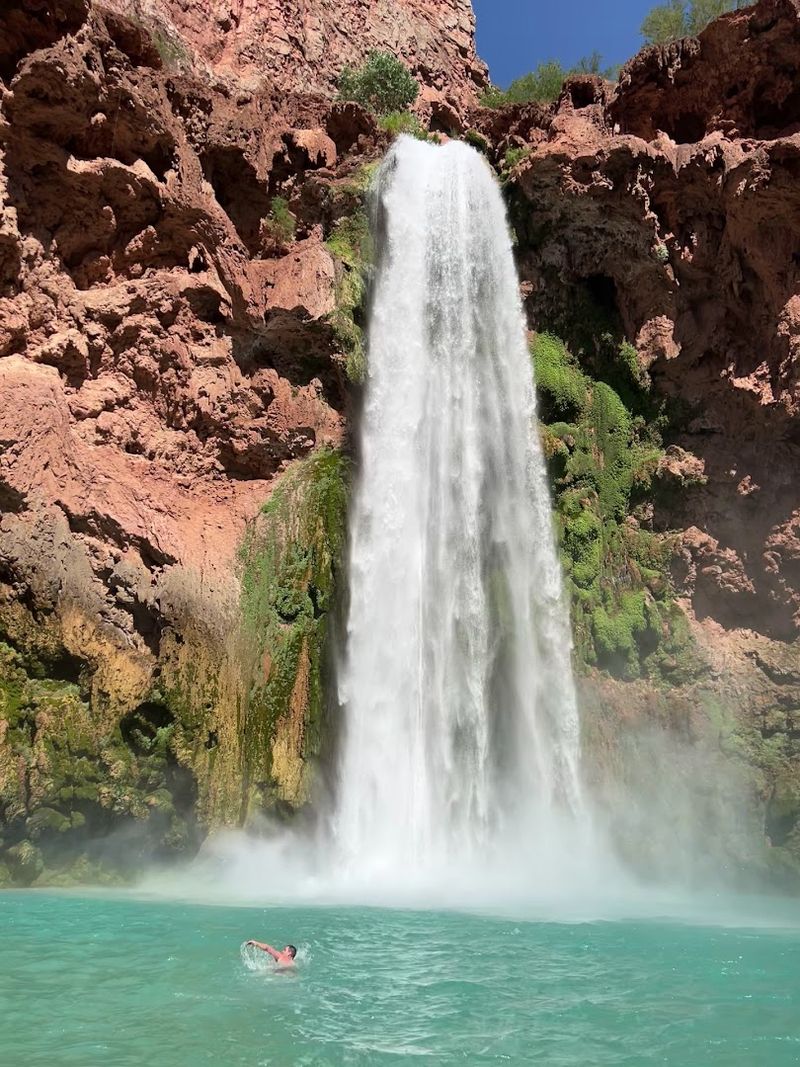
Standing at nearly 200 feet tall, Mooney Falls is the tallest waterfall in Havasu Canyon and one of the most dramatic natural sights in all of Arizona. Named after a prospector who had an unfortunate encounter with the cliff in the 1880s, this waterfall commands serious respect both for its history and its sheer vertical scale.
Reaching the base is genuinely thrilling. Visitors must descend a steep, narrow trail carved directly into the canyon wall, using chains bolted into the rock and crawling through small tunnels.
It sounds intense, and honestly, it is, but the payoff waiting at the bottom makes every heart-pounding moment worthwhile. Since Mooney Falls sits within the Havasupai Reservation, the same permit system that covers Havasu Falls applies here too.
Most visitors tackle both waterfalls during the same permitted overnight trip, which makes perfect logistical sense. The roar of the water at the base is something you will not forget quickly.
3. Beaver Falls, Supai, Havasupai Reservation
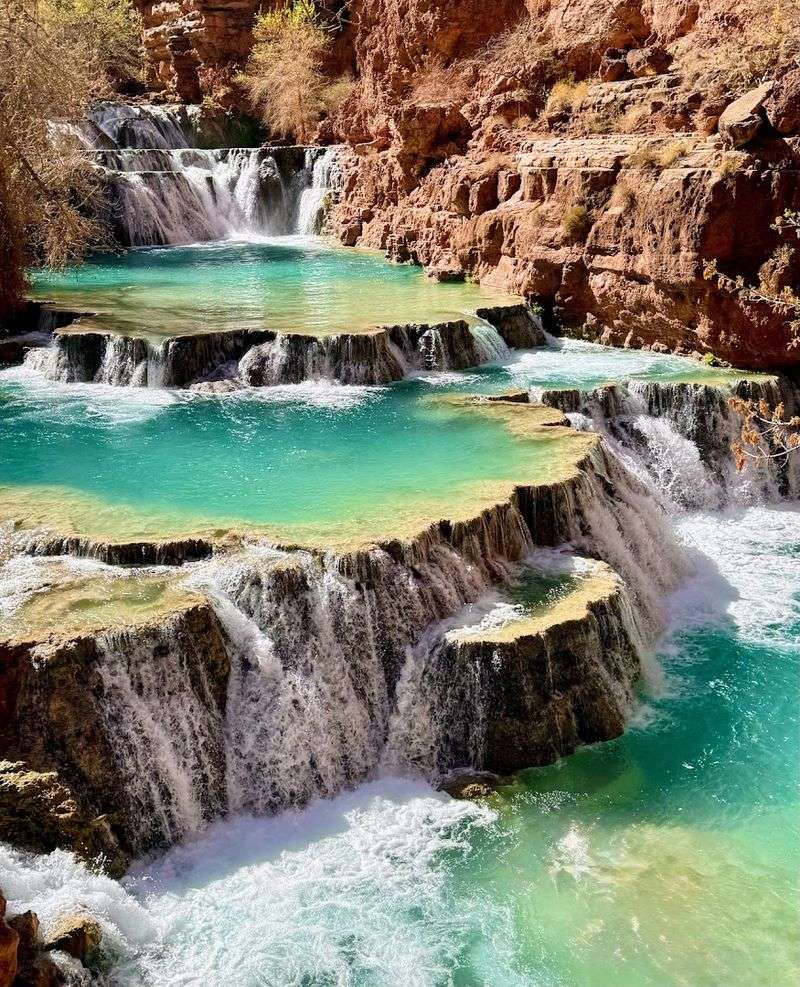
If you have already made the commitment to visit Havasu Canyon with a permit, pushing a little farther along Havasu Creek to reach Beaver Falls is absolutely worth the extra effort. This series of tiered cascades and clear pools sits about 3 miles downstream from the campground, making it a solid half-day add-on for overnight visitors.
Unlike the single dramatic drop of Mooney Falls, Beaver Falls offers a more layered experience with multiple small cascades tumbling into one another in a staircase pattern.
The surrounding canyon feels quieter here, with fewer crowds than the main falls area, and the cottonwood trees along the creek add a soft, shaded charm to the whole scene.
The trail involves some creek crossings, so waterproof shoes or sandals with good grip are a smart call. Swimmers love the calm pools scattered between the cascades. Beaver Falls reminds you that Havasu Canyon keeps rewarding the hikers willing to keep exploring just a little bit further.
4. Fifty Foot Falls, Supai, Havasupai Reservation
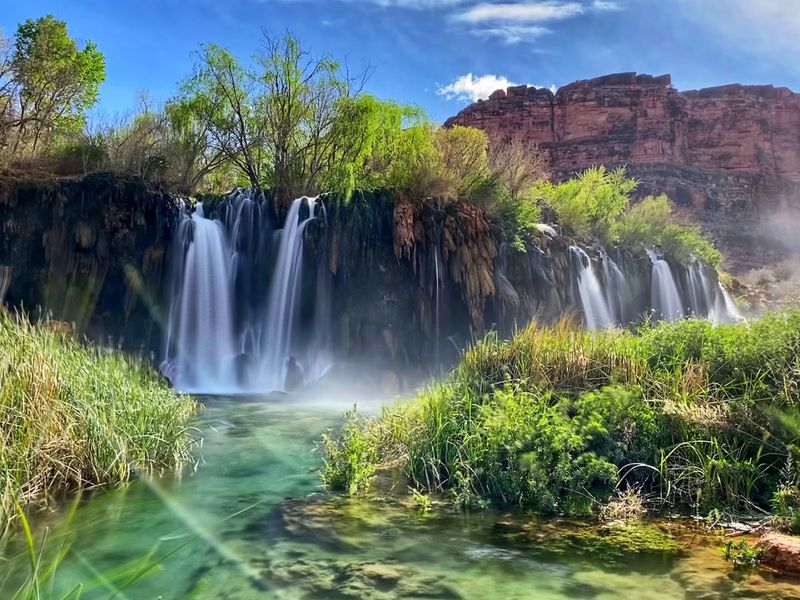
Not every waterfall needs to be the tallest or the most famous to earn a spot on a must-see list. Fifty Foot Falls sits quietly in Havasu Canyon, offering a wide, curtain-style drop that feels more intimate and personal than the towering neighbors nearby.
The name is refreshingly straightforward, and the falls deliver exactly what they promise.
Located along the same Havasu Creek corridor as the other canyon waterfalls, Fifty Foot Falls is accessible only to those with a valid Havasupai permit for overnight stays. The falls sit close enough to the main campground that visiting does not require a major detour, which makes it an easy addition to any Havasupai itinerary.
The wide pool at the base is calm enough for wading and swimming, and the surrounding canyon walls frame the scene beautifully.
Photographers especially appreciate the way the light plays off the water here in the late afternoon. It is a quieter, more relaxed stop in a canyon full of big personalities.
5. Little Navajo Falls, Supai, Havasupai Reservation
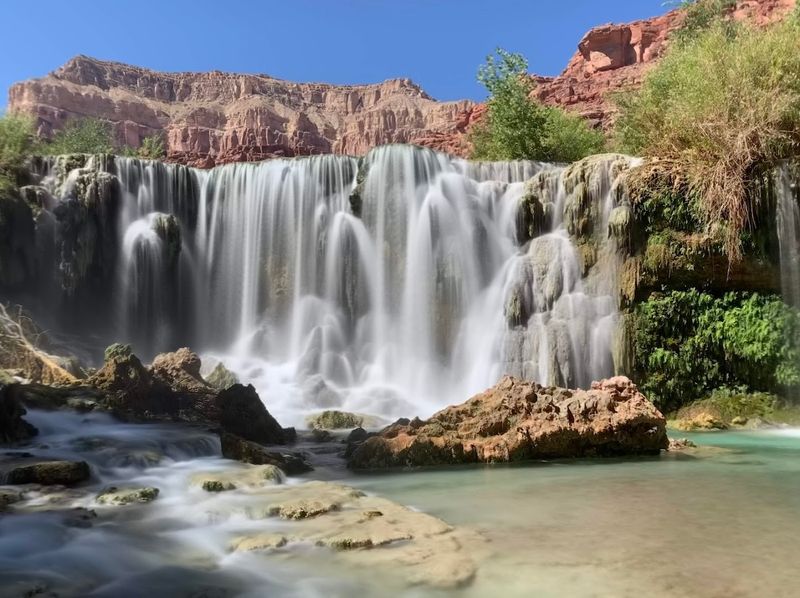
This place has a fascinating backstory that most visitors do not know. The original Navajo Falls was significantly altered by a major flash flood in 2008, and what hikers see today is actually a newer formation that emerged from the canyon’s natural reshaping after that event.
Nature, it turns out, is a pretty capable landscape architect.
Spread across a wide section of red rock ledges, Little Navajo Falls fans out into multiple strands before collecting in a shallow, sparkling pool below. The effect is more of a broad, spreading curtain than a single focused drop, giving it a distinctly different character from the other falls along the same canyon route.
Sitting close to the main trailhead area, this is often the first waterfall that permitted visitors encounter after arriving in Havasu Canyon.
The Havasupai permit system covers access here just as it does for the other falls. Starting your canyon experience with Little Navajo Falls is a genuinely wonderful way to set the mood for everything ahead.
6. Fossil Creek Falls, Fossil Creek Wild And Scenic River, Near Camp Verde
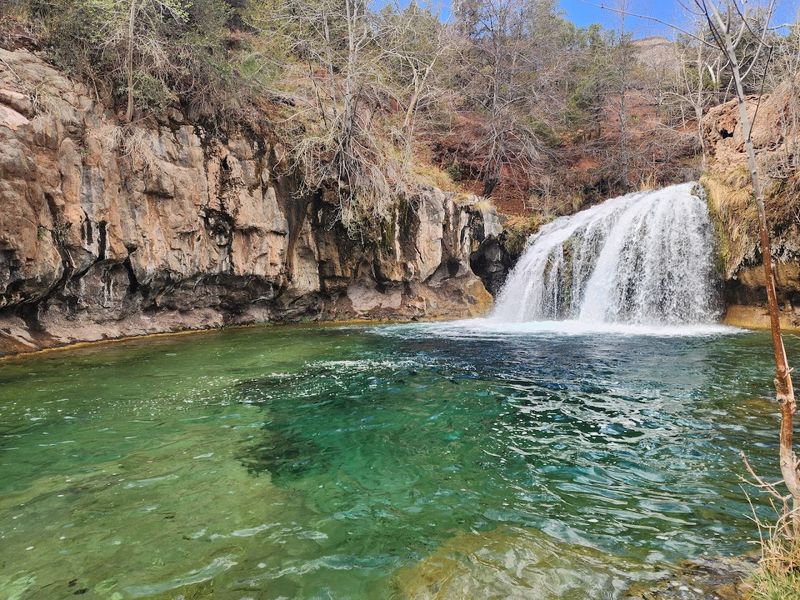
Fossil Creek Falls earns its spot on this list partly because of how unusual it is for Arizona.
The creek is spring-fed, which means the water flows year-round at a remarkably consistent temperature of around 70 degrees Fahrenheit, and the blue-green color of the water against the tan travertine rock formations is genuinely striking.
Located along the Fossil Creek Wild and Scenic River near Camp Verde, the falls are reached via a popular trail that winds through classic Arizona high desert terrain before dropping into the lush, green riparian corridor along the creek.
The contrast between the dry landscape above and the cool, shaded canyon below is one of the more memorable trail transitions in the state.
A permit is required from April 1 through October 1, and visitors must reserve in advance through the relevant booking system. This helps protect the sensitive ecosystem and keeps crowds manageable. Arriving early on permit days is strongly recommended, since the trailhead and parking fill up faster than you might expect.
7. Water Wheel Falls, Tonto National Forest, Near Payson
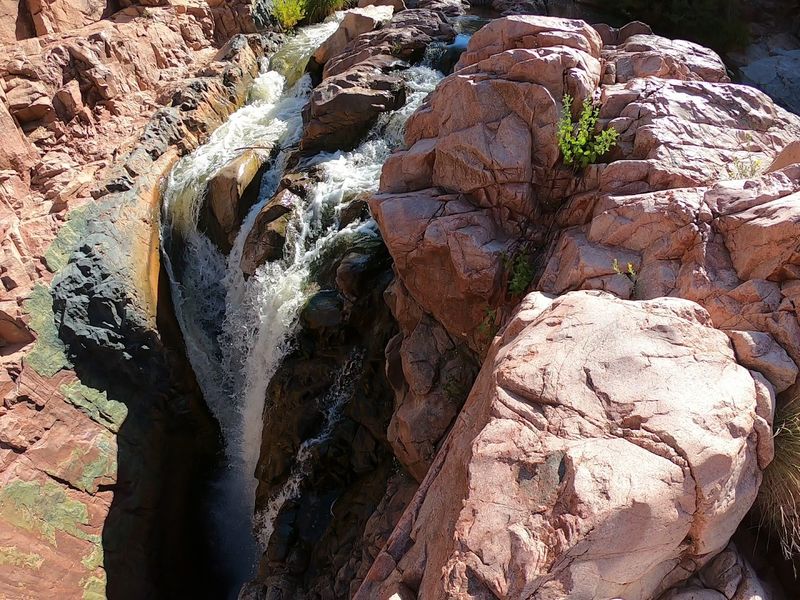
There is something wonderfully unpretentious about Water Wheel Falls. Tucked into Tonto National Forest near Payson, Arizona, this creek-and-cascade hike attracts families, weekend hikers, and anyone who wants a beautiful outdoor experience without the intense commitment of a multi-day canyon trek.
The falls themselves are not a single dramatic plunge but rather a lively series of cascades and small drops along Christopher Creek, where the water tumbles over and around large boulders in a forested setting.
Pine trees line the banks, the air smells clean and cool, and the sound of rushing water follows you along the trail in the most satisfying way.
The Water Wheel area is an active day-use site managed by the Forest Service, with current fee information available through Tonto National Forest. The trail is well-maintained and relatively accessible for most fitness levels.
Visiting during spring or after a good monsoon season gives you the best water flow and the most energetic cascade display the falls can offer.
8. Ellison Creek Cascades, Near Water Wheel, Payson Area
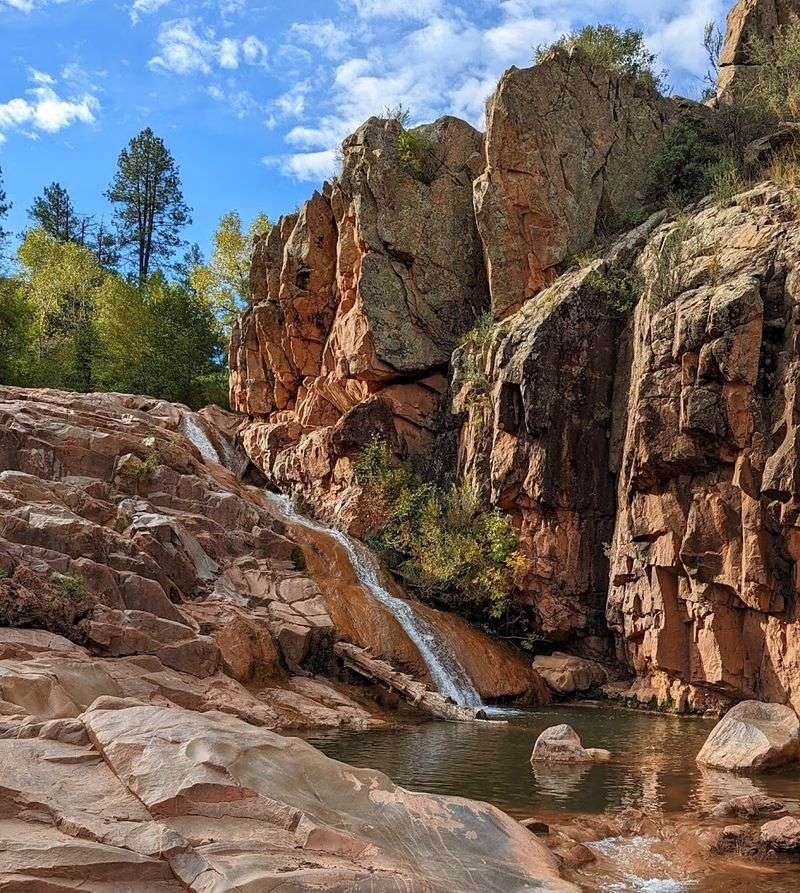
Just a short distance from Water Wheel Falls, Ellison Creek Cascades rewards the hikers who decide to keep walking a little longer down the trail. Many visitors stop at Water Wheel and turn back, completely unaware that the creek keeps delivering beautiful scenery around the next bend.
Ellison Creek flows through a stretch of ponderosa pine forest that gives the area a distinctly different feel from the lower desert zones of Arizona.
The cascades here are gentler and more spread out than a single defined waterfall, creating a series of photogenic spots where the water slides over smooth rock shelves and pools between boulders.
Since this area sits in the same general corridor as Water Wheel Falls within Tonto National Forest near Payson, pairing both spots into one outing makes complete sense logistically. Wear shoes with good grip because some of the creek-side terrain gets slippery when wet.
The Payson area as a whole is one of Arizona’s most underrated outdoor destinations, and Ellison Creek is a perfect example of why.
9. Seven Falls, Sabino Canyon Recreation Area, Tucson
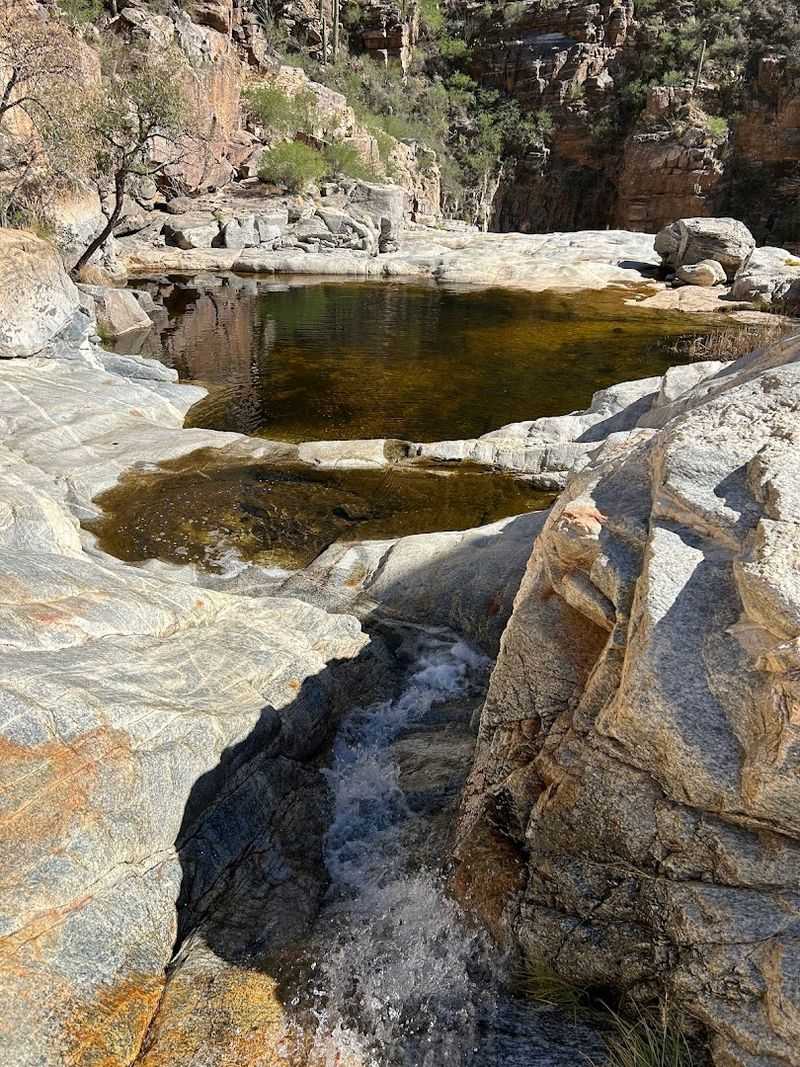
Tucson does not always get credit for its hiking, but Seven Falls is the kind of trail that converts skeptics fast.
Part of Bear Canyon Trail No. 29 within Sabino Canyon Recreation Area, Seven Falls sits at the end of an 8.5-mile round trip from the Sabino Canyon Visitor Center, though hikers can shorten the approach by taking the paid tram partway into the canyon.
The destination itself is a series of natural water slides and tiered pools carved into smooth granite walls, where the creek has spent centuries sculpting the rock into flowing curves.
When water levels are good, the pools are perfect for cooling off after the warm hike in, and the canyon walls create a natural amphitheater effect that amplifies the sound of the falls beautifully.
Spring is generally the best time to visit for reliable water flow, though summer monsoon season can also bring impressive surges.
The recreation area charges an entrance fee, and the Sabino Canyon Visitor Center is a great place to check current trail conditions before heading out.
10. Tonto Natural Bridge Waterfall, Tonto Natural Bridge State Park, Pine
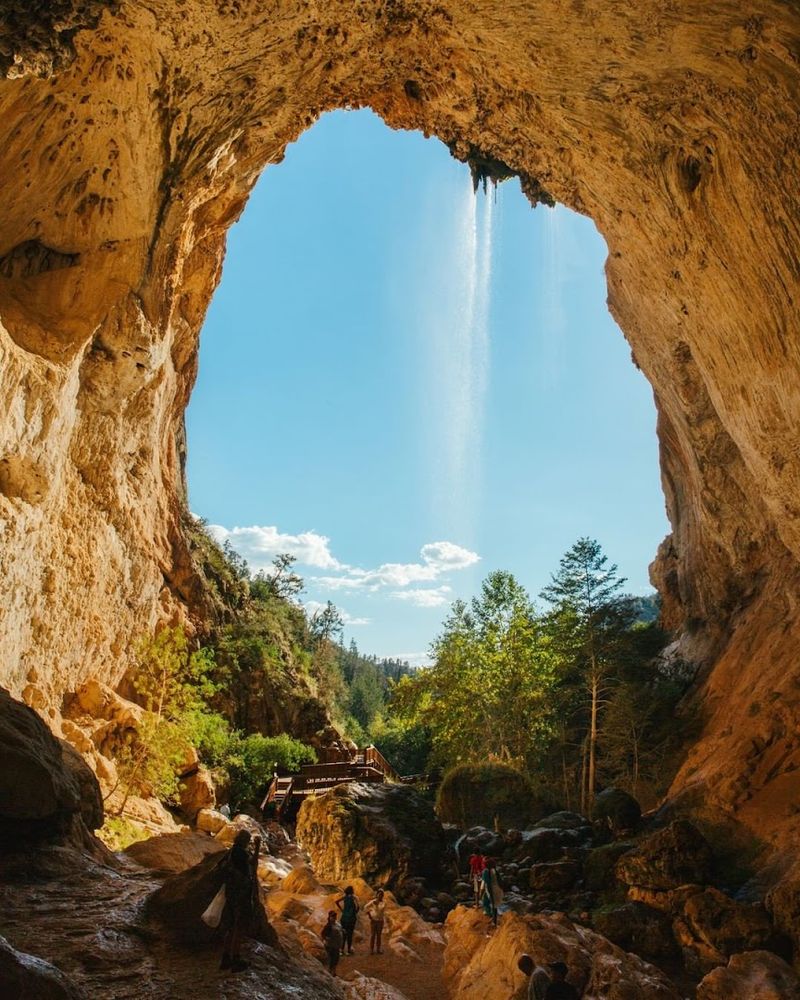
Tonto Natural Bridge State Park near Pine, Arizona, is home to what is believed to be the largest natural travertine bridge in the world, and the waterfall that flows through and beneath that arch adds a layer of magic that is hard to put into words.
The combination of the massive rock formation and the cascading water creates a scene that feels almost prehistoric.
The park offers several trails and viewpoints that let you see the bridge and waterfall from different angles, including a steep trail that brings you right down to the creek level beneath the arch.
The Waterfall Trail in particular puts you close enough to feel the mist, which is a welcome sensation on a warm Arizona afternoon.
One important note for planning: trails at the park close earlier in the day than the viewpoints, so checking the current schedule on the Arizona State Parks website before your visit is genuinely useful. The small town of Pine nearby is charming and worth a short stop after your hike.
11. Sycamore Falls, Kaibab National Forest, Near Williams
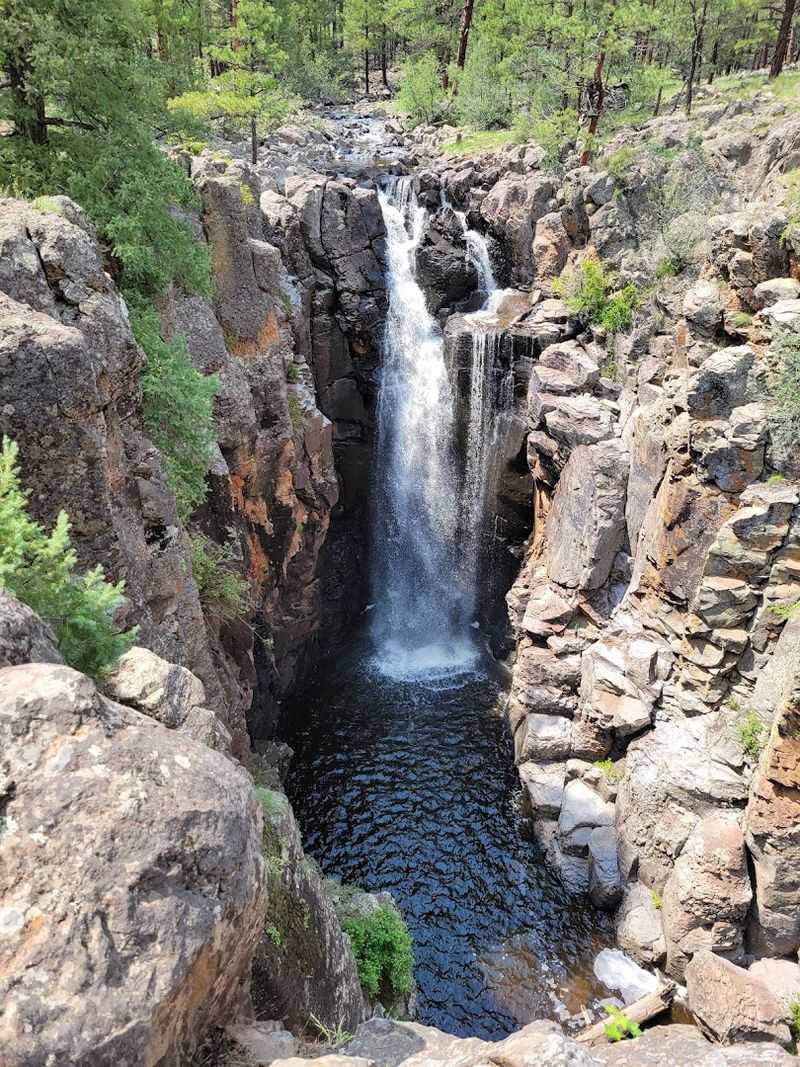
Sycamore Falls near Williams, Arizona, operates on nature’s schedule rather than a visitor’s wishlist, and that unpredictability is honestly part of its charm.
Located within Kaibab National Forest along the Sycamore Rim Trail area, this seasonal waterfall flows most reliably in spring following snowmelt or after periods of significant rainfall.
When it is running, the falls drop over a rocky ledge into a forested canyon in a way that feels completely surprising given the surrounding high plateau terrain. The Sycamore Rim Trail itself is a wonderful hike regardless of whether the falls are flowing, offering sweeping views into Sycamore Canyon and through stands of tall ponderosa pine.
The Kaibab National Forest lists the Sycamore Falls Trailhead as part of this trail system, and the drive from Williams is straightforward and scenic.
Checking recent trip reports or contacting the Kaibab National Forest Williams Ranger District before visiting will help you avoid the disappointment of arriving during a dry spell. Timing your trip for April or May generally gives you the best odds.
12. Ribbon Falls, Grand Canyon National Park
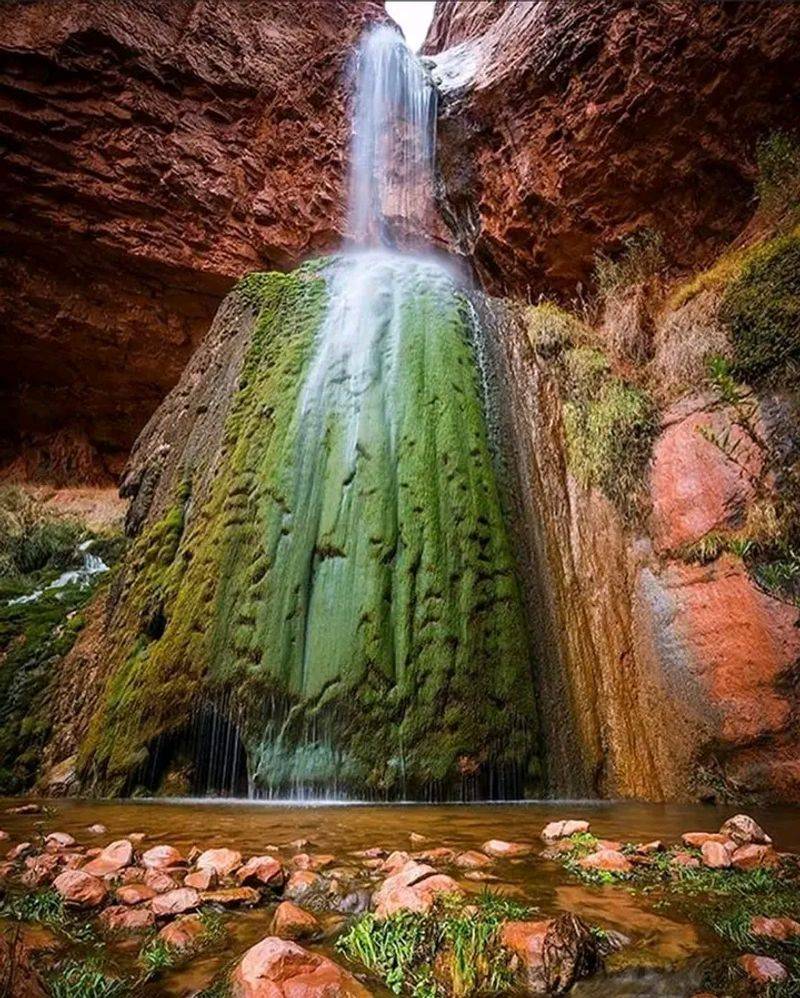
Ribbon Falls is one of those Grand Canyon rewards that feels almost secret, even though experienced canyon hikers talk about it with genuine reverence.
The falls drop in a slender, elegant stream onto a large moss-covered travertine mound that has built up over thousands of years of mineral-rich water flow.
The visual contrast between the delicate falling water and the massive, ancient rock formation it has created is one of the more quietly stunning sights in all of Grand Canyon National Park. The grotto-like setting around the falls adds to the feeling that you have stumbled onto something rare and tucked away from the rest of the world.
An important access note for 2026: Grand Canyon National Park has confirmed that the North Kaibab Trail north of the Ribbon Falls junction to the North Kaibab Trailhead is closed until May 15, 2026, and additional trail closures in the park remain in effect through June 30, 2026.
Checking the official park website for the most current trail status before planning your trip is strongly advised.