
This Canyon In Michigan’s Upper Peninsula Is A Surprise Most People Miss
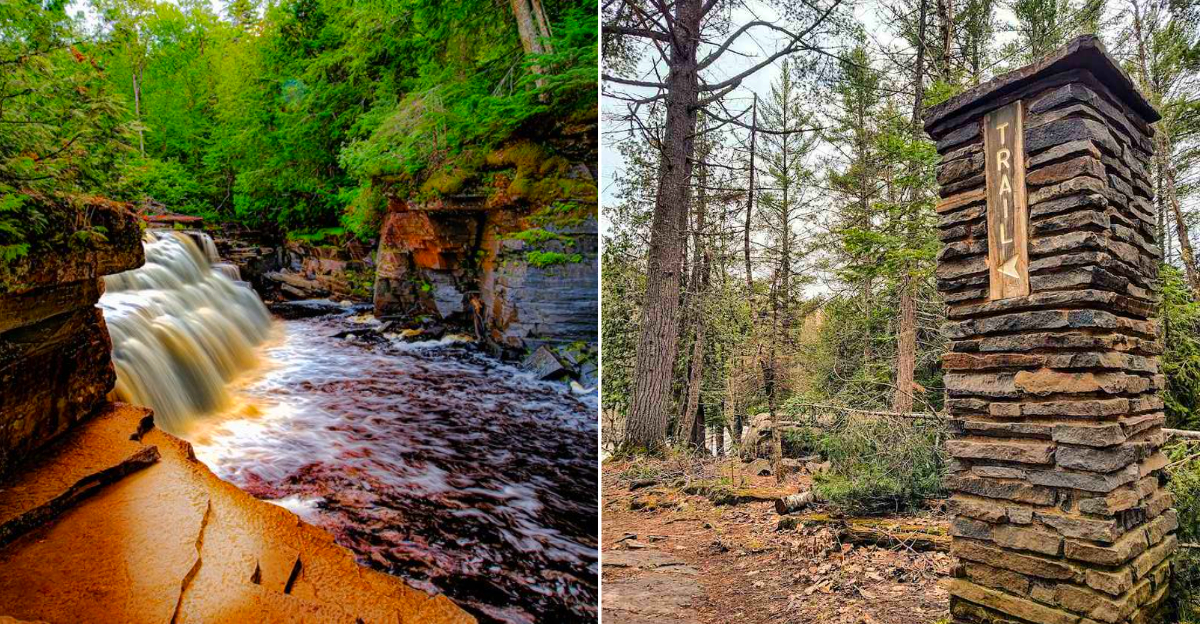
Drive past the L’Anse vault toilets and ignore the gravel-lot boredom; the real story starts where the pavement dies. This isn’t a highway billboard stunt. It’s a bait-and-switch.
You enter a standard screen of trees expecting a leg-stretch and instead find the Sturgeon River carving a jagged, slate-edged canyon that looks like it belongs in a different time zone.
The transformation is surgical: one minute you’re smelling exhaust, the next you’re catching river spray in a gorge that swallowed the horizon. I watched the water go from a polite murmur to a full-scale roar in under ten minutes of hiking.
It’s a raw, vertical payout for anyone tired of “scenic overlooks” that require a gift shop entry fee. No fluff, just ancient rock and gravity doing the heavy lifting.
Hike the “Grand Canyon of Michigan” near L’Anse to witness dramatic Sturgeon River waterfalls, ancient slate gorges, and the best hidden wilderness trails on US-41.
Let The Plain Trailhead Lower Your Expectations First
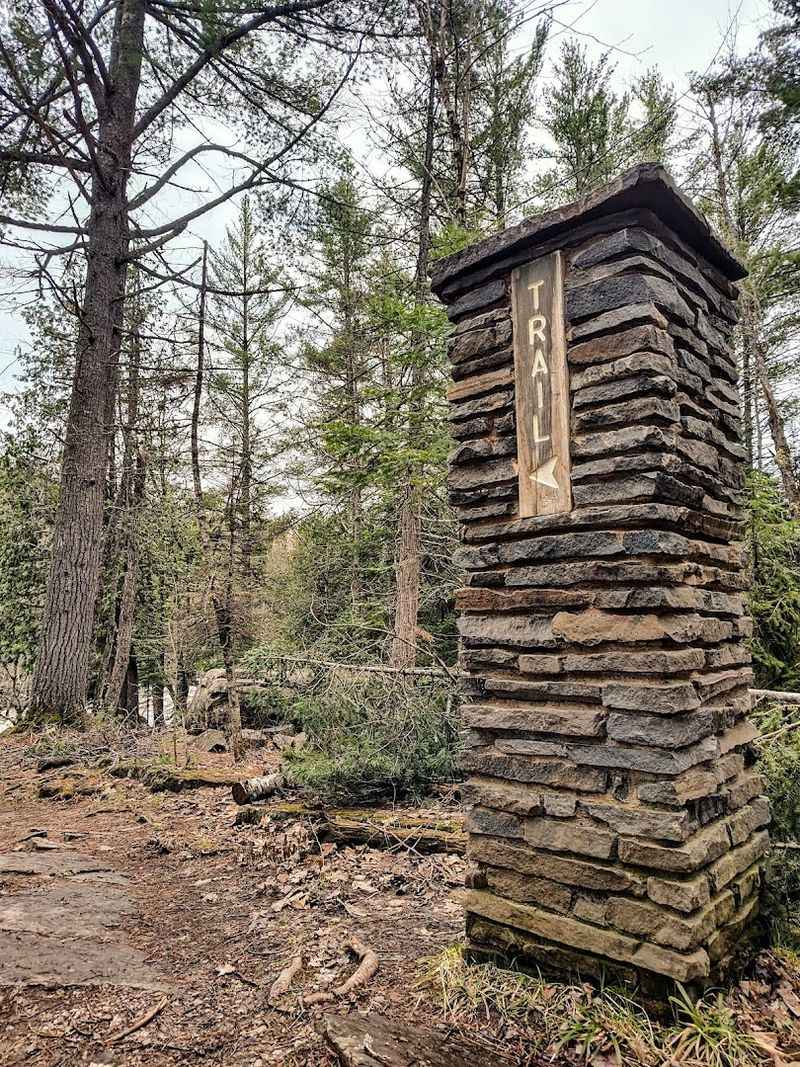
The first surprise at Canyon Falls is how ordinary the entrance looks. Off US-41, the roadside park feels practical rather than theatrical, with parking, vault toilets, and signs that suggest a useful stop instead of a memorable one. That modest beginning is part of the pleasure.
The trail heads gently downhill through the woods, and the reveal is paced well. Boardwalk sections, exposed roots, and a well-worn path keep things interesting without making the approach feel strenuous for most visitors.
Because the place begins so quietly, the canyon lands with more force when it appears. Give yourself a little time at the lot, then walk in without rushing, and let the landscape do its excellent, slightly sneaky work.
Location
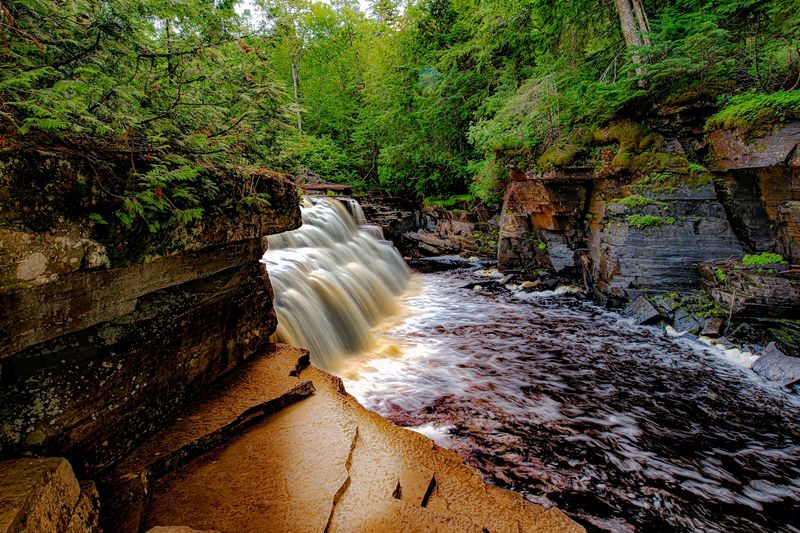
The trek to Canyon Falls Roadside Park at US-41, L’Anse, MI 49946 is an ascent into the raw, elevated spine of the Baraga Plains. Sunlight flickers through a relentless corridor of jack pine and hardwood as the pavement carves through jagged outcroppings of Precambrian rock.
Civilization thins out here, replaced by the vast, quiet intensity of the Upper Peninsula’s high country. Your tires hum against the asphalt until the sudden appearance of a modest timber sign breaks the green blur of the roadside, signaling a shift from the rhythmic pace of the highway to a pocket of ancient river geography.
Stopping the engine in the gravel-dusted lot, the persistent roar of the Sturgeon River immediately drowns out the fading sound of passing traffic. Stepping onto the trailhead, you leave the modern transit of the US-41 corridor behind, plunging into a shaded, damp sanctuary where the earth literally drops away into the “Grand Canyon of Michigan.”
The Slate Walls Are The Real Plot Twist
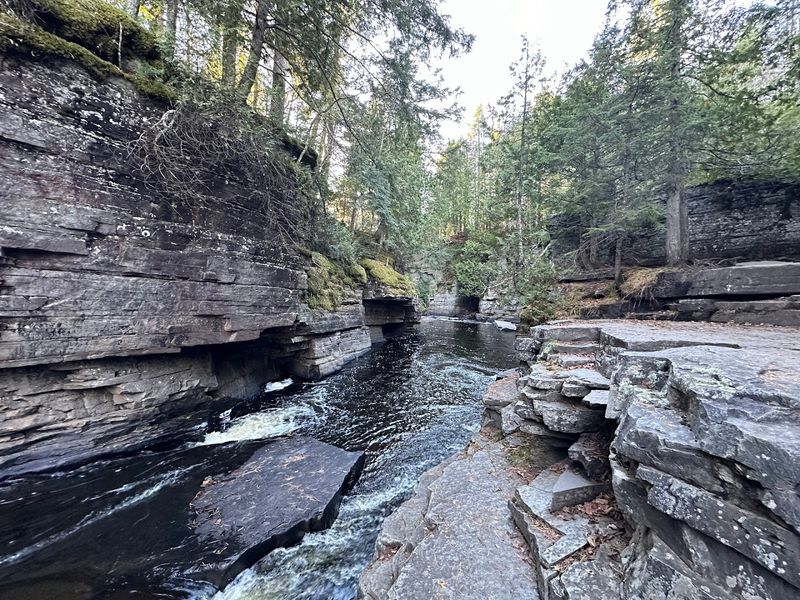
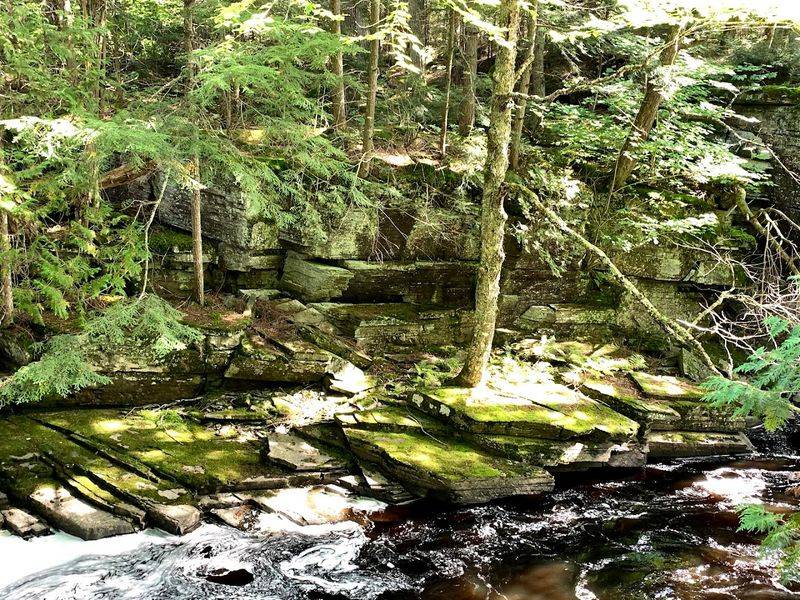
The waterfall is the famous feature, but the slate is what stayed with me. The Sturgeon River has cut through local bedrock in a way that creates sharp ledges, squared edges, and walls that can look almost arranged, even though their power comes from time and water.
At the main falls, those rock forms tighten into a box canyon effect that gives the drop extra drama. Moisture from the spray often deepens the stone color, so the walls can look darker, richer, and more textured than photographs suggest.
Stand still for a minute and study the geometry instead of only the falling water. The canyon explains why this stop feels bigger than a standard roadside waterfall break.
Treat The Hike As Easy Until The Footing Says Otherwise
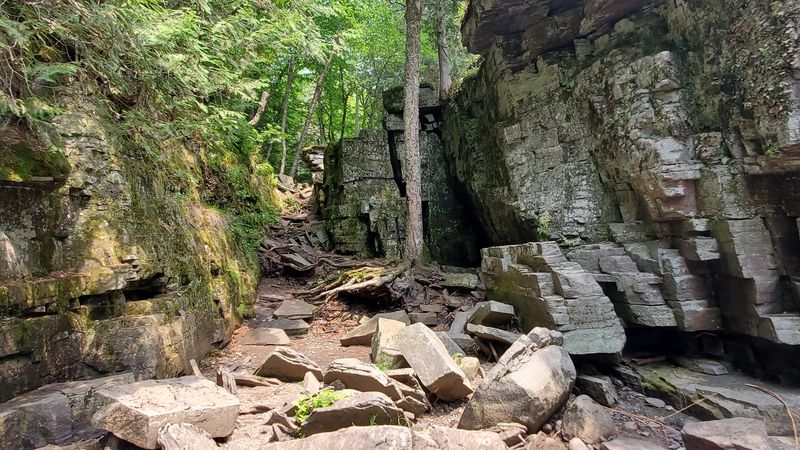
Canyon Falls is often described as an easy, short walk, and that is mostly fair. The main falls are accessible by a relatively gentle trail, but the path includes roots, uneven ground, rocky sections, and slick surfaces when rain or mist settles in. Easy does not mean careless.
Some sections are smooth and welcoming, especially near the start, while others demand that you watch each step. The trail is not wheelchair accessible, and anyone with balance concerns should move slowly and expect natural obstacles.
Wear shoes with grip and keep your pace honest. This is the kind of place where comfort comes less from distance and more from respecting the ground beneath you.
Go Beyond The Main Falls If You Have Steady Feet
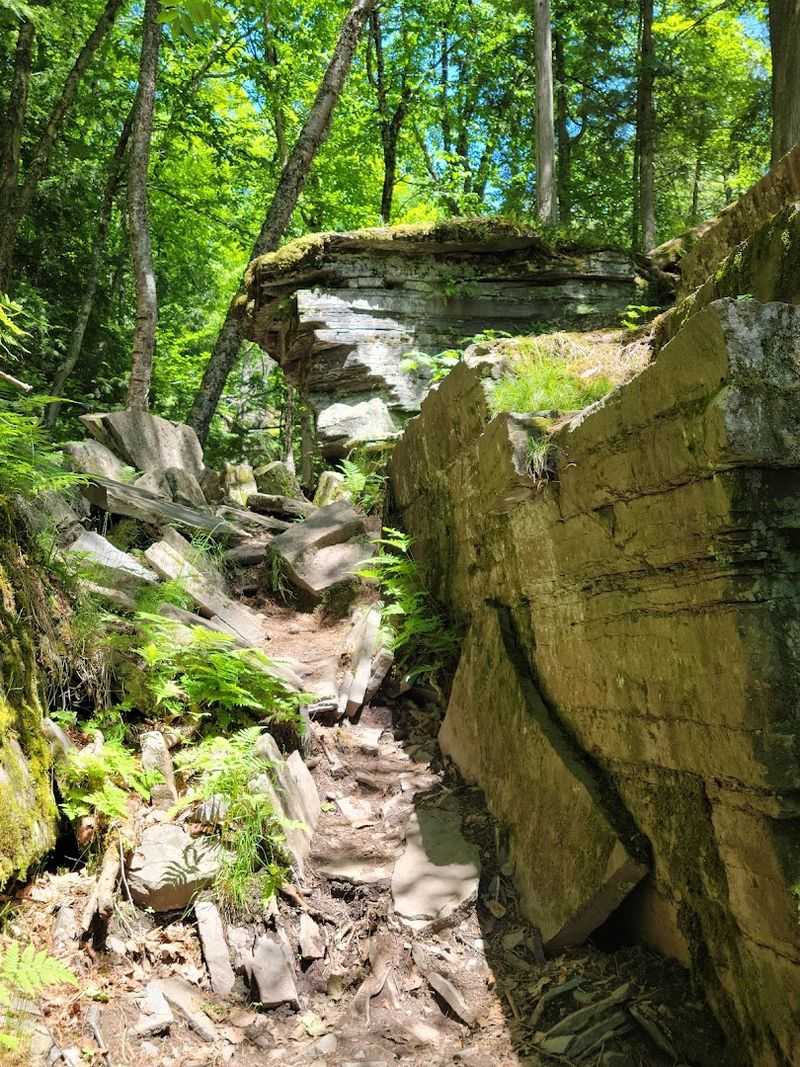
Many people reach the main waterfall, take in the view, and turn around. If conditions are good and your footing feels confident, continuing farther can be the smartest choice of the visit because the gorge keeps unfolding beyond the obvious stopping point.
The route connects with the North Country Trail, marked by blue blazes, and leads deeper into the Sturgeon River gorge landscape. This is where the setting starts feeling less like a roadside park and more like a threshold to genuine wilderness.
That said, more beauty comes with more responsibility. Drop-offs, uneven terrain, and wet rock demand caution, so continue only if you are prepared to watch every step with real attention.
Autumn Gives The Water An Extra Trick
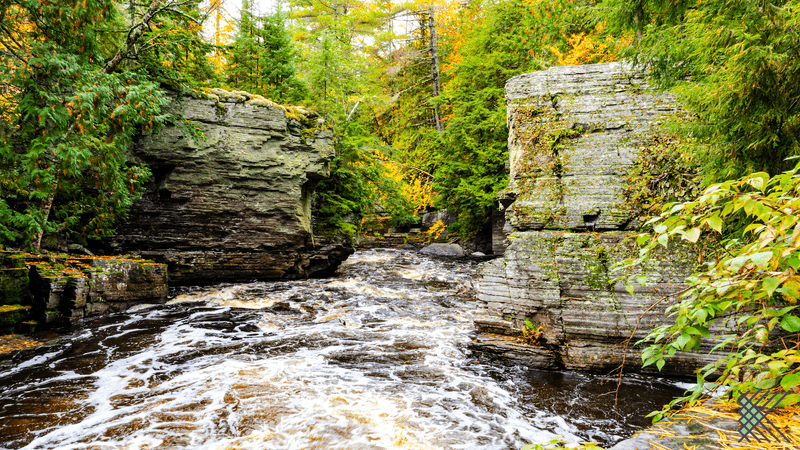
Fall is the season when Canyon Falls starts showing off without becoming flashy. Northern hardwoods around the trail typically peak from late September into mid-October, and the color arrives not only overhead but also in the river, where reflections catch in the tannin-dark water.
That brownish cast is natural, not muddy neglect, and it creates a lovely contrast with bright leaves. The result can look almost painted, especially when cool light softens the forest and the water keeps moving beneath it.
If you visit in autumn, do not race straight to the biggest drop. Pause at the smaller viewpoints first, because the combination of color, sound, and dark river surface builds the mood beautifully.
Spring Is Louder, Wetter, And More Impressive
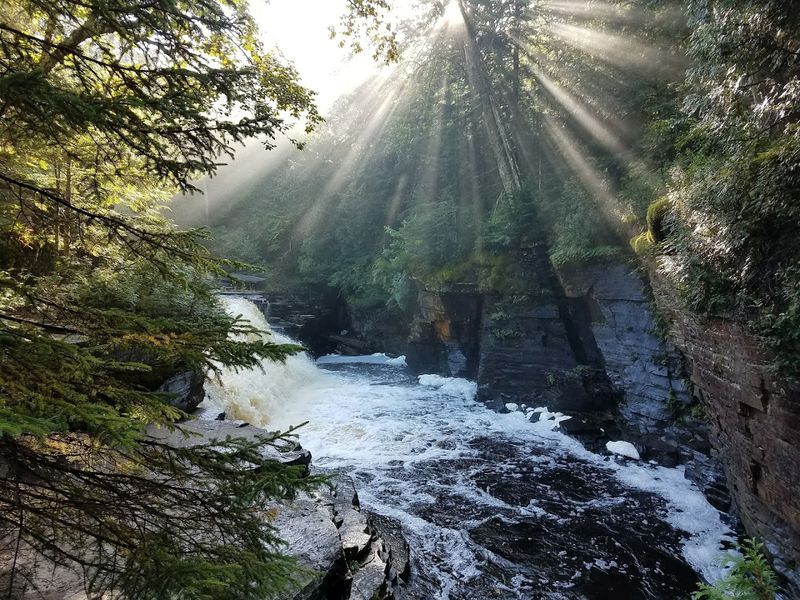
Spring changes Canyon Falls from scenic to forceful. Snowmelt swells the Sturgeon River, and the whole gorge seems to speak at a higher volume, with the falls pushing more water through the canyon and throwing more mist onto nearby rock and vegetation.
This is also a season of contrast. Fresh greens and early wildflowers can appear along the trail while the river looks muscular and cold, a reminder that the landscape is still carrying winter downhill.
I would only add one caution: spring beauty often comes with slick surfaces. If you visit during high flow, assume every exposed rock near the water is more treacherous than it first appears, and keep your admiration slightly back.
Summer Invites Lingering, But Choose Your Spot Carefully
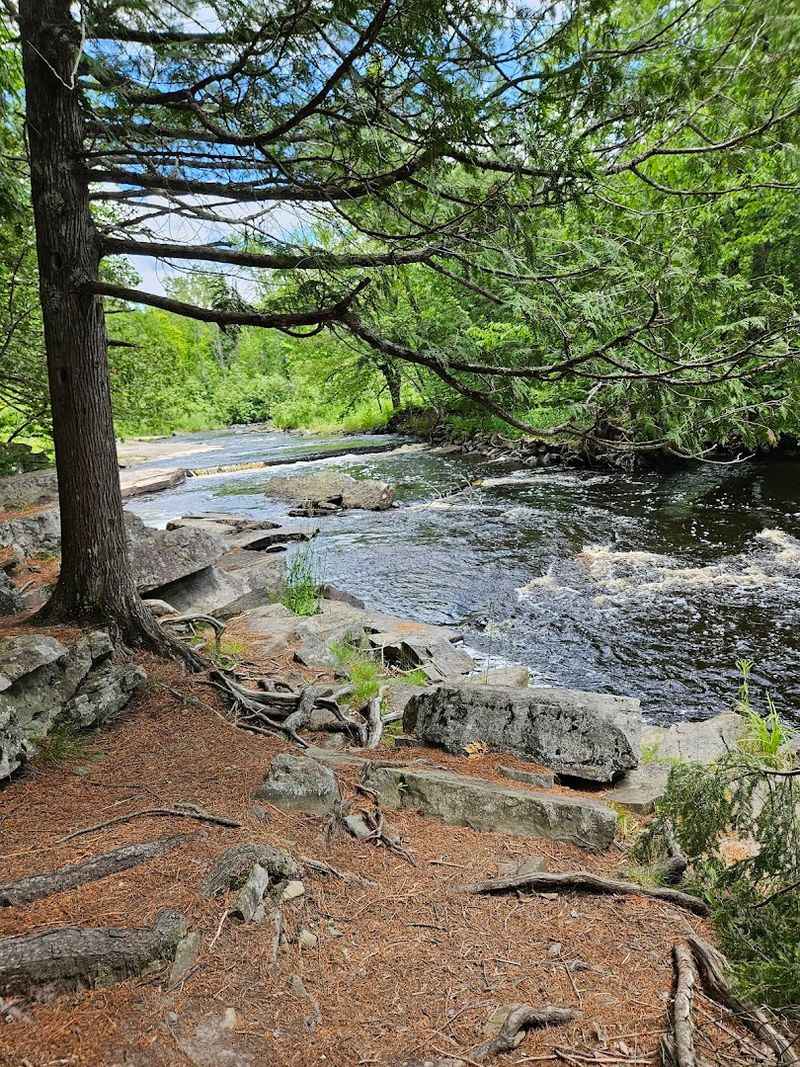
In summer, Canyon Falls becomes more than a quick waterfall stop. Downstream areas can feel inviting for wading, sitting on flat rock, or cooling off near quieter pools, and the forest shade keeps the outing pleasant even on warm Upper Peninsula afternoons.
The river’s tea-colored look can surprise first-timers, but the tint comes from natural tannins rather than pollution. What matters more is current, depth, and rock texture, which can change the mood of a spot faster than the color ever will.
Take your time choosing where to pause. The best summer habit here is not chasing the boldest perch, but finding a stable one where the canyon’s sound and the river’s movement can do the work.
Respect The Fences And The Drop-Offs Without Negotiation
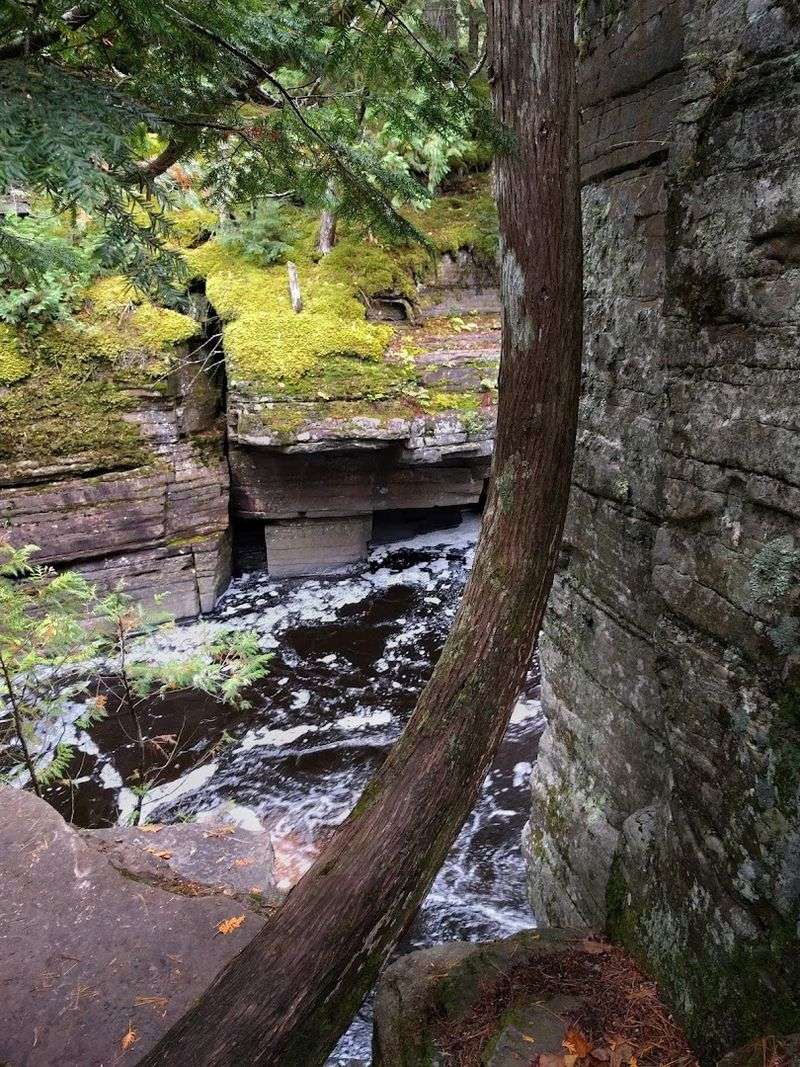
Canyon Falls has a relaxed roadside-park identity, but the gorge itself is not casual. Steep edges, slick rock, and fast water create real hazards, especially near overlooks and exposed surfaces where mist or rain can make footing uncertain in a hurry.
That is why barriers and warning areas deserve full respect. The beauty here can tempt people toward one more step for a better angle, but the canyon does not reward bravado, and the water below is not forgiving.
My strongest tip is also the least glamorous one: treat every fence as final. You will still have plenty to see from safe viewpoints, and you will enjoy the place more if your attention stays on wonder instead of risk.
Use The Practical Comforts Before The Woods Take Over
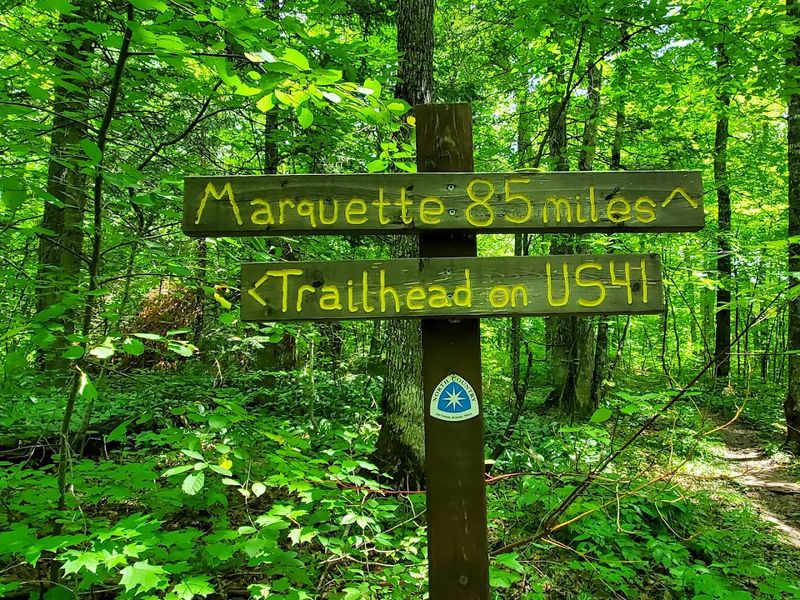
One reason Canyon Falls works so well as a surprise stop is that the logistics are refreshingly straightforward. The park is on Old US Hwy 41 near L’Anse, open 24 hours, and the lot usually makes a visit easy to fit into a broader Upper Peninsula driving day.
There are vault toilets at the parking area and informational signs to orient you before heading down the trail. Once you start walking, though, the atmosphere changes quickly from practical roadside convenience to enclosed forest and river noise.
That transition is part of the design charm, intentional or not. Handle the basic needs at the trailhead, pocket what you need, and then let the next half mile feel more remote than the highway location has any right to allow.
Give The Place Enough Time To Become Itself
The smartest way to visit Canyon Falls is not to schedule it too tightly. Yes, you can see the main falls on a relatively short outing, but the place improves when you leave room for pauses, extra viewpoints, and a little wandering attention.
Benches along the trail make that easier, and the sequence of smaller rapids, river ledges, and the final drop rewards anyone willing to slow down. Even the walk back feels different once you know what the gorge has been hiding below the trees.
I came away thinking this is exactly the kind of stop people underestimate because it sounds convenient. Convenience is the bait here, but the real experience is scale, texture, and the lovely feeling of being quietly proven wrong.