
This Abandoned Castle In South Carolina’s Charleston Harbor Feels Frozen In Time
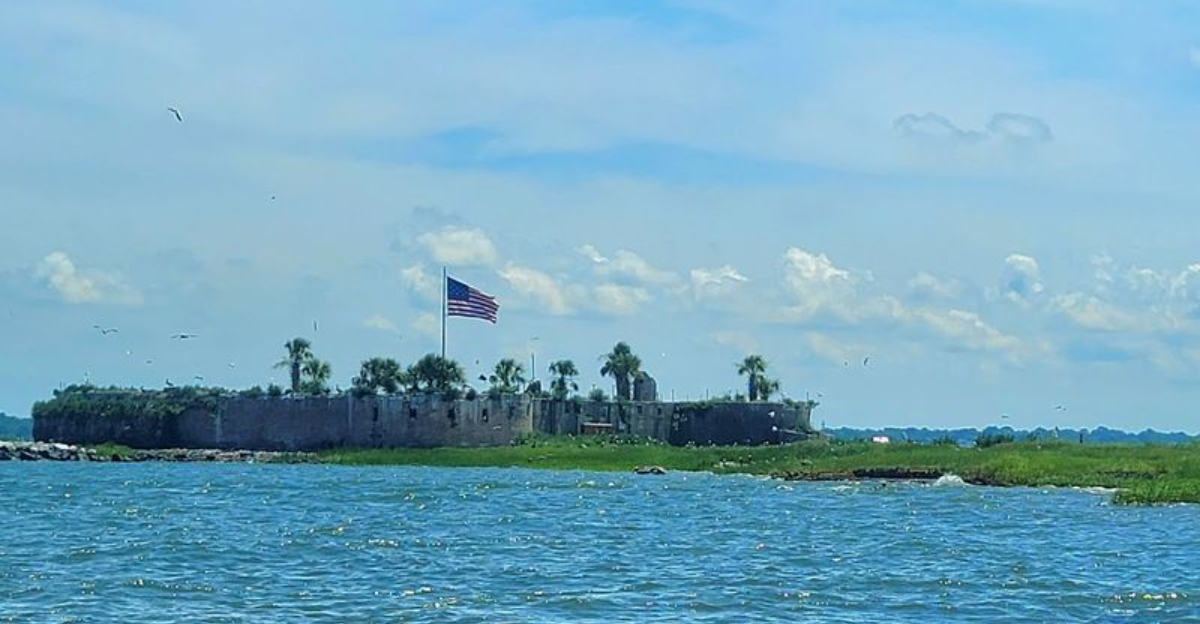
Out in the middle of Charleston Harbor, there’s a small island in South Carolina that most people barely notice, and that’s exactly what makes it feel so strange once you learn what’s sitting there.
From a distance, it almost disappears into the water and marsh around it. Then you spot the old brick walls, weathered by time, vines creeping across the structure like nature is slowly trying to reclaim it.
Places like this in South Carolina don’t feel preserved, they feel forgotten in the most fascinating way possible.
Castle Pinckney has been sitting quietly through centuries of American history, witnessing wars, military occupation, and moments that helped shape the country itself.
Now, the harbor moves around it while the fort remains frozen in place.
That contrast is what makes it so compelling.
The longer you look at it, the harder it becomes to believe something this historically important could sit so quietly in plain sight.
A Small Island With A Big Past
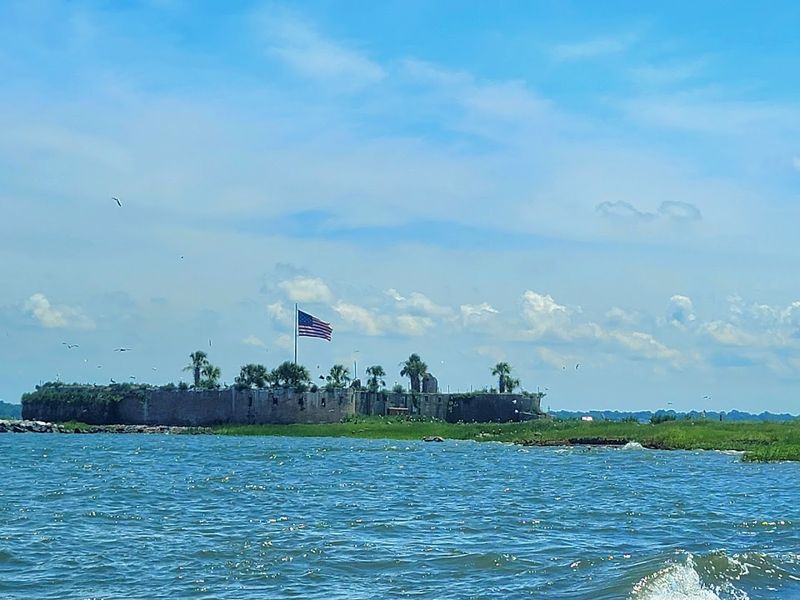
Perched on Shutes Folly Island in the middle of Charleston Harbor, Castle Pinckney does not look like much from a distance, but its story carries enormous weight.
The island itself is a compact, shell-covered patch of land sitting just offshore from the Charleston peninsula, coordinates 32.7762878, -79.9120319, and it has been shaping history since the late 1700s.
Visitors who have managed to kayak out from Sunrise Park on James Island describe a roughly 45-minute paddle that delivers them to a place that feels entirely cut off from the modern world.
Layers of oyster shells stretch across the island, and the crumbling brick walls of the old fort rise at its eastern edge like a quiet monument to everything this harbor has seen.
Standing here, even briefly, you understand why so many people are pushing hard for this site to receive the preservation attention it truly deserves.
Built To Guard The Harbor
Back in the early 1800s, the United States was still a young and somewhat nervous nation, and protecting its coastal cities from naval attack was a top priority for the federal government.
Castle Pinckney was constructed between 1809 and 1810 as part of what military planners called the “second system” of American coastal defenses, replacing an earlier log and earthen fort from 1797 that a powerful hurricane had largely destroyed in 1804.
The brick-and-mortar structure was designed specifically to shield Charleston from enemy ships that might try to sail into the harbor, and its position on Shutes Folly Island gave it a commanding view of the surrounding water.
Engineers of that era believed a solid masonry fort at this location would make any naval commander think twice before attempting an assault on the city.
That strategic confidence turned out to be well-placed, since no enemy ever tested those walls.
Named For A Revolutionary War Hero
The fort carries the name of Charles Cotesworth Pinckney, a South Carolina native who earned his reputation as a soldier and statesman during the American Revolutionary War.
Pinckney served under General George Washington, helped draft the United States Constitution, and later ran as the Federalist candidate for president twice, in 1804 and 1808, though he lost both times.
Naming the fort after him was a clear signal of how much respect he commanded in South Carolina and in the young nation as a whole.
It is a fitting tribute, since the fort was built to defend the very harbor city where Pinckney had deep personal and political roots.
Few people today connect the name on the old brick walls to the remarkable life behind it, but the history of Charles Cotesworth Pinckney is just as layered and fascinating as the crumbling fortification that bears his name.
A Fort That Never Fired A Shot In Battle
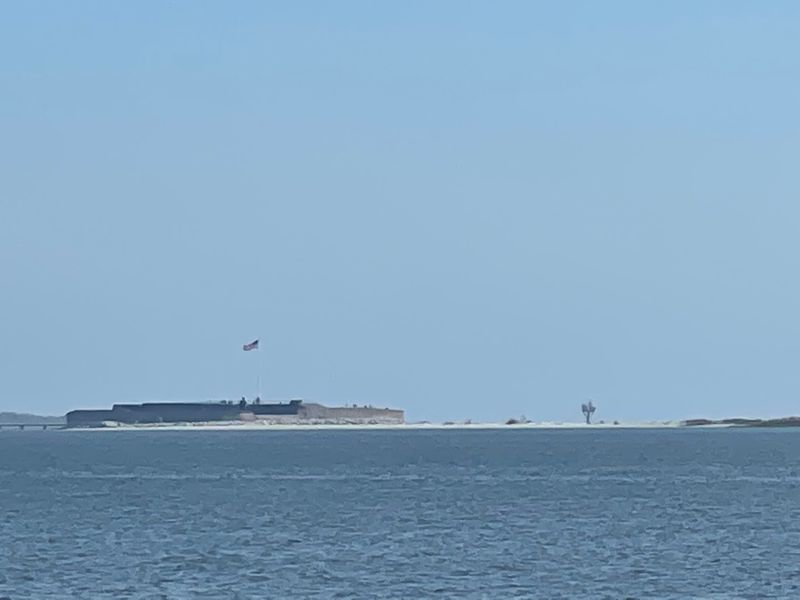
Here is a quirky historical footnote that tends to surprise people: despite being built as a military fortress and garrisoned during multiple tense national moments, Castle Pinckney reportedly never fired a single shot in actual combat throughout its entire existence.
Federal troops were stationed there during the War of 1812, when British naval forces were threatening American coastal cities, and the fort was also briefly occupied during the Nullification Crisis of 1832, a major political standoff between South Carolina and the federal government.
Both situations felt dangerous enough at the time to justify a military presence, but neither escalated into the kind of open naval battle the fort was designed to handle.
The cannons sat loaded and ready, soldiers kept their posts, and the harbor stayed quiet each time.
For a structure built entirely around the idea of firepower, that unbroken silence is one of the most unexpected details in Castle Pinckney’s long and complicated story.
The First Federal Installation Seized In The Civil War
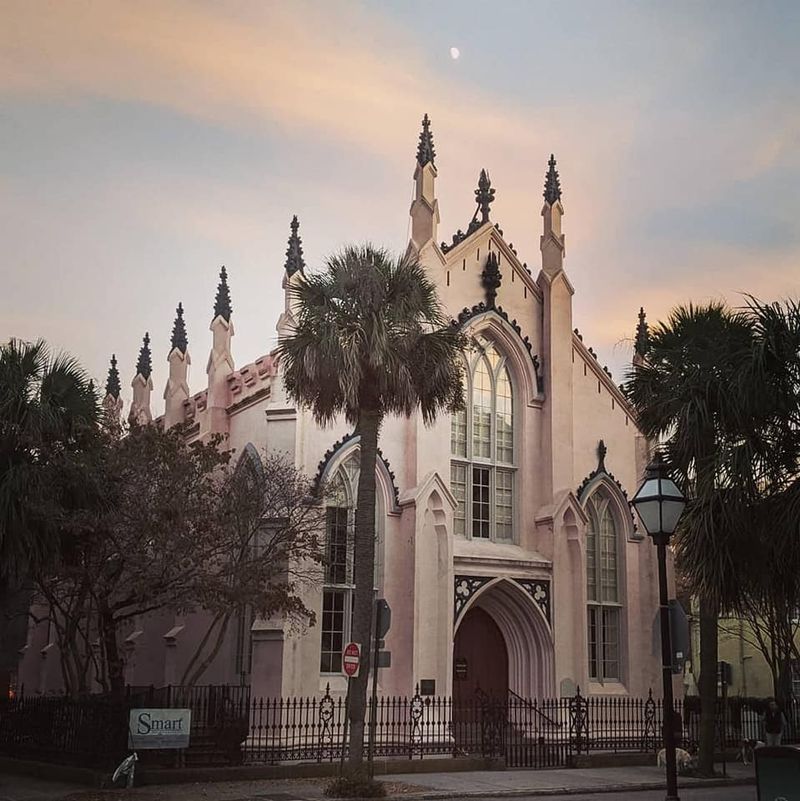
On December 27, 1860, just one week after South Carolina formally seceded from the Union, a group of South Carolina state militia troops rowed out to Shutes Folly Island and seized Castle Pinckney from its small federal garrison.
Some historians consider this the first overt military act of the Civil War, a bold move that signaled South Carolina was completely serious about breaking away from the United States.
The federal soldiers stationed there were vastly outnumbered and surrendered without resistance, making the takeover swift and bloodless.
This single event sent a shockwave through Washington and made it painfully clear that the crisis brewing between North and South had moved beyond political debate into something far more dangerous.
Knowing this piece of history changes the way you look at those old brick walls, because they did not just witness the Civil War from the sidelines, they were standing at its very first flashpoint.
A Brief And Overcrowded Prison Camp
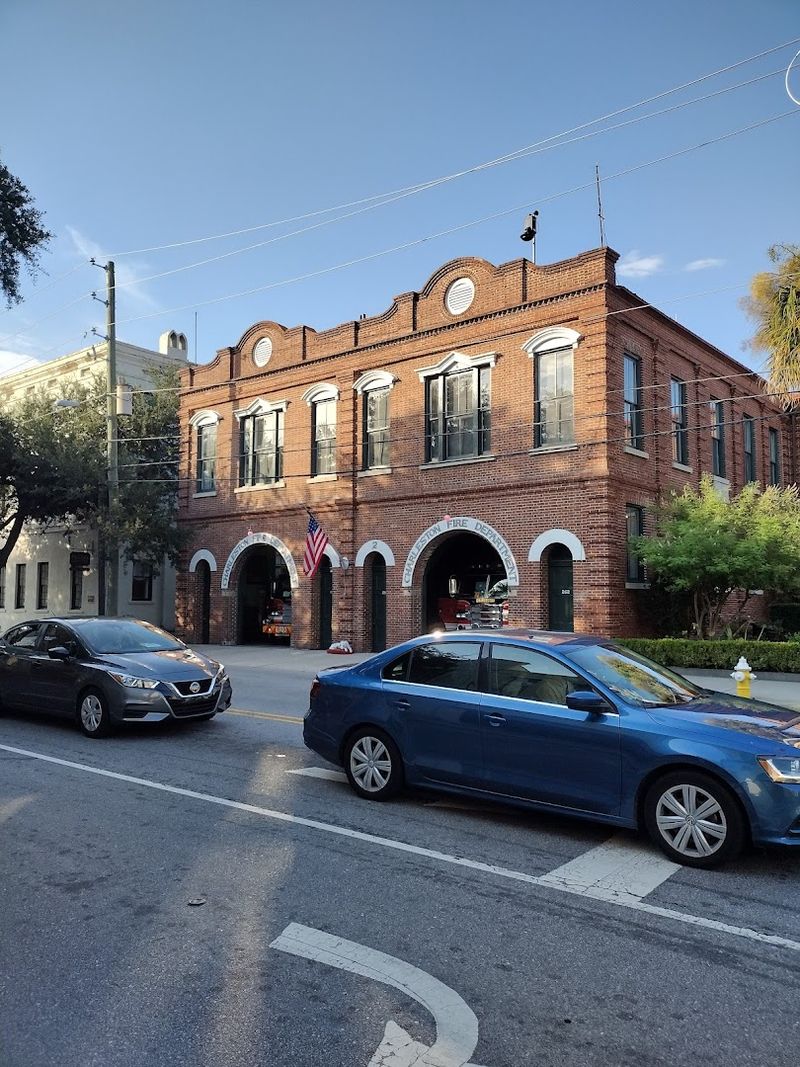
After Confederate forces took control of Castle Pinckney, they found a new use for the old fort that had nothing to do with defending a harbor.
In late 1861, the structure was converted into a prisoner-of-war camp for Union soldiers captured during early Civil War engagements, most notably after the First Battle of Bull Run.
Conditions inside the cramped brick walls were rough, and the island’s small size made it completely unsuitable for holding large numbers of prisoners for any extended period of time.
After roughly six weeks, the situation had become so overcrowded and unmanageable that Confederate authorities transferred the Union prisoners back to the Charleston City Jail.
That short chapter as a prison camp is one of the more somber threads woven into Castle Pinckney’s history, a reminder that the same walls built to protect a city ended up briefly confining the people who wanted to preserve the country that city once belonged to.
Prepared For A War It Never Joined
After the Civil War ended, Castle Pinckney sat largely forgotten and unused, its military purpose having faded along with the conflict that briefly brought it back into the spotlight.
Then came the Spanish-American War of 1898, and suddenly the federal government found itself scrambling to update coastal defenses all along the Atlantic seaboard.
Castle Pinckney was pulled back into service and underwent modernization work in preparation for a potential naval threat that, in this harbor at least, never materialized.
The fort was upgraded, inspected, and readied for action, but just as it had done during the War of 1812, it sat out the actual fighting without ever engaging an enemy vessel.
There is something almost poetic about a fortification that spent its entire military career preparing for battles that chose to happen somewhere else, leaving these walls untouched by the very conflicts they were designed to meet.
When The Lighthouse Moved In
Not every chapter in Castle Pinckney’s story involves soldiers and cannons, and the late 1800s brought a completely different kind of tenant to Shutes Folly Island.
In 1878, ownership of the property transferred to the United States Lighthouse Board, which converted the old fort site into a lighthouse depot and supply station serving the broader Charleston Harbor area.
Around 1890, an actual lighthouse was constructed on the island, and the site operated as a working lighthouse station until 1917, giving the crumbling fort walls an unexpected second career as a beacon for maritime traffic.
For nearly four decades, keepers lived and worked on this tiny island, maintaining equipment and keeping the light burning for ships navigating the harbor.
That lighthouse era is one of the quieter, more overlooked periods in the island’s history, but it proves that Shutes Folly Island has always found ways to stay useful long after each chapter of its story seems to be over.
A National Monument That Lost Its Status
In 1924, President Calvin Coolidge signed a proclamation designating Castle Pinckney as a United States National Monument, placing it in the same category as some of the country’s most celebrated historic sites.
That recognition felt like a turning point, a promise that the old fort would finally receive the attention and resources needed to preserve it for future generations.
The reality turned out to be far less encouraging, because Congress abolished the National Monument designation in 1956, citing a lack of public interest and insufficient funding to maintain the site.
After losing that protected status, Castle Pinckney bounced between government agencies, passing through the hands of the U.S. Army Corps of Engineers and eventually the South Carolina Ports Authority.
Losing a National Monument designation is genuinely rare in American history, which makes Castle Pinckney’s story feel even more unusual and underscores just how thoroughly this remarkable place slipped through the cracks of official attention.
Who Owns It Today And What Comes Next
Since 2011, Castle Pinckney has been owned by the Sons of Confederate Veterans Fort Sumter Camp No. 1269, with the Castle Pinckney Historical Preservation Society handling the day-to-day care of the property as a non-profit organization.
The site is not currently open to the general public, and anyone who paddles or boats out there without permission is trespassing, which explains the reviews from visitors who noted that the current owners are not exactly welcoming of uninvited guests.
The preservation society recognizes the enormous historical and tourism potential of the site and has expressed interest in restoration, but a large-scale effort has not yet been launched.
Some local voices are pushing for the National Park Service to incorporate Castle Pinckney into the existing Fort Sumter tour experience, which would give thousands of visitors each year a chance to see it properly.
For now, those crumbling walls keep their secrets, waiting patiently on Shutes Folly Island for the moment when someone finally commits to telling their full story.