
This Weird Nebraska Roadside Landmark Turns Old Cars Into A Prairie Stonehenge
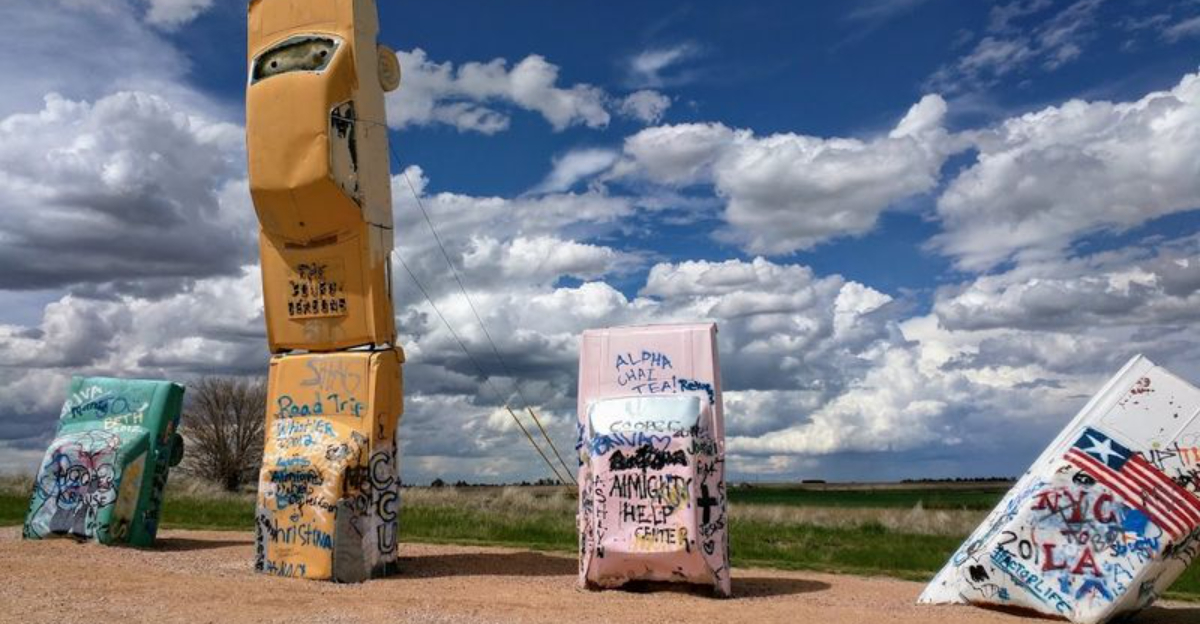
Nebraska is not where you expect to question reality. And yet, somewhere between endless plains and open sky, a circle of vintage cars suddenly rises out of the earth like America had a very strange dream and decided to commit to it.
At first glance, it feels like a prank. Then you notice the symmetry. The gray-painted cars stacked with bizarre precision.
The quiet seriousness of it all. And suddenly you’re standing in front of a full-scale Stonehenge replica made entirely out of old automobiles, wondering who looked at prehistoric history and thought, “needs more sedans.”
Built in just six days during a family reunion, this roadside monument somehow became one of the Midwest’s most legendary stops. Part art project, part fever dream, part love letter to American weirdness.
It’s the kind of place that makes you pull over “for five minutes” and leave an hour later with 47 photos and a completely different mood.
The Origin Story Behind Carhenge
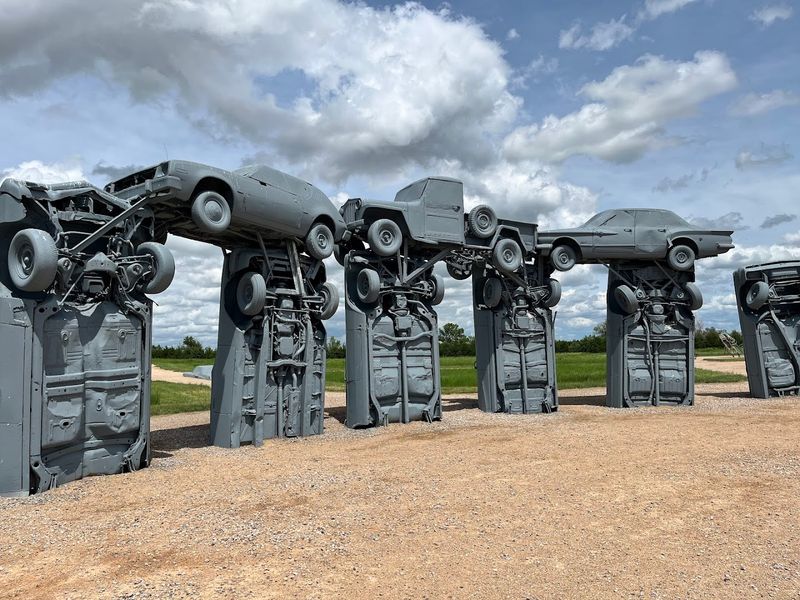
Some of the best ideas in history started as something deeply personal, and Carhenge is no exception. Back in 1982, Jim Reinders was living in England and became fascinated by the real Stonehenge.
He studied its proportions, its shape, and its mysterious energy with serious attention.
Reinders wanted to create something meaningful on the family farm in Nebraska. He decided to replicate Stonehenge using the most American material he could think of: old cars.
The idea was equal parts tribute and artistic statement, wrapped up in a whole lot of creativity.
In the summer of 1987, Reinders gathered roughly 35 family members for a reunion that doubled as a construction project.
Over just six days, they buried cars trunk-first into five-foot-deep pits, welded vehicles on top to form arches, and arranged everything to match Stonehenge’s actual dimensions. The dedication ceremony took place on the Summer Solstice, which felt perfectly poetic.
What started as a private memorial became a public sensation almost immediately. The story of one family coming together to build something so wildly original captured imaginations far beyond Nebraska.
Reinders eventually donated the 10-acre site to the Friends of Carhenge, who later gifted it to the City of Alliance in 2013. Today, it operates as a free public park open 24 hours a day.
The origin story alone is worth the drive out to see it in person.
Location And Getting There
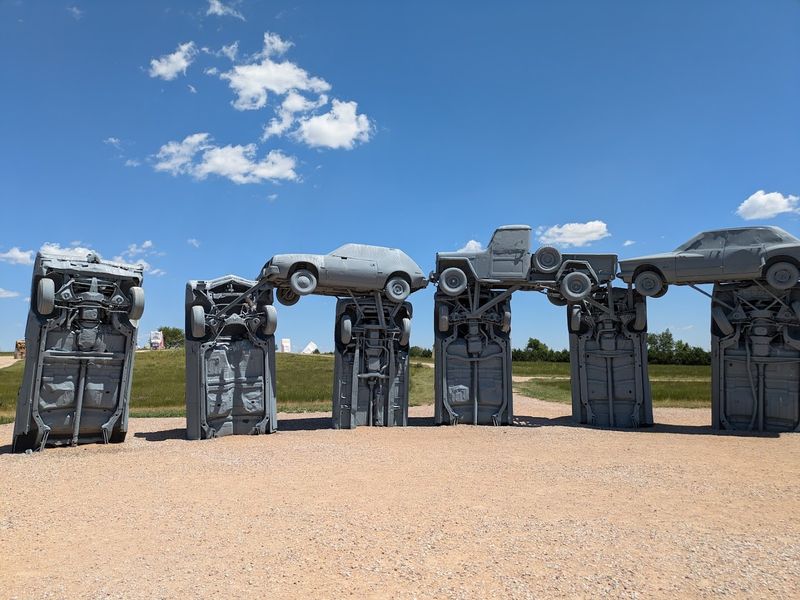
Getting to Carhenge feels like part of the adventure, and that is not just a cliche. The site sits at 2151 Co Rd 59, Alliance, NE 69301, about three miles north of the small town of Alliance on U.S.
Highway 385.
The drive through the Nebraska Sandhills is flat, wide, and surprisingly beautiful in its own quiet way.
Alliance itself is a town of around 8,000 people, which means it is small enough to feel charming but large enough to have restaurants and hotels nearby.
So if you plan to stay overnight or grab a meal before visiting, you have solid options just a short drive away. The proximity to town makes Carhenge a genuinely convenient stop rather than a remote wilderness expedition.
One of the best things about this location is that it is open 24 hours a day, every single day of the year, with no admission fee whatsoever. That means you can roll up at midnight, at sunrise, or in the middle of a thunderstorm if that is your thing.
There is RV parking available on-site, which makes it a popular stop for cross-country travelers.
During summer months, a gift shop called The Pit Stop operates on the property, offering souvenirs and a chance to support the site. The location is genuinely well-suited for a road trip detour, sitting close enough to major routes that a quick side trip rarely adds more than a few extra minutes to your journey.
What You Are Actually Looking At
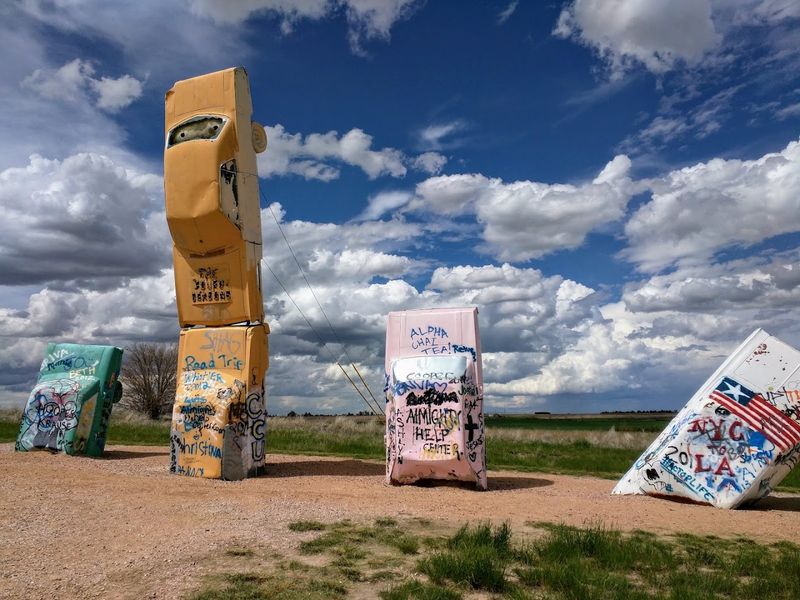
Standing in front of Carhenge for the first time, the first thing you notice is how genuinely big these cars are when they are standing straight up on end. Seeing a 1960s Cadillac buried trunk-down in Nebraska soil hits differently than any museum exhibit ever could.
The structure is made up of 39 vintage American automobiles, mostly from the 1950s, 1960s, and 1970s. The collection includes standard cars, a pickup truck, and even an ambulance.
Every single vehicle has been spray-painted gray to mimic the weathered stone appearance of the original Stonehenge in England.
The arrangement follows Stonehenge’s design with impressive accuracy. Some cars are held upright in five-foot-deep pits with their trunks pointing down.
Others are welded on top of upright vehicles to form the classic trilithon arch shape. A 1962 Cadillac serves as the heelstone, positioned just like its ancient counterpart across the ocean.
The circle measures approximately 96 feet in diameter, which genuinely matches Stonehenge’s proportions. Up close, you can see the welding work, the layers of gray paint, and the remnants of original car details peeking through.
Hood ornaments, door handles, and chrome trim create a texture that stone simply cannot replicate. Walking through the arches and standing in the center of the circle gives you a surprisingly powerful sense of scale.
It is the kind of moment that makes you quietly impressed by what human creativity can pull off with a pile of old cars.
More Than Just Carhenge
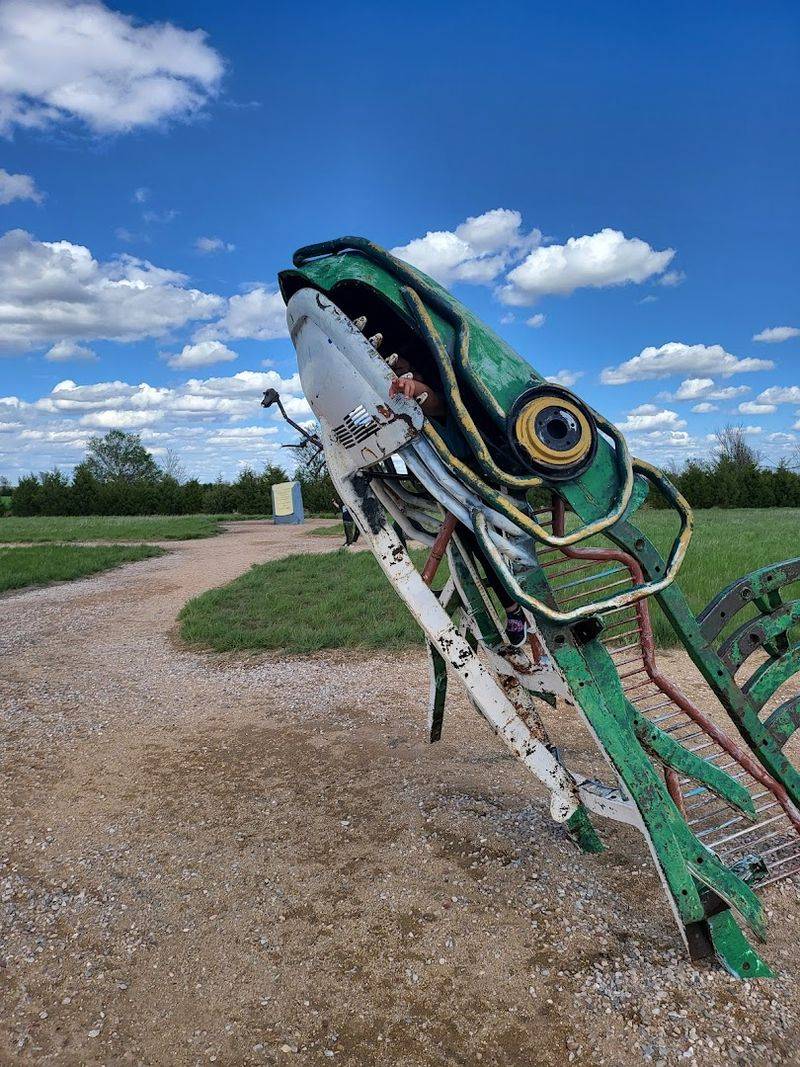
Here is a secret that many first-time visitors do not expect: Carhenge is actually just the beginning. Beyond the main circle, the surrounding grounds include something called the Car Art Reserve, and it is absolutely worth exploring every inch of it.
The Car Art Reserve is a collection of additional sculptures made entirely from automobiles. Artists have contributed works over the years that range from playful to genuinely thought-provoking.
One standout piece is called Spawning Salmon, which uses car bodies to create the shape of fish leaping upstream. Another is called Fourd Seasons, a clever pun that uses Ford vehicles to represent the four seasons of the year.
Each sculpture has its own personality and story, making the walk through the reserve feel more like a proper art tour than a simple roadside stop. The creativity on display goes well beyond novelty.
These pieces show real artistic intention, and the setting of the open Nebraska prairie only adds to their visual impact.
The reserve continues to grow as new works are added over time, which means repeat visitors often discover something fresh on each trip.
Walking through the whole site takes a comfortable 30 to 45 minutes depending on how much time you spend with each piece. For anyone who thinks Carhenge is just one photo opportunity and done, the Car Art Reserve will quickly change that assumption.
There is genuine depth here, and the whole experience rewards curiosity with something unexpected at every turn.
Carhenge In Film, TV, And Beyond
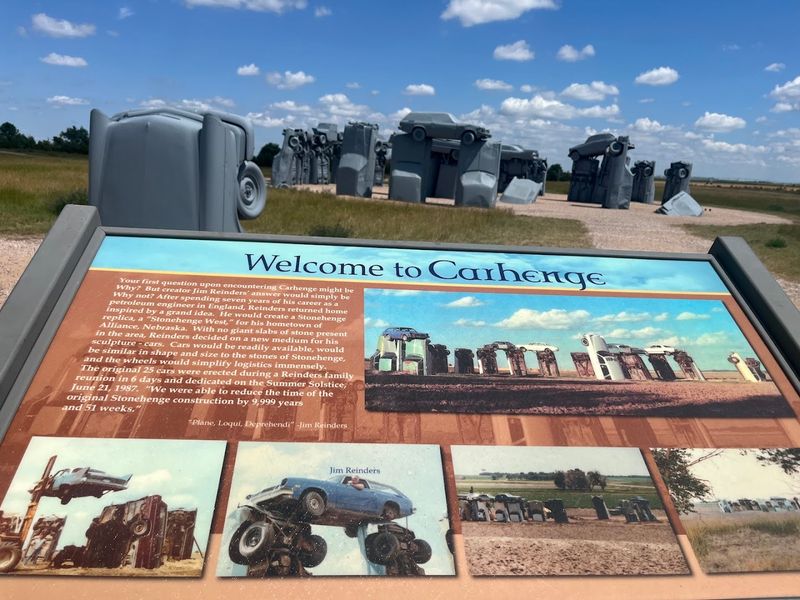
Not every roadside attraction makes it into a Pixar production, but Carhenge is not every roadside attraction. Over the decades, this gray circle of vintage cars has popped up in films, television programs, music videos, national commercials, and yes, a Pixar web series called Cars on the Road.
That is a pretty impressive resume for a bunch of old Chevys standing in a field.
The attention makes sense when you think about it. Carhenge has a visual quality that photographs and films beautifully.
The gray tones, the dramatic vertical lines of the cars, and the endless Nebraska horizon create a frame that feels cinematic without any effort. Directors and photographers have recognized that energy for years.
Beyond screen appearances, Carhenge has become a symbol of a specific kind of American creativity. It represents the spirit of doing something wildly original simply because you can.
That ethos resonates with people across generations and across very different taste levels. Road trip culture in particular has adopted Carhenge as one of its patron saints.
Travel publications, quirky Americana lists, and adventure blogs consistently feature Carhenge as a must-see landmark.
It sits comfortably alongside places like Cadillac Ranch in Texas and the World’s Largest Ball of Twine in Kansas as proof that the best American landmarks are often the ones nobody planned to make famous. Carhenge earned its pop culture status one delighted visitor at a time, and that kind of reputation tends to stick around for a very long time.
Why Carhenge Is Free And What That Means For You
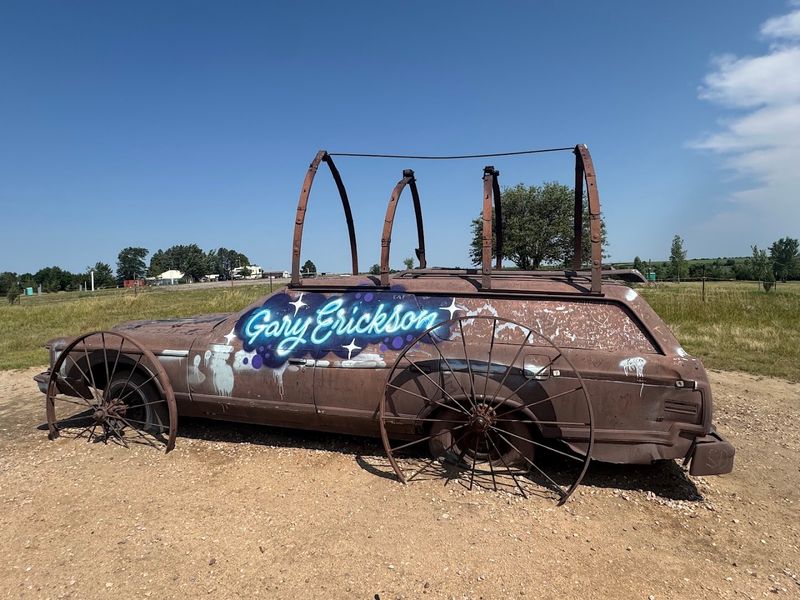
Free admission to a landmark this iconic feels almost suspicious, like there must be a catch somewhere. But Carhenge is genuinely, completely free to visit every single day of the year, around the clock.
No tickets, no booking ahead, no entrance fee hiding behind a parking charge.
The City of Alliance has owned and operated the site as a public park since 2013, when the Friends of Carhenge gifted it to the city. That public ownership model is exactly why access remains so open and unrestricted.
The community made a decision to share this place with the world, and that generosity shows in every aspect of the visitor experience.
RV parking is available on-site, which is a detail that matters more than it might seem. Cross-country travelers driving large vehicles often struggle to find attractions that can accommodate them without extra fees or complicated logistics.
Carhenge solves that problem completely and without fuss.
During summer months, The Pit Stop gift shop opens on the property, giving visitors a chance to pick up souvenirs and support the ongoing maintenance of the site. Buying a magnet or a postcard is a small way to give back to a place that charges you nothing.
The combination of free entry, 24-hour access, and RV-friendly parking makes Carhenge one of the most accessible and welcoming stops on any American road trip. There are very few places left in this country where something this extraordinary costs absolutely nothing to experience.
What Makes Carhenge Worth The Detour Every Single Time
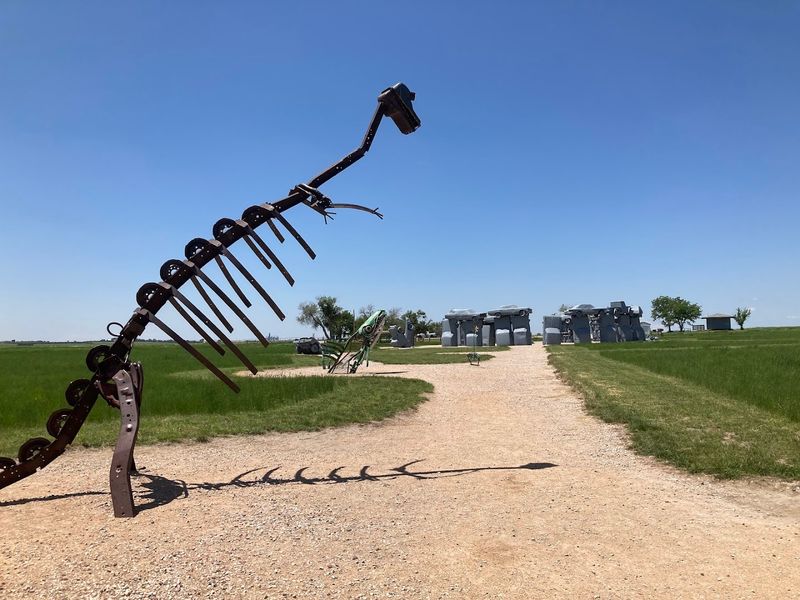
Some places look better in photos than they do in real life, and some places are the exact opposite. Carhenge firmly belongs to the second category.
Standing inside that circle of towering vintage cars, with the Nebraska wind moving through the space and the horizon stretching out in every direction, is something a photograph simply cannot capture.
The scale surprises almost everyone on a first visit. The circle spans 96 feet in diameter, and the cars used as uprights are buried five feet into the ground with their full bodies rising above.
The arches formed by welded cars overhead create genuine moments of architectural drama. This is not a miniature novelty.
It is a full-scale monument built with real intention.
The surrounding Car Art Reserve extends the experience well beyond the main circle. A walk through the whole property takes under an hour, which makes it a perfect length for a road trip stop.
Long enough to feel satisfying, short enough to fit into a busy travel day without stress.
Carhenge works because it is honest. There is no marketing fluff, no overpriced experience, and no manufactured emotion.
It is just a remarkable thing that a family built in a Nebraska field because they loved each other and had a genuinely great idea. That simplicity is what makes people drive four hours out of their way just to stand next to it.