
This Enormous Oak Tree In South Carolina Has Been Standing For Centuries
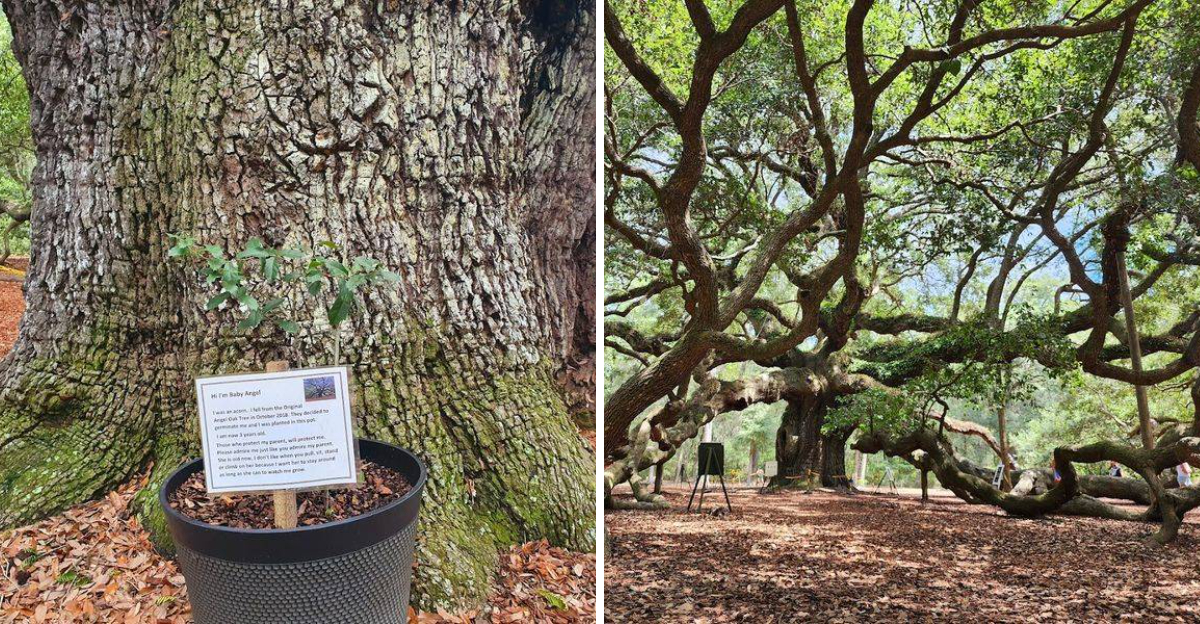
Photos really do not prepare you for this tree at all.
You turn onto a quiet road on Johns Island expecting a beautiful old oak, then suddenly the branches start spreading in every direction like something almost impossible to comprehend in person.
Few natural landmarks in South Carolina make people stop talking the way this one does.
The Angel Oak does not just look old. It feels ancient.
Massive limbs twist low across the ground, towering branches stretch outward like living sculpture, and the entire canopy creates the strange feeling of standing beneath something far bigger than a tree.
People arrive expecting a quick photo stop.
Then they end up lingering quietly beneath the branches, staring upward, walking slowly around the trunk, and trying to process the fact that this living giant was already growing centuries before the United States even existed.
There is something deeply calming about the place.
And once you stand beneath it yourself, it becomes very easy to understand why so many people consider it one of the most unforgettable sights in South Carolina.
The Angel Oak Is Estimated To Be Between 400 And 500 Years Old
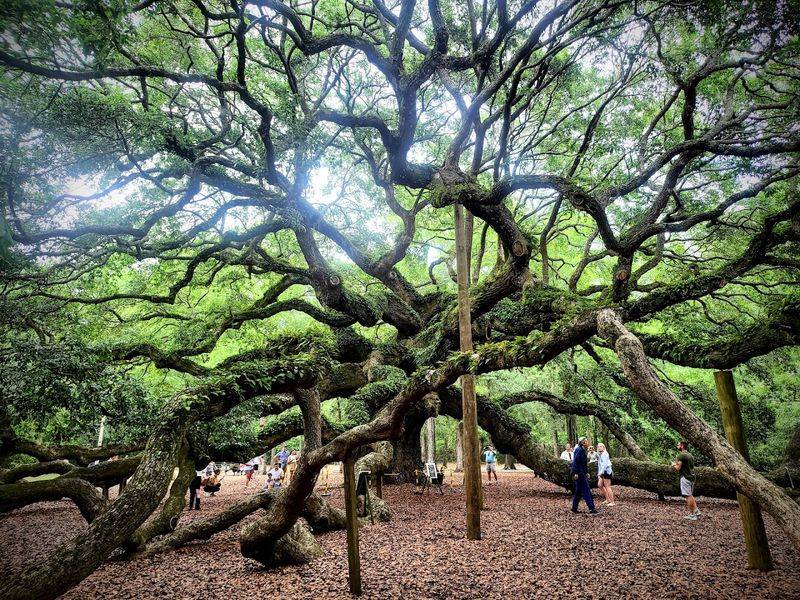
Few living things on Earth carry the kind of history that this tree does. Scientists and researchers estimate the Angel Oak is somewhere between 400 and 500 years old, which means it was already a mature tree when European settlers first arrived in the Americas.
Standing beneath it and doing that mental math is a quietly humbling experience. The tree was quietly growing on Johns Island long before the United States was even a thought, long before the Civil War, and long before any road was paved nearby.
What makes this even more impressive is that it has survived hurricanes, storms, and centuries of coastal South Carolina weather without losing its incredible shape. Local conservationists and the City of Charleston have worked hard to protect it, and that effort shows every single time a visitor walks through the gate and looks up in complete silence.
It Stands Nearly 67 Feet Tall With A Canopy That Covers Over 17,000 Square Feet
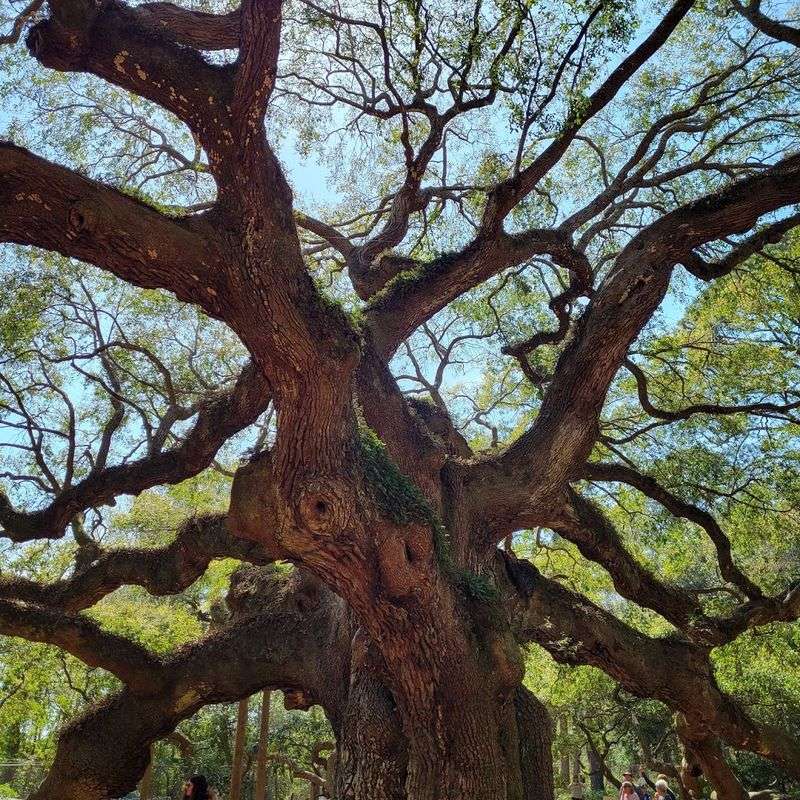
Numbers can be hard to picture until you are actually standing there with your neck craned back. The Angel Oak reaches nearly 67 feet into the air, which is roughly the height of a six-story building, and its canopy spreads out to cover an astonishing 17,200 square feet of shade.
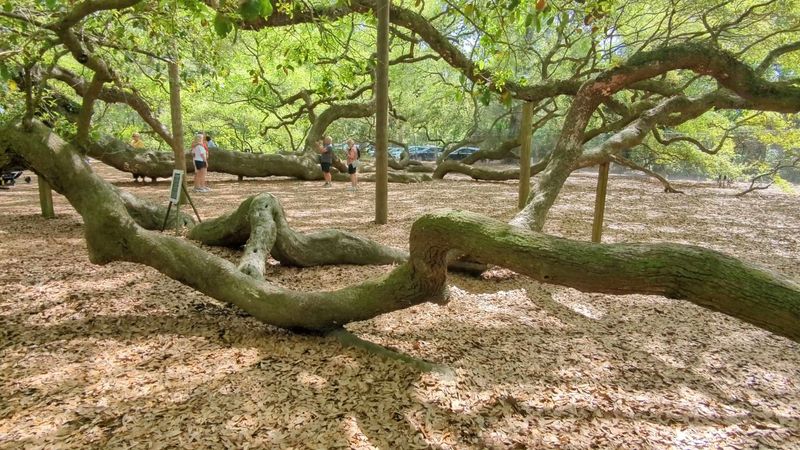
That canopy is not just wide, it is dramatic. Massive limbs twist and curve outward from the trunk in every direction, some dipping so low they nearly touch the ground before arching back up again, creating a natural sculpture that no artist could replicate.
On a warm South Carolina afternoon, stepping under that canopy feels like walking into a cool, green cathedral. The light filters through the leaves in soft patterns, and the air genuinely feels a few degrees cooler.
Photographers love this spot for exactly that reason, and it is easy to spend a solid hour just circling the tree looking for the perfect angle.
The Trunk Measures An Incredible 28 Feet In Circumference
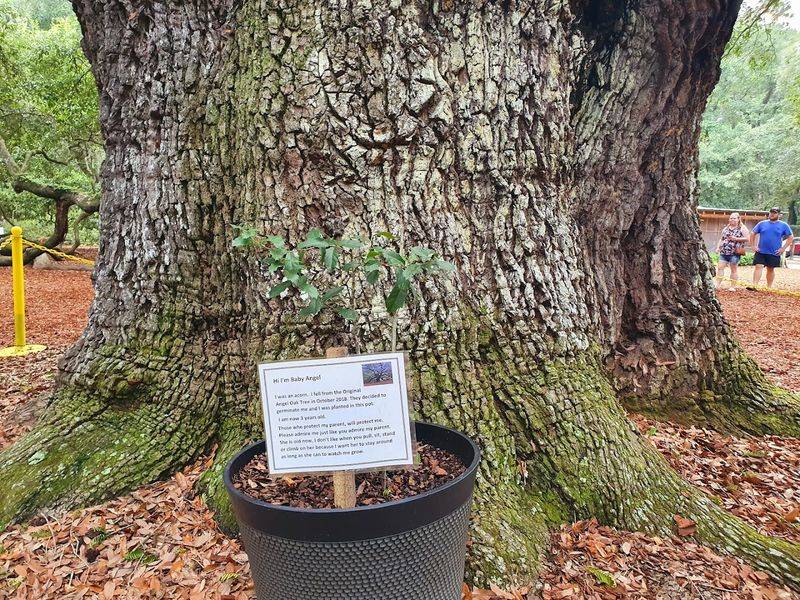
One of the first things that genuinely surprises first-time visitors is the sheer girth of the trunk. Measuring 28 feet around, it takes a group of several adults holding hands just to wrap around the base, and even then you might come up short.
The bark is deeply ridged and textured in a way that feels ancient to the touch, though visitors are asked to admire it from a respectful distance to protect the root system underneath. That request makes complete sense once you realize how fragile those roots are after centuries of growth.
I remember circling the trunk slowly on my visit, noticing how the bark changes color and texture at different heights. There is something almost meditative about just studying the surface of something this old.
It is one of those rare moments where a single object commands your full attention without asking for anything in return, and you give it willingly.
The Tree Is A Southern Live Oak, One Of The Most Resilient Tree Species In North America
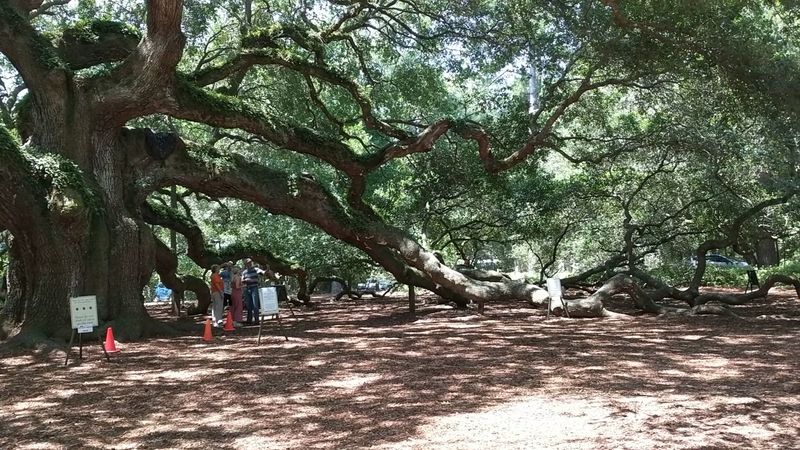
Not every tree could survive 400 years of coastal South Carolina weather, but the Southern live oak is built for exactly that challenge. Known scientifically as Quercus virginiana, this species is celebrated for its extraordinary durability, salt tolerance, and ability to withstand strong winds and storms that would flatten other trees.
Southern live oaks keep their leaves year-round, which is part of why the Angel Oak always looks full and lush no matter what season you visit. The dense, waxy leaves are designed to hold moisture and resist the kind of salt air that blows in from the nearby coast.
The species also produces some of the hardest wood in North America, which historically made it a prized shipbuilding material. Ironically, that same toughness is part of what has allowed this particular tree to outlast so many generations of human history.
The Angel Oak is essentially the ultimate advertisement for what a Southern live oak can become when left in peace.
Angel Oak Park Is Free To Visit And Open Most Days Of The Week
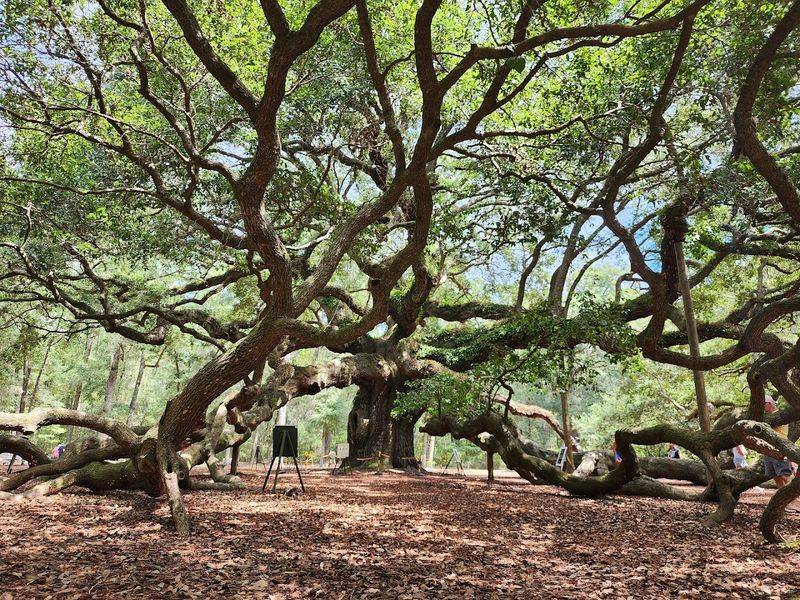
Here is a fact that makes this destination even more appealing: visiting the Angel Oak costs absolutely nothing. The City of Charleston manages Angel Oak Park at 3688 Angel Oak Rd, Johns Island, SC 29455, and admission is completely free, which is a rare treat for a landmark of this caliber.
The park is open Monday through Saturday from 9 AM to 4:50 PM and on Sundays from 1 PM to 4:50 PM. Those hours are firm, so checking ahead before you make the roughly 40-minute drive from downtown Charleston is genuinely worth the two minutes it takes.
Parking inside the gates is limited and reserved for visitors with disabilities, so most people park along the road nearby. A small gift shop on-site sells souvenirs, and portable restrooms are available for convenience.
The whole visit typically runs about 30 minutes, making it an easy and rewarding addition to any Charleston-area itinerary without disrupting your day.
The Longest Limb Stretches An Astonishing 89 Feet From The Trunk
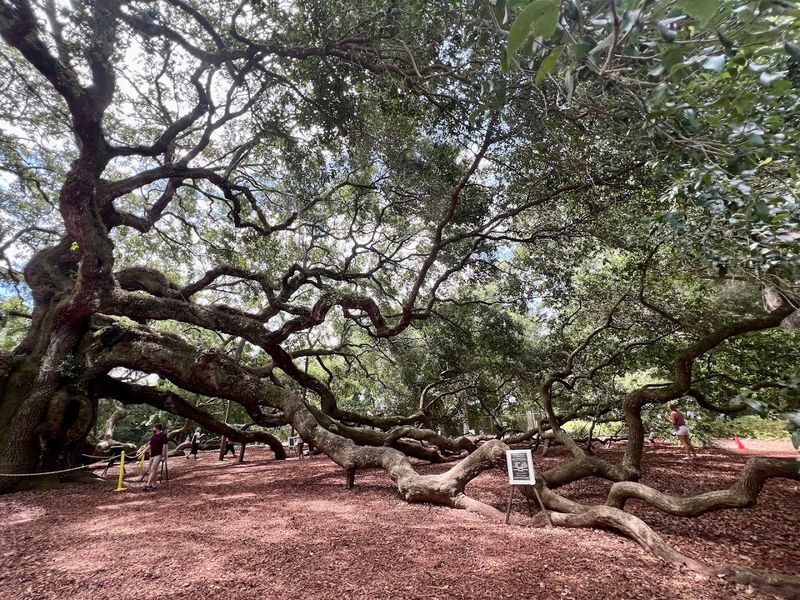
Most trees grow upward, but the Angel Oak seems to have decided that spreading outward was far more interesting. The longest single limb on the tree extends an extraordinary 89 feet from the trunk, which is longer than many houses are wide and longer than some city bus routes feel on a slow afternoon.
Those outstretched limbs give the tree its iconic silhouette, the one that makes every photo look slightly unreal, as if someone digitally enhanced the branches for dramatic effect. Some limbs dip so close to the ground that they appear to rest on the earth before curling back upward, creating natural archways that frame the surrounding landscape beautifully.
On my visit, I kept finding new limbs to follow with my eyes, each one branching off in its own unexpected direction. The tree has a genuinely chaotic energy that somehow resolves into perfect visual harmony, and that combination is exactly why photographers and casual visitors alike keep coming back season after season.
The Name Angel Oak Has An Interesting History Tied To The Land’s Former Owners
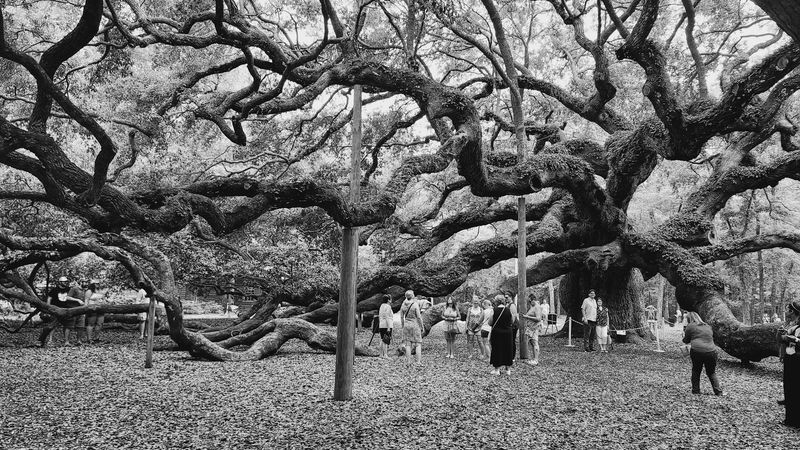
Every great landmark deserves a great name, and the Angel Oak’s story is no exception. The tree takes its name from Justus Angel and his wife Martha Waight Tucker Angel, who owned the surrounding land in the early 1800s.
Their connection to this property is what gave the tree its now-famous identity.
Over the years, various legends and local folklore have grown up around the name, with some stories suggesting that the tree is visited by the spirits of former enslaved people who once lived and worked on the property. Those stories add a layer of quiet solemnity to an already powerful place.
The land eventually passed through several hands before the City of Charleston acquired it and established Angel Oak Park to protect and preserve the tree for future generations. Knowing that history while standing beneath those ancient branches adds a completely different dimension to the visit, one that goes well beyond admiring the size and beauty of the oak itself.
Visiting On A Weekday Offers A Noticeably More Peaceful Experience
Popular destinations have a rhythm, and the Angel Oak is no different. Weekends, especially during summer and holiday periods, draw significant crowds to this relatively compact park.
The parking situation along the narrow road can become genuinely chaotic, and the peaceful atmosphere that makes the tree so special can feel harder to find when dozens of people are jostling for the same photo angle.
Weekday mornings are a completely different story. Arriving shortly after the 9 AM opening on a Tuesday or Wednesday puts you among a much smaller group of visitors, and the quiet that settles around the tree at those times is remarkable.
The birdsong, the rustling leaves, and the occasional creak of a massive limb become the soundtrack instead of crowd noise.
Multiple reviewers have specifically mentioned that their Tuesday visit felt far more magical than their Sunday one. If your schedule allows any flexibility at all, pointing toward a weekday morning is easily the single best practical tip for getting the most out of this remarkable place.
Pets Are Welcome But Must Stay Behind The Designated Rope Line
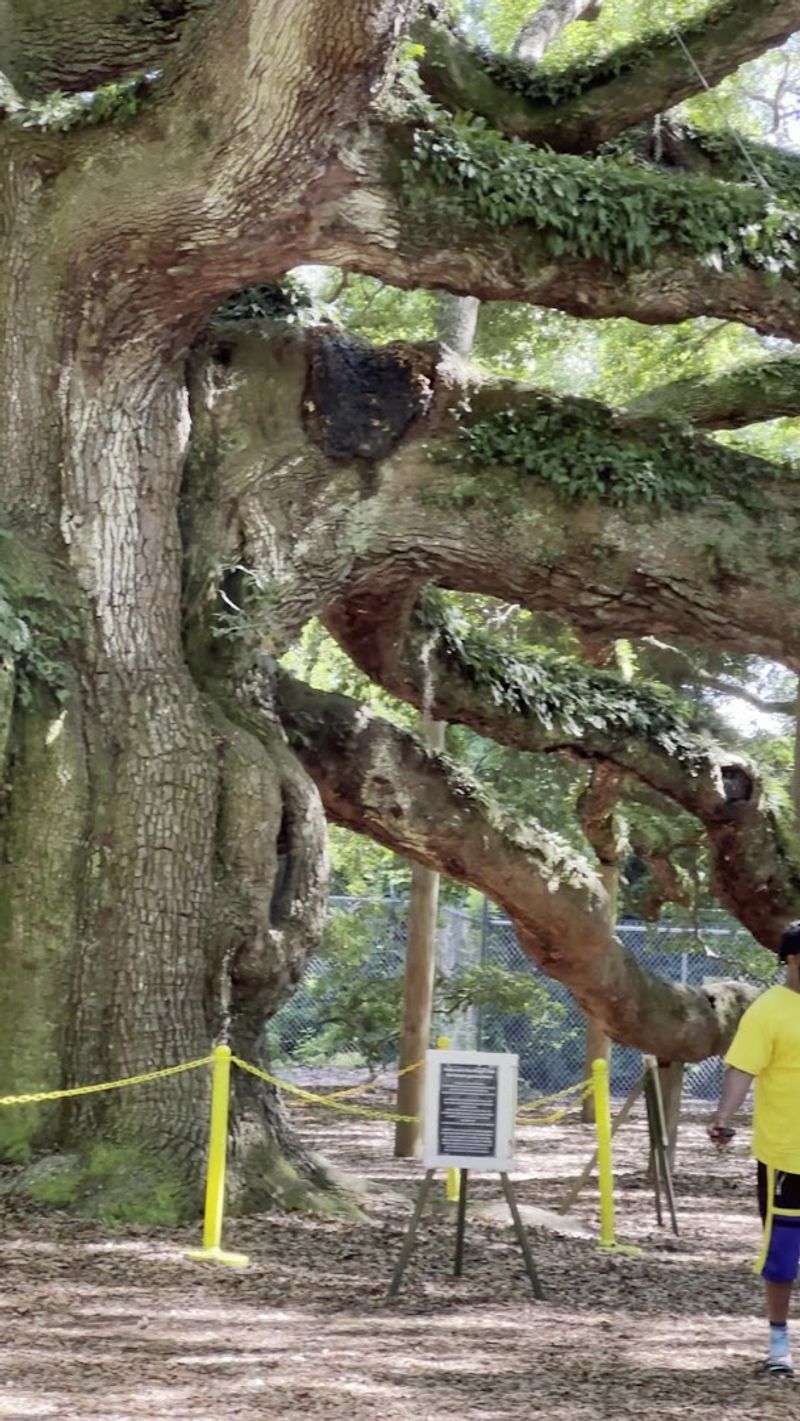
Good news for pet owners: dogs are welcome at Angel Oak Park, which makes it a solid stop for travelers journeying through the Charleston area with their four-legged companions. The park grounds are open and accessible, and the shaded canopy creates a comfortable environment for pets even on warmer days.
There is one important boundary to respect, however. A rope line is in place around the tree itself, and dogs must stay behind it at all times.
That rule exists entirely to protect the Angel Oak’s root system, which spreads far beyond the visible trunk and is sensitive to foot traffic and disturbance from animals.
One visitor noted in their review that their dogs had a hard time understanding why they could not get closer, which is both relatable and amusing. Keeping pets leashed and calm near the rope ensures that the experience remains pleasant for everyone and, more importantly, helps preserve this extraordinary tree for the countless future visitors who have not even been born yet.
No Photo Can Fully Capture The Scale And Presence Of This Tree In Person
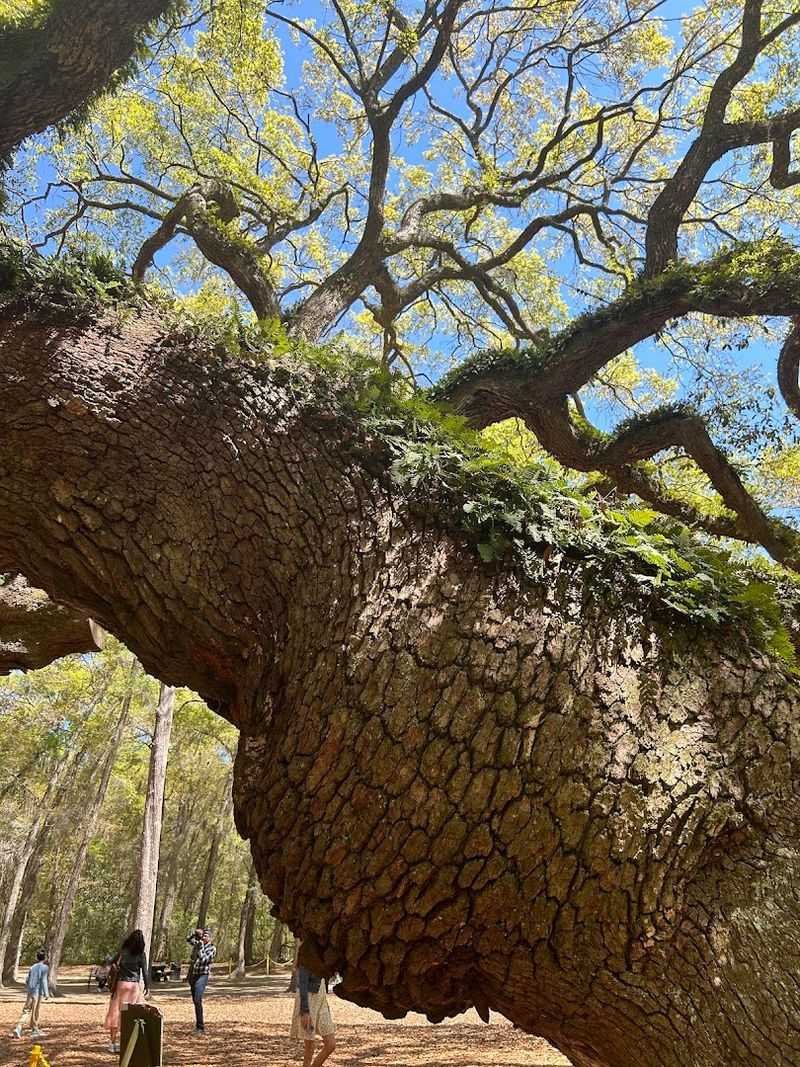
Nearly every visitor review of the Angel Oak includes some version of the same sentence: the photos do not do it justice. That phrase gets used so often it could sound like a cliche, but in this case it is simply the truth.
The tree’s sheer scale, the way the limbs arc overhead and outward simultaneously, the textured bark, the Spanish moss, all of it combines into an experience that a camera lens genuinely struggles to contain.
Standing beneath the canopy and looking up creates a sense of perspective that no photograph can replicate. Your eyes naturally move from branch to branch, following the tree’s logic outward in every direction, and that active process of discovery is something a static image cannot provide.
My strongest advice is to put the phone down for at least five minutes and simply stand there. Let your eyes wander.
Let the scale settle in. The pictures will still be there to take afterward, but that first unfiltered impression of the Angel Oak is something worth experiencing completely on your own terms.