
This Florida State Park Swaps City Lights For Prairie Ponds And Some Of The State’s Darkest Skies
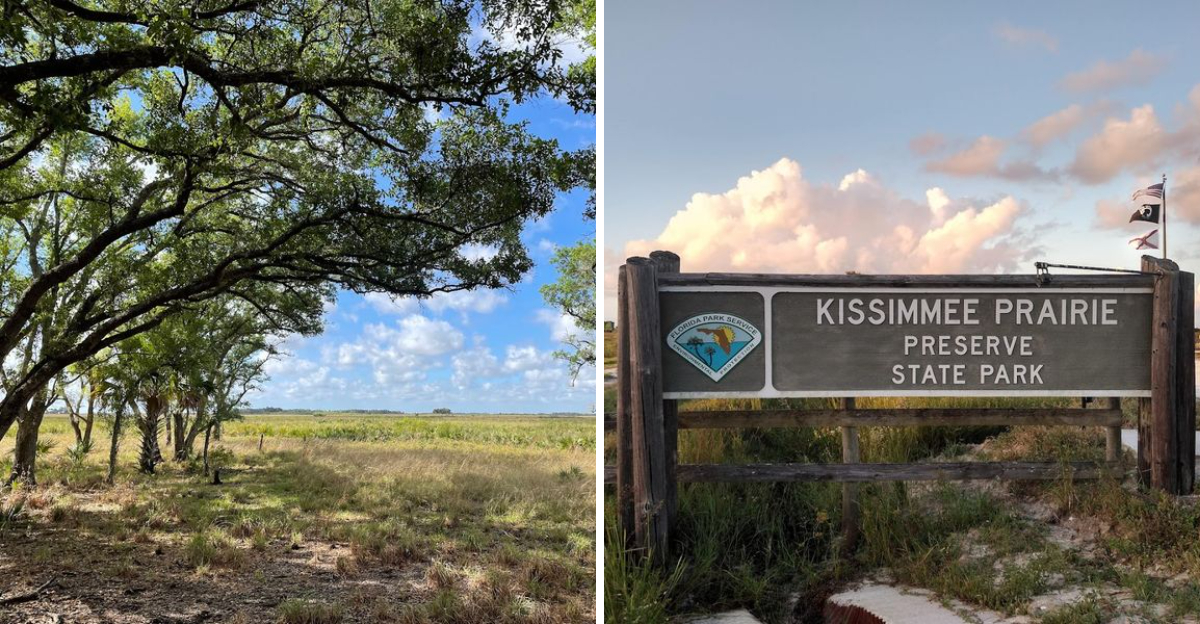
Most people have no idea Florida can get this dark.
Not gloomy dark. Real, untouched darkness, the kind where the stars suddenly look overwhelming because there is nothing left competing against them.
You drive into the prairie expecting another scenic state park, then sunset disappears, the sky deepens, and thousands of stars slowly begin taking over everything above you.
Few places in Florida make people feel smaller, quieter, and more amazed than this one after dark.
The landscape feels almost endless out here. Open grasslands stretch toward the horizon, trails disappear into silence, and the absence of city lights makes the entire preserve feel disconnected from the modern world.
Then the Milky Way appears.
Not faintly. Fully.
Bright enough to stop conversations and make people stand completely still staring upward.
It is the kind of experience that resets your brain for a while.
And once you see a Florida sky like this in person, ordinary nights never look quite the same again.
A Designated Dark Sky Paradise
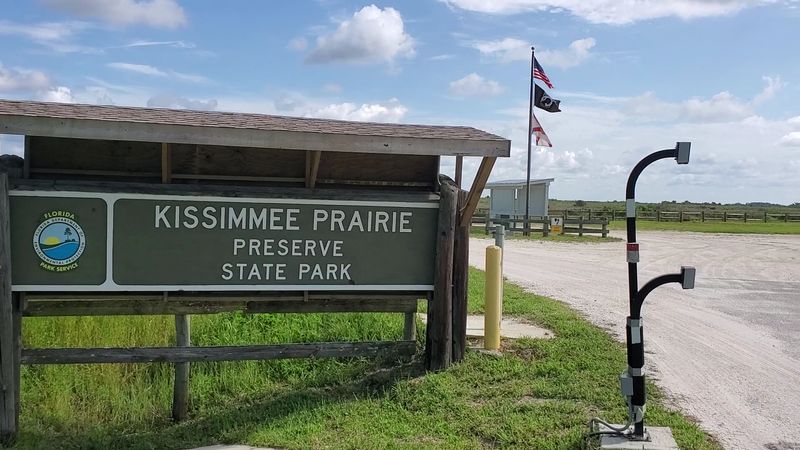
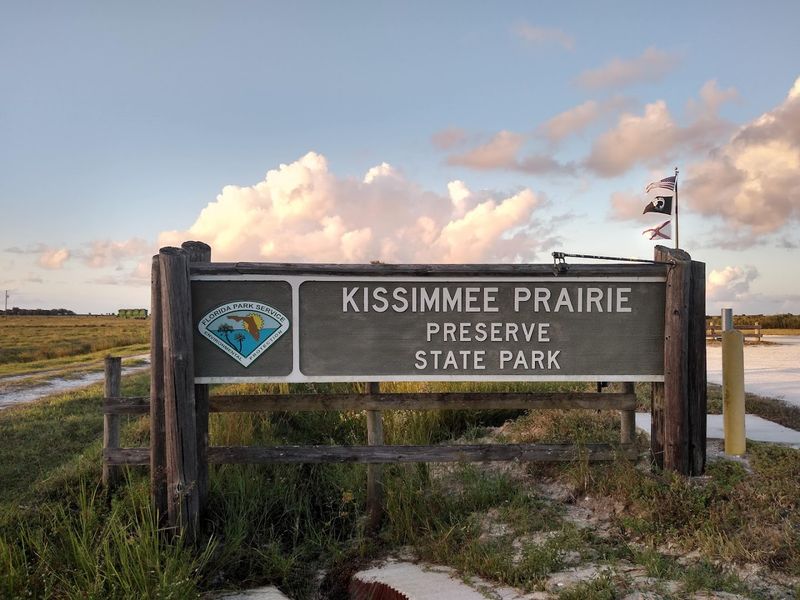
Kissimmee Prairie Preserve State Park earned its reputation as one of Florida’s official dark sky locations, and standing under that canopy of stars made me understand why astronomers get so emotional about light pollution. The park enforces strict lighting rules after sunset, allowing only red lights, which means your eyes can fully adjust to the darkness and pick up celestial details you’d never spot in the city.
I watched the Milky Way emerge like someone was slowly turning up the brightness on the universe, and I could make out individual star clusters without binoculars. Astrophotographers flock here during new moon phases, setting up tripods across the prairie to capture long exposures of our galaxy.
The park even maintains a dedicated astronomy observation pad where visitors gather with telescopes to share views of planets, nebulae, and distant galaxies that suddenly feel close enough to touch in this darkness.
54,000 Acres of Untouched Prairie
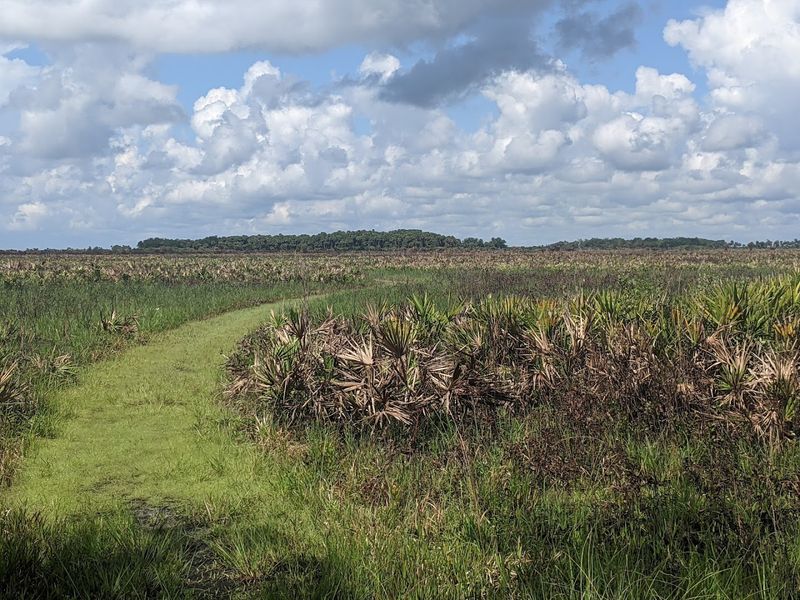
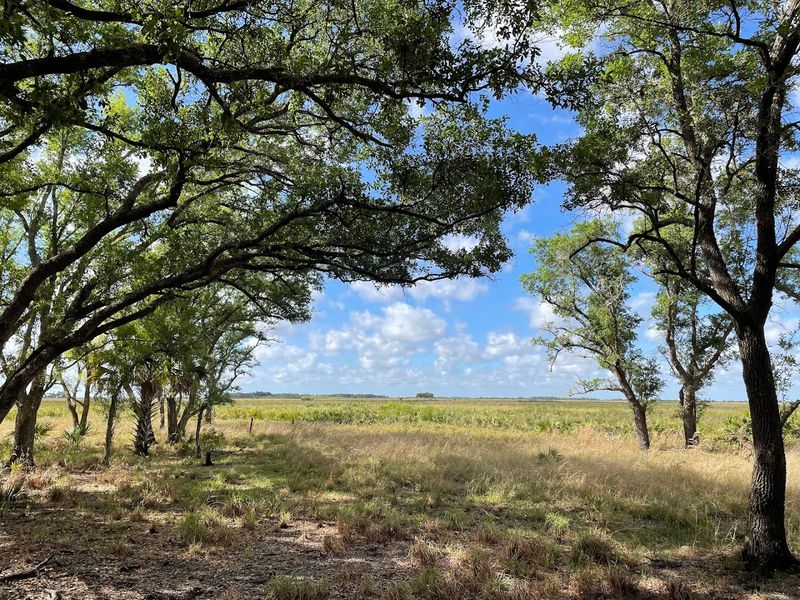
Standing at the edge of this preserve felt like stepping into a Florida that existed long before theme parks and shopping centers ever showed up on blueprints. The park protects over 54,000 acres of dry prairie, one of the rarest ecosystems in the entire state, and the sense of space here is almost overwhelming after spending time in crowded coastal towns.
I hiked out onto the grasslands and turned in a slow circle, realizing I could see the curve of the horizon in every direction without a single building interrupting the view. Native grasses ripple in waves when the wind picks up, creating patterns that shift and change like something alive.
This landscape once covered millions of acres across central Florida, but development reduced it to scattered fragments, making places like Kissimmee Prairie Preserve crucial for protecting what remains of this vanishing ecosystem and the species that depend on it.
Wildlife Encounters at Every Turn
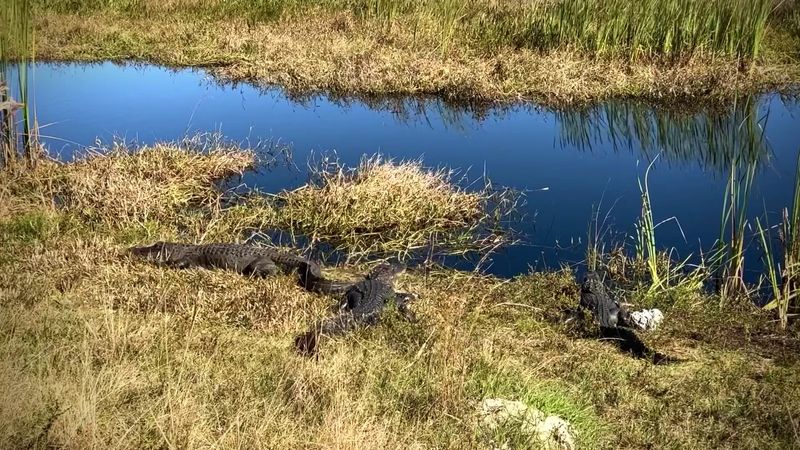
My first morning at the preserve started with a white-tailed deer staring at me from about fifteen feet away, completely unbothered by my presence as it munched on prairie grass like I was just another part of the scenery. Wildlife here doesn’t scatter at the first sign of humans, probably because the remote location means they encounter far fewer visitors than parks closer to major cities.
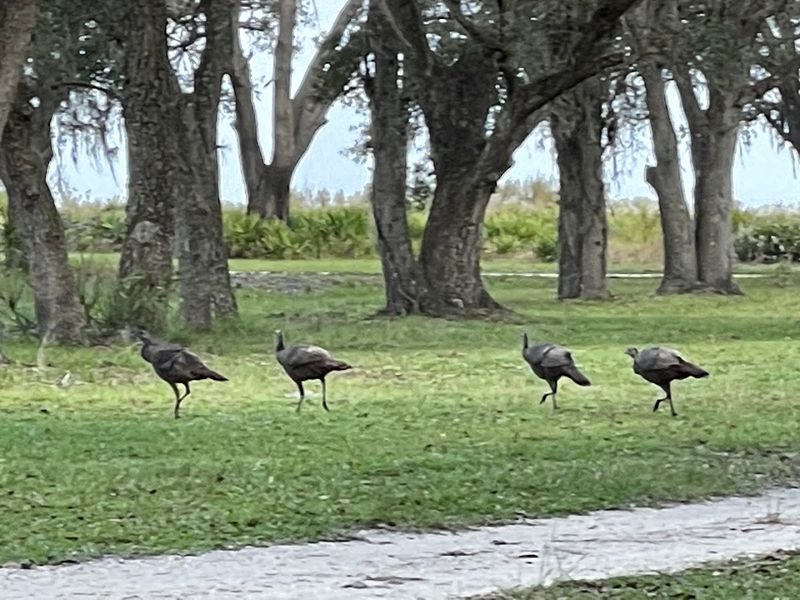
I spotted wild turkeys strutting across the trail in small groups, their iridescent feathers catching the light as they foraged for insects and seeds. Sandhill cranes flew overhead in pairs, their distinctive rolling calls echoing across the open landscape in a sound that felt prehistoric and otherworldly.
The preserve also supports populations of caracaras, those striking falcon relatives with bold facial markings, along with bobcats, wild hogs, and even the occasional black bear passing through on their way to other wild corridors across the state.
Glamping Under Ancient Oaks
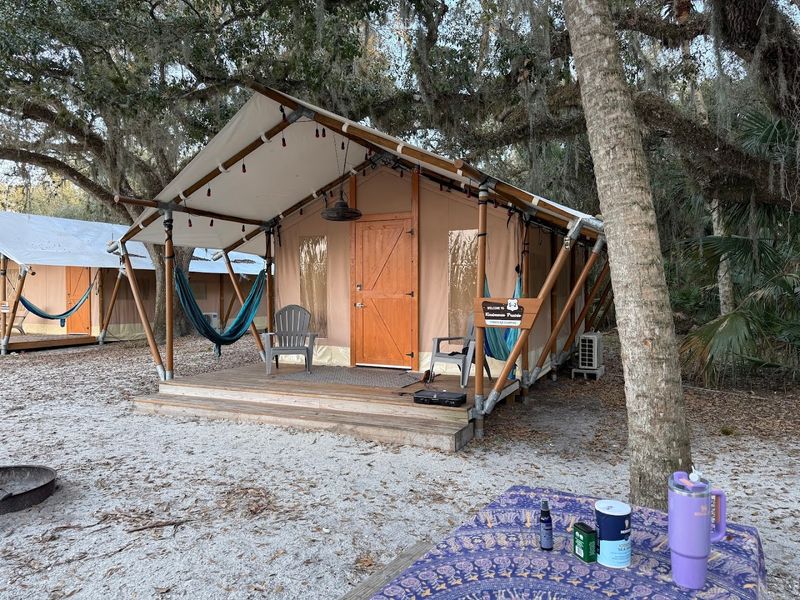
I’d never tried glamping before visiting Kissimmee Prairie, but after one night in those canvas tents nestled under sprawling oak trees, I understood why people rave about this middle ground between roughing it and hotel comfort. Each tent sits on a raised platform with real beds, electricity, and enough space to stand up and move around without doing the camping crouch.
The canvas walls let you hear every night sound, from rustling leaves to distant coyote calls, creating an immersive experience that feels more connected to the landscape than any cabin could manage. I appreciated having a proper mattress after a long day of hiking, and the nearby bathhouse offered hot showers that felt downright luxurious in this remote setting.
Booking fills up fast during new moon weekends when stargazers descend on the park, so I learned to reserve my spot weeks in advance to avoid disappointment.
Miles of Hiking Through Varied Terrain
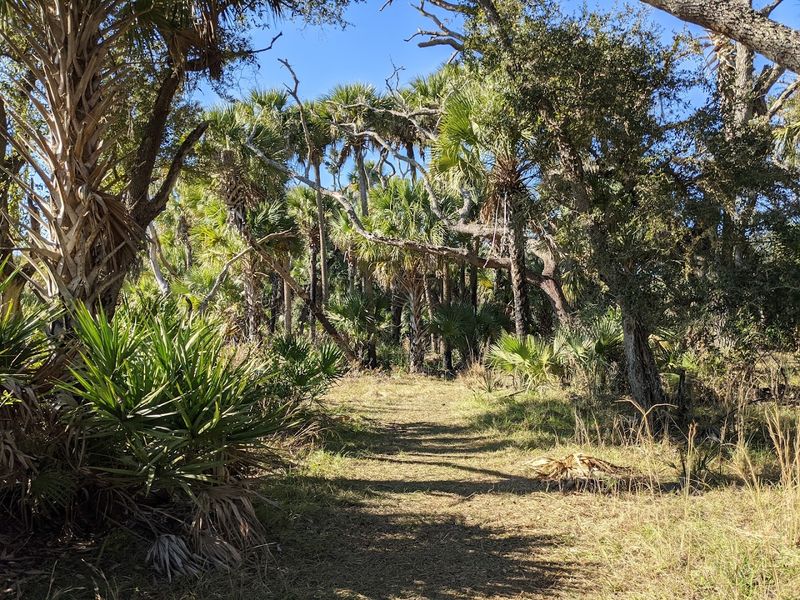
The trail system here surprised me with its variety, moving between open prairie where the sun beats down relentlessly and shaded oak hammocks that offer cool relief and completely different plant communities. I tackled several miles of the main loop trail, watching the landscape transform from grassland to dense tree cover and back again in a rhythm that kept the walk interesting.
Well-maintained paths and clear trail markers made navigation easy even for someone like me who occasionally gets turned around in parking garages. The flat terrain meant I could focus on observing plants and wildlife instead of watching my footing on rocky climbs, though the lack of elevation change did make the miles feel longer under the midday heat.
I spotted different bird species in each habitat zone, from prairie sparrows to woodland warblers, and the transitions between ecosystems happened quickly enough to feel like passing through distinct worlds on a single hike.
Peaceful Escape from Urban Chaos
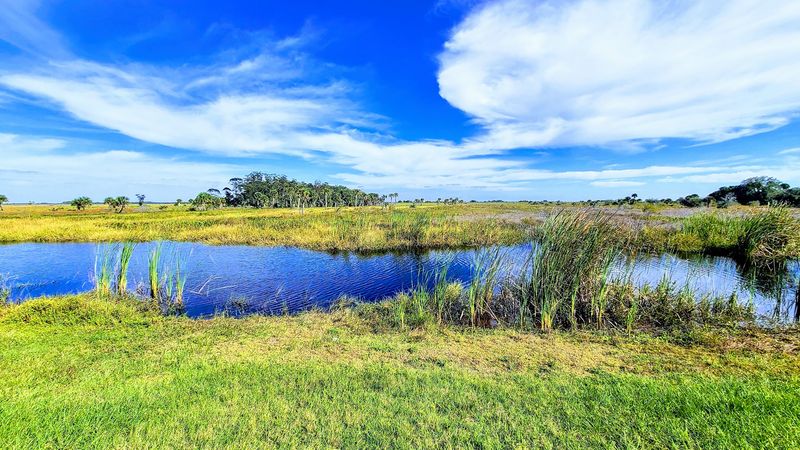
Driving into Kissimmee Prairie felt like passing through an invisible barrier that separated the frantic pace of modern Florida from something slower and more deliberate. The remoteness here isn’t just about physical distance from cities, it’s about the complete absence of urban noise, from traffic sounds to the constant hum of air conditioning units and electronic devices.
I sat outside my tent one evening and realized I could hear individual bird calls, wind moving through grass stems, and my own breathing without any mechanical sounds competing for attention. Cell service becomes spotty or nonexistent depending on your carrier, which initially frustrated me until I embraced the forced disconnection and stopped checking my phone every few minutes.
The other campers I encountered seemed to understand the unspoken agreement that this place demanded quiet respect, keeping voices low and music off to preserve the atmosphere of natural calm that drew everyone here in the first place.
Clean Facilities in a Remote Setting
I’ll confess that clean bathrooms rank high on my camping priorities list, and Kissimmee Prairie delivered facilities that exceeded my expectations for such a remote location. The bathhouses feature private shower stalls with hooks for your belongings, electrical outlets for charging devices, and most importantly, consistent hot water that actually stays hot throughout your shower.
I appreciated the outdoor sinks positioned near the bathhouse, perfect for washing dishes or rinsing sandy feet without tracking mess inside. The park staff maintains these facilities with impressive attention to cleanliness, and I noticed volunteers checking and restocking supplies multiple times during my stay.
Each campsite loop has its own bathhouse positioned within reasonable walking distance, though I learned to bring a headlamp for those middle-of-the-night trips when the red safety lights provide just enough illumination to avoid stumbling without ruining your night vision for stargazing when you return to your tent.
Year-Round Stargazing Opportunities
Unlike many stargazing destinations that only deliver spectacular skies during specific seasons, Kissimmee Prairie offers remarkable celestial views throughout the entire year thanks to Florida’s consistently clear weather patterns. I visited during spring and caught views of planets lining up in the pre-dawn sky, but winter visitors report equally stunning displays with different constellations taking center stage.
The park hosts occasional astronomy events where experienced stargazers set up powerful telescopes and invite others to peek through the eyepiece at Saturn’s rings or Jupiter’s moons. I joined one of these informal gatherings and ended up learning constellation names and mythology from a retired astronomer who spent twenty minutes pointing out deep-sky objects I’d never known existed.
Summer brings the Milky Way’s galactic center into view during evening hours, creating that classic arching band of light that photographers chase, while fall offers cooler temperatures that make extended observation sessions more comfortable than the humid summer nights.
Accessible Yet Wonderfully Isolated
The drive to Kissimmee Prairie takes you down increasingly rural roads until you start wondering if your GPS has led you astray, but the route stays paved and well-marked right up to the park entrance. I appreciated this balance between accessibility and isolation, knowing I could reach the preserve without needing four-wheel drive or special navigation skills.
The park sits roughly two hours from Orlando and about the same distance from Fort Myers, making it feasible for weekend trips without requiring vacation days or elaborate travel arrangements. That said, the final stretch of road shows its age with some rough patches that had me slowing down to protect my suspension, though the bumpy approach only reinforced the sense of leaving civilization behind.
Once you arrive, the nearest gas station or convenience store sits miles away, so I learned to stock up on supplies before making that final turn toward the park gates to avoid emergency runs for forgotten essentials.
Conservation Success Story
Learning about the preserve’s history added another layer of appreciation to my visit, especially understanding how close this landscape came to disappearing entirely under agricultural development. Florida purchased this land in the 1990s specifically to protect the vanishing dry prairie ecosystem, and walking these trails now feels like witnessing a successful rescue mission for an entire biological community.
The park works actively to maintain the prairie through controlled burns that mimic natural fire patterns, clearing out invasive species and encouraging native plants that evolved to thrive in this cycle of periodic flames. I noticed areas in different stages of recovery after burns, from blackened ground sprouting fresh green shoots to mature grasslands ready for the next carefully planned fire.
This active management approach helps support rare species like the Florida grasshopper sparrow and burrowing owl, birds that depend on this specific habitat and have nowhere else to go as development continues fragmenting wild spaces across the state.