
This Scenic Ghost Town Trail In Washington Leads Through Forgotten History
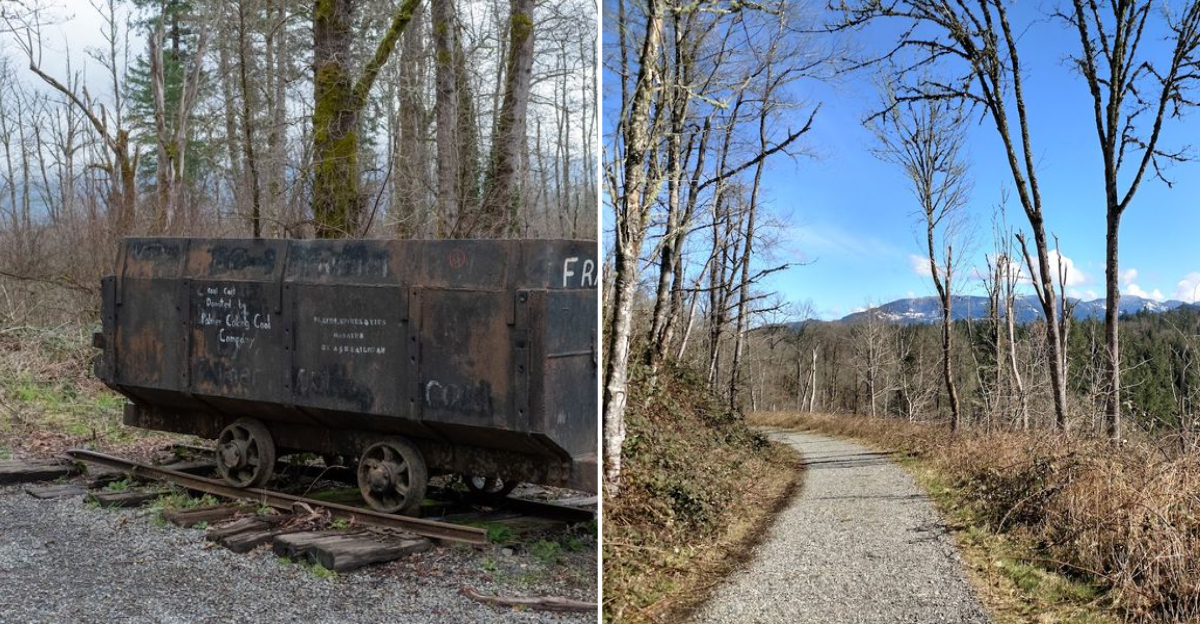
Okay, so I’ll admit it.I initially started exploring ghost towns because I thought it would make for excellent social media content. “Look at me, I’m spooky and adventurous,” I thought, picturing dramatic selfies amid desolation.
What I didn’t anticipate was becoming genuinely fascinated by the whole thing, especially this particular trail in Washington that keeps pulling me back for repeat visits. The thing about ghost towns is they’re actually less creepy and far more quirky than movies suggest.
Someone left a perfectly good piano in the middle of nowhere, and I refuse to stop pondering why. There’s an abandoned outhouse that somehow looks dignified, like it chose to retire rather than decay.
The whole place has a personality, a sense of humor even, as if the pioneers who built it left inside jokes carved into wooden beams.
I’ve learned that the best ghosts aren’t scary-they’re mysterious in the most entertaining way possible. It was once a booming coal mining town with more than 1,000 residents, a post office, hotels, and a school, and now it exists only as fragments scattered along a gentle trail beside the Green River.
The Story Behind
Back in the 1880s, Franklin was anything but forgotten. The Oregon Improvement Company established this coal mining settlement in east King County, Washington, and it grew fast, pulling in immigrants from Wales, England, Ireland, Italy, and Scotland who were hungry for steady work.
At its peak in the late 1890s, Franklin had a population of over 1,000 people. It had everything a thriving community needed, including a school, stores, hotels, and a post office that stayed open until 1916.
Coal from Franklin traveled by rail all the way to San Francisco, which tells you just how significant this little mountain town once was to the Pacific Northwest economy. Archaeologists from Green River Community College even conducted digs here in 1984 and 1985, carefully piecing together what daily life looked like for the people who called this place home.
By 1919, the mines had closed, residents had moved on, and Franklin quietly faded into the forest, leaving behind a trail of clues for curious hikers to follow today.
The Trail Itself: Easy, Beautiful, And Surprisingly Moving
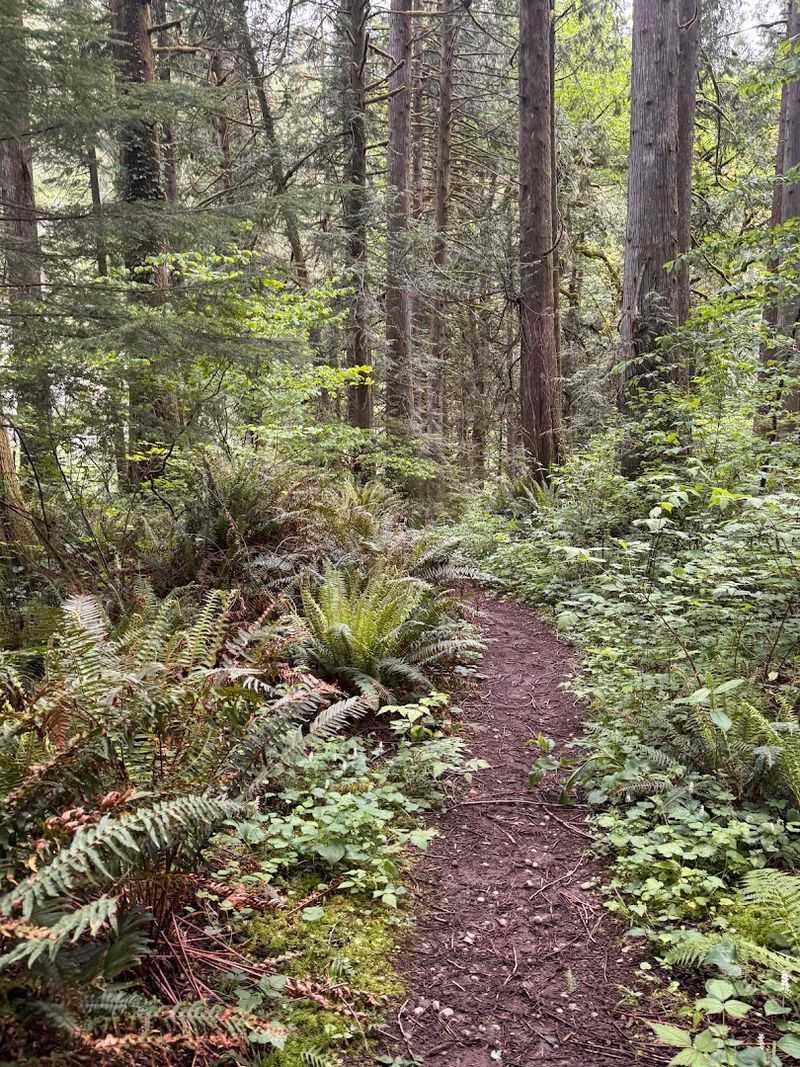
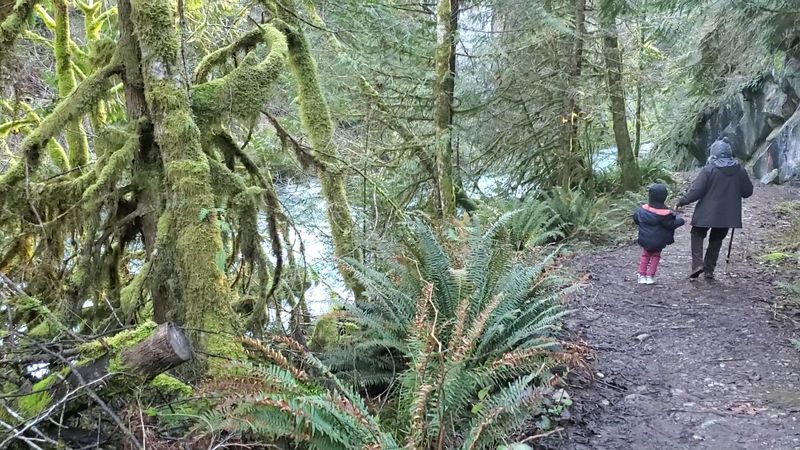
Not every meaningful hike has to punish your knees, and the Franklin Ghost Town Trail is proof of that. Stretching about 2 to 2.5 miles as an out-and-back route, this trail follows an old mining road and railroad grade along the Green River, keeping elevation gain minimal and the pace relaxed.
I found it genuinely easy to walk at a comfortable speed while still stopping constantly to look at things. The path is family-friendly and accessible to most skill levels, though I would skip the stroller because uneven terrain and the occasional fallen tree make it a little rough for wheels.
Wear waterproof boots if you visit after rain, because muddy patches are a real possibility and the trail does not apologize for them.
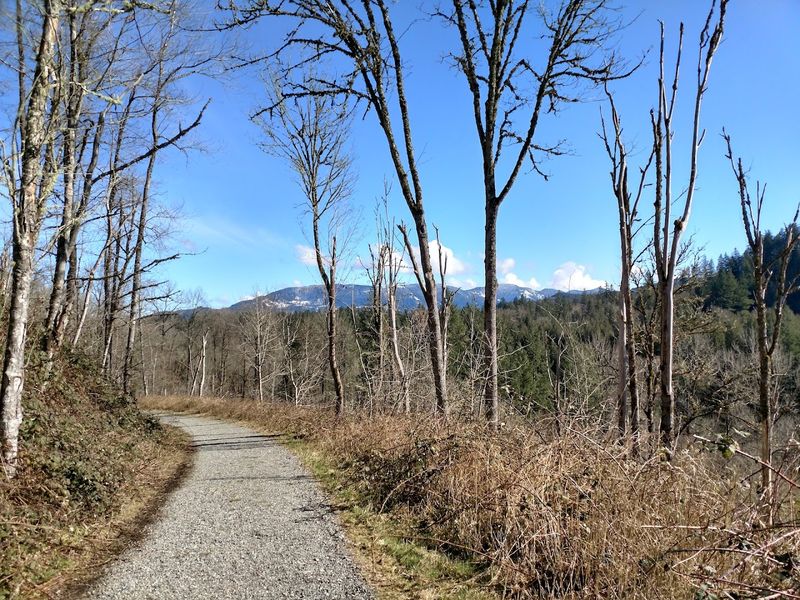
The Green River runs alongside sections of the route, and on a clear morning the combination of moving water, towering trees, and mountain views in the distance creates an atmosphere that feels almost cinematic.
The Historic Coal Cart At The Fork
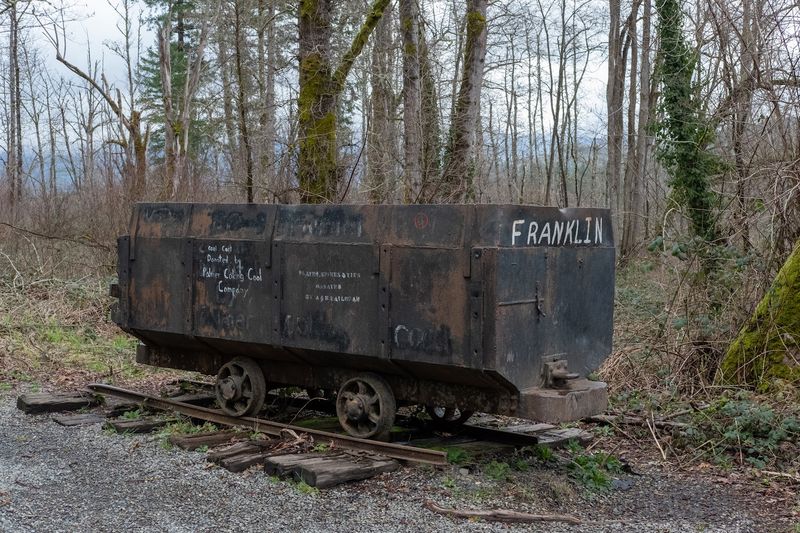
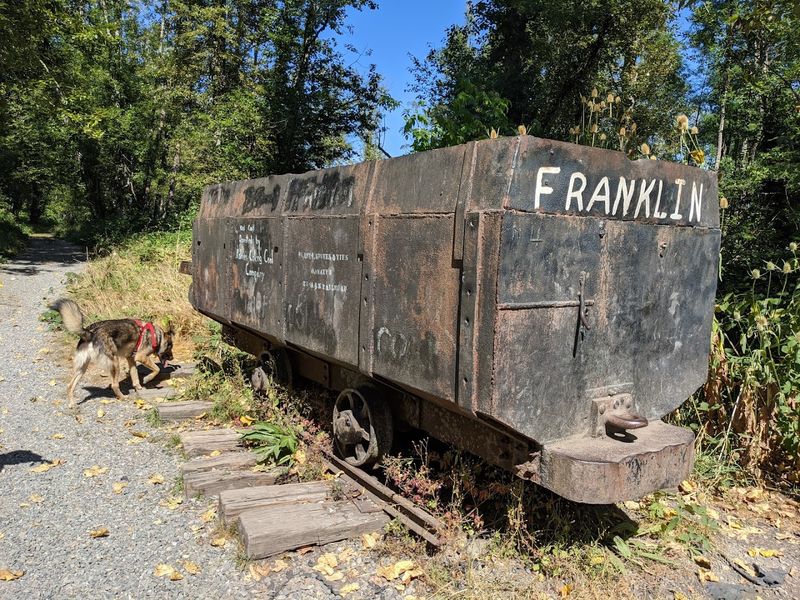
One of the first things that stopped me in my tracks was the old coal cart sitting right at a trail fork near the beginning of the route. Stamped with the name “Franklin,” this weathered relic is more than a photo opportunity, it is a physical handshake between the present and the past.
The cart sits at a junction where the trail splits toward different sections of the ghost town, so it also serves as a natural decision point for hikers. I spent a few minutes just standing there, running my hand along the rusted metal and thinking about the workers who once pushed these things through dark tunnels beneath the hillside.
It is one of those small, tangible details that makes the history feel real rather than abstract. No placard or museum display could do what that one beat-up cart does simply by sitting there at the edge of the forest, waiting to be noticed.
The Sealed Mine Shaft And What It Represents
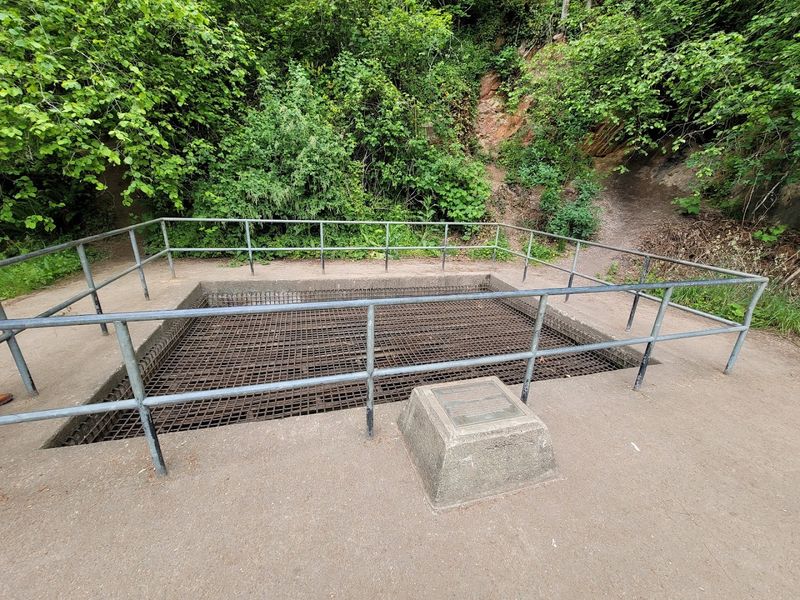
Standing in front of Mine Shaft No. 2 is one of those moments that quietly changes the energy of a hike. The shaft, once 1,300 feet deep, is now sealed with concrete and surrounded by a metal fence, but the weight of what happened here is still very much present.
On August 24, 1894, a fire broke out in the Oregon Improvement Company mine, and 37 miners suffocated underground in what became one of Washington’s worst mining disasters. A jury later determined the fire had been intentionally set, and the person responsible also perished in the same event.
The sealed shaft stands as a quiet memorial to those 37 lives, and I found myself standing there longer than I expected, just listening to the wind move through the trees above it.
There are no dramatic monuments here, just a concrete slab, a fence, and the forest growing thick and unbothered all around it, which somehow makes it feel even more solemn.
Foundations, Ruins, And Rusted Remnants Along The Path
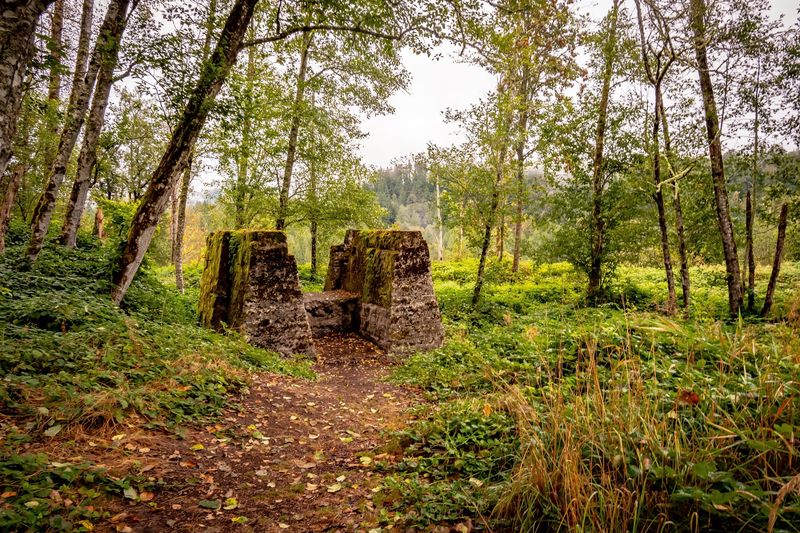
Scattered throughout the trail are the bones of a community that once hummed with daily life. Cement foundations of homes and buildings poke up through the undergrowth, and rusted equipment sits half-buried in the soil like artifacts waiting to be rediscovered.
Old pieces of cable snake through the brush, and if you slow down and look carefully, you start to see patterns in the ruins, a doorway here, a floor plan there, the ghost of a neighborhood that used to have neighbors.
I kept thinking about the families who cooked meals inside these walls and walked these same paths to work each morning.
The forest has done a thorough job of reclaiming most of Franklin, which makes the surviving remnants feel even more striking by contrast. There is something deeply satisfying about reading a landscape this way, not from a textbook but through your own two eyes and a pair of muddy boots on a quiet trail.
The Hillside Cemetery And Its Quiet Dignity
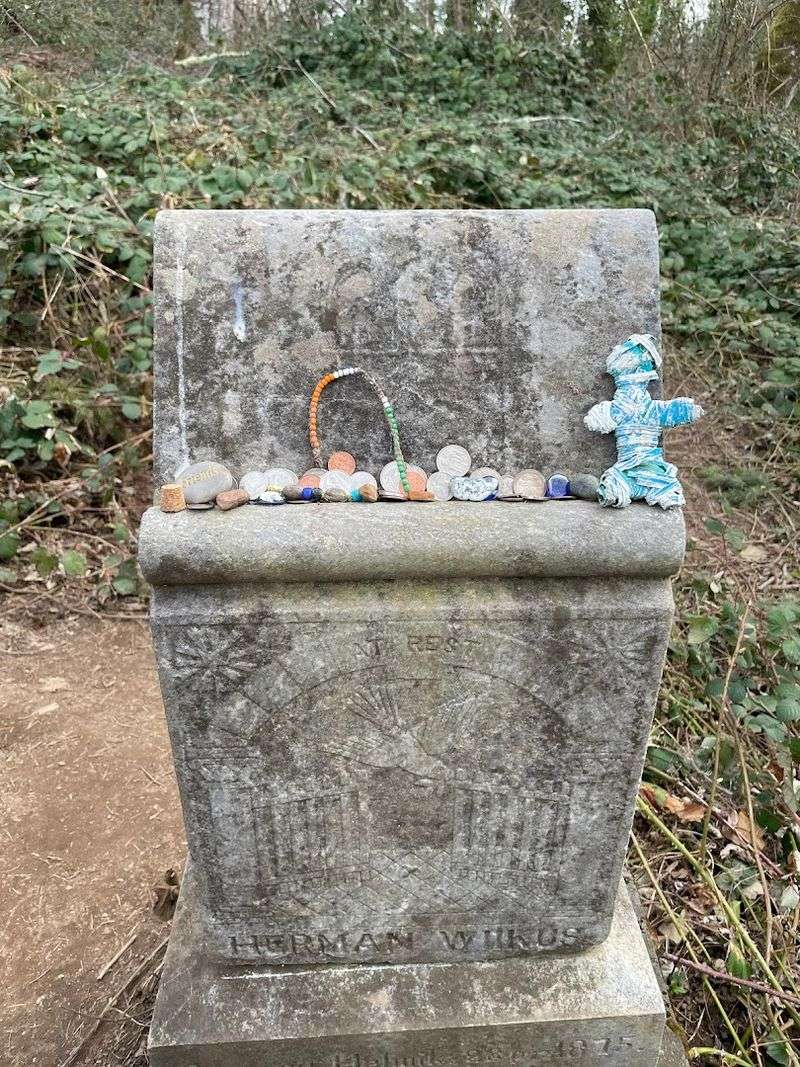
A short side path off the main trail leads up to a hillside cemetery that I almost missed, and I am genuinely glad I did not. The headstones here are weathered, some are cracked, some are partially buried, and a few are so worn that the names carved into them are nearly impossible to read.
What surprised me was learning that this cemetery is still actively cared for by descendants of Franklin’s former residents, as well as the Black Diamond Historical Society and Museum nearby. That ongoing connection between the living and the long-gone felt meaningful in a way I did not expect from a trail hike.
The atmosphere up on that hillside is different from the rest of the trail, quieter and more deliberate, like the forest itself is being respectful. I left feeling a strange mix of sadness and admiration for the people buried there, workers and families who built something real in a place the world has mostly forgotten.
Labor History And The 1891 Conflict
Franklin’s history is not just about coal and commerce. It carries a complicated chapter of American labor history that is worth understanding before you walk the trail.
In 1891, the Oregon Improvement Company brought in African-American workers as strikebreakers during a labor dispute, a decision that triggered violence and eventually required the deployment of the National Guard to restore order. The town’s workforce had been largely made up of Welsh, English, Irish, Italian, and Scottish immigrants who were pushing back against poor working conditions and low pay.
These events reflect tensions that were playing out across mining towns throughout the American West during that period, and Franklin was right in the middle of it. Walking the trail with that context in mind adds a layer of meaning to every rusted bolt and crumbled wall you pass.
History is rarely simple, and Franklin does not pretend otherwise. The trail lets you sit with that complexity in a way that feels honest and worthwhile.
Planning Your Visit: Tips And Nearby Stops
Getting to the Franklin Ghost Town Trail is straightforward once you know what to expect. The trailhead sits near Black Diamond in the Green River Gorge Conservation Area, and the dirt parking lot charges $5, payable in cash or via Cashapp, so come prepared.
Wear sturdy, waterproof footwear because the trail can get muddy, especially after rain. The route is easy enough for kids and older adults, but leave the stroller at home since the terrain gets uneven in spots.
After the hike, a short drive brings you to the Green River Gorge Falls, also known as Maid of the Mist Falls, which is worth the extra $5 fee to access through the Green River Gorge Resort. The Black Diamond Historical Society and Museum is also nearby and offers a deeper look at the region’s coal mining past.
For food, the Black Diamond Bakery and Deli is a satisfying stop that locals genuinely love, and after a morning on the trail, a fresh pastry feels very well earned.