
This Ancient Arkansas Cavern Hides An Otherworldly River Realm Deep Beneath The Ozarks
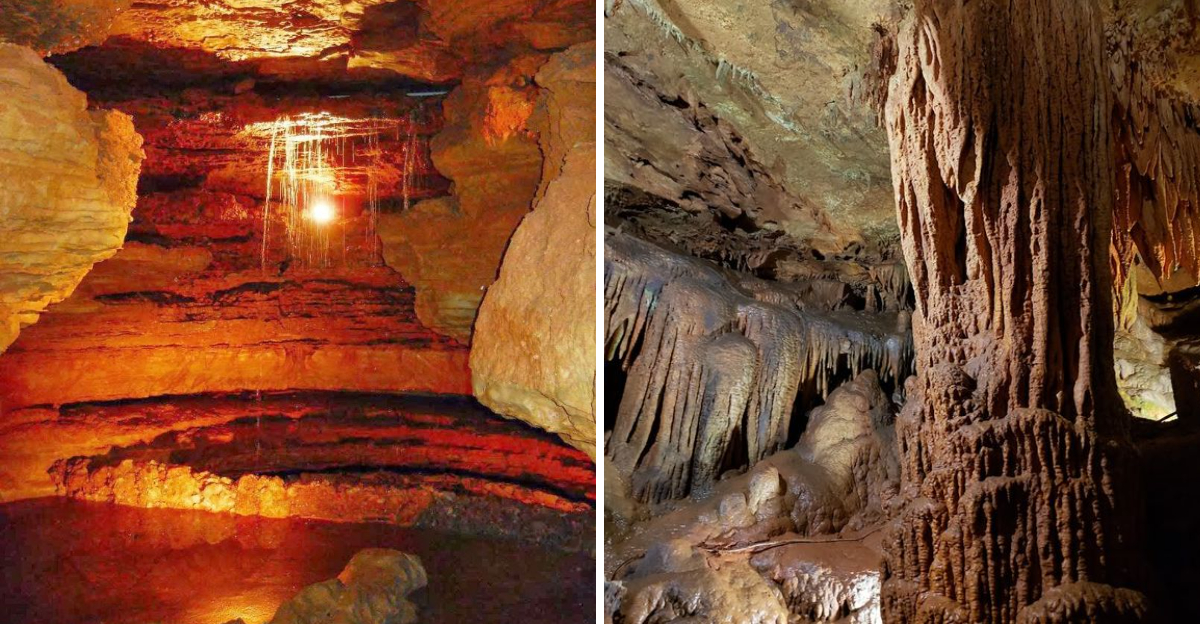
This is the kind of Ozark stop that sneaks up on you in the best way, without trying too hard. Northern Arkansas has plenty of pretty drives, but walking into this cavern feels like crossing into a cooler, stranger layer of the landscape.
The temperature drops. Your eyes adjust.
Then the cave opens into limestone passages shaped by water over an almost unbelievable stretch of time. There are formations overhead, textured walls beside you, streams moving below, and a waterfall that makes the whole place feel alive.
I love travel stops that give you more than a photo. This one gives you a mood.
Quiet, damp, ancient, and a little dramatic. You keep looking closer because every surface has something going on.
It is not loud or flashy. It just slowly wins you over, one chamber at a time.
By the exit, I was already telling people about it. Immediately.
Ancient Limestone Passages
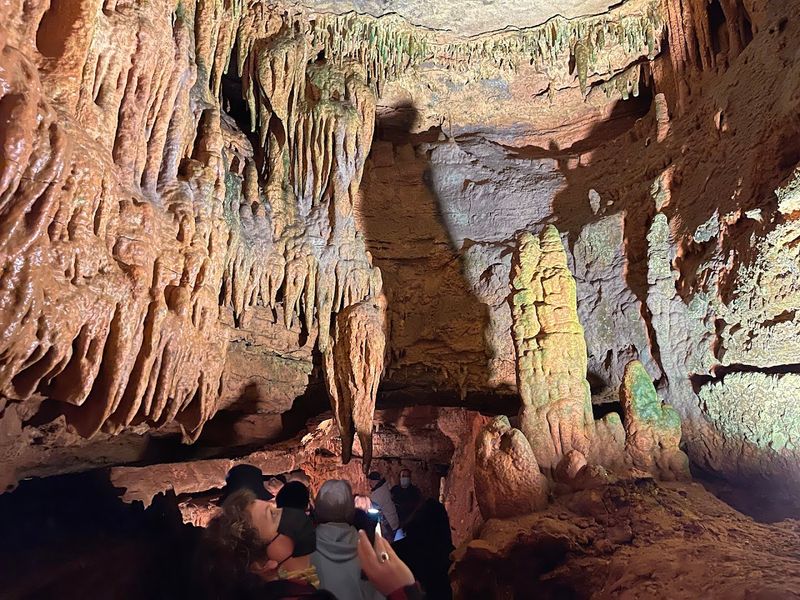
Some places earn your respect the moment you step inside, and these passages do exactly that.
The corridors of this cave were carved over hundreds of millions of years as slightly acidic water slowly dissolved the limestone bedrock beneath the Ozarks, leaving behind a winding underground architecture that no human hand could ever replicate.
In these narrow channels, the rough, layered walls make the age of the rock feel almost touchable here, with rough textures that clearly predate every civilization on Earth.
The passages vary in width, sometimes opening into broader chambers and then tightening again into sections where you have to duck, which honestly makes the whole thing feel more authentic.
That ducking-required moment is not a design flaw but a reminder that you are a guest in a natural structure built on geological time.
Tour guides here do a solid job of explaining how the limestone formed and why certain sections look the way they do, turning each turn in the passage into a small geology lesson.
By the time I reached the first major chamber, I already understood why this cave has been drawing curious visitors for decades, right inside Bull Shoals Caverns at 1011 C S Woods Blvd, Bull Shoals, AR 72619.
Underground Streams And Stone Walls
Water is the real architect here, and nowhere is that more obvious than when you come face to face with the underground streams threading through the cave.
These streams are not decorative features added for atmosphere but active waterways that continue shaping the cave walls even as you stand there watching them flow.
The stone walls flanking the streams have been polished and sculpted over an enormous span of time, creating surfaces that shift between rough and glassy depending on where the water has spent the most energy.
I remember pausing at one point during the tour and just listening to the sound of moving water in complete underground silence, which turned out to be one of the most unexpectedly peaceful moments of my entire trip.
One of the fun interactive moments the guide pointed out was a game of figuring out which direction the river was actually flowing, since the visual cues underground can be genuinely misleading.
Small frogs, salamanders, bats, and camel crickets are associated with cave environments, adding a surprising layer of life to what most people assume is a mineral world.
The combination of living water and ancient stone walls creates an atmosphere that feels both raw and quietly elegant at the same time.
A Hidden Waterfall Below
Not every waterfall requires a mountain trail and a pair of hiking boots, and this cave proves that in the most satisfying way possible.
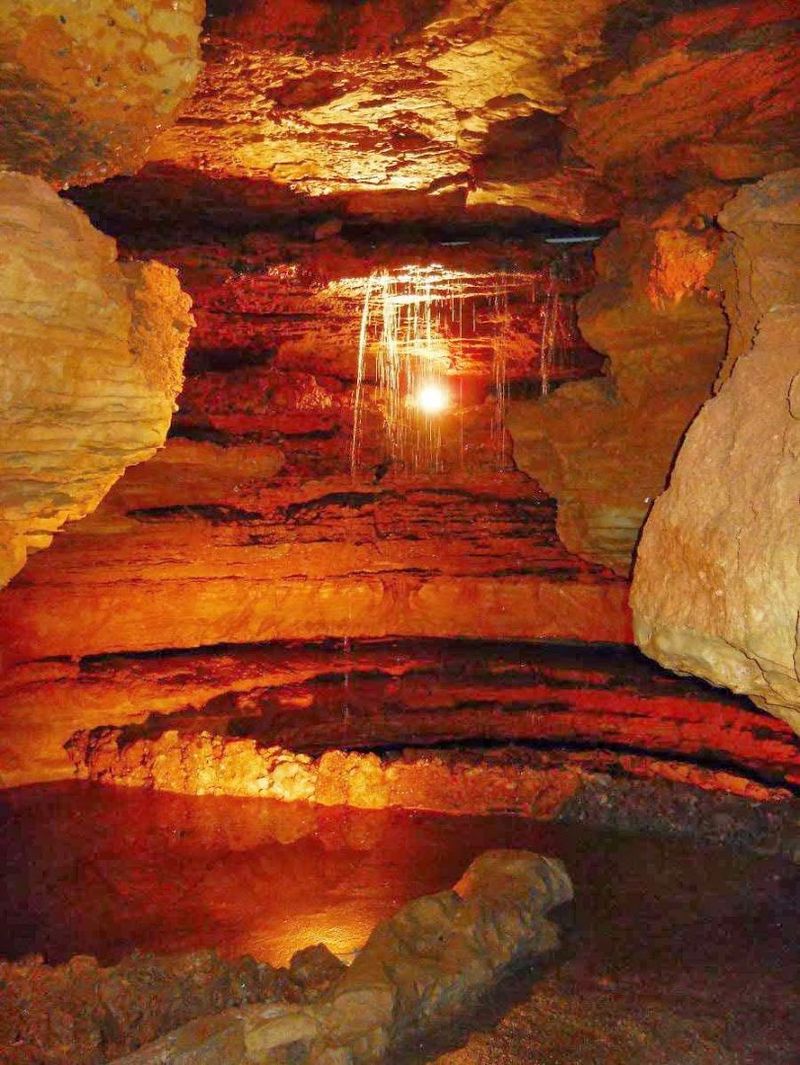
Near the deepest part of the cavern, a small waterfall drops through the darkness with a sound that carries through the surrounding chambers before you even see it.
The first time I heard that rushing sound echoing off the walls, I genuinely did not know what I was walking toward, which made the moment of actually seeing the waterfall feel like a proper underground reveal.
The water falls over formations that have been slowly building up mineral deposits for centuries, giving the surrounding rock a layered, almost sculptural appearance where the spray lands.
Tour guides tend to use this spot as a natural pause point, letting visitors take in the sound, the sight, and the cool mist that drifts out from the base of the falls.
Photographers in the group will want to have their cameras ready here, because the contrast between the dark cave walls and the white moving water creates a striking image even in low light.
A moment beside the waterfall that most people on the surface have no idea exists gives the whole experience a quiet, secretive quality belowground.
Cool Cavern Air Year-Round
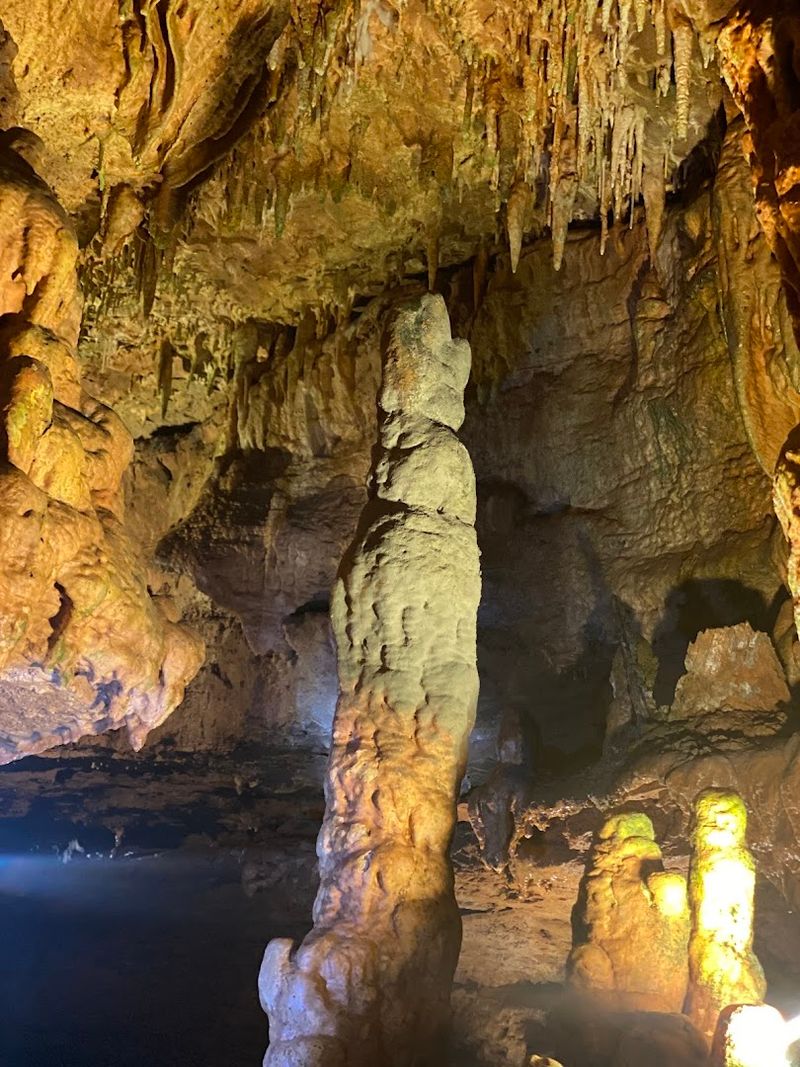
Arkansas summers are not known for being gentle, and on the day I visited, the heat outside was the kind that makes you rethink every outdoor plan you have ever made.
The cavern entrance feels like a different climate zone almost instantly during the tour, with the temperature dropping noticeably within just a few feet of the opening.
Caves like this one maintain a remarkably stable temperature throughout the entire year, staying right around 59°F regardless of whether it is a scorching July afternoon or a cold December morning outside.
That consistent coolness is not just a comfort feature but a result of the cave’s depth and the insulating properties of the surrounding rock, which buffers the interior from seasonal temperature swings.
One visitor I spoke with mentioned that she and her partner had originally come to the cave specifically to escape the summer heat, and ended up staying for the full tour because the formations completely won them over.
A light jacket is genuinely good advice here, especially if you are visiting during the warmer months when the contrast between outside and inside is the most dramatic overall.
That cool, steady air ends up feeling less like a weather quirk and more like the cave’s own quiet way of welcoming you in slowly.
Dripping Formations In The Dark
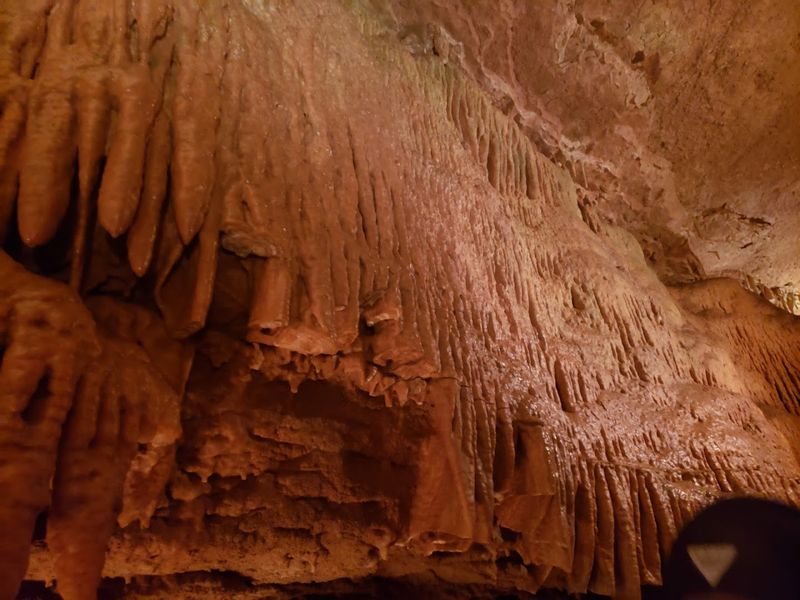
A single water droplet forming at the tip of a stalactite can slow the whole room down as it falls toward the cave floor below in near silence.
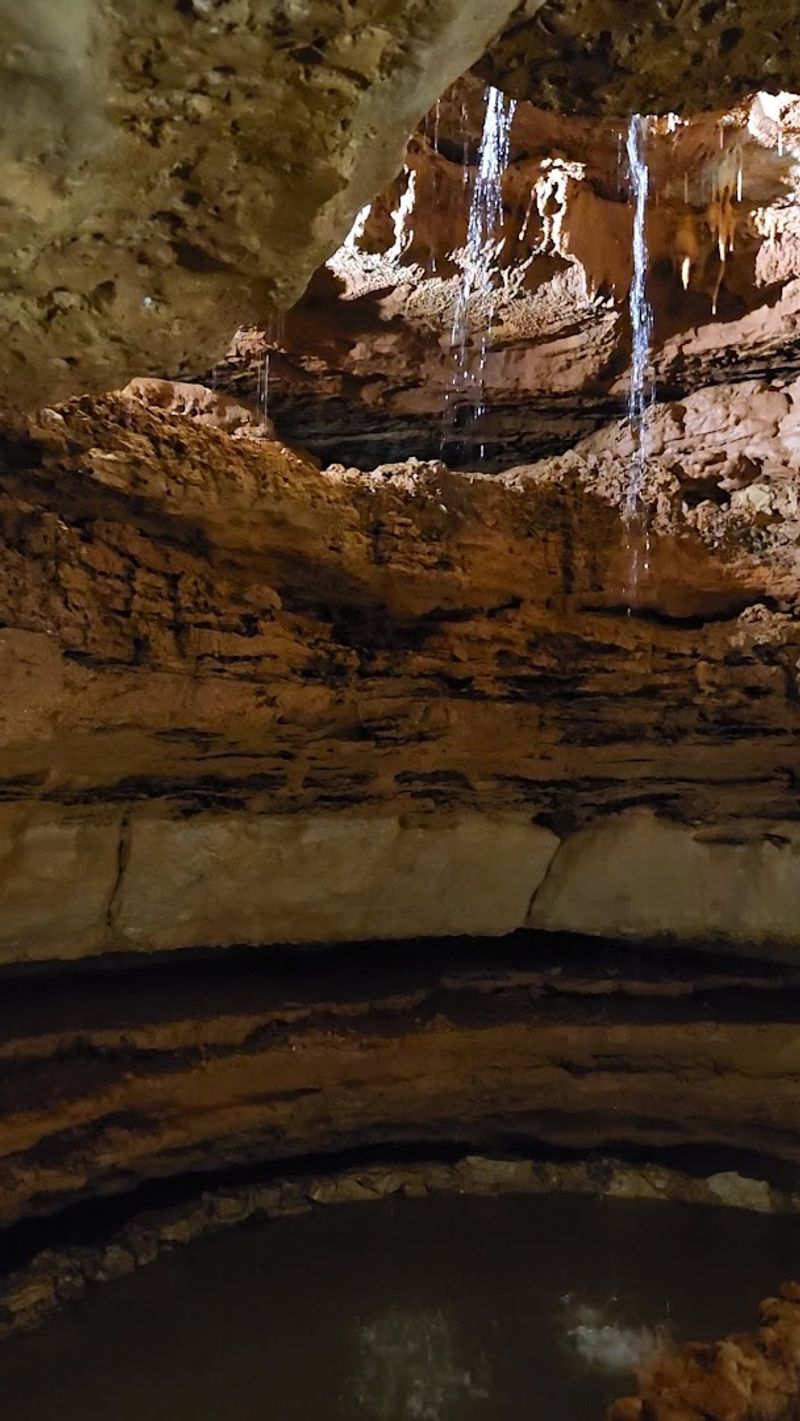
The formations inside this cavern represent thousands of years of mineral-rich water doing its patient, drip-by-drip work, building structures that range from delicate needle-thin stalactites to thick, column-like stalagmites rising from the ground.
What struck me most was not the size of the formations but the variety, since some sections of the cave feature clusters of thin, translucent spires while others show broad, layered shelves of deposited calcium carbonate spreading across the walls.
The tour guide pointed out several formations that I would have completely overlooked on my own, including some smaller features set into ceiling crevices that only become visible when a flashlight catches them at the right angle.
Visitors who have toured larger commercial caves sometimes note that independently owned caves like this one offer a more personal look at formations, with guides who genuinely enjoy pointing out the quirky and unusual shapes.
The darkness surrounding each lit formation adds a theatrical quality to the whole experience, making even a modest-sized stalactite look dramatic against the shadowed cave ceiling.
Every drip you hear in the silence is the cave quietly adding another microscopic layer to its already remarkable collection.
Ozark Depths And Quiet Echoes
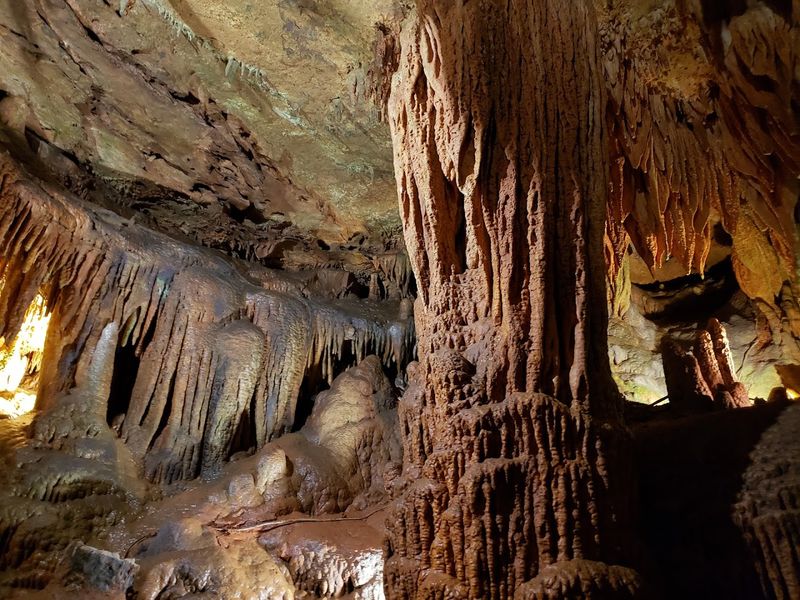
Somewhere beneath the forested ridges of the Ozarks, the noise of the modern world almost completely disappears.
Inside the deeper sections of this cave, the silence is layered and textured in a way that is genuinely hard to describe until you have stood inside it yourself, with only the faint sound of dripping water or a distant underground stream breaking through.
Sound behaves differently underground, bouncing off curved stone walls and returning to your ears with a softened, almost hollow quality that turns even a whispered sentence into something that seems to travel farther than it should.
The guide on my tour paused at one point in a wider chamber and spoke in a low voice just to demonstrate how the acoustics shifted, and the whole group went quiet for a moment to listen.
That kind of shared stillness is something you rarely get on a typical tourist attraction visit, and it gave the experience a reflective quality that I was not expecting from a cave tour.
Bull Shoals Caverns has its own long record of human use, including prehistoric Native people, Civil War soldiers, and later moonshiners, so that local history feels close inside the cave.
Quiet places like this one have a way of making the outside world feel very far away, which is sometimes exactly what a traveler needs.
A Living Cave Still Growing
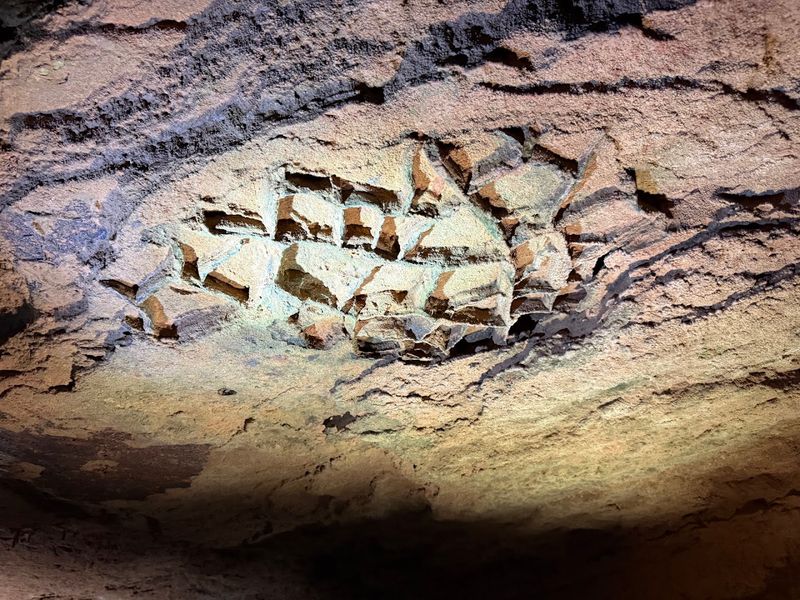
Most people think of caves as finished places, static and frozen in time, but this cavern is very much still in the middle of its own slow construction project.
Active speleothems, which is the scientific term for cave formations like stalactites and stalagmites, continue to grow here as mineral-laden water seeps through the limestone above and deposits thin layers of calcite with every drip.
The growth rate is extraordinarily slow, often measured in fractions of an inch per century, which means that even the smallest formation you see represents an almost incomprehensible investment of time.
Guides here are careful to remind visitors not to touch the formations, and that instruction comes with real weight once you understand that a single touch can leave oils that interfere with the mineral deposition process and damage growth that has been building for ages.
A look at fresh, glistening wet calcite on the tip of a stalactite is one of those small visual details that confirms the cave is alive and actively changing here.
Some independently owned caves like this one provide a more intimate look at active formations than larger, more crowded attractions, simply because smaller group sizes allow for closer observation overall.
A living cave growing in real time, even at a pace too slow to perceive, carries a kind of quiet momentum that is genuinely humbling to witness.
Shadowed Corners Beneath The Hills
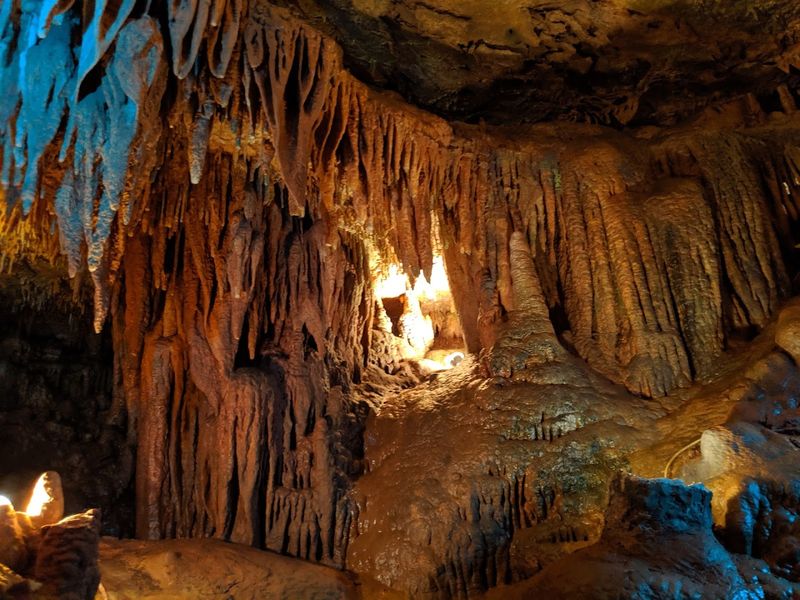
Not every part of a cave tour is brightly lit, and the shadowed corners of this cavern are honestly some of the most compelling sections of the whole experience.
The visual drama hits when tour lighting illuminates one side of a rock formation while leaving the other half in complete darkness around it, creating contrasts that make even familiar shapes look strange and new.
I found myself slowing down in these dimmer sections, letting my eyes adjust and trying to pick out the details that the shadows were only half-hiding, which felt less like a tourist activity and more like a genuinely exploratory moment.
The uneven cave floor in some of these areas adds a physical dimension to the experience, requiring a bit of careful footing that keeps your attention fully present rather than drifting toward your phone.
Small creatures like cave frogs, salamanders, bats, and camel crickets are part of this cave environment, so keeping an eye on the darker edges of the path sometimes rewards you with a small wildlife sighting along the way.
The overall atmosphere in these sections feels layered and ancient, with the weight of the surrounding Ozark hills pressing in from above in a way that is more felt than seen sometimes.
Shadowed spaces beneath these hills hold a particular kind of mystery that makes the full tour feel complete, and they linger in your memory long after you climb back into the Arkansas sunshine.