
These Forgotten Stone Walls In Florida Hold The Secrets Of A Vanished World
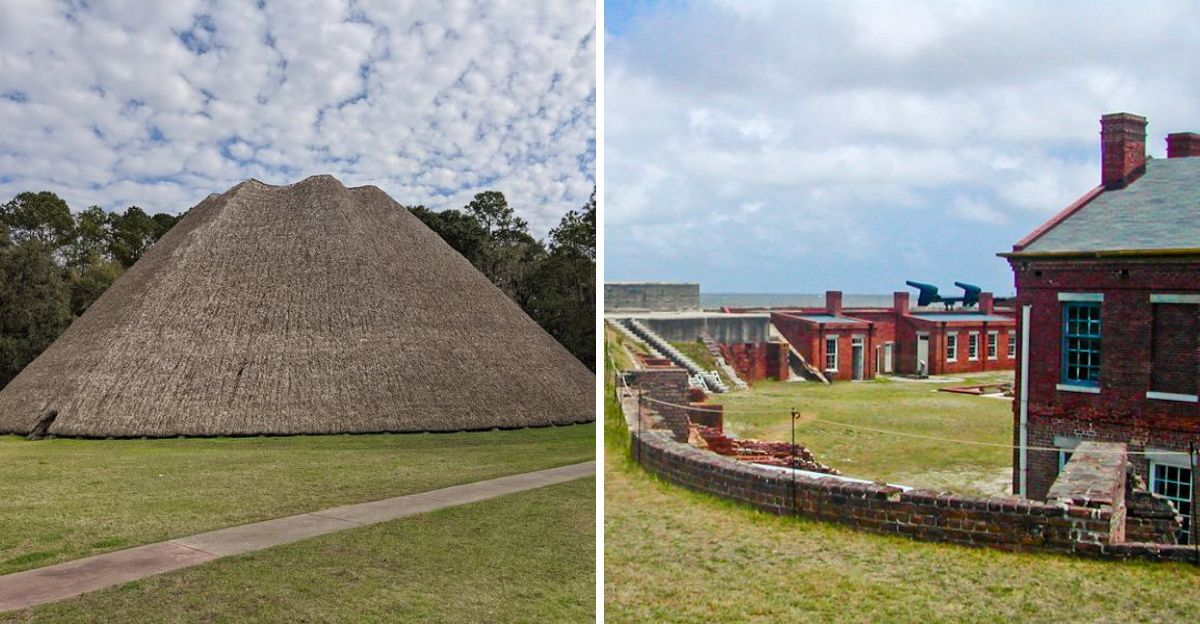
Florida does not exactly scream ancient ruins at first glance.
Sunshine, beaches, and theme parks usually take center stage, while the deeper layers of history stay quietly hidden in plain sight.
Then you start looking closer.
Florida is scattered with stone ruins that feel far older and more mysterious than most people expect.
Walls worn down by time, structures half reclaimed by nature, and places that still carry the presence of the people who once built them.
Some sit deep in the forest.
Others stand just minutes from busy roads.
All of them tell stories without needing a guide to explain them.
You walk through these spaces and start to imagine what life looked like centuries ago.
Who stood there. What happened.
Why it was left behind.
And once you see this side of Florida, it becomes very hard to think of the state the same way again.
1. Bulow Plantation Ruins Historic State Park, Flagler County
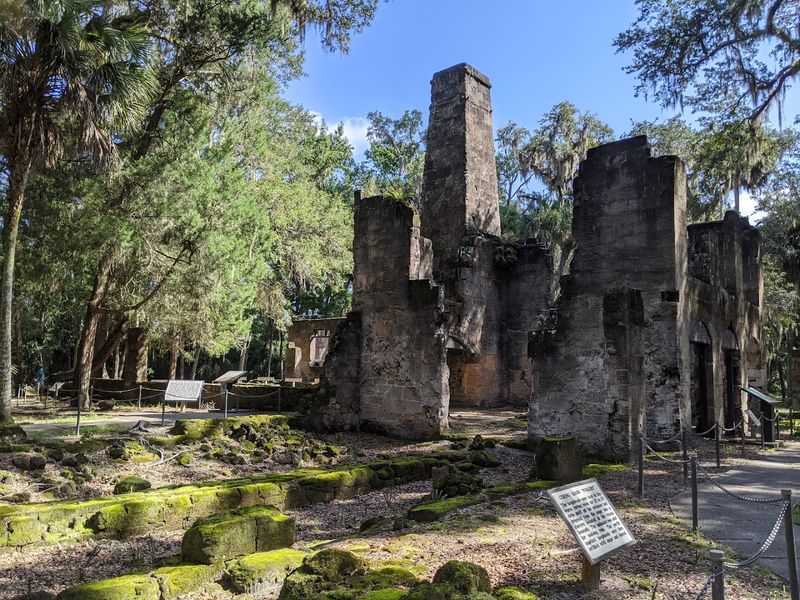
Moss creeps across the coquina sugar mill walls at Bulow Plantation Ruins Historic State Park in Flagler County, Florida, and standing here feels like the forest is slowly reclaiming what humans once built.
The plantation was established in the early 1800s by Major Charles Wilhelm Bulow, who grew sugar cane, cotton, and indigo on thousands of acres of fertile land.
During the Second Seminole War in 1836, the plantation was burned, and all that remained were these thick stone walls, which have held their shape for nearly two centuries.
I walked the short trail through the hammock forest and found four distinct ruins, including the sugar mill, the spring house, the well, and the slave quarters foundation, each one silent but full of weight.
The park sits along Bulow Creek, so paddling a kayak through the dark tannic water after your walk is a genuinely rewarding way to end the day here.
2. Castillo de San Marcos, St. Augustine, Florida
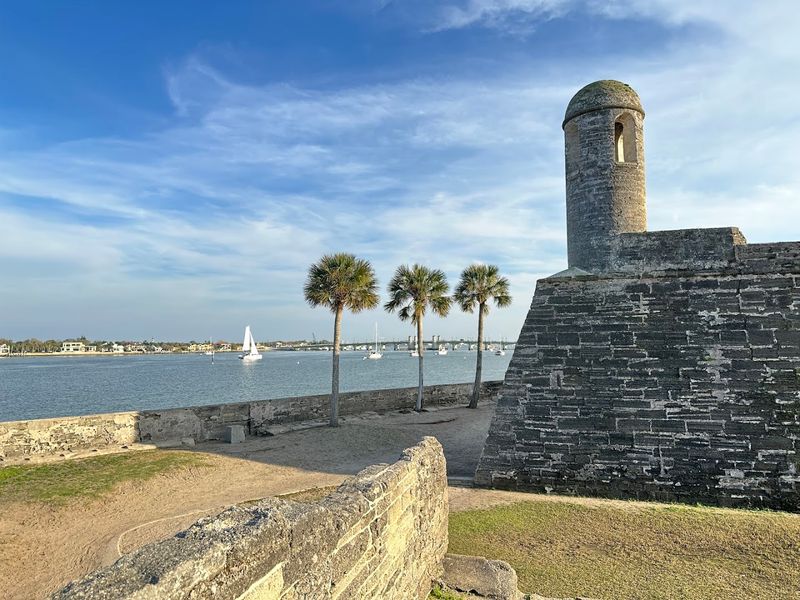
No stone structure in Florida commands attention quite like the Castillo de San Marcos, the oldest masonry fort in the continental United States, sitting proudly along the waterfront of St. Augustine, Florida.
Built by the Spanish starting in 1672, the fort is constructed entirely from coquina, a local shellstone quarried from nearby Anastasia Island, which gives the walls a texture unlike any other fortification I have ever touched.
What makes coquina so remarkable is that cannonballs would sink into it rather than shatter it, essentially making the walls self-healing under fire during battles.
I spent an entire afternoon exploring the gun deck, the dark interior rooms, and the central courtyard, and each space told a different chapter of Spanish colonial life in North America.
Rangers offer free guided tours throughout the day, and catching one during a cannon demonstration turns an already fascinating visit into something you will be describing to friends for weeks.
3. Fort Matanzas National Monument, St. Johns County
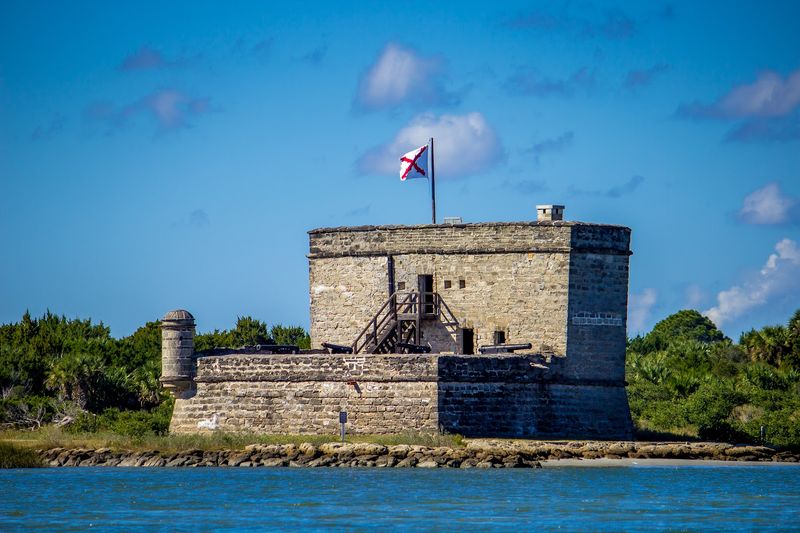
Reaching Fort Matanzas National Monument in St. Johns County, Florida, requires a short free ferry ride across the Matanzas River, which somehow makes the arrival feel even more dramatic than expected.
The small coquina watchtower was completed by the Spanish in 1742 to guard the southern inlet approach to St. Augustine, and its compact design packs a surprising amount of history into a very modest footprint.
Standing on the upper gun deck, I could see miles of salt marsh stretching in every direction, and it was easy to imagine a Spanish soldier scanning the horizon for British ships with the same view.
The name Matanzas, meaning slaughters in Spanish, references a 1565 massacre that took place near this site during the early years of European conflict over Florida.
Visiting at low tide gives the best views of the surrounding marsh grasses, and the ferry crossing itself offers a quiet, breezy moment that sets the mood perfectly before you step onto the island.
4. Kingsley Plantation, Fort George Island
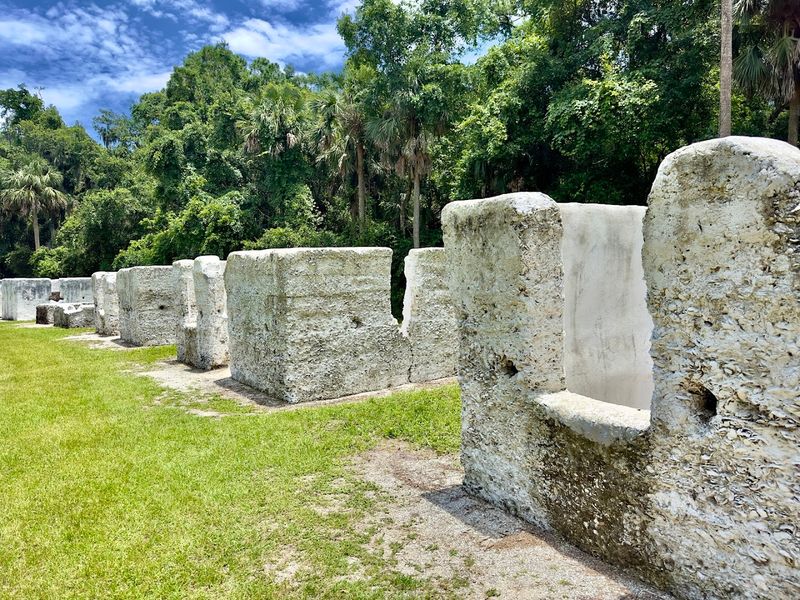
Tucked away on Fort George Island, Florida, Kingsley Plantation carries some of the most complex and difficult history in the entire state, and its walls of tabby construction speak to that weight directly.
Tabby is a building material made from oyster shells, sand, water, and ash, and the 25 surviving slave cabin ruins here are among the best examples of this construction method remaining in the American South.
Zephaniah Kingsley, the plantation owner, had a notably contradictory life, enslaving hundreds of people while also legally marrying an enslaved woman named Anna Madgigine Jai, who eventually became a plantation manager herself.
I spent a long morning walking between the cabin ruins and the main house, and the contrast between the two structures communicates the brutal inequality of plantation life more clearly than any written sign could.
National Park Service rangers lead thoughtful tours that do not shy away from the hard truths embedded in every wall and foundation stone on this island.
5. Fort Clinch State Park, Fernandina Beach
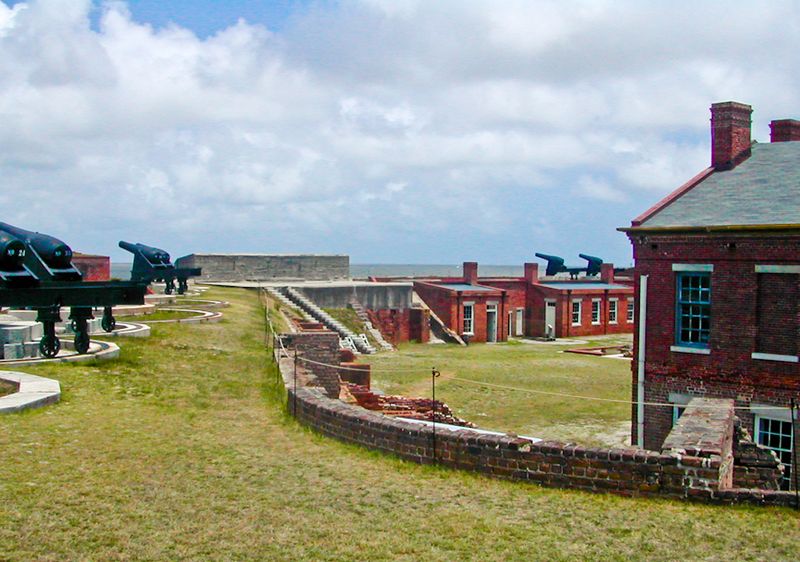
Fort Clinch State Park sits on the northern tip of Amelia Island near Fernandina Beach, Florida, and the brick and masonry fortification here is one of the best-preserved Civil War era forts I have ever explored.
Construction began in 1847, and the fort changed hands between Union and Confederate forces during the Civil War before eventually being abandoned and left to the elements and the surrounding forest.
What I love most about Fort Clinch is the living history program, where costumed volunteers portray Union soldiers going about their 1864 routines, cooking, drilling, and talking about the war as if it is still unfolding.
The walls of the fort are thick and imposing, with cannon positions, a blacksmith shop, a bakehouse, and a guardhouse all contained within the pentagonal layout.
After touring the fort, the park offers miles of beach and trails through maritime hammock, making it easy to spend a full and satisfying day without ever leaving the grounds.
6. Dade Battlefield Historic State Park, Bushnell
On a cold December morning in 1835, a column of U.S. soldiers marched through the Florida wilderness near present-day Bushnell and were ambushed in what became one of the opening engagements of the Second Seminole War.
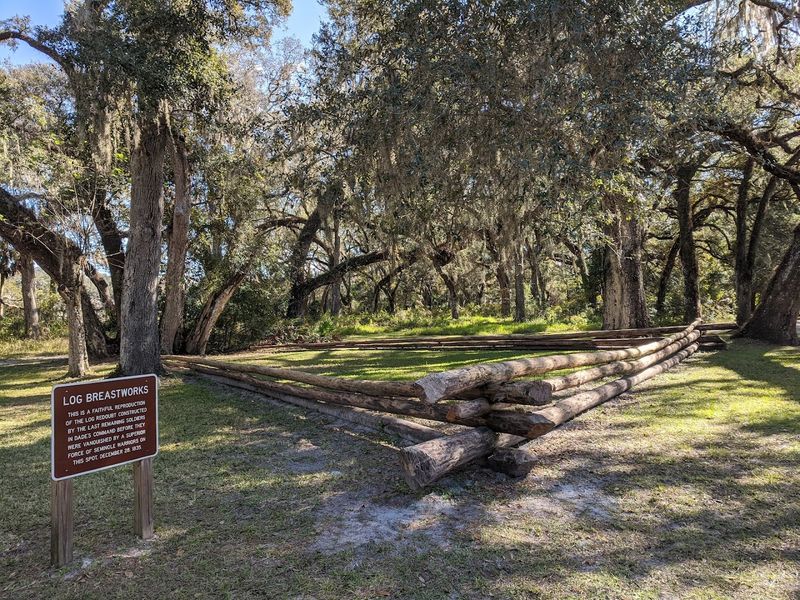
Dade Battlefield Historic State Park preserves the site of that encounter, and the reconstructed log breastwork that the soldiers tried to build during the fight stands as a haunting focal point of the grounds.
The stone and timber memorial markers placed throughout the field indicate where soldiers fell, and walking between them on a quiet morning gives the place a genuinely solemn atmosphere that is hard to shake.
I found the small museum on site to be surprisingly thorough, covering both the American military perspective and the Seminole perspective with equal care and historical context.
Every January, the park hosts a reenactment weekend that draws history enthusiasts from across the state, and watching the dramatized events unfold across the actual landscape adds a layer of immediacy that no museum exhibit can replicate.
7. Mission San Luis, Tallahassee
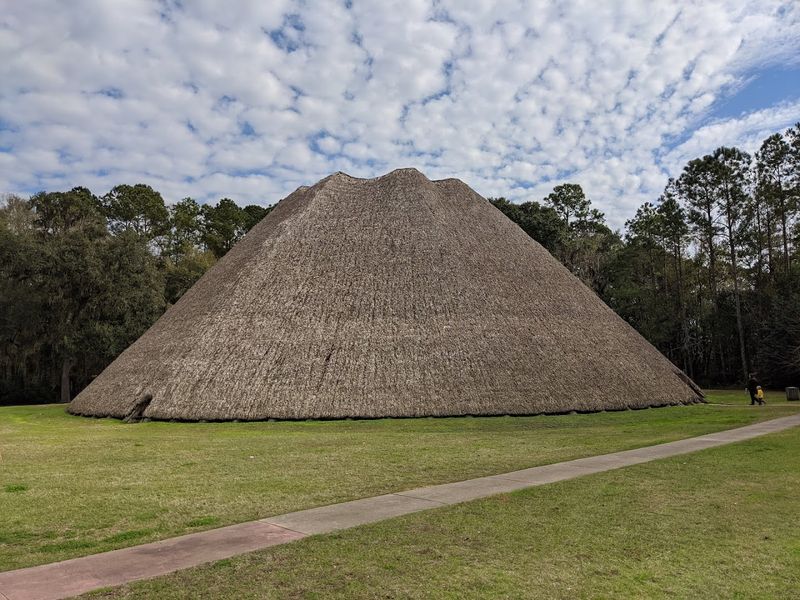
Just a few miles west of downtown Tallahassee, Mission San Luis stands as one of the most ambitious archaeological reconstructions in the entire southeastern United States, bringing a 17th-century Spanish-Apalachee mission town back to life.
The original mission was established around 1633 and became the western capital of Spanish Florida, housing both Spanish colonists and thousands of Apalachee people at its height of activity.
What stopped me in my tracks on my first visit was the scale of the reconstructed council house, a massive circular wooden and thatch structure built over the original archaeological footprint, which gives you a visceral sense of Apalachee community life.
The stone foundation remnants and earthwork features visible throughout the site connect the reconstruction to the actual buried history underneath, which archaeologists continue to study and interpret.
Living history demonstrations, including blacksmithing, cooking, and weaving, run on weekends, and the knowledgeable staff make every question feel welcome rather than rushed.
8. Fort Foster Historic Site, Hillsborough River State Park
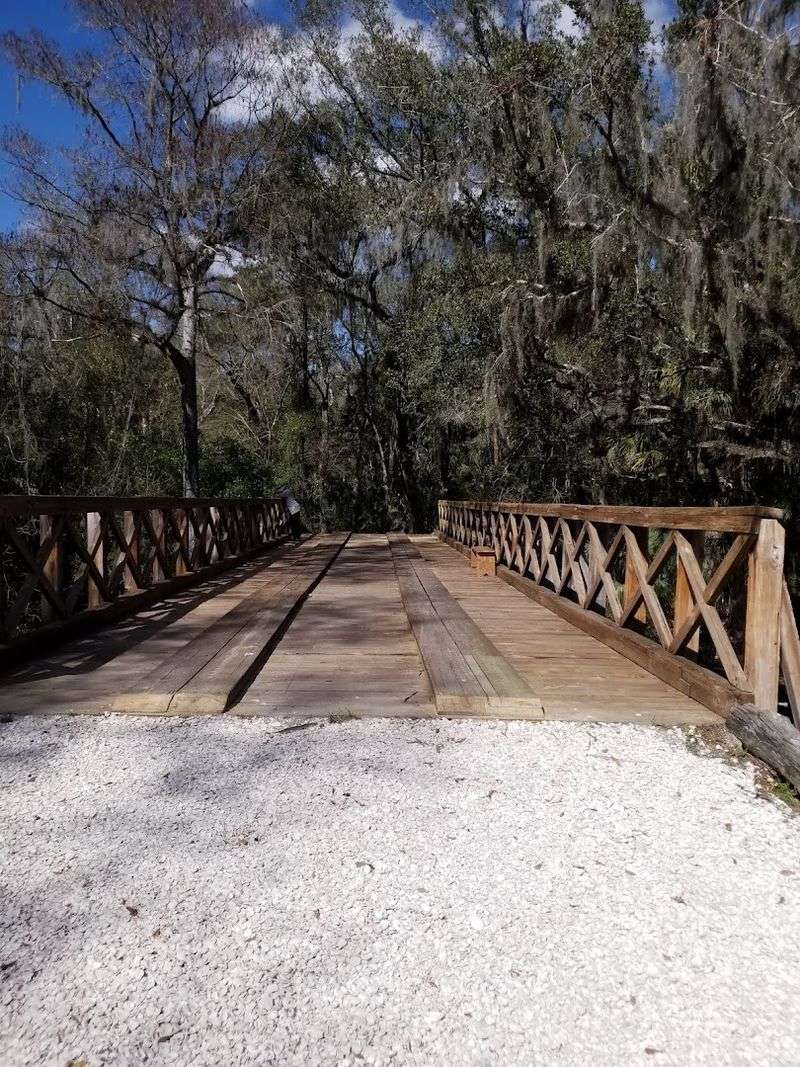
Buried inside Hillsborough River State Park north of Tampa, Fort Foster Historic Site is one of those places that rewards the curious traveler who takes the time to look beyond the swimming area and the picnic shelters.
The fort was originally built in 1836 during the Second Seminole War to protect a bridge crossing over the Hillsborough River, a strategically important supply route through the dense Florida interior.
A reconstructed blockhouse and bridge now stand over the original site, and the setting along the dark, tannic river with its cypress trees and Spanish moss feels genuinely atmospheric.
I crossed the wooden bridge on a February afternoon when the air was cool and the river was still, and the silence made it surprisingly easy to imagine soldiers posted here, watching the tree line for movement.
Reenactment events held at the site throughout the year bring the fort to life with musket demonstrations, period cooking, and guided walks that add real depth to what might otherwise seem like a modest reconstruction.
9. Yulee Sugar Mill Ruins Historic State Park, Homosassa
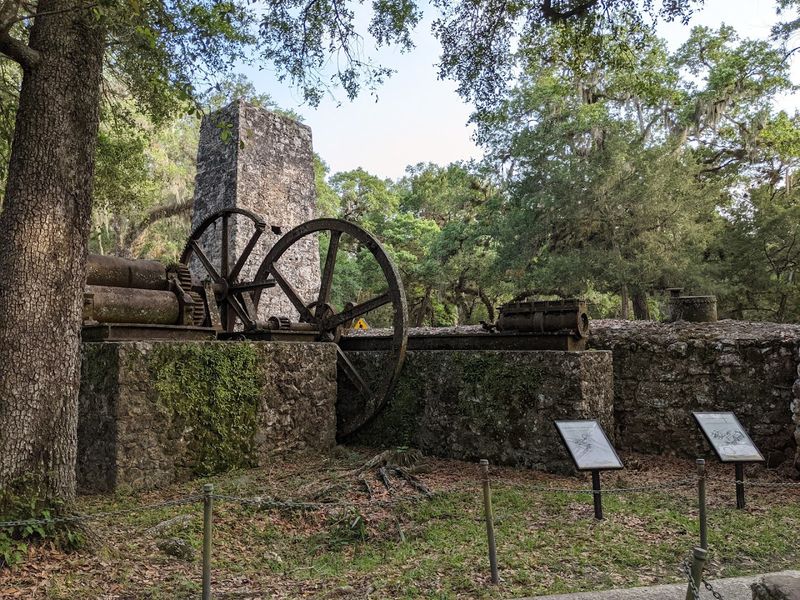
Few ruins in Florida hit the visual sweet spot of dramatic decay quite like the Yulee Sugar Mill Ruins Historic State Park in Homosassa, where massive limestone walls and original iron machinery have been standing in open air for over 160 years.
The mill was built in the 1850s by David Levy Yulee, one of Florida’s first U.S. senators, and at its peak it processed sugar cane grown on a 5,100-acre plantation worked by enslaved people.
What sets this site apart from other plantation ruins is the remarkable preservation of the machinery itself, including iron boilers, gears, and a cane crusher, all still sitting within the open stone structure.
I spent nearly an hour just circling the ruins, reading the interpretive panels and photographing the way vines and roots have worked their way into every gap in the coquina and brick.
The park is free, easily accessible, and located right off US 19, making it one of the most convenient historical stops on Florida’s Nature Coast corridor.
10. San Marcos De Apalache Historic State Park, St. Marks
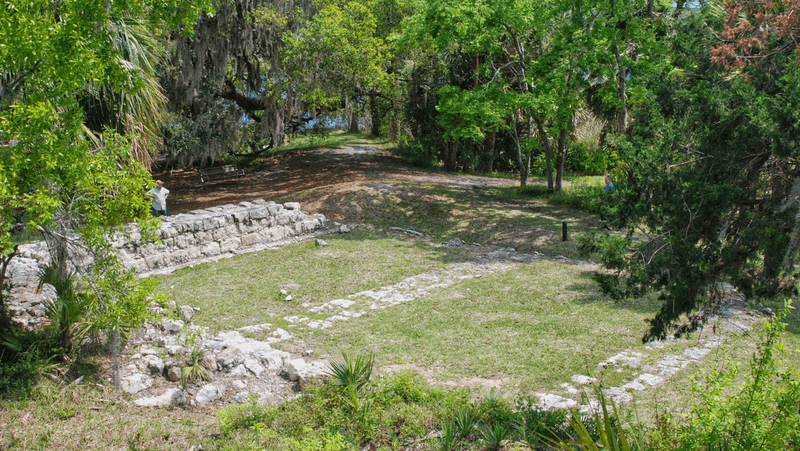
At the exact point where the Wakulla and St. Marks Rivers meet on Florida’s Gulf Coast, the stone foundations of San Marcos de Apalache tell a story that stretches across Spanish, British, and American chapters of Florida’s history.
The Spanish first built a wooden fort here in 1679, and over the following century it was rebuilt multiple times, eventually becoming the masonry structure whose foundations remain visible at the park today in St. Marks, Florida.
Andrew Jackson famously captured the fort in 1818 during his controversial military campaign into Spanish Florida, an event that accelerated the transfer of Florida from Spain to the United States just three years later.
The small but excellent museum on site traces the full arc of the fort’s history through artifacts, maps, and interpretive displays that connect this quiet riverside location to major turning points in North American history.
Watching the river current slide past those ancient stone foundations at sunset, I felt the kind of stillness that only genuinely layered historical places seem to produce.
11. Gamble Plantation Historic State Park, Ellenton
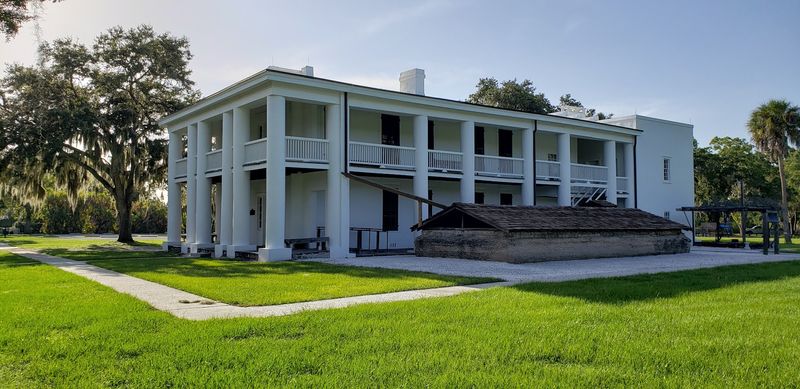
Driving through the suburbs of Ellenton, Florida, the sudden appearance of a Greek Revival antebellum mansion surrounded by ancient oaks stops you like a punctuation mark in the middle of a run-on sentence of strip malls and traffic lights.
Gamble Plantation Historic State Park preserves the only surviving antebellum plantation house in South Florida, built in the 1840s by Major Robert Gamble using tabby construction, a mix of oyster shells, lime, sand, and water that gave the walls their unusual pale, textured surface.
The plantation once covered 3,500 acres and was worked by over 200 enslaved people who grew sugar cane destined for processing and export throughout the region.
I joined a guided tour of the interior and was struck by how the thick tabby walls keep the rooms noticeably cooler than the Florida heat outside, a practical engineering choice that has lasted nearly two centuries.
The park also holds historical significance as a refuge for Confederate Secretary of State Judah P. Benjamin after the Civil War, adding yet another layer to an already dense historical record.