
The Quirky Roadside Museum In Arizona That’s Almost Too Weird For Words
Route 66 already has a way of pulling you into strange little detours, but this Arizona stop feels like the kind of place curiosity practically shoves you through the door. From the outside, it does not try very hard to impress you, which somehow makes the whole thing better.
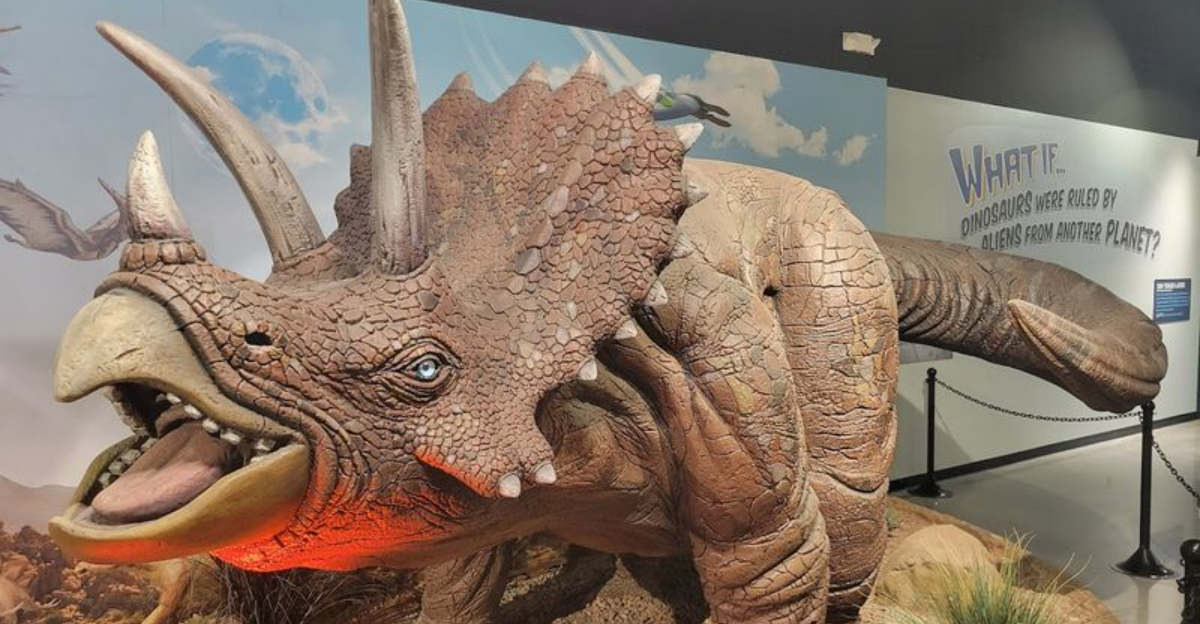
Then you step inside, and suddenly you are surrounded by the kind of odd, wonderful collections that make you stop mid-sentence and just stare. There are antiques, strange displays, unexpected little treasures, and rooms that seem to follow no rule except “let’s make this as fascinating as possible.”
That is the fun of it. Nothing feels polished into predictability. You wander from one surprise to the next, laughing at things you never expected to see and wondering who had the brilliant idea to put all of this under one roof.
Families get swept up in the silliness, road trippers find a break from the usual highway stops, and solo visitors can lose themselves in the weirdness without feeling rushed. It is messy, quirky, oddly charming, and completely its own thing.
And honestly, that is exactly what makes it feel so perfectly Arizona.
The Famous Yellow Billboards
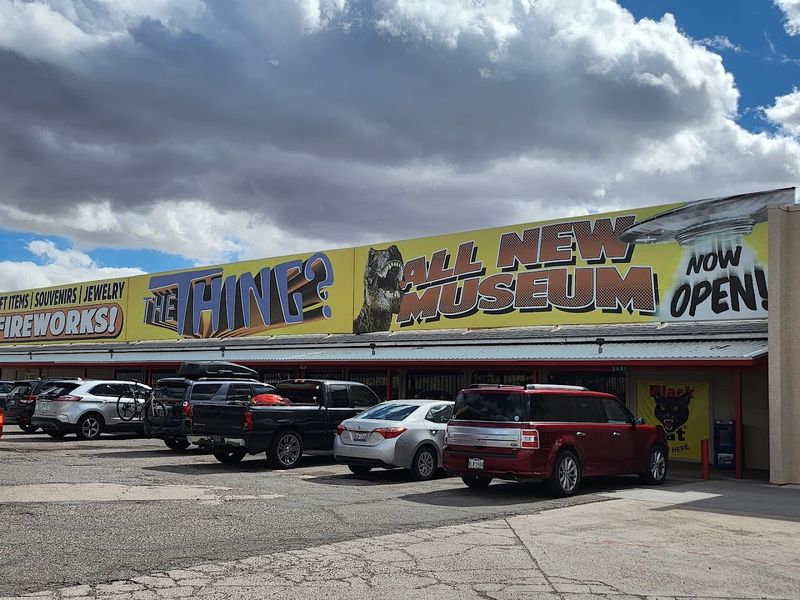
Long before you ever reach Benson, Arizona, The Thing starts working on your brain. Stretching across hundreds of miles of Interstate 10, those iconic yellow billboards are a masterclass in old-school roadside marketing.
Each one counts down the miles with the same tantalizing question: “What is The Thing?” I first spotted one of these signs somewhere around Lordsburg, New Mexico, and by the time I crossed into Arizona, my curiosity had reached a genuinely ridiculous level.
The signs offer zero hints. No photos, no descriptions, just that one relentless question repeated over and over across the desert landscape.
The billboard campaign has been running in some form since the 1950s, making it one of the longest-running roadside advertising traditions in the Southwest. There is something almost poetic about a marketing strategy built entirely on withholding information.
By the time you pull off the highway, you feel like you have earned the answer. That slow, miles-long buildup is honestly part of the full experience.
The One-Dollar Admission That Overdelivers
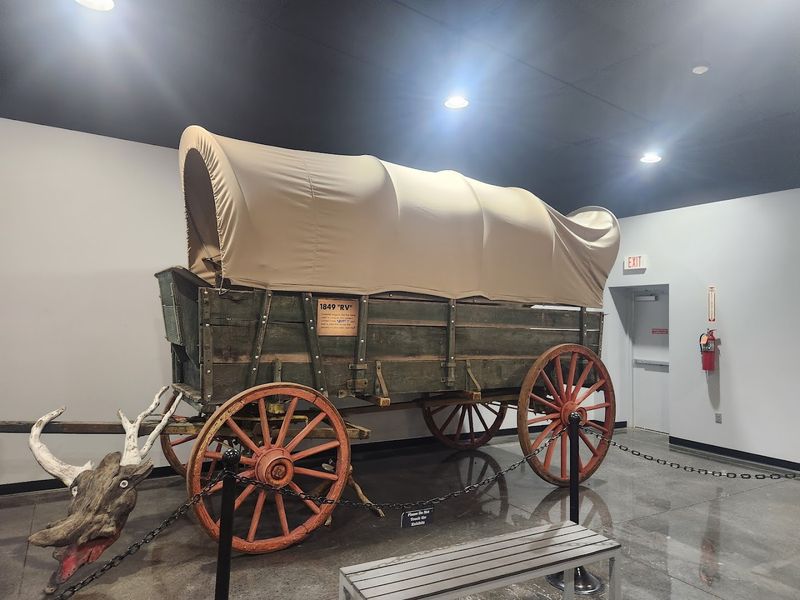
Paying one dollar to enter a museum feels almost like a trick, but The Thing pulls it off with total sincerity. Located at a Bowlin Travel Center at 2631 N Johnson Road in Benson, Arizona, the attraction sits attached to a gas station and gift shop, which makes the whole setup feel wonderfully unpretentious.
You hand over your dollar, grab a numbered placard, and walk through a door into a series of connected concrete outbuildings.
The low admission price sets exactly the right tone. This is not a polished, corporate-sponsored exhibit with velvet ropes and audio guides. It is something far more personal and far more entertaining.
Families traveling through often stop purely because the price makes it a no-risk adventure, and many end up staying much longer than planned. I budgeted ten minutes and spent nearly forty-five.
The value-to-weirdness ratio here is genuinely off the charts, and that contrast between the humble price tag and the sheer volume of oddities inside is a big part of what makes it so charming.
That Mysterious Mummified Figure
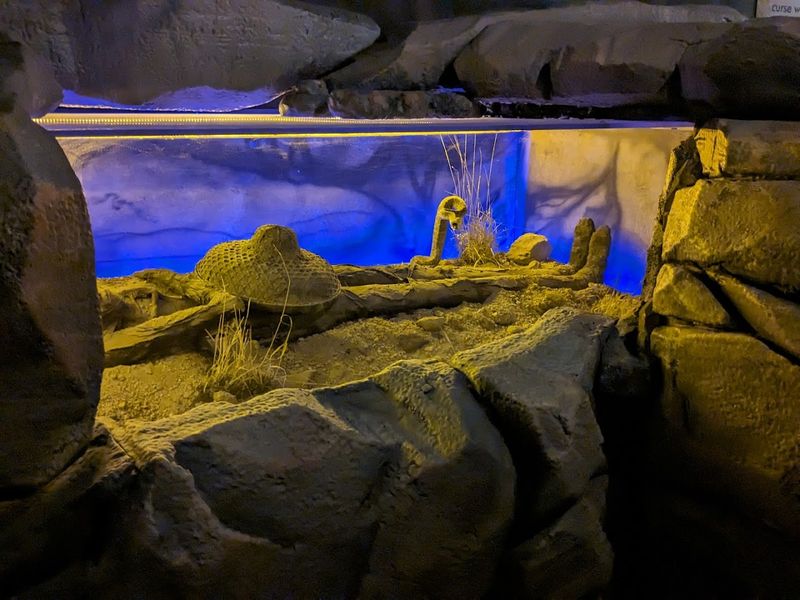
Here it is. The centerpiece. The answer to that question painted across hundreds of miles of desert highway.
Inside one of the concrete outbuildings, behind a glass case, rests a strange, shriveled figure that has sparked debate and fascination for decades.
Is it a genuine mummy? A clever forgery? An alien?
Nobody officially says.
When I first saw it, my brain genuinely stalled for a moment. The figure is small, oddly posed, and accompanied by what appear to be two smaller figures beside it. The placard provides minimal explanation, which is entirely deliberate.
The mystery is the whole point, and the museum leans into that ambiguity with tremendous confidence. Theories about the figure range from a crafted papier-mache creation to a preserved human body from centuries ago.
Researchers and skeptics have weighed in over the years without reaching any definitive conclusion. Whatever it actually is, the figure has earned its place as one of the most talked-about roadside curiosities in the entire United States, and seeing it in person genuinely delivers.
Vintage Cars, Nazi Artifacts, And Totally Random Treasures
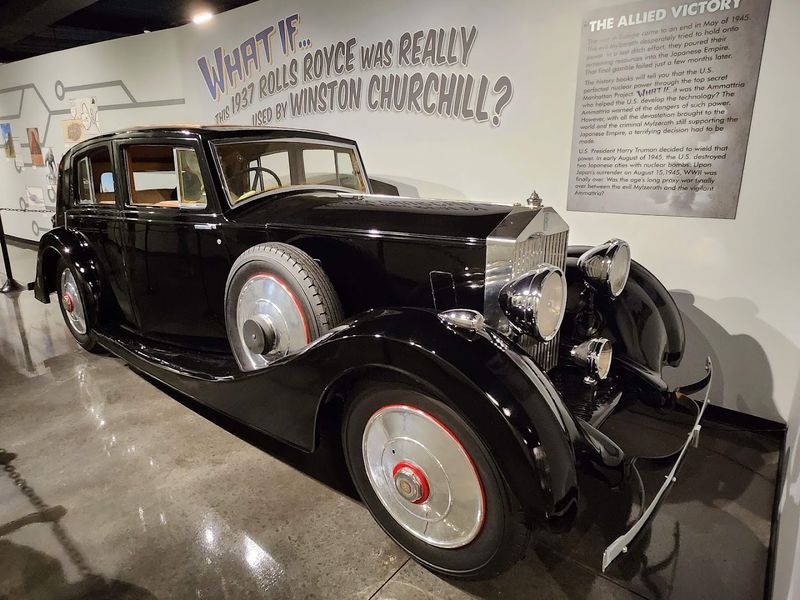
What makes The Thing so wonderfully strange is that the mummy is not even the weirdest part of the visit.
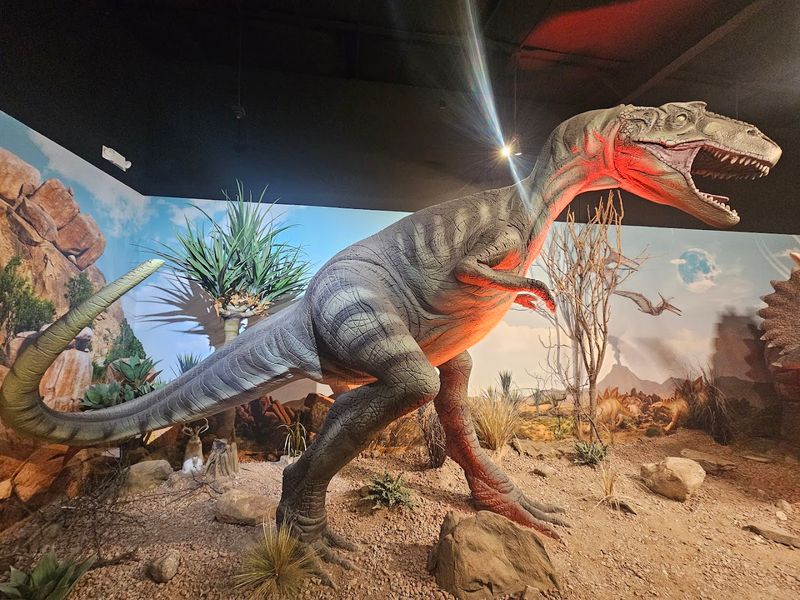
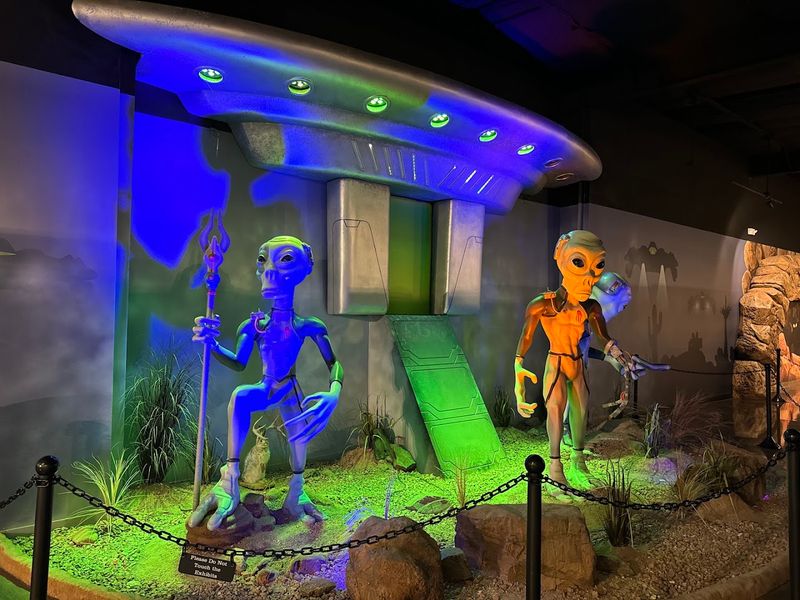
The three outbuildings are packed with an absolutely eclectic collection of objects that seem to follow no curatorial logic whatsoever, and that lawless quality is precisely what makes wandering through them so entertaining.
One room contains a vintage car that is said to have belonged to Adolf Hitler, though the claim comes without much supporting documentation.
There are also torture devices, old weapons, taxidermied animals, handmade folk art, and countless other objects that feel like they were gathered from a dozen different estate sales across fifty years.
Walking through felt like exploring someone’s very passionate, very peculiar personal collection. Each turn brought something unexpected, from a two-headed calf to ornate wooden furniture to painted portraits of historical figures.
The total lack of thematic consistency is not a flaw here. It is the feature. The Thing is basically a time capsule of American roadside collecting culture at its most uninhibited and joyfully unfiltered.
The History Behind This Desert Oddity
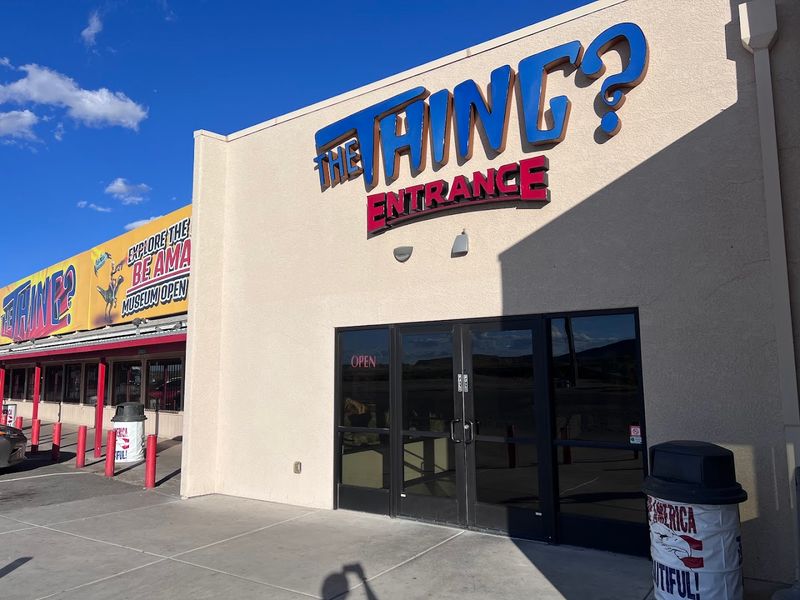
The Thing has been drawing curious travelers off the highway since 1950, when a man named Thomas Prince opened the attraction along what was then a less-traveled stretch of desert road.
Prince was a collector and showman who understood that people crossing the vast emptiness of the Southwest were hungry for anything interesting enough to justify a stop.
The attraction changed hands over the decades and was eventually absorbed into the Bowlin Travel Centers chain, which has maintained it with a pleasingly hands-off approach to modernization.
The original spirit of the place, that of a personal, slightly chaotic roadside cabinet of curiosities, has been carefully preserved rather than polished away.
What strikes me most about the history is how The Thing has outlasted so many of its roadside contemporaries. Dozens of similar attractions from the same era have closed, been demolished, or been transformed into something unrecognizable.
The Thing just keeps going, generation after generation, still asking the same question on those yellow billboards and still delivering a satisfyingly strange answer to everyone who takes the exit.
The Gift Shop And Travel Plaza Experience
No roadside attraction is complete without a gift shop, and The Thing delivers a genuinely enjoyable one.
After exiting the exhibit, visitors walk directly into a large, well-stocked travel plaza filled with Arizona-themed souvenirs, novelty snacks, branded merchandise, and the kind of cheerful kitsch that makes long road trips feel like actual adventures.
I picked up a small “The Thing” branded shot glass as a memento, which felt perfectly appropriate for a place built on mystery and mild absurdity. There are T-shirts, keychains, magnets, and plush toys, all leaning into the quirky branding with a knowing wink.
The travel plaza itself is clean, spacious, and well-maintained, making it a genuinely useful fuel and snack stop beyond the entertainment value.
Families with kids will find plenty of affordable souvenirs in the dollar-to-five-dollar range, which keeps the whole outing budget-friendly from start to finish.
The gift shop also stocks a surprising selection of locally made products and regional snacks, so even the most souvenir-resistant traveler usually finds something worth tucking into their bag before heading back to the highway.
Tips For Planning Your Visit To The Thing
Planning a stop at The Thing is refreshingly easy. The attraction is open daily, and because it sits directly off Interstate 10 at exit 322 near Benson, Arizona, it requires almost no detour from the main route between Tucson and El Paso.
The whole experience, including the exhibit, gift shop, and a fuel stop, comfortably fits into a thirty-to-sixty-minute break. The best time to visit is on a weekday morning when the travel plaza is less crowded and you can take your time moving through the outbuildings without feeling rushed.
Summer temperatures in southern Arizona can be intense, but the exhibit buildings are shaded and relatively cool, making it a manageable stop even in July or August. Bring cash for the admission fee, though the gift shop accepts cards.
Children tend to love the experience, and the low cost makes it easy to say yes when young travelers spot those yellow billboards and start asking questions.
Consider pairing the stop with a visit to nearby Kartchner Caverns State Park, which is about twenty minutes away and offers a dramatically different but equally memorable Arizona experience.