
This Tucked-Away Campground In Arkansas Is A Must-See For Anyone Who Loves History
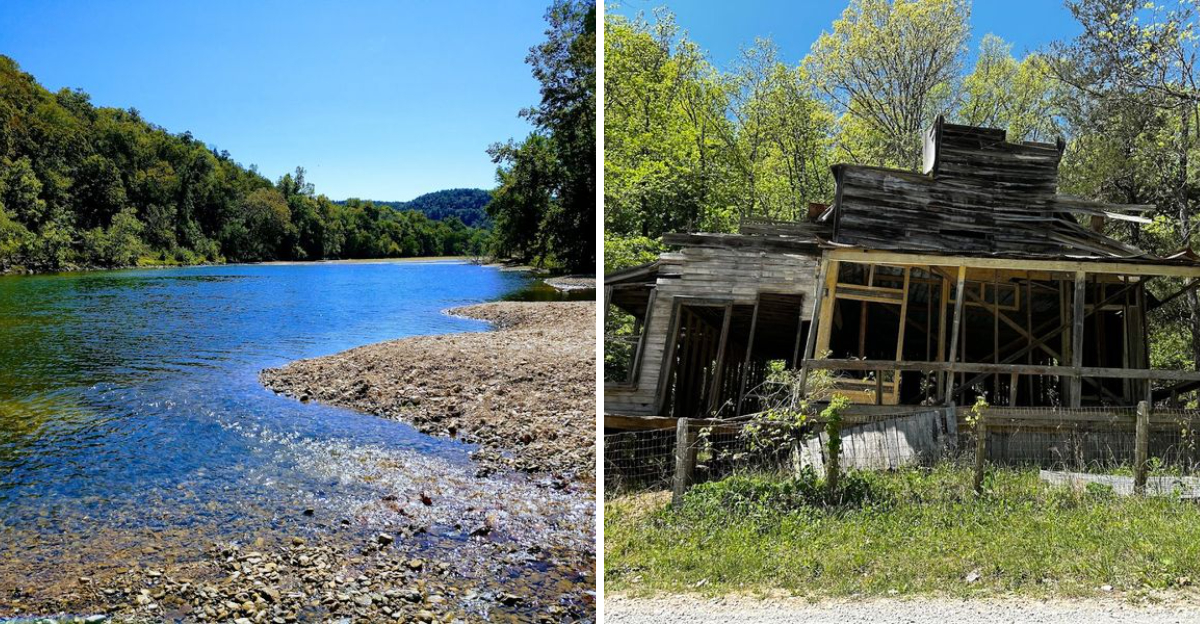
Some places do not need a big entrance. They just wait at the end of a curvy road and let the river do the talking.
That is exactly what happened here.
I was driving through the Ozarks with no real plan, just following the road and hoping it led somewhere worth stopping. It did.
The water was so clear I could see straight to the bottom, and the silence had that rare kind of pull that makes you put your phone down.
Then I found the old ghost town. Weathered walls, empty paths, and the feeling that every building had one more story left in it.
Add in a campground people keep rating like crazy, and this little corner of Arkansas turned into the stop I could not quit talking about.
I thought I would pass through. Instead, I started planning the return before I even left, which says plenty.
Quiet Streets With A Mining-Era Past
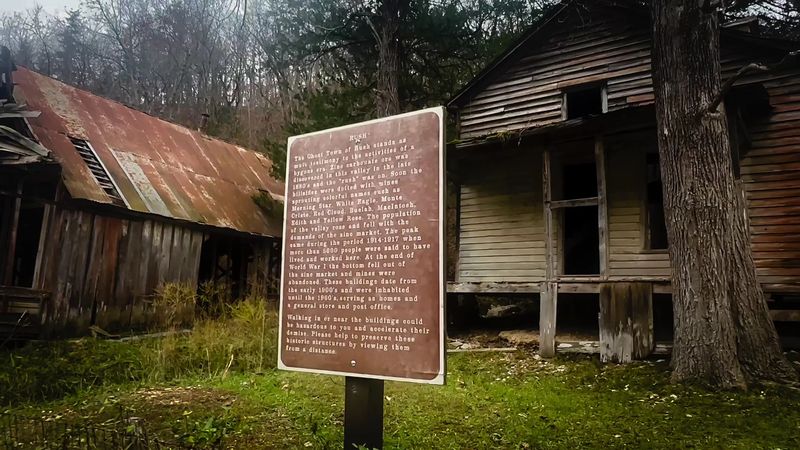
A walk through this ghost town felt less like sightseeing and more like slipping through a door someone forgot to lock a century ago.
The zinc mining boom here started quietly in the 1880s. Early prospectors came searching for legendary silver mines, but they found something else beneath the Ozark hills: rich deposits of zinc carbonate.
By the time World War I arrived, this once-small mining community had grown to nearly 5,000 people and was considered one of the most prosperous places per capita in Arkansas.
Its most famous mine became the crown jewel of the operation, pulling out ore at a pace that put this rugged mountain settlement on the national map.
One discovery was so impressive that a roughly six-ton nugget of Smithsonite known as Jumbo won blue ribbons at the 1893 Chicago World’s Fair. Today, that massive piece of history is tied to the Field Museum in Chicago.
On the old streets, I kept thinking about all the boots that once tracked mud across these same paths.
The place is Rush, and Rush Campground at Marion County 6035, Yellville, AR 72687 is your base for exploring every quiet, story-soaked corner of it.
Weathered Ruins Hidden In The Ozarks
Old ruins feel different when nature has started taking them back on its own slow schedule.
Rush delivers exactly that kind of scene, with weathered structures sagging under the weight of decades while moss and vines do their patient work around them.
After zinc prices collapsed following World War I, the town emptied out with remarkable speed, and what remained was essentially a snapshot of a community caught mid-stride.
Rush became part of Buffalo National River in 1972, by which time it was already known as a ghost town, and by 1987 the Rush Historic District had earned a spot on the National Register of Historic Places.
Visitors are not allowed inside the old buildings, which actually makes the experience feel more respectful, like you are observing rather than disturbing.
I found myself circling the same structures multiple times, noticing new details on each pass, a rusted hinge here, a collapsed doorframe nearby.
These ruins do not just show you history; they quietly insist that you sit with it for a while.
Old Stonework Beneath The Trees
Not everything at Rush has surrendered to time quite so completely, and the stonework scattered across the site is a quiet reminder of how much craftsmanship went into building this community.
Stone foundations and retaining walls built from local rock still hold their shape with surprising stubbornness, even after more than a hundred years of Ozark weather.
I crouched down near one low wall and ran my hand along the fitted stones, thinking about the hands that placed them without the help of modern equipment or power tools.
The trees have grown up tall and close around much of the stonework, creating a canopy effect that feels almost cathedral-like on a clear morning.
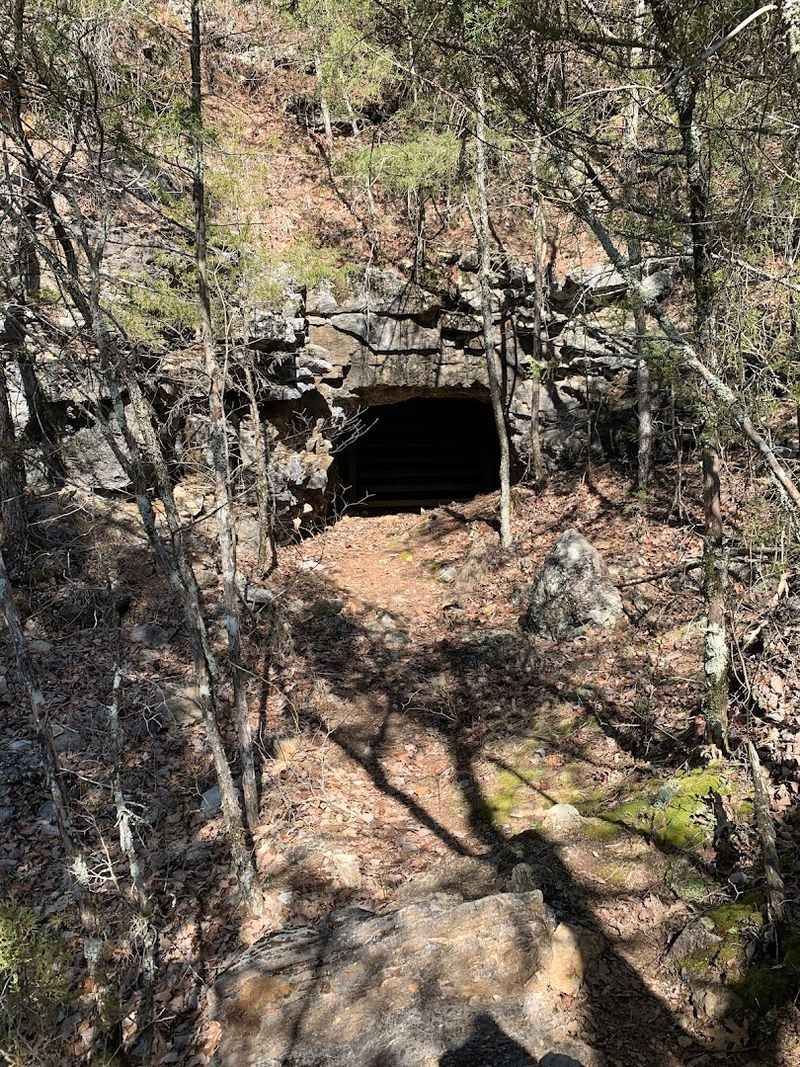
Hikers who take the trail closest to the abandoned buildings tend to find the most historic sites, though mine openings and old remnants should always be viewed from safe, marked areas.
Sunlight filters through the branches in shifting patches, landing on old stone in a way that makes the whole scene feel quietly dramatic.
A camera with good close-up capability is worth packing before setting out on these trails.
River Views Near A Forgotten Town
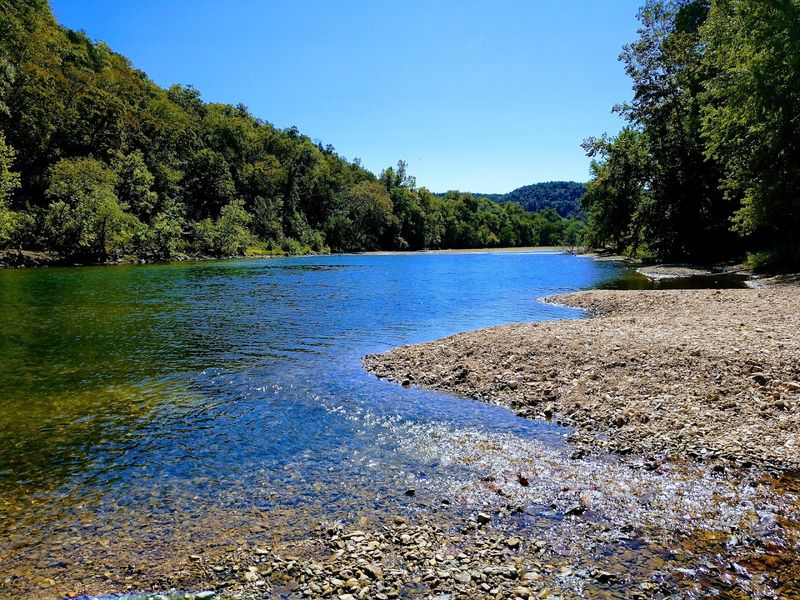
Leaving the ghost town for the Buffalo River felt like moving into a completely different kind of wonder, both equally hard to shake.
The river here is the kind of clear that seems almost unreal, with fish and turtles visible below the surface as long as you move quietly and do not spook them.
Cold water near the Rush access can make a summer river stop feel like the best decision you have made all year.
Bald eagles have been spotted crossing the river from this stretch, and I kept my eyes up during a long morning by the water hoping to catch one in flight.
The rock bluffs rising on the opposite bank create a backdrop that photographers and casual observers tend to stop and stare at longer than they planned.
Visitors with canoes or kayaks can use the Rush access near the campground, though the road down to the river can become difficult after a heavy rain.
After standing on that bank myself, I can understand why this stretch of the Buffalo stays with people long after they leave.
Historic Paths Through Rush Valley
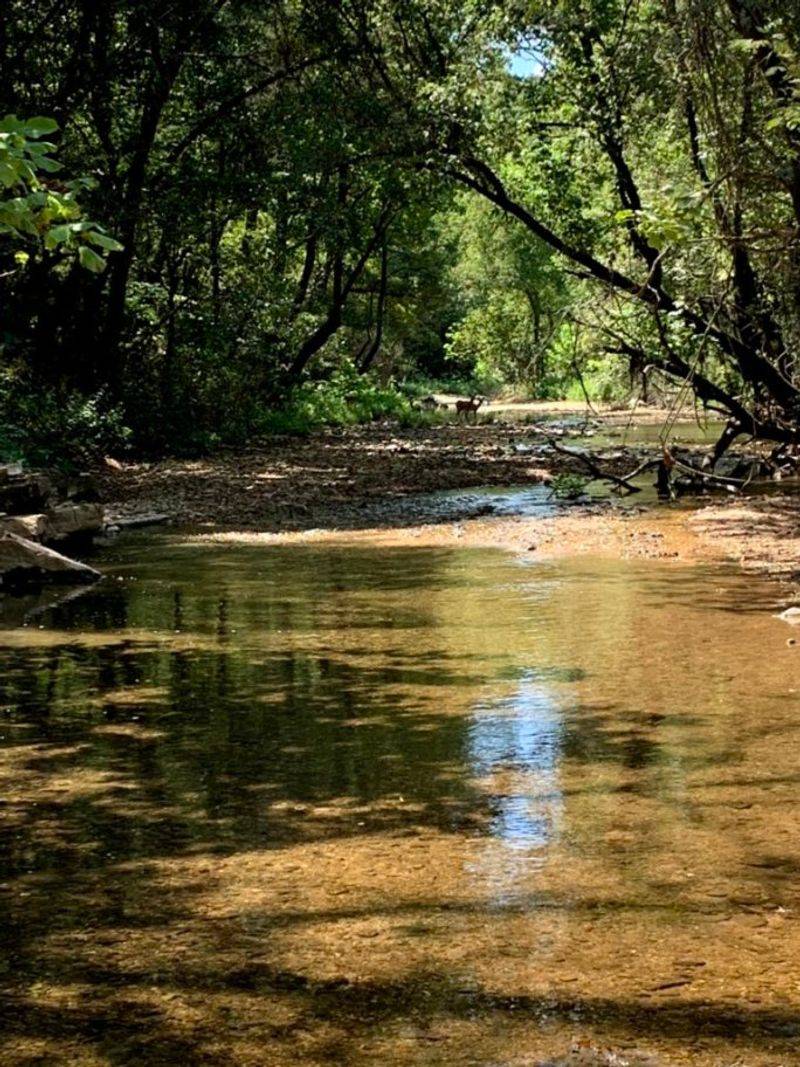
Hiking at Rush rewards patience, because the trail does not hand over its best surprises all at once.
Most of the paths climb gradually, and while parts can feel uphill for a while, the payoff at each turn is usually worth the effort in your legs.
The first trail running closest to the abandoned buildings tends to concentrate the most historical sites, making it the natural starting point for anyone interested in what this valley used to look like when it was alive with industry.
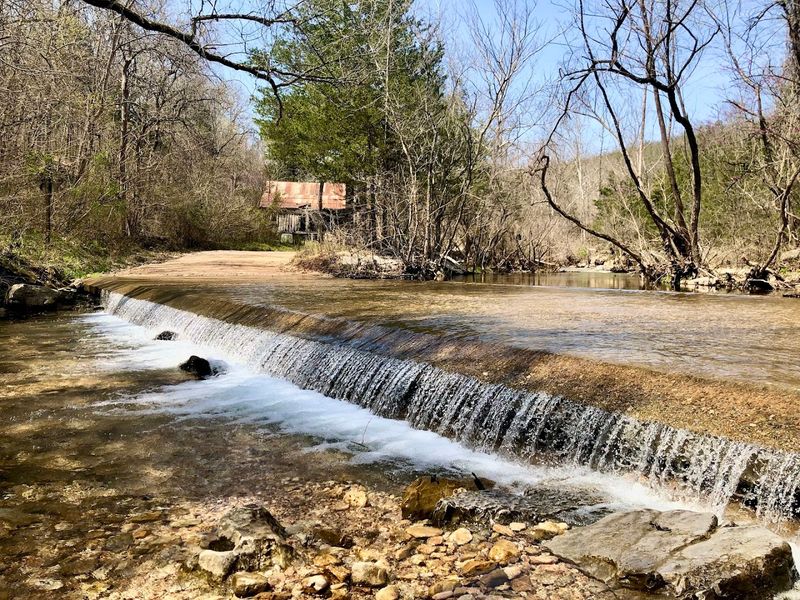
Rush Creek once served as the lifeblood of multiple mining companies during World War I, and the valley around it still carries that industrial energy in a muted, overgrown way.
I followed a path that curved along the creek bed and found myself stopping every few minutes to look at something unexpected, a collapsed timber frame or a rusted piece of machinery.
The trails are maintained enough that they feel accessible without feeling overly polished, which is exactly the balance a place like this needs.
Rangers may pass through the campground, but Rush is still a rustic spot, so check conditions before you arrive and do not count on immediate help.
Lace up something sturdy before you head out, because the ground rewards grip.
Hidden Corners Of A Zinc Mining Community
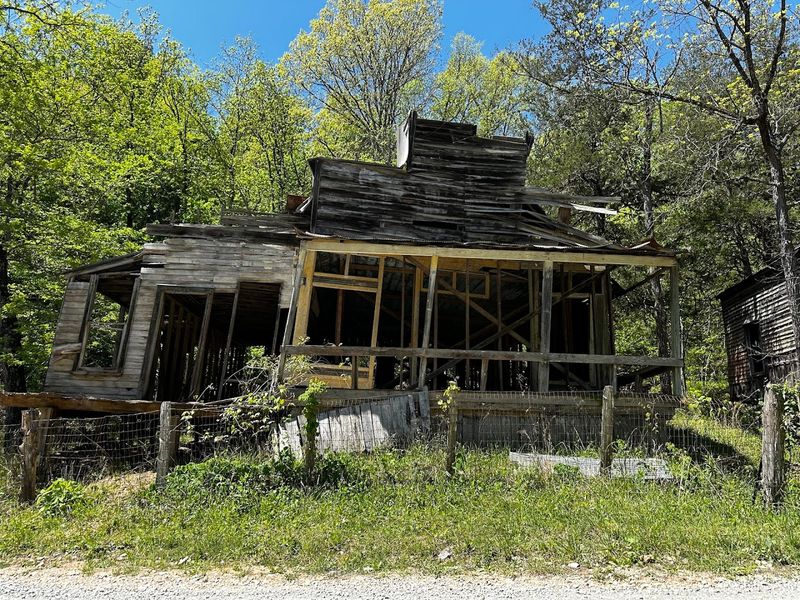
Rush is the kind of place that keeps offering up new details the longer you stay. I found myself doubling back on trails just to catch things I had walked past the first time.
The zinc mining community that once operated here was far more complex than a simple cluster of mines, with multiple companies running separate operations across the district during its World War I peak.
Tucked behind tree lines and down short side paths, there are remnants that feel genuinely hidden, with old structures and equipment set back from the main route.
One of the most striking finds on my visit was a partially standing building where the interior walls still showed traces of their original purpose, including shelving outlines and hardware anchors.
The Rush Historic District is now protected as part of the Buffalo National River system, which means the National Park Service works to preserve what remains without over-restoring it.
That hands-off approach is something I deeply appreciate, because it keeps the atmosphere honest and lets the place tell its own story without interference.
A paper map or downloaded offline route is a smart move before you arrive, since cell service is essentially nonexistent in the valley.
The silence where a signal used to be is actually one of the better parts of the experience.
Ozark Scenery Around A Ghost Town
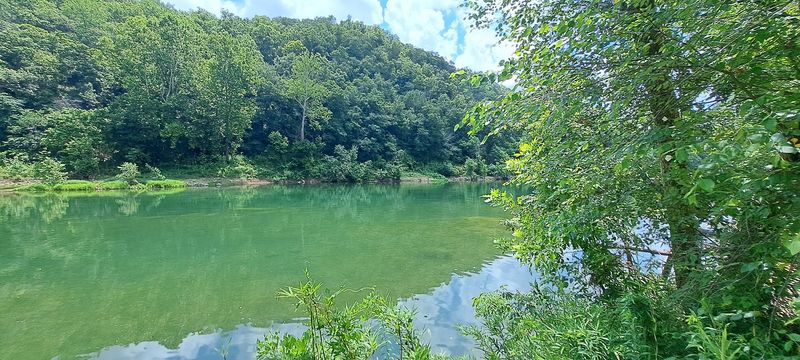
Even if Rush had no history attached to it at all, the scenery alone would make the drive worthwhile, and pairing the two together creates something genuinely hard to find anywhere else.
The Ozark Mountains wrap around the valley in a way that feels protective, with ridgelines visible from nearly every point in the campground and along the trails.
Spring is often a strong season for scenery and floating, though river levels can change quickly and should always be checked before paddling.
The night sky above Rush is the kind that reminds you how much artificial light you have been living under, with stars visible in numbers that feel almost excessive in the best possible way.
I sat outside my tent one evening and watched the sky for longer than I intended, which is exactly the kind of schedule disruption I do not mind at all.
Wildlife sightings are common here, and visitors may spot bald eagles or turtles during a quiet stay near the river.
Snakes and wild animals do share this space, so staying aware of your surroundings, especially near the river at dusk, is simply good practice.
The Ozarks do not ask for much from their visitors, just attention and a willingness to slow down.
Rustic Remnants Along The Buffalo River
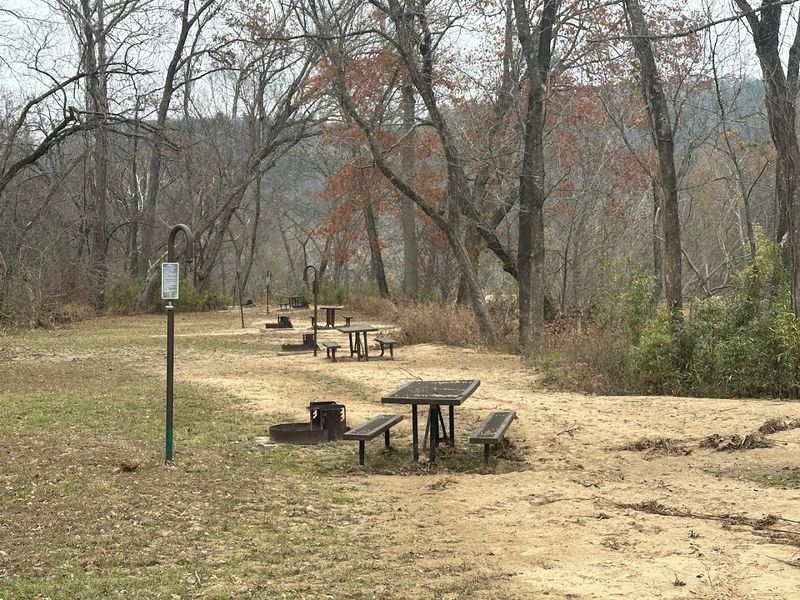
Spending a night at Rush is rustic, and I mean that in the most flattering way possible for anyone who values simplicity over amenities.
Each campsite comes equipped with a fire ring and a picnic table. A lantern hook gives you one more practical touch without cluttering up the experience.
Vault toilets are on site, but there are no showers, so plan for a simple stay close to the river.
During the 2026 regular season, Rush campsites require reservations through Recreation.gov, with the listed fee around sixteen dollars. Outside the reservation season, camping is generally free.
Rangers may pass through periodically, which adds a quiet layer of reassurance without making the place feel monitored or crowded.
Canoeists and kayakers use the Rush access near the campground as a launch point, and the river downstream includes long remote stretches that deserve planning before you push off.
The campground is peaceful, simple, and the kind of place that makes you want to extend your stay by at least one more night.
After my own time along this stretch of the Buffalo River, I packed up my tent, drove out slowly, and started planning when I could come back.