
This Michigan Park Is Filled With Fairytale Bridges, Quiet Paths, And Oddball Charm
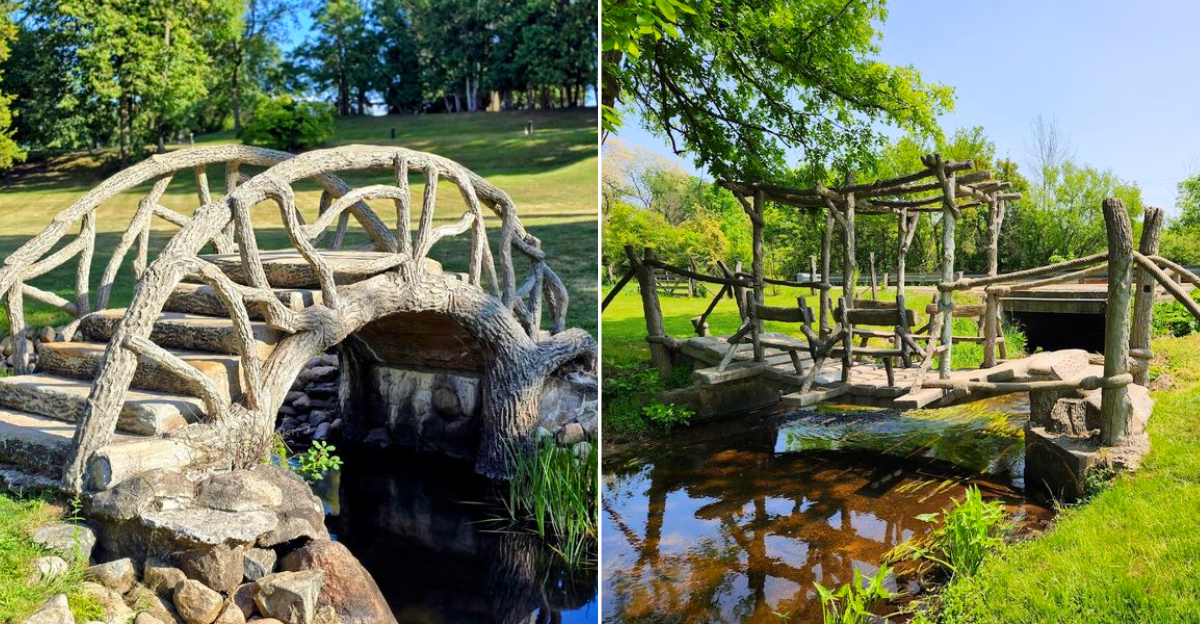
Some parks feel designed by committee, this one feels designed by somebody who had a dream about bridges and refused to wake up normal.
In southern Michigan, the 42-acre grounds move at a hush: shady lawns, creek bends, wandering paths, and seventeen sculpted concrete bridges pretending, wonderfully, to be logs, branches, and woodland secrets.
I like places where the strangeness is calm instead of shouting for selfies. Seventeen whimsical concrete bridges, peaceful walking paths, creek views, historic landscape design, and shady southern Michigan lawns make this park a quietly unforgettable detour.
The fun is in the close looking. Railings wear fake bark. Curves appear where straight lines would have been easier. A small crossing suddenly feels like folk art with engineering paperwork.
Bring comfortable shoes, a slow mood, and maybe someone who appreciates odd beauty. The place does not perform magic. It leaves it scattered under trees for you.
Start With The Bridges, Not The Playground
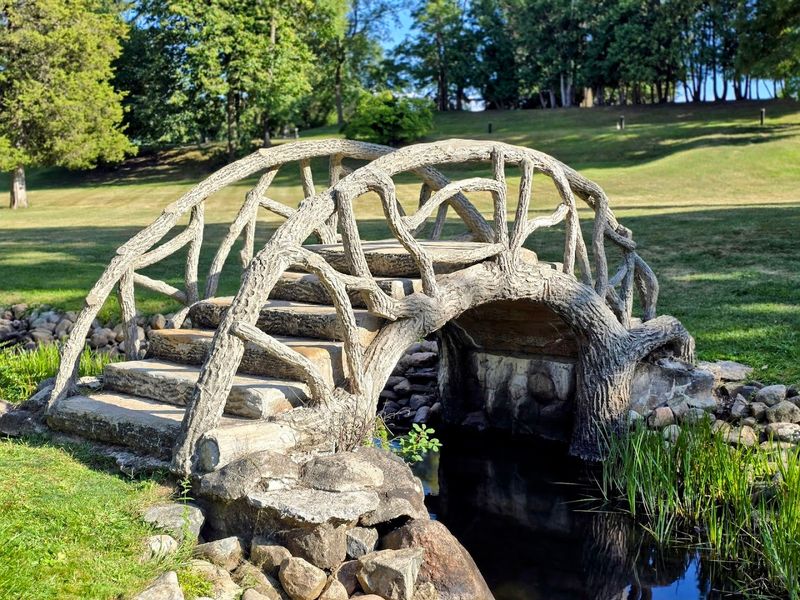
The first thing to understand about McCourtie Park is that the bridges are the main event. There are seventeen of them, each different, scattered across a modest waterway and surrounding grounds with a kind of cheerful improbability.
You keep expecting repetition, and then another railing twists like rope or another span pretends to be a stack of rough logs.
Built between 1930 and 1933 by Mexican artisans Ralph Corona and George Cardoso, the structures use trabajo rústico, a concrete technique that imitates wood and natural forms.
Starting here gives the whole park a frame, because everything else, from lawns to paths, feels arranged around this strange and lovely collection. It is the right kind of introduction.
Concrete-Wonderland Mode
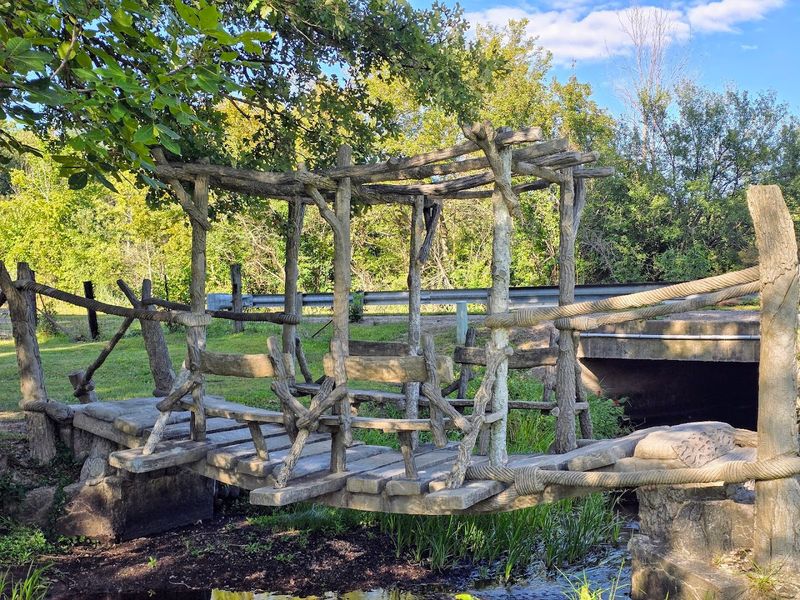
McCourtie Park is located at 10426 S. Jackson Rd., Somerset Center, Michigan 49233, near US-12, so it is a pretty straightforward stop once you are driving through the Irish Hills area.
Aim for South Jackson Road and slow down once the park entrance gets close. This is the kind of place where you may start spotting strange little bridge shapes before your brain fully understands what it is looking at.
Parking should be simple, so the real trick is just not rushing the approach. Once you pull in, the getting-there part is over, and the “why does this concrete look like a fairy-tale forest?” part can begin.
Take The Quieter Footpaths Too
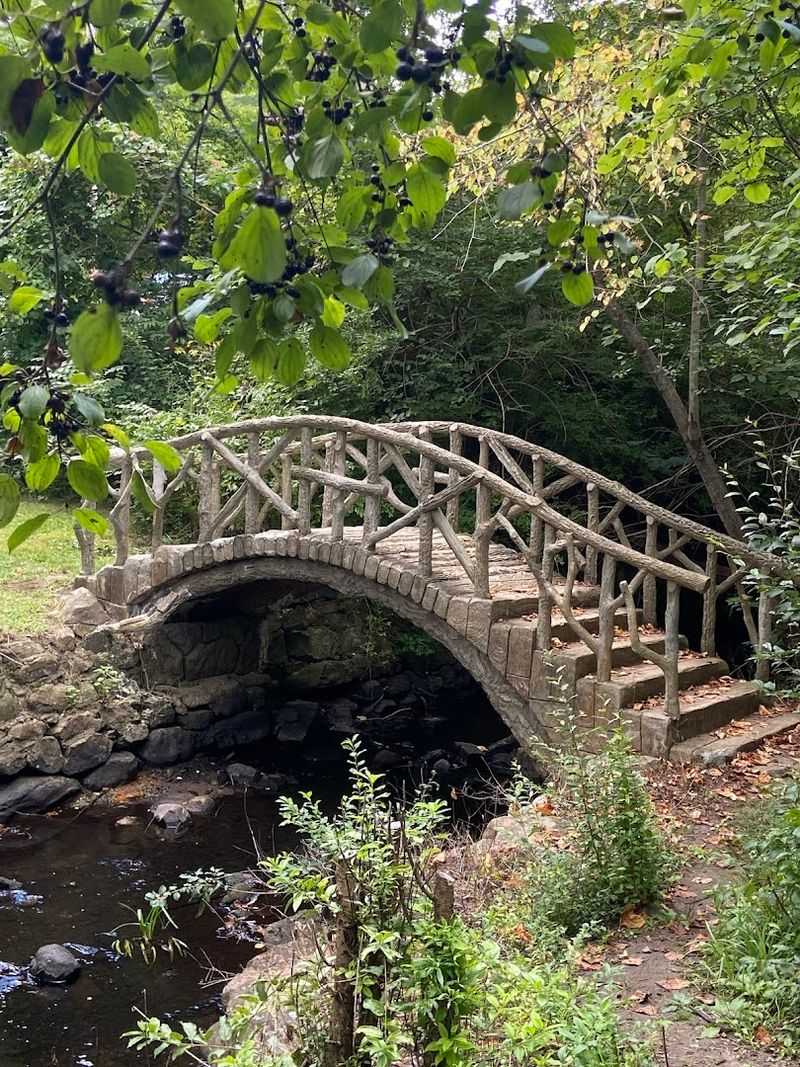
The open lawns are lovely, but some of the park’s best moments happen on the quieter paths. A few narrower footpaths slip into denser tree cover, where the air feels cooler and the bridges appear more unexpectedly, almost as if they wandered there on their own.
That change in scale makes the park feel bigger than its map suggests.
McCourtie Park is open daily from dawn until dusk, and the calmer stretches reward an unhurried visit. If you want the grounds at their most peaceful, aim for a weekday or an earlier hour, when the creek sounds carry farther and the ornamental details feel less like attractions than discoveries.
This is where the park becomes quietly transporting.
Know The Estate Story Before You Arrive
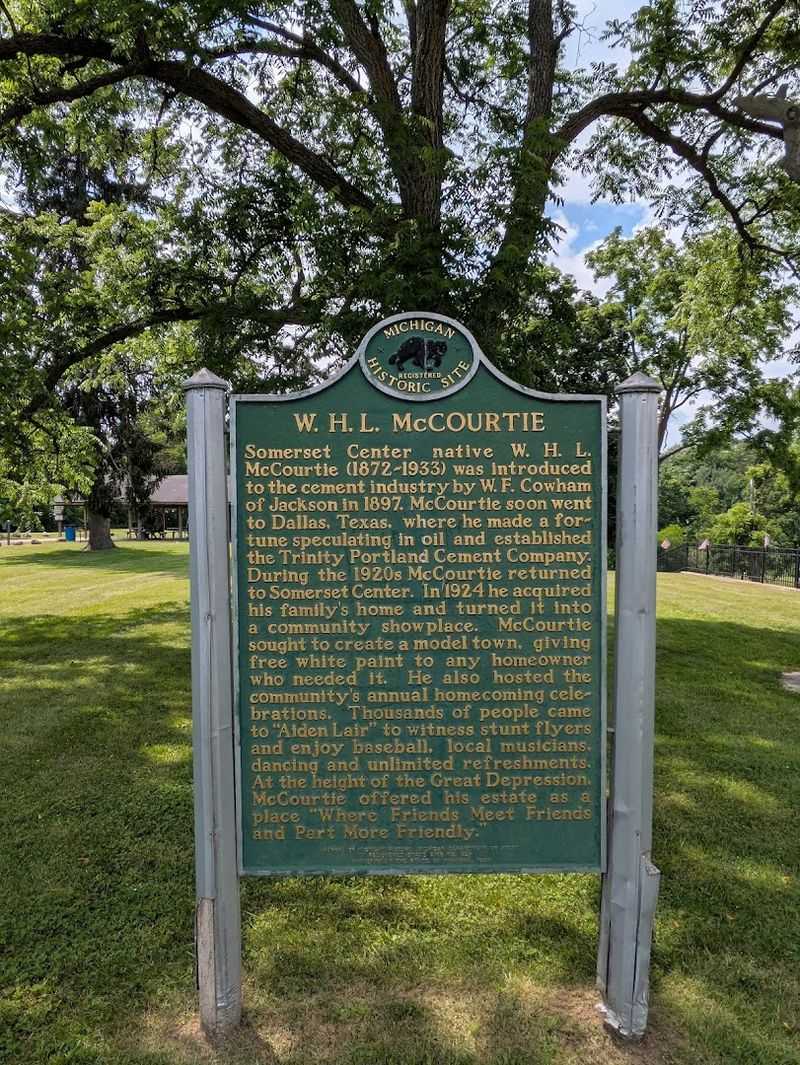
Without context, McCourtie Park can seem delightfully random, which is part of its appeal. With context, the oddness sharpens into something more interesting: this was once the estate known as Aiden Lair, created by W.H.L.
McCourtie after he returned to his hometown with money and ambition. The whimsical structures were not accidents of taste; they were expressions of a very specific vision.
McCourtie wanted a gathering place and also a showcase for concrete’s versatility. That explains why the park contains so much sculptural energy in a relatively compact area, including bridges where a simple crossing would have done.
I think knowing this history changes the mood of the visit. The place feels less eccentric for eccentricity’s sake and more like a personal landscape experiment.
Do Not Skip The Concrete Trees
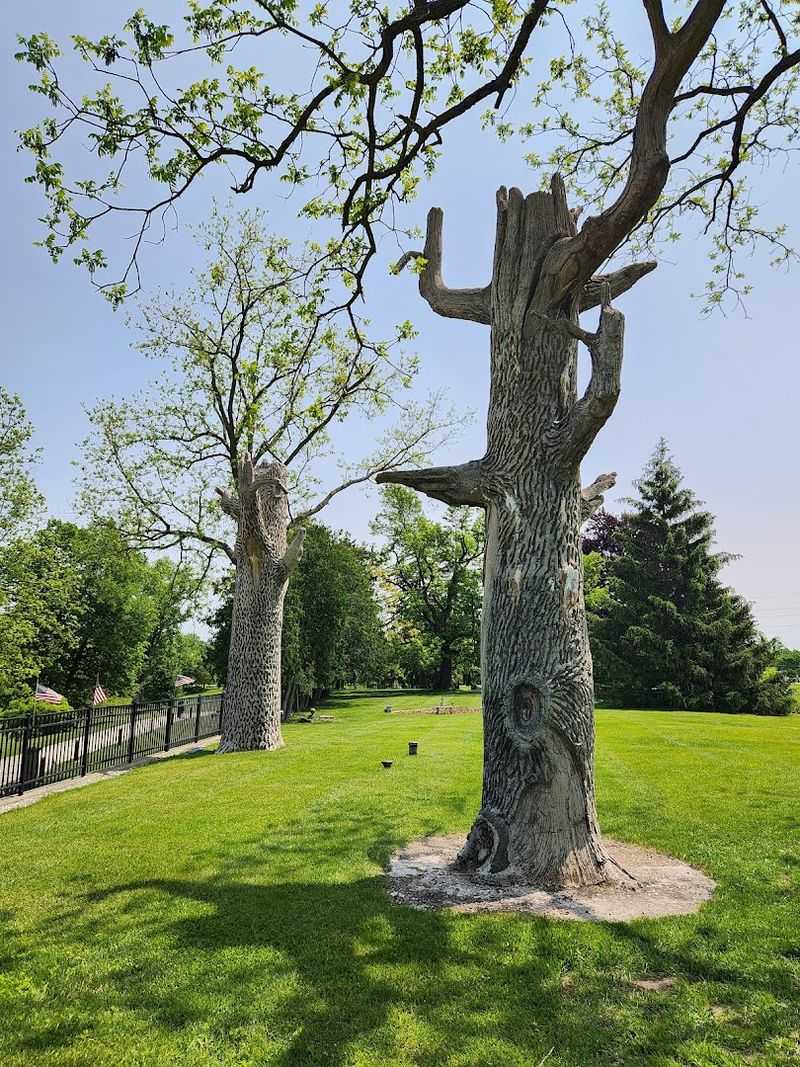
One of the park’s strangest sights is easy to miss if you are focused only on the bridges. Two concrete trees rise from the landscape in a way that first reads as decorative whimsy, but they are actually chimneys connected to the underground rathskeller and garage.
That practical purpose makes them even better.
McCourtie Park is full of moments where usefulness has been disguised as fantasy, and these trees are among the best examples. They also reveal how thoroughly the estate’s design language was carried across the grounds, not limited to a single showpiece area.
If you enjoy places where architecture behaves a little mischievously, pause here longer than you think necessary. The park rewards that sort of curiosity.
Time Your Visit For The Light
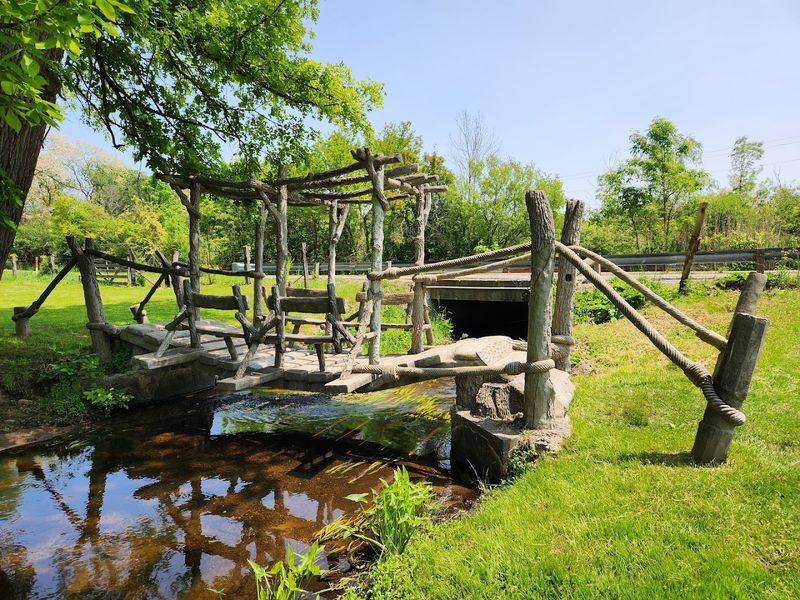
Light changes this park more than I expected. In flatter midday sun, the bridges are charming and clear, but in morning or late afternoon, the bark textures deepen, shadows settle into the grooves, and the creek starts reflecting little fragments of the railings.
The whole place becomes more theatrical without turning artificial.
Because the bridges rely on sculpted surface detail, angled light is your friend, especially if you like photography. That is also when the park’s quietness seems most convincing, with fewer harsh edges and a softer transition between lawn, water, and woods.
Even if you are not carrying a camera, this timing makes the craftsmanship easier to appreciate. McCourtie Park is a very good place to let daylight do some of the storytelling.
Notice How Much Space The Park Gives You
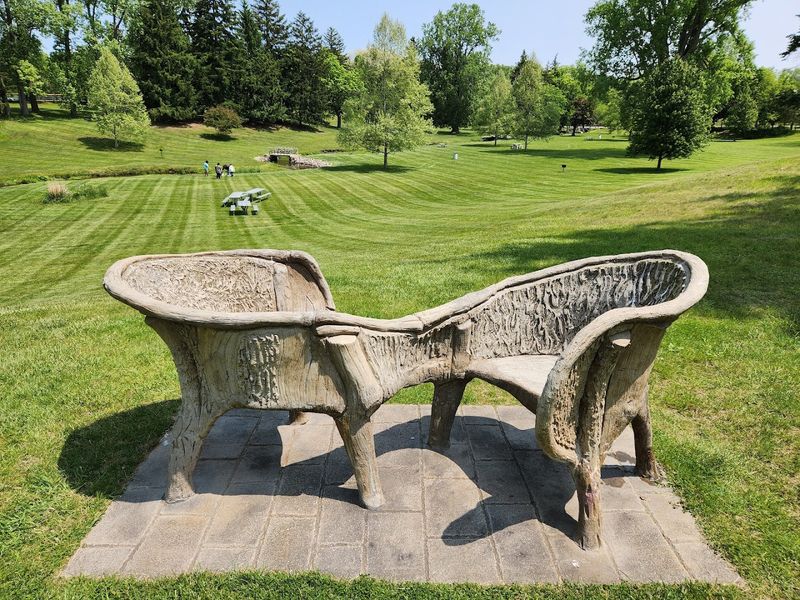
For a historic site with so many attention-grabbing details, McCourtie Park feels surprisingly breathable. The 42-acre layout includes broad lawns, mature trees, picnic areas, and enough open ground that the bridges never feel crowded by their own fame.
You can move from curiosity to calm in a matter of minutes.
That balance is part of the park’s personality. It is not a formal garden and not simply a recreation field, even though it also includes a playground, pavilion, sports courts, and disc golf course.
Instead, it feels like a civic space with an unusually imaginative center of gravity. If you are visiting with different kinds of travelers, this helps.
One person can inspect sculptural details while another just enjoys the shade and room.
Use The Park’s Historic Status As A Clue
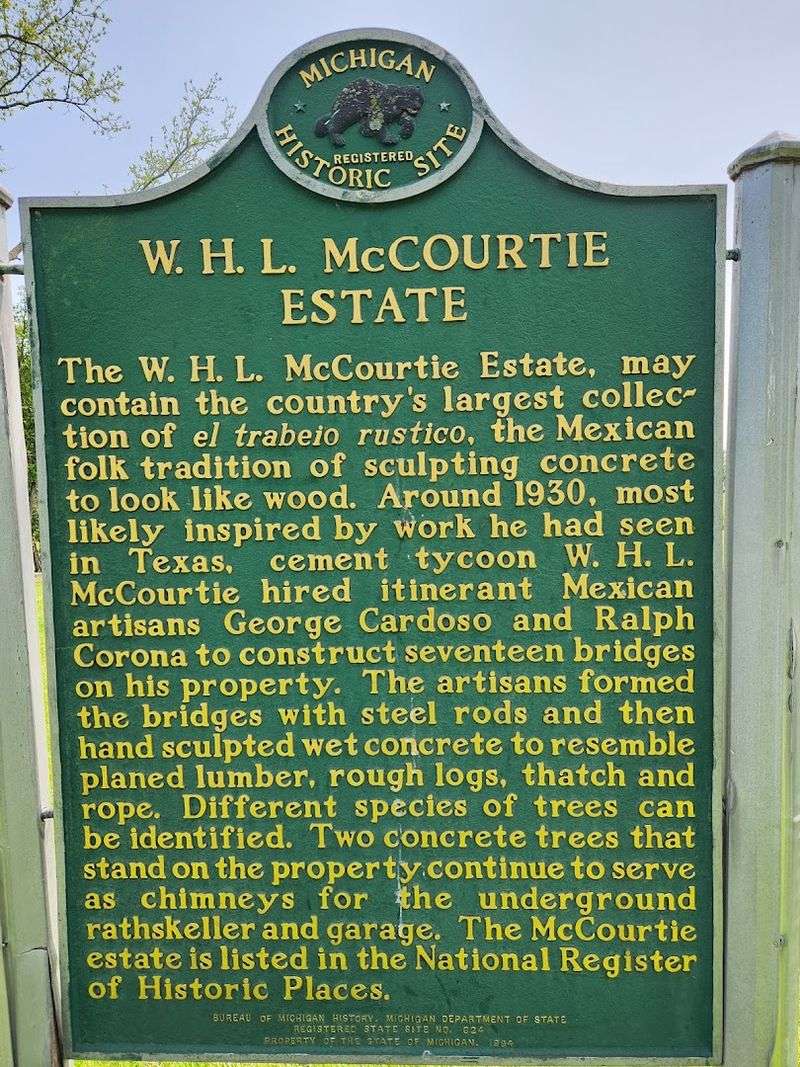
McCourtie Park is not merely quirky local scenery. It was designated a Michigan State Historic Site in 1991 and added to the National Register of Historic Places in 1992, which is a helpful reminder that what looks playful here is also culturally significant.
The park’s artistry and preservation value are real, not nostalgic exaggerations.
That status becomes easier to understand once you have crossed several bridges and noticed how distinct they are from one another.
The place preserves a rare concentration of trabajo rústico craftsmanship in the United States, and that makes even a casual walk feel like contact with a specialized design tradition. I like visiting with that in mind. It encourages a more attentive pace and a little more respect for the details.
Expect A Park That Is Practical As Well As Poetic
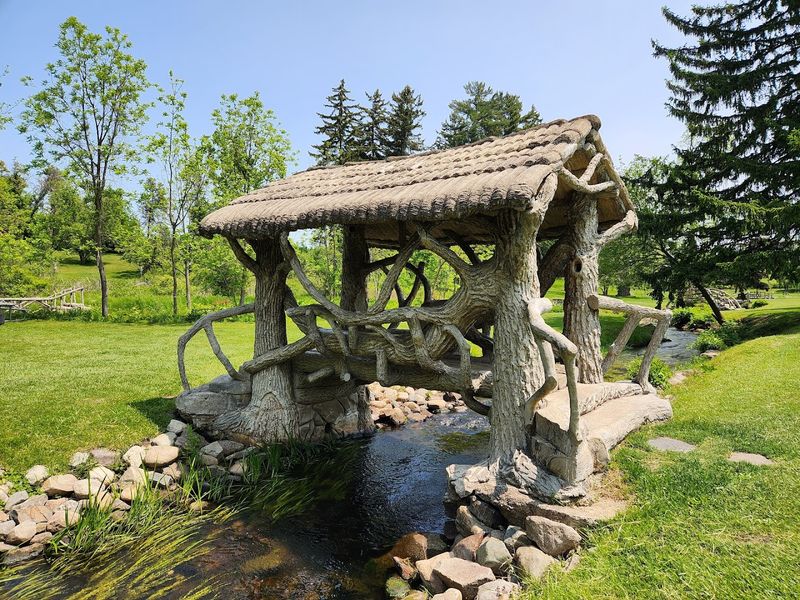
There is something refreshing about how unpretentious McCourtie Park remains. The signage is fairly modest, the setting still feels a little underannounced, and the visit does not arrive wrapped in heavy interpretation or performance.
You mostly experience the place directly, which suits its charm.
That said, a little practical planning helps. Parking is available on site, the park is easy to reach from the road, and you should expect a straightforward public-park setup rather than a full-service historic attraction.
Bring comfortable shoes, allow time to wander beyond the first few bridges, and treat the grounds as both a destination and a ramble. The simplicity works in the park’s favor. It keeps your attention where it belongs, on the landscape and its peculiar craftsmanship.
Come In A Season That Matches Your Mood
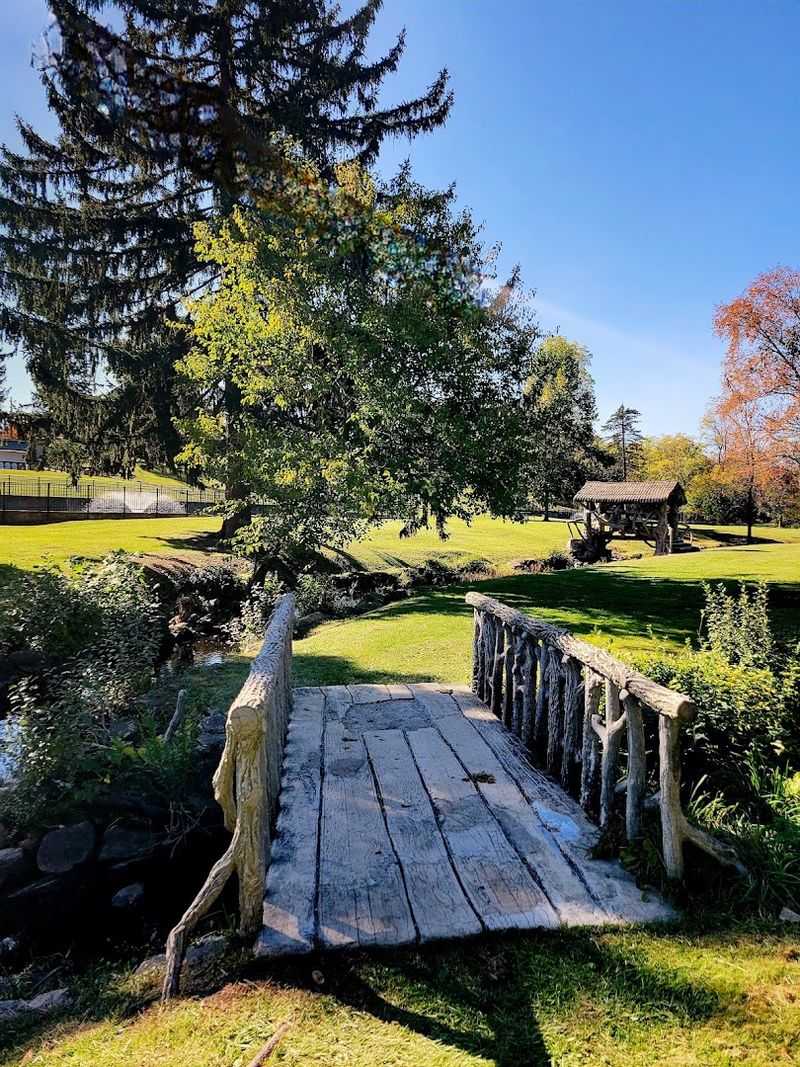
Season matters here, though the park’s character survives all year. In leafy months, the bridges peek through green cover like odd relics in a private woodland, while cooler weather sharpens the textures and opens longer views across the creek and lawns.
Even winter has a local reputation, thanks to the hills that draw sledders after snowfall.
What changes most is not the architecture but the emotional register. Summer makes the grounds social and spacious, autumn feels reflective, and a crisp spring visit can make every bridge look newly invented.
If you prefer parks with flexible moods, this one delivers. The same path can feel playful in one season and almost meditative in another, which is not something every historic landscape can claim.
Let The Oddness Be The Point
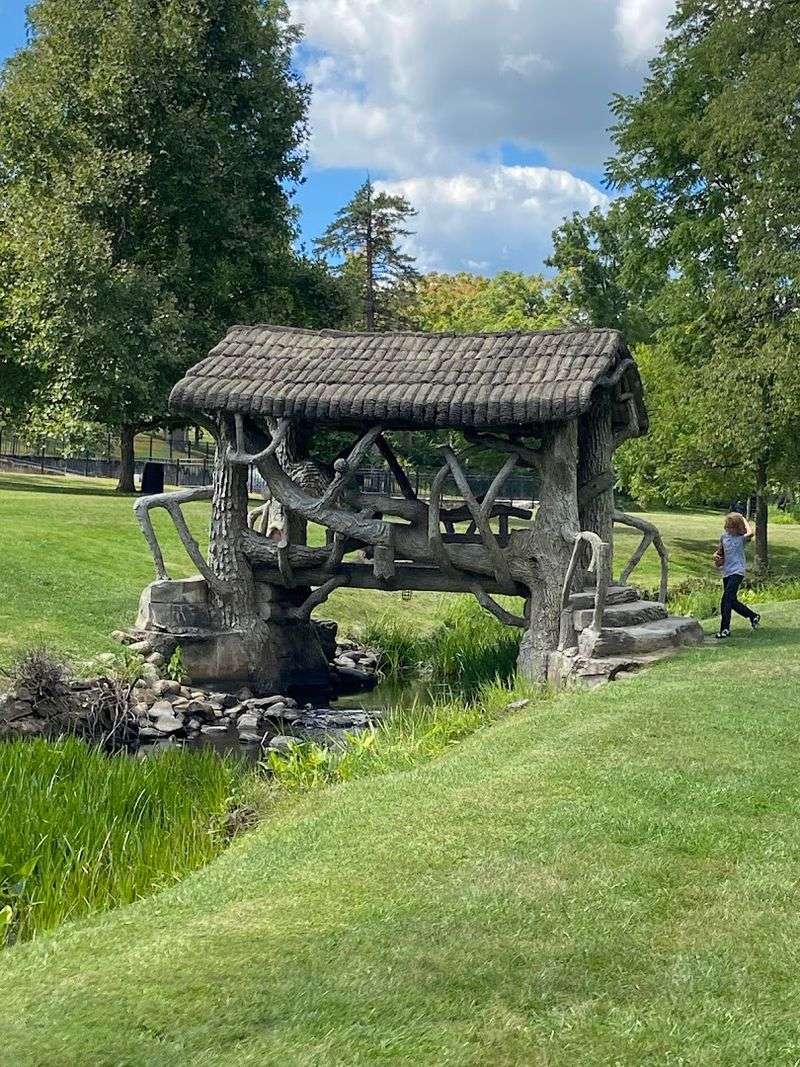
What stays with you after a visit is not just beauty, but the park’s stubborn strangeness. Seventeen elaborate bridges over a relatively small stream is objectively unusual, and McCourtie Park never tries to explain that away.
Instead, it lets the excess become its identity.
That is why the place feels memorable long after the details blur. The quiet paths, birdhouses, sculpted railings, and hidden architectural surprises create a setting that is gentle rather than grand, yet undeniably singular.
I would recommend it to anyone who likes destinations with personality and a little asymmetry. McCourtie Park is not polished into sameness.
It is a historic public park that still feels like one person’s curious idea, translated into concrete and somehow made welcoming for everyone.