
This Haunted Stone Bridge In South Carolina Is Straight From A Ghost Story
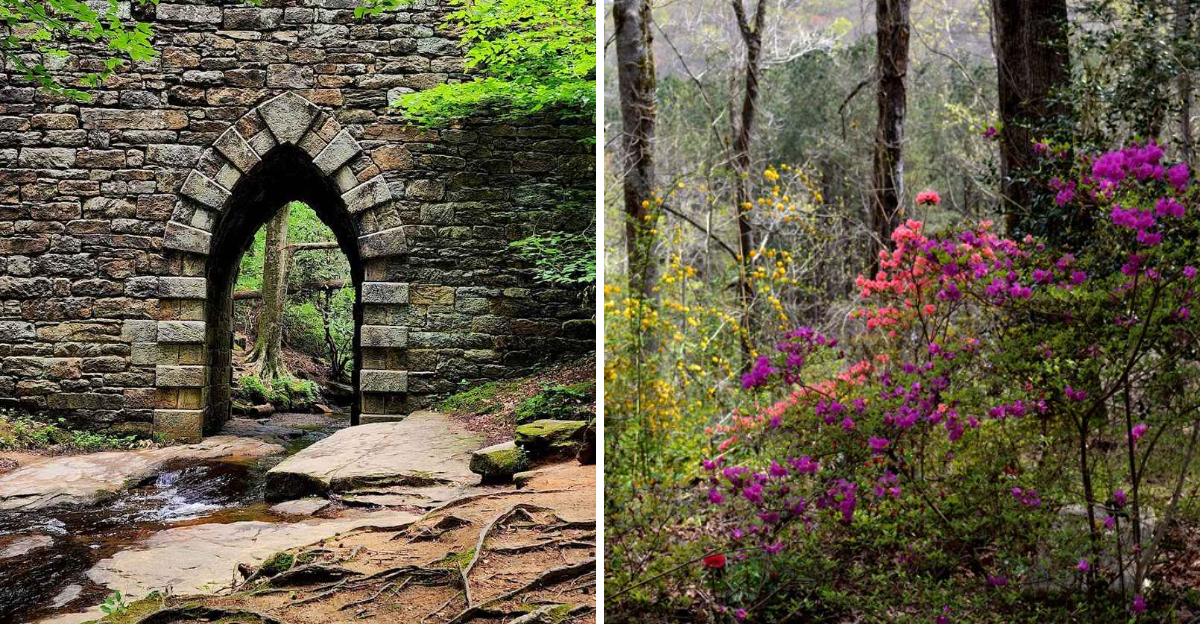
Some places are known for their history.
Others are known for what people cannot explain.
Deep in the woods of South Carolina, there is a stone bridge that feels older than everything around it. Quiet.
Still. Easy to underestimate at first glance.
But the longer you stay, the more it starts to feel different.
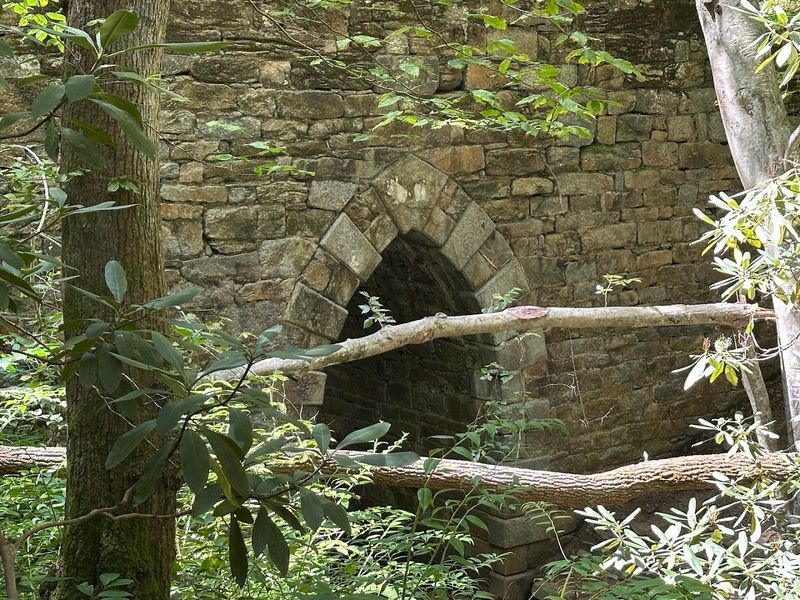
The arch rises in a Gothic curve. The stone holds onto time.
And the silence has a way of making every small sound feel louder than it should.
By day, it looks like a beautiful piece of history.
After sunset, it becomes something else.
People talk about lights that should not be there. Sounds without a clear source.
A feeling that lingers long after you leave.
Stories like this do not spread loudly in South Carolina.
They move quietly, from one person to another, and they tend to stay with you longer than expected.
South Carolina’s Oldest Standing Bridge
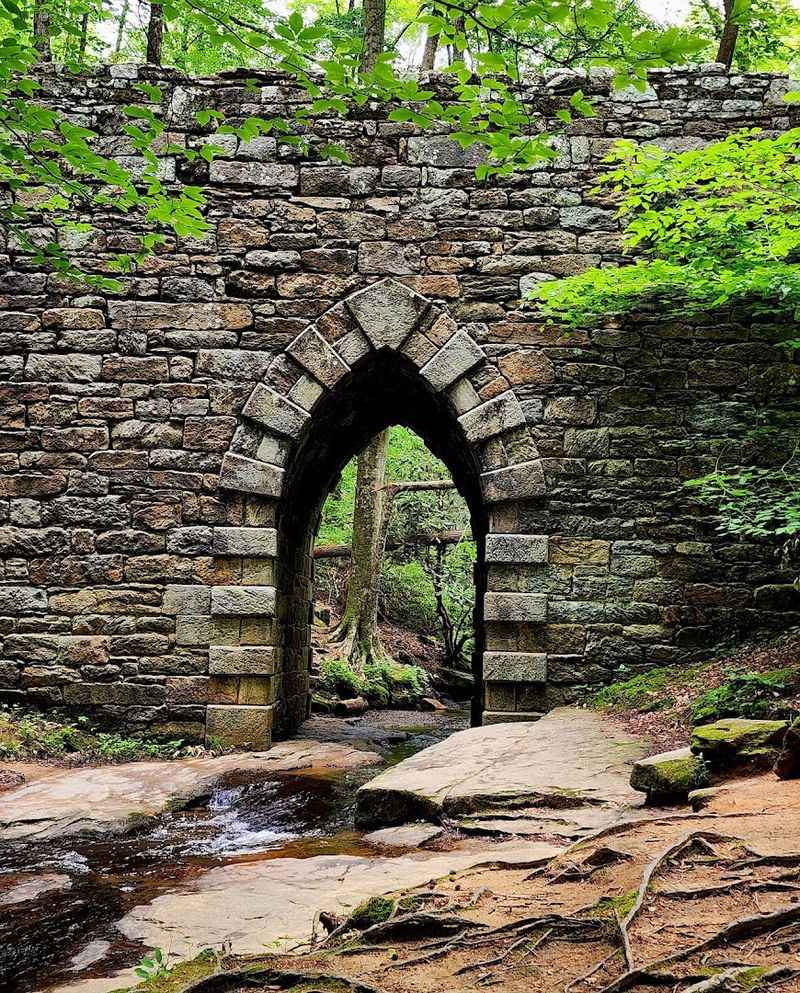
Standing before Poinsett Bridge, this structure claims the title of South Carolina’s oldest surviving bridge, and possibly the oldest in the entire Southeast. The Gothic arch design wasn’t just for show back in 1820.
Engineers chose this pointed style because it distributed weight more effectively than rounded arches, allowing the bridge to support heavy wagons and livestock crossing Little Gap Creek on the Saluda Mountain Road.
I ran my hand along the jagged stones during my visit, marveling at how these rocks held together without modern cement or adhesives. The construction technique relied purely on precise placement and the natural friction between stones.
Each rock was selected for its shape and positioned to lock into place with its neighbors.
What strikes me most is how this bridge outlasted countless modern structures. While highways crumble and need constant repair, these 200-year-old stones remain solid, a testament to craftsmanship that prioritized permanence over speed, especially once you make your way to 580 Callahan Mountain Rd, Landrum, SC 29356.
Built By Unknown Hands
Nobody knows for certain who actually built this bridge, and that mystery adds another layer to its haunted reputation. Historical records suggest enslaved laborers or possibly friendly members of the Catawba or Cherokee tribes constructed it, but no definitive documentation exists.
The lack of concrete historical attribution means the bridge carries stories from multiple communities, each claiming connection to its creation.
The construction method itself tells a story of incredible skill. Without mortar binding the stones together, builders had to understand weight distribution, friction, and structural integrity at an intuitive level.
I stood beneath the arch, looking up at how perfectly each irregular stone fits against the next, and felt genuine awe at the mathematical precision required.
This uncertainty about the builders feeds directly into the supernatural tales. When you don’t know whose hands shaped something, it becomes easier to imagine those hands reaching across time, still connected to the structure they created with such care and expertise.
Named After A Controversial Figure
Joel Roberts Poinsett lent his name to this bridge, the same man who gave us the poinsettia flower and the Poinsett Hotel. As South Carolina’s Secretary of War and a diplomat to Mexico, Poinsett championed infrastructure projects that would connect mountain communities to coastal trade routes.
The Saluda Mountain Road, which this bridge served, represented one of his pet projects for regional development.
What many don’t realize is how polarizing Poinsett was during his lifetime. His political maneuvering and strong opinions made him enemies, and some locals believe the bridge absorbed some of that controversial energy.
I found it fascinating that a structure meant to unite communities carries the name of someone who often divided them.
The poinsettia connection always makes me smile. We associate those cheerful red flowers with holiday warmth, yet the bridge bearing the same surname supposedly hosts some of South Carolina’s most active supernatural activity.
That contrast captures something essential about how history refuses simple categorization.
The Gothic Arch Design
Walking toward the bridge for the first time, that pointed Gothic arch catches your eye immediately, looking almost ecclesiastical rising from the forest floor. This wasn’t a common design choice for American infrastructure in 1820, making the Poinsett Bridge architecturally significant beyond its age.
The Gothic revival movement was just gaining momentum in American architecture, and seeing it applied to a utilitarian structure shows forward-thinking design.
The arch spans approximately 14 feet and rises to create enough clearance for Little Gap Creek to flow underneath even during spring floods. I noticed how the highest point of the arch aligns perfectly with the natural sight lines through the surrounding trees, creating an almost theatrical framing effect.
Whether intentional or accidental, this positioning makes the bridge feel like a deliberate stage set.
That dramatic appearance contributes to the haunted reputation. Gothic architecture carries cultural associations with mystery and the supernatural, so even skeptics approaching the bridge bring unconscious expectations shaped by centuries of Gothic literature and film.
Unexplained Lights And Sounds
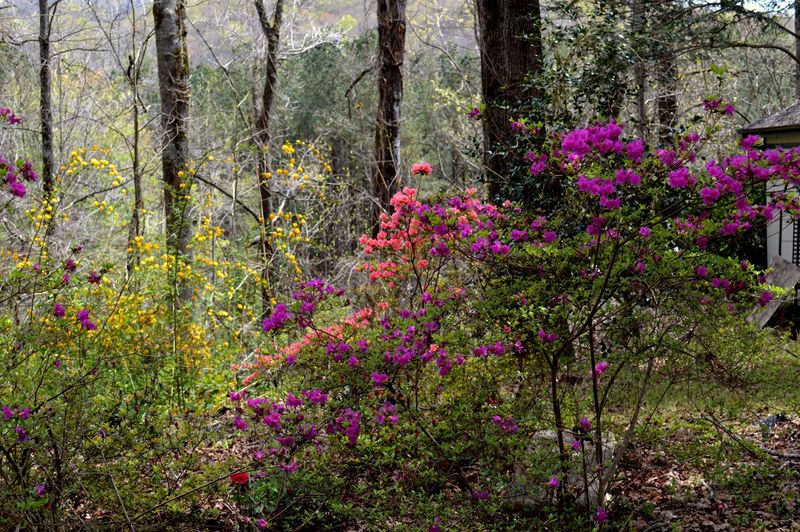
Visitors consistently report seeing strange lights near the bridge after dark, glowing orbs that drift through the trees or hover near the water. I spoke with a local photographer who captured what she described as light anomalies in multiple shots taken at dusk, though she admitted they could be anything from camera artifacts to fireflies.
The consistency of these reports across decades and from unrelated witnesses gives the phenomenon credibility beyond simple imagination.
The sounds prove even more unsettling. People describe hearing footsteps on the bridge when nobody visible walks there, voices speaking in languages they can’t identify, and occasionally the rumble of wagon wheels on stone.
During my visit on a quiet afternoon, I heard what sounded like distant conversation, but when I moved toward the sound, it seemed to shift location, staying always just out of clear hearing range.
Skeptics point to natural explanations like wind moving through the Gothic arch creating unusual acoustics, or the creek’s burbling being misinterpreted as voices. Yet those explanations don’t quite account for the specificity of witness descriptions.
The Teenage Dare Tradition
Throughout the 1980s and continuing into recent decades, local teenagers treated crossing the Poinsett Bridge alone after dark as a rite of passage. One reviewer I found online described sprinting back across the bridge during his attempt in the 80s, abandoning any pretense of bravery once darkness fully settled.
This tradition transformed the bridge from a historical curiosity into a proving ground for courage.
The dare typically required walking across the bridge, touching the far side, and returning without running. Simple enough in daylight, but something about the combination of isolation, darkness, and reputation made it genuinely frightening for participants.
I tried imagining myself as a teenager in that situation, standing alone on 200-year-old stones while trees whispered overhead and the creek murmured below.
What interests me most is how this tradition created a self-reinforcing cycle. Scared teenagers experienced heightened awareness and adrenaline, making them more likely to interpret normal sounds as supernatural.
Their frightened reactions then validated the bridge’s reputation for the next generation, keeping the legend alive through shared experience rather than just stories.
Hurricane Helene’s Impact
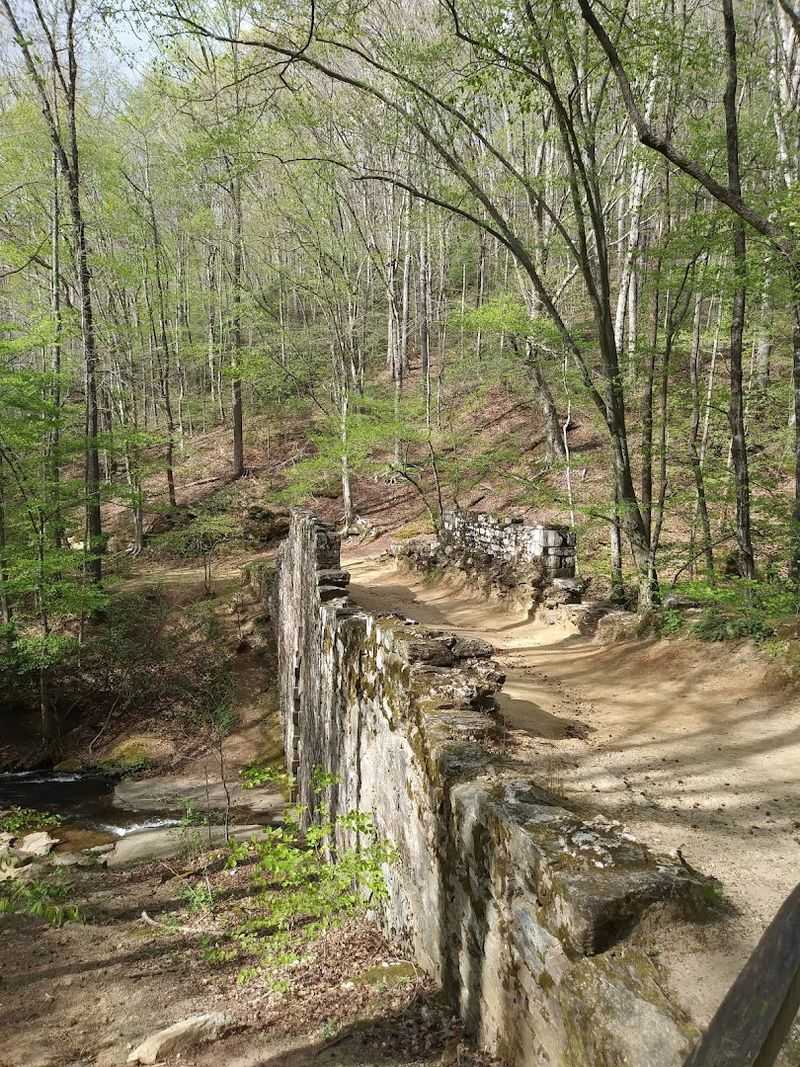
Hurricane Helene swept through the area, leaving its mark on the surrounding landscape while the bridge itself stood firm. Reviews from late 2024 describe numerous downed trees, damaged railings, and trails closed with caution tape.
The contrast struck me powerfully when reading these accounts: a 200-year-old bridge weathering a major hurricane better than modern safety infrastructure installed around it.
For several months following the storm, the site was completely fenced off while crews worked to clear debris and assess structural integrity. Visitors who made the trip during this closure found tall chain-link fencing blocking all access, a frustrating discovery after driving specifically to see the bridge.
One disappointed reviewer in November 2024 warned others not to bother visiting until repairs finished.
By early 2025, the bridge had reopened, though some storm debris remained visible on the banks. The fact that this structure survived yet another natural disaster adds to its mystique.
How many modern bridges will still be standing two centuries from now, weathering whatever climate changes throw at them?
Little Gap Creek’s Role
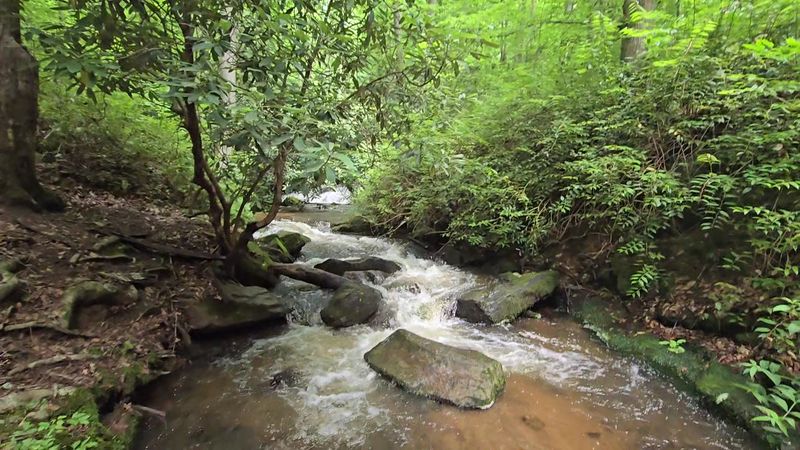
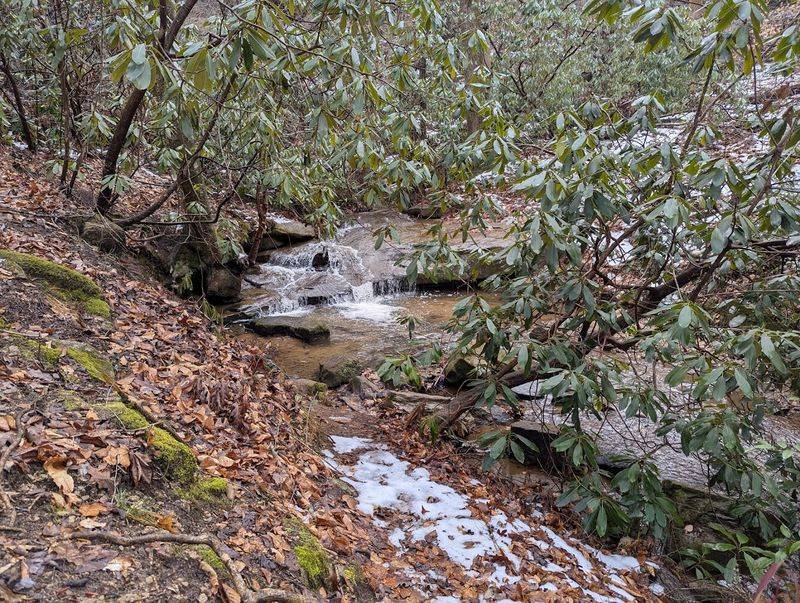
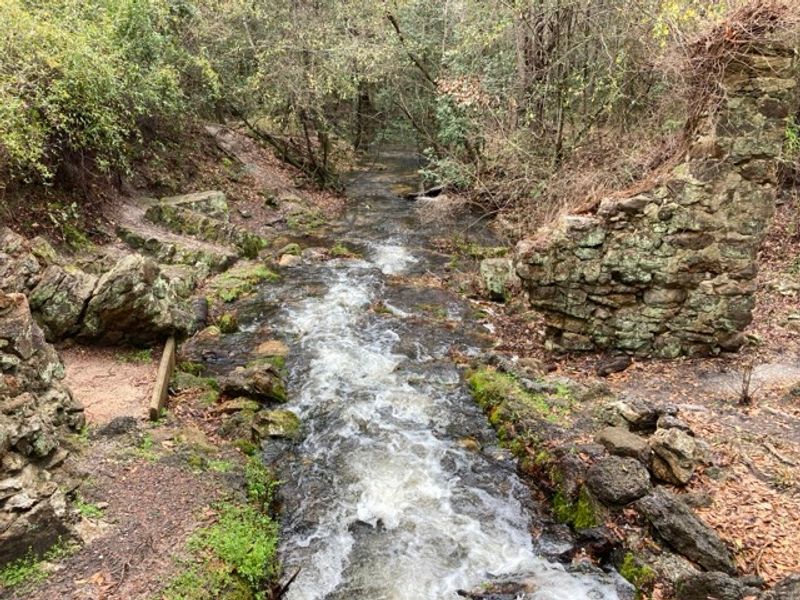
Little Gap Creek flows beneath the bridge in a shallow, rocky channel that invites wading during warmer months. I watched families let their children splash in pools barely ankle-deep, while dogs bounded through the water with obvious joy.
The creek’s gentle nature during normal conditions makes it perfect for cooling off after hiking the surrounding trails.
Several reviewers mentioned the water temperature, describing it as surprisingly cold even in July heat. That coldness comes from the creek’s source in the higher elevations nearby, carrying mountain runoff that never quite warms up.
I dipped my fingers in during my visit and understood immediately why people described it as refreshing rather than comfortable.
The creek’s role in supernatural stories shouldn’t be overlooked. Water appears in folklore worldwide as a boundary between worlds, a conductor of spiritual energy.
The combination of flowing water, ancient stones, and isolated woodland creates exactly the kind of liminal space where people expect to encounter something beyond normal experience. Whether that expectation creates the experiences or simply makes people more receptive to noticing them remains an open question.
Photography And Special Events
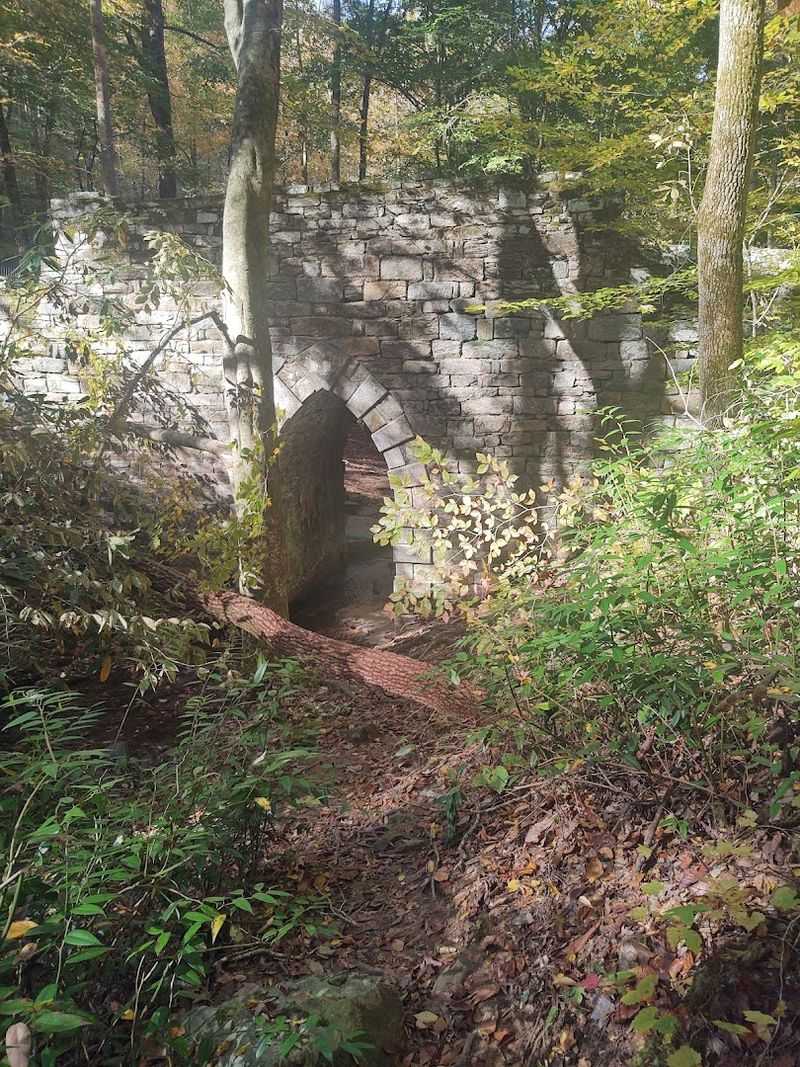
The bridge has become a sought-after location for photographers capturing everything from maternity photos to wedding ceremonies. One couple I read about got married there in April 2022, describing how other visitors respectfully gave them privacy during their ceremony and photos.
The natural beauty combined with historical architecture creates a backdrop that requires minimal additional decoration or staging.
During my visit, I noticed at least three different groups setting up photo shoots, ranging from a family portrait session to what looked like senior pictures for a high school student. The Gothic arch frames subjects perfectly, while the surrounding woodland provides natural diffused lighting that photographers love.
Fall foliage adds spectacular color, though spring and summer greenery creates its own lush appeal.
What makes this location special for events is the sense of permanence it provides. When you pose in front of a structure that has stood for over 200 years, your photos inherit some of that timelessness.
The bridge becomes more than scenery; it becomes a witness to your moment, just as it has witnessed countless other human moments across two centuries.
Visiting Today’s Preserved Site
Reaching the bridge today requires parking in a small gravel area across Callahan Mountain Road from the entrance, a detail several visitors mentioned missing on their first pass. The parking area holds maybe a dozen vehicles comfortably, so arriving early on weekends helps avoid competition for spaces.
From there, you cross the road and descend a few stairs to reach the bridge level and surrounding trails.
The site offers no restrooms or picnic tables, but visitors regularly spread blankets near the water for impromptu picnics. Dogs are welcome but should stay leashed, both for their safety on the uneven terrain and to respect other visitors.
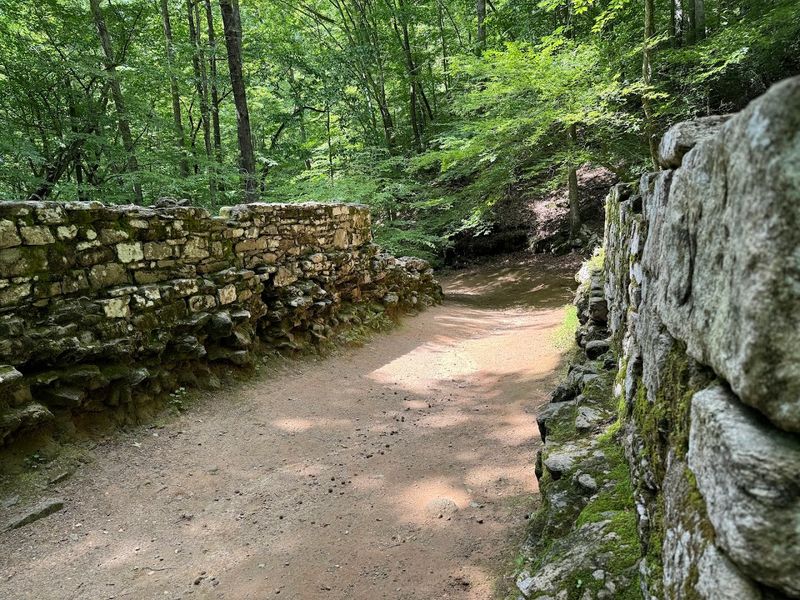
The trails feature exposed roots and rocky sections that make wheelchairs and strollers impractical, though the upper viewing area remains accessible.
What surprised me most was the complete absence of admission fees or operating hours. This piece of history sits open and free, maintained by preservation groups and visitor respect rather than commercial infrastructure.
That accessibility feels appropriate for a structure built to serve public needs rather than private profit, continuing its original democratic purpose into a new century.