
The Mysterious Ohio Rock Where A Blacksmith’s Carving Still Sparks Curiosity
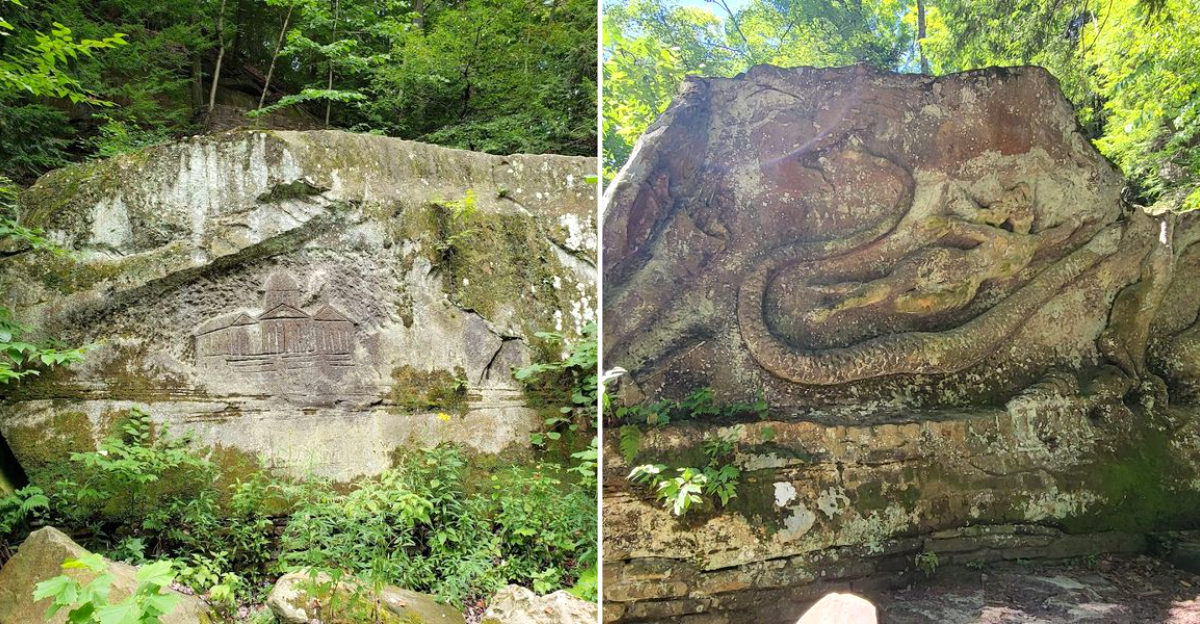
Northeast Ohio has a way of hiding odd little wonders where you least expect them.
Follow a wooded trail toward the river, and suddenly you find a sandstone boulder covered in faces, animals, and symbols carved by a blacksmith who clearly had more patience than most of us have phone storage.
The mystery is part of the pull. Nobody has fully decoded every mark, which makes the whole place feel less like a quick trail stop and more like an outdoor puzzle left behind for anyone curious enough to look closely.
Add in the rushing water, mossy rocks, small waterfalls, and shaded riverbank, and the trip becomes much more than a visit to one unusual carving.
It is a short Ohio hike with history, scenery, and just enough intrigue to make you feel like you stumbled into the opening scene of a very outdoorsy mystery movie.
The Story Behind the Carving
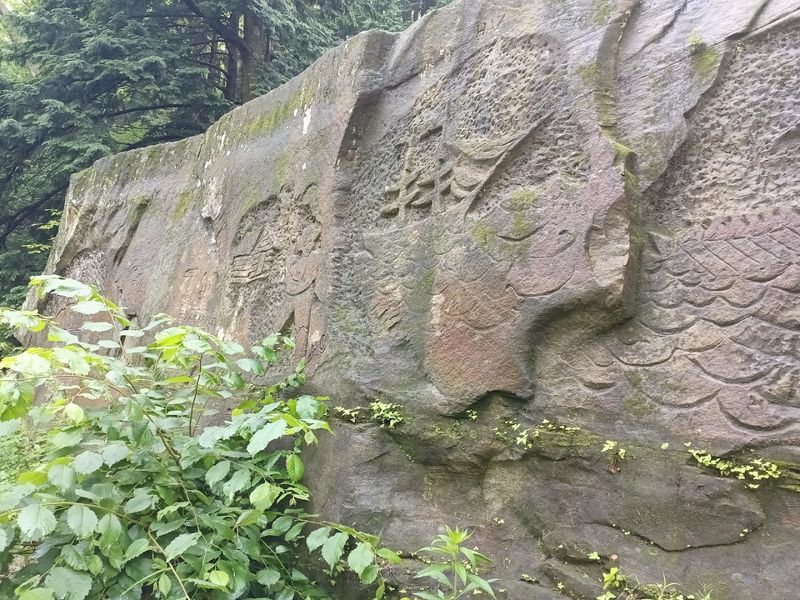
Henry Church Jr. was not a trained artist by any formal measure, but the man clearly had something to say.
Born in 1836, he worked as a blacksmith in Chagrin Falls, Ohio, and carved an enormous sandstone boulder along the Chagrin River with hand tools and sheer determination.
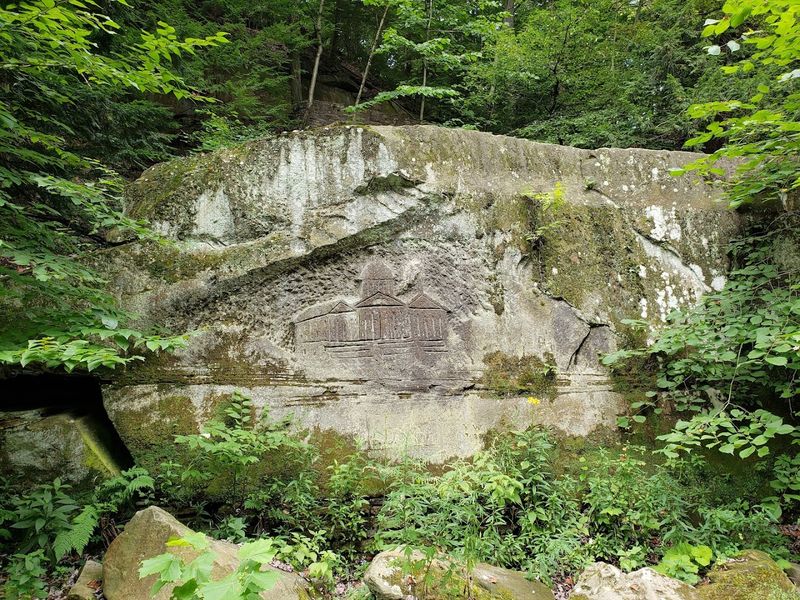
The carvings include an eagle, shield, papoose, woman, quiver, serpent, dog, and other figures. Nobody knows the full meaning behind every image, and that mystery is a big part of what draws people to this spot year after year.
Church dated the piece in 1885, treating the boulder as a kind of open-air canvas. He did not leave behind a clear explanation of the work, which means visitors get to bring their own interpretations to the surface.
Many people have speculated about the imagery, but the full story remains beautifully unresolved. You can access the site from the Henry Church, Jr., Rock Picnic Area on Hawthorn Parkway in Bentleyville, OH 44022.
What the Rock Actually Looks Like Up Close
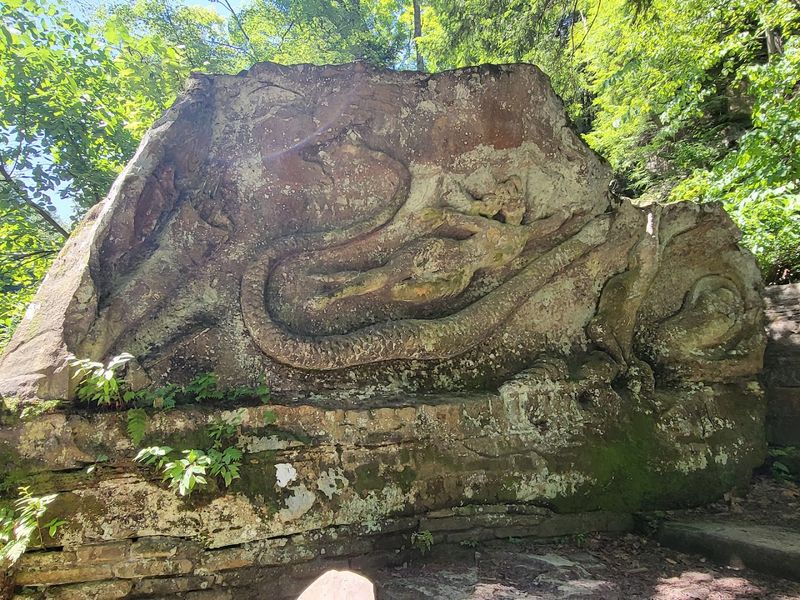
Nothing quite prepares you for seeing the rock in person. From a distance, it looks like a large, mossy boulder resting at the edge of the Chagrin River, the kind you might walk past without a second glance.
Get closer, though, and the surface transforms. Faces emerge from the stone, some serene and some almost confrontational.
There are animal figures that seem to move when the light shifts, and geometric patterns that weave between the larger images like a frame around a painting.
The craftsmanship is genuinely impressive when you consider the tools available in the late 1800s. Church used chisels and hammers, working the sandstone by hand.
The texture of the rock adds depth to every carved line, and the surrounding moss gives the whole surface a green-tinged, ancient quality. I spent a solid fifteen minutes just circling the boulder slowly, finding new details each time I changed my angle.
The Trail Down to the River
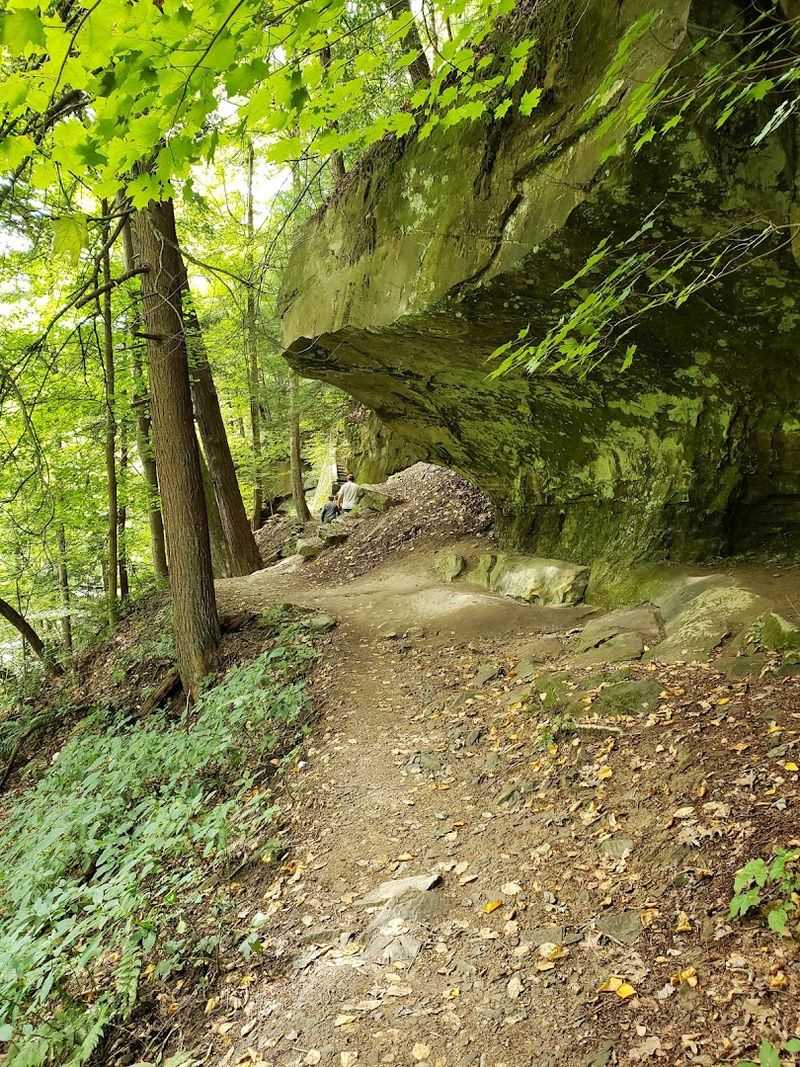
Getting to the rock is half the fun, and the trail does not disappoint.
The path starts near the Henry Church, Jr., Rock Picnic Area and winds downhill through a dense canopy of trees that block out most of the sky on a summer day.
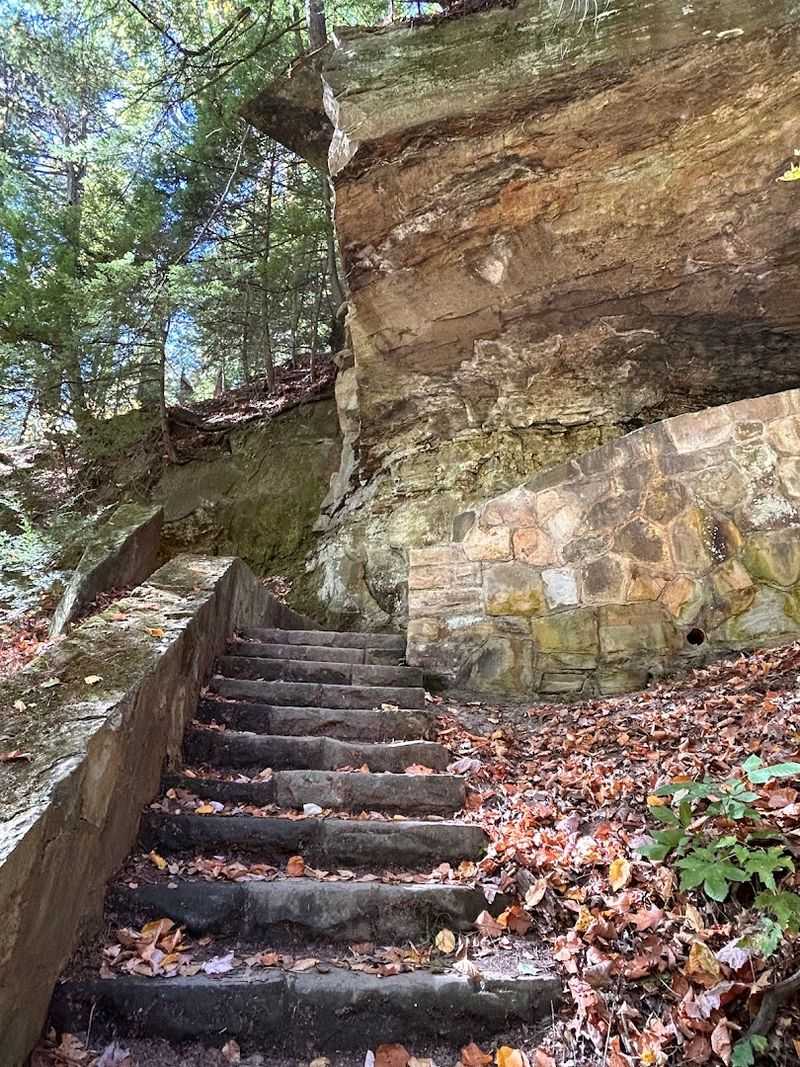
Stone steps cut into the hillside guide you down the steeper sections, and they are manageable for careful hikers of most fitness levels. The loop is roughly 0.6 miles, which makes it manageable for most people without feeling like a workout you did not sign up for.
I will be honest: the steps can feel a little intense on the knees coming back up, especially after a rain when the surrounding soil gets slick. Wearing shoes with decent grip is a smart call.
Strollers are not practical here, but kids who can handle stairs and uneven ground will likely enjoy the sense of adventure the descent creates. The trail back to the parking lot makes for a satisfying short loop.
The Waterfalls You Did Not Expect
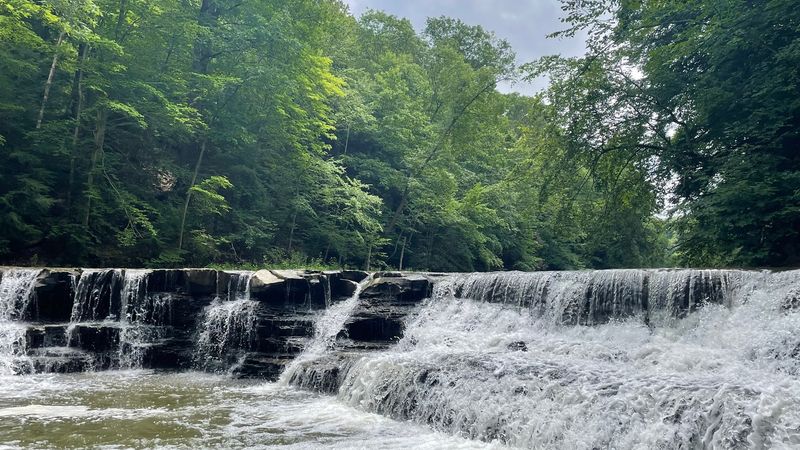
Most people come specifically for the carved rock, but the waterfalls along this stretch of the Chagrin River end up stealing a fair amount of attention.
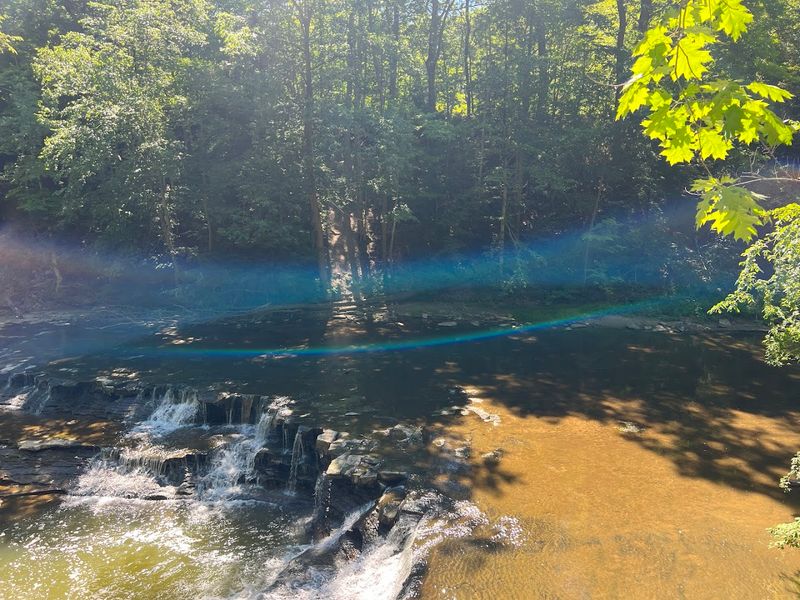
The area around the Henry Church Rock trail features small falls and cascades that tumble over natural rock ledges, and the sound alone is worth the hike.
From the main picnic area, visitors can reach the water features with a short walk, which gives you an instant sense of what this landscape is working with. The water is clear and shallow in many spots, and on warm days, people wade in the pools beneath the falls without hesitation.
The combination of rushing water, carved stone, and overhanging trees creates a scene that feels more remote than it actually is. You are not far from a suburban road, but the noise of the falls drowns out any reminder of that.
I sat on a flat rock near one of the smaller cascades for a while and genuinely forgot I had a schedule to keep. That is the quiet power of this place.
The Atmosphere Along the Riverbank
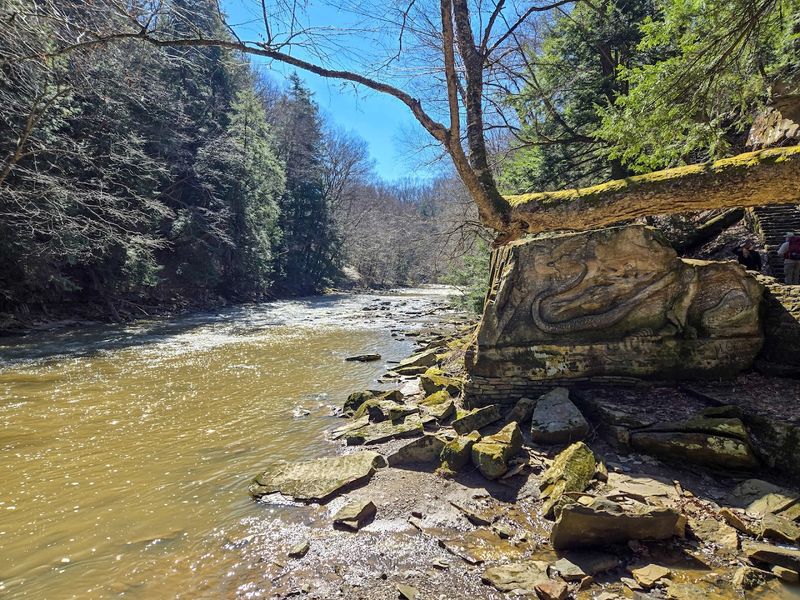
The riverbank itself has a calm, almost meditative quality that surprised me. The Chagrin River moves at a gentle pace through this section, threading between mossy rocks and exposed tree roots with a quiet confidence.
Natural overhangs jut out from the hillside above the water, creating shaded alcoves where the temperature drops noticeably.
Standing beneath one of those ledges while the river moves past is a genuinely refreshing experience, especially in July when the rest of northeast Ohio feels like a slow oven.
The sandstone ledges and layered rock formations that line the riverbank give the whole area a rich geological texture. You can see different strata in the rock faces, with bands of tan, gray, and rust adding depth to the scene.
Ferns grow from cracks in the stone, and the overall effect is lush without being overwhelming.
A few flat boulders near the water make natural seating spots, and I watched two families take turns skipping stones while a heron stood completely still upstream, apparently unimpressed by all of us.
Best Times to Visit and What to Expect
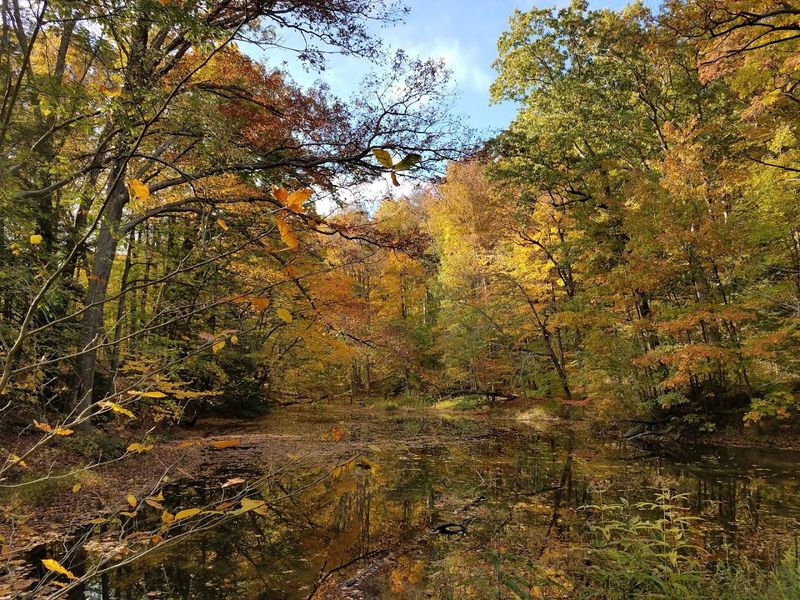
Timing your visit makes a real difference at this spot. Fall is widely considered the peak season, and for good reason.
The deciduous forest surrounding the trail turns into a full color show from mid-October through early November, and the contrast between the orange and red leaves and the dark, wet stone of the riverbank is genuinely striking.
Spring brings higher water levels, which makes the waterfalls more dramatic, though the trail can get muddy after heavy rain. Summer is popular with families because the shallow swimming holes beneath the falls are accessible and refreshing.
Winter visits are quieter and the bare trees open up views of the rock formations that foliage hides during warmer months.
The park is open daily from 6 AM to 11 PM, which gives you plenty of daylight to work with in any season.
Mornings on weekdays tend to be the least crowded, and arriving early means you might have the carved rock entirely to yourself for a few minutes, which is a genuinely different experience from sharing it with a crowd.
Practical Tips for Your Visit
A few practical notes can make the difference between a smooth visit and a frustrating one.
The parking area at the Henry Church Rock picnic area is easy to find and free to use, with picnic tables and restroom facilities nearby, which is a small but meaningful comfort after a hike.
The trail is not stroller-friendly due to the steep stone steps, so families with very young children should plan accordingly. Older kids who can manage stairs independently will likely thrive here.
Dogs are welcome on leash, and the trail is short enough that many leashed dogs can handle it well.
Mud is a real factor after rain, so trail shoes or boots with traction are a better choice than sneakers on wet days.
The loop trail is about 0.6 miles, so most visitors can complete it fairly quickly, though lingering near the falls or the carved rock can easily stretch that into a longer, more relaxed outing.
Bringing water and a small snack makes the picnic area feel like a proper reward at the end.
The Broader South Chagrin Reservation Context
Henry Church Rock sits within South Chagrin Reservation, which is part of the Cleveland Metroparks system.
The reservation covers a significant stretch of the Chagrin River valley and includes multiple trail options beyond the short loop that leads to the carved boulder.
The Buckeye Trail, one of Ohio’s most recognized long-distance hiking routes, passes through parts of the reservation, adding a sense of connectivity to a much larger network of natural spaces.
Horseback riding and cycling are also available on designated trails within the broader reservation, making it a multi-use destination that rewards repeat visits.
The landmark was long known locally as Squaw Rock, but Cleveland Metroparks now refers to it as Henry Church, Jr., Rock. Nearby South Chagrin stops such as Quarry Rock, Look About Lodge, and other trail areas give visitors more ways to turn the outing into a fuller park visit.
Cleveland is only about 20 miles away, which makes the sense of wilderness here feel almost improbable.
Why This Rock Still Matters Today
There is something quietly powerful about a place that resists easy explanation. Henry Church Jr. left behind no artist’s statement, no gallery notes, no social media account.
Just stone and time and a river that has been flowing past his work for well over a century.
The rock has earned a 4.8-star rating from more than 170 visitors, which in the language of our current moment means people genuinely feel something when they stand in front of it. That kind of consistent appreciation across different ages, backgrounds, and expectations is not easy to manufacture.
For me, the visit was a reminder that curiosity is its own reward. I left with more questions than answers about Church’s intentions, and somehow that felt right.
The carved faces on that boulder have been watching the river change for generations, indifferent to whether anyone figures them out.
Ohio has no shortage of beautiful natural spaces, but very few of them carry this particular combination of human mystery and natural beauty in one small, mossy, remarkable package.