
This Missouri Landmark Connects The Pony Express, Jesse James, And One Very Strange Museum Stop
At first glance, it looks like a beautifully preserved old hotel in Missouri. Then the story keeps unfolding.
One room brings the Pony Express roaring back to life, when horseback riders carried mail across the frontier at impossible speeds.
Another steps into the legend of Jesse James, one of the Wild West’s most famous names. And somewhere in between, you’ll wander through vintage streets, classic cars, old-time storefronts, and entire pieces of America that feel carefully tucked away from time.
This isn’t a museum that sticks to one chapter. It turns the page constantly.
The building itself once served as the headquarters of the Pony Express, connecting Missouri to one of the most legendary mail routes in history.
Today, every hallway feels packed with hidden details, unexpected collections, and stories waiting around the next corner. Part history lesson.
Part time machine. Part treasure chest of Americana.
The Pony Express Headquarters
Before email, before telegrams reached the frontier, before any of the communication tools we take for granted existed, there was a young rider on a fast horse carrying the nation’s words across the wilderness.
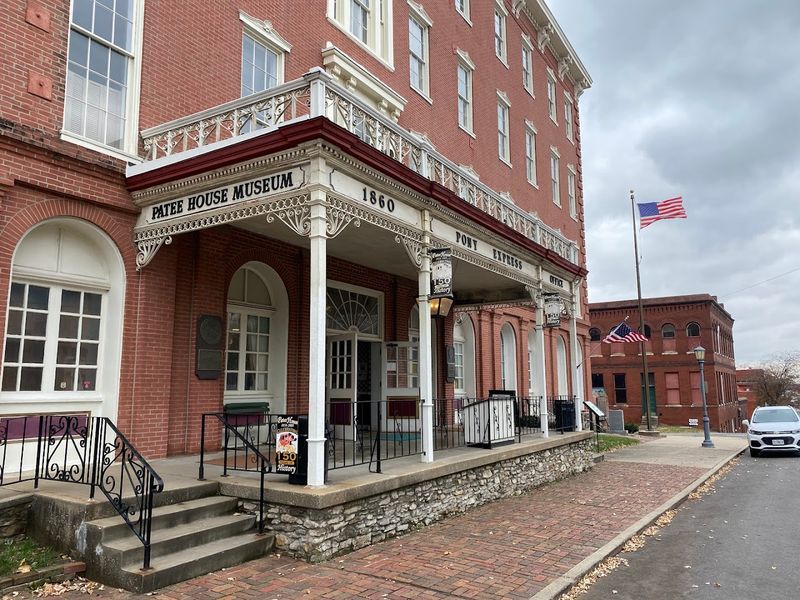
The Patee House served as the official headquarters for the Pony Express in 1860, making it the true nerve center of one of America’s boldest postal experiments.
The main office for the Pony Express operation was run right here, and riders would stage from this location before heading westward across nearly 2,000 miles of open terrain.
The museum has carefully restored the original Pony Express office so visitors can step inside and feel exactly what that moment in history looked like.
There is something quietly thrilling about standing in a room where real decisions were made that shaped how a young nation communicated.
The restored office features period-accurate furnishings, documents, and displays that bring the whole operation to vivid life.
The Patee House is officially recognized as the eastern terminus of the Pony Express National Historic Trail, which is not a small distinction. This is where that legendary chapter of American history literally began.
The Historic Hotel That Witnessed Everything
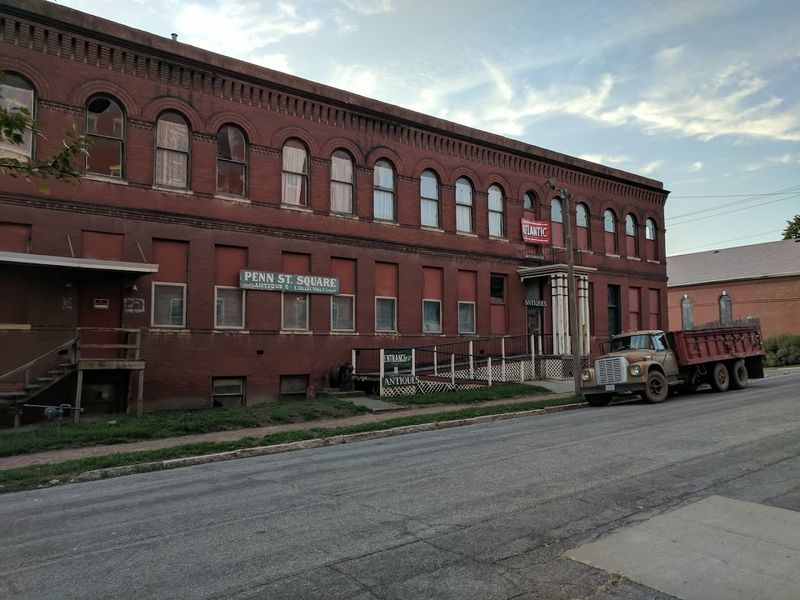
Some buildings just absorb history like a sponge, and the Patee House is that building. Located at 1202 Penn St, St. Joseph, MO 64503, this four-story brick structure was considered one of the most luxurious hotels west of the Mississippi River when it opened in 1858.
It cost around $180,000 to build, which was an extraordinary sum at the time.
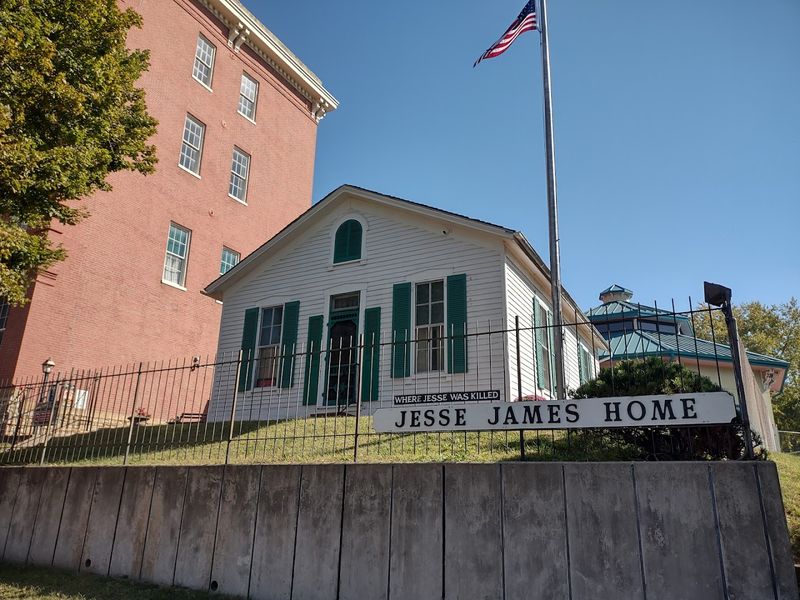
The hotel hosted travelers, business figures, and frontier legends throughout its early years. It operated under several names over the decades, including the World’s Hotel, which is the name it carried when it became entangled in the Jesse James story in 1882.
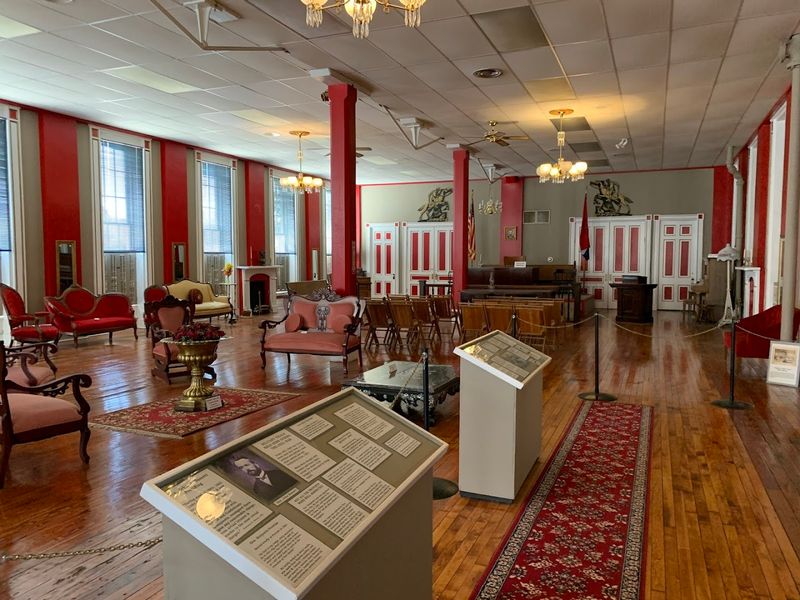
The third floor still retains original hotel rooms, giving visitors a rare glimpse into mid-1800s lodging.
Walking through the original corridors feels genuinely different from visiting a typical museum. The architecture itself tells a story of ambition, of a city that believed it was destined to be the gateway to the American West.
St. Joseph was booming, confident, and full of energy during those years, and the Patee House was its crown jewel. That original grandeur is still very much present if you know where to look.
A Town Inside A Building
Somewhere between a time machine and a movie set, the Streets of Old St. Joseph exhibit is one of the most creatively designed spaces you will find in any Midwestern museum.
The entire exhibit is built to resemble a mid-1800s city street, complete with authentic storefronts, period signage, and carefully curated objects that make you feel like you have walked backward in time by about 170 years.
Each storefront represents a different slice of frontier-era commerce and daily life. There is a wagon maker’s blacksmith shop, antique furniture displays, and a dentist office that once belonged to Dr. Walter Cronkite Sr., the father of legendary news anchor Walter Cronkite.
That detail alone tends to stop people in their tracks, because it is such an unexpected connection between two very different eras of American history.
The exhibit rewards slow, careful exploration. There are details tucked into every corner that reward the curious visitor who takes their time.
It is the kind of space where you keep turning around because you noticed something new. The Streets of Old St. Joseph proves that history does not have to be presented behind glass to feel alive and completely absorbing.
The Wild Thing Carousel That Rides Like No Other
Most carousels feature horses. Maybe a lion or two if they are feeling adventurous.
The carousel at the Patee House Museum looked at that tradition and went in a completely different direction.
The aptly named Wild Thing carousel features an extraordinary collection of hand-carved animals that includes a raptor, a bald eagle, a shark, a dinosaur, and a hummingbird, among others.
It is fully functional and still offers rides, which makes it one of the most joyfully unusual experiences inside the entire museum.
The craftsmanship on each carved figure is genuinely impressive up close. These are not mass-produced fairground pieces.
Each animal has its own personality, its own posture, and its own sense of movement that comes alive once the carousel starts spinning.
Riding the Wild Thing carousel feels like the perfect punctuation mark at the end of a long afternoon of history and exploration.
It brings a sense of pure, uncomplicated fun to a building otherwise packed with serious historical weight. Visitors of all ages tend to light up around it, and it has become one of the most photographed and talked-about features of the entire Patee House experience.
Some things just need to be experienced firsthand.
The 1860 Locomotive Parked Right Inside The Building
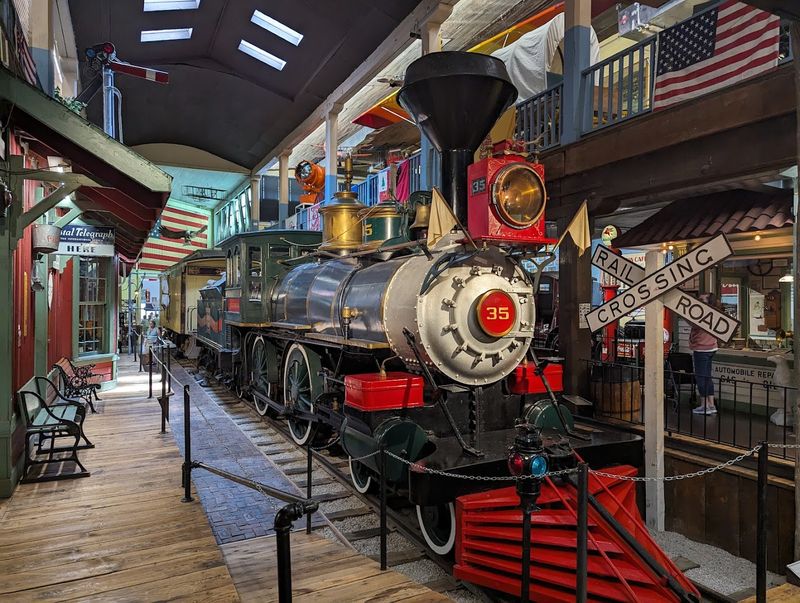
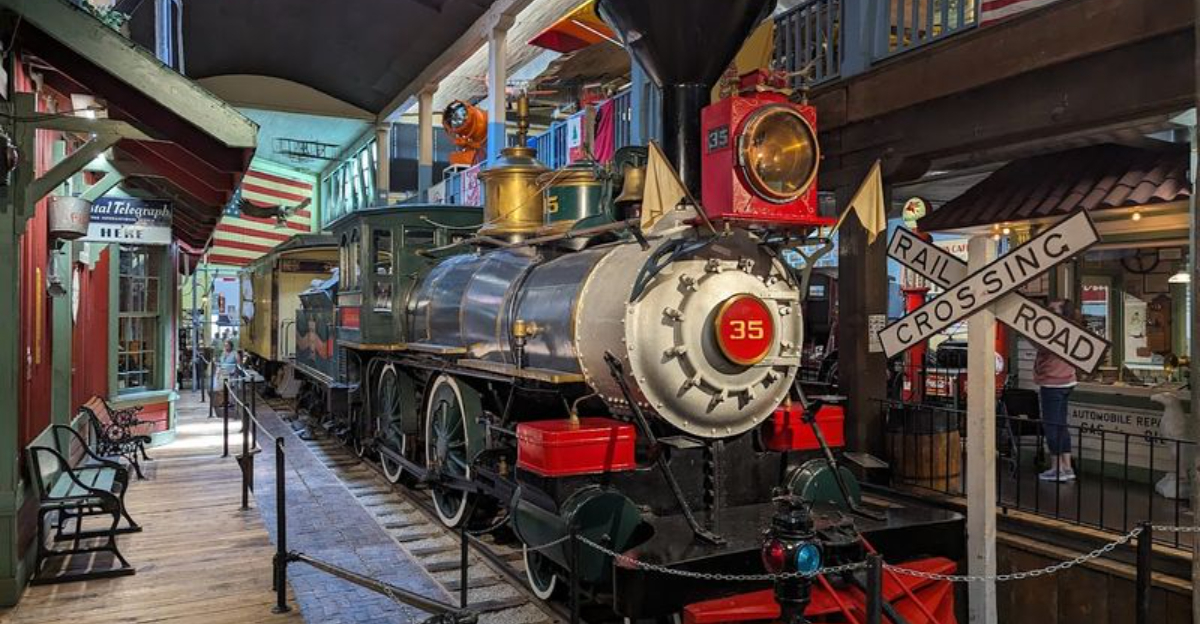
There is a full-sized 1860 Hannibal and St. Joseph locomotive sitting inside the Patee House Museum, and it is exactly as impressive as it sounds.
This is not a scale model or a decorative replica. It is an actual historic locomotive paired with a railway mail car, both of which played a direct role in speeding up mail delivery for the Pony Express operation.
The combination of the train and the nearby Pony Express office creates a vivid picture of how St. Joseph positioned itself as the communication hub of a growing nation.
The railway brought mail from the East, and the Pony Express riders carried it westward from this very location. Standing between the two exhibits, you can almost feel the urgency and energy of that era.
The locomotive is the kind of exhibit that catches visitors completely off guard, even those who have read about the museum beforehand.
Seeing something that large and that historically significant parked inside a building creates an almost surreal experience.
It is one of those moments where the scale of history suddenly becomes very, very real. The Patee House has a way of doing that repeatedly throughout a single visit.
Two Thousand Perfume Bottles And A 1920s Service Station
Here is where the Patee House Museum earns its reputation as genuinely unpredictable. Somewhere between the frontier history and the Jesse James artifacts, you will stumble upon a collection of over 2,000 antique perfume bottles displayed in elegant glass cases.
It is one of those exhibits that makes you pause and reconsider everything you thought this museum was going to be.
Right around the corner from that collection sits a fully recreated 1920s-style service station, complete with a Model T Ford that looks ready to roll out onto a century-old road.
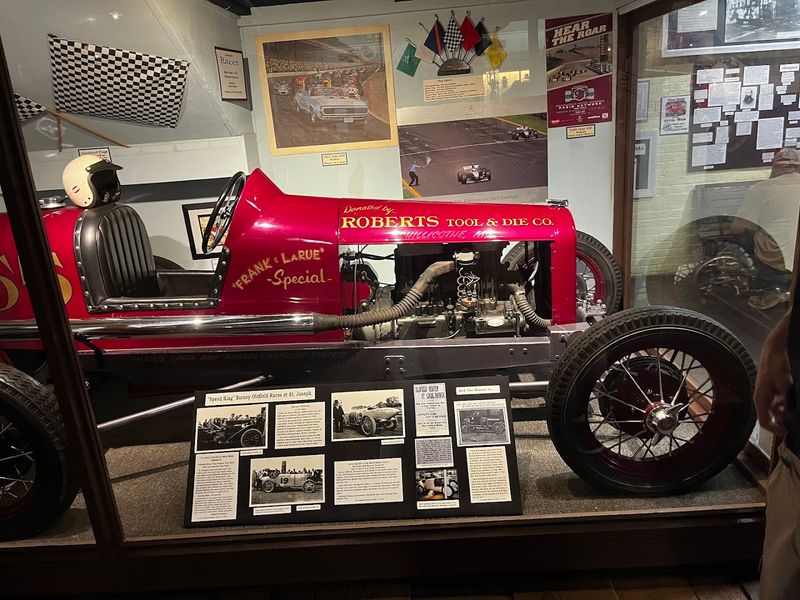
The attention to detail in this exhibit is remarkable, from the period-accurate signage to the tools and accessories arranged exactly as they would have appeared in that era. Antique cars, trucks, fire trucks, and even a 1921 race car round out the transportation displays.
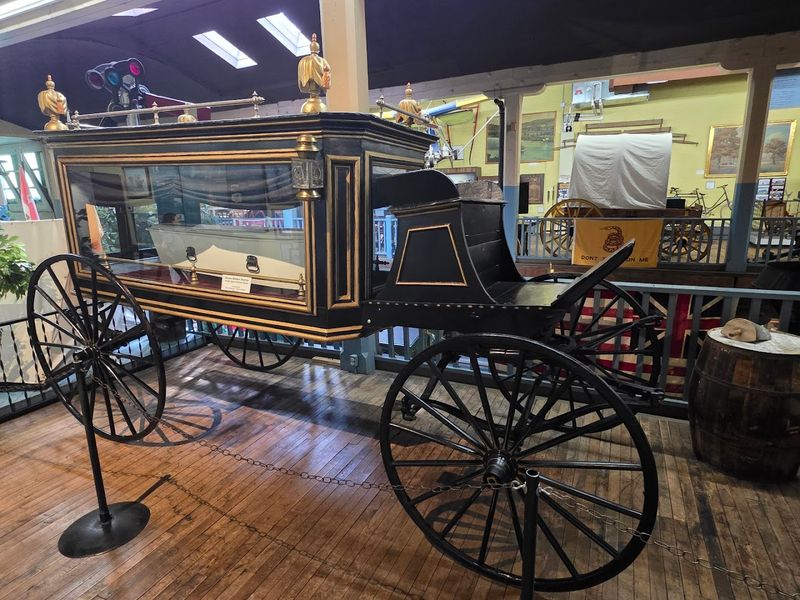
The museum also features antique hearses, which add a quietly fascinating layer to the transportation history on display.
What makes all of these exhibits work together is the curatorial commitment to showing the full scope of American life across multiple decades. The Patee House is not just a Pony Express museum or a Jesse James museum.
It is a portrait of an entire civilization in motion, captured one artifact at a time.
The Buffalo Saloon And The Seek And Find Game
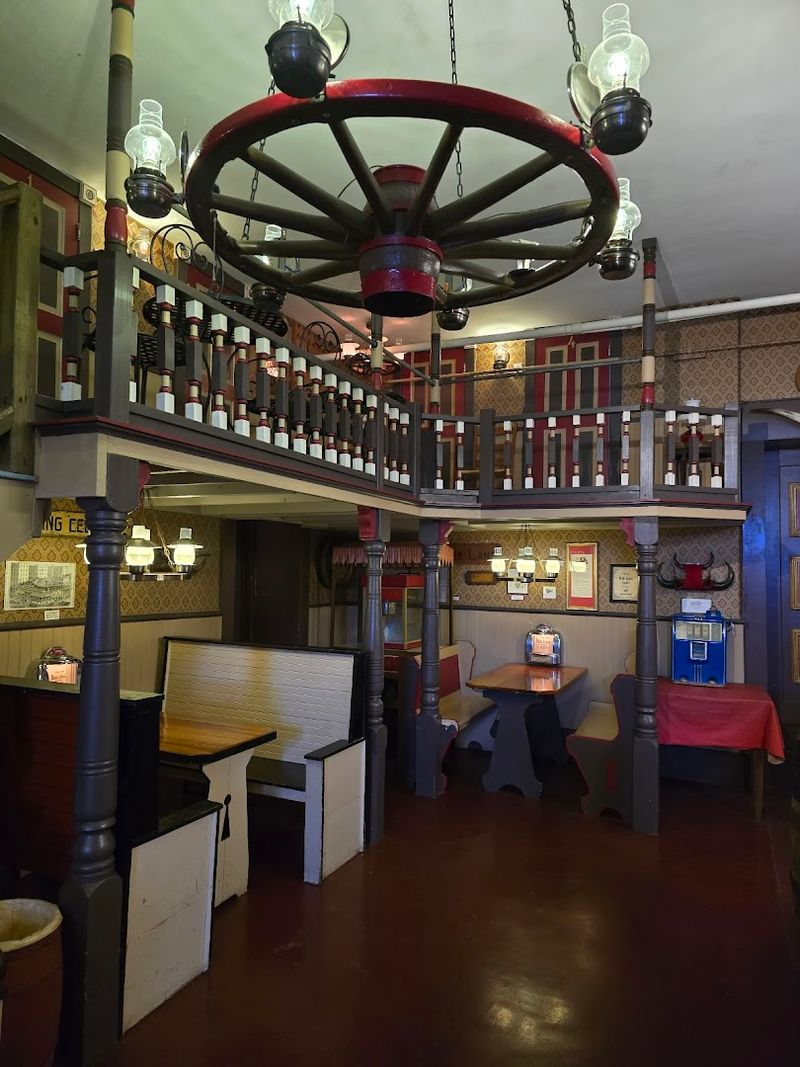
The recreated Buffalo Saloon inside the Patee House Museum is one of those spaces that instantly transports you somewhere else entirely.
Once known as the oldest saloon west of the Mississippi, the Buffalo Saloon has been faithfully recreated inside the museum and features a working Nickelodeon that fills the space with the kind of tinny, cheerful music that defined frontier entertainment.
Sarsaparilla is the drink of choice here, which feels completely on-brand.
The saloon is part of the broader Streets of Old St. Joseph exhibit and serves as one of its most atmospheric stops.
The combination of the period decor, the music, and the overall ambiance makes it genuinely easy to forget you are standing inside a museum building. It is theatrical in the best possible way, built with obvious care and historical intention.
Scattered throughout the museum is also an interactive Seek and Find game that challenges visitors to locate 20 misplaced objects hidden within the various exhibits.
It adds a layer of playful engagement to what is already a deeply immersive experience. The game works beautifully because it forces you to look more carefully at everything around you.
Slow down, pay attention, and the Patee House rewards you endlessly.
The Jesse James Art Collection And The Japanese Tea House
The Blue Room at the Patee House Museum houses the George Warfel Westerners on Wood art collection, which features life-sized portraits of Jesse and Frank James painted directly onto wood panels.
The level of detail in these portraits is striking, and the Blue Room provides a contemplative, gallery-like atmosphere that feels distinct from the rest of the museum’s more artifact-heavy spaces.
The art collection adds an unexpected cultural dimension to the Jesse James story. Rather than presenting him purely through relics and historical records, these portraits engage with the mythology and the human complexity of the man himself.
It is a thoughtful curatorial choice that elevates the entire Jesse James section of the museum beyond straightforward historical documentation.
Out on the museum grounds, there is also a Japanese Tea House built in 1916, originally constructed for lavish social gatherings.
It is a surprising and beautiful addition to the outdoor space, offering a quiet contrast to the energy packed inside the main building.
The Patee House Museum is genuinely full of moments like this, where something completely unexpected appears and reframes the whole experience. If you are anywhere near St. Joseph, this landmark is one of those rare places that earns every single minute you give it.
Have you visited yet?