
10 North Carolina Stargazing Escapes Where Mountain Skies And Giant Telescopes Make The Night Unforgettable
North Carolina doesn’t just do mountains and beaches. It does nighttime drama on a cosmic scale.
When the sun drops behind the Blue Ridge, something changes. The air gets sharper.
The noise fades out. And suddenly the sky remembers it has a job to do.
Stars don’t just appear here. They show off.
The Milky Way stretches like it’s late for something. Constellations feel closer, almost curious. And somewhere in the dark, giant telescopes quietly point upward like patient detectives trying to solve the universe one photon at a time.
This isn’t city stargazing with a few polite dots of light. This is the kind where you lose track of time, then lose track of your thoughts, then realize you’re okay with both.
Mountaintops become viewing platforms. Valleys turn into shadowed amphitheaters.
And every quiet breeze feels like it’s carrying secrets from somewhere very, very far away. So pack a jacket, not because it’s cold.
But because the night is deep enough to notice.
1. Bare Dark Sky Observatory At Mayland Earth To Sky Park
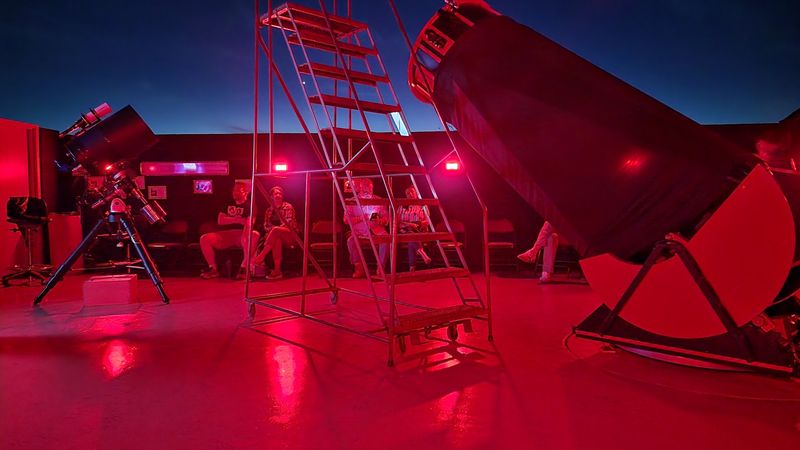
Sitting at 2,736 feet in the Appalachian Mountains, this place has a telescope nicknamed the Sam Scope, and it is absolutely not messing around.
Located at 66 Energy Exchange Drive, Burnsville, NC 28714, Mayland Earth to Sky Park earned the title of the first IDA-certified Star Park in the southeastern United States. That is a big deal, and the sky here proves it every single clear night.
The Sam Scope is a 34-inch Newtonian reflector, currently the largest public telescope in the Southeast dedicated entirely to public use. Through it, you can spot galaxies, nebulae, planets, and star clusters with shocking clarity.
The 360-degree sky views from the grounds are breathtaking even without the telescope.
Community Viewing Nights require advance tickets purchased through Eventbrite, so planning ahead is essential.
The parking area is open 24 hours for independent stargazing, which is a great bonus. If clouds roll in, the Glenn and Carol Arthur Planetarium on-site keeps the experience alive.
Honestly, this place sets the bar for every stargazing destination in the region.
2. Pisgah Astronomical Research Institute
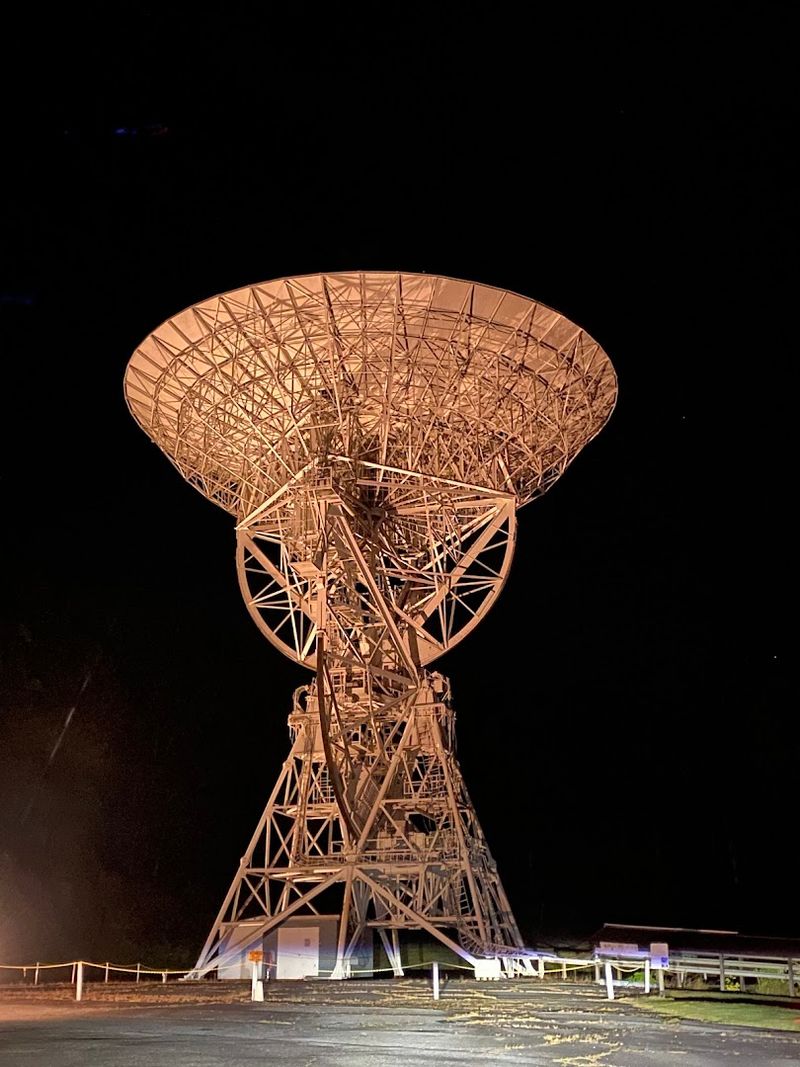
A former NASA tracking facility turned public astronomy playground sounds like something from a science fiction novel, but PARI is absolutely real.
Nestled at 1 PARI Drive, Rosman, NC 28772, deep inside Pisgah National Forest, this non-profit research center sits roughly an hour from Asheville. The forest location means light pollution is practically nonexistent here, and the skies reward that fact generously.
PARI features large optical and radio telescopes, genuine space shuttle artifacts, and a fascinating meteorite, gem, and mineral collection.
Multiple public stargazing events are hosted every single month, making it one of the most accessible astronomy destinations in the state. The combination of science history and live sky observation creates an experience that feels genuinely unique.
Walking through a facility where NASA once tracked satellites and then pointing a telescope at Saturn feels surreal in the best possible way.
The forest surroundings add a peaceful, almost cinematic quality to evening visits. If you want a destination that blends history, science, and pure natural beauty under one very dark sky, PARI belongs at the top of your list.
3. Dark Sky Observatory At Appalachian State University
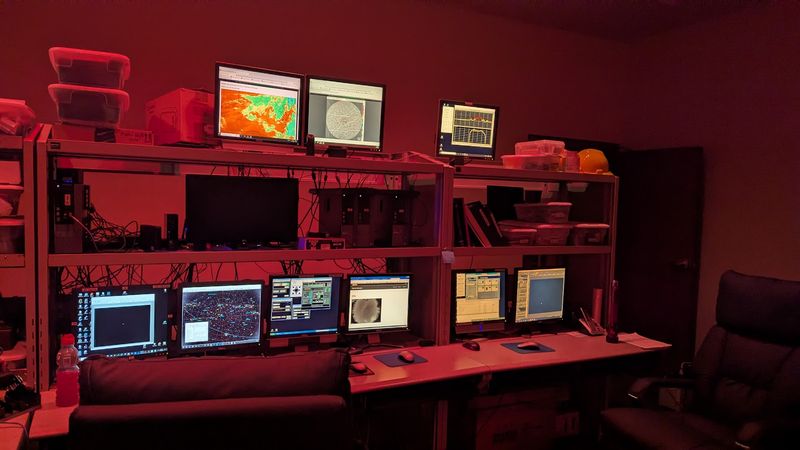
Twenty miles northeast of Boone, tucked along Observatory Road in Purlear, NC 28665, this facility has been quietly delivering spectacular sky views since 1981.
The Dark Sky Observatory at Appalachian State University is a legitimate research powerhouse that also opens its doors to the public, and that combination makes it genuinely special. Not every university lets curious visitors peer through its best equipment.
Four telescopes ranging from 6 to 32 inches in size are available here, used regularly for CCD imaging, photometry, and spectrographic work.
Monthly public nights offer an immersive, educational experience where visitors can observe planets, the Moon, galaxies, and nebulae up close. Tickets for public events are sold online, so booking in advance is the smart move.
There is something wonderfully humbling about looking through the same telescope that university researchers use for actual scientific study. The surrounding mountains and minimal light pollution make every viewing session memorable.
This observatory proves that serious science and public wonder are not mutually exclusive. It is the kind of place that turns a curious first-timer into a full-blown astronomy enthusiast by the end of the night.
4. Mount Mitchell State Park
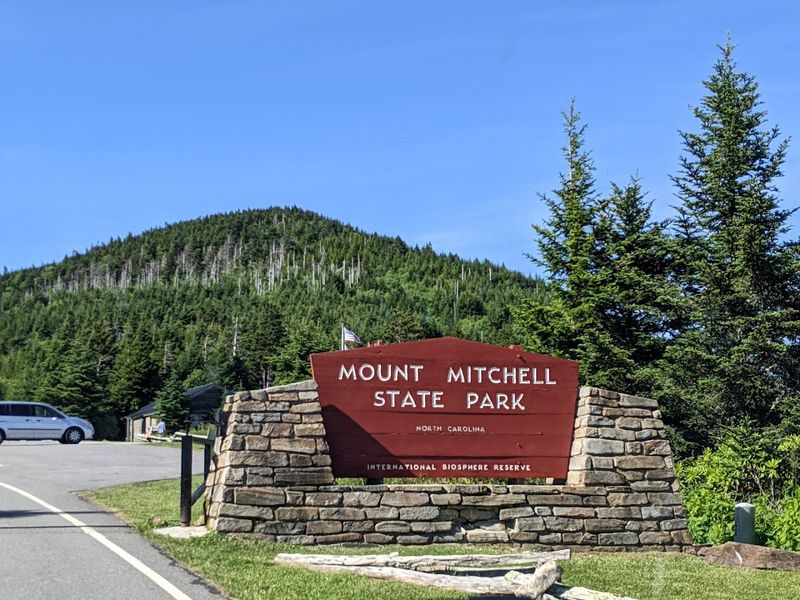
Standing at the highest peak east of the Mississippi River automatically earns you bragging rights, and Mount Mitchell delivers on every single one of them.
Located at 2388 North Carolina Highway 128, Burnsville, NC 28714, this state park carries International Dark Sky Park designation, meaning the absence of light pollution here is officially recognized and protected.
That matters enormously when you are trying to see the Milky Way with your own eyes.
On clear nights, the Milky Way stretches across the summit sky in a way that genuinely stops conversations mid-sentence.
Shooting stars appear regularly, and the observation platform provides sweeping views in every direction. Visitors can reach the summit by car or by hiking, and interpretive exhibits about the night sky make the experience educational as well as breathtaking.
The elevation here means temperatures drop significantly after sunset, so layering up is non-negotiable. Arriving before dark to watch the sunset transition into a full star show is highly recommended.
Few places in the eastern United States offer this combination of accessibility, elevation, and certified dark sky quality. Mount Mitchell at night is the kind of experience that quietly rewires how you think about the universe.
5. Gorges State Park
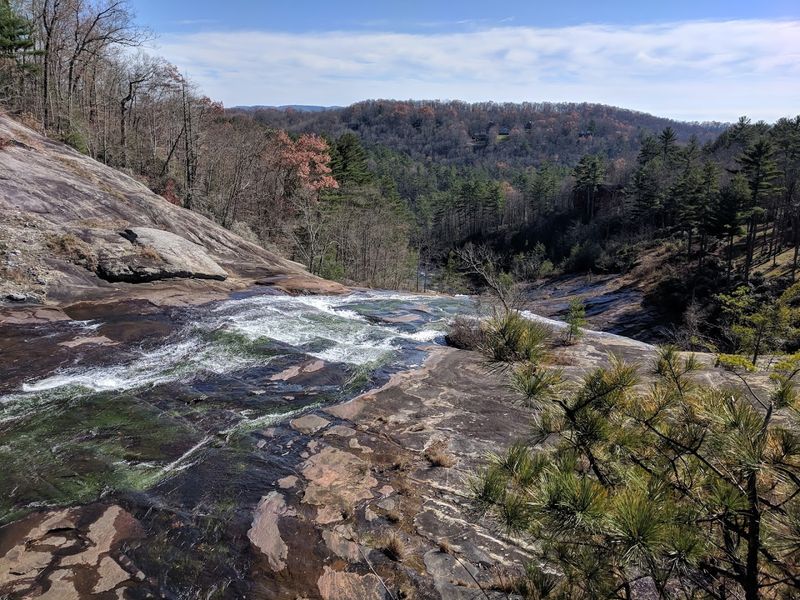
Gorges State Park is the kind of place that sounds too good to be true until you actually show up and the sky absolutely validates every expectation.
Situated at 976 Grassy Ridge Road, Sapphire, NC 28774, this park sits in the southern Blue Ridge Escarpment region of North Carolina. Its dramatic terrain and remote location combine to create some seriously impressive dark sky conditions far from urban glow.
The park features waterfalls, rare ecosystems, and rugged trails that take on a completely different character after sunset.
Camping inside the park gives stargazers extended time under skies that reveal deep-sky objects invisible from most populated areas. The combination of forest canopy breaks and high elevation clearings creates natural framing for the night sky that feels almost artistic.
Gorges is not as widely promoted for stargazing as some other North Carolina spots, which honestly makes it even better.
Fewer crowds, quieter nights, and a landscape that feels completely untouched by modern life create an atmosphere that is hard to replicate elsewhere.
Bring a good blanket, a red-light flashlight to protect your night vision, and zero expectations beyond pure amazement. Gorges delivers every time the clouds cooperate.
6. Three College Observatory
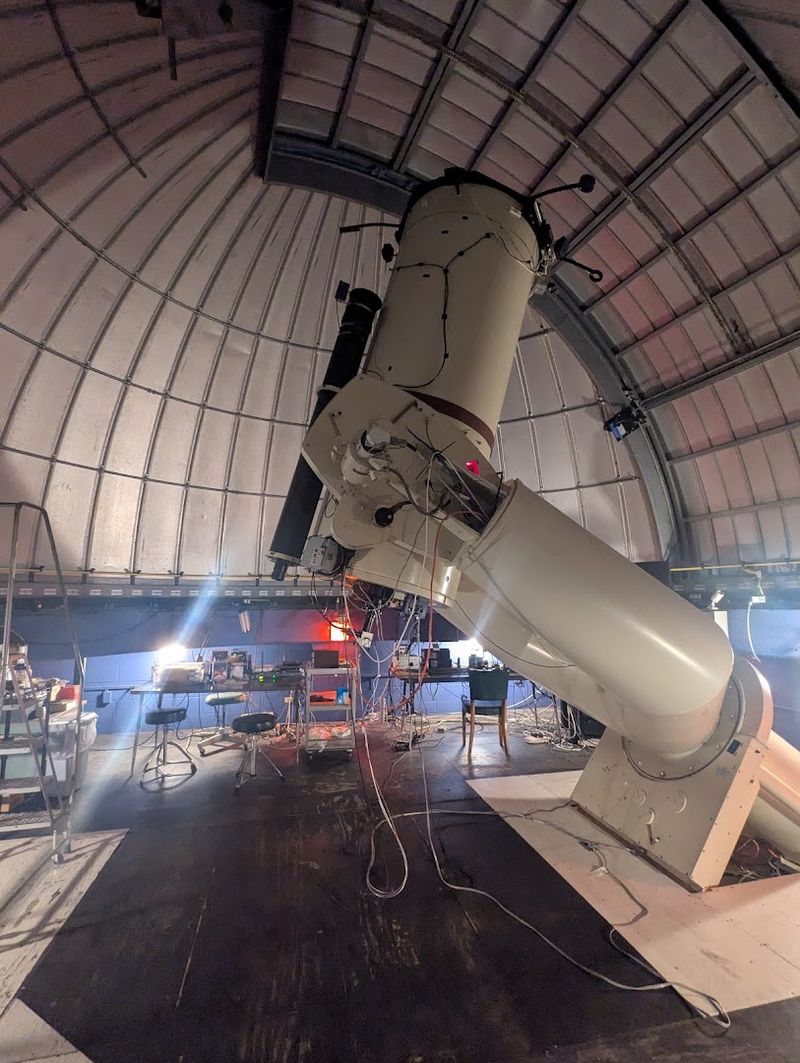
A 32-inch reflecting telescope is not something you stumble across every day, and Three College Observatory makes it available to the public on a regular basis.
Located at 5106 Thompson Mill Road, Graham, NC 27253, about eight miles south of Burlington, this facility has been operational since 1981.
It is jointly operated by UNC Greensboro, North Carolina A&T State University, and Guilford College, which gives it a collaborative academic spirit that is genuinely refreshing.
Free public observing events run on selected nights between late September and June, roughly once a month.
During sessions, visitors can observe star clusters, nebulae, galaxies, double stars, planets, and the Moon through the impressive 32-inch telescope. The dark-sky site location in central North Carolina ensures that light pollution stays minimal and views stay sharp.
The fact that three colleges share this resource speaks to a real commitment to public science education. Bringing a group here feels like attending an astronomy class taught entirely by the universe itself.
The telescope resolves details in deep-sky objects that smaller instruments simply cannot match.
If you have ever wanted to see a galaxy as more than just a smudge of light, Three College Observatory is exactly where that experience happens.
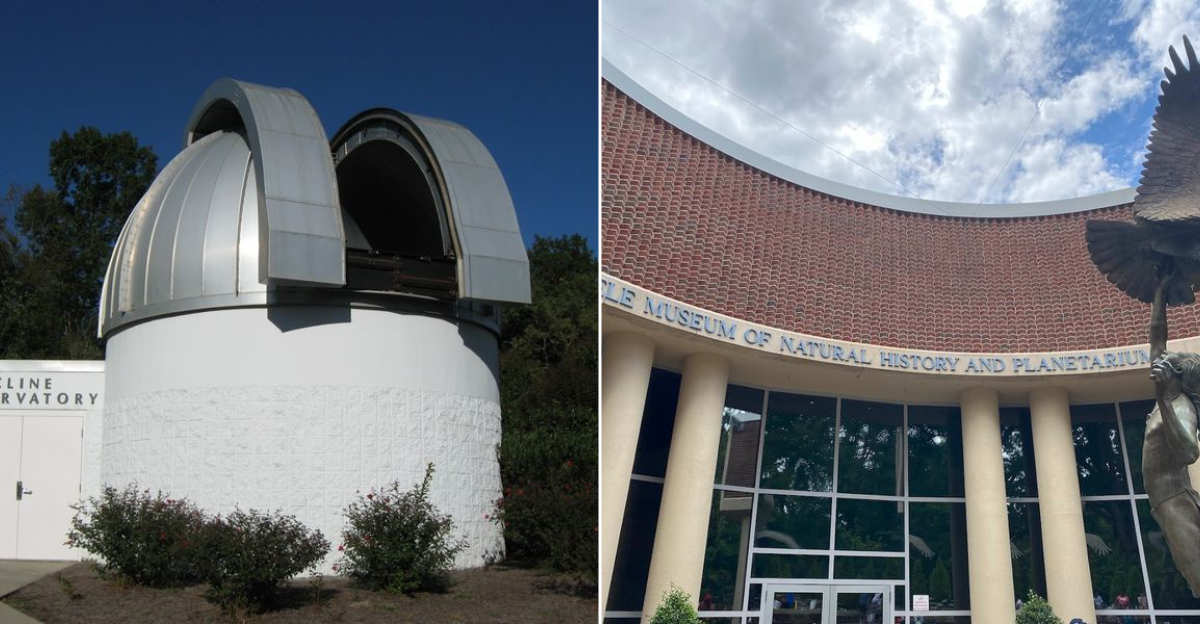
7. Cline Observatory At Guilford Technical Community College
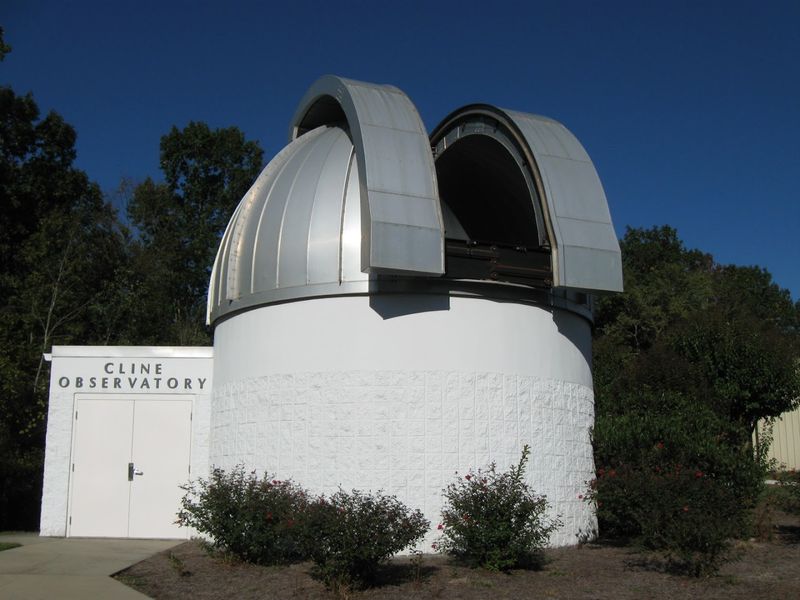
Community college observatories rarely get the spotlight they deserve, but Cline Observatory at GTCC is genuinely worth celebrating.
Perched at 601 East Main Street, Jamestown, NC 27282, this facility brings professional-grade stargazing to a community setting in a way that feels wonderfully democratic. Astronomy should not be exclusive, and Cline Observatory seems to operate on exactly that principle.
The observatory hosts regular public viewing nights where visitors can observe through quality telescopes and learn about what they are seeing.
Its location in the Piedmont region of North Carolina means it serves a large population that might not easily access mountain observatories. The programming here bridges the gap between casual curiosity and serious sky enthusiasm.
What makes Cline particularly appealing is the approachable, educational atmosphere it cultivates. First-timers feel welcome rather than overwhelmed, and the events are structured to be genuinely informative without turning into a lecture.
Families, students, and adults with zero astronomy background regularly leave with a completely new appreciation for the night sky. Sometimes the most unexpected places deliver the most memorable experiences, and this community gem absolutely fits that description.
Check the GTCC website for current event schedules before visiting.
8. Cape Lookout National Seashore
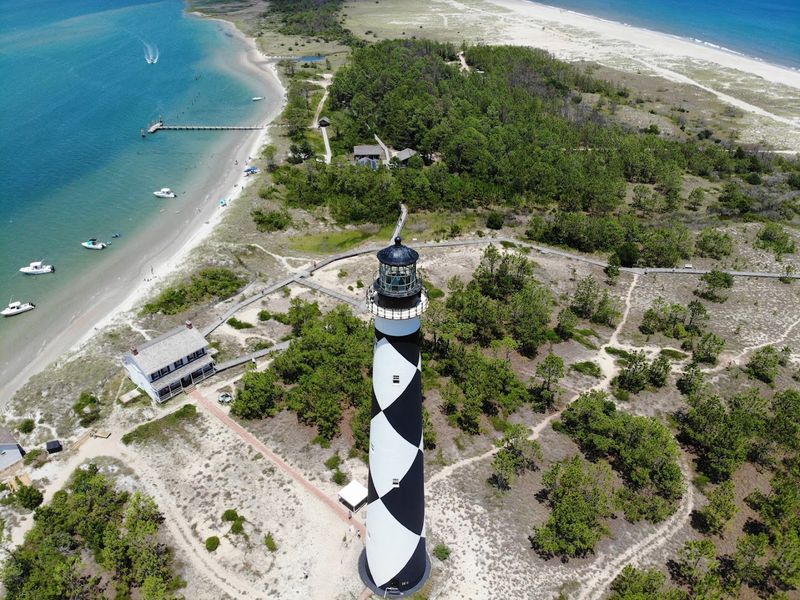
Stargazing over the ocean is a completely different experience from mountain observing, and Cape Lookout National Seashore delivers that coastal sky magic in a way nothing else in North Carolina can match.
Starting from the Harkers Island Visitor Center at 1800 Island Road, Harkers Island, NC 28531, visitors access undeveloped barrier islands where artificial light is almost entirely absent.
The horizon stretches in every direction without interruption.
The combination of dark water below and dark sky above creates a surreal, mirror-like atmosphere on calm nights. Stars reflect off the sound, constellations feel lower and closer than usual, and the silence amplifies everything.
The iconic Cape Lookout Lighthouse stands as a dramatic silhouette against the Milky Way on particularly clear evenings.
Getting to the islands requires a ferry or private boat, which adds a genuine adventure element to the experience. Planning around new moon phases maximizes darkness and visibility.
This is not a traditional observatory visit with guided telescopes and educational talks. It is raw, unfiltered, and deeply personal stargazing at the edge of the continent.
Few experiences in North Carolina feel as expansive and humbling as lying on that beach and watching the entire sky rotate overhead through the night.
9. Morehead Planetarium And Science Center
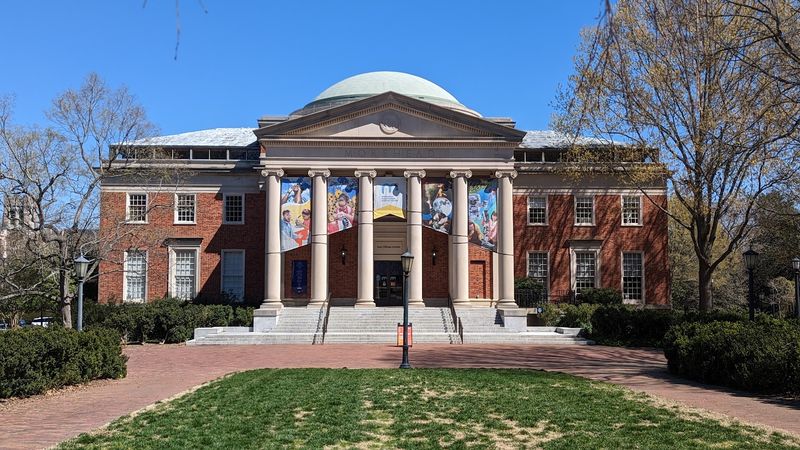
Before NASA astronauts launched into space, many of them trained their navigation skills at Morehead Planetarium.
That history alone makes a visit to 250 East Franklin Street, Chapel Hill, NC 27514 feel like stepping into something genuinely important. This is one of the oldest planetariums in the United States, and it has been inspiring sky curiosity in North Carolinians since 1949.
The full-dome digital projection system here creates immersive sky shows that transport audiences from Chapel Hill to the surface of Mars, the rings of Saturn, or the edges of the observable universe. Live programs, educational shows, and special events run throughout the year for all age groups.
The science center surrounding the planetarium adds interactive exhibits that complement the sky programming beautifully.
Morehead is ideal for those who want a structured, weather-proof introduction to astronomy without needing to stand in a field at midnight.
The storytelling inside the dome is genuinely captivating, blending scientific accuracy with cinematic presentation. Chapel Hill is an easy drive from much of central North Carolina, making this one of the most accessible stargazing experiences on this entire list.
Sometimes the best way to fall in love with the night sky is to let someone else do the navigating first.
10. The Schiele Museum Of Natural History And Planetarium
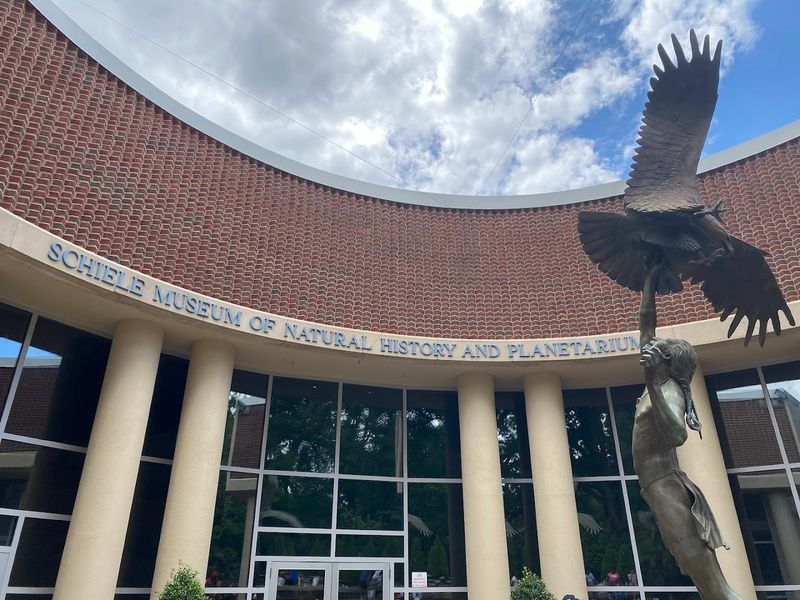
Gastonia might not be the first city that comes to mind when you think about astronomy, but the Schiele Museum of Natural History and Planetarium at 1500 East Garrison Boulevard, Gastonia, NC 28054 quietly makes a compelling case for itself.
This museum blends natural history, science education, and sky exploration under one roof in a way that feels both ambitious and genuinely welcoming. It is the kind of place that rewards curiosity at every turn.
The planetarium hosts regular sky shows using modern projection technology that makes the cosmos feel immediate and personal.
Programming covers everything from seasonal constellation guides to deep explorations of solar system science. The broader museum context adds layers of discovery that make a full visit feel like a proper adventure rather than a single-focus outing.
For families and first-time stargazers in the Charlotte metro area, Schiele serves as a perfect entry point into astronomy without the intimidation factor of a research observatory.
The shows are engaging, the exhibits are thoughtfully designed, and the overall atmosphere encourages questions rather than passive observation.
If the night sky has ever made you wonder what is actually out there, the Schiele Museum is a fantastic place to start finding answers. Where will your curiosity take you next?