
This Lake Michigan View Feels Like Standing At The Edge Of The World
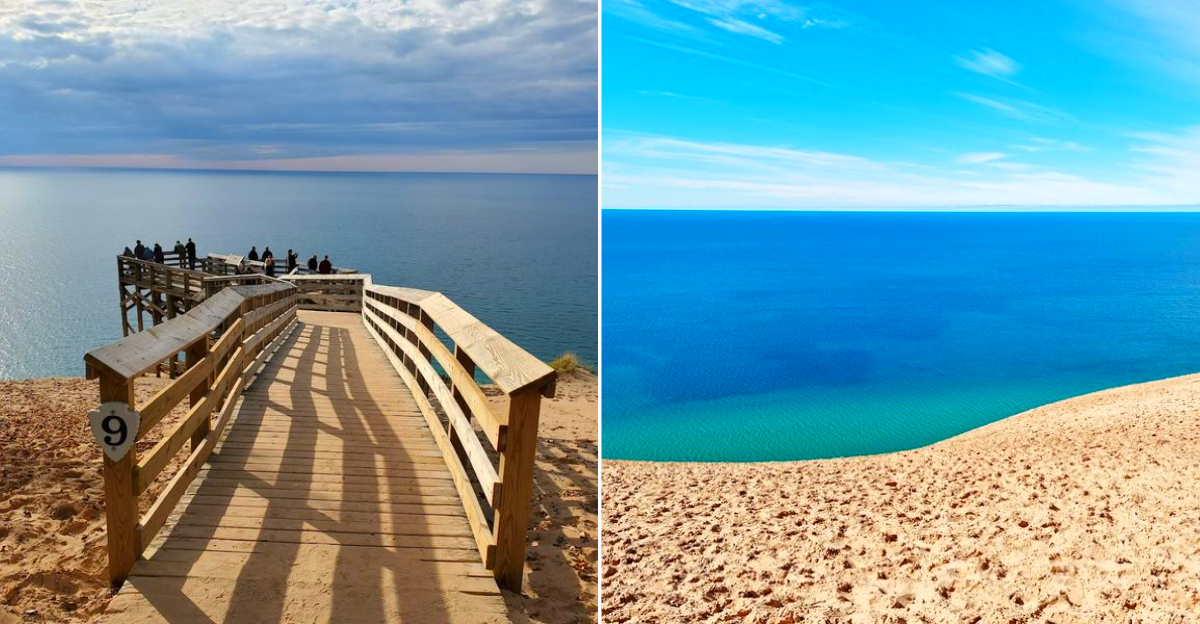
At the edge, your brain briefly misplaces the floor. You walk from a perfectly ordinary parking area toward what seems like another pleasant lake view, then the dune drops away and Lake Michigan becomes less scenery than weather, geography, and mild existential comedy.
Boats shrink to punctuation. Voices get careful. Even the wind seems to know it has seniority. The bluff rises roughly 450 feet above the water, which is impressive until you stand there and realize numbers are useless for describing vertigo.
Travelers who pause here get dune-top scale, Lake Michigan horizon drama, shifting sand, real safety stakes, and a westward view that keeps expanding after the first photo.
Respect the signs. They are not mood decoration. Sand moves, access can change, and the climb back is no joke. Stand still longer than planned. Let the lake make your schedule feel tiny.
Arrive Ready For The Reveal
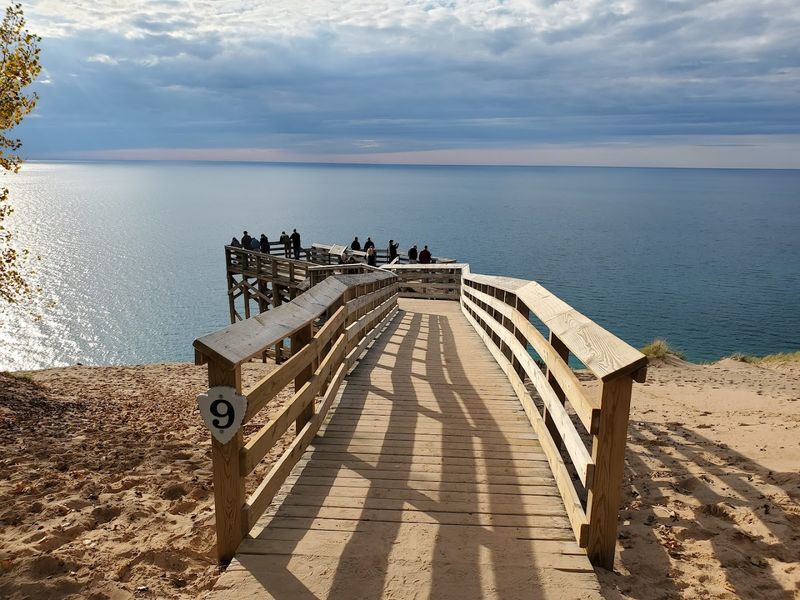
The approach is almost comically modest for a view this oversized. You park, walk a short paved stretch through maple-beech shade, and then the ground loosens into sand as the bluff opens ahead.
That last change underfoot matters, because it subtly announces that you are leaving ordinary footing behind.
I like this stop best when I slow down before the edge instead of rushing for the dramatic moment. The overlook sits on the 7.4-mile one-way Pierce Stocking Scenic Drive, and a park pass is required to enter.
Since March 2023, purchases at the park have been cashless, so handling that detail first saves an annoying little scramble later and keeps the first look feeling as grand as it should.
The Drive Climbs Toward The Big Blue
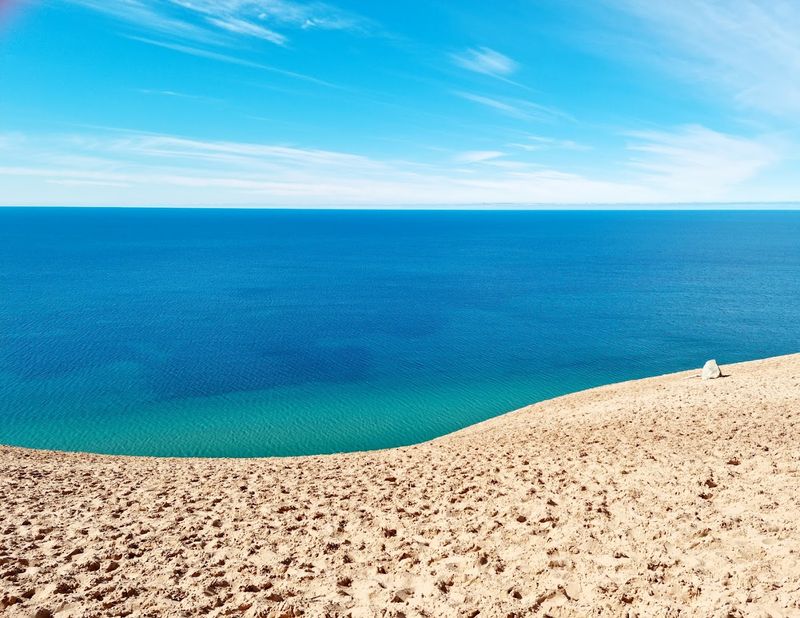
Lake Michigan Overlook, Stop #9 on Pierce Stocking Scenic Drive, Sleeping Bear Dunes National Lakeshore, near Empire, MI, arrives near the dramatic end of the scenic loop.
Follow Pierce Stocking Scenic Drive slowly, because the climb is part of the buildup. Forest, curves, and quiet pull-offs make the lake feel like it is being saved for the right moment.
Once you park, walk toward the overlook and let the view open all at once. The road gets you close, but that final step toward the water is the real arrival.
Do Not Underestimate The Bluff
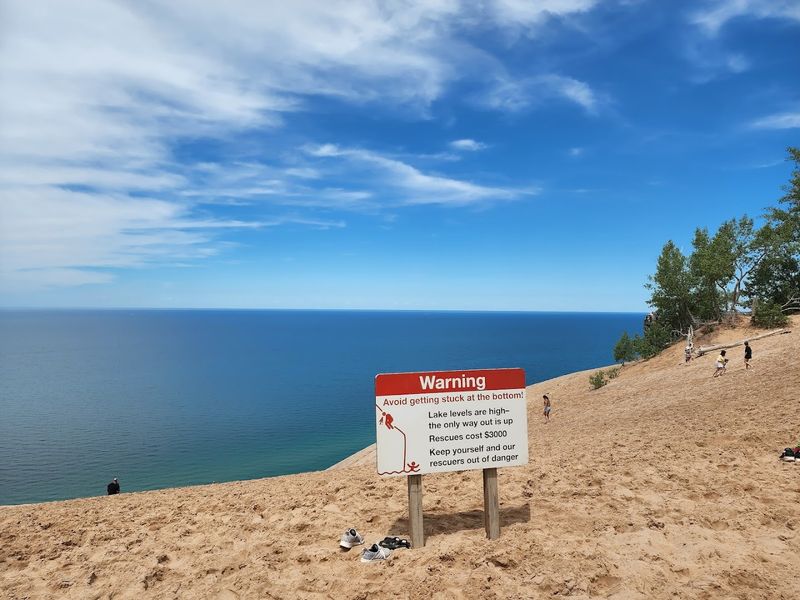
What looks like a tempting shortcut to the water is the most important thing to treat seriously here. The bluff drops about 450 feet, and the National Park Service strongly discourages going down because loose sand, rock, and extreme steepness make the return punishing and risky.
The climb back is not a cute travel challenge. It is a real physical test.
The danger is not only exhaustion. Dislodged rocks can threaten people below, and rescue from the base can cost $3,000.
The bluff is also actively eroding at roughly one foot per year through wave action and sliding material, so the shape you see today is part of a moving landscape, not a stable staircase waiting politely for your vacation plans.
Expect The Overlook To Keep Changing
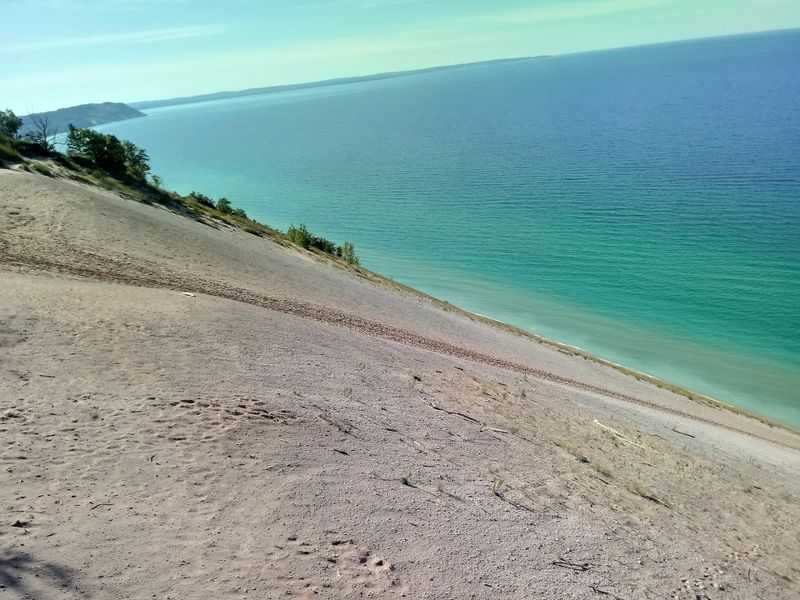
One of the most useful current details is also a reminder that this place does not hold still for our convenience. The wooden viewing platform at Stop #9 was removed in spring 2025 because erosion made it untenable.
You can still enjoy the overlook, but the experience is now more direct, less framed, and slightly more exposed to the realities of sand and weather.
That change actually suits the site. This bluff has likely retreated dramatically over time, with evidence suggesting it once extended much farther into the lake, perhaps even as a peninsula reaching up to two miles outward.
Standing here now, you are not visiting a fixed monument. You are meeting an active edge that is still rewriting itself.
Use The Drive As Part Of The Experience
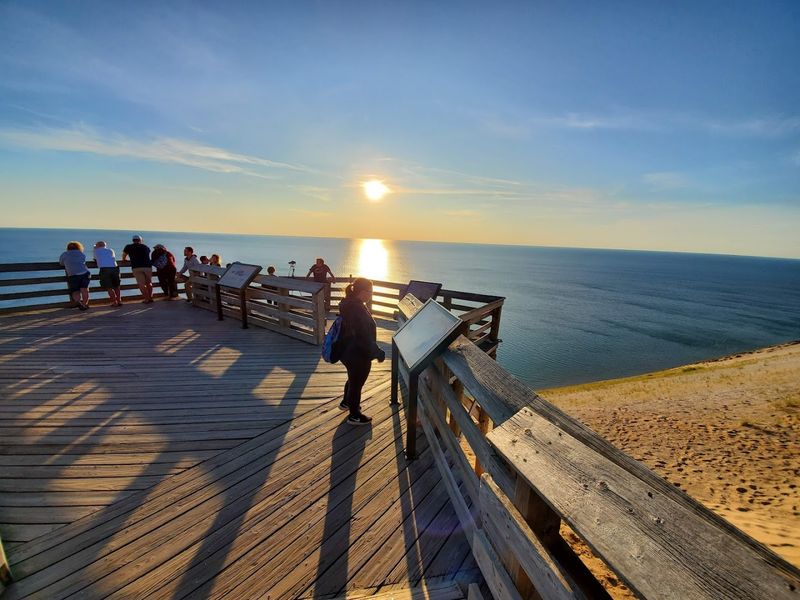
This stop lands better when it is not treated like an isolated photo errand. The overlook is part of the Pierce Stocking Scenic Drive, a 7.4-mile one-way route with 12 scenic stops that winds through dunes and beech-maple forest.
In practice, that means your eyes are gradually trained for contrast: shade, curve, dune, then sudden sky.
I would not rush the loop, even if Stop #9 is the headline act. Two to three hours is a realistic pace by car if you pause for views, photos, or a picnic, and the National Park Service offers free interpretive brochures plus a self-guided tour in the National Parks app.
Those details turn a beautiful drive into a more legible one.
Pick Your Time With Intention
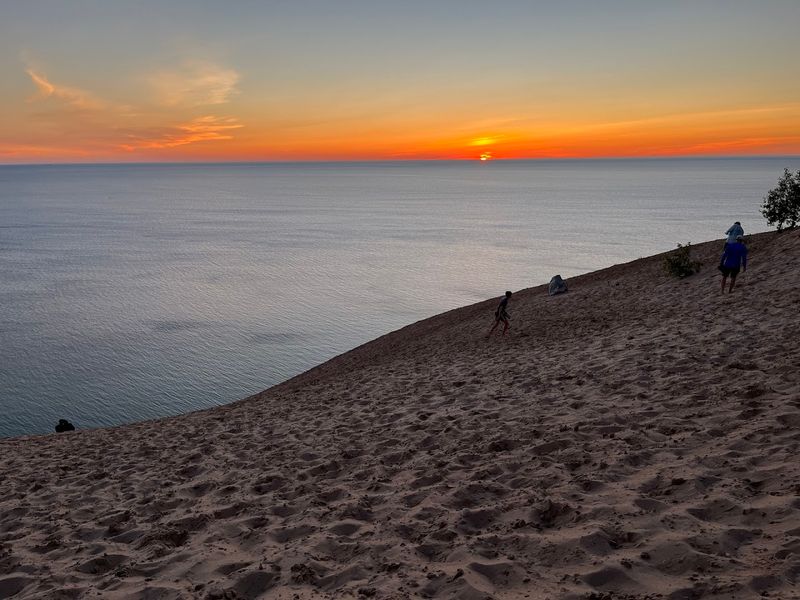
Late light does something almost unfair to this overlook. The bluff already feels oversized in daytime, but near sunset the lake turns into a broad sheet of changing color and the whole westward view starts behaving like a stage set designed by weather.
This is one of the strongest sunset spots in the park for a simple reason: the sightline is open, high, and gloriously unobstructed.
That popularity comes with company, so expect more people in the evening and build in a little patience. If you prefer quieter conditions, aim for earlier in the day or shoulder seasons when the drive is open.
Even on cloudier afternoons, the height and breadth of the scene still deliver that airy, edge-of-the-continent feeling.
Know What Accessibility Really Means Here
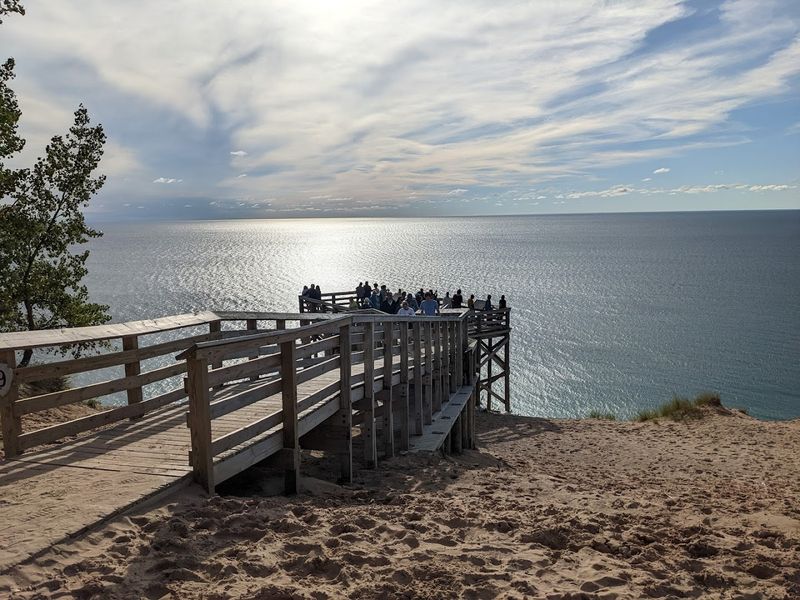
The good news is that this is one of the easier big views in Sleeping Bear Dunes to reach. From the parking area, a paved path carries you through shade for roughly 50 yards before the route turns sandy near the overlook.
That distinction matters. The stop is approachable for many visitors, but it is not fully wheelchair-friendly at the final sandy section.
That in-between quality defines the experience. You do not need a long hike to earn the panorama, which makes Stop #9 especially useful for mixed groups with different energy levels.
Still, the sand can be tiring, and the lack of the old platform means footing and comfort depend more on conditions than they once did, so sturdy shoes and measured expectations help.
Look Beyond The Obvious Horizon
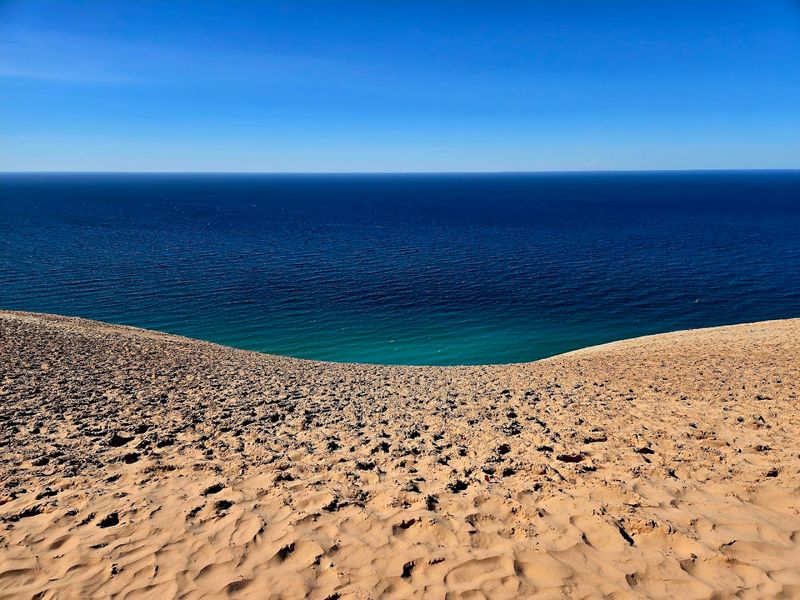
At first, the view reads as pure spectacle. Stay longer, though, and it starts resolving into geography: shoreline curves, tonal changes in the water, distant landforms that seem imaginary until you know their names.
On a clear day, Empire Bluffs, Platte Bay, and Point Betsie can all be visible from here, strung southward like quiet clues that this huge scene is also a readable map.
That shift from awe to orientation is one of my favorite parts of Stop #9. The overlook does not become less dramatic once you understand it.
It becomes richer. The named landmarks anchor the eye just enough to emphasize how much space still remains between them, especially across a lake so large it can mimic a sea.
Remember The Story In The Landscape
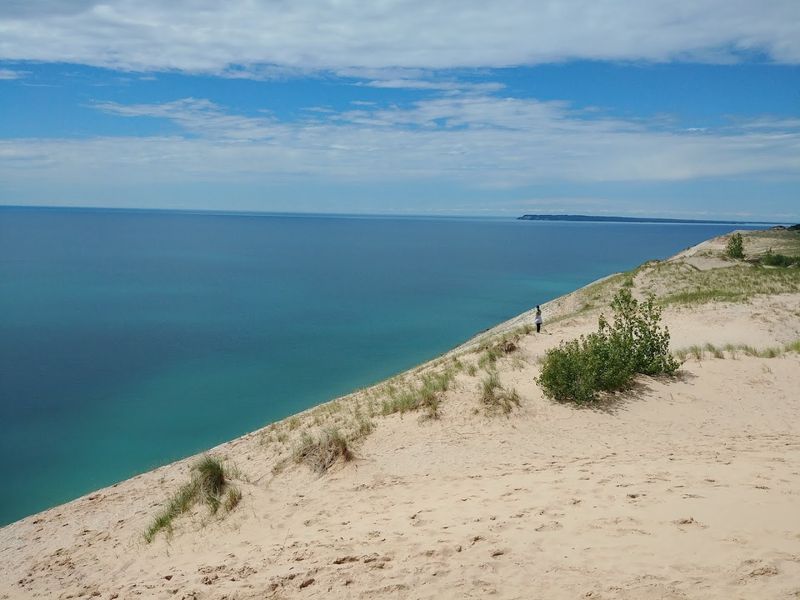
This is not just a grand lookout over water and sand. It is also part of a landscape shaped by story, specifically the Native American legend of a mother bear and her two cubs swimming across Lake Michigan.
In that tradition, the mother became the dune and the cubs became North and South Manitou Islands, visible from various overlooks in the national lakeshore.
I find that context deepens the stop without making it sentimental. The legend gives the terrain a human rhythm, while the geology keeps things firmly grounded in time, erosion, and distance.
At Stop #9, both layers coexist nicely: a factual landscape of bluff, lake, and retreating sand, and a cultural memory that helps explain why this place lodges so strongly in people.
Consider The Off-Season Version
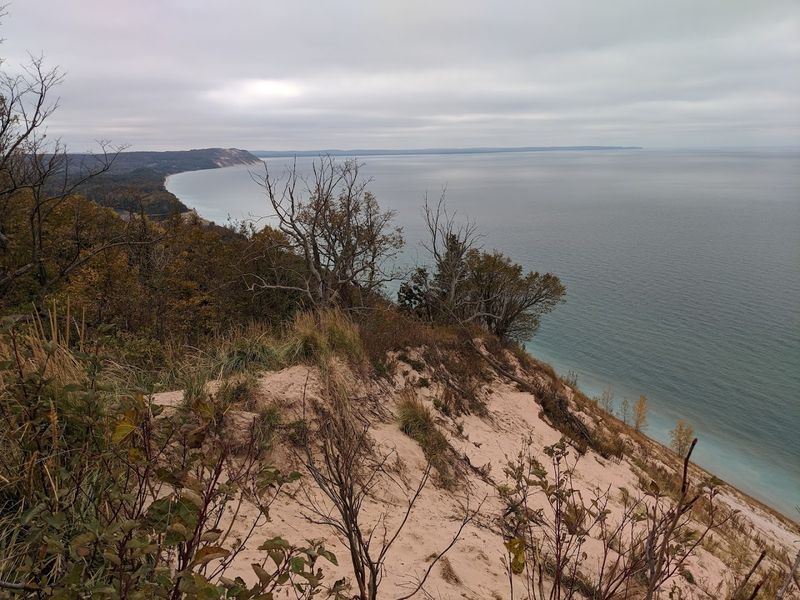
Most people experience Stop #9 during the vehicle season, typically from April through November, when the scenic drive functions as an easy loop. But the road has a second life when it closes to cars.
At those times, the route remains open for hiking, biking, or skiing, which changes the mood from scenic-drive convenience to something quieter and more deliberate.
That seasonal shift suits the overlook surprisingly well. Without the steady rhythm of cars moving stop to stop, the landscape feels larger and less curated, even though the same facts remain underfoot: bluff, forest, lake, wind, distance.
If your schedule and conditions line up, the non-driving season offers a calmer encounter with one of Michigan’s most startling views.
Treat It As More Than A Quick Photo Stop
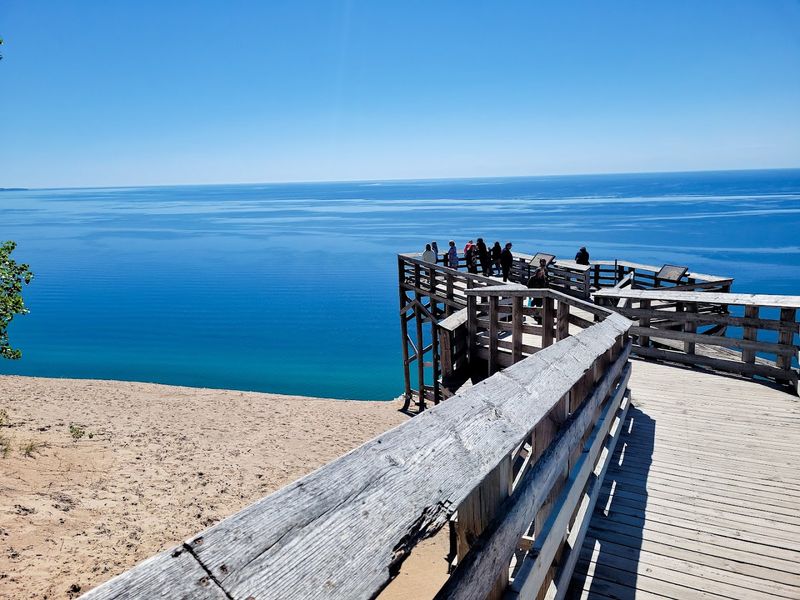
The easiest mistake at Stop #9 is assuming the whole point is a fast photograph and a dramatic gasp. The view absolutely delivers that, but it rewards lingering far more than it rewards checking a box.
Sunset is excellent here, and on dark, clear nights the overlook can also become a strong place for stargazing, with the possibility of seeing the Aurora Borealis under favorable conditions.
If you stay a little longer, the place starts working on subtler senses. Wind patterns become noticeable. The lake shifts color in slow bands. The broad silence between conversations begins to feel like part of the scenery.
That is when the so-called edge-of-the-world feeling becomes less about drama and more about perspective, which is the better souvenir anyway.